On this page
-
Text (1)
-

tfb. 4&B, March 12, 1853.1 THE LEADER; V...
Note: This text has been automatically extracted via Optical Character Recognition (OCR) software. The text has not been manually corrected and should not be relied on to be an accurate representation of the item.
-
-
Transcript
-
Note: This text has been automatically extracted via Optical Character Recognition (OCR) software. The text has not been manually corrected and should not be relied on to be an accurate representation of the item.
Additionally, when viewing full transcripts, extracted text may not be in the same order as the original document.
Imperial Parliament. Monday, March T. . ...
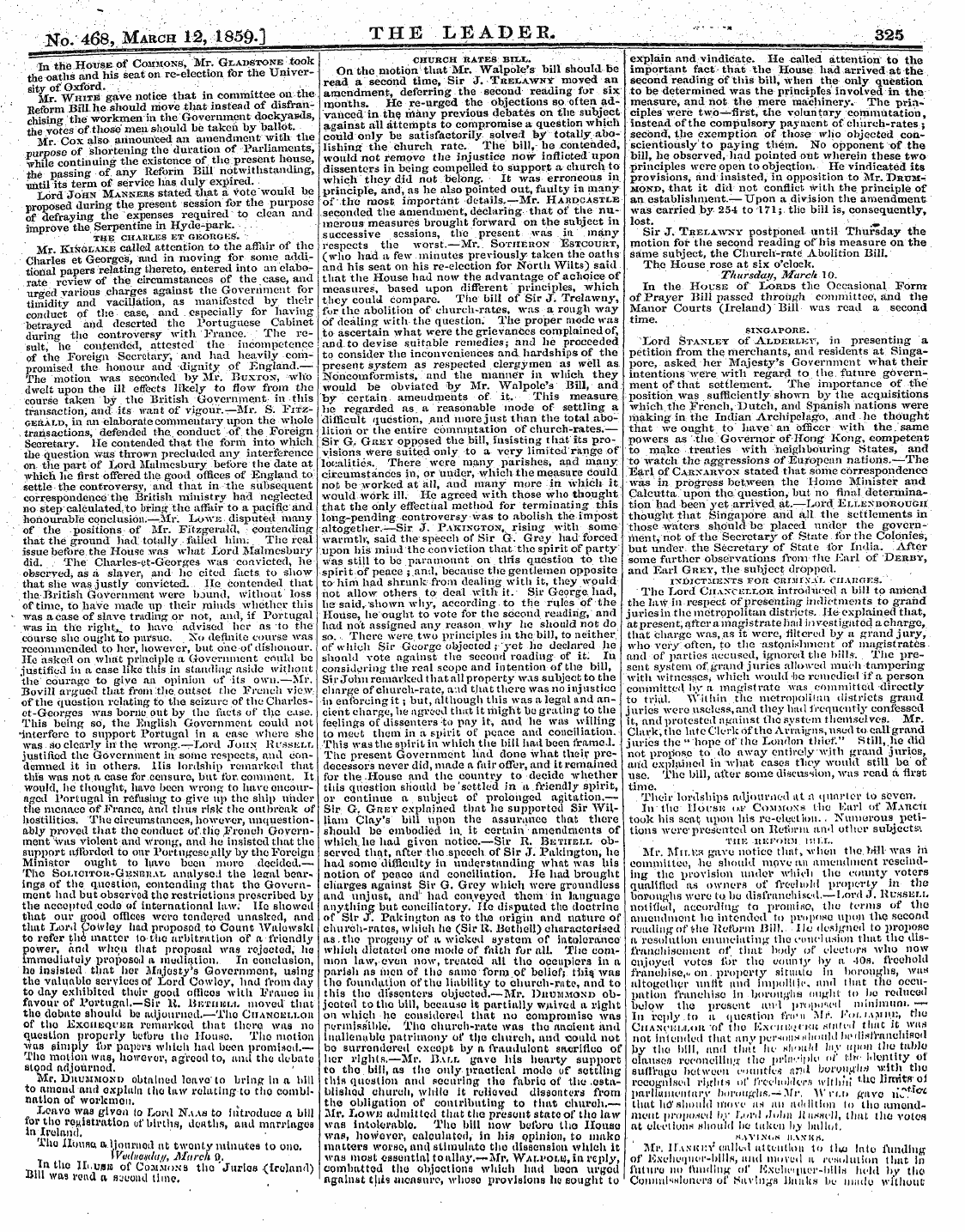
In the House of Commons , Mr . Gladstone took the oaths and his seat on re-election for the University of Oxford . . ,, Mr . White gave notice that in committee-on :-the Jt eform'Bfll . he-should move that instead of disfranchising the workmen in the Government dockyards , the votes of those' men should be taken by ballot . Mr Cox also announced an amendment with , the purpose of shortening the duration of Parliaments , \ 7 hile continuing the existence of the present house , the passing of any Reform BUI notwithstandmg , until its term of service has duly expired . ¦ _ Lord John Manners stated that a vote would be proposed during the present session for the purpose of defraying tiie expenses required to clean and impr ove the Serpentine in Hyde-park . THE CHAKCES ET GEORGES ' . '
Mr . KiNGLAiCE called attention to the affair of the Charles et Georges , and in moving for some additional papers relating thereto , entered into an elaborate review of the circumstances of the case , and urged various charges against the Government for timidity and vacillation , as manifested by their conduct of the case , and especially for having betrayed and deserted the Portuguese Cabinet during the controversy with France . The result , he contended , attested the incompetence of the Foreign Secretary , and had heavily compromised the honour arid dignity of England . —• The motion was seconded by Mr . Buxton , who dwelt upon the ill effects likely to flow from the
course taken by the British Government in -this transaction , and its want of vigour . —Mr . S : Fitzgerald , in an elaborate commentary upon the whole transactions , defended the conduct of the Foreign Secretary . He contended that tlie form into which the question was thrown precluded any interference on the part of Lord Malmcsbury before the date at which he first offered the good offices of England . to , settle the Controversj ' , and that in the subsequent correspondence the British ministry had neglected no step calculated , to bring the affair to a pacific and honourable conclusion . —Mr . Lowe disputed many of the positions of Mr . Fitzgeraitl , contending that the ground had : totally failed him ; The real
issue before the House was what Lord Malmesbury did . The Chai'les-et-Georges was convicted , he obseryedj as a slaver ^ and lie cited facts to show that she was justly convicted . He contended that the British Government were bound , without loss of time , to have made up their minds whether this was a case of slave trading or not , and ; if Portugal was in the right s to have . ' advised her as to the course she ought to pursue . jSo definite course was recommended to her , however , but one of dishonour . He asked on what principle a Government could be justified in a case like this in standing aside without the courage to give an opinion of its own . —Mr . Bovill argued that from . 'the . outset ( lie French view
of the question relating to the seizure of the Charlesot-Georges was borile out by the facts of the case . This being so , tlie English Government could not interfere to support Portugal in a case where she was so clearly in the wrong . —Lord . Tonx 'Krssiikr . justified the Government in some respects , and condemned it in others . His lordship remarked that this was not a case for censure , but for , comment . It would , lie thought , have boon wrong to have encouraged Portugal in refusing to give up the ship under tiie menace of France , find thus risk the outbreak of hostilities . Tlie circumstances , however , unquestionably proved that the conduct of I lie French Government was violent and wrong , and he insisted that the
support afforded to our Portugese ! ally by the Foreigu Ministor ought to 1 * avo boon more decided . — - Tlio Sor , ToiTOKrGi 3 Ni 3 jt . M < analysed the lecral bearings of the question , contending that the Government had but -observed the restrictions proscribed by the accepted , code of international law ; Ho showed that our good offices were tendered unasked , and that Lord . Cowley had . proposed , to Count Walowskl to refer the matter to tho arbitration of a friendly power , nnd when that proposal was rejected , lie immediately proposed a mediation .. In conclusion , ho insisted that her Majesty ' s Qovornmont , using
the valuable services of Lord Cowloy , had from day to day exhibited their good offices with Franco iu favour of I ' ortugal . —Sir U . linvuuuu moved that the debate should bo adjourned . —Tlio CiiAN . oiSM . on of tho ExoiiEQi'ian remarked tliat there , was no question properly before tho House . Tlio motion was simply for papers which hud been promised . — Tho motion was , however , agreed to , and the debate stood adjourned . Mr . Dkuhmokd obtained loavo'to bring In a bill to amond and explain tlio law relating 1 to tlio combination of workmen .
explain and vindicate . He called attention to the important fact that the House had arrived at the second reading of this bill , when the only question to be determined was the principtes involved in the measure , and riot the mere machinery . The principles were twb- ^ -first , the voluntary commutation , instead of the compulsory payment of church-rates ; second , the exemption of those who objected conscientiously to paying them . No opponent of the bill , he observed , had pointed oiit wherein these two principles were open to objection . He vindicated its provisions , and insisted , in opposition to Mr . Drummonx > , that it did not conflict with the principle of an establishment- —Upon a division the amendment was carried by 254 to 171 ; tlie bill is , consequently , lost . _
Sir J . Teelawsy postponed until Thursday the motion for the second reading of his measure on the same subject , the Church-rate Abolition Bill . The House rose at six o ' clock . Thursday , March 10 . In the House of Lords the Occasional Form of Prayer Bill passed through ' committee , and the Manor Courts ( Ireland ) Bill was read a second time .
SINGAPORE . Lord Stanley of Alderlky 7 , in presenting a petition from the merchants , and residents at Singapore , asked her Majesty ' s Government what their intentions were with regard to the future government of that settlement . The importance of the position was sufficiently shown by the acquisitions which the French , Dutch , and Spanish nations were making in the Indian Archipelago , and lie thought that we ought to have an officer with the , same powers as the Governor of Hong Kong , competent
to make treaties with neighbouring States , and to watch the aggressions of European nations . —The Earl of Cakxarvox stated that some correspondence was in progress between the Home Minister and Calcutta upon the question , but no final determination had been yet arrived at . —Lord ElLenborougii thought that Singapore and all the settlements in those waters should be placed under the government , not of the Secretary of State , for the Colonies , but under the Secretary of State for India . After some further observations from the Earl of Derby , and Earl Grey , the subject dropped .
INDICTMENTS FOR CRT . 11 I . V . U , CIIAJZGES . The Lord CiiaxCi : i : lor introduced . a bill to amend the law in respect of presenting indictments to grand juries in the metropolitan districts , lie explained that , at present , after a magistrate had in vestigiited a charge , that charge was , as it were , filtered by a gi * and jury , who very often , to the astonishment of magistrates and of parties accused , ignored the bills . The present system of grand juries allowed raui'Ii tampering with witnesses * which would be remedied if a person committed by a magistrate was committed directly to trial . Within the metropolitan districts grand juries were useless , and they had frequently confessed it , and protested against the system themselves . Mr . Clark , the late Clerk of the Arraijrns , used to call grand i uxics the " hope of the London thief . " Still , he did not propose to do away entirely with grand juries , and explained in w ) iat cases tlicy would still be of use . The bill , after some discussion , was read a first
time . . Their lordships adjourned at n qunrler to seven . In the lloi'Sio <> i' Commons the lOarl of March took his scat ; upon his re-election .. Numerous ^ petitions were 1 presented oil Keform and other subjects 1 . Tim nicroitM nu . r .. Mr . Mir . V . s gave notice that , when tho . bill was hi committee , he should move an amendment rescinding tlie provision under whivli the county voters qualified as owners of freehold property in the boroughs wore to bo disfranchised . —Lord J . Russisiu ., notified , according to promise , t ) io terms of the amendment ho intended to propone upon the second reading of the Reform Bill . I Jo designed to propose a resolution enunciating the conclusion that tho disfrauchisenient of flint body of electors who now
CHURCH BATES BILL . On the motion that Mr . Walpole ' s bill should be read a second time , Sir J . Tkelawny moved an ainendment , deferring the second reading for six months . He re-urged the objections so often advanced in the many previousdebates on the subject against all attempts to compromise a question which could only be satisfactorily solved by totally , abolishing the church rate . The bill , he contended , would not remove the injustice iiovr inflicted upon dissenters in being compelled to support a church to which they did not belong . It was erroneous in principle , and , as he also pointed out , faulty in many of the most important details . — Mr . Hakdcastle
seconded the amendment , declaring that of the numerous measures brought forward on the subject in successive sessions , the present was in many respects the worst . —Mr . Sotheron Estcourt , ( who had a few . minutes previously taken the oaths and his seat on his re-election for North Wilts ) said that the House had now the advantage of achoice of measures , based upon different principles , which they could compare . Tlie bill of Sir J . Trelawny , for the abolition of church-rates , was a rough way of dealing with the question . The proper mode was to ascertain what were the grievances complained of , aDd to devise suitable remedies ; and he proceeded to consider the inconveniences and hardships of the
liani Clay ' s bill upon the assurance that there should be embodied in , it certain amendments of which , he had given notice . —Sir R . BK / rirBi , ^ observed that , after tho speech of Sir J . l ' akington , he had some difficulty in understanding what was his notion of peace and conciliation . He had brought charges against Sir G . Grey which wore groundless and unjust , and' had conveyed them in language anything but conciliatory . He disputed tlio doctrine of Sir J . Pakin ^ ton as to the origin and nature of church-rates , which he ( Sir K . Bethell ) characterised as . tho progeny of a wicked system of intolerance which dictated one mode of faith for all . Tlio common law , even now , treated all tho opeur > iers in a parish as men of the saino fonn of belief } this , was the foundation of the liability to church-rate , and to this tho dissenters objected . — Mr . Drujimond
obpreseiit system as respected clergymen as well as Noncomformists , and the manner in which , they would be obviated by Mr . Walpole ' s Bill , and by certain amendments of it . This measure * , he regarded as , a reasonable mode of settling a difficult question , and more just than the total abolition or the entire commutation of church-rates . — Sir G . Grey opposed tlie bill , insisting that its provisions were suited only to a very limited range of localities . There were many parishes , and many circumstances in , or under , . which-the measure <& u'ld not be worked at all , and many more in wliich it would work ill .: He agreed with those who thought that the only effectual method for terminating this
long-pending controversy was to abolish the impost altogether . —Sir J . ' Pa ' kinot . o ' st , rising with some warmth , said the speech of Sir G . Grey had forced upon his mind the conviction that the spirit of party was still to be paramount on . this question to the spirit of peace ; . , because tlie gentlemen opposite to him had shrunk from dealing with it , they would hot allow others to deal with it . Sir George had , lie said , shown why , according to the rules of the House , he ought to vote for the second reading , and had no ' t assigned any reason why lie should not do so . - There were two principles in the bill , to neither , of which Sir George objected ; yet he declared he slionld vote against the second reading of itJ In
considering the real scope and intention of the bill , Sir John remarked that all property was subject to the charge of churchy-rate , and that there was no injustice in enforcing it ; but , although this was a legal and ancient charge , he agreed that it might be grating to the feelings of dissenters to pay it , and he was willing to meet them in a spirit of peace and conciliation . This was the spirit in which the bill had been frame J . Tho present Government had done what their predecessors never did , made a fair offer , atid . it remained for the . House and the country to decide -whether tltis question should be ' settled in a . friendly spirit , or continue a subject of prolonged agitation . — - Sir G . Grev explained that he supported Sir
Wilenjoyod votes for tho county by a 40 s . freehold franchise ,., on property Simula iii boroughs , wa « altogether unlit and impolitic , nnd Hint tho occupation franchise in . boroughs might to >'" reduced below tho present anl proposed ^ minimum . - — In reply to a question fro mi Mi . F <> i . iamii . i :, n-io Chan ( , m : i . ii . «» u of the I . « :. x < "iei-: ijjri-: ic *» nti-. 'l that it wu , s not intended that any persons nlionM hiMlisfVanchiROrt b y the bill , and tliut fie hIiouM I / i . v ui '"" tlio tablo clauses reconciling the * prliHplu » r (!>•< ¦ identity ot suffrage between i-ouutk'i ! nrM boivu ^ liri with the recognised rights ol 1 frechoJdcrfl witln ' ii < hc Imntfroi parlluiui'iiturv lxir <» ii # 'lis . —' ' Mr , W n . n # avo n \? t |< y ^ that hd should ii ' iovc its an addition to tho amendment | imj »<» . ¦) t' ( J Uy l . itvil . John JhisNi'll , that tiie votes at uk'i'tiouH should he taUeu hy hullol ,
jooted to tho bill , because it partially waived a right on which ho conaidored that no compromise was permissible ' . The church-rate was tho anaient and inalienable patrimony of tlje church , and could not bo surrendered except by a fraudulent sftorifloo of her rights , —Mr . Bam , yavo his hearty support to tho bill , as the only practical mode of settling this question- and securing tho fabrio of tlio . ostatilishod church , while it relieved dissoutcrd from tho obligation of contributing to that church . — Mr . Lowj ] admitted that tho present statoof tho law was intolerable . The bill no \ y bot ' ory tlio Houao was , however , calculated , in his opinion , to nmko matters worse , and stimulate , tho dissension which It was most essential to allay .---Mr , Waj . voi . w , in reply , eomhatted tho objections which had licoa urged ngahist thi ? uicnsurc , whoso provlaions ho sought to
M . VVl . NdH IIAVKrl . Mr . IIankiiv « alled uttiiilloii to tlw Into funding of ICvclicipioi ' -hlllfl , nnd niovixl a I'c'soluiion tliat In future no ttimliiiK cm Kxelii'mior-billrt held )> y the Couiinl > i < Nloneri 3 ot' fSavInas Dunks be iniulu wflliouc
Lcnvo was given to Lord N . \ . \ a to introduce ft bill for tho registration of births , deaths , and mnrrlagos in Ireland . Tho IlOusfta . ljournoil nt twonty minutes to ono . ] Vii ( tit < i , i ( Jttt / , March 9 . i > mi tIl ° IIlU fi " of Co 3 i . mo . n 9 tho ' Juries . ( Iceland ) ¦ B UI was rend , a sjuoikI time .
Tfb. 4&B, March 12, 1853.1 The Leader; V...
tfb . 4 & B , March 12 , 1853 . 1 THE LEADER ; V 325
-
-
Citation
-
Leader (1850-1860), March 12, 1859, page 5, in the Nineteenth-Century Serials Edition (2008; 2018) ncse.ac.uk/periodicals/l/issues/cld_12031859/page/5/
-