
On this page
-
Text (2)
-

878 ^HH XjEAIXDIB. [No. 39Q a ^gq >EMS!E...
-
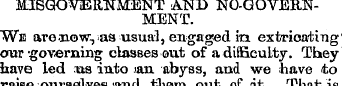
MISGOVERNMENT AND NO-GOVERNMENT. We are ...
Note: This text has been automatically extracted via Optical Character Recognition (OCR) software. The text has not been manually corrected and should not be relied on to be an accurate representation of the item.
-
-
Transcript
-
Note: This text has been automatically extracted via Optical Character Recognition (OCR) software. The text has not been manually corrected and should not be relied on to be an accurate representation of the item.
Additionally, when viewing full transcripts, extracted text may not be in the same order as the original document.
Wives-In-Law. It Is Amusing To Read The ...
, mm oT the TBgirrre -wno rms pttrcJhased the ¦ privilege of speaking with IDivlae authority . * Fhis is , of -course , nobodyV faiilt ; ' laymen say 1 ibey-cannot reBpect the Church , and the parstms complain lihat their flock will not near "them . TEn lieu of the old law of Q-od , we liave now * a law " made up bit by bit by a set of Parliamentary gentlemen wlio do not lead the lives of saints . But in the intervals of
the law making , we had declamation religious and moral enough to prove the House a conclave of anchorites . We itbought . of Cha-RUes , IjAmb , who after listening to similar praises of purity and morality from a circle of literary men after dinner , shocked the company by stuttering out , " It is all ver-y well ; but there ia not one -man here who will not flirt with the first pretty gtrl he meets going home . " In default , . however , of an authoritative Church , we must take our laws from the new temple of the law- —where we find publicans and sinners abrogating old and adding newcommandments . The great change in the law is that it enaables a wLfie to obtain divorce for c adultery of the husband , ' coupled with cruelty or * desertion for two years . ' If the law be acted on , some present separations will be made legal , and in some unhappy households separation may be added to adultery to facilitate divorce . We cannot believe , however , that there will be any divorces of couples aaow living in liariaoiiy . Laws are not as powerful as lawyers and legislators fondly dream . More influential than any laws are the habits of the English people . It would be curious to note how little either permissive or preventive Jaws h & Me affected our manners * aad
customs . The husbands aright in old times to beat ibis wife with a stick no bigger than his thumb was a © : more generally acted upon than the privilege of beating wives now , when six months' vimprisonment with hard labour is awarded to deter the offenders . The ecclesiastical courts up to the last session had a right to impose on a anan or woman , who by their ^ nduet or conversation gave parish scandal , the penance of public confession in church dad in a white sheet , yet the legal right has fallen into desuetude beyond the memory of ffche present generation . . English wives will not . rush for relief to the new
law more than they , now resort to the practical divorce of -quitting their homes . The common talk of society indicates > the virtual law — " " Wliy does « ae « ot leave him ? " is the invariable query m the middle 'classes when the story of an outraged wife is told . Many who Bay this would be surprised to hear that by ism « , fhusbaaad oan force back his wife to his bed * ttd board i 4 > ut even when aware of this
iaw ev ^ ery woman you speak tto will maintain that any outraged wife ' can' leave her husibarad . In \ fche < ease « where wires , outraged ibeynMttil tpafcienee , do leave their homes , how i & eluorn do we hear of 'husbands exercising * heir legal right of recovery P The ' world ' s tbeadkmgh , ' - * he . » o © rn ^ of » Bociel ) y , is mightier -than Parliament-made law , because the "world and society , in "their collective capacity , instinctively ( acknowledge the higher Haw , - " that mnrrdaere is a 'bond of -love .
In . tlneir amendments on the bill the Lords struck out , : as a gwwind for divorce obtained ¦ by blie wife , * the adultery of the husband in the conjugal ( residence . ' The Iiords were righ-t . " We must 'guard against the possibility of husbands or wives unmatched in temperaments agreeing to commit sin that they may be enabled -to separate . In very few cases would a woman oonsent to a witnessed sin
even to dbtain divoroo from a detested husband : tho worst wives may have modesty . But with a man it is different . Men , unhappily , are not very ashamed of infidelity ; and if they could , ¦ w ihhitlie consent of a wife
anxious to separate , obtain divorce by committing that sin in their own house , that condition would not deter them . By extend ing in this or in any other way the grounds of adultery * to the sins of the husband , you open a door to divorce really desired for mere incompatibility of temper . If it seem good to ^ our law-makers % o v & ak ® that a cause of divorce , let it be done but let not an unhu'ppy unmatched couple be compelled into sin to . give them a cause of action j let
the poor people came into court with a dean consciertoe , and let them keep the whiteness of their tsouIs although they cannot keep their tempers . But , ia our opinion , ' adultery by the husband' is an improper phrase , and not founded in truth . The ' adultery' denounced : froin Sinai was merely infidelity on the part of iihe wife , for -the Jews then and afterwards were allowed . concubines . TCh . e meaning of the word should have guarded us against afctoibutrng the offence to i ? he husband . An unfaithful wife * adulterates " * the
family , introduces spurious children into the home . An unfaithful husband simply keeps a concubine , and is guilty -of fornication—an offence against Ms wife , against society , againat morality , against religion , but etill not adultery . The man who commits , adultery is the man who , married or not , destroys the chastity of another man ' s wife : lie is the adulterer against whom , the wholesome terrors of any new law should have been directed . On this point we regret that adultery was not made a misdemeanour . The House
seemed to shrink from punishing too hardly the silken sinners who , without violence , commit the worst offence against honour and against society that , next to murder , can be committed . Yet , at the present day , a married man , who , by a second marriage , ' seduces' a woman , is liable to transportation for bigamy because he has profaned the ceremony of marriage ; but let him profane marriage itself —let him steal away a wife from her husband —wronging a woman and a man in character and in feeling , and the law simply makes him liable for the costs of the divorce . We
have no fear that under a law malting adultery a misdemeanour , either the adulberer or the sinful wife would be too hastily punished . Juries of men would be merciful enough to fellow-sinners ; but the stigma of the law would ; be on the offence , and collusion to camaait the punishable sin would be put out of ike question .
878 ^Hh Xjeaixdib. [No. 39q A ^Gq >Ems!E...
878 ^ HH XjEAIXDIB . [ No . 39 Q ^ gq > EMS ! EB 1 ^ 1 ^ 57 ,
Misgovernment And No-Government. We Are ...
MISGOVERNMENT AND NO-GOVERNMENT . We are now , as usual , engaged in extricating our'governing clasBesout of a difficulty . They have led us into jan abyss , and we have to raise ourselves and them , out of it . That is tho English principle . Our administrators are perpetually blundering into calamity , iaind we , good , easy people , are as continually -fighting and paying to relieve them of the conseiquetttces . Premiers , Secretaries of State , and
members of Parliament , ; iur > ong us , are only nominally responsible A . short retirement irotn . public lite is the worst that ever happens to an individual of that order . If he breaks down we : advdso him to lay ¦ up awhile while we put one < of his friends in the place , takiug all the burden upon our awn shoulders . It is true tha & similar practice , if applied to ordinary
affairs , would speedily reduce us to a community of bankrupts and cripples . But we do not find that reckless engiue-drivera , -chemists' assistants convicted of Belling poison without precaution , negligent night-watchmen , or inebriated sea captains , are precisely the people who enjoy tho permanent confidence of the public . With ( statesmen , hewever , all certificates are lor life , while , in moat
cases , certificates are jndt required at all TJndoubteoly , particular individuals disappear from particular departments ; but watah Jhe game for a few moments , and they will again become visible in the corners . It is found impossible to force Sir Dhabi ^ s "Wood a second time into the Beard of Control ; he is deputed to the Admiralty -where his energies are displayed in fitting out royal yachts ., or laying up line-oS ibattle ships . Having drawn the revenues
of the Post Office , and performed ( by deputy ) its mild duties , Lord 'Cannijto is presented with India , which ifc ig thought may be a convenience to him for a few years , and lie , or some one whosB responsibility is centred in him , sets fire to it . Twenty millions sterling , and , perhaps , thousands of lives , will be sacrificed to quencli the conflagration ; but we pay 4 ind bleed without stint , and nothing is said that might pain the courtly protectors of the noble lord . So , lately , . a feeble tjovernment was dragged into '
a Russian war which might have been prevented ; < xur blood flowed , our treasures were ¦ strained through theExchequersieves ; we were not weary of well-doing , and never inquired whether it would be possible to spare ourselves ithese unprolific labours . No doubt a cry was raised , aiad a few shafts struck the aristocracy ; but it is well known that what we say in the hour of danger we do not repeat in . the hour of security . Xike parents paying the ' debts of spendthrift children , we -vow to be severe : we declare it is for the last
time , ; but when , by our own exertions , and not Jby those of- our governors , the crisis as past , we embrace the hoary prodigals , and they start off once more with -a swing to run full tilt into an Afghan massacre , a Crimean . famine , or a Bengal mutiny . " We have very little doubt that , setting aside the interest of the national debt , a third of the public income is -wasted in redeemin g inexcusable errors of
administration . Can any one say that the East India Company , Liord Cannin g , Mr . Veenon Smith , and * Lord Pajomejistoit , are not guilty of having neglected the most solemn warnings from India ? Can it be said that if they had acted with common intelligence oipon those warnings , many of the recent disasters would not probably Lave been averted ? If not , why exhaust all our indignation against the rebels , whose plots were whispered to the G-ovfirnmeBLt at home , but whose
proceedings were uninterrupted- ? Not a step was taken . The alarm was actually suppressed . Our high officials live upon confidence , and it was the false confidence inspired by their fraudulent -attitude that lulled hundreds of women to remain in the upper country with their " children , to be . massacred . We arc not declaiming . Declamation on such a subject would be levity . The facts , the dates , tho writings are before us . Then , is public apathyleading to public calamity , a venial
, offence ? According to the national custom , it is . We , give Mr . Yebwon Smith tho option of resigning or holding his place . We are about to employ eighty thousand warn troops in reoonquering Xliudostan for J * - * ' Mangles and Co . We recognize no suck principle as responsibility . < Thore wej three stages in the history of every national breaKdown . First , the period of omens ; you
point out < the danger , and for your paiiw you nro called an alarmist . Then comes tw > crnali , and the struggle to extricate ourselves . While that ia going on you must be silcui and strengthen the hands of the executive-Lastly , after fifty thousand men arc 111 t » e » graves , and fifty millions lost to tho ^ puO ^ treasury , bygones are bygones , and agitate cuds in a bonttro . That is to say , ; vo pftj hnU-a-crown for a shilling ' s worth ot . BtronD
-
-
Citation
-
Leader (1850-1860), Sept. 12, 1857, page 14, in the Nineteenth-Century Serials Edition (2008; 2018) ncse.ac.uk/periodicals/l/issues/cld_12091857/page/14/
-