On this page
-
Text (2)
-

716 THE LEADER; [No. 535, Jiti* 24 1858 ...
-

COINS, CURRENCY, AND BANKING. A Treatise...
Note: This text has been automatically extracted via Optical Character Recognition (OCR) software. The text has not been manually corrected and should not be relied on to be an accurate representation of the item.
-
-
Transcript
-
Note: This text has been automatically extracted via Optical Character Recognition (OCR) software. The text has not been manually corrected and should not be relied on to be an accurate representation of the item.
Additionally, when viewing full transcripts, extracted text may not be in the same order as the original document.
New Books On India. Notes On The Revolt ...
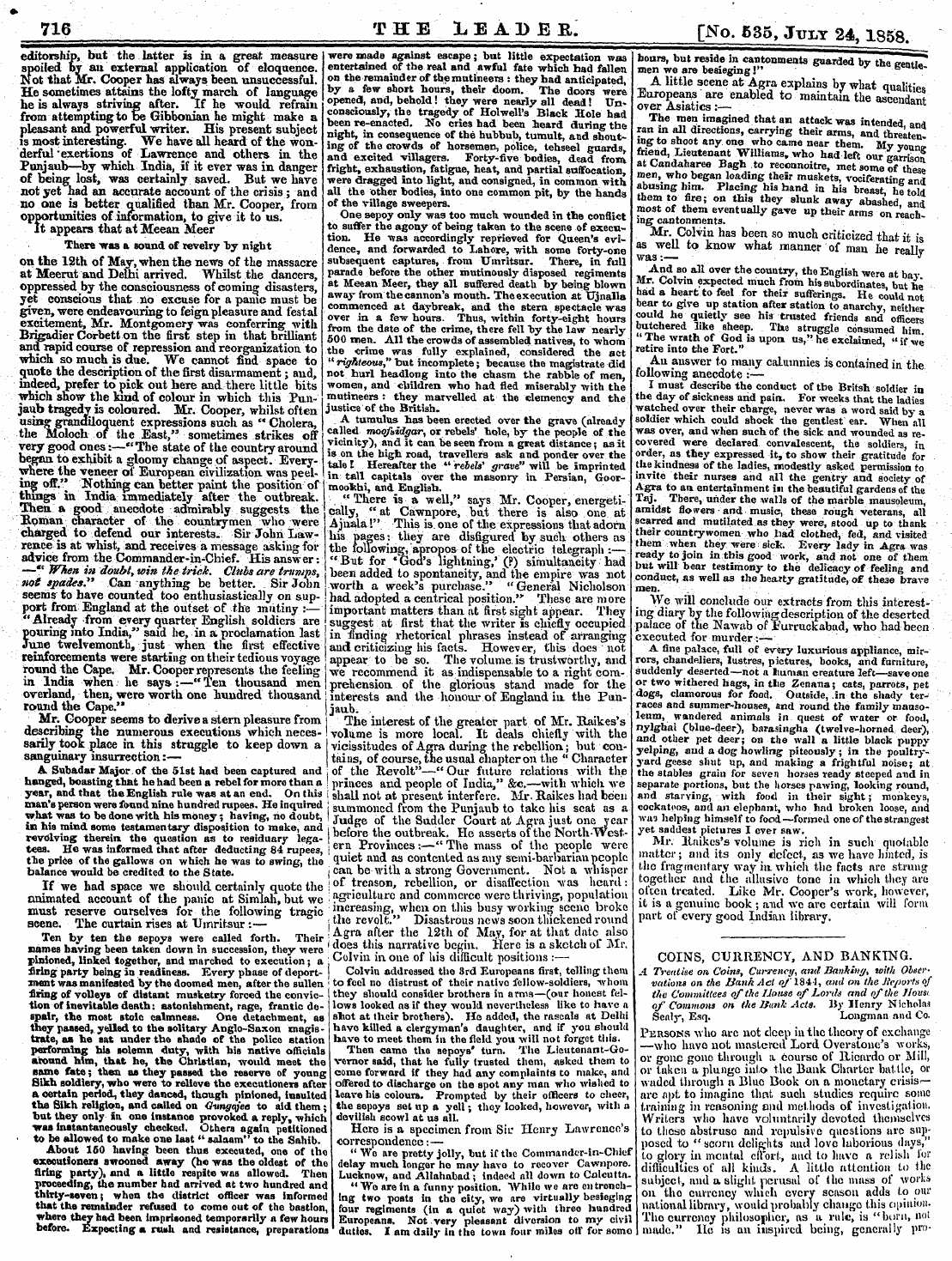
editorship , but the latter is in a great ; measure spoiled b y an external application of eloquence . Not that Mr . Cooper has always been , unsuccessful . He sometimes attains the lofty march , of language he is always striving after . If he -would refrain from attempting to be Gibbonian he might make a p leasant and powerful writer . His present subject is most interesting . We have all heard of the wonderful ' exertions of Lawrence and others , in the Punjaub—by which . India , if it eveT was in danger of being lost , was certainly saved . But we hare not yet had an accurate account of the crisis ; and no one is better qualified than Mr . Cooper , from opportunities of information , to give it to us . it appears that at Meean Meer
There was a Bound of revelry "b y night on the 12 th of May , when the news of the massacre at Meerut and Delhi arrived . Whilst the dancers , oppressed by the consciousness of coming disasters , yet conscious that no excuse for a panic must be given , were endeavouring to feign pleasure and festal excitement , Mr . Montgomery was conferring with Brigadier Corbett on the first step in that brilliant and rapid course of repression and reorganization to which , so much is due . We cannot find space to quote the description : of the first disarmament ; and , indeed , prefer to pick out here and there little bits which snow the kind of colour in which this
Punjaub tragedy is coloured . Mr . Cooper , whilst often using grandiloquent expressions such as " Cholera , the Moloch of the East / 3 sometimes strikes off very good ones :- — " The state of the country around began to exhibit a gjloomy change of aspect . Everywhere the veneer of European civilization was peeling off . ' * Nothing can better paint the position of things in India immediately after the outbreak . Then a good anecdote admirably suggests the Homan character of the countrymen who were charged to defend our interests . Sir John Lawrence is at whist , and receives a message asking for advice from the Commander-in-Chief . His answer
- —* ' When in doubt , win the trick . Clubs are trumps s not spades . " Can anything be better . Sir John seems to have counted too enthusiastically on support from England at the outset of the mutiny : — " Already from every quarter English soldiers are pouring into India , * ' said he , in a proclamation last June twelvemonth , just when the first effective reinforcements weire starting on their tedious voyage round the Cape . Mr . Cooper represents the feeling in India when he says : —" Tea thousand men overland , then , were worth one hundred thousand round the Cape . " Mr . Cooper seems to derive a stern pleasure from describing the numerous executions which necessarily took place in this struggle to keep down a sanguinary insurrection : —
A . Subadar Major of the 51 st had been captured and hanged , boasting that he had been a rebel for more than a y « ar , and that the English rule -was at an end . On this man ' s person were found nine hundred rupees . He inquired what was to be done with his money % having , ho doubt , in his mind some testamentary disposition to make , and revolving therein the question as to residuary legatees . He was informed that after deducting 84 rupees , the price of the gallows on which he was to swing , the balance would be credited to the State . If we had space we should certainly quote the animated account of the panic at Simlah , but we must reserve ourselves for the following tragic scene . The curtain rises at Umrit . sur .:
—Ten by ten the sepoys were called forth . Their names having been taken down in succession , they were pinioned , linked together , and marched to execution ; a firing party being in readiness . Every phase of deportment was manifested by the doomed men , after the sullen fring of volleys of distant musketry forced the conviction of inevitable death : astonishment , rage , frantic despair , the most stoic calmness . One detachment , as they passed , yelled to the solitary Anglo-Saxon
magistrate , aa he Bat under the shade of the police station performing hia solemn duty , with his native officials around him , that he , the Christian , would meet the same fate ; then as they passed the reserve of young Sikh soldiery , who were to relieve the executioners after a certain period , they danced , though pinioned , insulted the Sikh religion , and called on Gvngajee to aid them ; bat they only in one instance provoked a reply , which was instantaneously checked . Others again petitioned to be allowed to make one last " salaam" to the Sahib .
About 160 having been thus executed , one of the executioners swooned away ( he was the oldest of the firing party ) , and a little respite was allowed . Then proceeding , the number bad arrived at two hundred and thirty-seven { when the district officer was informed that the remainder refused to come out of the bastion , where they had been imprisoned temporarily a few hours before . Expecting « ruth and resistance , preparations
were made against escape ; but little expectation was entertained of the real and awful fate which had fallen on the remainder of the mutineers : they had anticipated , by a few short hours , their doom . The doors were opened , and , behold ! they were nearly all dead ! Un « consciously , the tragedy of Holwell ' s Black Hole had been re-enacted . No cries had been heard during the night , in consequence of the hubbub , tumult , and shouting of the crowds of horsemen , police , tehseel guards , and excited -villagers . Forty ^ five bodies , dead from fright , exhaustion , fatigue , heat , and partial suffocation , were dragged into light , and consigned , in common with all the other bodies , into one common pit , by the hands of the village sweepers .
One sepoy only was too much wounded in the conflict to suffer the agony of being taken to the scene of execution . He was accordingly reprieved for Queen's evidence , and forwarded to Lahore , with some forty-one subsequent captures , from ITmritsur . There , in full parade before the other mutinously disposed regiments at Meean Meer , they all suffered death by being blown away from the cannon ' s mouth . The execution at Ujnalla commenced at daybreak , and the stern spectacle was over in a few hours . Thus , within forty-eight hours from the date of the crime , there fell "by the law nearly 500 men . All the crowds of assembled natives , to whom
the crime was fully explained , considered the act ¦ ' righteous" but incomplete ; because the magistrate did not hurl headlong into the chasm the rabble of men , women , and children who had fled miserably with the mutineers : they marvelled at the clemency and the justice of the British . A tumulus has been erected over the grave ( already called moofnidgar , or rebels' hole , by the people of the vicinity ) , and it can be seen from a great distance ; as it is on the high road , travellers ask and ponder over the tale I Hereafter the " rebels' grave" wul be imprinted in tall capitals over the masonry in Persian , Goormoofchi , and English .
" There is a well , " says Mr . Cooper , energetically , " at Cawnpore , but there is also one at Ajn ^ la ! " This is . one of tlie expressions that adorn his pages : they are disfigured by suck others as the following , apropos of 'the ; electric telegraph : — " But for " God's lightning , ' (?) simultaneity had been added to spontaneity , and the empire was not worth a week's purchase . " " General Nicholson had adopted a centrical position . ' * These are more important matters than at first sight appear . They suggest at first that the writer'is chiefly occupied in Ending rhetorical phrases instead of arranging and criticizing his facts . However , this does ' not appear to be so . The volume is trustworthy , and we recommend it as indispensable to a right comprehension , of the glorious stand made for the interests and the honour of England iu the Punjaub .
The interest of the greater part of Mr . Itaikes ' s voliime is more local . It deals chjelly with the vicissitudes of Agra during the rebellion , ; but contains , of course , the usual chapter on the " Character of the Revolt "— " Out future relations with the princes and people of India , " & c . —with which we shall not at present interfere . Mr . Railces had been summoned from the Punjaub to take his scat as a Judge of the Suddcr Court at Agva just one year before the outbreak . He asserts of the
North-Western Provinces : — " The mass of the people were quiet and as contented as any semi-barbarian people can be with a strong Government . Not a whisper of treason , rebellion , or disaffection ^ vas heard : agriculture and commerce were thriving , population increasing , when on this busy working scene broke the revolt ; . " Disastrous news soon thickened round A-gra after the 12 th of May , for at that date also does this narrative begin . Here is a sketch of Mr . Colvin in . one of his difficult positions : —
Colvin addressed the 8 rd Europeans first , telling- them to feel no distrust of their native fellow-soldiers , -whom they should consider brothers in arms —( our honest fellows looked as if they -would nevertheless like to have a sliot at their brothers ) . Ho added , the rascals nt Delhi have killed a clergyman ' s daughter , and if you should have to meet them in the field you -will not forget tiiis . Then came tho Bepoys' turn . The Lieutenant-Governor said , that he fully trusted them , naked them to come forward if they had any complaints to make , and offered to discharge on tbe spot any man who wished to leave his colours . Prompted by their officers to cheer , the sepoys set up a yell ; they looked , however , with a devilish scowl at us all .
Here is a specimen from Sic Henry Lawrence ' s correspondence : — ' Wo are pretty jolly , but if tho Coinmn . nder-in-Chief delay much longer ho may have to recover Cawnpore . Lucknow , and Allahabad ; indeed nil down to Calcutta" Wo are in a funny position . "While wo are entrenching two posts in tho city , wo are virtually besieging four regiments ( in a quiot way ) with three hundred Europeans . Not very pleasant diversion to my civil duties . I am daily in tho town four milos olF for some
boors , but reside in cantonments guarded by the eenti / men we are besieging ! " . B « aue-_ A little scene at Agra explains by what qualities Europeans are enabled to maintain the ascendant over Asiatics : — ^ "uant The men imagined that an attack was intended and ran in all directions , carrying their arms , and threaten ing to shoot any one who came near them . My vouno friend , Lieutenant Williams , who had left our garrisoJ atCandaharee Bagh to reconnoitre , met some of these men , who began loading their muskets , vociferatin e and abusing him . Placing his hand in his breast , he told them to fire ; on this they slunk away abashed and most of them eventually gave up their arms on reach mg cantonments . « acu-Mr . Colvin has been so much criticized that it is as well to know what manner of niau he reaLIv was : — '
** AnAa the English were at bav Mr . Colvin expected much from his subordinates but he had a heart to feel for theii sufferings . He could not bear to give up station after station to anarchy , neither could he quietly see his trusted friends and officers butchered like sheep . The struggle consumed him "The wrath of God is upon us , " he exclaimed , "if , Ve retire into the Fort . " ^ Att answer to many caLumnies is contained in the following anecdote : —
I must describe the conduct of tbe Britsh soldier in the day of sickness and pain . For weeks that the ladies watched over their charge , never was a word said by a soldier which could shock the gentlest ear . When all was over , and when such of the sick and wounded as recovered were declared convalescent , the soldiers , in order , as they expressed it , to show their gratitude for the kindness of the ladies ,, modestly asked permission to
invite their nurses and all the gentry and society of Agra to an . entertainment in the beautiful gardens of the Taj . There , under the walls of the marble mausoleum , amidst flowers and music , these rough veterans , all scarred and mutilated as they were , stood up to thank their countrywomen who bad clothed , fed , and visited them when they were sick . Every lady in Agra was ready to join in this good work , and hot one of them but will bear testimony to the delicacy of feeling and conduct , as well as the hearty gratitude , of these brave ¦
men . ¦ . - . . : ¦ ... ¦ . ¦ . . ¦;• ¦ We will conclude our extracts from this interesting diary by the following description of the deserted palace of the Nawab of l ? urruckabad , who had been executed for murder : — A fine palace , full of every luxurious appliance , mirrors , chandeliers , lustres , pictures , books , and furniture , suddenly deserted—not a Iiuman creature left—save one or two withered hags , in tlie Zenana ; cats , parrots , pet dogs , clamorous for food . Outside , in the shady terraces and summer-houses , and round the family
mausoleum , wandered animals in quest of water or food , nylghai ( blue-deer ) , barasingha ( twelve-horned deer ) , and other pet deer ; on the wall a little black puppy yelping , aud a dog howling piteously ; in the poultryyard geese shut up , and making a frightful noise ; at the stables grain for seven horses ready steeped and in separate portions , but the horses pawing , looking round , and starving , with food in their sight ; monkeys , cockatoos , and an elephant , who had broken loose , and was helping himself to food—formed one of the strangest yet saddest pictures I ever saw .
Mr . llaikes ' s volume is rich in such quotable matter ; and its only defect , as we have hinted , is the fragmentary way in which the facts are strung together and the allusive tone in which they are often treated . Like Mr . Cooper ' s work , however , it is a genuine book ; ami we arc certain will form part of every good Indian library .
716 The Leader; [No. 535, Jiti* 24 1858 ...
716 THE LEADER ; [ No . 535 , Jiti * 24 1858 i————¦— " * ¦ = — = J—l-J ^ - - ¦ ' —; i *
Coins, Currency, And Banking. A Treatise...
COINS , CURRENCY , AND BANKING . A Treatise on Coins , Currency , and Banking , with Observations on the Bank Act of 1841 , and on the ltcportu of the Committees of the House of Lords and of the J / ovsi of Commons on the ISanh Acts . My Henry Nicholas Senly , Esq . Longman and Co . Persons who arc not deep in the theory of exchange —who have not mastered Lord Overstone ' s -works , or gone gono through n . course of Ricardo or Mill , or taken a plunge into the Bank Charter buttle , or waded through a Blue Book on a monetary
ci'isisrarc npt to imagine that such studies require some training in reasoning and methods of investigation . Writers who have voluntarily devoted themselves to these abstruse and repulsive questions me supposed to " scorn delights aiul lovo laborious dnys , " to glory in mental clibrt , and to have a relish lor difficulties of all kiuds . A little attention to the subject , and a slight perusal of the mass of works on tho currency which every season adds to our national library , would probably chaugo this opinion . Tho curronoy p hilosopher , aa a rule , is " born , i" > made . " lie is an inspired being , generally pro-
-
-
Citation
-
Leader (1850-1860), July 24, 1858, page 20, in the Nineteenth-Century Serials Edition (2008; 2018) ncse.ac.uk/periodicals/l/issues/cld_24071858/page/20/
-