
On this page
-
Text (4)
-

Untitled Article
-
Untitled Article
-

Untitled Article
-
Untitled Article
Note: This text has been automatically extracted via Optical Character Recognition (OCR) software. The text has not been manually corrected and should not be relied on to be an accurate representation of the item.
-
-
Transcript
-
Note: This text has been automatically extracted via Optical Character Recognition (OCR) software. The text has not been manually corrected and should not be relied on to be an accurate representation of the item.
Additionally, when viewing full transcripts, extracted text may not be in the same order as the original document.
Untitled Article
of " supply and demand" ? Competition is the lauded principle of our system—the true parent of progress — advocated by all but anarchical and destructive Socialists ; wherefore , then , should workmen be debarred from this beautiful principle ? Why should they not take advantage of the " necessities" of masters , and force them to higher wages , as Competition forces them to low wages ? It would be well to consider this in declaiming against strikes .
Untitled Article
FREEHOLD LAND CONFERENCE . TheTown . hali of Birmingham was filled to overflowing , on Tuesday evening , with the working classes assembled to hear Messrs . Cobden and Bright , and the other leaders of the freehold land movement , deliver their sentiments on this important subject ; and also to hear from the various delegates an account of the rapid progress made by the various sosocieties since the last meeting . The great number of persons present gave a strong proof of the interest the working classes take in the movement . At eight o ' clock the chair was taken by W . Scholefield , Esq ., M . P ., and on the platform were Messrs . Cobden and Bright , Locke King , M . P ., Bass , M . P ., Jos . Sturge ,
Esq ., and several other distinguished reformers . No less than 145 delegates were also present from the principal towns in England . The chairman congratulated the meeting on the prosperous state of the new movement . The council had been only twelve months established , and they had now eighty independent societies , independent of the branches , and in which they had enrolled no less than 30 , 000 members . The amount of money paid in already was nearly £ 150 , 000 . He thought it would be little exaggeration to anticipate that in a few years , when all the shares had been paid up , the capital invested would amount to one million sterling : —
** He had been struck in reading an extract from the letter of the French correspondent of the Morning Chronicle , in which the writer described an interview he had with an Irishman settled in France . ( The result was to the effect that the Irishman strongly approved of smallholdings in fee in addition to weekly wages , and contended that the multiplicity of such holdings contributed much to the comfort of the French peasantry . ) The fact was that land formed a more eligible investment for the tvings of the poor man than the savings banks—^( hisses ) —or any other species of investment . A most insuperable obstacle had hitherto existed to such investments , but the freehold land project had obviated all difficulties , and all the working classes need do was to give it their warm and continuous support . ( Cheers . )"
The first resolution , expressing satisfaction at the progress which has been made , during last year , in the establishment of freehold land societies , was moved by Mr . John Cassells , and seconded by Mr . JLattimore . The latter made some pertinent remarks on " the constant process that is going on of annexation in land . The larger ones were gradually wallowing up the smaller , like Aaron ' s rod . " The freehold land movement , he contended , was well adapted to restore the proper balance . Mr . Locke
King , M . P ., spoke also against the monstrous evils arising from our feudal land system . The engrossing of land by a few large proprietors proved disastrous everywhere . It lessened the demand for agricultural labour . In Scotland , with large proprietors , a farm of 1600 acres gives employment to onl y eighty perion 8 : in Belgium the same number of acres would give employment to 1400 inhabitants . Mr , Cobden made an excellent practical speech , in which he uttered some wholesome truths on the
moral and social aspects of the freehold land movement . The remarks of Mr . Locke King as to the evils arising from the way in which land was locked up by absurd laws , and of Mr . Lattimore regarding the ruinous process of annexing farms , which is everywhere going on , show what benefits must result from the agitation of the land question . What those gentlemen had said was already familiar to many of our statesmen . They begin to see the evils arising from this immense accumulation of landed property in few hands , and would willingly aid in such reforms as would promote a more healthy state of things . He was not , however , in favour of ny attempt to realize a social Utopia ,
" Let me not be considered as open to a charge of Communism , or Socialism : I am more likely to be called a cold-blooded political economist . It is on politicoeconomic grounds that the system must be changed , and it is on such grounds that I venture to predict it will be changed . ( Htar , hear . ) I read in the newspapers the other day an account of the estates of one proprietor in which the demesne wall alone is twelve miles in circumference—( Loud cries of 'Hear , hear' )—and that his land goes six miles unbroken in one direction and forty
involving a vast aggregate of labour . Look at the amount of labour that has been employed about our own little cottages . ( Hear , hear . ) If the land we have bought had been tied up by the strict law of entail none of that labour would have been employed , and the allottee would not be , as he is now , going into his sweet , fresh home , from , the narrow unwholesome streets of the town . Is there ^ not in that some advantage for the people ? ( Loud cheers , ) If you reverse that state of things , is it not a serious mischief to the surrounding population ? ( Hear , hear . ) But , once for all , I am . for the freest possible accumulation of property . I am for allowing such men
as Arkwrigbt , or Watt , or Peel , to accumulate if they can one million—ay , or ten millions if they can—and whether they invest it in land or in any other -way , it is theirs on the most sacred of all tenures—by the exercise of their skill , industry , and labour . It is not only for their benefit , but for the benefit of society , that the institution of property should be sacredly protected by all . ( Loud cheers . ) But while I advocate the freest possible accumulation of property , I am also for its freest possible distribution . ( Hear , hear . ) I am opposed to the system which permits the transmission of these vast not merel
accumulations through unborn generations , y to one family , but , as has been well described , to one individual , and which has so long been tolerated by the people of England . It is from this restricted system that has sprung so vast an amount of agricultural distress , the slavery and serf-like feeling pervading the agricultural districts , and much of the pauperism , in our large towns . ( Hear , hear . ) The raising of such questions as these is one of the collateral benefits conferred by our movement ; but I have always found that when the main vein or current of a popular agitation is right the lateral streams flowing from it will be of a similar
quality . { Hear . )" In . conclusion he recommended the members to purchase allotments large enough to give them a qualification out of a garden allotment rather than that they should rely wholly on building lots . By investing their money in that way they would get as much interest upon the investment as they could obtain from the savings banks , with this advantage , that if the land was near a town it would yearly become of more value .
The second resolution , calling upon the ninenfranchized millions to join these societies , " and thus , while fostering habits of economy and self-denial , obtain for themselves a secure and " advantageous investment for their savings , and a voice in the election of members of Parliament , " was moved by Mr . Henry Pease , of Darlington , seconded by Mr . Elkington , chairman of the Freehold Land Society , and supported by Mr . Bass , M . P . Mr . Bright , M . P ., who was received with great enthusiasm , said he was glad to hear Mr . Cobden and Mr . King speaking out against the monopoly of the soil , although he felt that thejr had been speaking his speech . He had been working at this question for years , and had received very little aid : —
" Now , however , I am glad to perceive that the recruits are coming in . ( Cheers and laughter . ) It is a great cause let me tell you , not inferior , possibly superior to that of free trade in the exchange of commodities produced by labour—a cause I will venture to Bay not inferior to any that has ever engaged the attention of the people of this country . ( Hear , hear , and cheers . ) We hear now that there are evils in vast estates and large farms . I am no enemy to large farms , if they have grown large in the regular course of free industry , and are worked with large capital and large experience and industry . But what I protest against is the system by which the land becomes the property of a few great
proprietors , who , for the sake of convenience , consolidate these farms , it being easier to take rent from twenty people than a hundred . I do not wish to see , on the one hand , proprietors and large farmers , and on the other nothing but serfs and labourers . ( Cheers . ) Farms should be like shops in towns , large and small , and in time the small ones might become large , as the small shops become large through the perseverance and industry of the holders . In the manufacturing towns also there are factories of 10-horse power , and factories of 400-horse , and most of the 100-horse ones are possessed by men who began with 10 or less ; and all this is wholesome , for it gives a chance to the man who is born in the ranks , by good conduct and industry to elevate himself . But go into
the rural districts , and theie you see the man who is born a labourer die a labourer—not one in a thousand ever acquiring a farm . { Hear , hear . ) What is the result ? It is that the population is the most helpless in the kingdom , with nothing to look forward to , nothing to hope for , but that their children should struggle through in the same condition as themselves . ( Hear , hear . ) Would it not be better that these poor men , with their wages of seven , eight , and nine shillings a-week , were able to acquire a little land for themselves ? ( Hoar . ) Don ' t you think that , if they could do so , it would put new life into them , give them new spirit ? ( Loud cheers . ) All the legislation by which this wretched system has been sustained from past generations might be swept away in a session ; and , if you had a Parliament that truly represented the people , it would be so swept away . ( Hear . )"
He then went to show how the evils work in a circle : — " The effect of this monopoly of land is to degrade the rural population ; and the more degraded they arc , the more these powerful gentlemen tell us would be the danger of extending the suffrage . They deny you the franchise and the possession of land ; this tends to degrade the population , and then they say that the population is in such a state that they cannot be trusted with political power . ( Hear , hoar . )"
He concluded by some humorous remarks on 1 shuffling way in . which Lord John Russell treats 1 suffrage question , making three speeches every si sion in praise of the constitution , and twelve othi of which the peroration amounts to the same thing another shape . There was no reliance for the peo ] on any party in Parliament . They must rely up themselves , and they had now got a plan establish which would gradually give them , with power enou to dictate terms to any Government , whether "Whig Tory .
( broken ) in another . ( Hear , / tear . ) That property is ituated in the midst of the densest population m Lancashire , perhaps in the civilized world ; and I ask how things can go well with such a vast amount of territory in the hands of one individual , while thousands are any interest in the soil ? ( Hear , must prevent the investment of , when frequently changing hands , tempt new investments , as scarcely without some project of improvement ,
Untitled Article
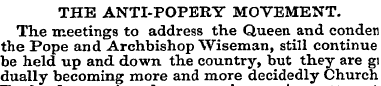
THE ANTI-POPERY MOVEMENT . The meetings to address the Queen and conden the Pope and Archbishop Wiseman , still continue be held up and down the country , but they are gi dually becoming more and more decidedly Church England sectarian demonstrations . Any attempt a Dissenter to introduce an amendment which he c conscientiously support is instantly put with as mu bigotry as Pio K " ono himself , or any of the College Cardinals , could desire .
The chief meeting of the week was the one held the Guildhall on Monday , and at which not less th , 4000 of the inhabitants of London -were present , i Lord Mayor in the chair . The first resolutio which described the recent attempt by the Po to create Sees in England as unjustifiable , and an u precedented interference with the supremacy ai the prerogatives of the Crown , was moved by M Masterman , M . P ., and seconded by Mr . Aldermi
Thompson , M . P . Mr . George Singer next attempt * to obtain a hearing for the purpose of showing th Ministers alone were to blame for the Papal Bu but the zeal of the meeting was too strong for hir He was obliged to retire from , the platform aft moving an amendment which no one had the bol < ness to second . Several other speakers , includir Sir Peter Laurie , then addressed the meeting again the papal aggression , and the various resolutioi were passed with , acclamation .
On . the same day a meeting of the clergy an churchwardens , of the deanery of Southwark , wj held in the Ladye Chapel of the Church of Soutl wark , to protest against the recent attempt of tl : Bishop of Rome to establish spiritual jurisdiction i England . The protest was carried without oppos tion . A resolution was then proposed , expressin condemnation of Puseyism , -which led to a dis cussion , but was ultimately carried . The Protester Association also held a meeting , on Monday . Th speakers were chiefly clergymen , the resolutions c the usual kind .
A numerous meeting of the inhabitants of Sevenoah and neighbourhood was held at the Royal Crown Hote on Monday , to address her Majesty relative to the lat Papal aggression , the Reverend Thomas Curteis , recto of Sevenoaks , in the chair . Earl Amherst and Mr . Hei ries , M . P ., moved the resolutions , which were carne unanimously . . At Gloucester an aggregate county meeting took plac on Tuesday—the fourth meeting that has been held o : this subject . The attendants at the meeting could no have numbered less than 3000 , including Earl Fitzhai dinge , Earl Ducie , Lord Redesdale , &c . An address t the Queen against Papal aggression was almost unani mously carried .
A meeting of the ward of Bishopsgate was hel < at the School-house , Peter-street , on Wednesday Mr . Hopgood moved the first resolution , which wa in the usual strain , expressing attachment to th Queen , and a determination to resist Papal aggression Mr . Tagg seconded the resolution " on the ground o philanthropy , on the ground of civil and religiou liberty , and because he believed the Pope to be Anti Christ . " Mr . Gilpin opposed the resolution , an ( proposed an amendment expressive of a firm deter mination to oppose foreign interference by ever ? moral and Christian means , but expressing a firrr adherence to the great principle of civil and reli
gious liberty . He asked them whether they wer ( not going too fast in praising Lord John Russell s ( very much for his " noble " letter , seeing the suppori which the Premier had always given to the Romar Catholics . Mr . Scoble , in seconding the resolution said he felt as much indignation as any man at the recent proceedings of the Pope , but they must noi forget that it had been invited by prelates and clergymen of the Established Church . Look at the Bishop also , who was playing fast and loose with the question of auricular confession , and who had said nothing against the mummeries at St . Barnabas , til ] driven to do so by the popular outcry . Mr . Carr , whe said ho was a Roman Catholic , appealed to those whe
know Mm if he had not supported every liberal proposition which had been brought forward in that ward . Mr . Orpwood said he was not ashamed to confess himself of the same religion as Alfred the Groat and the men who won Magnn Charta . lie regretted that tho present angry spirit had been awakened . He was quite aware of the pressure which had been applied to produce the present union against Catholicism , but those who invited that union would be the first to dissolve it . Tho Reverend E . Cox , vicar of St . Helen ' s , said ho was opposed to tho Church of Rome , because it did not allow men to think for themselves . " It had been , said that , with a free press and liberty of speech ,
Untitled Article
842 JE f > £ % LC Sifter . [ Saturday ,
Untitled Article
thjexchydeprived of n ^ V _/^ U « h a system MpIKPi-wJajW ^ Ltind kAfcMVQjmwko iKfltifir B&V W ? «•• % k « V IIHIIUO Ml % *¦• thxrcbvdeprived of y ^ Jf Shl ~} f&Kh a syst * r : ffS&mml rff win / . * , j ~ v v : ' i , 1 ZJ w : '' ' ^ j ^^ U ^ «• " ¦» '¦ * v i " "' \~ )» r *
-
-
Citation
-
Leader (1850-1860), Nov. 30, 1850, page 842, in the Nineteenth-Century Serials Edition (2008; 2018) ncse.ac.uk/periodicals/l/issues/vm2-ncseproduct1861/page/2/
-