
On this page
-
Text (6)
-

Untitled Article
-
Untitled Article
-

Untitled Article
-

Untitled Article
-

Untitled Article
-

Untitled Article
Note: This text has been automatically extracted via Optical Character Recognition (OCR) software. The text has not been manually corrected and should not be relied on to be an accurate representation of the item.
-
-
Transcript
-
Note: This text has been automatically extracted via Optical Character Recognition (OCR) software. The text has not been manually corrected and should not be relied on to be an accurate representation of the item.
Additionally, when viewing full transcripts, extracted text may not be in the same order as the original document.
Untitled Article
The Limerick Reporter , a main authority on Romish ecclesiastical affairs , announces that the Pope has conferred the dignity of Cardinal on Dr . Cullen , " Lord Archbishop of Armagh , Primate of all Ireland , and Apostolic Delegate . " It is also announced that the Very Reverend Tobias Kirby , president of the Irish College at Rome , has been appointed coadjutor Bishop of Dromore to the Right Reverend Dr . Blake . " Sir Chisholm Anstey , " Knight of the order of St . Gregory , has received notice to quit from the Catholics of Youghal who returned him to the Imperial Parliament . They have requested him to resign the trust which he occasions
has betrayed on many . They say they can forgive his advocacy of the atrocious Coercion Act—his indifference to Irish independence in the matter of Repeal— " but , " continue his constituency , " the act by which you have forfeited our confidence for ever is your advocacy of penal measures againt the Catholic hierarchy of England , and your support of aMinister who , having already awakened a fell spirit of religious bigotry in this country , now seeks by legislative enactments to violate the rights of man , and suppress liberty of conscience . " Meetings of Roman Catholics have been held at Carrickon-Shannon , Youghal , and several other places , at which petitions against the Ministerial measure were adopted .
Untitled Article
ATJDUBON THE ORNITHOLOGIST . The American papers received this week contain a notice of the death of John James Audubon , the great American ornithologist , -which took place on the 27 th of January , at his residence on the Hudson River , in the 76 th year of his age . He was born of French parents , on a plantation in Louisiana , near New Orleans , and from his earliest years he was taught by them to study nature . In an interesting autobiographical sketch published about twenty years ago , he gives the following account of his first attraction to ornithology : — " When I had hardly yet learned to walk , and to articulate those first words always so endearing to parents , the productions of nature that lay spread all around were constantly pointed out to me . They soon became my playmates ; and before my ideas were sufficiently formed to enable me to estimate the difference between the azure tints of the sky and the emerald hue of the bright foliage , I felt that an intimacy with them , not consisting of friendship merely , but bordering on frenzy , must accompany my steps through life , and now , more than ever , am I persuaded of the power of those early impressions . They laid such hold upon me that , when removed from the woods , the prairies , and the brooks , or shut up from the view of the wide Atlantic , I experienced none of these feelings most congenial to my mind . None but aerial companions suited my fancy . No roof seemed so secure to me as that formed of the dense foliage under which the feathered tribes were seen to resort , or the caves and fissures of the massy rocks , to which the dark-winged cormorant and the curlew retired to rest , or to protect themselves from the fury of the tempest . "
As he grew up this bias to the study of natural history was fostered by his father , who accompanied him in his forest rambles , and procured all kinds of rare birds and flowers for him . While yet a boy he was sent to Paris , where he studied drawing under David , but he does not seem to have liked the models which he was set to copy— " Kyes and noses belonging to giants , and heads of horses represented in ancient sculpture . " At the age of seventeen he returned from France—then in the midst of its revolution—to the woods of the New World , with fresh ardour , and began a collection of drawings under
the title of the Birds of America . This collection having multiplied upon his hands , after many years of devoted toil , he was persuaded to undertake the publication of his great work , and with the view of obtaining subscribers he visited Europe in 1821 . Everywhere was he well received . On the Continent , llerschcl , Cuvier , and Humboldt , whom he had encountered in America , gave him a hearty reception , Iu Edinburgh he was warmly received by Jlrewster , Jeffrey , Wilson , and Sir AV alter Scott . Professor Wilson gives a graphic description of Audubon in an article in lilackwood's Mat / a zinc : —
" When Home five years ago we first set eyeH on him in a party of lilcniti , in ' stately Edinborough throned on crags , ' he was such an American backwoodsman as took the shine out of us modern Athenians . Though dreBsed , of coarse , somewhat alter the fashion of our-BelveH , his lung raven locks hung curling over liin shoulders , yet unshorn from the wilderness . They were bhuded across his open forehead with a ftimple elegance , such as u . simple Clirinliun might be tmnpoHcd to give hia ' fell of hair , ' when pructisiug ' every man bin own
perruquier / in some liquid mirror in the forest glade , employing , perhaps , for u comb , the claw of the Uald Eagle , lliu sallow , fine featured face bespoke a sort of wild independence , and then such an eye , —keen us that of the falcon ! lli « foreign accent und broken English speech removed him still further out of the commonplace circle of this every-day world of ours , and his whole demeanour was coloured to our thought by a character ofconnuioiiH freedom mid dignity which he had acquired iu his lonely wanderings iwnong the woods . "
His / Urdu of America was highly successful , lie obtained . 17 ft subscribers , at one thousand dollars each , uud the work was completed in fourteen yours . For some years before his death lu ; was employed , along with . Dr . Baehnmn , in preparing for the press , The QuadnijHth of America , which was published lttBt year .
Untitled Article
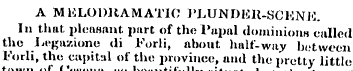
A MELODRAMATIC PLUNDEH-SCKNK In that pleasant part of the Papal dominions called the JLegaziono di Forli , about half-way between Forli , the capital of the province , and the pretty little town of Cesenu , ho beautifully situated at the foot of the Appenines , u romantic incident , quite in the Radclille style , wan transacted one evening about a fortnight ago . The scene of the adventure wbh the little fortified town of Forlini-Popoli—the . ancient
Forum Popilii—which contains a collegiate church , a castle built by Ctesar Borgia , and about 4000 inhabitants . The account of the affair is given in a letter from Rome : — " On the 25 th of this month ( January ) , the theatrical corps of Forlini-Popoli was playing the Death of Ccesar , By eight in the evening , the hour when the theatres open in Italy , all movement has disappeared from the streets , windows are closed , and the inhabitants have retired to their homes , the coffee-houses , or theatres . This absence of activity in the streets , which every one remarks at Rome , is still more complete in small towns . It may then be understood how , at Forlini-Popoli , and particularly on an evening when the theatre was open , tne streets should be so deserted as to make possible the occurrence now to be related .
" The first act of the piece had terminate d , and the curtain had just fallen , when suddenly it rose and disclosed—instead of the actors , who had disappeared—ten brigands of the band del Passatore , who , armed with muskets and carbines , levelled them so as to command the entire range of the pit and boxes . At the same moment , another party , consisting of thirty brigands , made their appearance on the floor of the house , the issues of which were guarded , and , armed with sabres and pistols , menaced the spectators . A moment of stupor , during which no one dared move , elapsed , when the chief of the brigands advanced to the foot-lights , and , exhibiting the keys of the two gates of the town , said : — ' Gentlemen , you see by these that you are entirely in our power : any
resistance on your part would lead to disasters which I should be the first to deplore , but which it depends on you to avert . Listen , then , to what I have to say . I am about to call out the names of several among you : as I pronounce a name let him who bears it step forth from his box and repair to his house , in company with one or two of my friends , who will assist him to bring hither all his hoards , and that without defrauding us of a porpetto . ' This said , the orator displayed a paper , and commenced reading the fatal roll . Submission was inevitable , A dozen carbineers formed the sole police of Forlini-Popoli . Six of these were in the theatre and had been gagged by the brigands . The six others ,
surprised in their guard-house , had ventured a vain resistance . The burgomastef was the first victim . " Some time was of course required for this operation , which did not terminate before a quarter to twelve . With a view , however , to shorten the agony of the pit and boxes , two brigands went from spectator to spectator , collecting hatfuls of watches , purses , chains , rings , and even umbrellas . When the harvest was gathered and the booty had been heaped up on the stage , the brigands allowed the curtain to fall , and quietly withdrew , carrying all with them . The money thus obtained amounted to 7000 Roman piastres , or about £ 1600 , and the bijoux , objects of art , &c , to double that sum .
" The next day an Austrian detachment set out in pursuit of the band , which probably had dispersed by that time in the mountains or passed the Tuscan frontier . Their number is supposed to have been about three or four hundred . It is probable that they were in league with some of the inhabitants . However this may be , private houses and public treasuries all have been plundered . with the exception of the Monte de Piete , the fastening of which resisted all the attempts made to break it . "
Untitled Article
MURDERS OF THE WEEK . Two men , named John Wiles and John Smith , entered the house of Williams Wilkins , shopkeeper , in the little village of Nempnett , Somersetshire , and asked for a loaf of bread , Mrs . Wilkins turned round to give it them , when Wiles struck her over the head with a stick . He then rushed at her husband , an old man , knocked him down , and struck him several blows with a spade ; the man named Smith keeping watch at the door all the time . Wiles then took a loaf , several parcels of tobacco , and her pocket containing eleven shillings . The old man died that night , but the woman is expected to survive . The two men , have been apprehended , and Smith has ma de the following confession : — "We came up to the house on Saturday morning last . Wiles coming up said , ' It is a little shop and there are only two old people living there , ' and he said , ' I will go in and get something before I come out again . ' This was between eight and nine o ' clock in the morning . Wiles went to the door and asked for a loaf ; a woman ' s voice answered him inside , but I did not hear what she said . He turned round to me and said in a low tone of voice , ' There is u man sitting in there at bis breakfast , and it will not do now . ' Then he asked me for sixpence , and 1 said , ' I have not got one . ' Wiles said to me , ' What did you send me on nuch a fool ' s errand for , then ' This was said loud enough for the woman to hear . We then both of us walked uway ; we went across the fields to a certain house to try and get some bread . I did not go with him into the house , but I utood In the road , and
Wiles told me he h < ul got a bit of bread at one of the places . We had then been about three-quarters of an hour away from Wilkins ' a house , and then Wilea said , ' I will go back there ; the man must have gone out from breakfast to his work by this ; ' and lie added , ' 1 will go in , and I will have something before I come out again . ' Wo then came down the road as far a * Wilkinn ' s house , and Wiles went in and said , Now , mistre . st * , 1 fnive got a few halfpence , and I am come back for the loaf . ' When the blows took place I was on the outside , and when I heard the old man scream 'Murder * I went in . Wiles was then beating the old man with a spnde . 1 took the spade out of his hand , and then lie took up an 'Italian iron' lying close by , and Htruek him with that ; and ho Btruck the miHtrenH too . He Htruek the wife with it tho limt . Thin blow knopked her utraiirht on the floor , mid
Untitled Article
146 © ft * VLeatltt . [ Saturday ,
Untitled Article
THE LATE LORD BEXLEY . Nicholas Vansittart , better known of late years as Lord Bexley , died on Saturday last , at his country seat , Footscray , Kent , in the eighty-fifth year of his age . His career , though not distinguished by striking ability , was a highly successful one . He was the son of Mr . Henry Vansittart , Governor of Bengal , who perished at sea when Nicholas was only four years old . The latter in due time went to school at Cheam , in Surrey , to Christchurch , Oxford , where he took the degree of A . M ., and ultimately was called to the bar on the 26 th of April , 1791 . His success was not brilliant . He attended sessions , went circuit , and duly presented himself in the courts at Westminster , with about the same degree of success which falls to the lot of nine-tenths of the unfortunate individuals who travel that dull round from year to year . In 1796 he was returned to Parliament for Hastings , which he represented till 1802 . By the influence of Lord Addington he then became member for Harwich , a mere Treasury borough , and in 1812 he exchanged it for Old Sarum , so renowned in Parliamentary History . The latter abuse he represented till 1823 . He was made a Lord of the Treaasury , in 1804 , and , after the death of Mr . Perceval , was elevated to the post of Chancellor of the Exchequer , which he retained till 1822 . He was then created Baron Bexley , and appointed Chancellor of the Duchy of Lancaster , which post he held till 1828 . From that time till his death he mingled little in public life . William Cobbett , who addressed many of his pungent letters to " Statesman Vansittart , " as he called him , was very fond of describing the marvellous rise and progress of the man who began life a " Commissioner of Scotch Herrings" and ended in " a peerage and half a million of money" : — " What is most curious in the history of Van is , that while a nation , whose money matters Van held the management'of , was growing poor , Van was growing rich ! This is something very wonderful . In human life , generally , we find that all belonging to the same concern become rich or become poor together . All being under the influence of the same cause , all experience a similar effect . Just the contrary with Van , who has been rising into enormous wealth , while the industrious millions , of whose wealth he has so long had the fingering , are sinking into misery . " It is said that Lord Bexley has left a large amount of real and personal property . He was married to a daughter of Lord Auckland , who died young and left no family .
Untitled Article
DINNER OF THE GERMAN CLUB . The " German Club" gave a dinner on Wednesday last in honour of three distinguished of their countrymen , namely , Johannes Ronge , Struve , and Ivinkel . The president of the club , Dr . Julius , assisted by the vice-president , Mr . Franz Thimm , were the leaders of the banquet , which was in many respects a national and interesting one . A number of gentlemen were present who had been members of the Chambers at Frankfort and Berlin ; others who have highly distinguished themselves as journalists or as men of letters .
After the removal of the cloth , the president proposed " The Deutsche Vaterland , " which was followed by Swindt ' s song—" Was ist der Deutschen Vaterland . " Mr . Thimm next proposed " TheEnglish Nation , " which was drunk with flattering enthusiasm , and three " Hochs . " The toast of Mr . Gerstenberg , who dwelt at length upon the merits of the noble actions of the guests , was enthusiasticall y responded to by all present , but the most interesting scene was the reply of these guests .
First Rongc ( the well-known reformer and leader of the German Catholics ) epoke of freedom both iu religion and in political life . Next spoke Struve , and his reply was such as would be expected of a dignified and eloquent Republican . But whenKinkel rose , a fine , almost handsome figure , the burst of enthusiasm was great , and he spoke like a poet ; he said he only remembered two evenings of his life—the one when ho took leave of his sleeping children to take up the musket for the political cause of his
country , and the other the banquet evening , when he took leave of his sleeping children , feeling happy and free , and honoured by lm countrymen on a free and foreign soil . lie spoke with a voice full of music , and uttered thoughts full of nobleness and dignity . As may be imagined , plenty of glees were sung , and a " Commerce , " amongst which the celebrated , ? ' Editc , bibite , " " Gaudeamus igitur , " and even " Der Pabst lebt hcrrlich in der Welt" finished a well attended banquet , in honour of these three distinguished Germans .
-
-
Citation
-
Leader (1850-1860), Feb. 15, 1851, page 146, in the Nineteenth-Century Serials Edition (2008; 2018) ncse.ac.uk/periodicals/l/issues/vm2-ncseproduct1870/page/6/
-