
On this page
-
Text (3)
-

Untitled Article
-
Untitled Article
-

Untitled Article
Note: This text has been automatically extracted via Optical Character Recognition (OCR) software. The text has not been manually corrected and should not be relied on to be an accurate representation of the item.
-
-
Transcript
-
Note: This text has been automatically extracted via Optical Character Recognition (OCR) software. The text has not been manually corrected and should not be relied on to be an accurate representation of the item.
Additionally, when viewing full transcripts, extracted text may not be in the same order as the original document.
Untitled Article
• with propriety do so , to persuade other Governments to extend to other countries as much as possible of those civil and political blessings of which we ourselves are so proud . ( Hear , hear . ) I think , gentlemen , that the people of this country have nobly performed their part of that duty ; and I can assure you that it is the anxious desire of her Majesty ' s Government not to be backward in performing what belongs to them . ( Hear , hear . ) Ttie people of this country did nobly perform that duty in the
course of the last year , when they supported unanimously and enthusiastically the Government of England in exerting its influence to prevent a foreign Sovereign from being compelled to violate the laws of hospitality by sacrificing the men who had thrown themselves upon him for protection . ( Cheers . ) Those efforts were successful , and I am happy to say that the last of those exiles are now on their way either to the shores of England or to the shores of the United States , according to their own choice and wishes . "
Finally , he perorated on the African Slave-tradeand there was an end of a long speech , which may fairly be entitled—the Platitudes of Palmerston .
Untitled Article
AGRICULTURAL MEETINGS . A great many agricultural meetings have been held lately . Th ^ se are signs that the agricultural mind is gradually giving up protection . By some they have been advised to give it up out and out . Lord Derby is silent ; Lord de Tabley throws protection to the ¦ winds ; Mr . Yernon Harcourt asserts , amid murmers , that the labouring classes have never been in so good a position ; and , finally , Disraeli has given perhaps the " coup de grace" to the notion altogether .
Two meetings have been held this week deserving of notice , one of especial notice . Sir James Graham presided over the dinner of the East Cumberland Agricultural Society on Thursday week , and , as usual , said some remarkable things . They had the American reaping-machine there , which excited great attention . Sir James spoke highly of it ; said that it was an implement of great promise , that its working was not unsatisfactory , that the ground on which it had been tried was not the best which might have been chosen , and that with some improvement it would be very valuable . He recommended the farmers of Cumberland not to plough so much , and to graze more , and pointed out sheep farming as the keystone to further improvement in the district .
" Let me remind you that in Great Britain we are in a very artificial state . These little islands are densely inhabited , and no less than £ 100 , 000 , 000 is embarked in the four textile fabrics , cotton , silk , wool , and flax . Two of these raw materials are beyond our reach . Cotton and silk we cannot produce ; but we can produce wool , and we can produce flax ; and I say it is worthy of the consideration of the agriculturists of this country to adapt their land to the growing wants of the community in which we live , and to place our country , as far as in us lies , in the situation of not being exclusively dependent for the supply of such raw materials as wool and flaxnot exclusively , I say . ( Hear , hear . )
" Observe well , no article has gone on so steadily advancing in price as wool ; no article has paid the farmer so well in the shape of produce as wool , and the sheep which produce the wool are , in my opinion , under proper management , the keystone of the impr . oved cultivation of the soil . ( Hear , hear . ) But , observe further , if you have the smaller quantity of land under cultivation , producing with that smaller quantity a larger amount of produce , the saving is immense in the wages of labour and the cost of production , and in everything which bears on the profits oh the outlay of capital in cultivation . 1 say , therefore , farm highly the small quantity of land you have under the plough—encourage the growth of grass laid down on the best order of land well cleaned , add to the number of your sheep , and increase the quantity of your wool . "
Referring to flax , he explained the difficulties attending itb culture us u raw material for manufacturing into linen , and the proceris of preparing the flax for the manufacturer , he said : — " If I have made myBelf intelligible , it in plain that the straw cannot be conveyed to a great distance to undergo this process , and that the manufacturer must be brought to the door of the furrner . ( Hear , hear . ) Such is the enterprise , the nkill , and 1 would almost say the patriotism of the manufacturing interest of this country - —not without reference to gain , but combined with gain , which is the real incentive of all improvement—that if you can allow that any such process will pay the uiunutacturer , that munufucturer of the raw material will establish a mill in the neighbourhood ; and I hold it to be one of the duties of landlords to ascertain whether
this mode of dialing with flux be not . feasible , and , if it be feasible , to muke an effort to introduce in their neighbourhood the machinery and the manufacture requisite for the extended growth of ho important and useful a crop as flux . ( Cheers . ) This in tediouw , but sti'l these are matters of great iinportuucc—matters bound up with our present welfare , and with the future prosperity and happiness of the # rt ' community of which we form a part . ( Hear hear . ) I am amoug the first to admit Mint the basis of our national prosperity in the produce of the soil . ( Loud cheers . ) If it were not no 1 should be poor indeed , for all 1 ponseHH in in land , and in land of thin county ' - you , therefore , have the utmost pledge of my Bincerity and my wit . li to promote the welfare of the BKriculturc of this county —( Amir , hear ) but . you must have it in u manner coincident with the welfare- of tho community ; and these are the objects and these the moden in which to attain that end . Societies of this kind appear to m « to huvo that tendency , and I WM delighted
to hear a sentiment which fell from you , Mr . Vice-Chairman . ( Cheers . ) You said you did not despair of the prosperity of the agricultural interest . ( Cneersj You said that agriculturists must meet increased difficulties with increased exertions . ( Cheers . ) You added that Heaven always favours those who help themselves , and that the agricultural interest would not be the last interest to make the requisite exertion . ( Chetrs . ) It is only necessary that that exertion should be well directed . It is the duty of landlords to lead the way in respect to all these improvements and experiments ; the landlords of England must not be left behind in the race of exertion , and , if w ^ fee a united body , then I say—* « " Nought shall make us rue , If England to itself do rest but true . ' ( Loud cheers . )"
The other meeting alluded to was that of the Vale of Evesham Agricultural Association . Over this meeting Mr . Hanford , a Roman Catholic landlord , presided . Captain Rushout , M . P ., rejoiced that the agriculturists had " by no means lost their wonted energy , " and that they " had not taken the advice given them , to throw their lands out of cultivation , and discharge their labourers . On the contrary , he thought they had displayed more energy than ever ,
and farmed fully as high and well as ever . " Mr . Foley , M . P ., thought they attached too much importance to the price of corn , and to its being kept up to a certain standard , and did not think sufficiently of the cost , quantity , and quality of other sorts of produce . Mr . Robert Woodward , a " stranger , " and high Protectionist , brought down from Liverpool , said , that to see what they were doing , " in these times , " was almost enough to make a professed Protectionist sceptical in his views : —
" From what he saw , he thought they paid a little too much importance in this part of the country to the growth of wheat , and not enough to other things . They still got a good price for their mutton and the produce of their dairies . He thought they should put more dependence for their profits on these portions of their produce . They , no doubt , had to thank the prosperity of the manufacturing districts for the good prices they got for these articles . That the manufacturing population was in a high state of prosperity he was not ashamed to confess , because it was a fact ; and the agriculturalists immediately round the towns of Lancashire and Yorkshire got good prices for their produce . There there was little distress , but he sadly feared that in remote districts , the distress must continue . The absence of railway communication was a great bar to many districts . "
When Mr . Woodward sat down , Mr . Gough , a tenant farmer , disappointed in his expectations , exclaimed— " Why , they told us he was an out-and-out Protectionist , and here he gives half the population in a state of prosperity ! " At a later period in the evening , the Chairman alluded to the relative position of landlord and tenant under the new system . He considered that there ought to be some principle upon which a rental might be settled fairly , and it would be most desirable to
get at it . He regretted that the Duke of Richmond should have told the tenant farmers that under Freetrade it was impossible that they could pay any rent at all . Such a statement was the very thing to create panic and alarm . Tenant farmers , like other men , were alive to their own interests ; and if they were told that they could not afford to pay any rent , they would be likely enough to inquire why it was that they were paying any . Mr . Foley thought they should wait before settling the question to see what prices would settle at !
In addition to the above meetings , Hertfordshire has met at Hertford . Sir lidward Bulwer Lytton was the presiding genius ; but lie studiously avoided politics . He made one suggestion worth notice . Many experiments have been made , he said , but lost for want of a proper record ; — " If , for instance , tho State were to take , at a fair rental , certain farma in different districts and with different soils , and invest in them auch capital only an a spirited farmer of good meanti may be Biippoaed to possess ; if it placed on each of these farms a good practical farmer , with a first-rate scientific chemist , for the farmer to carry out what the chemist suggested ; if there were a regular account kept , giving the minutest account , the Government being renponsible for the management of the account which should appear in the ledger-book
of the public money ; and if these accounts were open to inspection , and published once a year , why then we should learn at least all that the science ; of chemistry in capable of accomplishing ; we should unite practical knowledge with chemical science , and obtain what we cannot get from the amateur framcr—methodical and exact accounts of the precise cost of every single experiment . And if it flliould be proved , as we are told , that large profits may be made at present prices , I say we should then , for the first time , have something like authentic facts to guide our researches and stimulate our exertionu . If , however , they should not fulfil the promises held out , and tho iitute should not be the gainer when it conn's to the current prices at Mark-lane , then at . least we should have established respect for our complaints and sympathy for our struggles . "
One feature at tho termination of the speeches wo niniuk as u sign of the feeling in thin agricultural district on tho subject . Mr . Haggars wanted to tulk politics ; but tho Oliuirmun would not {> crmit him ; to ho turned fiercel y on tho OtuneawM : ¦—
" He fearlessly declared tjiat the burden thrown on the county rates by the administration of the Game-laws —than which laws there could be no more fruitful source of rural depravity—required readjustment . ( t , 6 ud cheers . ) He 6 aw several magistrates for the c ountv present , and he boldly called upon them not to enforce the Game-laws with the utmost rigour , because these laws were laws which had been made by the landlords themselves and for themselves . ( Vehement cheering . )
Untitled Article
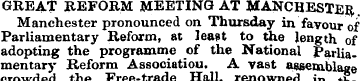
GREAT REFORM MEETING AT MANCHESTER Manchester pronounced on Thursday in favour of Parliamentary Reform , at least to the length of adopting the programme of the National Parliamentary Reform Association A vast assemblage crowded the Free-trade Hall , renowned in the triumphs of the League . Mr . George Wilson , an efficient chairman of that body , presided on the occasion , and made one of his admirable speeches
Letters of regret for non-attendance were rceceived from Mr . Cobden , Mr . Milner Gib , son , Mr . Bright , Lord Dudley Stuart , Mr . Wakley , and Mr . Hume . Four other Members of Parliament , Sir Joshua Walmsley , Mr . W . J . Fox , Mr . George Thompson , and Mr . John Williams , were present , and addressed the meeting . The proceedings went off in admirable order , and though there was no stirring enthusiasm , there was strong , steady feeling .
Mr . George Wilson ran over the topics of the programme of the Association , illustrating them in a humourous manner . When he came to the constitution of the House of Commons , he caused great amusement by citing from Dod ' s Parliamentary Companion some facts respecting the influence of Peers in elections , ironically insinuating that he did not eay the } ever interfered : —• " He found it said of the borough of Peterborough , ' This is usually considered a borough of Lord Fitz-William ' s , ' a Whig peer . ( Laughter , and cries of Hear , hear . ' ) Surely nobody thought that these proceedings were confined to peers on one side of the House , and
were eschewed by those on the other ? ( ' Hear , hear !' and cheers . ) Lord Fitzwilliam , a very liberal man under most circumstances , had a large interest in the borough of Peterborough , and his son , the Honourable G . W . Fitzwilliam , was returned as its representative ; but he ( the Chairman ) did not believe that Lord FiUwilliarn ' s influence had ever been exerted to return the Honourable G . W . Fitzwilliam . ( Laughter . ) Of Woodstock it was said , ' The Duke of Marlborough has influence here , ' and the Marquis of Blandford , « on of the Duke , sat for the borough ; but they were bound to believe that the Marquis of Blandford had never derived the smallest advantage from the influence or support of
the Duke of Marlborough . ( A laugh . ) Tiun it was stated that « the Duke of Bedford has considerable influence in Tavistock '; and it was Bomewhat curious that the Honourable E S . Russell ( no relative , of course , of the Duke of Bedford ) , was one of the members for that borough . ( Cheers and laughter . ) Of Thetford it was said , 'The Duke of Grafton and Lord Ashburton have considerable influence in this borough' ; and he found that one of the members was th * Honourable F . Baring , the brother of Lord Ashburton , and the other was the Earl of Euston , eldest son of the Duke of Grafton . ( Cheers , much laughter , and a cry of * Alter % t ) But he found there was a commoner Who did a little in this way ( Laughter . ) It was eaid of the borough of Eye , < Sir E . Kerrison ' s influence in this borough is consider-General Sir
able , ' and it so happened that Ljeutenant-E . Kerrieon sat for the borough . ( Great latighter . ) In the borough of Arundel the Duke of Norfolk , it was aUted , had considerable influence , » nd it seemed that some votes had been given by the Earl of Arundel and Surrey , the late member for Arundel , at variance with the opinions of the Duke , and , curiously enough , the Earl of Arundel had resigned the representation of Arundei . and Had obtained another seat . ( Cheers and laughter . ) tie ( the chairman ) did not mean to say that the resignation took place under instructions from the Duke of Norfolk , though some people had said bo . ( Renewed laughter . ) ' Mr . Neeld , ' it was said , ' has considerable influence in Chippcnham , ' and Mr . Joseph Neeld and hiB brother-inlaw , sat as members for that borough . ( Hear , hear . ) Of Chichester it was stated , ' The interest of the Duke of
Richmond preponderates in thiB borough , and , althougli they had heard a gruat deal of the Duke , very few of them might be aware that Lord Henry ( J . C . Gordon Lennox , son of the Duke , was the sitting member for Chichcater . ( Laughter . ) Of the borough ol Dudley it waasaid , ' The prevailing influence is that of Lord Ward , ' and Mr . J . Benbow , steward to Lord Ward , sat for tho borough . ( ' Hear' and laughter . ) Sir Joshua Wulmsley said that the theory of the Constitution was , thut tho House of Commons represented tho people ; while it was notorious it did no such thing . Their watchword should henceforth be , " The Constitution , the whole Constitution , and nothing but the Constitution . " ( Cheers . ) He recommended that the table of the House should bo covered with petitions .
Tho appearance oi Mr . W . J . Fox elicited qnthu-Hiustic cheers . U « m » do tt very telling speech ; aiiU though necessarily lie went over tho old ground , l » o noon raised merry luughtor at the expense of tiio Minister : — "If Mr . Hume , Mr . Gibson , Mr . Bright , and other members needed a change of air , how much must Lord J llutuicU i ^ ed it ? ( CA « w « and laughter . ) He wished Lord J . Kussell was there to enjoy It . ( A faugh . ) J" « would find the atmosphere of thfrt meeting very a »«> rent
Untitled Article
912 < & !) * 9 * € & % **• [^ atorpav ,
-
-
Citation
-
Leader (1850-1860), Sept. 27, 1851, page 912, in the Nineteenth-Century Serials Edition (2008; 2018) ncse.ac.uk/periodicals/l/issues/vm2-ncseproduct1902/page/4/
-