On this page
-
Text (1)
-

Untitled Article
Note: This text has been automatically extracted via Optical Character Recognition (OCR) software. The text has not been manually corrected and should not be relied on to be an accurate representation of the item.
-
-
Transcript
-
Note: This text has been automatically extracted via Optical Character Recognition (OCR) software. The text has not been manually corrected and should not be relied on to be an accurate representation of the item.
Additionally, when viewing full transcripts, extracted text may not be in the same order as the original document.
Untitled Article
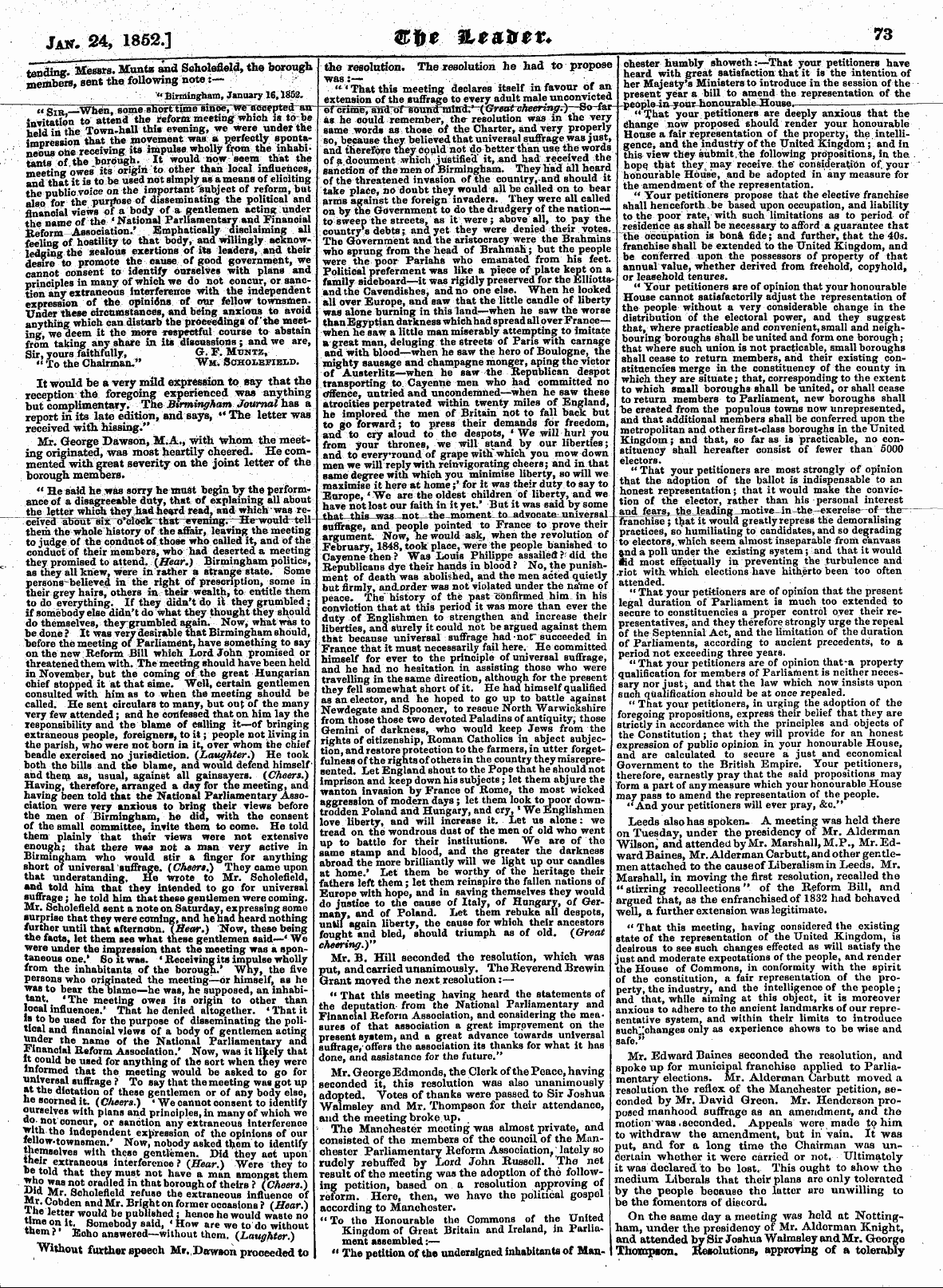
tanaing . Messrs . Mtmte and ScholeSeld , the borough ^ Sbiws , sent the following note :- ~ '«« BLnriinghani , January 16 , 1852 . » SIR , —When , some short time sinoe , w ^ wasepted-an Invitation to attend the ifeform meeting which « to be held in the Town-hall this evening , we were unde * the impression that the movement was > wrfectly sponta-JK one receiving its impulse wholly from the ^ nhabi . tanta of the borough * It would now seem that the meeting owes its origin to other than local influences , and that it is to be used not simply as a means of eliciting the public voice on the important ' subject of reform , but also for the purpose of disseminating the political and financial views of a body or * gentlemen acting under
the name of the ' National Parliamentaryand Financial Reform-Association . ' Emphatically disclaiming all feeling of hostility to that body , and willingly acknowledging the zealous exertions of its leaders , and their desire to promote the cause of good government , we cannot consent to identify ourselves with plans and principles in many of which we do not concur , or sanction any extraneous Interference with the independent expression of the opinions of oar fellow townsmen . Under these circumstances , and being anxious to avoid anything which can disturb the proceedings of the meeting , we deem it the more respectful course to abstain from taking any share in its discussions ; and we are , Sir , yours faithfully , G . F . Mttntz , " To the Chairman . " ¥ m . SchoiiBPIkld .
It would be a very mM expression to say that the reception the foregoing experienced was anything but complimentary . The Birmingham Journal has a report in its late edition , and says , ' The letter was received with hissing . " Mr . George Bawson , M . A ., with whom the meeting originated , was most heartily cheered . He commented wiith exeat severity on the joint letter of the borough members . " He said he was sorry he ttmst begin by the performance of a disagreeable duty , that of explaining all about the letter whicht they had heard read , and which wag received about six o ' clock that evening . He would tell them the whole history of the affair , leaving the meeting to judge of the conduct of those who called it , and of the
conduct of their members , who had deserted a meeting they promised to attend . { Hear , ) Birmingham politics , as they all knew , were in rather a strange State . Some persons-believed in the right of prescription , some in their grey hairs , others in their wealth , to entitle them to do everything . If they didn't do iV they grumbled ; if somebody else didn't do what they thought they should do themselves , theyrgrumbled again . Now , what was to be done ? It was very desirable that Birmingham should , before the meeting of Parliament , have something to say on the new Reform Bill which Lord John promised or threatened them with . The meeting should have been held in November , but the coming of the great Hungarian
chief stopped it at that sime . Well , certain gentlemen consulted with him as to when the meeting should be called . He sent circulars to many , but out of the many very few attended ; and he confessed that on him lay the responsibility and the blame of calling it—of bringing extraneous people , foreigners , to it ; people not living in the parish , who were not born in it , over whom the chief beadle exercised no jurisdiction . ( Laughter . ) He took both the bills and the blame , and would defend himself and them as , usual , against all gainsayers . ( Cheers . ) Having , therefore , arranged a day for the meeting , and having been told that the National Parliamentary Association were very anxious to bring their views before
the men of Birmingham , he did , with the consent of the small committee , invite them to come . He told them plainly that their views were not extensive enough ; that there was not a man very active in Birmingham who would stir a finger for anything short of universal suffrage . ( Cheer * . ) They oame upon that understanding , He wrote to Mr . Scholefield , and told him that they intended to go for universal suffrage ; he told him that these gentlemen were coming . Mr . Scholefield sent a note on Saturday , expressing some surprise that they were coming , and he had heard nothing further until that afternoon . ( Bear . ) Now , these being the facts , let them see what these gentlemen said— ' We
were under the impression that the meeting was a spontaneous one . ' So it was . « Receiving its impulse wholly from the inhabitants , of the borough . ' Why , the five persons who originated the meeting—or himself , as he was to bear the olame—he was , he supposed , an inhabitant . 'The meeting owes its origin to other than local influences . ' That he denied altogether . ' That it is to be used for the purpose of disseminating the political and financial views of a body of gentlemen acting tinder the name of the National Parliamentary and financial Reform Association . ' Now , was it likely that It could be used for anything of the sort when they were informed that the meeting would be asked to go for unlversal suffrage ? To say that the meeting was got up at the dictation of these gentlemen or of any body else , a — ' ^^ ' —* — " — w *«»^ vw ^ b > ^» ^ 0 w va ^ tf m ^ m v * *^ m ^^ ¦ •**•• J ^^ « # w J ^* ¦ v ^* s scorned
ne it . ( Cheers . ) « We cannot consent to identify ourselves with plans and principles , in many of which we ao *» ot concur , or sanction any extraneous interference with the independent expression of the opinions of our xellow-townsmen . ' Now , nobody asked them to identify themselves with these gentlemen . Did ihey act upon their extraneous interference ? ( Hear . ) Were they to be told that they must not have a man amongst them £ « , ? w ?* 1 J ? ora « led in tha * borough of theirs ? ( Cheers . ) : " »<* Mr . Scholefleld refuse the extraneous influence of JJ » r , Cobden and Mr . Bright on former occasions ? ( Hear . ) A « e letter would be published ; hence he would waste no r . }^ Somebody said , ' How are we to do without inem ? Boho answered—without them . ( Laughter . ) Without further speech Mr . Dawson proceeded to
the resolution . The resolution he had to propose was .: — '¦' . ¦ ' ¦¦ ¦ . ; . , ' . . ' ¦ ¦¦¦ . ' ¦ - , . ' ' " « That this meeting declares itself in favour of an extension of the suffrage to every adult male unconvicted of crime , and ^ fiRSrasd-ffiln ** -t < ' » ' «» ' « A « eH ?^ y—So-far as he could remember , the resolution was in the very same words as those of the Charter , and very properly so , because they believed that universal suffrage was just , and therefore they could not dp better than use the words of a document which justified" it , and had iieceiyed the sanction of the men of Birmingham . They had all heard of the threatened invasion of the country .-and should it take place , no doubt they would all be called on to bear arms against the foreign invaders . They were all called
on by the Government to do the drudgery of the nationto sweep the streets , as it were ; above all , to pay the country ' s debts ; and yet they were denied their ... votes .. The Government and the aristocracy were the Brahmins who sprung from the head of Brahman ; but the people were the poor Pariahs who emanated from his feet . Political preferment was like a piece of plate kept on a family sideboard—it was rigidly preserved for the Elliotts * and the Cavendishes , and no one else . When he looked all over Europe , and saw that the little candle of liberty was alone burning in this land—when he saw the worse than Egyptian darkness which had spread all over Francewhen he saw a little man miserably attempting to imitate a treat man . deluging the streets of Pans with carnage
and with blood—when he saw the hero of Boulogne , the mighty sausage and champagne monger , aping the victor of Austerlitz—when he saw the Republican despot transporting to Cayenne men who had committed no dffence , untried and uncondemned—when he saw these atrocities perpetrated within twenty miles of England , he implored the men of Britain not to fall back but to go forward ; to press their demands for freedom , and to cry aloud to the despots , ' We will hurl you from your thrones , we will stand by our liberties ; and to everyround of grape with" which you mow down men we will reply with reinyigorating cheers ; and in that same degree with which you minimise liberty , so will we maximise it here at home ; ' for it was their duty to say to Europe , * We are the oldest children of liberty , and we have not lost our faith in it yet . ' But it was said by some
that this was n » t t . hfi _ mbAent _ io-adgocate universal suffrage , and people pointed to France to prove their argument . Now , he would ask , when the revolution of February , 1848 , took place , Were the people banished to Cayenne then ? Was Louis Philippe assailed ? did the Republicans dye their hands in blood ? No , the punishment of death was abolished , and the men acted quietly but firmly , andjsrder was not violated under the na " me of peace . The history of the past confirmed him in his conviction that at this period it was more than ever the duty of Englishmen to strengthen and increase their liberties , and surely it could not be argued against them that because universal suffrage had-nor succeeded in France that it must necessarily fail here . He committed
himself for ever to the principle of universal suffrage , and he had no hesitation in assisting those who were travelling in the same direction , although for the present they fell somewhat short of it . He had himself qualified as an elector , and he hoped to go up to battle against Newdegate and Spooner , to rescue North Warwickshire from those those two devoted Paladins of antiquity , those Gemini of darkness , who would keep Jews from the rights of citizenship , Roman Catholics in abject subjection , and restore protection to the farmers , in utter forgetfulness of the rights of others in the country they misrepresented . Let England shout to the Pope that he should not imprison and keep down his subjects ; let them abjure the wanton invasion by France of Rome , the most wicked aggression of modern days ; let them look to poor downtrodden Poland and Hungary , and cry , We Englishmen
love liberty , and will increase it . Let us alone : we tread on the wondrous dust of the men of old who went up to battle for their institutions . We are of the same stamp and blood , and the greater the darkness abroad the more brilliantly will we light up our candles at home . ' Let them be worthy of the heritage their fathers left them ; let them reinspire the fallen nations of Europe with hope , and in saving themselves they would do justice to the cause of Italy , of Hungary , of Germany , and of Poland . Let them rebuke all despots , until again liberty , the cause for which their ancestors fought and bled , should triumph as of old . ( Great cheering . ) ' * Mr . B . Hill seconded the resolution , which was put , and carried unanimously . The Reverend Brewin Grant moved the next resolution : —
" That this meeting having heard the statements of the deputation from the National Parliamentary and Financial Reform Association , and considering the measures of that association a great improvement oh the present system , and a great advance towards universal suffrage , offers the association its thanks for what it has done , and assistance for the future . " Mr . George Edmonds , the Clerk of the Peace , having seconded it , this resolution was also unanimously adopted . Votes of thanks were passed to Sir Joshua WalmBley and Mr . Thompson for their attendance , and the meeting broke up .
The Manchester meeting was almost private , and consisted of the members of the council of the Manchester Parliamentary Reform Association , lately so rudely rebuffed by Lord John Russell . The net result of the meeting was the adoption of the following petition , based on a resolution approving of reform . Here , then , we have the political gospel according to Manchester . 41 To the Honourable the Commons of the United Kingdom of Great Britain and Ireland , in Parliament assembled : — " The petition of the undersigned inhabitants of
Manchester humbly showeth : —That your petitioners have heard with great satisfaction that it is the intention of her Majesty ' s Ministers to introduce in the session of the present year a bill to amend the representation of the ^ eop le 4 n-y 4 > ur-honourableiHou 8 e . — - ———; ¦ " That your petitioners are deeply anxious that the Change now proposed should render your honourable House a fair representation of the property , the intelligence , and the industry of the United Kingdom ; and in this view they submit , the following propositions , in the hope that they may receive the" consideratiion of your honourable House , and be adopted in any measure for the amendment of the representation .
" Your petitioners propose that the elective franchise shall henceforth be based upon occupation , and liability to the poor rate , with such limitations as to period of residence as shall be necessary to afford a guarantee that the occupation is bOna fide ; and further , that the 40 s . franchise shall be extended to the United Kingdom , and be conferred upon the possessors of property of that annual value , whether derived from freehold , copyhold , or leasehold tenures . " Your petitioners are of opinion that your honourable House cannot satisfactorily adjust the representation of the people without a very considerable change in the distribution of the electoral power , and they sugeest
that , where practicable and convenient , small and neighbouring boroughs shall be united and form one borough ; that where such union is not practicable , small boroughs shall cease to return members , and their existing constituencies merge in the constituency of the county in which they are situate ; that , corresponding to the extent to which small boroughs shall be united , or shall cease to return members to Parliament , new boroughs shall be created from the populous towns now unrepresented , and that additional members shall be conferred upon the metropolitan and other first-class boroughs in the United Kingdom ; and that ¦ , so far as is practicable , no constituency shall hereafter consist of fewer than 5000 electors .
" That your petitioners are most strongly of opinion that the adoption of the ballot is indispensable to an honest representation ; that it would make the conviction of the elector , rather than his personal interest and fears , the lejyimtr _ motige—in-the—exereise—of—the— franchise ; that it would greatly repress the demoralising practices , so * humiliating to candidates , and so degrading to electors , which seem almost inseparable from canvass and a poll under the existing system ; and that it would
fid most effectually in preventing the Jurbuience and riot with which elections have hitherto been too often attended . •« That your petitioners are of opinion that the present legal duration of Parliament is much too extended to secure to constituencies a proper control over their representatives , and they therefore strongly urge the repeal of the Septennial Act , and the limitation of the duration of Parliaments , according to ancient precedents , to a period not exceeding three years . that
" That your petitioners are of opinion -a property qualification for members of Parliament is neither necessary nor just i and that the law which now insists upon such qualification should be at once repealed . " That your petitioners , in urging the adoption of the foregoing propositions , express their belief that they are strictly in accordance with the principles and objects of the Constitution ; that they will provide for an honest expression of public opinion in your honourable House , and are calculated to secure a just and economical Government to the British Empire . Your petitioners , therefore , earnestly pray that the said propositions may form a part of any measure which your honourable House may pass to amend the representation of the people . " And your petitioners will ever pray , &c . "
Leeds also has spoken . A meeting was held there on Tuesday , under the presidency of Mr . Alderman Wilson , ' and attended by Mr . Marshall , M . P ., Mr . Edward Baines , Mr . Alderman Carbutt , and other gentlemen attached to the cause of Liberalism in Leeds . Mr . Marshall , in moving the first resolution , recalled the " stirring recollections" of the Reform Bill , and argued that , as the enfranchised of 1832 had behaved we ll , a further extension was legitimate . * ' That this meeting , having considered the existing
state of the representation of the United Kingdom , is desirous to see such changes effected as will satisfy the just and moderate expectations of the people , and render the House of Commons , in conformity with the spirit of the constitution , a fair representation of the property , the industry , and the intelligence of the people ; and that , while aiming at this object , it is moreover anxious to adhere to the ancient landmarks of our representative system , and within their limits to introduce suoh " changes only as experience shows to be wise and safe /'
Mr . Edward Baines seconded the resolution , and spoke up for municipal franchise applied to Parliamentary elections . Mr . Alderman Carbutt moved a resolution the reflex of the Manchester petition , seconded by Mr . David Green . Mr . Henderson proposed manhood suffrage as an amendment , and the motion was seconded . Appeals were made to him to withdraw the amendment , but in vain . It was put , and for a long time the Chairman was uncertain whether it were carried or not , Ultimately it was declared to be lost . This ought to show the medium Liberals that their plans are only tolerated by the people because the luttor aro unwilling to be the fomentors of discord . On the same day a meeting was hold at Nottingham , under the presidency ot Mr . Alderman Knight , and attended by Sir Joshua Walmsley and Mr . George Thompson . Revolutions , approving of a tolerably
Untitled Article
Jan . 24 , 1852 . 1 M ^ t ^ tUitX ^ 73 ¦ ... ¦ ¦ - _ . - - . ¦ ¦ . - ; ¦ ¦ . . .. — —L— . — : . _ . „__—_^ j . _ t ^ .. _ - ^ ' . - .... , ' ,, ¦ - ., n —i—^—^ j—_—— . ——^ am ^^ i— ^^^^^^^^^^^^^^^^^^^^^^^^^^^^^^^ ^ ^
-
-
Citation
-
Leader (1850-1860), Jan. 24, 1852, page 73, in the Nineteenth-Century Serials Edition (2008; 2018) ncse.ac.uk/periodicals/l/issues/vm2-ncseproduct1919/page/5/
-