On this page
-
Text (2)
-

Untitled Article
-

Untitled Article
Note: This text has been automatically extracted via Optical Character Recognition (OCR) software. The text has not been manually corrected and should not be relied on to be an accurate representation of the item.
-
-
Transcript
-
Note: This text has been automatically extracted via Optical Character Recognition (OCR) software. The text has not been manually corrected and should not be relied on to be an accurate representation of the item.
Additionally, when viewing full transcripts, extracted text may not be in the same order as the original document.
Untitled Article
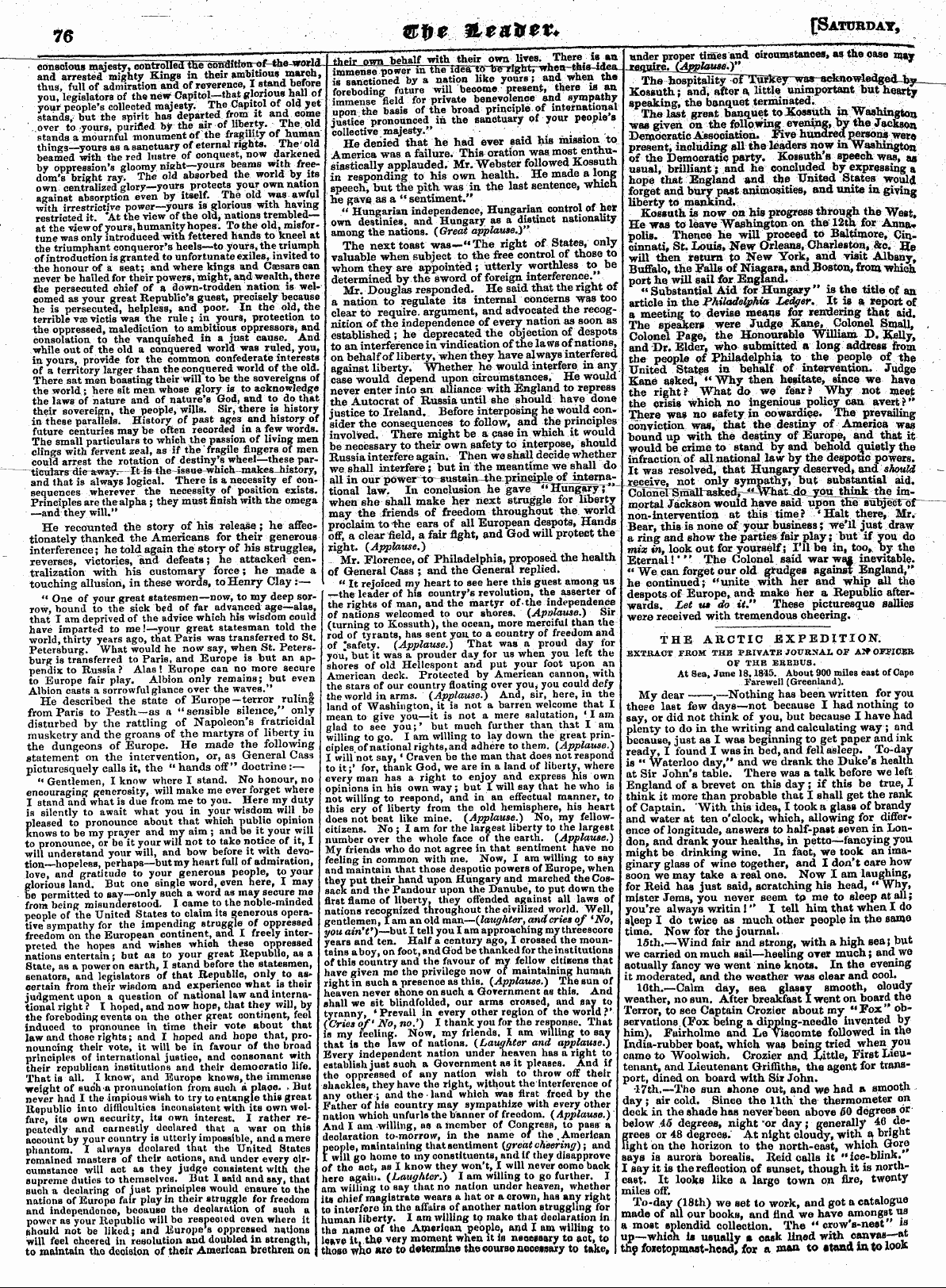
conscious majesty , controlled tile conditioirdf-tae-wowa and arrested mighty Kings in their ambitious march , thus , full of admiration and of reverence , I stand before you , legislators of the new Capitol—that ff lonous hall of your people's collected majesty . The Capitol of old yet stands , but the spirit has departed from it and , come over to yours , purified by the air of liberty . The ; old stands a mournful monument of the fragility of human things—yours as a sanctuary of eternal rights . 1 he' old beamed with the red lustre of conquest , now darkened by oppression ' s gloomy niRht—yours beams withYreedom ' s bright ray . The old absorbed the world by its own centralized glory—yours protects your own nation against absorption even by itself . The old was ^ awful is withhaving
with irrestrictire power—yours glorious , restricted it . * At the view of the old * - nations trembled —• at the view of yours , humanity hopes . To the old , misfortune was only introduced with fettered hands to kneel at the triumphant conqueror ' s heels—to yourS i the triumph of introduction is granted to unfortunate exiles , invited to the honour of a seat ; and where kings and Caesars can never be hailed for their powers , might , and wealth , there fhe persecuted chief of a down-trodden nation is welcomed as your great Republic's guest , precisely because he is persecuted , helpless , and poor . In the old , the terrible vae victis was the rule ; in yours , protection to the oppressed , malediction to ambitious oppressors * and consolation to the vanquished in a just cause . And while out of the old a conquered world was ruled , you ,
in yours , provide for the common confederate interests of a territory larger than the conquered world of the old . There sat men boasting their will to be the sovereigns of the world ; here sit men whose gl ory is to acknowledge the laws of nature and of nature's God , and to do that their sovereign , the people , wills . Sir , there is history in these parallels . History of past ages and history of future centuries may be often recorded in a few words . The small particulars to which the passion of living men clings with fervent zeal , as if the fragile fingers of men could arrest the rotation of destiny ' s wheel—these parti ( mlaTs ^ ie-awayT ^ Hs ^ e-is « u «^ wiich-makes-hi&tory , and that is always logical . There is a necessity ef consequences wherever the necessity of position exists . Principles are the alpha ; they must finish with the omega —and they will . "
He recounted the story of his release ; he affectionately thanked the Americans for their generous interference ; he told again the story of his struggles , reverses , victories , and defeats ; he attacked centralization -with his customary force ; he made a touching allusion , in these words , to Henry Clay : — " One of your great statesmen—now , to my deep sorrow , bound to the sick bed of far advanced age—alas , that I am deprived of the advice which his wisdom could have imparted to me!—your great statesman told the world , thirty years ago , that Paris was transferred to St .
Petersburg . What would he now say , when ot . Petersburg is transferred to Paris , and Europe is but an appendix to Russia ? Alas ! Europe can no more secure to Europe fair play . Albion only remains ; but even Albion casts a sorrowful glance over the waves . " a He described the state of Europe—terror ruling from Paris to Pesth—as a " sensible silence , " only disturbed by the rattling of Napoleon ' s fratricidal musketry and the groans of the martyrs of liberty in the dungeons of Europe . He made the following statement on the intervention , or , as General Cass picturesquely calls it , the " hands off" doctrine : —
" Gentlemen , I know where I stand . No honour , no encouraging generosity , will make me ever forget where I stand and what is due from me to you . Here my duty is silently to await what you in your wisdom will be pleased to pronounce about that which public opinion knows to be my prayer and my aim ; and be it your will to pronounce , or be it your will not to take notice of it , I will understand your will , and bow before it with devotion—hopeless , perhapB—but my heart full of admiration , love , and gratitude to your generous people , to your glorious land . But one single word , even here , I may be permitted to say—only such a word as may secure me from being misunderstood . I came to the noble-minded DeoDle of the United States to claim its generous
operative sympathy for the impending struggle of oppressed freedom on the European continent , and I freely interpreted the hopes and wishes which these oppressed nations entertain ; but as to your great Republio , as a State , as a power on earth , I stand before the statesmen , senators , and legislators of that Republic , only to ascertain from their wisdom and experience what ib their judgment upon a question of national law and international right ? I hoped , and now hope , that they will , by the foreboding events on the other great continent , feel induced to pronounce in time their vote about that law and those rights ; and I hjoped and hope that , pronounoing their vote , it will be in favour of the broad principles of international justice , and consonant with their republican institutions and their democratic life . That is all . I know , and Europe knows , the immense weight of Buo ' ha pronunciation from suoh a place . <¦ But
never had I the impious wish to try to entangle this great llqpublio into difficulties inconsistent with its own welfare , its own security , ita own interest . I rather repeatedly and earnestly declared that a war on this aoooilnt by your country is utterl y impossible , and a mere phantom . I always declared that the United States remained masters of their actions , and under every circumstance will act as they judge consistent with the supreme duties to themselves . But I said and say , that suoh a declaring of just principles would ensure to the nations of Europe fair play in their struggle for freedom and independence , booauBO the declaration of buoIi a power as your Republic will be respeotcd oven where it should not be liked ; and Europe ' s oppressed nations will feel cheered in resolution and doubled in strength , to maintain the decision of their American brethren on
their own behalf with their own lives . , There w an immensTpower in the idea to be rlghl , when tfcia-idea is sanctioned by a nation like yours ; . « 4 ; : » jM » »• foreboding future will become present , thew wan immense field for private benevolence and sympathy upon the basis of the broad principle of international justice pronounced in the sanctuary of your people s collective majesty . " -. . . ¦ ' He denied that he had ever said his mission , to America was a failure . This oration was most enthusiastically applauded . Mr . Webster followed Kossuth in responding to his own health . He made a long speech , but the pith was in the last sentence , which he gavje as a " sentiment . " " Hungarian independence , Hungarian control pf hex own destinies , and Hungary as a distinct nationality among the nations . ( Great applause . )"
The next toast was—" The right of States , only valuable when subject to the free control of those to whom they are appointed ; utterly worthless to be determined by the sword of foreign interference .. Mr . Douglas responded . He said that the right of a nation to regulate its internal concerns was too clear to require , argument , and advocated the recognition of the independence of every nation as soon as established ; he deprecated the objection of despots to an interference in vindication of the laws of nations , on behalf of liberty , when they have always interfered against liberty . Whether he would interfere in any case would depend upon circumstances . He would never enter into an alliance with England to repress
the Autocrat of Russia until she should have done justice to Ireland . Before interposing he would con * sider the consequences to follow , and the principles involved . There might be a case in which it would be necessary to their own safety to interpose , should Russia interfere again . Then we shall decide whether we shall interfere ; but in the meantime we shall do all in our power ^ itr ^ ustain ^ he 4 aancip leof international law . In conclusion he gave " Hungary- ^ when she shall make her next struggle for liberty may the friends of freedom throughput the world proclaim to * he ears of all European despots , Hands off , a clear field , a fair fight , and God will protect the right . ( App lause . ' ) .
Mr . Florence , of Philadelphia , proposed the health of General Cass ; and the General replied . "It rejoiced my heart to see here this guest among us —the leader of his country ' s revolution , the asserter of the rights of man , and the martyr of-the independence of nations welcomed to our shores . { Applause . } Sir ( turning to Kossuth ) , the ocean , more merciful than the rod of tyrants , has sent you to a country of freedom and of ^ safety . ( Applause . ) That was a proud day for you * but it was a prouder day for us when you left the shores of old Hellespont and put your foot upon an American deck . Protected by American cannon , with the stars of our country floating over you , you could defy
the world in arms . ( Applause . ) And , sir , here , in the land of Washington , it is not a barren welcome that I mean to give you—it is not a mere salutation , I am glad to see you ; ' but much further than that I am willing to go . I am willing to lay down the great principles of national rights , and adhere to them . ( Applause . ) I will not say , ' Craven be the man that does not respond to it ; ' for , thank God , we are in a land of liberty , where every man has a right to enjoy and express his own opinions in his own way ; but I will say that he who is not willing to respond , and in an effectual manner , to this cry of liberty from the old hemisphere , his heart does not beat like mine . ( Applause . ) No , my
fellowcitizens . No ; I am for the largest liberty to the largest number over the whole face of the earth . ( Applause . ) My frienda who do not agree in that sentiment have no feeling in common with me . Now , I am willing to say and maintain that those despotic powers of Europe , when they put their hand upon Hungary and marched the Cossack and the Pandour upon the Danube , to put down the first flame of liberty , they offended against all laws of nations recognized throughout the civilized world . Well , gentlemen , I am an old man—( laughter , and cries of 'No , you ain't *)—but I tell you I am approaching my threescore years and ten . Half a century ago , I crossed the mountains a boy , on foot , and God be thanked for the institutions
of this country and the favour of my fellow citizens that have given me the privilege now or maintaining human right in such a presence as this . ( Applause , ) The sun of heaven never shone on suoh a Government as this . And shall we sit blindfolded , our arms crossed , and say to tyranny , ' Prevail In every other region of the world ?' ( Cries q / 'No , no . ' ) I thank you for the response . That is my feeling . Now , my friends , I am willing to sav that ia the law of nations . ( Laughter and applause ?) Every independent nation under heaven has a right to establish just suoh a Government as it pleases . And if the oppressed of any nation wish to throw off their shackles , they have the right , without the Interference of anv other ; and the land which Was first freed by the
Father of his country may sympathize with every other nation which unfurls the banner of freedom . ( Applause . ) And I am willing , as a member of Congreen , to pass a declaration to-morrow , in the name of the . American Eeople , maintaining that sentiment ( great cheering ); and will go home to my constituents , and if they disapprove of the act , as I know they won't , I will never oomo back here again * ( Laughter . ) I am willing to go further . I am willing to say that no nation under heaven , whether its chief magistrate wears a hat or a crown , has any right to interfere in the affairs of another nation struggling for human liberty- I am willing to make that declaration in tha name of the Amerloan people , and I am willing to Iqave it , the very moment when it is necessary to aot , to those who are to determine the course neceiaory to take ,
under proper times and circumstances , as the case m » y jMcjHre jJ ^ l ^ toMf ^ yV ^ The ~ liiosp 1 itality ^^ Kogsuth ; and ; after a , little unimportant but hearty speaking , the banquet terminated . The last great banquet to Kossuth in Washington was given on the following evening , by the Jackson Democratic Association . Five hundredpersons wer © present , including all the leaders now in Washington of the Democratic party . Kpssuth a speech was , as usual , brilliant ; and he concluded by expressing a hope that England and the United States would forget and bury past animosities , and unite in giving liberty to mankind .
Kossuth is now on his progress through the West He was to leave Washington on the 12 th for Anna , polis . Thence he will proceed to Baltimore , Cincinnati . St . Louis , New Orleans , Charleston * fcc . He will then return to Hew York , and visit Albany , Buffalo , the Falls of Niagara , and Boston , from which port he will sail for England . U Substantial Aid for Hungary " is the title of an article in the Philadelphia Ledger . It is a report of a meeting to devise means for rendering that aid . The speaker * were Judge Kane , Colonel Small , Colonel Page , the Honourable William P . Kelly , and Dr . Elder , who submitted a long address from the people of Philadelphia to the people of the
United States in behalf of intervention . Judge Kane asked , «« Why then hesitate , since we have the right ? What do we fear ? Why not meet the crisis which , no ingenious policy can avert ?" There was no safety in cowardice . The prevailing conviction was , that the destiny of America was bound up with the destiny of Europe , and that it would be crime to stand by and behold quietly the infraction of all national law by the despotic powers . It was resolved , that Hungary deserved , and should receive , not only sympathy , but substantial aid . ColoS ^ nTalt ^ asked y- *^ mortal Jackson would have said tip ^ n ^ n ^ nfubjecTof
non- intervention at this time ? * Halt there , Mr . Bear , this is none of your business ; we ' ll just draw a ring and show the parties fair play ; but if you do mix in , look out for yourself ; I'll be in , too * Tby the Eternal !'" The Colonel said war was inevitable . " We can forget our old grudges against England , " he continued ; " unite with her and whip all the despots of Europe , and make her a Republic afterwards . Let w * do it . " These picturesque sallies were received with tremendous cheering .
Untitled Article
THE ARCTIC EXPEDITION . EXTKACT FKOM THE PRIVATE JOURNAL OF Alf OFFICER OF THE EREBUS . At Sea , June 18 . 1845 . About 900 miles east of Cape Farewell ( Greenland ) . My dear , —Nothing has been written for you these last few days—onot because I had nothing to say , or did not think of you , but because I have had plenty to do in the writing and calculating way ; and because , just as I was beginning to get paper and ink ready , I found I was in bed , and fell asleep . To-day is " Waterloo day / ' and we drank the Duke ' s health at Sir John ' s table . There was a talk before we left
England of a brevet on this day ; if this be true , I think it more than probable that I shall get the rank of Captain . With this idea , I took a glass of brandy and water at ten o ' clock , which , allowing for difference of longitude , answers to half-past seven in London , and drank your healths , in petto— -fancying you might be drinking wine . In fact , we took an imaginary glass of wine together , and I don ' t care how soon we may take a real one . Now I am laughing , for Reid has just said , scratching his head , "W hy , mister Jems , you never seem tp me to sleep at all ; you ' re always writin 1 " I tell him that when I do sleep I do twice as much other people in the same time . Now for the journal .
15 th . —Wind fair and strong , with a high sea ; but we carried on much sail—heeling over much ; and we actually fancy we went nine knots . In the evening it moderated , and the weather was clear and cool . 16 th . —Calm day , sea glassy smooth , cloudy weather , no sun . After breakfast I went on board the Terror , to see Captain Crozier about my " Fox' observations , ( Fox being a dipping-needle invented by him ) , Fairholme and Le Yiscomte followed in the India-rubber boat , which was being tried when you came to Woolwich . Crozier and JCittie , First Lieutenant , and Lieutenant Griffiths , the agent for transport , dined on board with Sir John . 17 th . —The sun shone out , and we had a smooth ,
day ; air cold . Since the 11 th the thermometer on deck in the shade has never'been above 00 degrees or below 45 degrees , night " or day ; generally 46 degrees or 48 degrees . At night cloudy , with a bright ght on the horizon to the north-east , which . Gore says is aurora borealis , Reid calls it " ice-blink . I say it is the reflection of sunset , though it is northeast . It looks like a large town on fire , twenty miles off . To-day ( 18 th ) we set to work , and got a catalogue made of all our books , and find we have amongst us a moat splendid collection . The " crow ' s-nest" «• up—which is usually a oaak lined with canvas- —at the foietopmnut-head , for a man to « tond in to look
Untitled Article
76 fffre frtnttet * ff ^*^
-
-
Citation
-
Leader (1850-1860), Jan. 24, 1852, page 76, in the Nineteenth-Century Serials Edition (2008; 2018) ncse.ac.uk/periodicals/l/issues/vm2-ncseproduct1919/page/8/
-