
On this page
-
Text (2)
-
Untitled Article
-

Untitled Article
Note: This text has been automatically extracted via Optical Character Recognition (OCR) software. The text has not been manually corrected and should not be relied on to be an accurate representation of the item.
-
-
Transcript
-
Note: This text has been automatically extracted via Optical Character Recognition (OCR) software. The text has not been manually corrected and should not be relied on to be an accurate representation of the item.
Additionally, when viewing full transcripts, extracted text may not be in the same order as the original document.
Untitled Article
to which all the souvenirs tend . There can be little doubt that the Empire is fully ripe . Pretexts for its establishment wjll not be wanting , but the higher the man m (^^;^||^ sud ^ 9 and the more violent will be niSfaJ | # t' : Old Jerome's speech betrays a ; 1 j # ent respect for the necessities of the nineteentti-jpentury . ! , Billault , by no means ; a silent ] # ttaber in the Constituent and in thfrfJnambe * J * f deputies , * e * commends few words . He also says that the
Budget and the Taxation will be grave and serious topics of discussion . Very true : but the Budget is already decreed and the Taxation settled for the year . The protest of the three Republican Members is bold and firm ; but alasi from Cavaignac ' s lips the words " public liberties" come with an ill grace : Louis Bonaparte , the Saviour of Society , only bettered the instructions of the Saviour of the Republic
The Emperor , indeed , is coming ; but faster than the Emperor comes difficulty and opposition . Ridicule , omnipotent in Prance , is daily gnawing at the parody with its thousand teeth ; and in France , ridicule kills . The Salle des Marechauso was but sorrily composed at the installation . Ve > on and Granier de Cassagnac were there exultant ; but where were the statesmanship and the genius ?
Signs there are of a reviving public spirit : Emile de Girardin ' s return to La Presse will be a Pharos in the darkness . It is not easy for the keenest censor to find Mm tripping , and yet he will , in one former another , say his say . The Empire undoubtedly alarms Europe , —not so much for what it may bring , as for what it may leave when the tide has ebbed away .
The East India Government seem disposed to prosecute the Burmese war in downright earnest . No less than thirteen war steamers , the largest steam fleet ever fitted out , have sailed for Rangoo n ^ arid are now probably sending shqt and shell into that strongly fortified town . Six thousand troops , drawn from the Bengal and Madras
armies , have been marched to the enemies territory . Hot work is cut out for the irascible Burmese . Gold in South Australia ! A reward was offered by the Governor , to stimulate the explorers . Two days afterwards there were several claimants . The new auriferous region is Mount Gambier , about 288 miles from Adelaide .
Untitled Article
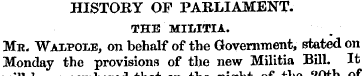
HISTORY OF PARLIAMENT . THE MILITIA . Mr . Wai / poxe , on behalf of the Government , stated on Monday the provisions of the new Militia Bill . It will be remembered that on the night of the 20 th of February lost , when Lord Palmerston defeated Lord John Russell , the House agreed to an amended form of the motion proposed by the late Premier , and on that question the late ministry resigned . As a matter of course the amended resolution remained on
the journals of the House as an order of the day , and was adjourned from time to time , until Ministers were in a position to bring the question forward again . The motion was fixed last week for Monday ; and leave having boen given on the 20 th of February to bring in a bill to " amend and consolidate the laws respecting the Militia , " Mr . Walpole moved " that Mr . Chancellor of the Exchequer , Mr . Secretary Walpole , and the Secretary at War , do prepare and bring in the
bill . " This motion was preceded by a long speech , in which Mr . Watvpole stated the reasons of Ministers for bringing in the bill . Ho considered himself as obeying tho will of the House in brinffinpr tho measure forward ; b ut ho also felt that he would bo neglectin g hia duty , and actuully botraying tho intercuts of tho country , if ho shrank from tho task . On tho topic of our perils ho was prolific in alarmfl . Trusting that actual danger was an far removed as over from our ulforos , yet ; looking at tho stato of Europe with roibronco reference
to its govornmontH— " 1 moan , " ho , said , " with to tho elements of anarchy and confusion which exist , " ( ironical chooru from tho Opposition and counter choors from tho Ministerial bonchetA and then , correcting him , wolf , ho continued— " I did not say anarchy and confusion ; but looking , to tho olonionl . H of anarchy and confusion which might easily break out not many months henco , I . think we are bound to boo ( hat we are in such a state of defence as to bo ablo to resist any attack which by possibility may bo made upon us . " ( Hear , hoar , and cheers . ) Implying to a quostion . previously put by Mr . Collins , ho franlcly answered , that Ministers had not received any information respecting foroign powers , einco their accession
to office , wHcb ? a ^^ bill . In fact , : ! puj £$ nendly relations with foreign powers have increased . ipSsclaiming all improper mbtavfes ^' stich as jealousy or ftp ^ he based the reasons for theintfrbduc-, tion of tkeWfi , fct ^ y on . the belief ^ f . the ; Govermnemfcfffifcjb % is ou ^ &jtffof tfsBes . to J ^ fj ^^^^ -gJ ^ tf ; * $ f . aefen # & ; Ax $ yrein ajtfflM . d # *» c $ > ( & $ & $ * » ot . And ihen he entered into 'a . Jqjag . statement of xea 'Sras to prMHs ' pe&i ; ' siniuar ^ tjios © widen ^ o ^ 1 ; h £ 2 ptfc W 5 ? ebrta # & werfr ittade to thttblouse' iftbitt all 8 fat % -P 'iniountittg tti ebMriW ^ gumeBtflf to / tnttrial three rfqrajgMi * tionBC ; First , ^ i ^ . ouijrac ^ i ^ : » d 0 fes ^ : ; are wfiiei | ii /' inaccurate ~~ -- ^ - ~—^^*^^^ m ^^ '
This he met by stating that it was basett on an estimate of our disposable force ; those who affirmed the above proposition costing up among otff defensible . forceai , the ships and soldiers engaged in service in all parte of the ffibbe ^ incltidjiiig ' . ¦' tiip&dian army ; , wHle , as , a matter of f £ ct , we have ; a total of nearly 160 , 0 pp men , yet there are nqt more vthan , j 26 , Qbt > who could be concentrated op a given point for tne defence of , t \ xe island . It ^ fts * he same with our Ship ' s ^ AcLpnral Berkeley ; had , said there were sHps enough to cover the south coast . Granted ; but have we inen W * iem ? ' Qn the home station there were nine ships of the ^ e , £ ye ( frieates ; one sjoop , nine screw ; and eiffht Daddle steamers , " He would not disparage that force , their
but supposing ^ a Hostile squadron evaded yigilaiice , and we had no adequate covering armyon land , We should then be in a position -which , a great country like , this ought not to be in ; Secondly , it was said , that there , was ; no immediate necessity ^ because there was no jmijaed ? ate danger , " , Kiis argument he disposed of bj quoting Edmuiid . BuxkeJ ' Tpy'hqVsaid '; that Nearly aiad prp ^ eftt fear is the mother of s , afety , ; and enlarging generayy : on , the advantages / of , b ^ mg fmaiturely prepared for p ^ Os ^ ible dangers . Thirdly , were were , those who urged that if . there were dangeri . ' f : yreought to incre ^ e oiw army , and navy *' This he shortly ^ emohshed'h y assertingt ^ fc the pe ^ te of
so far cleared his patli : of bbstt ^ ction ^ ie djla ^ d P ^ -the advantages pf the militia as a constitutional force , andjaid down the Glover ^ mentplaiu The greatprinciples of the proposed biD . were toi provideby means " ofvoluntarV enlistment an armed force for national defence , iapd to ioMe $ ha £ forCe effective by means of drilling * ^ nd training . The amount of force permanently W be maintained ' waa 80 , 000 men , pf which 60 , 000 would be Mobed in the firs * and 30 , 000 in the second year . The period of service to be for five years . It was proposed to pay the men . by bounties of , 3 Z » or 4 Z . each , paid at once or hy monthly ^^ allpTQUices , pf 2 s . or
option to be witnthe men . With regard . to ' the qfficers j the high qualification fixed by the old Mihtia Acjt of George III . would not be required below the rank of major , but half-pay ^ fficersjand p ^ spns wht ^^^ h a ^ , se / 5 ved Would have a preference . The training . wquld . be ior - < S 1 days in each year under ordinary circumstances ,. pbwer benig taken to extend or reduce that period as might be required . The existing law ( for it was an existing . law , beuig merely suspended by an annual bill ) in respect to the embodiment of the force , would be followed—that was , it would be embodied in th ^ e . even ^ of actual invasion or , imminent danerer of it . The payment of bounties , and the
necessity of providing arms and equipments , would bring the expense in the first year to about 400 , 000 Z ., but in after years it would be about 250 , 000 / . a year . The , enlistment would be voluntary , but in the event of way district not supplymgifa quota , power would bo taken to put the ballot in motion . iThe objection , that to raise such a fprce would interfere with recruitine for the army , wpuld be met by adopting 18 to 35 as the eligible age , and 5 feet 2 inches as the lowest standard of height , the standard of pur regular army being 6 , feet 6 inches , and that pf the French army 5 feet 1 inch . He woundup by warning the House that if they refused to pay for this constitutional defensive force they might have to pay forced contributhat if the
tions levied by a foreign power ; and by stating , measure were tlirown out , Government would have the melancholy satisfaction of having dono its duty , while the responsibility of leaving tho country defenceless would fall upon tho House . Mr . Httme opposed the bill . He treated the necessity for it as not proven ; and he argued that the forces existing would be sufficient , if properly disposed , and the navy adequate , if called home . Ho quarrelled with Mr . Walpole ' s estimate of our military strength ; and by enumerating our regular and irregular forces , tho marines , tho Irish and English police , he made up a grand total of 232 , 000 men ; and undertook , any day ,
to call together 25 , 000 men , without touching tho regulars . Ho generally argued against the measure , on tho grounds—that it would add to tho taxes , that it would demoralize tho country , and that it was hostile to the doctrine of the division of labour . Sir De Laoy Evans thought no caso of necessity had been made out , and that , relying mainly on our present army , wo should encourage tho formation of volunteer corps . Mr . MiiiNER Gibbon suggested whether it would not bo better to defer the bill until tho mooting of tho now parliament / Ho appealed to Lord Palmorston for , aid in stopping tho progress of tho bill ; and stated his belief that " tho people of this country would profor the increase of tho rogular army to tho embodiment of
tho militia . " In answer to tho appeal of Mr . Gibson , Lord Pai > mbhston made a short and decisive speech . It was his intention to givo hor Majesty ' s Government any support in his power for tho purpose of carrying tho bill . ( Ohoorfl . ) Tho nocoBsity for it could not do overstated ; wo liad not tropps available for our defence , and tho argumont drawn from a oasting-up of tho number of eoldiora employed in all parts of tho world , and represent *
o , . ; R ; t f ti > vr rMT- # l . ffifi % fy in- . nl . i , ing th * , 4 q * a ^ abM > Jifc 8 & ^|^^ sconteA 4 ideSSuSS 1 ieyen nTM « nited ^ ia « i ! & as a matter ! of . course , in ^ S rh ^ stfle fleet ^ Nettie *« jould--M * rely , up <» n E £ f « V nriV ^ mationef . i ^ IVaiiefcj . m « M ? ^^ WM ^ Mj ^ ishipsbrineuiB ^ S « tof . tfeeiex ^ diti ^ liavmgr sailed , r would ^* S °£ ? f |« fore ^^ xp % S& « i , i « olfi ^ e ^^ t meaS ^ wfl ?^ to mm ^ pte 8 fe ^ , aanger , , fai ^^ ioh ife wouS ibS ^ f qna * 8 i l ™ t : ** ti « 0 )^ p ( 5 feti ^ ^ ^ , W . 1 * ££ m m « M ^ h ^ a peman ^ SS id tae stondingraimr , i ^ would t > ear amilitia ^~" i iu luuaiaBiue ' _ .
vna - ^ , aomuugni , at , generally a / wi / wl one . ¦ i'Hei ^ hadtaJwayB h > Bn favpiurablentp ^ pluntarv enSsf ment . Therfe Wadiome objection to payine the boumtf at . , once , and > he tho ^ himoathly instalments would b ^ morc- _ seeurek ' Excepting details , yet to be discussed ¦' . ' ho felt bound to ^ state . ' i Onfe-tliiid plan- of ^ ^ the Government . Was one higldydeservirig the . favour and sanction of thl ¦ Wiii ^ . r : m >> te--&m :. 3 ilfaify- Mifc Gibson in talrini « d vantage of this measure to ; tum out her aiiajesty ' s Govern * menft / he should be ; happy , ^ afford hex Majesty ' s GovernI ment eyerxposable assjs ^ nce . ^ o ^ rvi ^^ a meiaeure that he considered of the utmost importance to the cbuntrv '( - * Hear , hear , " iand' cfiber ^ 'froni the 'Mnusterial bencfees V Colonel Thomp 8 O 1 T joined the ranks of the dissia ^ ts tao Diu
opposed ; , ana counseuea ttelajy . liiB Bttbneest re ^ on , waa the asjer ^ on i ^ hat ;; ' . 'if ajay Continental .. Mte 3 thought proper to eovee their countries with a network of fbrfcre ^ ses ^ that would not justify the addition of a single man to the British army . " f < ord Jokir BtrssiEaiii wasplilof those Who thought that an increase of the'defeneivbforce of the country was necessary . He enlargedupon the precarious nature of peace , and instanced the IVitchard mdeiaiiity case as one of those unforeseen incidents which brin ^ nations 6 n the iverge of war . He critieised the bill somewhat , and asked for exphinatibna respecting the ballot , as he did not feel sim-e that volunteers would come forward . He © H ^ ted to payins the botmty b ahmp . Although
he could form oidy an imperfect notion of tibo meattire , yet a * it was one fonr the defence of the ^ country , , "he should think iit most unjustifiable if he offered any obstacle to the introduction of the bilL' ? ( Cheers from the ministerial benches .- ) From this patriotic remark the transition to the conduct of IiOrd Palmerston was easy . "He was . glad toi find that thenoble lord ,- the member for Tivertoiij supported the intrbduetibnof the bill . ( Hear . ) It was hir ( Lord J . Euseell ' s ) misfortune that the noble lord did not approve of his bin , because it onl y applied to England , and Scotland and Ireland not being included the noble lord said it _ would be presumed that all the Scotch
Were cowaords arid all the Kj&were rebeb * ' ( Hear , best . But the righ £ honv « en * l « m « tt had inade the same proposal dnt that' reapect . ( Hear , hear . ) ^ He proposed a bilMor England , and . when * they were embodiea they might be sent to any part of the United Kingdom , and that Iras the measure which he ( Lord J . Eussell ) had proposed . ( Hear , hear . ) But the objection pf the noble lord did not apply to the right honourable gentleman —( hear , hear , and laughter)—and though the proposition was the same , the noble lord had npt made the , same qbjection , ( Laughter . ) in reply to some questipna ' from Lprd John Russell , Mr . Walpolb made the following useful sijatement : —
"It was intended to tak . e the Begisferar-General ' s districts as the districts that would fumiah men . On reference to the census of 1861 , it would be found that they could fix the quota of men to be supphed by the different places more equitably bygoing to those disfancts than by going to the parishes . { Hear , hear . ) Withregtfrd totle question oancerninff the ballot , it wa » a necessary conscquenoo that they should fall back upon it if they couldnot procurd a siunciont number of men by voluntary enlistment * and it would also be necessary * hat substitutes BhoiJd be allowed . ( Hear , hear . l In regard to the next quqs wn of the noble lord , ho should lay before the House a calculation which ho held in his hand with regard to the e ^ enflc . If m . a man were paid as bounty , the sum requn-ediortne
first 50 , 000 men would be 150 , O 00 Z . ; and the w ^ - to bo raised next year would cost 90 . 000 J . Of couwe , « tho bounty was 4 , 1 ., tho expenditure would be M"Jj 2 i more . The pay and ' allowances to 60 , 000 men , withoffi ^ J would be for 21 days , 87 , 129 Z . j marching moneyj totme * joining and returning , 6250 ^ . ; carriage of baggage , w ^^ clothing , at 11 . IBs . a man , 93 , 663 * . ; extra f <>™*™ l innkeepers , 15 , 000 ? . ; making a total for 1852 of 2 ^ Tho 8 ( fo 00 men proposed to bo enrolled for 1853 wo entail an additional expense of 38 , 027 A 10 s . for tho ^ days' training ; with 3 § 25 l . for ^ marching money ^ * for innkeepers ' allowances ; clothing ( at 11 . l ^ KJ ^ 53 , 550 Z . ; making , with some allowances for « g m £ * £ a total expenditure for tho two years of 311 , ww ^ ^ ing tho cost of clothing provided in , l » f iKaS « M ¦»* tofal cost of 80 , 000 men for 1853 would , bo , Mg ^ tno oi oiotik 8 t Jo
ogam deducting cose »«>~ *— v ^ h r cost of training for 1854 , would be } 0 W ? ' ^ f thul ) :-fivo years , ho believed , might betakesl to ^ etand m For 1852 , 200 , 000 * . ; for 1853 , 210 , 000 * - ; for 185 * , V »> , for 1866 , 160 , 000 * . j for 1866 , 16 O , O 0 OZ . " ^ After Mr . Duff had declared an nn- ^ jT m i feronco for a standing army , Mr . Can ** « J ° ' . ^ opposed the measure from tho " peace at any p point of view . , , to yn ( ior-Tho more ho hoard tho moro ho was at a low w ^ stand why our forces wore to bo |«« W- BShori * y ^ Evans had given thorn tho weight of * " JJV c 0 U ntry show that it would bo impossible for any fo ^ to got a large invading army together without o ^ timely notjSe of it . If lord Y ^ l ^ J ^ m ^ l ciuestfon in a military capacity , it must bo ^^ xn ^ ^
( laughter ); but ho contradicted ^ LTmS ^ V ^ 2 Sir Bo Xacy Evans , andJLord John JJS ^ taM Now , on such a measure , ho «»*««»» . ]? 3 too ] M \ t to dofor to thoir opinions . Bosiclos , ho did not £ ^^ il , any real apprehension wo » foW . we
Untitled Article
310 , ^ . , . . / ,, ^ ¦ ' ¦ ' ¦ ' ¦ ' ¦ i • i ... ill .. I _ mmmmmma ^ l ^*^** &WI * A / 0 B ** MGG ^ 9 mmmmm ^^^ ^^ mmmmmm ^^^^ ^ mmmm ^ ' ^ mmam ^* ***^ P ' ^^ W ^^ FlG ' f * £ ^^ mmm *^ j
-
-
Citation
-
Leader (1850-1860), April 3, 1852, page 310, in the Nineteenth-Century Serials Edition (2008; 2018) ncse.ac.uk/periodicals/l/issues/vm2-ncseproduct1929/page/2/
-