On this page
-
Text (3)
-

Untitled Article
-

Untitled Article
-

Untitled Article
Note: This text has been automatically extracted via Optical Character Recognition (OCR) software. The text has not been manually corrected and should not be relied on to be an accurate representation of the item.
-
-
Transcript
-
Note: This text has been automatically extracted via Optical Character Recognition (OCR) software. The text has not been manually corrected and should not be relied on to be an accurate representation of the item.
Additionally, when viewing full transcripts, extracted text may not be in the same order as the original document.
Untitled Article
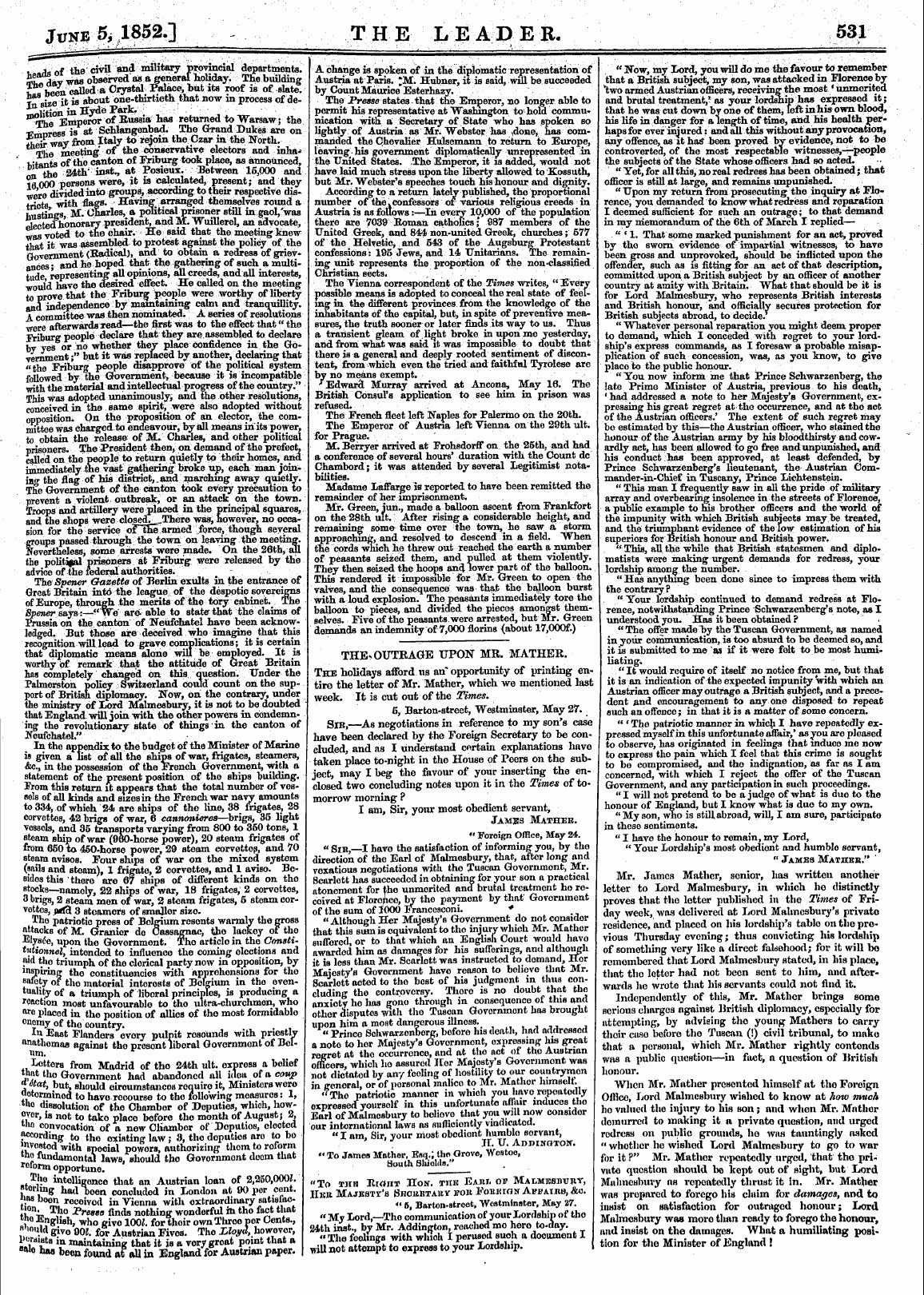
iM i fl of the civil and military provincial departments . SSiv was observed as a general holiday . The building PfbeCTi ^ ed a Crystal Palace , but its roof is of slatl fjrsize it is about one-thirtieth that now in process of de" " rn ^^ toperor of Bussia has returned to Warsaw ; the T 7 mnresB is at Schiangenbad . The Grand Dukes are on Sfway feota Italy to rejoin the Czar in the Forth . The meeting ' ofthe conservative electors and inha * feitants of the canton of Friburg took place , as announced , n the 24 th' inst ., at Posdeux . Between 15 , 000 and IB 000 persons were , it is calculated , present ; and they were divided into groups , according to their respective distr icts , with flags . - Havinff ^ rranged themselves round a Imstinffs M . Charles , a political prisoner still in gaol , was uiuerel
electedhqnorary president ; , ana m . w , an advocate , was voted to the chair . He said that the meeting knew that it was assembled to protest against the policy of the Gove rnment ( Radical ) , and to obtain a redress of griev ances ; and he hoped that the gathering of such a multitude representing all opinions , all creeds , and all interests , -would have the desired effect . He called on the meeting to prove that the Friburg ; people were worthy of liberty and independence by mamtaining calm and tranquillity A committee was then nominated . A series of resolutions were afterwards read—thefirst was to the effect that " the Iriburg people declare that they are . assembled to declare bv ves or no whether they place confidence in the
Government •; " bu , t it was replaced by another , declaring that " the Friburg people disapprove of the political system followed by the Government , beeause it is incompatible with the material and intellectual progress of the country . " This was adopted unanimously ; and the other resolutions , conce ived in the same spirit ^ were also adopted without opposition * O n the proposition of an elector , the committee was charged to endeavour , by all means inits power , to obtain the release of M . ' Charles , and other political prisoners . The President then , on demand of the prefect , called on the people to return quietly to their homes , and immediately the vast gathering broke up , each man joinjh » the flag of bis district ,. and marching away quietly . Tlie Government of the canton took every precaution to
prevent a violent outbreak , or an attack on the town , Iroops and artillery were placed in the principal squares , and the shops were closedj _ JThere was , however , no occasion for the service pj the armed force , though several groups passed through the town on leaving the meeting . Nevertheless , some arrests were made . On the 26 th , all the polit % al prisoners at Friburg were released by the advice of the federal authorities . The Spener Gazette of Berlin exults in the entrance of Great Britain into the league of the despotic sovereigns of Europe , through the merits of the tory cabinet . The
Spener says : — "We are . able to state that the claims ol Prussia on the canton of Neufchatel have been acknowledged . But those are deceived who imagine that this recognition will lead to grave complications ; it is certain that diplomatic means alone will be employed . It is worthy of remark that the attitude of Great Britain lias completely changed on this question . Under the Pahnerston policy Switzerland could count on the support of British diplomacy . Now , on the contrary , under the ministry of Lord Malmesbury , it is not to be . doubted that England will join with the other powers in condemning the revolutionary state of things in the canton of Neufchatel "
In the appendix to the budget of the Minister of Marine is given a list of all the ships of war , frigates , steamers , &c ., in the possession of the French Government , with a statement of the present position of the ships building From this return it appears that the total number of vessels of all kinds and sizes in the French war navy amounts to 334 , of which 24 are ships of the line , 38 frigates , 28 corvettes , 42 brigs of war , 6 cannonierea—brigs , 35 light vessels , and 35 transports varying from 800 to 350 tons , 1 steam ship of war ( 960-horse power ) , 20 steam frig ates of from 650 to 450-horso power , 29 steam corvettes , and 70 steam avisos . Four ships of war on the mixed system ( sails and steam ) , 1 frigate , 2 corvettes , and 1 aviso . Besides this there are 67 ships of different kinds on tho stocks—namely , 22 ships of war , 18 frigates , 2 corvettes ,
o brigs , 2 steam men of war , 2 steam frigates , 6 steam corvettes , ftrfa 3 steamers of smaller size . The patriotic press of Belgium resents warmly the gross attacks of M . Granior do Cassagnoc , the lackey or tho Elys < 5 e , upon tho Government . The article in the Constitutionnel , intended to influence the coming elections and aid the triumph of tho clerical party now in opposition , by inspiring tho constituencies with apprehensions for tho safety of tho material interests of Belgium in tho eventuality of a triumph of liboral pr inciples , is producing a reaction most unfavourable to tho ultra-churchmen , who are placed in tho position of allies of the most formidable cnomy of the country . In East Flanders every pulpit resounds with priestly anathemas against tho prosontliboral Government of Belrnn . e
Letters from Madrid of tho 24 th ult . express a belief that the Government had abandoned all idea of a coup ytat , but , should circumstances require it , Ministorsworo aotorminod to have recourse to tho following measures : 1 , tno dissolution of tho Chamber of Deputies , which , how-° vor , is not to take place before tho month of August } 2 , tho convocation of a now Chamber of Doputios , elootod fording to tho existing law ; 3 , tho deputies aro to bo invested with special powers , authorizing thorn to reform tho
fundamental laws , should tho Govornmont doom that reform opportune . Tho intelligence that an Austrian loan of 2 , 250 , 000 ? . "wrung had been concludod in London at 00 per cont . «« w boon rocoivod in Vienna with extraordinary Hatisioc-: { ° - Tho Prewo finds nothing wonderful m tho foot that i ° ^ " ^ ish , who give 100 Z . forihoir own Throe nor Cents ., f'lould give OOJ . for Austrian Fives . Tho Lloyd , however , l >« r « Ht 8 in maintaining that it is a very groat point that a B has been found &t all in England for Austrian paper .
A change is spoken of in the diplomatic representation of Austria at Paris . * M . Hubner , it is said , will be succeeded by Count Maurice Esterhazy . The JPresse states that the Emperor , no longer able to permit his representative at Washington to hold communication with a Secretary of State who has spoken so lightly of Austria as Mr . Webster has , done , has commanded the Chevalier Hulsemann to return to Europe , leaving ^ , his government diplomatically unrepresented in the United States . . The Emperor , it is added , would not have laid much stress upon the liberty allowed to Kossuth , but Mr . Webster ' s speeches touch his honour and dignity . According to a return lately published , the proportional number of the . confessors of various religious creeds in Austria is as follows : —In every 10 , 000 of the population there are 7039 Roman catholics ; 987 members of the United Greek , and 844 non-united Greek , churches ; 577
of the Helvetic , and 543 of the Augsburg , Protestant confessions : 195 Jews , and 14 Unitarians . The remaining unit represents the proportion of the non-classified Christian sects . The Vienna correspondent of the Times writes , " Every possible means is adopted to conceal the real state of feeling in the different provinces from the knowledge of the inhabitants of the capital , but , in spite of preventive measures , the truth sooner or later finds its way to us . Thus a transient gle a m of . g ht broke in upon me yesterday , and from what was said it was impossible to doubt that there is a g eneral and deeply rooted sentiment of discontent , from which even the tried and faithful Tyrblese are by no means exempt . * Edward Murray arrived at Ancona , May 16 . The British Consul ' s application to see him in prison was refused . The French fleet left Naples for Palermo on the 20 th .
The Emperor of Austria left Vienna on the 29 th ult . for Prague . M . Berryer arrived at Frohsdorff on the 25 th , and had a conference of several hours' duration with the Count dc Ghambord ; it was attended by several Legitimist notabilities . Madame Laffarge is reported to have been remitted the remainder of her imprisonment . Mr . Green , jun ., made a balloon ascent from Frankfort on the 28 th ult . After rising a considerable height , and remaining some time over the town , he saw a storm
approaching , and resolved to descend in a field . Wlien the cords which he threw out reached the earth a number of peasants seized them , and pulled at them violently . They then seized the hoops and lower part of the balloon . This rendered it impossible for Mr . Green to open the valves , and the consequence was that the balloon burst with a loud explosion . The peasants immediately tore the balloon to pieces , and divided the pieces amongst themselves . Five of the peasants were arrested , but Mr . Green demands an indemnity of 7 , 000 florins ( about I 7 , 000 f . )
Untitled Article
THEx OUTRAGE UPON MR . MATHER . The holidays afford us an" opportunity of printing entire the letter of Mr . Mather , which we mentioned last week . It is cut out of the Times . 6 , Barton-street , Westminster , May 27 . . Sib , —As negotiations in reference to my son ' s case have been declared by the Foreign Secretary to be concluded , and as I understand certain explanations have taken place to-night in the House of Peers on the subject , may I beg the favour of your inserting the enclosed two concluding notes upon it in the Times of tomorrow morning ? I am , Sir , your most obedient servant , James Mather . ' Foreign Office , May 24 . « gIB )—I have the satisfaction of informing you , by tho direction of the Earl of Malmesbury , that , after long and vexatious negotiations with tho Tuscan Government , Mr . Scarlett has succeeded in obtaining for your son a practical atonement fbr the unmerited and brutal treatment ho received at FloroAco , b y tho payment by that Government of tho sum of 1000 Francosconi . * " Although Her Majesty ' s Government do not consider that this sum is equivalent to the injury which Mr . Mather Buffered , or to that which an English Court would havo awarded him as damages for his sufferings , and although it is loss than Mr . Scarlett was instructed to domand , Hor Majesty ' s Government have reason to bolievo that Mr . Scarlett acted to tho best of his judgmont in thus concluding the controversy . There is no doubt that the anxiety ho has gone through in consequence of thie and other disputes with tho Tuscan Govornmont has brought upon him a most dangerous illness . ,,,,, „ , " Prince Schwarzenborg , before his death , had addressed a note to her Majesty ' s Govornmont , expressing his great roeret at tho occurrence , and at the act of the Austrian officers . ' which ho assured Hor Majesty ' Govornmont was not dictated by any fooling of hostility to our countrymen in general , or of personal mnlico to Mr . Mather himself . " Tho patriotic manner in whioh you havo repeatedly oxprossedyoursolf in this unfortunate affair induces tho Earl of Malmosbury to believe that you will now consider our international laws as sufficiently vindicated . " I am , Sir , vour most obedient humblo servant , II . U . Adpinotoit . " To Janioa Mnther , Bnq . ; tho Grovo , Wostoo , South SJuolda . "
Untitled Article
"To urn EidnT Hon . this Exrth oi ? MAiiMKsnvjiY , IlKIt MAJKSTv ' fl SkOBBTAHY VOU FoUKIGN API ? AlKB , &O . " 6 , Barton-stroot , Westminster , May 27 . " My Lord , —Tho communication of your Lordship of tho 24 th inst ., by Mr . Addington , reached mo hero to-day . " The feelings with which I perused such a document I will not attempt to express to your Lordship .
" How , my Lord , you will dome the favour to remember that a British subject , my son , was attacked in Florence by v armed Austrian officers , receiving the most' unmerited and brutal treatment , ' as your lbrdship has expressed it ; that he was cut down b y one of them , left in his own blood , his life in dang er for a length of time , and his health perhaps for ever injured : and all this without any provocation , any offence , as it hos ^ been proved by evidence , not to be controverted , of the most respectable witnesses , —people the subjects of the State whose officers had so acted . " Yet , for all this , no real redress has been obtained j that officer is still at large , and remains unpunished . _ " Upon my return from prosecuting the inquiry at Florence , you demanded to know what redress and reparation I deemed sufficient for such an outrage ; to that demand in my memorandum of the 6 th of March I
replied" ' 1 . That some marked punishment for an act , proved by the sworn evidence of impartial witnesses / to have been gross and unprovoke d , should be inflicted upon the offender , such as is fitting for an act of that description , committed upon a British subject by an officer of another country at amity with Britain . What that should be it is for Lord Malmesbury , who represents British interests and British honour , and officiall y secures protection for British subjects abroad , to decide . " Whatever personal reparation you might deem proper to demand , which I conceded with regret to your lordship ' s express commands , as I foresaw a probable misapplication of such concession , was , as you know , to give place to the public honour . " You now inform me that Prince Schwarzenberg , the
late Prime Minister of Austria , previous to his death , ' had addressed a note to her Majesty ' Government , expressing his great regret at the occurrence , and at tho act of the Austrian officers . ' The extent of such regret may be estimated by this—the Austrian officer , who stained the honour of the Austrian army by his bloodthirsty and cowardly act , has been allowed to go free and unpunished , and his conduct has been approved , at least defended , by Prince Schwarzenberg ' s lieutenant , the Austrian Cominander-in-Cbief in Tuscany , Prince Lichtenstein . " This man I frequently saw in all the pride of military array and overbearing insolence in the streets of Florence , a public example to his brother officers and the world of the impunity with which British subjects maybe treated , and the triumphant evidence of the low estimation of his superiors for British honour and British power .
" This , all the while that British statesmen and diplomatists were making urgent demands for redress , your lordship among the number . " Has anything been done since to impress them with the contrary ? " Your lordship continued to demand redress at Florence , notwithstanding Prince Schwarzenberg ' s note , as I understood you . Has it been obtained ? " The offer made "by the Tuscan Government , as named in your communication , is too absurd to be deemed so , and it is submitted to me as if it were felt to be most humiliating . " It would require of itself no notice from me , but that it is an indication of the expected impunity with which an
Austr ian officer may outrage a British subject , and a precedent and oncouragement to any one disposed to repeat such an offence ; in that it is a matter of some concern . " ' The patriotic manner in which I have repeatedly expressed myself in this unfortunate affair , ' as you aro pleased to observe , has originated in feelings that induce me now to express tho pain which I feel that this crime is sought to be compromised , and tho indignation , as far as I am concerned , with which I reject the offer of tho Tuscan Government , and any participation in such proceedings . " I will not pretend to be a judge of what is duo to the honour of England , but I know what is duo to my own . " My son , who is still abroad , will , I am sure , participate in these sentiments .
" I havo the honour to remain , my Lord , " Your Lordship ' s most obedient and humblo sorvant , " James Mathbb . " Mr . James Mather , senior , has written another letter to Lord Malmesbury , in which ho distinctly proves that the letter published in the Times of Friday week , was delivered at Lord Malmesbury's private residence , and placed on his lordship ' s table on the previous Thursday evening ; thus convicting his lordship of somothing very like a direct falsehood ; for it will bo remembered that Lord Malmcsbury stated , in his place , that tho letter had not been sent to him , and afterwards ho wrote that bin servants could not find it .
Independently of this , Mr . Mather brings some serious charges ngninst British diplomacy , especially for attempting , by advising tho younp Mathers to carry thoir case before the Tuscan (!) civil tribunal , to make that a personal , which Mr . Mather rightly contends was a public question—in fact , a question of British honour . When Mr . Mather presented himself nt tho Foreign Ofllco , Lord Malmesbury wished to know nt how much ho valued tho injury to his son ; and when Mr . Mother
domurrcd to making it a private question , mid urged rodress on public grounds , ho was tauntingly asked " whether ho wished Lord MalmcHbury to go to war for it ? " Mr . Mather repeatedly urged , that the private quostion should bo kept out of sight , but Lord Miilmesbury ns repentodly thrust it in . Mr . Mather was prepared to forego his claim for damages , and to insist on satisfaction for outraged honour ; Lord Malmesbury was more than ready to forego the honour , and insist on the damages . What a humiliating post tion for tho Minister of England !
Untitled Article
¦ ^^' .. j ' -: ¦ , ' :, ^ . / ' / Ill ^ l ^ P RtL ; ' .: 531
-
-
Citation
-
Leader (1850-1860), June 5, 1852, page 531, in the Nineteenth-Century Serials Edition (2008; 2018) ncse.ac.uk/periodicals/l/issues/vm2-ncseproduct1938/page/7/
-