On this page
-
Text (2)
-
Untitled Article
-

Untitled Article
Note: This text has been automatically extracted via Optical Character Recognition (OCR) software. The text has not been manually corrected and should not be relied on to be an accurate representation of the item.
-
-
Transcript
-
Note: This text has been automatically extracted via Optical Character Recognition (OCR) software. The text has not been manually corrected and should not be relied on to be an accurate representation of the item.
Additionally, when viewing full transcripts, extracted text may not be in the same order as the original document.
Untitled Article
Composed , as the lower House is , largely of an aristocratic element , there is nothing of the " snob " about it in the aggregate . Mr . Anstey goes about saying , " I was counted out because I was poor ; but Mr . Disraeli was always poorer than Mr . Anstey , and is , defacto , Premier of England . London society suffered Mr . Hudson ; but the House of Commons , from the first , iaughed at him , and at last howled him down . The House of Commons would not listen to Mr . Stanley ( the present Lord ) when , with all the prestige of his name and lineage , he attempted to teach it about sugar ;
but the House of Commons cheered the first great sugar speech of Mr . Economist Wilson , although Mr . Wilson was fresh from a hatter ' s shop , and smelt of " the Borough . " The House of Commons hates Manchester ; but it jeered Baillie Cochrane ' s aristocratic attacks on Cottonopolis to that extent that Baillie Cochrane gave up being Pitt , and took to idiotic novels , while it burst into an honest and hearty sympathetic shout
when Mr . Brotherton , pleading for the Ten Hours Act , said , with the tears in his eyes , " Sir , I am now a Member of Parliament , but I was once a poor , wretched , half-starved factory boy . " Again , the House of Commons detested 1 eargus O'Connor ; but not because he was a Chartist . Indeed , from what I know of it , the House would rather like , and would certainly carefully listen to , a genuine working-man Chartist .
It is odd ; but the clever men always blunder , at first , with , the House oi Commons . The men of genius always attempt , as green genius attempts in other directions , to take it by storm . Disraeli went at the Senate with a rush , to talk Aeroy isms ; and the yelling laughter which greeted him made him a great man—it gave him so much to obliterate ! That was a spasmodic saying— " The time will come when you shall hear me ; " but to redeem the boast a system was necessary , and Disraeli , a man essentially of an Italian and intriguing
genius , soon found that the House was not to be bullied out of applause . There were no more tours de force in his career ; he has got on by sheer hard work , on an exact system , biding his time , ever at hand , and never missing an opportunity . He has never been guilty of an impulse since impulse plunged him into the greatest parliamentary failure on record ; and that his system is worth studying is suggested in the fact that it has been successful—successful despite drawbacks—to say nothing of his race and
creedwhich would have crushed most other men . He knew what he had to overcome , and calculated the cost ; invested , waited , and got .. the profits . And the parliamentary system essential to triumph is so invariable , that Mr . Disraeli , because he does what Sir Hobert Peel did , is accused of being an imitator of Sir Robert Ted . The imitation is said to consist in the assiduous complimenting of everybody . That was poor Sir Robert ' s fortea trick coming natural to him , as a parvenu , and
as never certain of what party he would be among in a month . As a parvenu ,, too , Mr . Disraeli finds it indispensable ; despises the meanness of the sycophancy , but is constrained to resort to it because he knows its results are desirable . Men , secure and safe in . their own positions—either Lords J . Russell or Derby—may indulge haughtiness , and be costive in laudations ; but Mr . Disraeli bows to the statue of Jovo , while worshipping Jehovah , because lie does not know if his turn wont come again !
Another instance of a man of genius endeavouring to take the House of Commons by assault , and being conspicuously rebuffed , is supplied by Sir Edward Lytton , of whom it now remains to bo seen whether ho appreciates the sagacity of undermining . Sir Edward entered parliament for the express purpo . se of making a sensation , and of making use of the- House of Commons platform for his own intellectual glorification . The intention , always quickly detected , implies a conceited contempt for the lfou . se itself , and is ftlwavs punished by vigorous snubbing . Sir
Edward soared wonderfully , but lie couldn't get the 11 ouso to look up . lie made undoubtedly lino , rattling , sound , witty speeches ; and there was no doubt whatever that he was an acquisition , a suitable representative man , and a possible popular minister . But the pretence offendedthe incessant evident desire to render the House subordinate to Sir Edward JJuIwor— the prominence given to the individuality , which would not identify itself with the whole body -disgusted ; and Hir Edward never became a great " parliament man . " Ho would not work j that is , Jie
scorned the rehearsals ; he was always on the stage , stagy—and always insisting on being brilliant . He was , in short , an outsider in the club ; he wouldn't join the rest , think , or affect to think , like the rest j and—he talked to the " gallery , ^ not to the " honourable gentlemen opposite , and grievously offended the House by indicating indirectly that he thought less of them than of " the great public . " Sir Edward ' s parliamentary failure is often stupidly adduced as a proof of literary men being unfit for the House of Commons . The theory arises in forgetfulness of the fact that most of the literary men who go into the House of Commons , do not go there to become House of Commons personages . What
they do not aim at , they do not attain ; and , of course , episodical appearances in debate , straggling speeches , and lounges about committee rooms , do not produce that effect which induces competitors to make way for them . The Penates of St . Stephen's are jealous gods , and require an exclusive devotion . A great author who wont work for House of Commons position and fame , is no more entitled to be a leader there than a
great lawyer who doesn't give up the law can expect to head lobbies . The House of Commons heroes—the Pitts , Grahams , Peels , Russells—are the men wh o live for the House of Commons , and are ambitious of its honours only . Even Disraeli wrote Coningsby in a recess : and since he saw f > ower looming in the future , he has not written at all , except with an aim at House of Commons ends , as in the Political Life of
Bentinck , which was an appeal to a party . The House of Commons insists uponits own style ; and will not " hear , hear , " the literary style , and got-up brilliancies of the literary member ; and it will not intrust a literary man with any sort of leadership , because it distrusts all but those who look at the public and at the government from , its own point of view , and in whose chieftainship , therefore , for its own purposes , it can cpnfide . It , therefore , puts down a Bulwer just as it puts down a Bright ( as a man of commerce , and
member for Manchester ) , or a Cockburn ( as a lawyer ) , as a man not identifying himself with itas a man who moves out of the Commons' circle , and has other business , which , is not Commons ' business . These aggregate instincts do not correspond with the individual influences , since most members are , sometimes , in some occupation , portions of the public ; but they are unmistakeable in their operation : and this need not be wondered , since all large bodies are possessed of a collective tone , so to speak , on all matters applying to their collective interest . But though the
House wont place the literary members in the first rank , it is an error to suppose they are such failures as to bo disliked . If they are pretensious , mere literary men , they are snubbed — but for the pretensiousness , not for the literature . If they , in their degree , and at their leisure , appear in a Parliamentary melee , and make a good speech , adopting as nearly as they can the cue of the place , they are listened to dqferentially , and applauded . Mr . Macaulay was , surely , no failure P Even Peel did not draw such audiences . When it was known
Macaulay would speak , and it always was known , clubs would empty and drawing-rooms would give up their males ; and at cloven o ' clock—for Macaulay would never deign jto speak until the audience was a largo one—thoro would be no seat vacant . He was watched , listened to , and cheered , by a rapt audience , who were enjoying , with cultivated taste , a finished essay . Its polish , its completeness , and its exhaustion of the topip in hand , excited universal admiration . But then
the House saw more than a mere literary manthey saw an accomplished scholar , a man of learning , of judgment—a inan who served a direct and useful purpose in pouring out hjs mind . They saw a man whose intellectual qualities were greater than those of their p \ vi Sir Robert Peel—for Sir Robert Peel could not have spoken such an essay . But winch would they follow , in a political crisis P Sir Robert ; because they did not want in their leader a brilliant man only—because Sir Robert had passed his life in studying the relations between them and ' the world—because Sir Robert was a man
of the world , understanding them , men of the world ; and because ; , having studied the trade of governing , and studied nothing else , fhe-y eouit ) . nave confidence in his advice in a political emergency . Instinct—the instinct of inasses—djctates their choice ; and while they admire a
Macaulay , they follow Peel . Had Mr . MacanW S Ven up to the House what was meant for th * ouse ' s constituents , he would have been a Pep ] too ; and , who can tell , perhaps vice versd ? ' " Literary men , " in short , must cease to be literary men ( it is p , wonder men of literatui do not put down the horrible phrase ) before thev can lead political parties . In otter words , thev must become ordinary men of the world—worldlv —or , in other words , must learn how to manage ordinary men , which is npt learned in closed Burke carried all before him while he rnmn ^^ j jjuutt-t / uaiucu a . ** iLfci . \ -M . t > . liii-h yvjj . uk xitj remained
a politician ; but he got sublimated into the philosopher , and degenerated into a " dinne r bell . '' Sheridan observed this , and gained by the fact . Kelly , in his memoirs , states that he one day told Sheridan that he ( Sheridan ) daren't write another comedy , because he was afraid of the author of The ScJiool for Scandal . But , clearly , Sheridan , who was ambitious of political distinction and whose managership was regarded as an amusement , avoided writing simply in order to talk with the more effect . Gibbon , in his remarks about Sheridan ' s . Warren Hastings' oration , confesses that the powers then developed would require a life of practice ; and
Gibbon , when an M . P ., was aback bencher , from his consciousness that his great inteUect was in a world where it was but as a child ' s . Sir James Mackintosh is always referred to as among the authors who failed in Parliament , and it is supposed he failed because he was not a leader . As a man of the world , as a politician , he was without influence in the House ; but he was admired and cheered as a wise , thoughtful , honest man . The same is to be said of Jeffrey , who had no business ( though a good deal of practice ) at the bar , much less in the House of Commons . As I said in the last paper , the great " nublic man " must have defects of character to suit him to his
position . What could the Whigg do with Burke when they found he was a man who would talk " eternal justice" about Marie Antoinette , forgetful of the use the revolution was to the party P What could Brougham do with the Sir James Mackintosh , whose every oration commenced with an apology for his " hot youth's" ( and he a Scotchman !) " Vindiciao ? " ' The " literary man " talks abstractions , and is , therefore , dangerous . Thus the House of Commons condemned Peel for making George Smythe an . Under Foreign Secretary , because the House has a nervous
horror , whatever its admiration , of a young man who used to rise in a foreign debate , stand bolt upright , shut his eyes , and pour forth epigrammatic eloquence , sounding like a translation irom the French of Vergniaud . The " practical commonplace man for the House , which thinks well of Forbes Mackenzie for helping Lord Derby on with his coat , and cheered Lord Henry Lennox ( he of the police-court , and Lord of the rroasury ) for bringing in a glass of water—a son ot a duke , too !—to Mr . Disraeli , while that exhausted statesman was dealing with Direct Taxation in
his immortal budget . , « All these arc general views , leading to rules oi detail ; and these details you shall have ncxi week .
Untitled Article
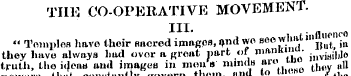
CO-OPERATIVE MOVEMENT . " Temples liavo their sacred images , and wo s 00 ™ " 11 , " ^ ^ they have always hud over a groat ]> ftrfc ° \ ' A' mviaililo truth , the ideau and images in men ' s minds ' "'" lh ( , ,, 11 powers that constantly govern them , and t <> W U" J | lio universally pay a ready submission . It w , tnor ¦ > ( f l ) l 0 highest eoiMiornment that groat caro should tn > w * understanding . "—Looms . ( To the Editor of the Leader . ) Sm . —No philosophical history of Socialism ig as far as 1 know , been written . "f V ^ great social revolutions of the world nave generally treated by historians us P V tllU , \ isolated movements , produced by oxc ( 'l . ^ tooio oftentimes trivial causes , and not as ^ t ] l 0 phases in the progressive development ^ human race , subject to laws us f ! . j ) 0 those of the physical world , and an lia ^ ° is by disturbed by storms and convulsions . J » a ,, , nature social belli * and society an »»»« »^ £
a , . of individuals bound together by natural bv « j ^ thies , or from motives of solf-intoreBt , l « r Jj cCf assistance , security , or en tertainment . ¦ ' oT in speiely , we find two counteracting I <>' ^ J j motive principles-namely , iP *^ ^ H ° l » soeia ] isin , in constant operation . *¦*> "i on \ siw , however , necessarily hostile and u , , ? 111 ( jWy but , o » the contrary , frjendly and au * m powers .
Untitled Article
802 THE LEA DER . [ Saturday ,
-
-
Citation
-
Leader (1850-1860), Aug. 21, 1852, page 802, in the Nineteenth-Century Serials Edition (2008; 2018) ncse.ac.uk/periodicals/l/issues/vm2-ncseproduct1948/page/14/
-