On this page
-
Text (2)
-

Untitled Article
-

Untitled Article
Note: This text has been automatically extracted via Optical Character Recognition (OCR) software. The text has not been manually corrected and should not be relied on to be an accurate representation of the item.
-
-
Transcript
-
Note: This text has been automatically extracted via Optical Character Recognition (OCR) software. The text has not been manually corrected and should not be relied on to be an accurate representation of the item.
Additionally, when viewing full transcripts, extracted text may not be in the same order as the original document.
Untitled Article
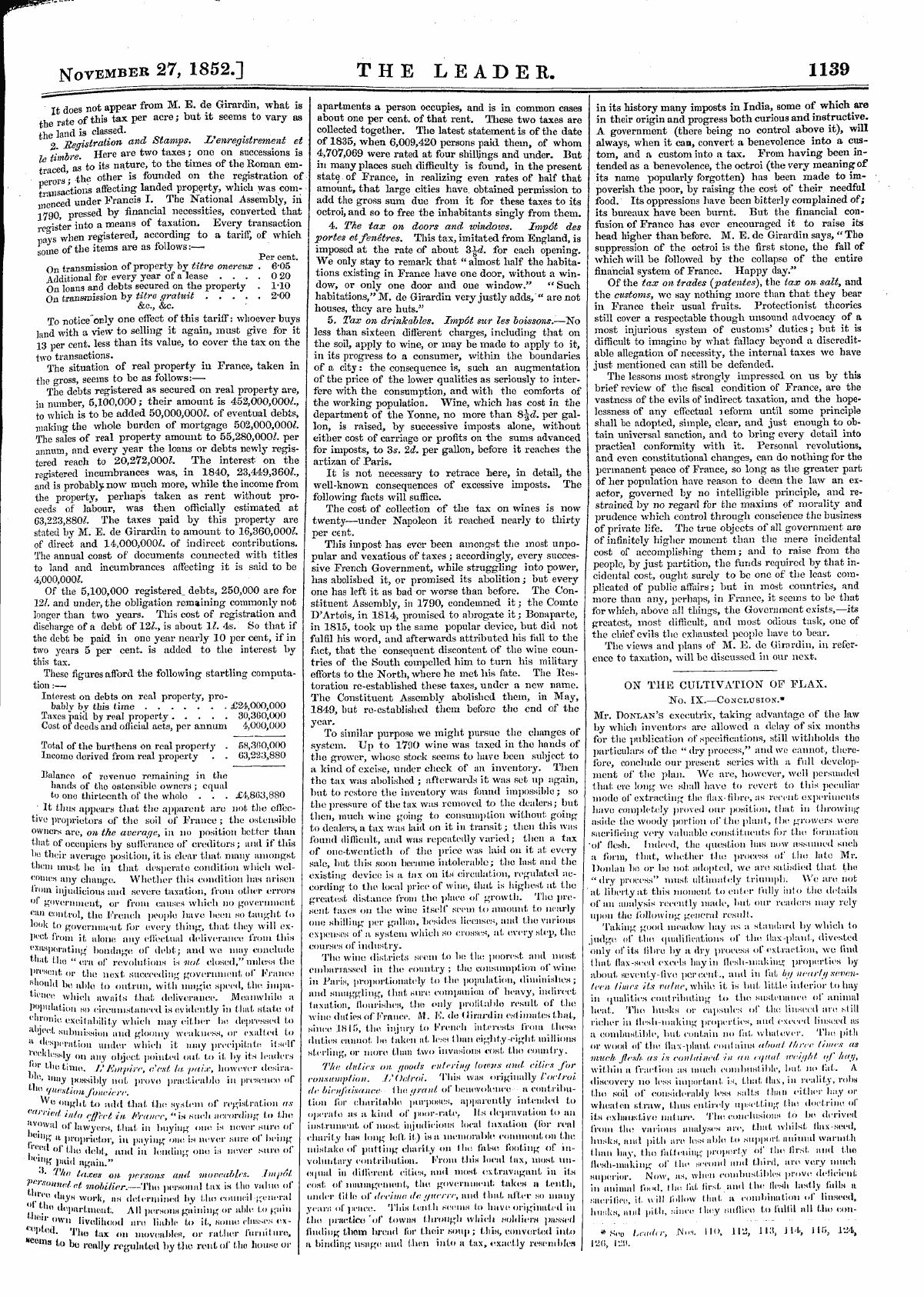
It does not appear from M . E . de Girardin , what is the rate of this tax per acre ; but it seems to vary as the land is classed . 2 Reg istration and Stamps . L'enregistrement et f ' nbre Here are two taxes ; one on successions is t * ed as to its nature , to the times of the Roman emors ' - the other is founded on the registi-ation of transactions affecting landed property , which was commenced under Francis I- The National Assembly , in 1 V 9 O pressed by financial necessities , converted that eo-ister into a means of taxation . Every transaction nays when reg istered , according to a tariff , of which soine of the items are as follows : — Per cent .
On transmission of property by titre onereux . 6-05 Additional for every year of a lease .... 0 20 On loans and debts secured on the property . 1 * 10 On transmission by titre gratuit 2-00 &c , &c . To noticeonly one effect of this tariff : whoever buys land with a view to selling it again , must give for it 13 per cent , less than its value , to cover the tax on the two transactions . The situation of real property in France , taken in the gross , seems to be as follows : —
The debts registered as secured on real property are , in number , 5 , 100 , 000 ; their amount is 452 , 000 , 000 / ., to which is to be added 50 , 000 , 000 ? . of eventual debts , making the whole burden of mortgage 502 , 000 , 000 / . The sales of real property amount to 55 , 280 , 000 / . per annum , and every year the loans or debts newly registered reach to 20 , 272 , 000 / . The interest on the registered incumbrances was , in 1840 , 23 , 449 , 360 / ., and is probably , now much more , while the income from the property , perhaps taken as rent without proceeds of labour , was then officially estimated at 63 , 223 , 880 / . The taxes paid by this property are stated by M . E . de Girardin to amount to 16 , 360 , 000 / . of direct and 14 , 000 , 000 / . of indirect contributions . The annual coast of documents connected with titles
to land and incumbrances affecting it is said to be 4 , 000 , 000 / . Of the 5 , 100 , 000 registered , debts , 250 , 000 are for 12 / . and under , the obligation remaining commonly not longer than two years . This cost of registration and discharge of a debt of 12 / ., is about 11 . 4 s . So that if the debt be paid in one year nearly 10 per cent , if in two years 5 per cent , is added to the interest by this tax . Those figures afford the following startling computation : — Interest on debts on real property , probably by this time .... " ... £ 24 , 000 , 000 Taxes paid , by real property 30 , 360 , 000 Cost of deeds and official acts , per annum 4 , 000 , 000 Total of the burthens on real property . 58 , 300 , 000 Incomo derived from real property . . 03 , 223 , 880 Ualanco of revenue remaining in the hands of tho ostensible owners ; equal to one thirteenth of tho whole . . . £ 4 , 803 , 880 ' It thus appears that the apparent arc not tho effective proprietors of tho soil of Franco ; the ostensible owners are , on the average , in no position better than that of occupiers by sufferance of creditors ; and if this be their average position , it is clear that many amongst them must be in that desperate condition which welcomes any change . VVhether this condition lias arisen from injudicious and severe taxation , from other errors of government , or from causes which no government can control , the French people have been mo taught to look to government for every thing , that they will expi'ofc from it alone any effectual deliverance from this exasperating bondage of debt ; and wo may conclude that the " em of revolutions is not closed , " unless the present or the next succeeding government of France K Jioul ( l be able to outrun , with magic speed , the inipatienee which awaits that deliverance . Mounwhilo a population ho circumstanced is evidently in that state of chronic excitability which may either be depressed to ! ll ) jec ( , submission and gloomy weakness , or exalted to < l desperation under which it may precipitate itself ' " , lessl y on any object pointed out , to it by its leaders r '" etime . I )' Empire , e ' est lit . paix , however desira' e , may possibly not prove practicable in presence of l 'lut ' -stianfoiitiinn ' . "_ « o ught to add that the system of registration as varritul into effect in France , "is such according to the u vo \ val of lawyers , that in buying one is never wire of ) 01 I 1 g a proprietor , in paying one is never sure of being u (!( l <> f the debt , and in lending one itf never Mire of ll 0 "' tf paid again . " ' "hn taxes on persons and inooeablcs . Jin / tot Pvrmune / . « t mobi / ier . —Tho personal tax is tho value of ' ''• • ' () days WOrl { , aH determined by the council-general ? . . ' 'lopartnuml ; . All persons gaining or able to gain 1 1 <( ' own livelihood are liable to it , some clauses ex-<; <> I > l
apartments a person occupies , and is in common cases about one per cent , of that rent . These two taxes are collected together . The latest statement is of the date of 1835 , when 6 , 009 , 420 persons paid them , of whom 4 , 707 , 069 were rated at four shillings and under . But in many places such difficulty is found , in the present state of France , in realizing even rates of half that amount , that large cities have obtained permission to add the gros s sum due from it for these taxes to its
octroi , and so to free the inhabitants singly from them . 4 . The tax on doors and windows . Impot des portes etfenetres . This tax , imitated from England , is imposed at the rate of about 3 ^ . for each opening . We only stay to remark that " almost half the habitations existing in France have one door , without a window , or only one door and one window . " " Such habitations , " M . de Girardin very justly adds , " are not houses , they are huts . "
5 . Tax on drinkables . TmpSt sur les boissons . —No less than sixteen different charges , including that on the soil , apply to wine , or may be made to apply to it , in its progress to a consumer , within the boundaries of a city : the consequence is , such an augmentation of the price of the lower qualities as seriously to interfere with the consumption , and with the comforts of the working population . Wine , which has cost in the department of the Yonne , no more than S \ d . per gallon , is raised , by successive imposts alone , without either cost of carriage or profits on the sums advanced for imposts , to 3 s . 2 d . per gallon , before it reaches the artizan of Paris .
It is not necessary to retrace here , in detail , the well-known consequences of excessive imposts . The following facts will suffice . The cost of collection of the tax on wines is now twenty—under Napoleon it reached nearly to thirty per cent . This impost has ever been amongst the most unpopular and vexatious of taxes ; accordingly , every successive French Government , while struggling into power , has abolished it , or promised its abolition ; but every
one has left it as bad or worse than before . The Constituent Assembly , in 1790 , condemned it ; the Comte D'Artois , in 1814 , promised to abrogate it ; Bonaparte , in 1815 , took up the same popular device , but did not fulfil his word , and afterwards attributed his fall to the fact , that the consequent discontent of the wine countries of the South compelled him to turn his military efforts to the North , where he met his fate . The Restoration re-established these taxes , under a new name . The Constituent Assembly abolished them , in May , 1849 , but re-established them before the end of the
year . To similar purpose we might pursue the changes of system . Up to 1790 wine was taxed in the hands of the grower , whose stock seems to have been subject to a kind of excise , under check of an inventory . Then the tax was abolished ; afterwards it was set up again , but to restore the inventory was found impossible ; so the pressure of the tax was removed to the dealers ; but then , much wine going to consumption without going to dealers , a tax was laid on it in transit ; then this was
found difficult , and was repeatedly varied ; then a tax of one-twentieth of the price was laid on it at every sale , but this soon became intolerable ; the last and the existing device is a tax on its circulation , regulated according to the local price of wine , that is highest at the greatest distance from the place of growth . The present taxes 011 the wine itself seem to amount to nearly one shilling per gallon , besides licenses , and the various expenses of a system which so crosses , at every step , the courses of industry .
The wine districts seem to be the poorest , and most embarrassed in the country ; the-consumption of wine in Paris , proportionately to the population , diminishes ; and . smuggling , that sure companion of heavy , indirect taxation , flourishes , tho only profitable result of the wine duties of France . M . 10 . de ( iinirdin estimates that , since 181 . 5 , tho injury to French interests from these duties cannot be taken at less than eighty-eight millions sterling , or more than two invasions cost the country .
The duties on goods entering towns and . cdie . i for consumption . . // Octroi . This was originally / . ' octroi de bienjaisauce f he grant , of benevolence- a contribution for charitable purposes , apparently intended to operate as a kind of j ) oor-rate Its depravation to an instrument of most injudicious local taxation ( for real charity linn long left it ) is a memorable comment on the mistake of putting charity on tho false footing of involuntary contribution . From thin local tax , most unequal in different cities , and most extravagant in its cost of management , the government , takes a tenth , under fillo of deei . tne . de . guerre , and that after ho many yean ; of peace . This tenth seems to have originated in the practice of towns through which soldiers passed finding thorn bread for their soup ; thin , converted into a binding usage and ( hen into a tax , exactly renemblea
in its history many imposts in India , some of which are in their origin and progress both curious and instructive . A government ( there being no control above it ) , will always , when it can , convert a benevolence into a custom , and a custom into a tax . From having been intended as a benevolence , the octroi ( the very meaning of its name popularly forgotten ) has been made to impoverish the poor , by raising the cost of their needful food . Its oppressions have been bitterly complained of ; its bureaux have been burnt . But the financial confusion of France has ever encouraged it to raise its head higher than before . M . E . dc Girardin says , " The suppression of the octroi is the first stone , the fall of which will be followed by the collapse of the entire financial system of France . Happy day /'
Of the tax on trades ( patentes ) , the tax on salt , and the customs , we say nothing more than that they bear in France their usual fruits . Frotectionist theories still cover a respectable though unsound advocacy of a most injurious system of customs' duties ; but it is difficult to imagine by what fallacy beyond a discreditable allegation of necessity , the internal taxes we have just mentioned can still be defended . The lessons most strongly impressed on us by this brief review of the fiscal condition of France , are the
vastness of the evils of indirect taxation , and the hopelessness of any effectual leform until some principle shall be adopted , simple , clear , and just enough to obtain universal sanction , and to bring every detail into practical conformity with it . Personal revolutions , and even constitutional changes , can do nothing for tho permanent peace of France , so long as the greater part of her population have reason to deem the law an exactor , governed by no intelligible principle , and restrained by no regard for the maxims of morality and prudence which control through conscience the business
of private life . The true objects of all government are of infinitely higher moment than the mere incidental cost of accomplishing them ; and to raise from the people , by just partition , the funds required by that incidental cost , ought surely to be one of the least complicated of public affairs ; but in most countries , and more than any , perhaps , in France , it seems to be that for which , above all things , the Government exists , —its greatest , most difficult , and most odious task , one of the chief evils the exhausted people have to bear . The views and plans of M . E . do Girardin , in reference to taxation , will be discussed in our next .
Untitled Article
ON THE CULTIVATION OF FLAX . No . IX . —Conclusion . * Mr . Doni . an ' s executrix , taking advantage of the law by which inventors are allowed a delay of six months for the publication of specifications , still withholds tho particulars of the " dry process , " and we cannot , therefore , conclude our present series with a full development of the plan . We are , however , well persuaded that ere long we shall have to revert to this peculiar mode of extracting the -flax-fibre , as recent experiments
have completely proved our position , that in throwing aside the woody portion of tho plant , flic growers wore sacrificing very valuable constituents for the formation of flesh . Indeed , the question has now assumed such a form , that , whether the process of tho late Mr . Donlan be or bo not adopted , wo are satisfied that the "dry process" must ultimately triumph . We are not at liberty at this moment to enter fully info the details of an analysis recently made , but our readers may rely upon the following general result .
Taking good meadow hay as a standard by winch to judge of the qualifications of the ( lax-plant ,, divested only of its fibre by a dry process of extraction , we find that flax-seed excels hay in flesh-making properties by about seventy-five percent ., and in fat />// ne < crfgseventeen limes its value , while it is but little inferior to hay in qualities contributing to the sustenance of animal heat . Tho husks or capsules of the linseed are si ill richer in flesh-making properties , and exceed linseed us a combustible , but contain no fat whatever . The pith or wood of the dax-plant contains about three times as much jleslt . as is con / Mined in an equal weight of hat ] , within a fraction as much combustible , l > u ( , no fat . A
discovery no less important is , that Has , in reality , robs the soil of considerably less salts than either hay or wheat en straw , thus entirely upsetting tho doctrine of its exhaustive nature . The conclusions to bo derived from the various analyses are , that whilst flax-seed , husks , and pith an ; less able to support animal warmth than bay , tho fattening property of the first and tho flesh-iimlting of the second and third , arc , very much superior . Now , as , when combustibles prove deficient in animal food , the fn ! first and the Mesh lastly falls a . sacrifice , it will follow that a combination of linseed , husks , and pith , . since they suffice to fulfil all tho 0 . 011-* . Soo Leader , JMom . IK > , 1112 , IK * , J M-, 11 T > , llM , iyo . 11 : 11 .
Untitled Article
I November 27 , 1852 . ] THE LEADER . 1139
-
-
Citation
-
Leader (1850-1860), Nov. 27, 1852, page 1139, in the Nineteenth-Century Serials Edition (2008; 2018) ncse.ac.uk/periodicals/l/issues/vm2-ncseproduct1962/page/15/
-