
On this page
-
Text (4)
-

Untitled Article
-
Untitled Article
-

Untitled Article
-

Untitled Article
Note: This text has been automatically extracted via Optical Character Recognition (OCR) software. The text has not been manually corrected and should not be relied on to be an accurate representation of the item.
-
-
Transcript
-
Note: This text has been automatically extracted via Optical Character Recognition (OCR) software. The text has not been manually corrected and should not be relied on to be an accurate representation of the item.
Additionally, when viewing full transcripts, extracted text may not be in the same order as the original document.
Untitled Article
feeling of tlie Bkitish people should be , not to sweep the sea with ships , or to scour the continent with troops , but to subsidize the be volution , to put arms in the hands of the insurgents of Italy , Germany , Hungary , and Poland , to lend the helping hand to revolutionary Prance , and to assert with unfaltering voice the liberties of the world . All these reflections are born of the breath of this morning ' s rumours , which every ear interprets according to its wishes or its fears . It is not the less true that the last illusions about the possibility of preserving the peace of Europe have now completely vanished away .
The actual point of public interest , as I write , is to know which of the two prevailing rumours ( if either ) is correct . Is the Ticino occupied ? Has Austria marched on Lugano and Bellinzona , by way of a hint to France to occupy Geneva ? or has Austria as yet simply proposed to France to move , making her own movement a subordinate and subsequent , or an accompanying and joint'demonstration ? Does Austria await , the decision of Bonaparte , or has she anticipated it ? The prevalent impression in Paris is , that . Austria , tinder pretence of necessity , and authorized by Russia and Prussia , has made , or will make the movement , after simply announcing the intention to France , leaving
to the latter to pronounce upon that intention , for or against . It cannot be forgotten that the Ticino is the gate of Lombardy , and that if in the approaching continental war the canton remained unoccupied by Austria , the Swiss or the French might , through the Tieino , take Lombardy in flank , while the Piedmontese attacked it in the front , and Italy would thus be lost to Austria without striking a blow . Such a movement , then , as the rumour I have mentioned indicates , would be nothing more than a precautionary measure on the part of Austria in the prevision of a continental struggle , for which , indeed , it would also be an unmistakeable signal .
All these rumours and recent events have broken the monotony to which we had succumbed . A few days ago we had only the insignificant gossip of the Imperial train-train to amuse or to chafe our weary indolence . The Legislative Corps has commenced its operations . We had heard that it was disposed at first to exercise a certain control over the acts of the Government ; but it is now reported that any such intentions , if they ever existed , have vanished away . The Corps has proceeded to the nomination of the Presidents of its l . ureaux , and instead of nominating the men who distinguished themselves last year in the commission on
the budget by a show of independence , it has now nominated a set of creatures , insignificant in themselves , and ready to sell away like trash , the interests , as it has already cringed away the last surviving liberties of the country . Nevertheless , one incident has kindled a spark of opposition , lionapartc , supported by the army alone , must needs make himself the providence of the barracks , at any price . Without consulting Semite or Legislative Corps , he has just decreed an increase of ten centimes u-day in the pay of the sous-officiera throughout the army and navy . This amounts to : m augmentation of 1 , 500 , 000 franca on the budget of the
year . True , the " Constitution" says positively that the budget shall be voted by the Legislative Corps . Tlio Senate , in its character of guardian of the Constitution , assembled for n moment to discuss in serious fashion the vonslituiionalily of the decree ; . Without laughing , I assure you they met for this dignified purpose . Scarcely were they assembled , however , or , to speak more precisely , no sooner was the delicacy of the question felt { apv . ine a Con en louche , la corde sensible ) than every senator , alarmed at the responsibility , made the best of Inn way out of the salle , and the Senate was found suddenly empty . So much lor our Senators .
On the occasion of the proclamation of the Empire , Honnpurte exacted of the Senate , and of the Legislative Corps a new talcing of the oaths . Never has then ; been a man so greedy of the oaths of others , so reckless of his own . On this occasion M . Houhior de l'Keluse , the Legitimist deputy of La Vendee , wrote a letter to M . Killault , the President of the Legislative Corps , which he intended to be read to the Chamber ; but the tenor of the letter appearing too violent to the sensitive nerves of the President , lie refused to read it . Thereupon followed a piquant scone . All the deputies quilled their M-iits individually , and crowded round M . HouIiht do 1 'Eeluse to hear hi * letter read privately . Tho Legitimist , deputy satisfied their curiosity .
These gentlemen of the Legislative Corps hud the honour to be presented individually , with their wives , to Hie KmproHH on Sunday evening lust . The ccnimony was a < niict affair enough , iinrf has not even found mention in tho journals . Tho Coronation in still talked of . Some tiny it i » fixed for March ' 20 : others , for May f>—tho anniversary of the death uf Napoleon . What I imagine iney
probably delay it till the latter date is the difficulty which Bonaparte finds in persuading the Pope to come to Paris . An active intrigue is on foot at Home to that effect . On the one hand , Bonaparte , throug h his Envoys , Cardinal Donnet , and the other Bishops , despatched ad . hoc , is urging all the inducements that he thinks likely to overcome the repugnance of the Pope . He insists upon the advantage to religion that the presence of the Pope in Franco would create . He promises him a triumphal reception , and a journey of acclamation through the country . Then he dwells upon the services rendered to the Pope , and lays a
stress upon the absolute importance of preserving the good graces of a man who has only to lift his hand to leave Pope and cardinals at the mercy of the Revolution that already shakes Italy like a mine . On the other side , foreign diplomacy , svipported by the majority of the Cardinals , labours to dissuade the Pope from so perilous a journey , and recommends him to turn the difficulty by sending a Legate , a latere , to replace him at Paris , where he would receive the same honours as the Pope himself , and march , preceded by cross and banner , and mounted like the Pope himself on the Pontifical mule . All considerations incline me to
think that the latter suggestion will be adopted . What if war should come to interrupt all these fine projects , and if in six months' time the Pope should be sent a-fishing , with his ring in his mouth , and the Emperor be nowhere ? Last week , Bonaparte sent to request the Court of Austria to give up the mortal remains of the Due de Reichstadt : his intention being to revive the ceremonial performed on the return of the ashes of Napoleon . In the midst of all these unforeseen accidents and
disturbing rumours , it is just possible that the disbanding of 20 , 000 men , so pompously announced in the Moniteur , may be quickly countermanded . At all events , St . Arnaud has taken good care to render this reduction of the forces quite illusory . In a circular to all the chefs de corps , he ordered them to discharge such sous-qfficiers , corporals , and brigadiers us were on the point of terminating their period of service , and to inscribe them on the reserve , so as to be available at any emergency for active service .
A new expedition to Kabylia has been talked of , to exercise the troops in Algeria , and keep them " in the slips , " but it is probable that under existing circumstances they may find enough to do , or at least to expect , at home . Napoleon Jerome is slow to start for his seat of government . He raises great difficulties on the subject . He insists on nothing less than the establishment of an Algerian Vice-Royalty , altogether separate from France , as the viceroyalty of Italy was under the former Empire . In this case the political regime , the administration , and even the army , would be separate mid distinct , Uonaparte has refused assent to this scheme , but to wheedle his uncle , whoso displeasure he dreads , and to amuse his cousin , he has promised to " have the question examined . "
M . d'Haussonville owes his immediate release from arrest to his firmness . When the Commissary of Police interrogated him on the words imputed to him , he replied with equal wit and assurance , " I used that expression , ' their Kmperor , ' in speaking of those fellows who surrounded me , and who no doubt all voted for Bonaparte ; but for my part , sis 1 voted against him , I could not conscientiously say , ' 1 ' Jmperor . '" The
CommisHary , embarrassed at this mocking tone , and having the sense to understand that it would make all Paris shout with derisive laughter , released M . d'llaus-Honville . A great number of domestics were discharged from the Tuileries lust Saturday . They arc suspected of having made indiscreet , revelations to foreigners , or at least out of doors , of certain facts detrimental to the Emperor and the Empress . Nothing more is known about the matter , S .
Untitled Article
CONTINENTSL NOTES . An nrtieloentitled , " Napoleon III , Ojjlcier d'Artillerit <" recently appeared in 1 ho J ' ai / a , signed , " . I . Augier . " It has since appeared in the , Constit . ittionMl , n \ gnvi \ "Denuin . " Paris papers make merry with this mysterious article . Who , they ask , is tho ro : il authorP Which of tlio two hnH violated tho law , passed throe years ngo , which declares that a person signing nn article not , written by himself nhnll bo prosecuted for forgery ? Tho » S /< V /« venture * to hint that , neither tho ono nor tho other of tho nersoriH signing is tlio IK'IUKT I . JUT Olltl HIM MM : imjui 111 mhi IFiinwnn o »^» w . i ^ ' ¦¦«•*•
veal author , and it vccoinnicndH to tho enthusiastic writer of tho article in question to t / arder Vuwmymr , reminding him ul the nihiio liinotlint tho civil code , which is in opposition to , but , of greater authority thim , tho Tinguy law , declares that la rcclurcho do la paternity cut tnUrditei , This ( illusion of tho Htfcle . will bo understood in a doublo sense by thoso who know tho story of tlio French Kinjieror ' H parentage . Such is tho war of ( illusions , a war which , conducted by writers unskilful as tho ablest of tlio I'Yoi'icli publicists , provos inoro ( loudly than any thundors of unrostrainod invective . M . 1 ' ages Dimont , editor of tho Union , M . Tanski , and Messrs . Lowenfold , Hurtmann , and Etionno ,
correspondents of the German press , have been liberated with a simple caution . " Tho following is a striking , though unfortunately not a singular instance of the hardship to which , the political victims of the coup d ' etat of the 2 nd December are- subjected . Professor Charles Jule 3 Geraizer was brought before the correctional police on a charge of ruptnre de ban , when , the following conversation took place between him and the magistrate : " ' Why did you come to Paris , where you are forbidden to reside in consequence of the condemnations you have incurred ?—I did not come to Paris either to remain or to conceal myself .
" ' Is it true you gave yourself up ?—Yes ; if I have broken my ban , it was for the purpose of surrendering to the authorities with the hope of being sent to Cayenne . My story is very simple and very sad . For the last two years and a half that I have been condemned to surveillance , it has been impossible for me , as the Comb will understand , to find employment as a professor . I was on the point of getting a place in a , manufactory , but my passport , -which shows that I am under surveillance , closed the door against mo . I was without resources , and . would not allow myself to be drawn into evil ways . It was then that I thought that if I were sent to Cayenne , I might still find means of doing something which would enable rne to live without falling into bad courses . This is mv reasonfor breaking my ban . '
" This touching speech , which shows how little dangerous the unfortunate professor is , had no effect on the flinty heart of the magistrate . M . Geraizer was condemned to three months' imprisonment for rupture de ban . " M . Emile de Girardin draws the attention of tho French Government to a grand scheme of arterial drainage , which resembles the ideas put forth on the same subject by Mr . F . O . Ward , of the Metropolitan Sanitary Association in this country , and advanced by him at last year ' s Sanitary Congress in Brussels , in an address which has since been printed as a pamphlet , with the striking title , Stagnation et Circulation . Marshal Narvaez has arrived in Paris .
Untitled Article
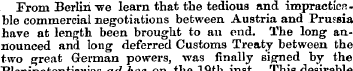
From Berlin -we learn that the tedious and impracticR - ble commercial negotiations between Austria and Prussia have at length been brought to an end . The long announced and long deferred Customs Treaty between the two great German powers , was finally signed by the Plenipotentiaries ad hoc on the 19 th inst . This desirable result has certainly been effected in a great measure by the energy , ability , and prudence , of the Austrian commercial diplomatist ( by birth a Prussian ) M . do Bruck ; and the conclusion has perhaps been hastened by the
premature revolts in Italy , the untoward attempt to assassinate tho Emperor of Austria , and the general insurrectionary symptoms in Hungary and Italy , which have terrified tho excitable king of Prussia , in the midst of his harmless f ) otations of Rhenish and Champagne , and have probably cd him . to feel the instant necessity of a close understanding between the Courts of Vienna and Berlin : a consideration to which commercial jealousies and customs rivalries are made to yield . The Times , in a leading article on the treaty yesterday , thus favourably sums up its leading results : —
" As far ns we are acquainted with the terms of this important convention , it leaves each party at liberty to regulate its own commercial tariff , subject to certain general principles of a liberal charucter . Thus Austria renounces all prohibitory duties , except on the peculiar artielos of salt , tobacco , gunpowder , and playing-cards , which are Government monopolies . The trade in raw materials , &c , as defined in tho first schedule of the treaty , is free . AH export duties on tho produce of one State sold to tho other aro abolished . Navigation dues are equalized between the ships and ports of both countries . Tho consular agents of both countries nro to protect tho common interests of both . Transit dues arc abolished , and access to tho rivers , canals , and railroads of both parties is mutually conceded on tlio same terms . Provision is made for the introduction of a uniform monetary system . The
prosent treaty is concluded for a period of 12 years , and at a mutable , time commissioners aro to consider the propriety of effecting a more intimate commercial union . Meantime tho commercial adherents of Prussia in Germany aro invited to uceedo to tho treaty , as well as tho commercial , adherents of Austria in Italy , including , consequently , the principalities of Parma , Mod en a , and Tuscany . On tho other hand , an tho essential object of tlio Darmstadt loaguo of minor Status was to obtain tlio certainty of cloHor comuiercial rohitioiiH witli Austria before they closed again , with tho oonditioiiH of tho Prussian Zollveroin , tho principal purnoHO of that ucparato combination is secured , anil it is probable that no further difficulties of moment , will provont , tho reconstitution of tho . Zollverein . Even Hanover in not indisposed to join tho new compact , and it is dcsirahlo that , tho Northern States should throw into
tho scalo their influence , favourable as it , is to low import ; thilicN nnd foreign trade . " Tho result of this treaty will therefore probably bo to romovo commercial restrictions , national barriers , and fiscal taxes ovor n very largo portion of Central Europe , extending from tho lOibo to tho Arno , and from Aix-la-Cbapollo to Molgrado ; and thus to bring into easier and freer intoreoiirno no loss than 70 millions of tho jiuwt civilized and industrious inhabitants of the , globe . "
1 ho Roman ( ittJiolic motion for an addresH to tho King of 1 ' rusnia , praying him to order tho recall of certain Ministerial instruction !! of lust , year , for tho bettor preservation of the poneo at " sliitions " ' hold by . Jesuit missionaries in the midst , of Protestant populations , and circumscribing tho liberty of visiting tlio Collegium ( Jcrnianieiun or any foreign educational establishment conducted by . losuitH , was brought , on lft : j | , Saturday ; and , after a very animated dehiilo of moro than . soveu bourn , was rejected by a majority of 17 f > to lii . 'l .
Untitled Article
Tho Kmperor of Austria , that youngNoro , Franz Josopli , hfiB boon ulmost deified by tho journuls of foreign govern-
Untitled Article
198 THE LEADER . [ Saturday ,
-
-
Citation
-
Leader (1850-1860), Feb. 26, 1853, page 198, in the Nineteenth-Century Serials Edition (2008; 2018) ncse.ac.uk/periodicals/l/issues/vm2-ncseproduct1975/page/6/
-