On this page
-
Text (3)
-
Untitled Article
-
Untitled Article
-

Untitled Article
Note: This text has been automatically extracted via Optical Character Recognition (OCR) software. The text has not been manually corrected and should not be relied on to be an accurate representation of the item.
-
-
Transcript
-
Note: This text has been automatically extracted via Optical Character Recognition (OCR) software. The text has not been manually corrected and should not be relied on to be an accurate representation of the item.
Additionally, when viewing full transcripts, extracted text may not be in the same order as the original document.
Untitled Article
world by the following extract from the pen of the Reverend Sidney Godolphin Osborne , and printed by the Times : — " I have before me the report for 1852 of ' the Poor Pious Clergymen Clothing Society ; ' in it there is a copy of a letter of thanks for relief to the manager of that institution , under every letter of the alphabet ; and these are headed ' Extracts from Correspondence / I fiiid in these letters from clergymen , —i . e ., from men who might be bishops—gratitude expressed for coats , which fitted themselves as though they ' had been made to measure ; ' secondhand frocks , equally
fortunate in At , ' for their daughters ; ' ' brown linen , which makes up into wagoner's bibs for our boys ; ' ' Old bed curtains , which , re-made , made nice winter curtains for my room / ' When we are sitting round our hearth , ' writes letter ' G , ' we talk over our dress , and one points to one thing and another to another , all and each supplied by your parcel . ' Letter ' L' says , ' Accept our warmest thanks for all you have sent , but especially for the linen , which Mrs . L much required ; the boqts and coats are matters of delight to my boys . ' ' O' says , ' The black cloth comes very seasonably ; the coat , trousers , and waistcoat , ready-made , fit very nicely / ' Q' says , 'My dear daughters are delighted ;
they know that they could not be clothed , year after year , as they are , without your kind help . ' ' U * says , ' The cloth would be amply sufficient to include a vest , did I not usually wear a frock-coat , which will require the whole quantity now sent ; but this is of no moment , as I scarcely need a new vest / ' Y' says , ' The articles are so good and so suitable , that we stand astonished ; you will be pleased to hear that in most instances the wearing apparel is really a good fit , requiring but little alteration ere it can be worn / 'Z' writes , ' Humiliating as it is to the natural feelings to be the object of such bounty , I cannot but yet feel that the association which you represent is entitled to my deep gratitude and thanks / "
Probably among these humble men we might find some of the lights of the Church as she should be . What a hard step-mother tbey have found her as she is . She ordained them to be children of Gf-od ; she compels them to be the suppliants of men for food and raiment to keep them respectable . A member of this national Church dare not preach where he can , and so get him together a congregation who trust and love him . No , he is admitted to the grace of starvation , while the property amassed in the course of ages is shared mostly on the principle of patronage and favouritism .
Tben there is the enormous folly of simony ; the enormous folly of non-residence ; the enormous folly of doing work by badly paid deputies , who are ground down to the earth—the clerical Uncle Toms of clerical Legrees—victims of the worst kind of slavery , the slavery of mock freedom , the slavery whoso alternative is starvation , It is said curates connive at low salaries , glad to catch at straws . Here is a case which has been brought under our notice ; we commend it to the attention , if we may be allowed , of the Bishop of Bath and Wells .
Not a hundred miles from the fine old episcopal palace of Wells there is an aristocratic rectory . The rector , good easy man , is Japped in the luxury of many good things . Cited at every visitation , by the indulgence of the superior clerical authority , he never answers to his name . This gentleman receives one-half of the tithes , the rent of the Rectory House , and of above a hundred acres of glebe land . For this pay ho has never given any consideration , never done any duty , and we believe he has never been in the parish since ho was inducted and read himself in abou t thirty years ago *! Now this parish , of which tins worthy id lloctor , comprises five hamlets and twelve
hundred souls . Who looks after their spiritual welfare P The Hector is one of those shocking anomalies , a clerical lay impropriator ; ho takes iho lion ' s share ; and other lay impropria , tors take tho remainder of the tithes and glebe lands . The Vioar , who does the work , gets something over a hundred a year . Bui ; then the liectory House in lot to him ; and when ho has paid rent and taxes , hia honorarium is less than a hundrod a year ! Tho natural consequence ensues . Tho vicar , a gentleman and a scholar , as well as a clergyman , is obliged to take pupils , and , of course , tho time he devotes to them ia iilchod from tho parish euro . Js this not an abomination P Now wo have reason to believe , this is by no means an unusual , or even an extreme case . Tho Church has splendid bishops , opulent d eans , magnificent canons—in tho city eonso $
the same standard judges her curates to be poor , and not respectable enough for promotion . If the Church had her parliament , properly constituted , could these things be P If her parliament could not devise a remedy , then—but we must leave futurity to settle that question . It is possible that all this gross mismanagement may bring about changes wonderful to survivors . At all events , whether the property held by the magnificoes of the Church be rightfully the property of that Church , or the property of the Nation , one thing is clear—a just and earnest people will not long allow it to be abused and misapplied , after the fashion current for these many , many years .
Untitled Article
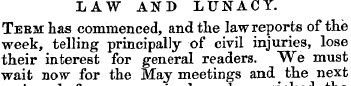
LAW AND LUNACY . Term has commenced , and the law reports of the week , telling principally of civil injuries , lose their interest for general readers . We must wait now for the May meetings and the next assizes before we again hear how wicked the world is ; meanwhile we must endeavour to forget with what an equality of failure these two noxious influences have hitherto attempted to improve it . " There are then but two cases of late date which seem to deserve mention at our hands : the first is in Monday ' s papers , and is that of a young mother , aged 20 , wilfully murdering her child , as stupidly as brutally , with oil of vitriol , for the mere sordid motive of obtaining the paltry gain to be got out of a burial club , of which the infant had been entered as a member . In the trial there is nothing peculiar to remark ; nor is there , we fear , in the wretched woman who was tried , any such great peculia ^ ty as there should be . So low is the moral cultivation of the classes by whose
patronage burial clubs thrive , that among them the murder of members by their relatives for the fees is of almost constant occurrence—that even maternal instinct becomes distorted or destroyed . So low is their mental cultivation , that discovery always follows on their crime , and the secretary of the club hangs them , as they poisoned their acquaintances , neither from personal malice nor from public feeling , but simply with a calm and business-like view to the possession of the
undertaking expenses . In this case , the mother administers oil of vitriol to her child , and doubtless is surprised at the traces left by the dose—an argument for or against education , seeing that the crime would not have been committee ! , had the criminal been properly trained ; and on the other hand , that it would not have been discovered had she not been perfectly ignorant . The only question left by the dilemma is , whether to prevent be not better than to punish .
The other case we find reported in the Durham Advertiser ; it occurred at Quarter Sessions , and , as tending to show that at other lunatic asylums besides the Bethlehem , the practice of gross cruelty towards insane persons still exists , should not be lost sight of by those who do not think that diseases of the mind are to be cured by sufferings inflicted on the body . The Commissioners , we notice with pleasure , are on the alert ,
and it was in consequence 01 a communication from them that tho matter became the subject of inquirv . As tho accusation runs , the proprietor of tho ' Dunston Asylum has horsewhipped one of his pationts , and ( on the ground that he used them to hi to him with ) has caused the extraction of some of his teeth . Tho horsewhipping does not appear to bo denied , tho tooth-drawiug responsibility seems possibly to lie with the dentist , and not with ^ he accused . Hero , therefore , the
matter lies ; a report is sent to the Commissioners ; the license of Mr . Wilkinson , against whom this misconduct is charged , is suspended ; and the public waits for tho result . Wo trust that it will be satisfactory , and that if the vindication of tho accused be not suflicient , his punishment will be certain . A question of Bar morality , often canvassed , but never yet properly pronounced upon , has been raised again in the Leicester Election Committee . The petition ,
weak enough in itself , was deserted one day altogether by the two leading couiihoI who had boon paid to support it ; the . unfortunate junior , whose principal occupation should havo been to look official , and mend tho pens of his seniors , was loft to cope , unassisted , with Serjeant Wilkins , the most formidable antagonist ho could have hud ; and a not over-brilliant Committee found itself without that excuse for not understanding the arguments , which , hod thoro boon
any opposition , they might have got rid of by saying they had been met . Accordingly , there were symptoms of disgust , murmurs that barristers should not receive payment for duties which they did not perform , and at length a record made on the minutes , " That the absence of both the leading counsel for the petitioners was unjust to their constituents and disrespectful to the Committee . " However , ubiquity is lucrative , and the habit of taking briefs which they must inevitably neglect , a barristerial
characteristic of long standing . So the leading counsel next day remonstrated , the intelligent Committee relented , the obnoxious minute was expunged , and neglect of clients by gentlemen who never neglect the honorarium , has received Parliamentary sanction . Juniors may deplore , and the public may denounce this state of things in the legal profession ; at present we wish only to expose it . But the matter is hardly amenable to public opinion . Clients and solicitors have protection in their own hands , and it is their own fault if barristers are encouraged in obtaining money under false pretences .
Untitled Article
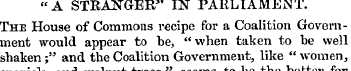
"A STKANGEB / ' IN PARLIAMENT . The House of Commons recipe for a Coalition Government would appear to be , " when taken to be well shaken ; " and the Coalition Government , like " women , spaniels , and walnut trees , " seems to be the better for the beating—at any rate takes it as a matter of course . It set the fashion of " unprincip led combinations , " accepts the penalty ; Mr . Disraeli having to the full his revenge on Thursday for the coalescing vote which drove him prematurely from office ; and Mr . Butt and Mr . Cobden , on Tuesday , on the Kilmainham and
Clitheroe matters , affording to the nation ample evident ^ that there may , after all , be some inconvenience from a too philosophical dispensation with " Government by party / ' But , properly considered , the teasing incidents of the week contribute perhaps new evidence of the immense strength of the Cabinet , which lias illustrated the fable of the bundle of sticks , and the sagacity of Lord Shelburne ' s notion that if the great families would only share and share alike , the destinies of humanity would be easily manageable . A weak Government would have been forced into resignation
after such a set of divisions ; a strong Government does not feel the blows , hardly thinks it decent to notice the intentions , of dwarfs in league against the giant . Besides , is not Lord John leader , and . is he not famous as the Toots of politics whose view of any catastrophe is that it ' s of no conseque nce ? Struck on one cheek he is notorious for a development of iace ; or , at all events , the extent of his indignation when kicked has been the procrastinating , " You 'd better not do that again . " Tho present is also a Government which takes too high ground to be sensitive to petty assaults . Lost in
comprehensive considerations about civil and religious liberty , why should it mind a snub about Kilmainham , a correction about Clitheroe , or a sotting down about a paltry 200 , 000 / . worth of advertisement duty ? Pistol Gladstone , pressed for a reckoning' with wan tens of situations , is exclamatory about golden joys and the reduction of the national debt . Skhnpole Sidney Herbert , pushed at tho doors of Kilmainham for payment of a debt for lodgings , goes of ! " into statesmanlike generalities about the lieauties of benevolence , and the bouquet of British virtue . Cheapen literature ! said Lord John to Mr . Gibson , " How ean you waste time
in such talk about details , when I have put before you a bill for national education ? " " Stop corruption" is the cry of committee niter committee , and Lord John does agree , generally , to a commission , to pass tho time ; but what moro can you expect when he's so engaged in tho crowning victory of religious liberty which ho got last night P Leader of a Government beaten four times in a week , you might suppose fiorao slight modesty in his tone in tho presence of tho triumphant Jew gentleman , who rewards by defeatsthe Cabinet which removes Hebrew disabilities . But Lord John , always looking after gre > it principles , is quite indifferent about small facts . No religious Keclesiastieid
liberty is his creed when be pusses an Titles Bill , and political liberty is bis < -recd when be agrees with Lord I ' almerston ( when tl . e two agree tiieir unanimity is wonderful ) that the system of police visits to jH ) litiwil refugees is suitable to the Unglish climate . All those inconsistencies are dinceii » cd accurately onough by tho parties who lmvu an interest in disabling tho public of a credulity in conservative liberality ; « n < l though there are advantages about a Coalitioii which includes both the preacher and tho frightful example , tho influence , of the last iw in thin cas * o likely to bo the longtwt felt . Thoso interpellationsabout KosHuth hint nigliL were extremely inconvenient , to a Government which wanted f /> look bold advanced
Untitled Article
April 16 , 1853 . J THE LEADER , 375
-
-
Citation
-
Leader (1850-1860), April 16, 1853, page 375, in the Nineteenth-Century Serials Edition (2008; 2018) ncse.ac.uk/periodicals/l/issues/vm2-ncseproduct1982/page/15/
-