On this page
-
Text (2)
-

Untitled Article
-

Untitled Article
Note: This text has been automatically extracted via Optical Character Recognition (OCR) software. The text has not been manually corrected and should not be relied on to be an accurate representation of the item.
-
-
Transcript
-
Note: This text has been automatically extracted via Optical Character Recognition (OCR) software. The text has not been manually corrected and should not be relied on to be an accurate representation of the item.
Additionally, when viewing full transcripts, extracted text may not be in the same order as the original document.
Untitled Article
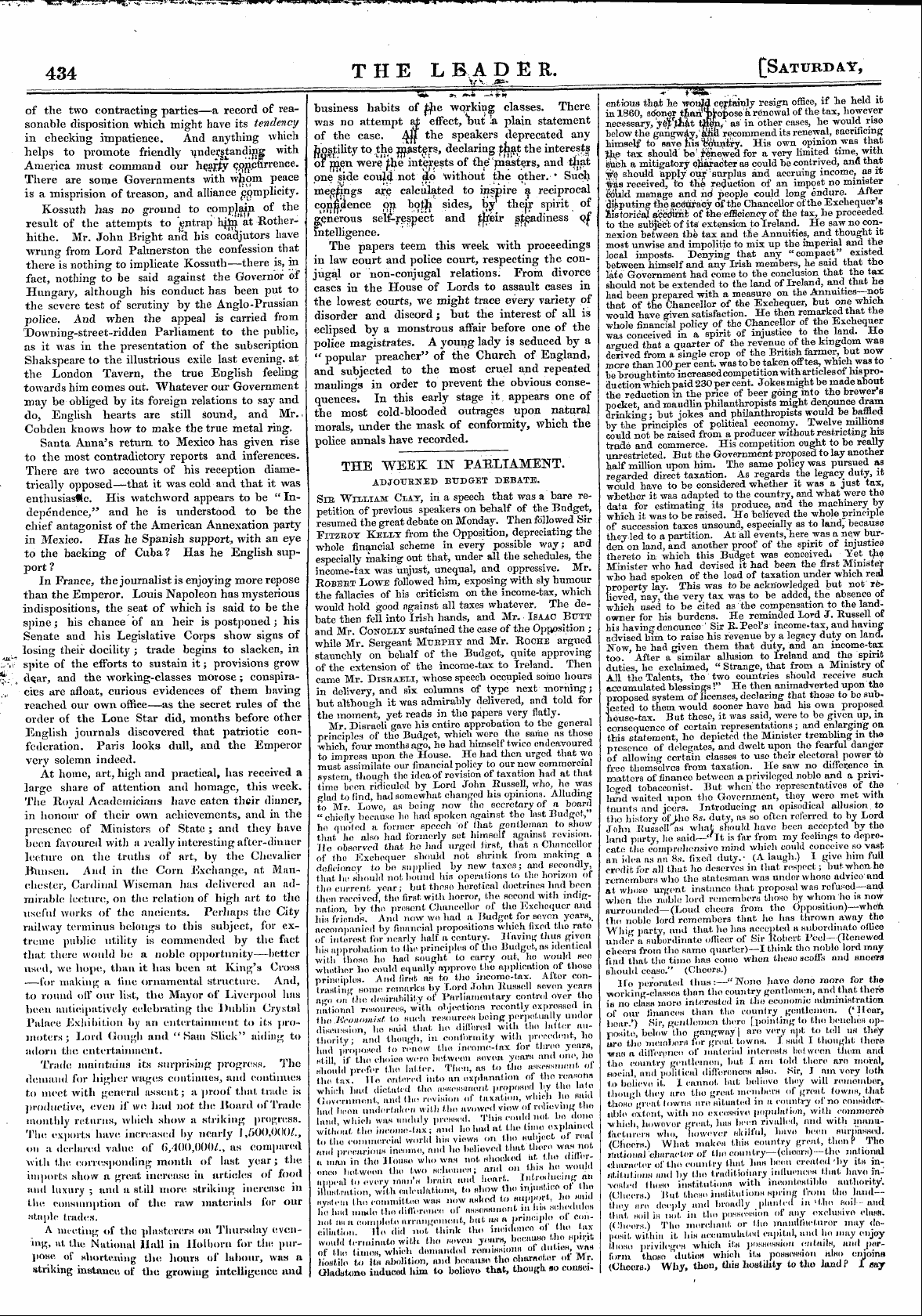
of the two contracting parties—a record of reasonable disposition which might have its tendency in checking impatience . And anything which helps to promote friendly understanding with America must command our heaj ^ y conptirrence . There are some Governments with wjbom peace is a misprision of treason , and alliance complicity Kossuth has no ground to comph ^ in of the result of the attempts to ' ptrap hjbf at Rotherhithe . Mr . John Bright and his coadjutors have wrung from Lord Pahnerston the confession that there is nothing to implicate Kossuth—there is , in
fact , nothing to be said against the Governor of Hungary , although his conduct has been p ut to the severe test of scrutiny by the Anglo-Prussian police . And when the appeal is carried from TDowning-street-ridden Parliament to the public , as it was in the presentation of the subscription Shakspeare to the illustrious exile last evening , at the London Tavern , the true English feeling towards him comes out . Whatever our Government may be obliged by its foreign relations to say and do , English hearts are still sound , and Mr . Cobden knows how to make the true metal ring .
Santa Anna ' s return to Mexico has given rise to the most contradictory reports and inferences . There are two accounts of his reception diametrically opposed—that it was cold and that it was enthusiastic . His watchword appears to be " Independence , " and he is understood to be the chief antagonist of the American Annexation party in Mexico . Has he Spanish support , with an eye to the backing of Cuba ? Has he English support ?
In France , the journalist is enjoying more repose than the Emperor . Louis Napoleon has mysterious indispositions , the seat of which is said to be the spine ; his chance of an heir is postponed ; his Senate and his Legislative Corps show signs of losing their docility ; trade begins to slacken , in spite of the efforts to sustain it ; provisions grow d ^ ar , and the working-classes morose ; conspiracies are afloat , curious evidences of them having reached our own office—as the secret rules of the
order of the Lone Star did , months before other English journals discovered that patriotic confederation . Paris looks dull , and the Emperor very solemn indeed . At home , art , high and practical , has received a large share of attention and homage , this week . The Royal Academicians have eaten their dinner , in honour of their own achievements , and in the presence of Ministers of State ; and they have been favoured with a really interesting after-dinner lecture on the truths of art , by the Chevalier Runscn . And in the Corn Exchange , at
Manchester , Cardinal Wiseman has delivered an admirable lecture-, on the relation of high art to the useful works of the ancients . Perhaps the City railway terminus belongs to this subject , for extreme public utility is commended by the fact that there would be a noble opportunity—better used , we hope , than it has been at King ' s Cross —for making a line ornamental structure . And , to round off our list , the Mayor of Liverpool has been auticipatively celebrating the Dublin Crystal Palace Exhibit ion by an entertainment to its promoters ; Lord Gougli and " Sam Slick" aiding to
adorn the entertainment . Track ; maintains its surprising progress . The demand for higher wages continues , and continues to meet with general assent ; a proof that trade ; is productive , even if we ; had not tin ; Board of Trade monthly returns , which show a striking progress . The exports have ; increased by nearly 1 , 500 , 000 / ., on a declined value of ( J ,-100 , ()()()/ ., as compared
with the corresponding month of last year ; the imports show a great increase in articles of food and luxury ; and a still more striking increase in the consumption of the raw materials for our staple trades . A uu-eting of the plasterers on Thursday evening , at , U » e National IIall in llolborn for tin ; purpose of Hhortening the hours of labour , was a striking instance of the growing intelligence and
business habits of jthe working classes . There was no attempt at effect , l > ut ; a plain statement of the case . AJJ the speakers deprecated any hostility to the jnaste ^ , declaring that the interest ^ of men were we interests of the piasters , and that one ' side could not dp without the other . * Such meetings are calculated to inspire a reciprocal conscience on bo $ i sides , by their spirit of generous self-respect and weir steadiness q £ Intelligence . The papers teem this week with proceedings in law court and police court , respecting the conjugal or non-conjugal relations . From divorce cases in the House of Lords to assault cases in the lowest courts , we might trace every variety of disorder and discord ; but the interest of all is eclipsed by a monstrous affair before one of the police magistrates . A young lady is seduced by a " popular preacher" of the Church of England , and subjected to the most cruel and repeated
maulings in order to prevent the obvious consequences . In this early stage it appears one of the most cold-blooded outrages upon natural morals , under the mask of conformity , which the police annals have recorded .
Untitled Article
THE WEEK IN PARLIAMENT . ADJOURNED BUDGET DEBATE . Sib Wixxiam Ciat , in a speech that was a bare repetition of previous speakers on behalf of the Budget , resumed the great debate on Monday . Then followed Sir Fitzeot Kelly from the Opposition , depreciating the whole financial scheme in every possible way ; and especially making out that , under all the schedules , the income-tax was unjust , unequal , and oppressive . Mr . Eobeet Lowe followed him , exposing with sly humour the fallacies of his criticism on the income-tax , which would hold good against all taxes whatever . The debate then fell into Irish hands , and Mr . Isaac Butt and Mr . Conolxt sustained the case of the Opposition ; while Mr . Sergeant Mubpht and Mr . Roche argued staunchly on behalf of the Budget , quite approving of the extension of the income-tax to Ireland . Then came Mr . Disraeli , whose speech occupied soiue hours in delivery , and six columns of type next morning ; but although it was admirably delivered , and told for the moment , yet reads in the papers very flatly . Mr . Disraeli gave his entire approbation to the general principles of the Budget , which were the same as those ¦ which , four months ago , he had himself twice endeavoured to impress upon the House . He had then urged that wo must assimilate our financial policy to our new commercial system , though the idea of revision of taxation had at that timo been ridiculed by Lord John Russell , who , ho was glad to find , had somewhat changed his opinions . Alluding to MrLoweas being now the secretary of a board
. , " chiefly because he had spoken against the last Budget , " he quoted a former speech of ( hat gentleman to show that ho also had formerly set himself against revision . Tie observed that he had urged first , that a Chancellor of tho Exchequer should not shrink from making a deficiency to be supplied by new taxes ; and secondly , that he should not bound his operations to the horizon of tho current year ; but these heretical doctrines had been then received , tho first with horror , the second with indignation , by tho present Chancellor of tho Exchequer and his frionds . And now we had a Budget for seven years , accompanied by financial propositions which fixod tho rato of interest for nearly half a century . Having thus given
his approbation to the principles of tho Budget , ns identical with those he had sought to carry out , ho would see whether ho could equally approvo the application ot those principles . And firHfc as to tho income-tax . Alter contrasting Bomo remarks by Lord John Itussoll seven years nan on the desirability of Parliamontary control over the national resources , with objections recently expressed in tho Mronomist to such resources being perpetually unelor discussion , bo said that ho dillon-d with tho latter authority and though , in conformity with precedent , ho had proposed to renew tho income-tax for tliroo years , Ht ill if tho ehoico were between ttovon years and one , ho
should prefer tho latter . Then , as to tho nHsmsmont . of the tax ITo entered into an explanation of the reasons which had dictated tho assessment proposed by the late « ov « u-mnmil , and fhn revision of taxation , which ho said had been undertaken with tho avowed vie > w o relieving \\ w bind , which was unduly pressed . This could not bo done without tho income-lax ; and he had at the Him . ejxp lamee to tho commercial world his views on tho hu » j « ct of re ami precarious income , and ho boliovod that thoro was not n mar . in tho Houso who was not shocked at tho di ( N re , noo between tho two schemes ; and on tins ho would m > .. nl In ,, vorV man ' s brain and heart . Inlro . lucmg au in
, ilhWmtion , with calculations , to show tho injustice or , HyHiv . ii tho committee was now askod to support , > e > *}» i he had undo the ) eliilWenee > of assessment in his schedules not > ih a complete amusement , hut as a principle « , 1 conciliation , llo did not think the , incidence- ol Mio ax would terminate with tho wovon yours , bocauHO tho Hjm . it of tho limoH , which demanded remissions oi duties was hoHtilo to its abolition , and because tho character ot Mr . Gladstone , induced liim to believe- that , though no
conscientious that he would certainly resign office , if he held it in 1860 , sooner t £ an pk > pose a renewal of the tax , however necessary , yefjtirfit trfeta , ' as in other cases , he would rise below the gangway / & £ & recommend its renewal , sacrificing himself to save fris Wunfcry . His own opinion was that Jhe tax should be' renewed for a very limited time , with Shell a mitigatory oh ' aracter as could be contrived , and that Tjre should apply our surplus and accruing income , as it ps received , to the reduction of an impost no minister Mxld manage and nb people could long endure . After disputing the accuracy of the Chancellor of the Exchequer s historical a ^ c cfttafc of the efficiency of the tax , he proceeded to the subject of its extension to Ireland . He saw no connexion between the tax and the Annuities , and thought it
most unwise and impolitic to mix up the imperial and the local imposts . Denying that any " compact" existed between himself and any Irish members , he said that the lafe Government had come to the conclusion that the tax should not be extended to the land of Ireland , and that he had been prepared with a measure on the Annuities—not that of the Chancellor of the Exchequer , but onewheh would have given satisfaction . He then remarked that the whole financial policy of the Chancellor of the Exchequer was conceived in a spirit of injustice to the land . He argued that a quarter of the revenue of the kingdom was derived from a single crop of the British farmer , _ but now more than 100 j > er cent , was to be taken off tea , which was to be "broughtinto increased competition with articles of hisproduction which paid 230 per cent . Jokes might be made about the reduction in the price of beer going into the brewer s Docket , and maudlin philanthropists might denpunce dram
drinking ; but jokes and philanthropists would be Dameq by the principles of political economy . Twelve millions could not be raised from a producer without restricting his trade and commerce . His competition ought to be really unrestricted . But the Government proposed to lay another half million upon him . The same policy was pursued as regarded direct taxation . As regards the legacy duty , it would have to be considered whether it was a just tax , whether it was adapted to the country , and what were the data for estimating its produce , and the machinery by which it was to be raised . He believed the whole principle of succession taxes unsound , especially as to land , because they led to a partition . At all events , here was a new burden on land , and another proof of the spirit of injustice thereto in which this Budget was conceived * Yet the Minister
Minister who had devised it had been the first wlo had spoken of the load of taxation under which real property lay . This was to be acknowledged but not relieved , nay , the very tax was to be added , the absence of wiich used to be cited as the compensation to the landowner for his burdens . He reminded Lord J . Russell of his having denounce ' Sir E . Peel ' s income-tax , and having advised him to raise his revenue by a legacy duty on land . Now , he had given them that duty , and an income-tax too . After a similar allusion to Ireland and the spirit duties , he exclaimed , " Strange , that from a Ministry of All the Talents , the two countries should receive such accumulated blessings ! " He then animadverted upon tho proposed system of licenses , declaring that those to be subjected to them would sooner have had his own proposed house-tax . But these , it was said , were to bo given up , in consequence of certain representations ; and enlarging on this statement , he depicted the Minister trembling in tho teartul clan
prcsenco of delegates , and dwelt upon the ger of allowing certain classes to use their electoral power t 6 free themselves from taxation . He saw no difference in . matters of finance between a privileged noble and a privileged tobacconist . But when the representatives of tho land waited upon tho Government , thoy were met with taunts and jeers . Introducing an episodical allusion to tho history of the 8 s . duty , as so often referred to by Lord John Russell as what should have been accepted by tho land party , he said—'' It is far from my feelings to deprecate the comprehensive mind which could conceive so vast h him full
an idea as an 8 s . fixed duty .- ( A laug . ) I give credit for all that lie deserves in that respect ; but when he remembers who tho statesman was under whoso advico and at whoso urgent instance that proposal was refused—and when the noble lord remembers those by whom ho is now surrounded— ( Loud cheers from the Opposition)—when tlui noble lord remembers that he has thrown away the Whig party and that he has accepted a subordinate oflico under a subordinate officer of Sir Robert reel— ( Renewed cliecra from the samo quarter)—I think tho noble lord may find that tho timo has como when the / so scoffs and enoefra
slumld cease . " ( Cheers . ) Ho perorated thus : —" None have < lono raoro for tho v * orking-ehiHses than tho country gentlemen , and that there is no class more interested in tho economic administration of our finances than tho country gentlemen . ( 'Hear , hear . ' ) Sir , gentlemen thores [ pointing to tho benches opposite , bolow tho gangway | ares very apt to tell uH theiy uro tho numbers for great towns . I . said I thought thesre was a elilfeirpnce ) of material interests hoi ween them and tho country gcntlomem , but I am told thoro aro moral , social , and political difloresncoH also . Hir , I . am ve > ry le > f , h to believe ) it . I eanne > t but belieivo thoy will reiinemibor , though tlie'y are ) the great members of great towns , that thoso groat towns are ; situated in a e-ountry of no considefrubie ) oxtont , with no oxeemsivo population , with e-ommorco whie : h , however groat , has boon rivalled , nnel with manufacturers whe > , howeve-r skilful , have ) be ^ n surpassed . ( Cheers . ) What makes thin cemntry groat , themP Tho national character of the ) country— ( cheiors)—tho national diameter of the ) cemntry that has beeui create *! 'by its institutions nnel by tho traditionary intlucne-os that haves in-TOflte-el thewei institutiems with irieemtesliblo authority . ( UheeTH . ) But these ) iiistitutiems spring fremi tho landtli « . y nre ) deeply anel broadly plante-d in W . ho Se > il and that soil is not' in thei poswissiem e > f any eixclusivo e-hiHB . ( Chews . ) The ) ine > reihaiit e > r tho innnuYneturor may deposit , within it his ueicumulafed capital , uiul ho may emjoy l , lie > . se > privile-ge-s which ittt po . smissiem eintails , and peirform thoHO elutioH which its possession alse > enjoins ( Clicore . ) Why , then , this hostility to tho Jond ? I flay
Untitled Article
434 THE LEADER , [ Saturd ay ,
-
-
Citation
-
Leader (1850-1860), May 7, 1853, page 434, in the Nineteenth-Century Serials Edition (2008; 2018) ncse.ac.uk/periodicals/l/issues/vm2-ncseproduct1985/page/2/
-