On this page
-
Text (2)
-

Untitled Article
-

Untitled Article
Note: This text has been automatically extracted via Optical Character Recognition (OCR) software. The text has not been manually corrected and should not be relied on to be an accurate representation of the item.
-
-
Transcript
-
Note: This text has been automatically extracted via Optical Character Recognition (OCR) software. The text has not been manually corrected and should not be relied on to be an accurate representation of the item.
Additionally, when viewing full transcripts, extracted text may not be in the same order as the original document.
Untitled Article
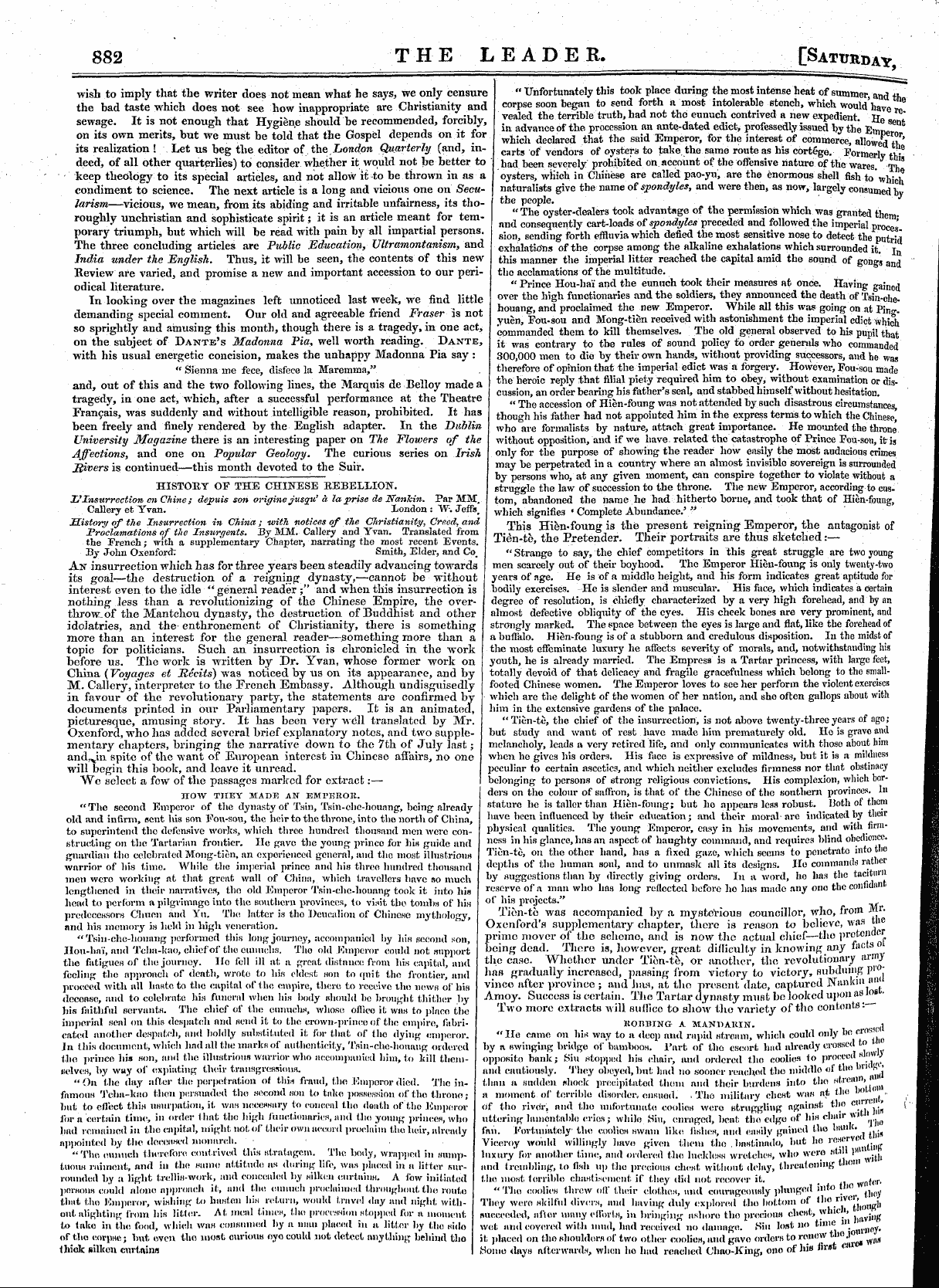
wish to imply that the writer does not mean what he says , tve only censure the bad taste which does not see how inappropriate are Christianity and sewage . It is not enough that Hygiene should he recommended , forcibly , on its own merits , but we must be told that the Gospel depends on it for its realisation ! Let us beg the editor of the London Quarterly ( and , indeed , of all other quarterlies ) to consider whether it would not be better to keep theology to its special articles , and not allow it-to be thrown in as a
condiment to science . The next article is a long and vicious one on Secularism— -vicious , we mean , from its abiding and irritable unfairness , its thoroughly unchristian and sophisticate spirit ; it is an article meant for temporary triumph , but which will be read with pain by all impartial persons . The three concluding articles are Public Education , Ultramontanism , and India under the English . Thus , it will be seen , the contents of this new Review are varied , and promise a new and important accession to our periodical literature .
In looking over the magazines left unnoticed last week , we find little demanding special comment . Our old and agreeable friend Fraser is not so sprightly and amusing this month , though there is a tragedy , in one act , on the subject of Dante ' s Madonna Pia , well worth reading . Dante , with his usual energetic concision , makes the unhappy Madonna Pia say : " Sienna me fece , disfeee la Maremma , " and , out of this and the two following lines , the Marquis de Belloy made a tragedy , in one act , which , after a successful performance at the Theatre Francais , was suddenly and without intelligible reason , prohibited . It has been freely and finely rendered by the English adapter . In the Dublin University Magazine there is an interesting paper on The Flowers of the Affections , and one on Popular Geology . The curious series on Irish Hivers is continued—this month devoted to the Suir .
Untitled Article
HISTORY OF THE CHINESE REBELLION . IS Insurrection en Chine ; depuis son origlne jusqy ? a la prise de Nankin . Par MM , Callery et Yvan . London : W . Jeffs , History of the Insurrection in China ; with notices of the Christianity , Creed , and Proclamations of the Insurgents . By MM . Callery and Yvan . Translated from the French ; with a supplementary Chapter , narrating the most recent Events . By John Oxenforcfc Smith , Elder , and Co An insurrection which has for three years been steadily advancing towards its goal—the destruction of a reigning 1 dynasty , —cannot be without interest even to the idle " general reader ; " and when this insurrection is nothing Jess than a revolutionizing of the Chinese Empire , the overthrown of the Mantchou dynasty , the destruction of Buddhist and other idolatries , and the enthronement of Christianity , there is something
more than an interest for the general reader—something more than a topic for politicians . Such an insurrection is chronicled in the work before us . The work is written b y Dr . Yvan , whose former work on China { Voyages et Recits ) was noticed by us on its appearance , and by M . Callery , interpreter to the French Embassy . Although undisguisedly in favour of the revolutionary party , the statements are confirmed b y documents printed in our Pai'liamentary papers . It is an animated , picturesque , amusing story . It has been very well translated by Mr . Oxenford , who has added several brief explanatory notes , and two supplementary chapters , bringing the narrative down to the 7 th of July last ; and . in spite of the want of European interest in Chineso affairs , no one will begin this book , and leave it unread . We select a few of the passages marked for extract : —
HOW THEY MADE AN EMPEROR . " The second Emperor of the dynasty of Tsin , Tsin-che-houang , being already old and infirm , sent his Bon Fou-sou , the heir to the throne , into the north of China , to superintend the defensive works , which three hundred thousand men Avere constructing on the Tartarian frontier . He gave the young prince for his guide and guardian the celebrated Mong-tien , an experienced general , and the most illustrious warrior of his time . While the imperial prince and his three hundred thousand men were working at that great wall of China , which travellers have so much lengthened in their narratives , tho old Emperor Tsin-chc-houang took it into his head to perform a pilgrimage into the southern provinces , to visit tho tombs of his predecessors Clmen and Yu . The latter is tho Deucalion of Chineso mythology , nnd his memory is held in high veneration .
" Tsin-chc-houang performed tins long journey , accompanied by his second son , Hou-hai , and Tcha-kao , chief of tho eunuchs . Tho old Emperor could not support the fatigues of the journey . lie fell ill at a great distance from his capital , and feeling the approach of death , wrote to his oldest son to quit tho frontier , and proceed with nil haste to the capital of the empire , there to receive tho news of his decease , and to celebrate his funeral when his body nhould be brought thither by his faithful servants . The chiof of the eunuchs , whose ; office it was to placo the imperial seal on this despatch and send it to the crown-prince of the empire , fabricated another despatch , and boldly substituted it for that of the dying emperor . Jn this document , which had all the marks of authenticity , Tsin-che-houang ordered tho prince his son , and the illustrious warrior who accom panied him , to kill themselves , by wuy of expiating their transgressions .
" On the day sifter the perpetration of thin fraud , tho Emperor died . The infamouH Tcha-kao then persuaded the . second son to take possession of the throne ; but to effect this usurpation , it was necessary to conceal the doiith of the Emperor for a certain time , in order that the high functionaries , and the young princes , who had remained in the capital , might not of their own accord proclaim the heir , already appointed by the deceased monarch . " Tho eunuch therefore contrived this stratagem . The body , wrapped in fmmptuouH raiment , nnd in the name attitude as during life , was placed in a litter surrounded by a light trellis-work , and concealed by silken curtains . A few initiated porsons could alone approach it , and the eunuch proclaimed throughout the route that the Emperor , wishing to hasten his return , would travel day and night without alighting from his litler . At meal times , the procession stopped for a moment , to take in the food , which wan consumed by a man placed in a litter b y the sido of tho corpse ; but oven tho most ouvjoub eyo could not detect nnything behind tho thick Million curtains
" Unfortunately this took place during the most intense heat of summer , and th corpse soon began to send forth a most intolerable stench , which would ' hav vealed the terrible truth , had not the eunuch contrived a new expedient . He **' in . advance of the procession an ante-dated edict , professedly . issued by the EmpeT ^ which declared that the said Emperor , for the interest of commerce , allowed th * carts of vendors of oysters to take the same route as his cortege . -Formerly th ' had been severely prohibited on , account of the offensive nature of the wares . Th * oysters , which in Chinese are called pao-yu , are the enormous shell fish to ' which naturalists give the name of spondyles , and were then , as now , largely consumed by the people .
" The oyster-dealers took advantage of the permission which was granted thenv nnd consequently cart-loads of spondyles preceded and followed the imperial proces sion , sending forth effluvia which defied the most sensitive nose to detect the putrid exhalations of the corpse among the alkaline exhalations which surrounded it . j n this manner the imperial litter reached the capital amid the sound of gongs and the acclamations of the multitude . " Prince Hou-hai and the eunuch took their measures at once . Having gained over the high functionaries and the soldiers , they announced the death of Tsin-chfl .
houang , and proclaimed the new Emperor . While all this was going on at Pino- , yuen , Fou-sou and Mong-tien received with astonishment the imperial edict which commanded them to kill themselves . The old general observed to his pupil that it was contrary to the rules of sound policy to order generals who commanded 300 , 000 men to die by their own hands , without providing successors , and he was therefore of opinion that the imperial edict was a forgery . However , Fou-sou made the heroic reply that filial piety required him to obey , without examination or discussion , an order bearing his father ' s seal , and stabbed himself without hesitation .
" The accession of Hien-foung was not attended by such disastrous circumstances , though his father had not appointed him in the express terms to which the Chinese , ' who are formalists by nature , attach great importance . He mounted the throne without opposition , and if we have related the catastrophe of Prince Fou-sou , ifrig only for the purpose of showing the reader how easily the most audacious crimes may be perpetrated in a country where an almost invisible sovereign is surrounded by persons who , at any given moment , can conspire together to violate without a struggle the law of succession to the throne . The new Emperor , according to custom , abandoned the name he had hitherto borne , and took that of Hien-foung , which signifies Complete Abundance / " This Hien-foung is the present reigning Emperor , the antagonist of Tien-te , the Pretender . Their portraits are thus sketched : —
" Strange to say , the chief competitors in-this great struggle are two young men scarcely out of their boyhood . The Emperor Hien-foung is only twenty-two years of age . He is of a middle height , and his form indicates great aptitude for bodily exercises . He is slender and muscular . His face , which indicates a certain degree of resolution , is chiefly characterized by a very high forehead , and by an almost defective obliquity of the eyes . His cheek bones are very prominent , and strongly marked . The space between the eyes is large and flat , like the forehead of a buffalo . Hien-foung is of a stubborn and credulous disposition . In the midst of the most effeminate luxury he affects severity of morals , and , notwithstanding his youth , he is already married . The Empress is a Tartar princess , with large feet , totally devoid of that delicacy and fragile gracefulness which belong to the smallfooted Chinese women . The Emperor loves to see her perform the violent exercises which are the delight of the women of her nation , and she often gallops about with
him in the extensive gardens of the palace . " Tien-te , the chief of the insurrection , is not above twenty-three years of ago ; but study and want of rest have made him prematurely old . He is grave and melancholy , leads a very retired life , and only communicates with those about him when he gives his orders . His face is expressive of mildness , but it is a mildness peculiar to certain ascetics , and which neither excludes firmness nor that obstinacy belonging to persons of strong religious convictions . His complexion , which borders on the colour of saffron , is that of the Chinese of the southern provinces . In
stature he is taller than Hien-foung ; but ho appears less robust . Both of them have been influenced by their education ; and their moral are indicated by their physical qualities . The young Emperor , easy in his movements , and with firmness in his glance , has an aspect of haughty command , and requires blind obedience . Tien-te , on tho other hand , has a fixed gaze , which seems to penetrate into the depths of the human soul , and to unmask all its designs . He commands rather by suggestions than by directly giving orders . In a word , ho has the taciturn reserve of a man who has long reflected before ho has made any one the confide "
of his projects . " Tien-to was accompanied by a mysterious councillor , who , from Mr - Oxenford ' s supplementary chapter , there is reason to believe , was the prime mover of tho scheme , and is now the actual chief—the pretender being dead . There is , however , great difliculty in knowing any f » c ' ° the case . Whether under TiJsn-tfc , or another , the revolutionary army lias gradually increased , passing from victory to victory , subduing P " vince after province ; and has , at tho present date , captured Nankin am Amoy . Success is certain . Tho Tartar dynasty must be looked upon as Jos Two more extracts avjII sullico to show tho variety of tho contents : KOBUING A MANDARIN . i
"Ho came on his way to a deep and rapid stream , which could only bo c * os ' . by a swinging bridge of bamboos , Part of tho escort had already crossed to ¦ opposito bank ; Siu stopped his chair , and ordered tho coolies to proceed nl « w' > and cautiously . They obeyed , but had no sooner reached tho niiddlo of tho 1 «>< fTj than » Nudden nhock precipitated them and their burdens into tho stream . » ^ a moment of terrible disorder , ensued . . Tho military chest wn « tit tho 1 ><> ^ ^ oT tho river , and the unfortunate coolies were struggling against , tho c '"?'' j ^ uttering lamentable cries ; while tfiu , enraged , beat , the edge of his chair wi l ^ fan . Fortunately the coolies swam like fishes , and easily gained tho bank . ^ Viceroy would willingly have given thorn the , bastinado , but ho rc ^ . " ntj ,, jf luxury for another time , and ordered the luckless wretches , who wero nt »» P ^ and trembling , to fish up the precious chest without delay , threatening thoin
tho most terrible chastisement if they did not recover it . # . wnf <> r , " The coolies threw off their clothes , and courageously p lunged into tho ^ They were skilful divers , and having duly explored the bottom of 11 >« rlV (^ j ^ j , pueceeded , after many oHbrln , in bringing ashore the precious chest , wluc » » jng wet and covered with mud , had received no damage . Sin lost no time u oV < it placed on the « houlder « of two other coolies , and gavo orders to renew tho . ] > ^ ^ Homo days afterwards , when ho hud reached Chno-King , ono of his ^ r » t ca
Untitled Article
882 THE LEADER . [ Saturday
-
-
Citation
-
Leader (1850-1860), Sept. 10, 1853, page 882, in the Nineteenth-Century Serials Edition (2008; 2018) ncse.ac.uk/periodicals/l/issues/vm2-ncseproduct2003/page/18/
-