On this page
-
Departments (1)
-
Text (4)
-

tmmm.
-

Untitled Article
-

Untitled Article
-

Untitled Article
Note: This text has been automatically extracted via Optical Character Recognition (OCR) software. The text has not been manually corrected and should not be relied on to be an accurate representation of the item.
-
-
Transcript
-
Note: This text has been automatically extracted via Optical Character Recognition (OCR) software. The text has not been manually corrected and should not be relied on to be an accurate representation of the item.
Additionally, when viewing full transcripts, extracted text may not be in the same order as the original document.
Tmmm.
tmmm .
Untitled Article
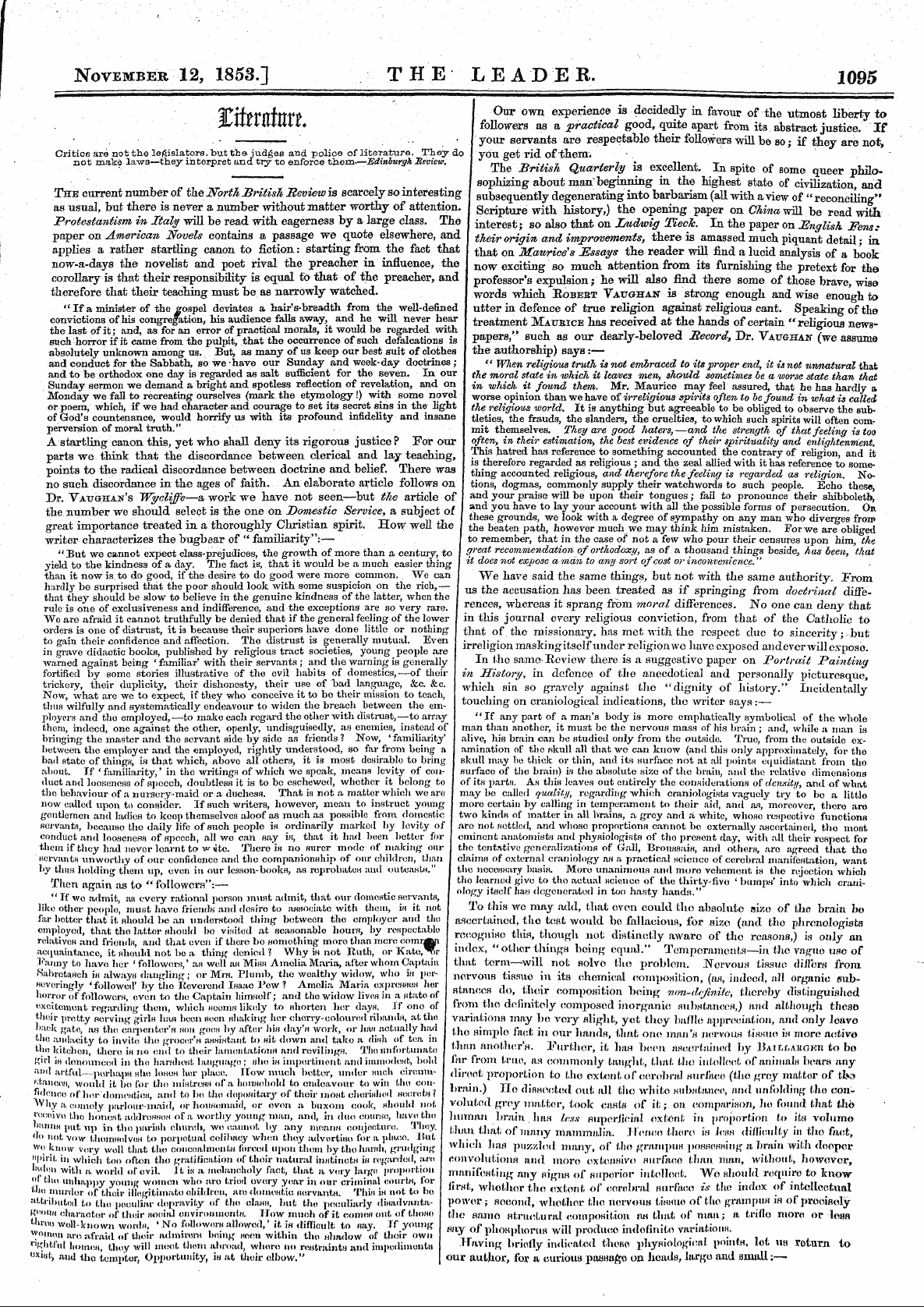
The current number of the North British Review is scarcely so interesting as usual ,, but there is . never-a number without matter worthy of attention . Protestantism in Italy will be read with eagerness by a large class . The paper ¦ onAmerican Novels contains a passage we quote elsewhere , and applies a rather startling canon to fiction : starting from the fact that now-a-days the novelist and poet rival the preacher in influence , the corollary is that their responsibility is equal to that of the preacher , and therefore that their teaching must be as narrowly watched . " If a minister of the gospel deviates a hair ' s-breadth from the well-defined convictions of his congregation , his audience falls away , and he will never hear the last of it ; and , as for ah error of practical morals , it would be regarded with such horror if it came from the pulpit , that the occurrence of such defalcations is absolutely unknown among us . But , as many of us keep our best suit of clothes and conduct for the Sabbath , so we have our Sunday and week-day doctrines ;
and to be orthodox one day is regarded as salt sufficient for the seven . In our Sunday sermon we demand a bright and spotless reflection of revelation , and on Monday we fall to recreating ourselves ( mark the etymology !) with some novel or poem , which , if we had character and courage to set its secret sins in the light of God ' s countenance , would horrify us with its profound infidelity and insane perversion of moral truth . " A startling canon this , yet who shall deny its rigorous justice P For our parts we think that the discordance between clerical and lay teaching , points to the radical discordance between doctrine and belief . There was no such discordance in the ages of faith . An elaborate article follows on Dr . Vatjghan ' s Wycliffe—a work we have not seen—but the article of the number we should select is the one on Domestic Service , a subject of great importance treated in a thoroughly Christian spirit . How well the writer characterizes the bugbear of " familiarity " : —
"But we cannot expect class-prejudices , the growth of more than a century , to yield to the kindness of a day . The fact is , that it would be a much easier thing than it now is to do good , if the desire to do good were more common . We can hardly be surprised that the poor should look with some suspicion on the rich , — that they should be slow to believe in the genuine kindness of the latter , when the rule is one of exclusiveness and indifference , and the exceptions are so very rare . We are afraid it cannot truthfully be denied that if the general feeling of the lower orders is one of distrust , it is because their superiors have done little or nothing to gain their confidence and affection . The distrust is generally mutual . Even in grave didactic books , published by religious tract societies , young people are warned against being ' familiar' with their servants ; and the warning is generally fortified by some stories illustrative of the evil habits of domestics , —of their trickery , their duplicity , their dishonesty , their use of bad Language , &c . &c . Now , what are we to expect , if they who conceive it to be their mission to teach , thus wilfully and systematically endeavour to widen the breach between the
employers and the employed , —to make each regard the other with distrust , —to array them , indeed , one against the other , openly , undisguisedly , as enemies , instead of bringing the master and the servant side by side as friends ? Now , ' familiarity between the employer and the employed , rightly understood , so far from being a bad state of things , is that which , above all others , it is most desirable to bring about . If ' familiarity , ' in the writings of which we speak , means levity of conduct and looseness of speech , doubtless it is to be eschewed , whether it belong to the behaviour of a nursery-maid or a duchess . That is not a matter which we are now called upon to consider . If such writers , however , mean to instruct young gentlemen and ladies to keep themselves aloof as much as possible from domestic servants , becauso the daily life of such peop le is ordinarily marked by levity of conduct and looseness of speech , all we can say is , that it had been better for them if they had never learnt to w lite . There m no surer mode of making our servants unworthy of our confidence and the companionship of our children , than by thus holding thorn up , even in our lesson-books , as reprobates and outcasts . " Then again as to " followers " : —¦
" If wo admit , an every rational person must admit , that our domestic servants , like other people , must have friends and desire to associate with them , in it not far hotter that it should be an understood thing between the employer and tho employed , that the latter should bo visited at seasonable hours , by respectable relatives and friends , and that even if thoro bo something more than mere comnflui acquaintiuice , it should not bo a thing denied ? Why m not Ruth , or Kate , ^ 5 r ¦ Fanny to have her ' followei-H , ' aa well a « Miss Amelia Maria , after whom Captain Sabrotasch i « always dangling ; or Mrs . Plumb , the wealthy widow , who is pcr-Hoveringly ' followed' by tho Reverend Isaac Pew ? Amelia Maria expresses her horror of followers , even to tho Captain himself ; and tho widow lives in a otatoof uxoitcinent regarding them , which noonis likely to shor ten her days . If ono of their pretty serving girln ban been Heon Blinking her cherry-coloured ribands , at tho
baok gate , ; ib tho carpenter ' h hou goes by after bin day ' s work , or him actually had tho audacity to invite tho grocer ' h : iHHiHtant to sit down and tako a dish of tea in ' h o kitchen , thoro in no cud to their lamentations and revilingH . Tho unfortunate ) tf'i'l ib denounced in tho harshest ; language ; oho in impertinent and immodest , bold < 'i"d artful—purhapu hU « Iohch Ivor place . How much better , under Huoh ciroumutancoH , would it be for the miHtruHH of a household to endeavour to win the confidence of her'dorncHticH , and to be tho depositary of their niont choriHhfld Hoorotn ? Wliy a comely parlour-maid , or housemaid , or oven a buxom cook , tthouhl not roeeivo tho honest addreHHOH of a worthy young man , and , in due course , have tho baniiH put up in the parish church , we cannot by any means conjecture . They do not vow tbeuiHelvoH to perpetual celibacy when they advertise for a place . Hut
Wo know very well that the concealments forced upon them by thoharnh , grudging Npirit in which too ofton tho gratification of their natural intitinctH if ) regarded , are liwlon with a world of evil . It w a melancholy fact , that n very largo proportion ° ' the unhappy young women who are tried every year in our criminal courts , for 'he murder of their illegitimate children , aro domestic Hervantn . This in not to be aUrihutod to the peculiar depravity of the claHH , but tho peculiarly disadvantageous character of thoir Hoeial environmontH . How much of it comoH out of those three well-known wordfl , ' No followers allowed , ' it in diflioult to say . if young Wo nien are afraid of their admirem being hooh within tho shadow of thoir own n Pflitful homos , they will meet thorn abroad , where no reutrainta and impedimenta ox , and tho tempter , Opportunity , io at their elbow . "
Our own experience is decidedly in favour of the utmost liberty to followers as a practical good , quite apart from its abstract justice . If your servants are respectable their followers will be so ; if they are not , you get rid of them . The British Quarterly is excellent . In spite of some queer philosophizing about man beginning in the highest state of civilization , and subsequently degenerating into barbarism ( all with a view of " reconciling *' Scripture with history , ) the opening paper onCAwawill . be read with interest ; so also that on JJud ^ wig TiecJc . In the paper on English Fens ;
their origin and improvements , there is amassed much piquant detail ; in that on Matvrice's Essays the reader will find a lucid analysis of a book now exciting so much attention from its furnishing the pretext for the professor ' s expulsion ; he will also find there some of those brave , wise words which Robeet Vafghan is strong enough and wise enough to utter in defence of true religion against religious cant . Speaking of the treatment MTattbice has received at the hands of certain " religious newspapers , " such as our dearly-beloved JRecord , Dr . Vaughan ( we assume the authorship ) says : —
' ' When religious truth is not embraced to % ts proper end , it is not unnatural that the moral state in which it leaves men , should sometimes be a worse state than that in which it found them . Mr . Maurice may feel assured , that he has hardly a worse opinion than we have of irreligious spirits often to be found in what is called the religious world . It is anything but agreeable to be obliged to observe the subtleties , the frauds , the slanders , the cruelties , to which such spirits will often commit themselves . They are good haters , —and the strength of that feeling is too often , in their estimation , the best evidence of their spirituality and enlightenment . This hatred has reference to something accounted the contrary of religion , and it
is therefore regarded as religious ; and the zeal allied with it has reference to something accounted religious , and therefore the feeling is regarded as religion . Notions , dogmas , commonly supply their watchwords to such people . Echo these , and your praise will be upon their tongues ; fail to pronoun ce their shibboleth , and you have to lay your account with all the possible forms of persecution . On these grounds , we look with a , degree of sympathy on any man who diverges fron » the beaten path , however much we may think him mistaken . For we are obliged to remember , that in the case of not a few who pour their censures upon him , the great recommendation of orthodoxy , as of a thousand things beside , has been , that it does not expose a man to any sort of cost or inconvenience . "
We have said the same things , but not with the same authority . From us the accusation has been treated as if springing from doctrinal differences , whereas it sprang from moral differences . No one can deny that in this journal every religious conviction , from that of the Catholic to that of the missionary , has met with the respect due to sincerity ; but irreligion masking itself under religion we have exposed and ever will expose . In the same Review there is a suggestive paper on Portrait Painting in History , in defence of the anecdotical and personally picturesque , which sin so gravely against the "dignity of history . " Incidentally touching on craniological indications , the writer says : —
" If any part of a man's body is more emphatically symbolical of the whole man than another , it must be the nervous mass of his brain ; and , while a man is alive , his brain can be studied only from the outside . True , from the outside examination of the Hkull all that we can know ( and this only approximately , for the skull may he thick or thin , and its surface not at all points equidistant from the surface of the brain ) is the absolute size of the brain , and the relative dimensions of its parts . As this leaves out entirely the considerations of density , and of what may be called quality , regarding which craniologists vaguely try to be a little
more certain by calling in temperament to their aid , and as , moreover , there aro two kinda of matter in all brains , a grey and a white , whose respective functions are not nettled , and whose proportions cannot bo externally ascertained , the most eminent anatomists and physiologists of tho present day , with all their respect for tho tentative generalizations of Gall , Broussais , and others , aro agreed that the claims of external eraniology as a practical science of cerebral manifestation , want the necessary basis . More unanimous and more vehement is tho rejection which tho learned give to tho actual science of the thirty-five ' bumps' into which eraniology itself liaa degenerated in too hasty hands . "
Io this we may add , that even could tho absolute size of the brain bo ascertained , tho test would bo fallacious , for size ( and tho phrenologists recognise this , though not distinctly awaro of tho reasons , ) is only an index , " other things being equal . " Temperaments—in the vag-uo use of that term—will not solve tho problem . Nervous tissue diJIbrs from nervous tisauo in its chemical composition , ( as , indeed , all organic substances do , their composition being non-dejinite , thereby distinguished from tho definitely composed inorganic ; substances , ) and although theao variations may be voiy slight , yot they bailie appreciation , and only loavo the simple fact in our hands , that one man ' s nervous tissue is more active than another ' s . Further , it has been ascertained by ] 3 Air , r . AKO-ion to bo far from true , as commonly taught , that tho inlolled ; of animals bears any direct proportion to tho extent of cerebral surface ( tho groy matter of tfca
bmin . ) Ho dissected out all tho white substance , and unfolding tho convoluted grey matter , took casts of it ; on comparison , he found that tho human brain lias less superficial ox . tont in proportion to its volume than that of many mammalia . Hence thoro in less difficulty in tho fact , which has puzzled many , of tlio grampus possessing a brain with deeper convolutions aiul more extensive surfaoo than man , without , however , manifesting any signs of superior intellect !; . Wo should require to know first , whether tho extent of cerebral surface itt the index of intellectual power ; second , whether the nervous tissue of the grampus is of precisely tho same structural composition ns that of man ; a trifle moro or letm fiay of phosphorus will produce indefinite variations . Having briefly indicated these physiological points , lot us return to our author , for a curious pasnago on heads , largo and small ;—>
Untitled Article
Critics are not the legislators , but tie . judges and police of literature . They do not mats laws—they interpret and . try to enforce them- —Edinburgh Ileview .
Untitled Article
November 12 , 1853 . ] THE LE ADER , 1095
-
-
Citation
-
Leader (1850-1860), Nov. 12, 1853, page 1095, in the Nineteenth-Century Serials Edition (2008; 2018) ncse.ac.uk/periodicals/l/issues/vm2-ncseproduct2012/page/15/
-