On this page
-
Text (1)
-

Untitled Article
Note: This text has been automatically extracted via Optical Character Recognition (OCR) software. The text has not been manually corrected and should not be relied on to be an accurate representation of the item.
-
-
Transcript
-
Note: This text has been automatically extracted via Optical Character Recognition (OCR) software. The text has not been manually corrected and should not be relied on to be an accurate representation of the item.
Additionally, when viewing full transcripts, extracted text may not be in the same order as the original document.
Untitled Article
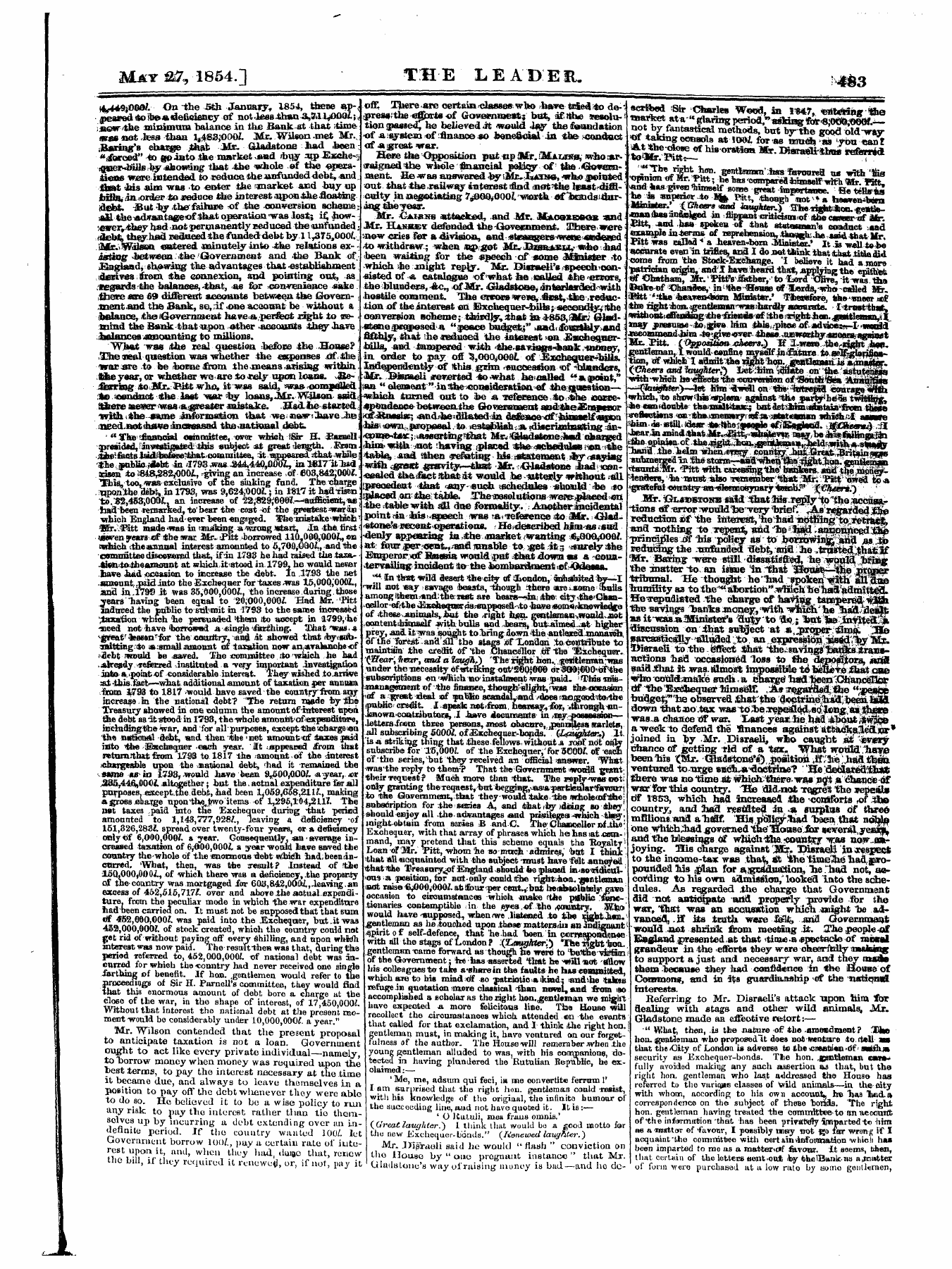
$ f * 49 £ O 80 / . On -the 5 th January , 1854 , thene appeared to toe * deficiency of not leas-than S , & 1 ifiOQl ; new the minimum balance in the Bank at that time ma * not Jess than l , £ S 3 , t ) OQ 2 . Mr . Wilson . met Mr .. iBaritlg ' B charge jfchafc Mr . Gladatone liad < been * s £ oroed" to go into the market jmd > buy arpExche-^ bbt ^ HUb by showivg that the whole of the operations were intended to reduce the unfunded debt , and that -Ms aim was to enter the ^ market and buy up jbijla , , iniorder to seduce the interest . njxmtlie-floating debt . Sut by the failuse of the conversion scheme a £ L the Adyaaxtageof that operation -was lost ; if ,
horn-, eveT < bhey had not permanently seduced the unfunded rdebl * they had nedueed the funded debt by 11 , 375 , 000 / . ! Mr . > Wilson entered minutely into the relations existing -between the Government and the Bank of JSnglaad , shewing the advantages that establishment ( derives tfrom * he connexion , sod pointing out , as regards the balances , that , as for convenience sake . there are £ 9 different accounts between thte Government and the Bank , so , ; if . one account be without a jbfilance , thefGovernajeat h&ve& perfect light to tcemioA the Bank that ^ pon other vaecoanats they . have balances vSBQOunting to millions .
What was the real question ibefoee the House ? ¦ Ehe teal question was whether the eacpenses xtf the war are to be borne irom the oneans , arising within , ftbe year , or whether we are to xely upon loans , fieifearring * o Jitr . lPitt who , it was said , was- roomptfl&L ftp icondnct the tort "war « by loiuis , Jbfc . >/ V 51 son said $ bere memer maa ~ a < g £ e&ter mistake . Had . lie started with the ^ came information that we nowi ^ have . Ae ineed . BotfhAveinaKsased the . national debt . "ThB ^ fioaaowl ownnoittee , over winch iSir H . Earuell presided , fiageatigatediithis subject at great deqgth . f ! r « rn &to * 4 aatslaid £ be £ M ^ at < coBanjitfcee , it ¦ appeared , ithat while tie , imbUc . iabt in 1793 , wag ^ 44 , 440 , OX ) 0 Z , ia 1817 it had
aasen * o 2848 ^ 82 ^ 000 / ., -giving an increase of 603 , 842 : 000 * TFbls- too , was exclusive of the sinking fund . The charge Tapontbe Sebfc , in 1793 , was 9 , 624 , 00 ( M . } in 1817 it hauTfisen to . ; 82 , 4 SS ;; 00 ( M ., an increase of ^ 829 ^ 6002—sufficient , ** had been remarked , to bear the cost ¦© £ the greatest ^ war-id -which England had ever been engaged , ^ be mbtake whricb fflfir . llBitt made > was in ufaaking a vwong wtart , JLn the first wren yews cf * be war Mr . iPitt borrowed 110 , 000 , 000 * * * b fcdiich cthe annual interest amounted to 5 , 7 O 0 , OQOZ ,, andthe committee discovered , that , if in 1793 be had raised tlie tasa-. 4 i « n . to ^ eAmount at which it stood in 1799 , he would never have had occasion to increase the debt , la . 1793 the net amount . paid into the -Exchequer for "taxes / was 15 , OO 0 jOO 0 L , and in . 1799 it was 35 , 000 , 000 / ., the increase during . those
years Tiaving been egnal to 20 , 000 , 000 / . Had Mr . 'Pitt induced the public to srilinrit in 1793 to the same increased fetation which lie persuaded . them ito accept in 1799 , he -need not have'borrowed a single iartihing . Tiiat * wjw . * ^ great > tesean for the < MMuitry , and it showed that djyvsuibattitting 4 o ia . small amount of taxation new an , avalanobe of fjebt would te saved . The comnoittee ito which he had .. already -referred instituted a 'very important . investigation into- a , . poiat « f considerable interest . They wished to . arrive at-thi 8 , fect- ~ wliat additional amount of taxation per annum from 1798 to 1817-would have saved the country from any increase in the national debt ? The return iqade by tbe Treasury showed in one colnmn the amount of interest open
me debt sb -it stood in 1793 , the -whole amonntof ^ penditope , incluaingtbe war , and for all purposes , except the-charge * a the nstaonrtl debt , and then the > net amount of taxes paid iitto the Exchequer each year . It appeared / from that retum ? that feom 1733 to 1817 the amount of the interest jdutrgesble upon the national debt , had it remained the flame srio 1793 , would have bean 9 , 500 , 000 / . a year , . or 335 44 ^ , 000 i altogether ; but the . actual expenditure for Jill purposes , except the debt , had been 1 . 059 , 658 , 211 ? ., makiqg across . charge npon'thyojnvoiterns of 1 , 295 , 104 , 2117 . The n « t taxes . paid into the Exchequer during -that period amounted ' to 1 , 148 , 777 , 928 / ., leaving a deficiency -of 151 , 326 , 2832 . spread over twenty-four years , or a deficiency
only of 6 , 000 , 0007 . a year . Consequently , » n average increased taxation of 6 ^ 000 , 0002 . a year-would lave saved tlie country the whole of the enormouB tlebt wibich hadbeentinenrred . l Wbat , then , -was the result ? . Instead of fthe 15 Q * OOOjO 0 Oi ., of which there was a deficiency , . the property of the country was mortgaged for 60 a , 842 , OOftZ , leaving . an excess of 452 , 516 , 717 £ . over and above the actual . expenditure , from the peculiar mode in which the war expenditure had been carried on . It must not be supposed that that sum ftf 452 , GdO , 000 Z . was paid into the . Exchequer , but it was
• 4 S 2 , 000 , OOOZ . of stock created , whioh the country could not pet rid of without paying off every shilling , and upon whidh interest was now paid . The result "then was that , during the period referred to , 452 , 000 , 000 ^ . of national debt was incurred for which the ¦ eonntry had never received one single farthing of benefit . If hon . . gentlemen would refer to the proceediqgs of Sir H . Parnell ' s committee , toey would find that this enormous amount of debt bore a charge at the close of the war , in the shape of interest , of 17 , 450 , 0 O 0 Z . Without that interest the national debt at the present moment'would be considerably under 10 , 000 , 000 ^ . a year . "
Mr . Wilson contended that the present proposal to anticipate taxation is not a loan . Government ought to act lite every private individual—namely , to borrow money when money was required upon the best terms , to pay the interest necessary at the time it became due , and always to leave themselves Ln a position to pay off the debt wlicnever they were able to do so . Ho believed it to be a wise policy to run any risk to pay the interest rather than tie themselves up by incurring a debt extending over an indefinite period . If the country wanted 100 / . let Government borrow 100 / ., pay a certain rate of iutercst upon it , ami , when they had , duifto that , renew the bill , if they required it renewed , or , if not , pay it
ofC There ate certain ^ classes who hare tried &o depressithe egprte of Govretnroeit ; but , a £ tth « resolu tion spassed ; he believed it -wauld 4 « y the foundation of a isystem of finance so beneficial in the > condttct of < a great var . Here the (^ position pit * ftp JBPy . Mjt ^ who nr-^ aigned fthe whole financial poldqy of the ( Goverainaent . fie * ras anffweped fyy \ ifc ~ Jx 4 a } m , mh 4 > feinted out that the railway interest sftnd inot ^ the least difficulty in ae ^ etiating 7 ^ 000 ^ / . \ wrth « f bondsidairdqg the year-Mr . Cai « ks aattecked , and Mr . SfeLccnaCKiB « nd Mi . Hank £ Y defended tiie Government . SShere inere tnow cries for a ^ livisioa , and « teaxKer » 'w « ne « edeiied
-to withdraw- when iqxgot MeJDj ^ t ^ jci ^ , ^ wjio had been waiting for the * peech of « ome ASnister , to which 4 e anight reply . Mr . Disrweli ' s ep « ech consisted of a catalogue of "what be calied 4 lie ^ errors , the blunders , &c ^ of Mr . filadskoae , ? interi « rded with 'hostile comment . The enross wene , fii » ti , tbe > redaction of the interest on ibcchequer ^ biUs ; « ecc > nd { y ^ ifehe aonversioji scheme ; tiidrd ] y , 4 hafe m ^ S 5 d , $ B £ rJ € r } ad-^ tene-pepposed a "> pe « ce budget ; " kaad . ibmthiy ^ and fifthly , * hai the reduced the interest > oa JQxcheqoerbills , and Jan ^ ered with the savia ^ s ^ anlcinoaey , in order to pay off 5 , OG 0 jOGei . of JExab ^ aei * bilis Independently of tthis jgshn reucoeasion of ^ blnaders , < Mx . Bisntteli dreverted ^ o-what he oaUed *• * ( point , " tan " eleiAont" in tt&e consideration of the question—^ wbich turned out to ibe a Tefersnce $ o &he coxue
# poudeitc ^ between . tbe QovBmm&st smds&het&m&eBor Krfitassia : ; ^ ndrhe dilated in defeaaee of feinoself J » pon his ; lowai ^ opiasal , to » estafcliah ;* ? discruaabaating sdn-<» uie . tftic ; , averting-that Mr . GWadatone JMdi charged fbira < with -. not hariog ^ placod ^ b ^ c ^ chedttkw -i « n itke table , Aad ithen refatiqg his statement * y * ayi * g with groet gravityr—that Mr Gladstone tad eonhealed thfciact Jtbat it would he mtteriy without rail Lpieoedent Ihat sny eucb tschedoles « hoeuld ? be < o $ p } aced © n the : table . The tcesolutions wereiplfteed « n the table with aH due formality ; . . Another imcidental point dn ibis 8 | ieech was ? a leference * to 3 Mr . < Gl « dstoneTs grecentop ^ &tioas . - He ^ described him ^ as ;« ad denly appeariag ia ; the > maxket / wanting « i , QOQy £ ) O 0 / . at fqur jper rowat ,, , -anfl tunable to . * et it ? , surely * he SmperoFvotf Beussia would put that down « s a countervailiiif incident to the bombardment . of XMesaa .
;« In that wild desert the city of Xondon , fchabited by—I will not eay Bavace beasts , -though there are uuune Soils among lthem ^» nd : the-xeet ate hears—4 n i ftb © city ^ the'Giumoellor ofrtae £ xeh « qaBrds ^ suppQsed ^ to have « om « rknowie 4 ge of ^ these ^ animals , iut the / right h $ a . gentlamao ^ woald . Jiofc contentsbinaaelf jvith bulls and bears , butjiimed - at higher prey , ¦ aaiL it ^ was sought to bring down the antloxed . inanaroh df tlie forest" an ' d ' all the stags jdf Xon'dari 1 ; o , * oi ) ttribute to maintain Jthe creifit df the Chancellor , ttf itoe "Ekcheguer . tfffearyitmr , and a < t avg \} The right hon . ; / geiitlenranrims under the necessity of wtrikmg out' 2 © C ^ 006 or SOOJOOO'of tbe subsoriptlans en which nc- instalment < was paid . '¦ Wins sriisjm « nag « nentof the finance , thougfc' ^ liffhtvwjis the ooeaaon
of a nre » t ideal « f ^ pu blio 8 CKndal and / doesinGfigood 1 to ) 'thc ipubtic credit . I specie not < from , besrcay ^ { Ei ) r , sthrongh . ian-Jcnown coat tabu tor * , , 1 . have documents in dnyhpossBssion—. letters . from three persons , most obaenre , ^ penmless starlets , all subscribing 50001 . of Exchequer-bonds . XLfLugkter ^) It . is a strlkiog thing that . these-fellow * , without a roof not 0 % subscribe for 16 , O 0 OZ . of the Exchea . uer , 'for 5 G 0 Qf . of eaoSb of the series , but they received an official answer . Wtafct wasthe reply to thetn ? That the Gorvermnent = * rou ? a < gnmt their request ? Much more thnn that . The r » plf-was ooti only granting the reqaest , but beggiBB , Jasiftpart ^ dJarftmittr ; lo < the Government , that they would take -the iwholeaafTlih : sobscription for . the secies A , and that iby ( diioff so * b » y
should enjoy all -the advantiiges and piivilegea-ivbich tbE ^ might-obtain from series £ and C . The CUanoellor of-the ¦' Exchequer , with that array of phrases which he has lat-cmn- i mand , may pretend that this scheme equals the Hqyalty " Loan of Mr . Titt , Whom 'he so nrocji admires , 'bt » t I tbini ¦ that all eoquainted with the Bubject Tnust have felt annoyed Tthatthe Traasnry ^ f England shonld be iplaaed in ^ Bo tidiottlous a positdon , for not - only canldtthe right-faon .-jpntlenutn « flt raisoe ^ OOiOOOZ . at tfi > uarTMnr cent ., bnt l »<» btt > ltttely caws occasion to eivcumstauces which make fthe ptfblic wnctionariea contemptible in the eyes , « f the gauntry . WMo would have supposed-, when rwe . listened . to tlw rigbtiei ) . . gentleman as he / touched upon . these mattersdii an andigoant ' spirit of self-defence , that he had boen in cerr # aponaqn « e
witn &u the stags ot London ? { JLmigkter , } The Tight 'fcoo . gentlemitn came Forward as though Be were to bettbe vfcfim of the Government : h * has asserted that he MiW iiot allow his colleagaes ta taie a « sh « rein the faults he has ceounittei , which are to his miod of so jmtciotic aikiad : and the takse refuge in quotation mxre chusical > ihan novel , &nd ftxna iso accomplished a scholar as the sight uon . ^ gentleman we miglit have expected & more felicitous line . The House will recollect the ciroumatanoes which , attended on the eventa that called for that exclamation , and . I think ithe right hon . gentleman must , in making it , have ventured an our forgctfulnoss of the author . The House will remember when . the young gentleman alluded to was , with his comjpanione , detected in having plundered the Eutulian Republic , he exclaimed : —
' Me , me , adsum qui feci , in me convertite ferrmn 1 ' I am summed thut tlie right hon . gentleman could resist , witli hia Knowledge of the original , the infinite humour oi the succeeding line , u . ud not have quoted it . It is : — ' O liuLuJi . moii friius omnis . ' ( 6 ' reat laughter ?) 1 tldnk that would bo a good nootto for tJio new JKxchoquor-bonds . " ( Renewed lam / ftter . * ) Mr . JXIpraeli said he would "flash " conviction on the House by " one pregnant instance " that Mr . GIndstone ' H way ofraisinir money is bad—and ho
defterfted Sir Charles Wood , in \ mi « staing me VBH&et at a « glaring period asking « bt *{ Oe ^ OO 0 f . ^ - not by fantastical methods , but by the good old-way r * *? 1 ^ 0 OB ?* 8 »* lWi foT * s much ns ^ ou tjanJ te ^ fe Sl ? nM'on * iw Mr . Disraeli tbrw refwrtd . « XSVi § ^ - J&f *™** * ¦ •*«¦ fewnirea us with ttis oprown of Mr . JPrtt ; be has compared khnseff * ifli Mr . Rtt , * nd * as givep ^ imBetf some great Smpwteiwe . fi « telhri ^ lLSJ ?^?? * * ""ft / f ** P ^ « ot % a ha ^ . n-b ^ r Minuter . ' f Uheers wad laughterS ) 5 IheTurhtijon . ce » tle-^ aaMnABJeed in flippantS&o . ^ ^ cSiifSfc PJtt , and h » e spoken of that statoHmn ' s conduct and ^ mple in ^ r ^ of ^ iepr « heniuon ,, thi ^ h ; , he , s « d tt » at Mr . fitt was caHaa " * a -heaven-born tMiniBtar . ' It . is -w « ll te be accurate even m tffles . and I do net tfcmk that that ««« S ^ A
come from the Stodc-Exciange . I believe it had a moro " patrician origin , and'I have heard that , Applying the epithet eff Chatham 3 Ir . IHt ^ s if ather , to Ijoto tSive , it-was tha iWke of ClfaanaM , in the ^ Bflittse of Hords , who ) cabled Mr . « Ktt ' - 'ttie 'heaTen 4 Kini Minister . ' Ttievefore , feh »*« neerjof the riglu iian . igentlennn' -inB > hardly aararste . I trastth ^ L iwithont riffeqiifaqg the ^ ftienis of ithe ^ rightiien . ^ aitleiinm ^ may j > iesuB » e to ^ jgwe him tbis / pieore of advice 3 f--I «« cddl veeommendiaim 4 o > givB « ver 4 J ^ ese , axiworitby . « Beeu 3 riHtauwt Mr . Pitt . ( Opposition jxhters . ) If ILiraw the-Mht i > m ~ g entleman ,. I would eanfine noyselfintfature to , e& ^ lorjfJM tion , < tf wibiofc I aflnriit'tlia Mjpit hon . ^ BaElmaMvig m . jrn »« it j wr (¦ Cheers ana laughter ?) Let ihim ffl&Ste on ihe asfcutentoa
with-which b » effects the conversion oiH 96 atii&e » AnBuh ^ —{ lauffhtery—ltit htm ^ wll on trre hrtwspia courage ^ fo « whush , to Bhew £ bs 4 fpleea' against th * ^ whd ^ B twhSJnjr , 4 ie canidoabie thsimiltltuK ; bat det ^ litmsflliiBtakii'lToin ti ^ eM 9-efltotims < on-itb » iinein » ryrtQf »^ BtetcMnsn xhltihAl in—fu \ umm « tUl . ( d «« r *» f » he ' , f « rie « f , K « f 5 i « id . > t fvOkem * , il shear jnj n » ind * hatMr ., « Eiit rwba > evfrv nsay , be shas >< i » iBrig « the ojpinien-of : tba ^^^ t ^ , ^^ y ^ a ^ ^ v ^ ^ . ^ . fl * t » # y -Jj anfl the idm Hhm ^ t ^ Br ^ country J ^^ r ^ j ^ riMttigw submerged xn ! &estoxni' -- « u ^ e ^^ B q ^ t . 1 iaa . ' « e ^ nn » ^ aunts . iar . "Pitt with caressing the' bankers . anSl tfieiaoSlgelenaere , % e must « too Temernber'j ^ tt ^ Sk : "' Mtt bwea to « ^ g « rteftti <» nHrtry « a ^ TeetnQsynary *« Hnb . $$ h 4 Brik ^ '
Mr . pLaxxKroNB said that * Mreiply to "the « cciiaAr iions df terror ^ w > uMi 3 B'viBry % riBfr r As regarded ^© reauctron tit the interest , he had nothing to Tetraet , ana -nothing to repent , and he had announced ti ^ l » rincl | aesjff "his poiicy as to b ^ rrowin ^ , and w 3 fr reducing the -unftindel flebtj aria ; he . traErtedl ^ haifeif Mr . Bathr ? -were still dissatisfire ^ , he vop 35 ^ TWiiijr the matter to an issue in that Souee—the projiex tr £ bmial . He thouglit he lind spoicetf ^ fith all a 9 se Iranniity as tothe ^ al ) orlioh' ^ wHichhe 1 lala adm ^ ttea . He ^ repudiated the cbarge of havi ^ jf tamperedffj £ the saviqgs I ) ants 4 noney , 'with Vhicb . he ^ hatt " cleiilt asit waaj » MiniBteT ' 8 duty to do ; l > ut he invited ji
dnjcussion on ibat subject at » jnqper ^ mi ^ Sfe 9 arcaBticiSlly ailuaed to an expresBion djfcg'&y ' His . Bisraeli to the effect that the ^ avings iDariks transactions had occasioned loss to the dep ^ jtors , inaSL Baia ^ hat it was . almoist irnposslblle to beif } £ re ihat cne iirbo could ^ malce such , a charge ! futd iJNBen"C ^ anceTQDt ctf the ExK ^ equer Wrnself . , A » Te ^ af 4 ed . the "; t > e » ce budget , " he observea that the d <> ctrineiLaa beenhad down IJiat oiotox waei ; o % eTf |«^ 6 ^ v 8 Q ^ toi ] ygja ^| j ^ was a chance of war . Xast yeariie hail 4 > aut ^ wf (» a week to defend the "finances against itfeiicTcal ^ ttr joined iu by . Mr . Disraeli , wlio caught ai ' every chance of getting rid of a % smm What would have
beenliis CMr . GJlaatftpne ^) ^ aition 4 iSf ; 3 iie ; j « tat 1 joa ventured to urge « nctu « 'doxittiae ? ^ edeolatea ^ la there was no time at # hich . there was joof * n chance of war for this country . 'Ste did . not T ^ greit the repeals of 1853 , which had increaaeA the xoniforts , of lha country , and had resulted fa . » surplas of three millions , anil aliaif . His policy- 'had boea that nobl ^ one wixich ^ had governed the'HbaBej&a several , yeaai , and the blessings of wfoielitfhe ! count ? ry -was noweokjoying . His charge against JMEr . BisraetVinorespcck to the income-tax wae that , at xhetime' ^ he h ad «
ropourideaius plan for a « c 4 dualion , lio had not , ao > cording to his own aamission / looked Into the schedules . As regarded . the charge that Government did not anticipate and property provide for the war , th £ t -was an accusation which anight Ixb ad-YanceA , . if its truth w « re -felt , ana GoveEnnaaat would joaI shrink feom roeebiqg . it . The people-of England presented at that timca . spectacle of mini grandeur in the efforts they were oheerftdly rmtJemg to support a just and necessary war , and they ntatfte them because they had confidence in the Hou « eof Oonnnoncp , « nd in i ^ s guardiaftahip of the nactiqniA interests .
Referring to Mr . Disraeli ' s attack upon hitu lor dealing with stags and other wild animals , Mr . Gladstone made aa effective retort : — " What , then , is the nature of the . amendment ? : Xiw hon . igenbleman who nrvposedlt does not ivanbnre itortell mm that the 'City of London is adveree to the tcnejsbiwQ df Mftftm security us Exchequer-bonds . Tlie hon . jptnftlonuui (¦» fully avoided makiqg any such assertion as that , but the right hon . gentleman who last addressed fthe Houao has
referred to the vuriqits classes of Vild tminxaU—in the city with whom , according to hia own account * ho 'has 1 iod , acorrespondenco on the subject of theme bonds . "The Hght hon . gentlemnn having treuted the comnnrittweto anuccount of the infarmafiion'that has been privately ijiiparted to him as a inattor of favour , I poeaibly may not fgo iar wronng f < f I acquaint'tlie committee with oert ain vinfovmatdon which has been imparted to mo as a raattono'f favowr . It aeems , then , that cerUin of the lottecs « ent > ont kty thelBa . r » kna n , inatter of form wore purchused at u low rato by aoino gentlornen ,
Untitled Article
May & 7 , 1854 . ] THE LEA DEE . ' 4 g 3
-
-
Citation
-
Leader (1850-1860), May 27, 1854, page 483, in the Nineteenth-Century Serials Edition (2008; 2018) ncse.ac.uk/periodicals/l/issues/vm2-ncseproduct2040/page/3/
-