On this page
-
Text (2)
-

Untitled Article
-

Untitled Article
Note: This text has been automatically extracted via Optical Character Recognition (OCR) software. The text has not been manually corrected and should not be relied on to be an accurate representation of the item.
-
-
Transcript
-
Note: This text has been automatically extracted via Optical Character Recognition (OCR) software. The text has not been manually corrected and should not be relied on to be an accurate representation of the item.
Additionally, when viewing full transcripts, extracted text may not be in the same order as the original document.
Untitled Article
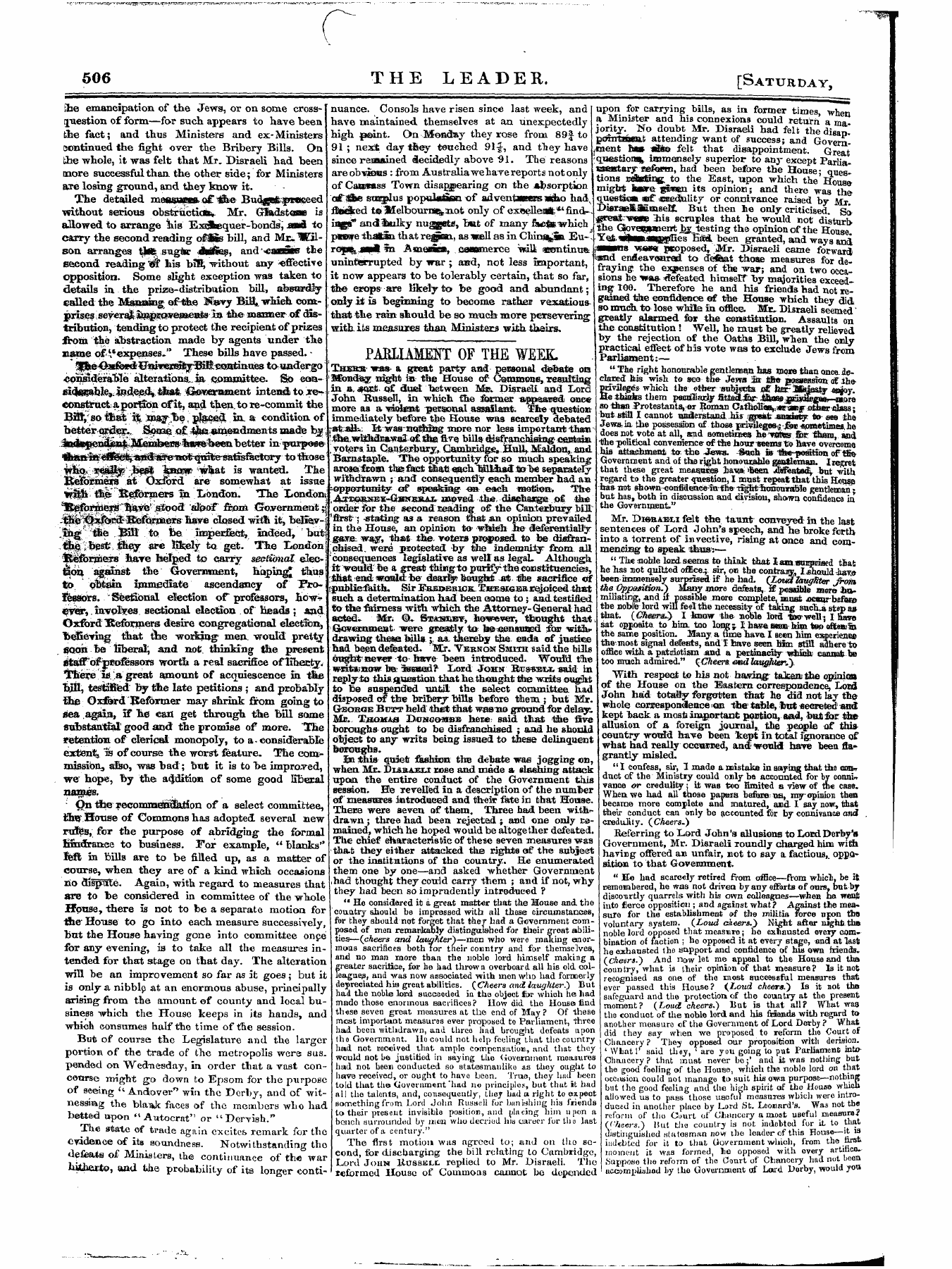
the emancipation of the Jews , or on some crosstjuestion of form—for such appears to have been the fact ; and thus Ministers and ex-Ministers continued the fight over the Bribery Bills . On the whole , it was felt that Mr . Disraeli had been more successful than the other side ; for Ministers are losing ground , and they know it . The detailed measueeft . of ifee Bud $$ e& proceed without serious obstruction ., Mr . Gladstone is allowed to arrange Vis ExuSequer-bonds i and to
carry the second reading oflUs bill , and Mr-Wilson arranges tJifc , sugfcr Asfies , and *«¦«¦» tie second reading W tis biB , 'without any ^ effecti \ e opposition . Some slight exception was taken to details in . the prize-distribution bill , abBaa ? d 3 y called the Maaakig of ^ the Sfovy BiH , irbieh contprises severaji * o * puc » ¥ esa . e ais-in the manner of distribution , tending to protect the recipient of prises from the abstraction made by agents under the name of- " expenses . " These bills have passed . ¦
3 Pte < £ » S ^ & ^ ta undergo considerable alterations , ia committee . So eoa-« i ( lssable ,. ipd . iee . di , that , * G « av « rament intend ; to reconstruct apoiiaon of it , and then , to re-commit the Bat , so tils * ' % may be , placed ; in . a condition of better order .. Some of 4 ^» fi amendments made iDdgftendi ^> MenT ^ i » l « TO % e « n better in purpose 1 > hianinell § e % t »^ to tb-ose . ydtofo ; :: > T $ j $ k tf ' - $ && lsp * om wl * at is wanted . The Reformers at Oxford are somewhat at issue
tofjbf t the Reformers in London . The Iiondont Reformers have stood alpof from Government ;; the Oxford Keformers have closed witli it , believiuig the J 3 aH to be imperfect , indeed , but ^^ feest jpif gr arc likely ta get . Tie koncton feiiforjneTS hare helped to carry ; sectional eleetaoqi against the Groverranent , hoping * thus to obtain immediate ascendancy of Pro-Fessors . Sectabnal election or professors , however , involves sectional election of heads ; and
OxfordReformers desire congregational electron , believing that tibe working men . would pretty soon be liberal ; and not . thinking t ile present BtaflT ' of professors worth a real sacrifice of liberty . There is a great amount of acquiescence in the bill , testified by the late petitions ; and probably the Oxford Beformer may shrink from going to sea agaia , if Tie can get through the bill same substantial good and the promise of more . The retention of clerical monopoly , to a considerable extent , " fa of course the worst feature . The conxmissibn ., also , was bad ; but it is to be improved , wer hope , by the addition of some good liberal
names . : On the TOconraiGJjxcEMfon of a select committee , iihe Honse of Commons has adopted several new ru ^ as , for the purpose of abridging- the formal fimdraace to business . JTor example , " blanks " left in bills are to be filled up , as a matter of course , when they are of a kind which occasions no dispute . Again , with regard to measures that are to be considered in committee of the w"hole
House , there is not to be a separate motion for ¦ fixe" House to go into each measure successively , but the House having gone into committee once for any evening , ia to take all the measures intended for that stage on that day . The alteration will be an improvement so far as it goes ; but it is only a nibble at an enormous abuse , principally arising- from the amount of county and local business which the House keeps in its hands , and which consumes half the time of the session .
But of course the Legislature and the larger portion of the trade of tine metropolis were sus . ponded on Wednesday , in order that a vast concourse might go down to Epsom for the purpose of seeing " ¦ Andover" win the Derby , and of witnessing the blai ^ c faces of the members wlio had betted upon " Autocrat" or u Dervish . " The state of trade again excites remark for the evidence of its soundness . Notwithstanding the defeats of Ministers , the continuance of the war hkhexto , md the probability of its longer
continuance . Consols have risen since last week , and have maintained themselves at an unexpectedly high point . On Monday they rose from 89 J to 91 ; next day tlSey touched 91 f , and they have since remained decidedly above 91 . The reasons areobTOEHzs : from Australia we have reports not only of Canvass Town disappearing on the absorption a £ 3 £ te surplus population of adventamrawbo had flSaieJked tfcHelbournn ^ axot only of exoellenifc *'
findings" and milky nuggets , bat of many ftwjfiR which ptosje thaiSn that regpni , as well as in Chin ^ io . £ u--rofi % . « pBin Amenta , eaasmerce will arontinu « : uninterrupted by war ; and , not less important , it now appears to be tolerably certain , that so far , the erops are Bkelyto be good and abundant ; only it Is beginning to become rather vexatious that the rain stould be so much more persevering with , its measures than . Ministers with thveirs .
Untitled Article
PAIILUMEIT OF THE WEEK . Thetcb- was a great party and personal debate os M < md * y n % ht in the House of Commone , resulting in a , duatQC duel between Mr . Disraeli and Lord John Russell , in which the former appealed once more as aviorbmt personal assallaait . The question immediately before the House was scarcely debated at a& . It was BQifluag more nor less important lham tlta wftMrjwal oftha five bills disfranchistng cejitaiiiL voters in Canterbury , Cambridge , HulL Maiden , and Bamstaple . The opportunity for so much speaking arose from the fact tliat each UllJifta : to he separately withdrawn ; and consequently each member had an
opportunity of epeafciag -on each motion . Th < e : &TXHLXE * -GmtEXAx . moved . the , diach&sge o £ tbe order for the second reading of the Canterbury hilt first ; stating as a reason that an opinion prevailed in the House , an opinion to vMeh he deferentially gave way , that the . voters proposed , to be disfranchised , were protected by the indemnify from ail consequences legislative as well as legaL Although it vouid be a great thirg to purity the constituencies , that end wxndd be dearly ; bought-at the sacrifice of public faith . Sir 1 ^ bj > eri ok Ekesiger rejoiced that such a determination had been some to ; a , ud testified to the fairness with -which the Attorney-General had
acted . Mir . Ol Stasuey , however , tbought that Government were greatly to beeensutsed for witir drawing these bills ; . aa . thereby the . enda of justice had been defeated . TSCr . Veknon Smith said the hills ought never to have "been introduced . Would t 3 ve writs ; now bo rasaed ? Lord John Rrjs * Eiri < said in reply to this question , that he thought the writs © ugkt to be suspended until the select committee , had disposed of tb « bribery bills before them ; but Mr . George Butt held that that was no ground for delay Me . Thomas Djtngootbe here said tlutt the five boroughs ought to be disfranchised ; and he should object to any writs being issued to these delinquent boroughs .
Han thia quiet fashion the debate was jogging en , when Mr . Dtauakt . t rose and made a shushing attack upom the entire conduct of the Government this session . He revelled in a description of the number of measures introduced and their fate in fchat House . There were seven of them . Three had been withdrawn ; three had been rejected ; and one only remained , which he hoped would be altogether defeated . The chief characteristic of these seven measures was tha . fc they either attacked toe rights of ? the subject or the institutions of the country . He enumerated them one by one—and asked whether Government had thought they could carry them ; and if not , why they had been so imprudently introduced ?
" He considered it a great matter that the House and the country should be impressed with nil these circumstances , for they should not forget that they" bad a Government composed of man remarkably distinguished for their great abilities—( cheers and laughter )—men who wero mating enormous sacrifices both for their country and for themselves , and no man more than the noble lord himself making a greater sacrifice , for he had thrown overboard all his old . colleagues , and yas now associated with men who had formerly depreciated his great abilities . ( Cheers and laughter . ' ) But had the noble lord succeoded in the object for which he liad made those enormous sacrifices ? How did the House find those seven grout moasures at the end of May ? Of these
most important measuros ever proposed to Parliament , three had been withdrawn , and thrco had brought defeats npon the Government . He could not holp feeling that the country hud not received that ample c » inpen 8 atioii , and that thisy would not be juetitied in saying the Government measures hud not been conducted so statesmanlike us they ought to have received , or ought to have Leon . True , they had been told that the dovernmont'had no principles , but that it had all the talents , and , consequently , they had a right to expect something from Lord John Rusacll for Lwnishing his fiionds to their present invisible position , and p lacing him upon a bench Burroundcd by men who decried his career for thu last quarter of a century . "
The first motion was agreed to ; smd on tko second , for discharging the bill relating to Cambridge , Lord John IIcsskcc replied to Mr . Disraeli . The reformed House of Commons cannot bo depended
upon for carrying bills , as in former times , when a Minister and his connexions could return a majority . No doubt Mr . Disraeli had felt the disap * ptnnlmeat attending want of success ; ajid Government b » a £ no felt that disappointment . Great question % immensely superior to any except Parliaxaext&ryr teStmn , had been before the House- ques > tions re 9 ta@n& to the East , upon which the Housa might fcmre f £ Nen its opinion ; and there was the question « f cnedinlitj or connivance raised by jvjj PigraeRMmselfc But then he only criticised , si jpreat ; TOMS iiis scruples that he ¦ would not disturb the GSove ^ werrt ^ testing the opinion of the Houao et 0 h £ & been
lc , ^ a — jmqgB . e s granted , and ways and j 3 MVB 8 yf 4 um proposed , Mr . Disraeli came forward l "» nd endeavoured to defeat thoae measures for defraying the expenses of the war ; and on two occasions he was- tfefeated himserf "by majorities exceeding 100 . Therefore he and his friends had not regained the confidence of the House which they did so much , to lose wMle in office . Mr- Disraeli seemed greatly alarmed foi the constitution . Assaults on the constitution ! Well , he must be greatly relieved by the rejection of the Oaths Bill , when the only practical effect of bis vote was to exclude Jews from Parliament : —
" The right honourable gentleman has moxe than onceieclarad feds wjsh to see the- Jews jfir t&us possession , of theprivileges which the other subjects of her" tfein'itT enaoy . He tbiaka them pacaliaxJy fitted &r . £ uoeua jjciy&g « sr-i » ao than Protestants , or Roman CathplTQB ^ . ^ raBjr jDtluar class ; but still I cannot understand his gjnat juaai&y to- see the Jews , in , the possession of those privileges , ; v&r « pmetimefl , he does not vote at all , amd Bometioi « 3 he ^ otts &r them , Mid the political convenience of- the hour « eemfl 1 ^> have overcome his attachment to the Jews . Sach is Ifee- ^ ositian of tire Government and of the right honourable gentleman . Ire £ rret that these great me& ^ nct © hav * > been ^ effeated v but -with regard to the greater question , I must repeat that this House has not shown confidence in the nght honourable gentleman * but has , both in discussion and division , shown confidence in the Gov&rnment . "
Mr . DiSBABLi felt the taunt' conveyed in the last sentences of Lord John ' s speech , and he broke forth into a torrent of invective , rising at once and commencing to speak Ihusi- — " Th « noble lord seems to thiok that ZamflospiaBed that he lias not quitted office . ; , sir , on the contraro , Ijshauld iav . e been-iitnaaensely surpaised if he had . ( Loud laughter Jrofn the Opposition . ^ Many more defeats , n ° pcsaihle mere 3 iu miliating , and li possible more complete , must « caarbefa& the noble h > rd will fed the necessity of taking snch . a step as that . ( Cheers ^ I know the noble lord -tarwell ^ I nave sat opjoaite to him . too long j I have bhbh him too ofteaivi the same position . Many a time have I seen him experience the-most signal defeats , and I have seen him still adhere to office ¦ with a patriotism and a pertinacity which ; cannot Is too nrach admired . " ^ Gheen end lamhterS
With respect to his not hawing taken the qpdnioii of the House on the Eastern correspondence , Lord John had totally forgotten that he did not lay the whole correspondence on -the table , tut secreted and kept back a most important postion , aad , butibr ti » allusion of a . foTeign journal ,, the people of thi » country would hsrv-e been kept in total ignorance of what had really occurred , aud would have been fla * grantly misled . " I confess , sir , 1 made a . mistake in saying that the conduct of the Ministry could only be accounted for by eonnir vance or credulity : it was too limited a view of the caBe . When we had all those papers before us , my opinion then became more complete and matured , and I say now , that their conduct can only be accounted for by connivance and cueduJUy . ( Cheers . )
Referring to Lord John ' s allusions to Lord Derby's Government , Mr . Disraeli roundly charged him with having offered an unfair , not to say a factious ,, opposition to that Government . " He had scarcely retired from office—From whicli , be it remembered , ho was not driven by any efforts of ours , but by discomrtly quarrels with his own colleagues—when ha went into fierce opposition ; and against what ? Against the mea » sure for the establishment of the militia force n | x > n tho voluntary system . ( Loud cheers . ) Night after night the noble lord opposed that measure ; he exhausted every combination of faction ; he opposed it at every stage , < ind at last he exhausted the support and confidence of hia own friends . ( cheers . ) And now let me appeal to the House and tha
country , what is their opinion of that measure ? Is it not recognised as one of the most successful measures that ever passed this House ? { Loud cheers . ) Is it not the safeguurd and the protection of the country at the present moment ? ( Loud cheers . ) liut is that all ? Wliat was the conduct of the noble lord and hia Manas with regard to another measure of the Government of Lord Derby ? What did they say when we proposed to reform the Court of Chancery ? They opposed our proposition with derision . ' Wliat ! ' said thoy , ' are you going to put Parliament ! into Chancery ? that muBt never bo : ' and it was nothing but the good feeling of the Housewhich the noble lord on that
, occasion could not manage- to suit his own purpose- —nothing but the good feeling and the high spirit of the Houao which allowed ua to pass those useful measures whicli were introduced in another place by Lord St . Leonard ' s . Wao not the reform of the Court of Cliuncery a most useful ineaaurar (( -beers . ) But the country is not indebted for it to that extinguished statesman now the loader of this Houao—it ia indebted for it to that Government which , from the nrst moment it was formed , lie opposed -with every artifice . Suppose the reform of the Court of Chancery had not boon accompliahod by the Government of Lourd Derby , would you
Untitled Article
506 THE LEADER . [ Saturday ,
-
-
Citation
-
Leader (1850-1860), June 3, 1854, page 506, in the Nineteenth-Century Serials Edition (2008; 2018) ncse.ac.uk/periodicals/l/issues/vm2-ncseproduct2041/page/2/
-