
On this page
-
Text (3)
-

Untitled Article
-
Untitled Article
-

Untitled Article
Note: This text has been automatically extracted via Optical Character Recognition (OCR) software. The text has not been manually corrected and should not be relied on to be an accurate representation of the item.
-
-
Transcript
-
Note: This text has been automatically extracted via Optical Character Recognition (OCR) software. The text has not been manually corrected and should not be relied on to be an accurate representation of the item.
Additionally, when viewing full transcripts, extracted text may not be in the same order as the original document.
Untitled Article
served , of the hig hest possible importance , which the Government of this country has not yet been asked by the House of Commons to prpduce , and of which it still remains to be seen whether , when asked , the Government will think it consistent , with , its duty to the public to advise this House to consent to the production . " S i r J a me s admitted th at t h e A d m i r alty did in the main approve the conduct of Sir C . Napier , and h e , for one , had never quarrelled with his discretion , with respect to which he ( Sir James ) sarcastically
remarked"I stated upon the occasion of the Reform Club D inner , that I had a great admiration for the proved and distinguished valour of Sir C . Napier ; I added also that I thoug ht him discreet . He has confirmed my opinion . Discretion— ' the better part of valour '—has not been ¦ wanting , and I may say of him that he is both brave and discreet . " ( A laugh , and some murmurs of disapprobation . } Referring to his promise at the same dinner that he would attend to celebrate Sir Charles ' s return , Sir James remarked— " I have received no invitation to celebrate the return and the brilliant successes of the gallant Admiral . " With regard to the letter of the 4 th of Octoberhe said that Sir Charles closely
, reconnoitered Sweaborg for the first time on the 24 th of September ; and that he then wrote to the Admiralty a despatch which appeared to them materially to alter the aspect of the case . This despatch showed that it was possible to . make an attack upon the place ; and , in answer , Sir Charles was told to make no desperate assault , but to ac t up o n his o wn discretion . As to the alleged censure and dismissal of Sir C . Napier , the Admiralty had no ground of censure , with reference to his command of the fleetbut they had occasion more than once
; to warn him that the language and tone he assumed did not appear to them consistent with due subordination to superior authority . The Admirals who served in the Baltic had received orders on their return to strike their flags ; and it was for the Executive to determine whether Sir Charles should rehoist his or not . Finally , Sir James observed that he thought it would be very dangerous to produce the papers required by Mr . Malms ; and , leaving the affair in the hands of the Government , concluded by another blow at the
author of the motion . " Never in my life was 1 more astonished at the course pursued b y any hon . member than I have been at that taken by the hon . and learned member for Wallingford . As for the equity and love of justice on which the hon . and learned member prides himself , the mode which he has of displaying it may be very good practice in the courts , but I am very much mistaken if it will succeed in the House of Commons . " ( Cheers . ") Admiral Walcot defended Sir C . Napier . Sir Charles- Wood was satisfied that it was incompatible with the interests of the public service to produce documents which discussed the means , the possibility , and the mode of attacking fortresses . Cantain Scol » lBLiran"d"MrrW ' HiTESiDE"defended Sir Gibson of the
C . Napier ; and Mr . Milneb approved course taken by Mr . Malins . ^ Admiral Berkeley ju s tified th e c on d u ct o f the A dmiralty by st a ting certain official details ; and the Attorney-Geherai * denied that Sir C . Napier had been dismissed—his command had simply terminated—while , s o far fr o m being censured , the Admiralty had expressed satisfaction at his conduct . Lord Palmerston , in stating that he should vote against the motion , repeated the denial that Sir Charles had bepn censured and dismissed , and ass er t e d t hat no thing had occurred which in the slightest degree diminished the high character he held in the service of the country . Mr . Malins replied , and consented , after what had been said concerning the danger of producing the papers asked for , to withdraw the motion .
Untitled Article
PROBABLE DISSOLUTION OF PARLIAMENT . We have excellent authority for stating that the French Emperor has remonstrated against the committee for inquiring into the conduct of the war , and that h e has s a id , that , in the event of its continuing to sit , the armies of the two nations cannot act together , although they may act for the same object . In order , therefore , to satisfy Louis Napoleon , without affronting the Eng li s h people , a dissolution of Parliament will , it is stated on the authority we have alluded to , take place almost immediately . —• Morning Herald , Tuesday .
Untitled Article
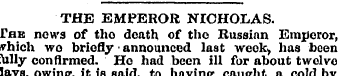
THE EMPEROR NICHOLAS . J ? he news of tho death of the Russian Emperor , rvhich wo briefly ¦ announced last week , has been fully confirmed . Ho had been ill for about twelve lays , owing , it is said , to having caught a cold by visiting the soldiers in their barracks , , and holding long and frequent reviews in spite of tho severity of th « weather , and in opposition to tho remonstrances Df bis children wad chief officers , to whom , soya a
French paper , he would reply , that he had something else to do besides taking care of his health . "He had , however , attended to it , " says the same authority , " for more than a year past , and at times felt some uneasiness . He said that he had reached , and even exceeded , the number of years which God had allowed to others of his race , and th at his e nd w a s not far distant . He had treated himself according to his own ideas ; and had insisted on his physician putting him on a regimen which would prevent his getting corpulent , of which he had a singular dread . According to another account , his malady resulted from the fearful rage into which he fell on hearing that Sardinia had joined the alliance . At the commencement of his illness , he had felt some symptoms of gout ; but pulmonic apoplexy , or paralysis of the lun «* s , was the disease of which he died . For a time , th . " _ _ — . m . 11 ? ¥ _ T " . i _ - _ - — _^ lk * ¦ ' ¦ ¦
Dr . Mandt felt no alarm ; but , early on e morning of Friday week , the p hysicians announced to the E mp er or that b u t a few h o urs of e x iste n ce r e mai ne d to him . Upon being told that atrop hy of the l u ngs was p o ssible , h e a sked , " When shall I be paralysed ? " The physicians could not give a precise answer . The Emperor then said to Dr . Carell , " When shall I choke ? " Shortly afterwards he rec e iv e d the las t sa cr aments , and , c alling th e m e mb e rs of his family to his bedside , took leave of them , and gave them his blessing separately—it is said with great calmness and self-possession , a nd in a firm voice . Paralysis then gained on his lungs , and h e e x pir e d sh o rtl y after midnight . The news of his illness had reached Berlin at eight o ' clock on Thursday evening , and the intelligence of his death was conveyed in a despatch addressed to the King of Prussia , which arrived at the Palace at noon on
Friday . The following sketch of the late Czar ' s life is derived from the daily papers—chiefly from the Morning Post : — The Emperor Nicholas Paulowitch was born on the 6 th of July , 1796 , being the third son of the Emperor Paul by his second wife , Mary of Wurtemberg . His mother superintended his education , which she comtoitted to General de Lamsdorf , who was assisted , amongst others , by theJDountess de Lieven , the p hilolog ist Adelung , and the Councillor Stork . At an earl y period he applied himself with great aTdour to military pursuits , in which he evinced considerable proficiency , e s peciall y in the art of fortification . However , in youth his instructors formed no high estimate of his abilities . He was taciturn , melancholy , and ,
when not engaged in his military studies , absorbed in trifles . The boy was not five years of age when , the ni ght Palace murder of March 23 , 1801 , made him an orp han . When the French invasion took place , Nicholas was old enough to be an observant , thoug h distant spectator of that great struggle . On the restoration of peace in 1814 , he left Russia to travel , and visited the principal battle-fields of Europe . In 1816 he arrived in Eng land , where he received a cordial welcome . On returning home , he visited the different provinces of Russia , for . the purpose pf _ bejcoming acquainted with the actual condition of the population . " In July , 1817 ~ hemarried Charlotte Louisa , the eldest daughter of Frederick William , of Prussia , and sister of the present King . Four
sons and three daughters are the issue of this marriage , the eldest son , Alexander Nicolaiewitch , having been born in the year 1818 . At this time Nicholas had little expectation of obtaining the Imperial Crown ; but in the year 1825 , his eldest brother , the Emperor Alexander , died at Taganrog , in the Crimea , it is supposed , by poison . The next heir to the throne was the Grand Duke Constantine , who was then at Warsaw , and Nicholas hastened to take the oath of fidelity . But his brother had already renounced the Crown in a paper which ho had secretl y si gned on the occasion of his marriage with the daughter of a private Polish gentleman . Nicholas , with expressions of regret , then
ascended the throne ; and now came a terrible struggle . A vast conspiracy , composed of two classes—the enthusiastic lovers of liberty and tho old Russian party , the supporters of Constantino — was formed ; but elements so discordant could not long act together . Tho troops wero called upon to swear allegiance to the new Emporor ; but they had pre v iousl y sworn fidelity to Constantino , and not understanding the reason for the change of masters , they remained faithful to the oath which they had taken . When tho ceremony commenced , tho officers stepped out of their ranks , denounced Nicholas as a usurper , and declared that he held Constantino in confinement . Tho soldiers followed their
officers , with cries of " Constantino and the Constitution . " Milarodovitch , tho Governor of St . Petersburg , and the veteran favourites of the army , were s ent to parley with them . The archbishop appeared in his ecclesiastic a l robes ; but all in vain . , The populace began to sympathise with the troops , and the scene which followed has thus been described : — " The tide and tumult of death swopt on to tho imperial palace . Tho Emperor and -Empress had proceeded alone to their chapul , and on their knees upon tho altar steps had mutuall y s w orn to die as sovereigns . Then placing himself at tho head of the guard that yet remained loyal , tho Cz a r rodo out and confronted the rebels . Standing before th e m , he cried in a firm tone , ' Return to your ranks—oboy . —
down upon your knees ! ' The energy of his voice —his countenance , calm , though pale—and the veneration with which every Russ regards the person of his sovereign—prevailed . Most of the soldiers kneeled before their master , and grounded their arms in token of submission . They say in St . Petersburg that while he harangued them one of the conspirators four times came forward to kill him , and four times shrank back in fear . He retired from the spot ; wherever resistance was made , the artillery played upon the gathering crowds and the fire of musketry completed the work of destruction . " The hopes of the Liberal and old Russian party having been thus quenched , Nicholas found himself the sole and absolute master of the gigantic Russian Empire . de Custinewho had -3 n . ^ ~¦ ~_ H ^* w -w * -rf ^«* ^ J ^*» J * s * n * ^ ¦ M * 1 » > fe am - -- - - _ « mm
The Marquis , a conversation with the Emperor as to the memorable events of that dayrecords the following words used hy Nicholas : "I did nothing extraordinary . I said to the . soldiers , ' Return to your ranksV and , at the moment of passing the regiment in revie w , I cried ' On your knees ! ' They aU obeyed . What gave me power was , that the instant before I had resigned myself to meet death . I am grateful for having succeeded , but I am not proud of it for it was b y no merit of my own . " In the punishments inflicted on the rebels , Nicholas evinced the most unappeasable severity . Absolutism was henceforth his darling doctrine . To the Marquis de Custine he said , "I have no conception of a representative monarchy . It is the government of falsehood , fraud , and corruption , and , rather than adopt it , I would fall back to the borders of China . " A gain , " Despotism is the very essence
of my government , and it suits the genius of the land . ' Shortl y after his coronation , war Tvas declared with Persia , which , after continuing more than a year , was concluded by a treaty , whereb y the Shah ceded two fine provinces to Russia , and bound himself to pay 20 millions of silver roubles as the penalty of resistance . About a year afterwards Nicholas declared war with Turkey . Adrianop le opened its gates , and Constantinop le was itself in danger , althoug h the Turks in the Balkan , and in the defence of Silistria and Varna , had covered themselves with g lory . In 1829 the peace of Adrianople was concluded , by which Nicholas was permitted to retain authority in Wallachia and Moldavia , and the Porte _ agreed to indemnif y the expenses of the war by a payment of eleven millions and a-half of "Dutch ducats—a sum from which three millions were afterwards deducted . In" 1830 the Polish revolution
broke out ; but England and France remained neuter , and Austria and Prussia aided the Czar in crushing the insurgent patriots . After a heroic resistance , Poland was reconquered- —the Russians entered Warsaw , and an iron despotism was substituted for the semblance of constitutional government , whicITpreviously had been permitted to exist . When the cholera invaded St . Petersburg , the i gnorant populace accused the physicians of having poisoned the sick in the hospitals , and put some of them to death . Nicholas rode to the mob , and shouted in a voice of thunder , " Down upon your knees before God , and ask pardon of him for your offences . I , your Emperor—your master—order you . " The populace obeyed . In 1839 war was declared with
Circassia—a war which , with little honour to the Russian arms , has c ^ Throug hout his reign the under-current of Russian intervention in the affairs of Turkey may be constantly traced until it reached , in 1853 , that catastrophe which has for the last two years convulsed Europe . In 1840 the insidious propositions of Russia , being adopted by the British Government and by that of Austria , led us to the brink of war with France , and engaged us in military operations in Syria ; but with this exception the peace of the world remained undisturbed until 1848 . Since that period , the chief features of the Czar ' s life must be too fresh in the reader ' s mind to need
recapitu-AI . I . KOED INSANITY OP THE LATE CZAR . A singular letter from Dr . Granville appears in the Times of Monday . We learn from tliisthat , in th e course of June , 1853 , the doctor endeavoured to obtain a confidential communication with Lord Palmerston on the plea of having a very important fact to state with reference to the negotiations with Russia then proceeding . Failing this , lie sent a letter tohiB lordshi p , in which he advanced the opinion that the Government was wrong in entering i n to treati es with t h o E mp e ro r of llussia , since that individual was , in fact , a madman , and quite incapable of understanding abstrnct reason . In support of the assertion , Dr . Granvillo gave practical reasons : — " Tho heulth of tho Czar is shaken . It has become
so graduall y for the last five yearn . Ifc hn * - table , passionate , fanciful , more than usually superstitious , capricious , hasty , precip itate , and obstinate withal —all from ill-health , unHkilfully treated ; and of late deteriorating into a degree of corcbrnl excitement , which , whilo it takes from him tho power of steady reasoning . impels him to every extravagance , in tho same manner as with Inn father in 1800 ; aa with Alexander , w Poland , in 1820 ; aa with Constantino , at Warsaw , » 1880 ; aa with Michael , at St . Petersburg , in 1 « -18-J < Like thorn , his nature feels tho fatal transmission ot hereditary insanity , tho natural consequence of an overlooked and progressive congestion of tho brain . J ' lJ (<) thorn ho is hurrying to his fato , sudden death , from con-
Untitled Article
22 ( y THE LEADER . [ Saturday , ' 1 I
-
-
Citation
-
Leader (1850-1860), March 10, 1855, page 220, in the Nineteenth-Century Serials Edition (2008; 2018) ncse.ac.uk/periodicals/l/issues/vm2-ncseproduct2081/page/4/
-