On this page
-
Text (3)
-
Untitled Article
-

Untitled Article
-

Untitled Article
Note: This text has been automatically extracted via Optical Character Recognition (OCR) software. The text has not been manually corrected and should not be relied on to be an accurate representation of the item.
-
-
Transcript
-
Note: This text has been automatically extracted via Optical Character Recognition (OCR) software. The text has not been manually corrected and should not be relied on to be an accurate representation of the item.
Additionally, when viewing full transcripts, extracted text may not be in the same order as the original document.
Untitled Article
Wood , Sir George Cobsbwam Lewis , and Sir GeokSb Grkt . It was said that these men had a greed with Lord John and Mr Gudstone ; but the real charge against Lord Paxmerston was that of consenting to sit as President of a Coalition Cabinet for political P urfW > se ^ t < home ^ wtale , in foreign affairs half that Cabinet consisted ? of " traftors . " Sir George Grey stood up , and boldly denied that there was any division in the Cabinet at all : and there is ,, indeed , no evidence to prow it If any person conveyed to Mr . DisRAmra the information which he professed to have , there must be or must have beensome very base " traitor
, in the Cabinet ; a traitor so mean and so paltry , that we regard his existence among English gentlemen as more improbable than Mr . Disraeli s having been totally deceived in the matter . Mr , Gladstone finish . ed . tLe debate by oneof his most casuistical and unexciting speeches—a kind of lecture to the House of Commons for the mistake it had made in not adopting his views , and closing the war on the Russian terms of peace ; and then Sir Edward Lytton ' s vote of censure was withdrawn . Mr . Roebuck ' s motion of censure upon the members- of the Administration who advised the
Sebastopol expedition came late in the day absolutely ; and it-was rendered still more out of date by the interposition of Sir Edward Lttton ' s motion , a censure upon a more recent event , but already felt to be too late . Preter-plu-perfect is not the tense in which Mr . Roebuck should have spoken , but some tense much further thrown back . The effect of tedium was increased by the adjournment from . Tuesday over the Wednesday ; and , excepting Mr . Roebuck ' s conscientious reproduction , of his favourite portions from the Sebastopol
[ Report , the discussion principally turned upon the same question put in ; a variety of forms , whether or not the debate ought to have been had at all . It -was contended , that since the political grounds ibr proceeding with the Crimean expedition , had not been stated , and could not be stated , the House could not judge the conduct of the Cabinet Ministers , and that " the previous question , " therefore—whether the motion ought to be put- — was a very proper one to be answered in the negative . Sir James Graham and the Peelites voted
against that form , because they wished to meet the motion with a direct negative ; but the House was really engaged in single combats , such as Mr . Bbight ' s attack upon Lord Palmerston , and the viscount ' s retaliation . Mr . Roebuck himself had created a difficulty , for virtually he exonerated the late Ministers in the War Departments ; Lord John Russell had already been disposed of ; he could not censure Lord Palmerston as Home Secretary in the Aberdeen Cabinet , while exonerating the Premier and the War Ministers . The attack , therefore , seemed to be levelled at Lord Palmerston as Premier of the Cabinet which had not given the advice imputed ! One speech had a great effect
upon the House , for its substantial facts and noble-minded spirit . Sir Db Lac y Evans impartially and earnestly surveyed the mistakes committed in the Crimea , and the means to correct them . But the real question upon which the House divided was , whether or not it would be convenient for the several parties to put Lord Paxmerston out of office . The body of the members usually sitting on the . right hand of Mr . Speaker , and some forty of the more discreet Conservatives , in voting that Mr . Roebuck ' s motion should not be put , virtually pronounced a negative on the removal of Lord Palmeuston . This division gave to Ministers 289 to 182 ; and with that vote the session virtually closed .
Some obstruction to the closing of the session had already been got rid of . Maynooth , instead of being a weekly debate , is postponed till " that day three months "—which will fall somewhat in the middle of the recess . Lord Palmerston had made it up with the Irish Members , consenting to support their clause for retrospective compen-BUtion in the Tenants Compensation Bill . The Chancellor , of the Exciucqujcb has announced
that no further domand upon Parliament will be necessary at present ; as Ministers have 3 , 000 , 000 / . of the allowance already made unuppropriate . It is true that members havo boon doing some fWv-ci TKCff ^ * Committeo , -which would soon to require ^^ AjTj&Htical sequol . The conduct of the police | h * i , y > r "i niiHjIttft ^ the socond Sunday of the rioting has boon : *• ' /~ < bj ^ m gfifc bofoi * o the Commissioners appoipted by c ^/ i ^ ^^/ tfi ^ -Jt ^ cwio Office , and the evidence is tolling so WJ'i ' - ^ ' ^ l ^^ 'W' ^ aga * nst tuo polico in particular cases , ^^^ - ^^ j ^ waK ^ flf Commons will probably have something *^ S % w ^
Untitled Article
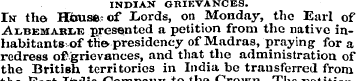
INDIAN GRIEVANCES . Int the Hfausfcof Lords , on Monday , the Earl of Albkmable presented a petition from the native inhabitants of th&presidency of Madras , praying for a redress of ? grievances , and that the administration of the British territories in India be transferred from the East India Company to the Crown . The petition emanated from a public meeting convened by the sheriff , and was signed by 14 , 000 persons . In the course of his speech , the earl pointed out the oppressive and heartless taxation under which the
natives labour—a taxation which reduces them to the very verge of famine , and which is ¦ wrung from them by torture . That horrid practice had indeed been carried on to a frightful extent ; and this cruel state of things had not been mitigated by any attempts to improve of develop the material capabilities of the land , which , was so disgracefully neglected that famines were of frequent occurrence . — Earl Granvillk was of opinion that the Indian Government had done much already , and he had no doubt they would do more .
DEFICIENCY BILLS . Lord Mokteagle moved for copies of all the correspondence which had passed between the Bank of England and the Chancellor of the Exchequer on the matter of deficiency bills . —Earl Gkanville at first objected to produce the correspondence , but when the motion was supported by Lord Derby , agreed to it .
RELIGIOUS WORSHIP BILL . The Earl of Shaftesbury , in moving that this bill be recommitted , observed that certain modifications had been introduced into it , and he believed he was justified in asserting that it was now approved , not only by the Archbishop of Canterbury , with whom he had communicated on the subject , but by the Episcopal body generally . —The Archbishop of Canterbury confirmed this statement . —Ultimately , it was agreed that the bill should be sent back to the select committee , the Earl of Siiaftesbury this time expressing his readiness to serve thereon .
THIRD READINGS . The following bills were read a third time and passed : — Endowed Schools ( Ireland ) , Edinburgh Lands , Youthful Offenders ( No . 2 ) , Gold Wedding Rings , Commons Inclosure ( No . 2 ) , Encumbered Estates ( Ireland ) Act Continuance . THE OFFICE OF POSTMASTER-GENERAL . In the Commons Lord Palmerston , in answer to Mr . Moffatt , said it was not the intention of Government to abolish the office of Postmaster-General , as it seemed to them that the Post-office ought to be a department connected with the political administration of the country .
lord john kussell / s . e . . lytton ' s motion . Lord John Russell ( who spoke from the third Ministerial bench ) moved , in pursuance of an arrangement with Lord Palmerston , that the orders of the day be postponed , so as to allow of Sir Edward Bulwer Lytton ' s motion being brought ion . He recapitulated the circumstances attending his promise to place the Austrian propositions before the Cabinet in the most favourable manner , and the subsequent rejection by the Government of those propositions . The Foreign Ministers of Franco and Turkey agreed with him in thinking the proposals might be accepted ; but circumstances arose in the course of the
week following their rejection here which caused him to change his mind . lie had originally tliought that the Austrian scheme presented tho moans of combining all the Powers of Europe against the future aggressions of Russia ; but , subsequent to the decisions of the English Cabinet , the Austrian Government proposed to lay down , in Conference , some proposals for a limitation of the Russian fleet , and declared that oven tho rejection by liussia of those proposals would not bo considered a casits belli . Now he ( Lord John Russell . ) , in conjunction with tlie rest of tho Cabinet , did not think it wortli while to enter into negotiations founded upon proposals so made . This was on tho lUth of May ; and , from that time , things reverted to thoir previous condition . Mr . Disraeli had objected that , after his return from
Vienna , ho had become " an uncompromising advocate of war . " After the rejection of tho Austrian propositions , ho had no other course . As for the House not having boon informed of the Austrian propositions , that was a matter for which tho Foreign Secretary was responsible ; hut ho ( Lord John Kussell ) thought that it would havo boon a dereliction of duty to publish them . When tho Austrian scheme waa refused , ho foil back upon his former opinions , and a more united Cabinet could not exist . IJut ho had now resolved to resign becauso of t'ie wide provalenco of opinions-adverse to him . ¦ "' was awaro thut ho had many friends , and thtwo ho thanked for thoir kindnoss and support . An for 1 »' enemies , who turned upon him when there wifl a i'ul » in his fortune ^ ho rogardcd ^ them ) j with oontumpt-
Untitled Article
fco say upon , the suhje , e * , f if Ministers do not anticipate them . Some- of the police appear to have struck-: out the brilliant idea , that if they were called / upon to attack one person they could acquit . themselves of the . duty by attacking somebod else— a womanvor > a quiet-looking ,-main . ; or theyvorender their business easier by thotfVapoleonic plan of concentrating ; their force upon a-single point—twelve truncheons on one man ' s head ; Di \ HasS-Axl is proving before the Select Committee of the Commons that which he has proved before the readers of the Lancet—that by the adulterations of food the retail dealers of this country are poisoning her Majesty ' s lieges , —undermining the strength of > her Majesty ' s subjects for
service in the Crimea , and other useful purposes ; and really , with the evidence before the Committee , it , does seem , criminal that Parliament should adjourn for the recess and leave the community to another year of poisoning . Then there is the Beer Act—that great law which every police magistrate condemns either by his own opinion or the facts he states ; while it is supported by Sir Robert Garden , who dictates to others the Maine Liquor Law he does not obey himself ; and by Mr . George Oruikshank , who denies that there is any inconvenience resulting from the act , the ci-y for the act repeal being only " a fuss about drink , " while he hands in caricatures of his own as evidence for the Select Committee I
Nothing decisive from . Sebastopol . The Generals report that all goes on well , and that they are pushing their works nearer to those of the enemy . That they are coming to close quarters is clear from the sorties that have taken place . The French have been three times attacked , on the 15 th , 16 th , and 18 th ; but in every instance the Russians have been repulsed with loss . In like manner the English repulsed an attack upon
the left side on the 18 th . It may therefore be fairly inferred that the enemy finds the proximity of the Allies menacing and inconvenient , and that as reinforcements are expected , he is more desirous than ever of obstructing the progress of the siege in every possible way . This is a period of silent activity on the part of the Allies , and troubled action on the part of the enemy ; but we cannot have long to wait for more decisive news .
In Asia the Russians have again advanced upon Kars , have cut off communication with Erzeroum , and have invested the place—some say with G 0 , 000 mem The retirement of the French military commissioner from Vienna , and of the Austrian military commissioner from Paris , are facts which illustrate the widenin g difference between the Western Powers and their recent ally . On the other hand , the largo subscriptions which are already anticipated towards the loan in France , now ascertained to be an open one , imply that the resources of that country aro much more buoyant , the people much more favourable to the war , than they were supposed to bo .
Naples , who has declared that she shall follow Austrian suit , has just been welcoming tho King of Portugal ; expecting , it is said , that ho will take one of the Neapolitan princesses off the royal hands as his wife ; for while powers are trembling in the balance , dynasties are still pursuing the speculations of wedlock . New relations , it is solemnly said , have been made , favourable to the Orleans family , because the Count cle Ciiamiioiu > begins to think that his wife never will have an heir .
Rather an important measure is in prospect of being passed by the Legislature of North Carolina —a law to legalise the marriage and education of slaves . North Carolina is scarcely a slave state ; her example , perhaps , would be slowly followed by others more to tho South ; and the measure has only been delayed by tho hostile and menacing agitations of the Abolitionists . It may , however , be at least tho fine point of the wedge . This is a better mode of carrying on the war against slavery than tho old plan of persecuting
our ally , Brazil , because she could not at a blow purify her domestic institutions , or persevering in an exchange of massacres with tho natives of tho Gambia , to enforce tho surrondcr of slaves or compensation . In the recent case of Mullaghen , wo havo thrown uway many valuablo lives , and bombarded a town , to extort money ; disguising tho moral lesson under an equivocal appearance of avarice . If tho Nogroca , us a body , were respectably settled in life and educated , it would bo morally impossible to keep them in n state of slavery .
Untitled Article
MKliBJAL PARLIAMENT :
Untitled Article
T H E L , E APEB . [ No . 278 _ Satuiu ) At >__ C / O ^ - ' — ¦¦ ¦ ¦ ¦¦ ¦—¦ _ ¦ ; ' - ; ' n ^ SSmr ^^ Mr " m- ^—' ~^ i T ~ B n it ~ rTiir^—— - ^————p ^—^— t ^ mm w ^ ^
-
-
Citation
-
Leader (1850-1860), July 21, 1855, page 686, in the Nineteenth-Century Serials Edition (2008; 2018) ncse.ac.uk/periodicals/l/issues/vm2-ncseproduct2100/page/2/
-