On this page
-
Text (3)
-

Untitled Article
-

Untitled Article
-

Untitled Article
Note: This text has been automatically extracted via Optical Character Recognition (OCR) software. The text has not been manually corrected and should not be relied on to be an accurate representation of the item.
-
-
Transcript
-
Note: This text has been automatically extracted via Optical Character Recognition (OCR) software. The text has not been manually corrected and should not be relied on to be an accurate representation of the item.
Additionally, when viewing full transcripts, extracted text may not be in the same order as the original document.
Untitled Article
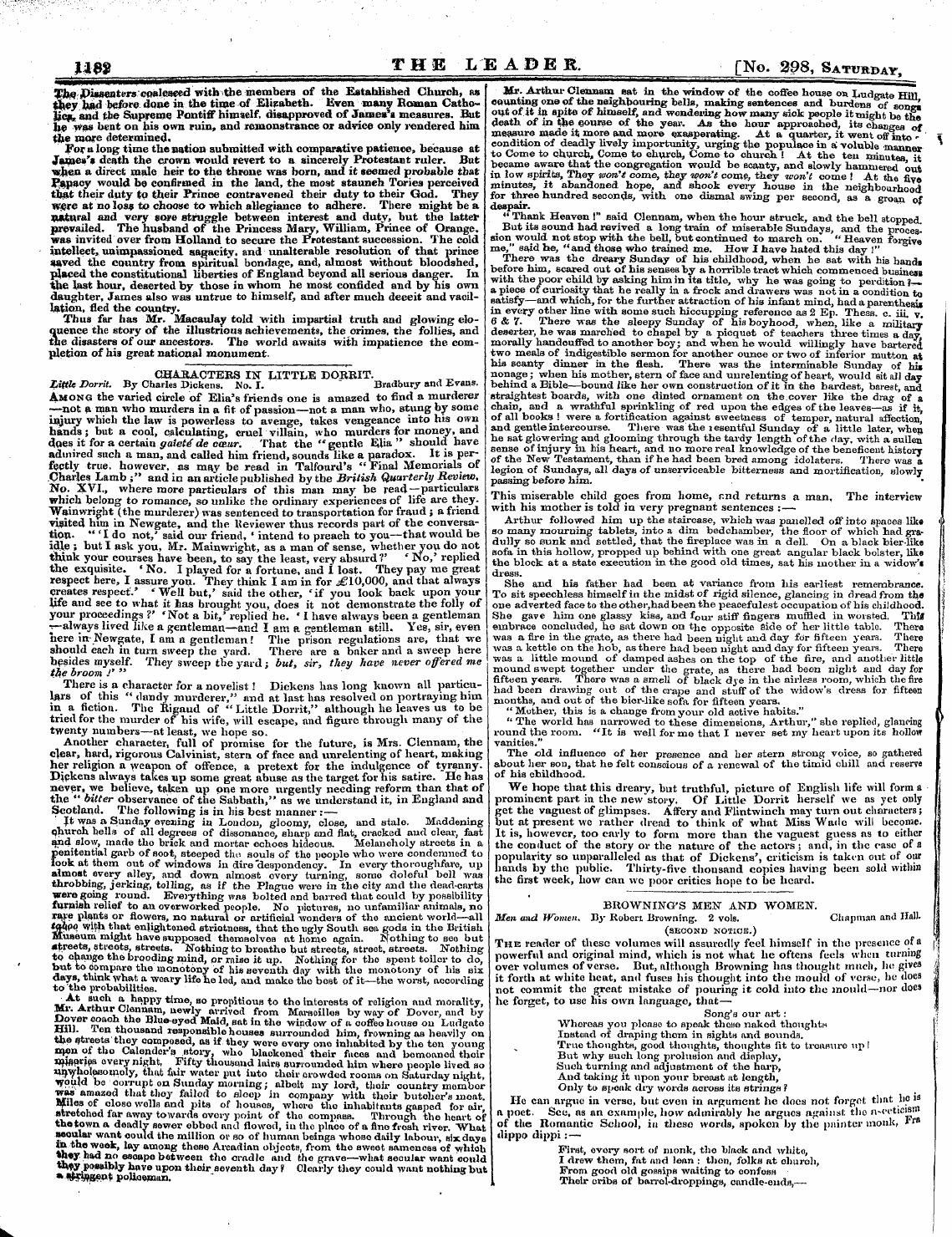
^ he Dissenters coalesced Church , as tfaey bft 4 be / ore done in the time of Eli ^ aheth . Even many Roman Catho-Jjcft , and tide Supreme Pontiff himself , disapproved of James ' s measures . But be was bent on his own puin , and remonstrance or advice only rendered him the more determined * For h long time the nation submitted with comparative patience , because at Jainea ' t death the crown would revert to a sincerely Protestant ruler . But ¦ orheja a direct male heir to the throne was born , and it seemed probable that I * # paoy would be confirmed in the land , the most stauneh Tories perceived that their duty to their Prince contravened their duty to their God . They were at no loss to choose to which allegiance to adhere . There might be a natural and very sore struggle between interest and duty , but the latte * prevailed . The husband of the Princess Mary , William , Prince of Orange , was invited over from Holland to secure the Protestant succession . The cold intellect , unimpassioned sagacity , and unalterable resolution of that prince saved the country from spiritual bondage , and , almost without bloodshed , placed the constitutional liberties of England beyond all serious danger . In the last hour , deserted by those in whom he most confided and by his own daughter , James also was untrue to himself , and after much deceit and vacillation , fled the country . Thus far has Mr . Macaulay told with impartial truth and glowing eloquence the story of the illustrious achievements , the crimes , the follies , and the disasters of our ancestors . The world awaits with impatience the completion of his great national monument .
Untitled Article
with the members of the Established i 14 * 9 THE Lfi ABER , [ No . 298 , Saturday , J , j i ,. ju . w . r in ' 1171 X 71 ' " ' ' ' ' ' "" ' ' ' ¦ --- ' - ¦ ---- ' ¦¦¦ " * ^
Untitled Article
CHAHACTERS IN LITTLE DORRIT . Little JDorrit . By Charles Dickens . No . I . ~ Bradbury and Evans . Among the varied circle of Elia ' s friends one is amazed to find a murderer —not a man who murders in a fit of passion—not a man who , stung by some injury which the law is powerless to avenge , takes vengeance into his own hands ; but a cool , calculating , cruel villain , who murders f or money , and da . es it for a certain gaiety de cceur . That the " geptle HUia " should have admired such a man , and called him friend , sounds like a paradox . It is perfectly true , however , as may be read in Talfourd ' s " Final Memorials of Charles Lamb ; " and in an article published by the British Quarterly Review , No . XVI ., where more particulars of this man may be read—particulars which belong to romance , so unlike the ordinary experiences of life are they . Wainwright ( the murderer ) was sentenced to transportation for fraud j a friend visited him in Newgate , and the lieviewer thus records part of the conversation . " ' I do not / said our friend , intend to preach to you—that would be idie » but I ask you , Mr . Mainwright , as a man of sense , whether you do not think your courses have been , to say the least , very absurd ? ' ' No / replied the exquisite . ' No . I played for a fortune , and I lost . They pay me great respect here , I assure you . They think I am in for ^ 10 , 000 , and that always Creates respect / 'Well but / said the other , if you look back upon your life and see to what it las brought you , does it not demonstrate the folly of your proceedings ? ' 'Not a bit / replied he . I have always been a gentleman r-always lired like a gentleman—and I am a gentleman still . Yes , sir , even here in- Newgate , I am a gentleman ! The prison regulations are , that we should each in turn sweep the yard . There are a baker and a sweep here besides myself . They sweep the yard ; but , sir , they have never offered vie the broom . ' *" There is a character for a novelist ! Dickens has long known all particulars of this " tlandy murderer , " and at last has resolved on portraying him in a fiction . The Rigaud of "Little Dorrit , " although he leaves us to be tried for the murder of his wife , will escape , and figure through many of the twenty numbers—at least , we hope so . Another character , full of promise for the future , is Mrs . Clennam , the clear , hard , rigorous Calvinist , stern , of face and unrelenting of heart , making her religion a weapon of offence , a pretext for the indulgence of tyranny . Dickens always takes up some great abuse as the target for his satire . He has never , we believe , taken up one more urgently needing reform than that of the " bitter observance of the Sabbath , " as we understand it , in England and Scotland . The following is in his best manner : — Jt was a Sunday evening in London , gloomy , close , and stale . Maddening church bells of all degrees of dissonance , sharp and flat , cracked aud clear , fast and slow , made tho brick and mortar echoes hideous . Melancholy streets in a penitential garb of soot , steeped tho souls of tho people who wore condemned to look at them out of windows in dire " despondency . In eveiy thoroughfare , up almost every alley , and down almost every turning , some doleful bell -was throbbing , jerking , tolling , aa if tho Plague were in the city and the dead-carts were going round . Eveiything was bolted and barred that could by possibility furnish relief to an overworked people . No pictures , no unfamiliar animals , no ra , ye plants or flowers , no natural or artificial wonders of tho ancient world—all Slkpo wtyb , that enlightened strictness , that the ugly South sea goda in the British uaeuxn might have supposed thonmelves at homo again . Nothing to seo but greets , streets , streets . Nothing to breathe but streets , street , streets . Nothing to change the brooding mind , or raiae it up . Nothing for tho spent toiler to do , but to oonipare tho monotony of hie seventh day with the monotony of his six days , tnmk what a woavy life he led , and make the best of it—the worst , according to the probabilities . ¦ M- ' ^ A . iu * 5 L * PPy * lw * e , bo propitious to tho interests of religion aud morality , Mr . Artnur Clennatn , newly arrived from Marseilles by way of Dover , and by Hover ooaoh the Blue eyed Maid , sat in the window of a cofteohouse on Liidgato Jtlill . J . en thousand lesponuible houses surrounded him , frowning as heavily on the atraeta tliey composed , aa if they were every one inhabited by the ten young injmof the Calenders story , who blackened their faces and bemoaned their « PH « W a every night , Fifty thousand loirs surrounded him where people lived so iwyholeaomoly , th « , t fair water put into their prowded rooms on Saturday night , wou /« bo corrupt on Sunday morning ; albeit my lord , their country morabor J ™ amazed that thoy failod to eloop in oompany with their butoher ' s meat . Miles of oloso wells and pits of houaos , whore tho inhabitants gasped for air , stretched far away towards every point of tho compaBa . Through the heart of the town a deadl y sower ebbed and flowed , in tho place of a fine fresh rivojr . What aaoular want could tho million or so of human beings whoso daily labour , nix days in the woek , lay among these Arcadian objects , from tho sweet sameness of which they had no escape between the cradle and tho grave—what secular want could tttyyjpospibly hove upon their seventh day ? Clearly thoy could want nothing but ** wiwsont policeman . -
Jtr- Arthur Clennam Bat in the window of the coffee house on Jmdgate Hffl counting one of the neighbouring bells , making sentences and burdens of sonai out of it i » apite of himself , and wondering how many sick people ifc might be the death of in the course of the year . As the hour approached , its changes of measure made i % more and more exasperating . At a quarter , it went off into - condition of deadly lively importunity , urging the populace in a voluble manner to Come to church , Come to church , Come to church ! At the ten minutes it became aware that the congregation would be scanty , and slowly hammered , out in low spirits . They won ' t come , they it > orit come , they wont come ! At the fiyo minutes , it abandoned hope , and shook every house in the neighbourhood for three hundred seconds , with one dismal swing per second , as a groan of despair . ¦¦ ? ? ' Thank Heaven ! " said Olennam , when the hour struck , and the bell stopped But its sound had revived a long train of miserable Sundays , and the procession would not stop with the bell , but continued to march on . " Heaven forgive me , " said he , " and those who trained me . How I have hated this day !" There was the dreary Sunday of his childhood , when he sat with his hands before him , scared out of his senses by a horrible tract which commenced business with the poor child by asking him in its title , why he was going to perdition ?^—a piece of curiosity that he really in a frock and drawers was not in a condition to satisfy—and which , for the further attraction of his infant mind , had a parenthesis in every other line with some such hiccupping reference as 2 Ep . Thess . c . iii . v . 6 & 7 . There was the sleepy Sunday of his boyhood , when , like a military deserter , he was marched to chapel by a picquet of teachers three times a day morally handcuffed to another boy ; and when he would willingly have bartered two meals of indigestible sermon for another ounce or two of inferior mutton at his scanty dinner in the flesh . There was the interminable Simday of hi * nonage ; when his mother , stern of face and unrelenting of heart , would sit all day behind a Bible—bound / ike her own construction of it in the hardest , barest , and straightest boards , with one dinted ornament on the cover like the drag of a chain , and a wrathful sprinkling of red upon the edges of the leaves—as if it of all books ! were a fortification against sweetness of temper , natural affection , and gentle intercourse . There was the lesentful Sunday of a little later , when he sat glowering and glooming through the tardy length of the clay , with a sullen sense of injury in his heart , and no more real knowledge of the beneficent history of the New Testament , than if he had been bred among idolaters . There was a legion of Sundays , all days of unserviceable bitterness and mortification , slowly passing before him . This miserable child goes from home , r . nd returns a man , The interview with his mother is told in very pregnant sentences : — Arthur followed Mm up the staircase , which was panelled off into spaces like so many mourning tablets , into a dim bedchamber , the floor of which had gradully so sunk and settled , that the fireplace was in a dell . On a black bier-like sofa in this hollow , propped up behind with one great angular black bolster , like the block at a state execution in the good old times , sat his mother in a widow ' * dress . She and his father had been at variance from his earliest remembrance . To sit speechless himself in the midst of rigid silence , glancing in dread from the one adverted face to the other , had been the peacefulest occupation of his childhood . She gave him one glassy kiss , and f our stiff fingers muffled in worsted . Thil © inbi'ace concluded , he sat down on tke opposite Side of her little table . There was a fire in the grate , as there had been uiglit and day for fifteen years . There was a kettle on the hob , as there had been night and day for fifteen years . There was a little mound of damped ashes on the top of the fire , and another little mound swept together under the grate , as there had been night and day for fifteen years . There was a smell of black dye in the airless loom , which the fire had been drawing out of the crape and stuff of the widow ' s dress for fifteen mouths , and out of the bier-like sofa fox * fifteen years . " Mother , this is a change from your old active habits . " " The world has narrowed to these dimensions , Arthur , " she replied , glancing round the room . "It is well forme that I never set my heart upon its hollow vanities . " The old influence of her presence and her stern strong voice , so gathered about her sou , that he felt conscious of a renewal of the timid chill and reserve of his childhood . We hope that this dreary , hut truthful , picture of English life will form a prominent part in the new story . Of Little Dorrit herself we as yet only get the vaguest of glimpses . AfFery and Flintwinch may turn out characters ; but at present we rather dread to think of what Miss "Wade will become . It is , however , too early to form more than the vaguest guess as to either the conduct of the story or the nature of the actors ; and , in the case of 8 popularity so unparalleled as that of Dickens ' , criticism is taken out of our hands by the public . Thirty-five thousand copies having been sold within the first week , how can we poor critics hope to be heard .
Untitled Article
BROWNING'S MEN AND WOMEN " . Men and Women . By Robert Browning . 2 vols . Chapman and Hal ) . ( second notice . ) The reader of these volumes will assuredly feel himself in the presence of a powerful and original mind , which is not what he oftens fuels when turning over volumes of verse . But , although Browning has thought much , he gives it forth at white heat , and fuses his thought into the mould of verse , he does not commit the great mistake of pouring it cold into the mould—nor does he forget , to use his own language , that—Song ' s our art : Whoreas yon ploaso to speak those naked thought * Instead of draping them in sights and sounds . True thoughts , good thoughts , thoughts fit to treasure up I But why such long prolusion and display , Such turning and adjustment of the harp , And taking it upon your breast at length , Only to speak dry words across its strings ? He can argue in verse , but even in argument he does not forgot that hp ' , a poet . Sec , ns an example , how admirably he argues ngninst the iwt'twisrn of the Romantic School , in these words , spoken by the painter monk , * \ dippo dippi : — First , every sort of monk , tho black and whito , 1 I drow them , fat and lean : thon , folks at church , i From good old goesipa waiting to confess Thoir cribs of barrel-droppings , candle-endo , —
-
-
Citation
-
Leader (1850-1860), Dec. 8, 1855, page 1182, in the Nineteenth-Century Serials Edition (2008; 2018) ncse.ac.uk/periodicals/l/issues/vm2-ncseproduct2118/page/18/
-