On this page
-
Text (2)
-

Untitled Article
-

Untitled Article
Note: This text has been automatically extracted via Optical Character Recognition (OCR) software. The text has not been manually corrected and should not be relied on to be an accurate representation of the item.
-
-
Transcript
-
Note: This text has been automatically extracted via Optical Character Recognition (OCR) software. The text has not been manually corrected and should not be relied on to be an accurate representation of the item.
Additionally, when viewing full transcripts, extracted text may not be in the same order as the original document.
Untitled Article
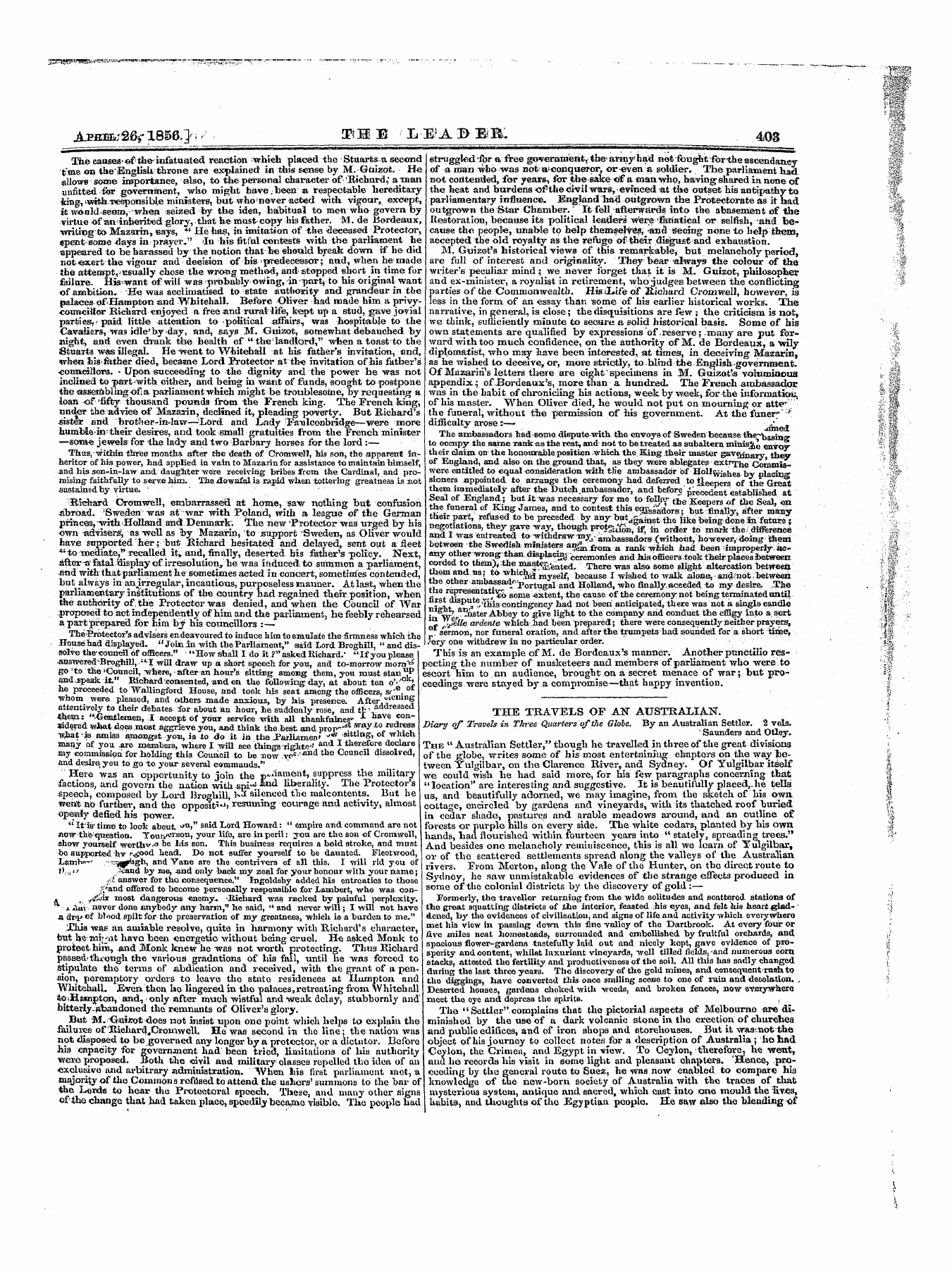
The causes ¦ of'thc infatuated reaction which placed the Stuarfes a second t ' me on theEnglish throne are explained in this sense by M . Gtaizot . He allows some importance , also , to the personal character of 'Richard , ' a-man unfitted for government , who might have . been a respectable hereditary king , 'with-responsible ministers , but whonever acted with vigour , except , it would seem , when seized by tke idea , habitual to men who govern by virtue of an inherited glory , that he must copy his father . M . de Bordeaux , ^ writing ti » Mazarin , says , * ' He has , in imitation of the deceased Protector , epent some days in prayer . " Jn his fitful contests with the parliament he appeared to be harassed by the notion that he should break down if he did not exert the vigour and decision of his predecessor ; and , when he made the attempt ,-usually chose the wrong method , and stopped short in time for failure . His * want of will was probably owing , in p « Ttj to his original want of ambition . He was acclimatised to state authority and grandeur in the
palaces of Hampton and Whitehall . Before Oliver had made him a privycounciltor Richard enjoyed a free and rural life , kept up a stud , gave jovial parties , ' paid little Attention to political affair's , was hospitable to the Cavaliers , was idle * by day , and , says M- Guizot , somewhat debauched by night , and even drank tbe health of " the landlord , " when a toast to the Stuarts was illegal . He went to Whitehall at his father's invitation , and , when Lis father died , became Lord Protector at th « invitation of his father ' s -councillors . Upon succeeding to the dignity and the power be was not inclined to part "with either , and being in want of funds , sought to postpone the assembling < ofi a parliament which might be troublesoine , by requesting a loan of fifty thousand pounds from the French king . The French king , under the advice of Mazaa-in , declined it , pleading poverty . But Richard's sister and brother-in-law—; Lord and Lady Faiilconbridge—were more humble in their desires , and took small gratuities from the French minister —some jewels for the lady and two Barbara horses for the lord : —
struggled * £ pr a free government , the-army had not fought for the ascendancy of a man who was not a / conquerpr , or even a soldier . The parliament had not contended , for years , for the sake of a man who , having shared in none of the heat and burdens of the civilwars , evinced « t the outset his antipathy to parliamentary influence . England lad outgrown the Protectorate as it had outgrown the Star Chamber . It fell afterwards into the abasement of the Restoration , because its political leaders were fanatical or selfish , and because the people , unable to help themselves , -and seeing none to help them , accepted the old royalty as the refuge of their disgust and exhaustion . M . Guizot ' s historical views of this remarkable , but melancholy period , are full of interest and originality . They bear ¦ always the colour of the writer ' s peculiar mind ; we -never forget that it is M . Guizot , philosopher and ex-minister , a royalist in retirement , who judges between the conflicting parties of the Commonwrealfch . HisiLrifeof fiichard Cromwell , however , is less in the form , of an essay than -some of his earlier historical works . The
narrative , in genei'al , is close ; the disquisitions are few ; the criticism is not , we think , sufficiently minute to secure a solid historical basis . Some of his own statements are qualified by expressions " of . reserve ; , many are put forward with too much confidence , on the authority of M . de Bordeaux , a wily diplomatist , who may have been interested , at times , in deceiving Mazarin , as he wished to deceive , or , more strictly , to blind the English-government . Of MazariiTs letters there are eight' specimens in M . Gu . izot * s voluminous appendix ; of Bordeaux ' s , more than a hundred . The French ambassador was in the habit of chronicling his actions , week by week , for the information of his master . When Oliver died , he would not put on mourning or atte < : the funeral , without tie permission of his government . At the funerf " - difficulty arose : — ¦• ' *
•> * The ambassadors had some dispute with the envoys of Sweden because tiae- ^ agjjj ^ to occupy the same rank ^ as the rest , and not to be treated as subaltera minisji e eayo ^ their claim oir the honourable position vhieh the Bang their master gavfijnary they of England , and also on the , ground that , as they w . ere ablegates extnfjjg Conuniswere entitled to equal consideration with tHe ambassador of Holl ^ jgfc eg by placing aioners appointed to arrange the ceremony had deferred to jieepeTS of the Great them immediately after the Dutch . a mbassador , and before precedent established at Seal of England ^ but it was necessary fox me to follpr tie Keepers of * h e Seal , on !?!! J f ' ^*^ St se 3 &sadors : but finallya ^ er maiiy
S = ^^ S ^ ^ *^ , then- part , refused to be preceded by any but d |^ nst fte | a ^ ing : done 5 n future ; negotiations , they gave way , though protg ;^ , # order to mar 3 s : ^ difference and I was entreafcKL to withdraw my ^ Ambassadors ( without , however , doing them between the Swedish ministers ag ^ froHl a tank ^^ haa been ^ improperljr kcany other wrong ^ an displacmj 6 eremonies an < i Ma officers vtqbfc their places between corded to toem ) f . the maste ^ ented ? There was also some slight altercation hetween tbemandus ; to which ^ myselfj because I wished to walk atone , aridmbt ; between toe other ambas 8 adr . p ortugalaild HollaTldj who finally aceeded to my desire . The me representative Rome extent , the cause of the cerenion v not beinsr terminated until
5 ? ^^ P ^ j'tliis contingency had not been anticipated , there was not a single candle ni ^ f ^? ^^ agter Abbey to give light to the company and conduct the effigy into a sort 1 ^ Jelle ardente which had been prepared ; there were consequently neither prayers , s ' ermon , nor funeral oration , and after the trumpets had sounded for a short tinpe , / ery one withdrew in no particularorder . ' ¦ This is an example of M . de Bordeaux ' s manner . Another punctilio respecting the number of musketeers and members of parliament who were , to escort him to , an audience , brought on a secret menace of war ; but proceedings were stayed by a compromise—that happy invention .
Thus , witiiin three months- after the death of Cromwell , his son , the apparent inheritor of his power , had applied in vain to Mazarin for assistance to maintain himself , and his son-in-law and daugiter were receiving bribes from the Cardinal , and promising faithfully to serv-e him . The xfownfal is rapid when tottering greatness is not sustained by virtue . " ' Richard Cromwell , embarrassed at home , sa'w nothing but confusion Abroad . ' Sweden was at war with Poland , with a league of the German princes , -y ith Holland and Denmark . The new Protector was urged by his own iadvisersV as well as -by Mazarin , to support Sweden , as Oliver would
have stipported her ; but Hichard hesitated and delayed , sent out a fleet * Ho mediate / ' recalled it » , finally , deserted bis father ' s policy . Next , ^ f ter-a fatal display of irresolution ^ he was induced to summon a parliament , « nd with that parliament he sometimes acted in concert , sometimes contended , but always in an ^ rxegular , incautious , purposeless manner . At last , when the parliamentary institutions of the country had regained their position , when the authority of , the Protector was denied , and when the Council of Wax { proposed to act independently of him and the parliament , he feebly rehearsed a part prepared for him b-v his councillors : —
The Protector ' s advisers endeavoured to induce Mm to emulate the firmness which the House had displayed . '' Join In with the Parliament , " said Lord Broghill , " and dissolve thecoturcU of officers . " "How shall I do it . ? " asked Richard . ' "If you please answered'Broghill , " I will draw up a short speech for you , and to-morrow morn ' ° go ! to the'Council , -where , after an hour ' s sitting among them , you must stan ^ and . speak it" Richard consented , and on the following daj ' , at about ten o ' = ' ^ lie proceeded to Wallingford House , and took his seat among the officers , sr * . whom were pleased , and others made anxious , by his presence . After . ^ eiuil f attentively to their debates for about an hour , lie suddenly rose , and tt . addressed 4 ; hem ,: "^ Gentlemen , I accept of your service with all thankfulnep" L have * ~ sidled wihat Apes moBt aggrieve you , and think the best and pror' - ' 3 t smy it 0 redress Tvhat-is amiss amongst yow , is to do it in the . Parliament " ™ slttm £ > vrluch many of you . are members , where I will see things riglite- ' and I therefore declare my coramiBsion for holding this Council to be now , xp !' anA the Counc" dissolved , and desireyou to go to your several commands . "
Here was an opportunity to join the p- ^ ament , suppress the military factions , and govern the nation with spi " ^^ liberal i ty . The Protector ' s speech , composed by Lox-d iiroghill , M silenced the malcontents . But he went no further , and the oppostt ' -J ? resuming courage and activity , almost opesily defied his power . " It'is' time to looi about aT 1 » " ^ Lord Howard : " ompire and command are not Jiowtlie-question . TouiV crsonj your life , are in peril : yon are the son of Cromwell , show yourself worthv-o be Iris eon . This business requires a bold stroke , and must be supported hv < -, £ ood liead . Do not suffer yourself to be daunted . Fleotvrood , Lamb" - ' ' r- ~ j 0 A * gh , and Vane are the contrivers of all this . I will rid you of t >; ii > ' viiand by me , and only back my zeal for your honour with your name ; fi answer for the consequence . " Ingoldsby added his entreaties to those j ^ and offered to become personally responsible for Lambert , who was con-- c yvj&i * most dangerous enomy . liichard was racked by painful perplexity . x Aav never done anybody any harm , " ho said , " and never will ; I will not have a dxiy of blood spilt for the preservation of my greatness , which is a burden to me . "
, 'JQua was an amiable resolve , quite in harmony with Richard ' s character , tut he wiivat have been energetic without being eruel . He asked Monk to protect him , , and Monk knew ho was not worth protecting . Thus liichard passed'through the various gradations of his fall , until he was forced to stipulate the terms of abdication and received , with the grant of a pension , peremptory orders to leave the state residences at Hampton , and Whitehall . JEveivthen . ho lingered in the palnces , retreating from Whitehall * QiHampton , and , only after much wistful and weak delay , stubbornly and bitterly , abandoned the remnants of Oliver ' s glory . _ Bwb M . Cruifcot does not insist upon one point which helps to explain the failures of Kichar ^ Cromwell . Ho was second in the line ; the nation was not disposed to be governed any longer by a protector , or a dictator . Before his capacity for govQwunent had been tried , limitations of his authority wore proposed . Both the -civil and military clauses repelled the idea of an exclusive and arbitrary aidnunisfcratjorou When Itia first parliament mot , u majority of the Commons refilaed to attend tlie uafcera' summons to the bar of the Londa to hear the Protoctoral Bpoech . These , and many other signs of ' 4 fcQ change that had taken place , speedily became visible . The people had
Untitled Article
THE TRAVELS OF AN AUSTRALIAN . Diary of Travels in Three Quarters of the Globe . By an Australian Settler . 2 vols . 1 Saimders and Otley . The " Australian Settler , " though he travelled in three of the great divisions of the globe , writes some of his most enterfciiiniug chapters on the way between xulgubar , on the Clarence River , and Sydney . Of Yulgilbar itself we could wish he had said more , for his few paragraphs concermng that " location" are interesting and suggestive . It is beautifully p ) aced ,. he tells us , and beautifully adorned , we may imagine , from the sketch of his owa
cottage , encircled by gardens and vineyards , with its thatched roof buried in cedar shade , pastures and arable meadows around , and an outline of forests or purple hills on every side . The white cedars , planted by his own hands , had flourished within fourteen years into " stately , spreading trees . " And besides one melancholy reminiscence , this is all we learn of Yulgilbar , or of the scattered settlements spread along the valleys of the Australian rivers . From Morton , along the Vale of the Hunter , on the direct route to Sydney , he saw unmistakable evidences of the strange effects produced in some of the colonial districts by the discovery of gold : —
Formerly , the traveller returning from the wide solitudes and scattered stations of tho great squatting districts of the interior , feasted : his eyes , and felt bis heart gladdened , by tho evidences of civilisation , and signs of life and activity which everywhere met his view in passing down this iine valley of tho Dartbroolc . At every four or iive wiles neat ljomestoads , surrounded and embellished by fruitful orchards , and . spacious flower-gardens tastefully l a out and nicely Icept , gavo evidence of prosperity and . content , whilst luxuriant vineyards , -well tilled fields , 'and numerous corn stacks , attested tho fertility and productiveness of the soil . All this has sadly changed during the last three years . The discovery of tho gold mines , and consequent-rash , to tho diggings , Lave converted this once smiling scene to one of rain and desolation .
DeBerted houses , gardens choked with weeds , and broken fences , » ow everywhere meet the eye and depress tho spirits . ( The Settlpr" complains that the pictorial aspects of Melbourne are diminished by the us © of a dark volcanic stone in tho erection of churches and public edifices , and of iron shops and storehouses . But it w&Bvmot the object oflus journey to collect notes for a description of Australia ; ho bad Ceylon , the Crimea , and Egypt in view . To Ceylon , therefore , he went , and he records his visit in some light and pleasant chapters . Hence , . proceeding by the general route to Suez , he was noy enabled to compare his knowledge of the new-born society of Australia with tho traces of that mysterious system , antique and sacred , which cast into ono mould the livea , habits , and thoughts of the Egyptian people . Ho saw also the blending of
Untitled Article
ABsm ^ Qfl&m . J >/ ¦ TiW M L 1 A BEB . 40 g . _ ' - '— i ~ z _^_ Ij— ITi jM mim 1 ™» i « -i ™ — ^" ' ~— —*—¦—¦ " —¦ - ' ———^—~ - ~»»^> M ^ M »«^ ta » 1 »^« MMi *» M »« i ^ S ^^»^ j ^»^^^»^^^ aa ^^»^^ M ^ M « aiM ^^^^^ k »»^^ a ^ i «^^ -- — - — -i ^ i i ^ - ^^^ ' ¦ , _
-
-
Citation
-
Leader (1850-1860), April 26, 1856, page 403, in the Nineteenth-Century Serials Edition (2008; 2018) ncse.ac.uk/periodicals/l/issues/vm2-ncseproduct2138/page/19/
-