
On this page
-
Text (3)
-
Untitled Article
-

Untitled Article
-

Untitled Article
Note: This text has been automatically extracted via Optical Character Recognition (OCR) software. The text has not been manually corrected and should not be relied on to be an accurate representation of the item.
-
-
Transcript
-
Note: This text has been automatically extracted via Optical Character Recognition (OCR) software. The text has not been manually corrected and should not be relied on to be an accurate representation of the item.
Additionally, when viewing full transcripts, extracted text may not be in the same order as the original document.
Untitled Article
the facts have the faintest bearing against Mazzini , none against Ledrtj Roliiu . The whole chain rests upon the confession of the incredible raggamuflin Bartolotti . The Emperor visits our Court at a time when our journals are making the most of the intelligence from India . He will beisBte , therefore , to study the details of our Indian difficulties , and . the policy of our journalism , both together . The ampler accounts supplied by ' -the heavy mail' do not add to the force of the nanratfiye receihred on Saturdfey , but together they certainly present a state of affairs somewhat different from that described by the
imperfect telegraph . It is now tolerably clear that some persons m Delhi , collected there after the first arrival of the Meerut mutineers , suddenly got up a plan for a more combined action than any hitherto attempted . It was to include the dispossessed or dissatisfied Mussulman princes . One of the keys to . this combination consists in a proclamation issued in Delhi , but seized in Calcutta . It states that the new Mogul Emperor had been established on condition that the Sepoys should slaughter the British and become ' the servants of Delhi ; ' and while they should form a new army , receiving ' double pay , ' receive
¦ np . i-Krvns hrinp-ino- sunrilies for it should persons bringing supplies for it should receive * doable prices . The submission of Oude was pointed out as an example to be avoided . The approach of the rainy season was a formidable prospect for the British , hut in the meanwhile forces were gradually advancing from Lower Bengal , Bombay , ^ and the Punjab , upon the disturbed districts of Upper Bengal ; and thus on the 16 th of June we leave Sir Henry Barnard firing away upon Delhi , repelling sorties , and awaiting reinforcements .
Officially , the most cheerful aspect is taken of Indian affairs ; yet it is quite evident that we have not estimated , and shall not for months to come estimate the real enemy with whom we have to contend in that empire . The Bengal army has ' disappeared ;' it -will be necessary to recreate a new army ; it will be necessary to reconsider the composition of that army , and the relation of many semi-iudependent states to the British . All this will require money India lias a chronic deficiency in her revenue , estimated in good vears at one million sterling ; in bad years at three millions . Business in Calcutta was
entirely suspended , even in Bombay it was comparatively slack . The disturbed districts produce indigo , the trade in which is almost annulled for the present ; and in short , the productive and commercial powers of India are suspended , either by the disturbance in Bengal , or by the want of confidence in the great centres . Already they are ask' in ' the City' whether the British Government wnl be called upon to give a guarantee of an advance in aid of the Indian finances ? No ! says Precedent ; but Precedent has rather failed in recent events . . .
Meanwhile our diplomacy is rather troubled by a storm at Constantinople , where the Ministry has given way under the threat of the French Ambassador that ho should demand his passports . On what ground ? Several of the representatives of the Allies hold that the elections in Moldavia and Wallaciiia , especially the former , have been iobbed by the local Governments . The ground of their dissatisfaction is , that the elections have gone in favour of continued separation ; the majority of the allied Powers wanting that union which Russia .-wants , and as a means of coercing Turkey , tho servant of our nearest ally , threatening to with .-dirnv his passports , has brought down the Turkish Ministry . _
Titk Lath Sir Charles Napier ' s Indian Memoir . — Lieutenunt-Gonoral Sir W . Napier writes to the daily papurti : — " Lot mo call attention to the exceedingly ridiculous conduct of Ministers about a memoir of tho Into Sir CJ . Napier moved for by General Wyndham and by Mr . Disraeli : it has been rofusod as tending to public injury 1 Mo a gro s c raps , cooked and garbled , have been givon , indood , to Mr . Disraeli , but they do not contain th < - twentieth part of tho . memoir . The ridiculous part of tlio mutter ia this : —Three years ago , I publish e d
thin mysterious , dangerous memoir m eastenso . It will bo found in the Appendix No . 1 to Sir 0 . Napier's posthumous work culled' I n d i a n Miagov e nv n cnt , now being xe |> ubUrthod by Wostorton , St . Georgo ' s-place . As a climax to this absurdity , it is said that whe . n General Wymlluun first moved for tho memoir ho wua privately nsl ' cud from whom he got an intimation of its existence , became , said tho quostionor , Lord Panmuro Bays there is but . oiio person in England besides himaolf who is cognizant of itl His secret intelligence must bo adttilmbly managed I "
Untitled Article
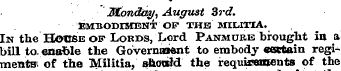
3 Ionday , August 3 rd . EMBODIMENT OF THE MILITIA . In the House of Lords , Lord Panmure broug ht i n a bill to . enable the Government to embody certain regiment * of the Militia , attoold the requirements of the public service render sjieh a step necessary during the recess . —After-some disenssiony in the course of which the Government was taunted by Lords Derby and Hahdwicke with having changed its mind on thia matter ( inasmuch as the Opposition had suggested the same cotwso a month er two Back , without effect ) , the bill was read a first time .
THE COMING REFORM . Lord Brquq-ham : moved , as a preparatory step towards the measure of Parliamentary Keforra expected , next . session , for returns of the number of electors ia every county , city , and borough in the United Kingdom . He wished to see a certain amount of reform , thoug ht protesting against the representation being made anymore democratic than the reform of 1832 had left it . But he would give skilled artisans a vote , if it could be managed ; and lie proposed the establishment of class voters , consisting of the cl « rgy ( rectors and curates ) , medical men , physicians , apothecaries , officers of the
array and navy , retired officers of the army and navy , literary men of different kinds , men having degrees from universities , men belonging to scientific bodies—in a word , the class that was generally called the scientific , literary , and well-educated class . He should object , however , to admitting the votes of 10 ? . householders in counties , as that -would swamp the votes of the proprietary body , and thus destroy -what he conceived to be a fixed element in the constitution . —Lord Granville , on the part of the Government , had no objection to the production of the returns , which were accordinglyordered .
THE AUSTRALIAN POSTAL CONTRACT . Lord Hardwtcke called the attention of the Government to the subject of the Australian postal contract , and declared tha t , the company with which the existing contract was made having failed to fulfil its obli gations , the contract itself was void , and the Government free to enter into a fresh one . —The Duke of Argyll contended that the performance of the contract had not been hitherto so unsatisfactory as to warrant the Government in throwing it up , especially as an element in that contract was the enforcement of certain penalties . —The Earl of Derby thought the system of penalties one of very doubtful expediency , and warned the Government against continuing what was understood to be a very extravagant contract .
The Banking Bill , and the Boundaries of Land ( Ireland ) Bill , were read a third time , and passed . The House adjourned at a quarter to eig ht o ' clock . SLIGO BOROUGH AND HUNTINGDON COUNTY ELECTIONS . In the House of Commons , the Clerk of tub Crown attended at the table , and amended the returns for the boroug h of Sligo and the county of Huntingdon ; on whi c h , Mr . Fellowes and Mr . Wynne took the oaths and their seats .
LIABILITIES OF MONTE VIDEO . In reply to Mr . "Wyse , Mr . Wilson said that tho exact amount granted to the Monte Videan Government was . 50 , 909 ? ., of which 37 , 395 ? . were advanced from tho Civil Contingencies Fund . The advance was made for the benefit of the Monte Vidoan community , and nothing would be left undone to induce them to repay the money . CONFERENCE WITH THE LOBDS . On the motion of Mr . Massey , a conference was appointed with the Lords upon the subject of an address to her Majesty under the provisions of tho Act 15 and 16 Vic , c . 57 , and . with reference to the cases of bribery at the Galway election ; and tho proceedings of the Housq wore suspended during the conference . —On the return of the members of the conference , Mr . Massey reported that an address had been delivered to Lord Grnnvillo , to which the concurrence of the Lords was required .
MILITIA MJOPENSES . Supplementary Army Estimates having been laid on tho table , Lord Palmibkston exp lained that they were for such portions of tho militia as her Majosty might bo advised to embody during tho year .
THE LATIC SIR CHAM-IBS NAPIEU ON INDIA . In rep ly to Mr . Disraeli , Lovd Pai > merston stated that another lottor had boon found ut the Horse Guarda from Sir Charles Napier , not to tho Duke of Wellington , but to Lord Dalhousio . It was dated in Juno , I 860 , and it related partly to tho Queen ' s army , and partly to the native troops of tho East India , Company . Tho latter portion ho would lay before tho House . —Mr , Roebuck : " Sir William Napior says this latter was published throo years ago in his brother ' s posthumous work on tho Miayovormnent qf India . " ADMISSION OF JIDW 8 TO PARLIAMENT .
Tho orders of the day having boon postponed on tho motion of Lord Palmickston , Lord John Russicll moved that a select commlttoo bo appointed to consider whether the 5 th and Gth William IV ., c . 02 , bo applicable to oaths appointed by law to bo taken by
members of that House at the table previously to . their tal their * mats , and in what manner the said act can b app lied ^ and ' to- report their observati ons thereupo the ilouse . His Lordship observed that his Oi Validity Amendment Bill stood for the second reac that night ; but Baron Rothschild had been -adv that , under the act referred to in the motion , the H ( mi g ht , by an order , enable him to make a declaratio : lieu of the Oath of Abjuration , and that , if the Ht took that course , he was ready to make such a decls tion . On the strength of Mr . Pease ' s case , and of vari authorities , the House , if it pl e ased , might omit ¦ words ' on the true faith , of a Christian . ' A vexati obstacle would thus be overcome .
Sir Frederick Thesiger , while intimating that would not oppose the committee , unless it did not elude a sufficient number of those members who oh to the admission of Jews to Parliament , accused L John Russell of inconsistency in his present course , a former years he had resisted the admission of Jew any other way than by an act passed by both Hou According to a well-known rule of construction , House of Commons could not be include ! in the t ' other bodies , ' which could only mean corporati quasi corporations , and other bodies ejusdem generis , that , according to another equally well-known rule , enumeration being from , a higher class to a lower , general words , ' other bodies' could not include anytt
superior to the enumeration , as in the p hrase ' para vicars , and others having spiritual promotion , ' whic held not to include bishops . Bat , even if a declarai could be substituted for an oath , the words , ' true faith of a Christian , ' which had been decided \ a the essence of the oath , could not be omitted- The s porters of Baron Rothschild quoted the seating of Pease as a precedent in this case ; hut Mr . Pease not seated by a resolution . By the act 8 Geo . I ., affirmation was allowed to be made by Quakers in ev case where an oath was required to be taken . ' affirmation which was to be substituted for the patl abjuration omitted the words ' on the true faith o Christian , ' and this was confirmed by the act 22 Geo . under which Mr . Pease took his seat .
Colonel French supported the committee ; bat . Garnett , though he had voted for the bill remov Jewish disabilities , said he would oppose any attempt effect that object by a resolution of the House . Lord Palmerston said he concurred in the moti considering the matter to be of sufficient importancf justify its reference to a select committee . —The mot was agreed to . A good deal of discussion then arose upon the m question , the number of the committee ; and it was length agreed that it should consist of twentymembers , to be nominated by the House , and all gen men of the long 1 robe members of tho House . 1 nomination of the committee produced another disc sion , and , Mr . Nbwdeg-ate having moved that the bate be adjourned , Lord John Russell consented defer the motion for the nomination until the next d This was agreed to .
BEVERLEY ELECTION . The Chairman reported from the Beverley Electi Committee , that Edward Auchniuty Glover was not di elected for Beverley ; that the said E . A . Glover h signed the declaration respecting his qualification , i holding the necessary qualification ; and that the Atti ney-General should be directed to consider what sti should be taken in consequence . PROBATES AND LETTERS OF ADMINISTRATION BILL .
The House wont again into committee upon this b and discussed at much length tlie compensation claui and certain new clauses , including one moved by B Malins , giving to proctors , by way of compensation , annual payment during life equal to ono half of the net proctorial profits . Mr . Malins stated that thia olai was identical with one inserted in tho Government bi of 1855 and 185 G , and that the proctors were , willin if it should be adopted , to relinquish the qualified mon poly of business secured to them by the bill . the und
T he Attorney-General said that , upon < standing that tho proctors gavo up their monopoly business not only in the Testamentary C o urt , but in t Marriage and tho Divorce Court and tho Court of A miralty , so that all the Courts mig ht bo thro w n opo he thought tho Govornmont was pledged to tho pr posal of last year , from which he would not retire ; bi ho suggested that , at th o exp iration of throo yoars aft the Act came into operation , an account should bo talc of the professional gains of tho proctors , and , if should turn out that they had diminished daring tho throe years compared with tho thrco yoars preceding tl Aot for that loss they should bo compensated .
, Mr . Malins . oloctod , on behalf of tho proctors , tl formor alternative ; and upon tho understanding tn tho clauses necessary upon this alteration should added to tho bill on recommitment profonnd , which t Attorney-General undertook to do , ho withdrow t clause . —Tho bill was then ordered to bo reported amended . Tho , Gibnmual Board of Hjsalth Continual Bill , and th o Superannuation Act Ambnwmw Bill , w or e road a third time , mul passed . —Other "i were advanced a stage , and tho House was counted o at half-past two o ' clock .
Untitled Article
( -: ; JMPERflL PARLIAMENT .
Untitled Article
746 THE IEADEB , [ No . 385 , August 8 ; 1857 .
-
-
Citation
-
Leader (1850-1860), Aug. 8, 1857, page 746, in the Nineteenth-Century Serials Edition (2008; 2018) ncse.ac.uk/periodicals/l/issues/vm2-ncseproduct2204/page/2/
-