On this page
-
Text (1)
-

Untitled Article
Note: This text has been automatically extracted via Optical Character Recognition (OCR) software. The text has not been manually corrected and should not be relied on to be an accurate representation of the item.
-
-
Transcript
-
Note: This text has been automatically extracted via Optical Character Recognition (OCR) software. The text has not been manually corrected and should not be relied on to be an accurate representation of the item.
Additionally, when viewing full transcripts, extracted text may not be in the same order as the original document.
Untitled Article
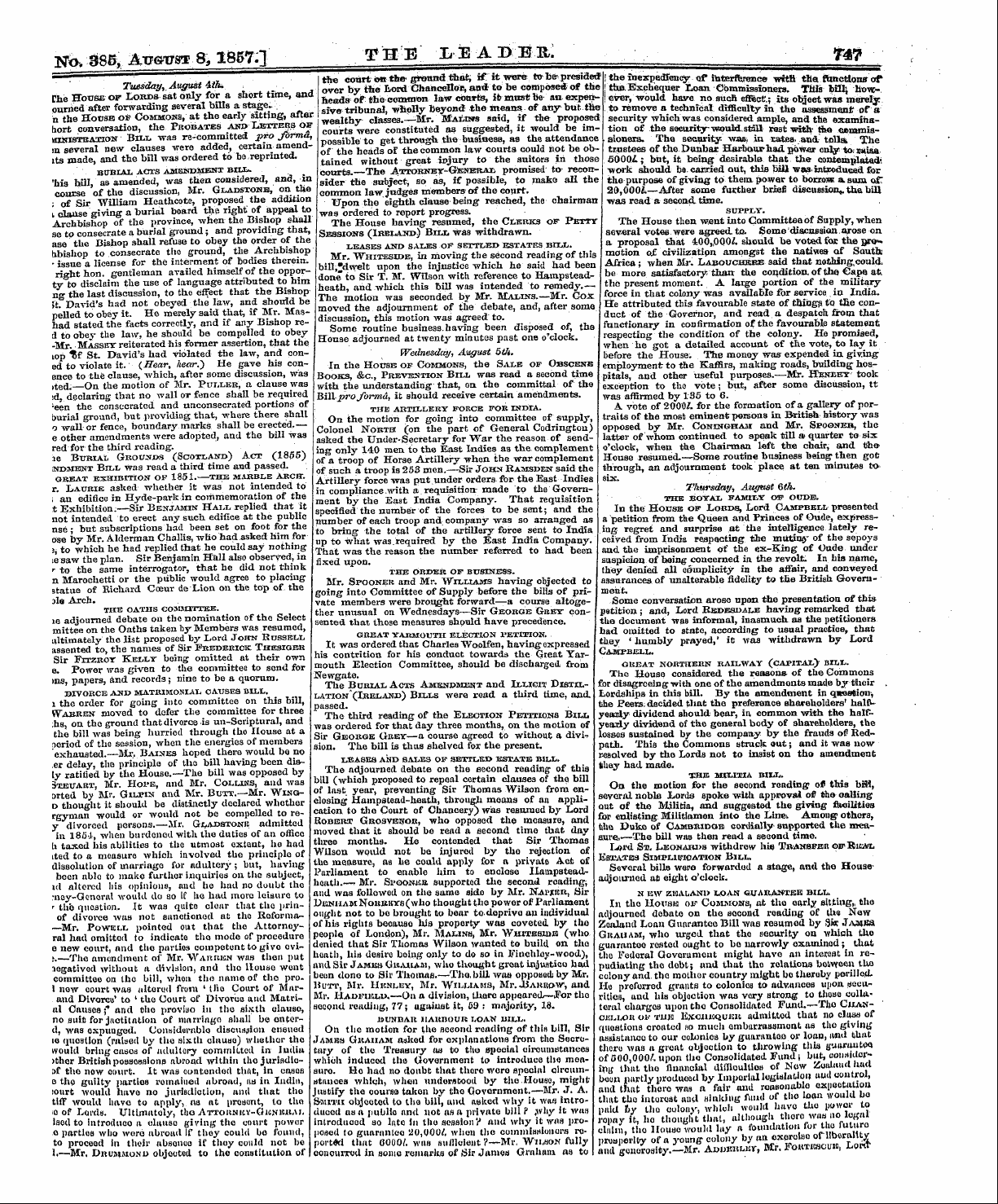
Tuesday \ , August 4 tJu the House of Lojrds sat only for a short time , and punied after forwarding several bills a stage- _ h the House op Commons , at the early sitting , after tort conversation , the Probates and Letters of kONiSTBATioN Bill was re-committed pro forma , sn several new clauses were added , certain amendits made , and the bill was ordered to be reprinted . BtTBIAL ACTS AMENDMENT BILL . ^ 'his hill , as amended , was then considered , and , in course of the discussion , Mr . Gladstone , on the of Sir "William Heathcote , proposed the addition [ clause giving a burial board the light of appeal to Archbishop of the province , when the Bishop shall se to consecrate a burial ground ; and providing that , ase the Bishop shall refuse to obey the order of the tibishop to consecrate the ground , the Archbishop interment of bodies therein
issue a license for the , right hon . gentleman availed himself of the opporty to disclaim the use of language attributed to him ng the last discussion , to the effect that the Bishop > t . David ' s had not obeyed the law , and should be pelled to obey it . He merely said that , if Mr . Mashad stated the facts correctly , and if any Bishop red to obev the law , he should be compelled to obey -Mr . Massey reiterated his former assertion , that the top ^ f St . David ' s had violated the law , and coned to violate it . ( Hear , hear . } He gave his conence to the clause , which , after some discussion , was , ted . ;—On the motion of Mr . Fuller , a clause was id , declaring that no wall ot fence shall be required l een the consecrated and unconsecrated portions of burial ground , but providing that , where there shall o wall or fence , boundary marks shall be erected . — e other amendments were adopted , and the bill was
red for the third reading . ie Burial Grounds ( Scotland ) Act ( 1855 ) indment Bill was read a third time and passed . GREAT EXHIBITION OF 1851 . THE MARBLE ARCH . r . Laurie asked whether it was not intended to ; an edifice m Hyde-park in commemoration of the t Exhibition . —Sir Benjamin Hall replied that it not intended to erect any such edifice at the public nse ; but subscriptions had been set on foot for the ose by Mr . Alderman Challis , who had asked him for 5 j to which he had replied that he could say nothing ie saw the plan . Sir Benjamin Hall also observed ^ r to the same interrogator , that he did not think n Marochetti or the public would agree to placing statue of Richard Coeur de Lion on the top of the ale Arch .
TJETE OATHS COMMITTEE . ie adjourned debate on the nomination of the Select mittee on the Oaths taken by Members was resumed , ultimately the list proposed by Lord John Russell assented to , the names of Sir Frederick Thesigek Sir FrrzRor Kelly being omitted at their own e . Power was given to the committee to send for » ns , papers , and records ; nine to be a quorum . DIVORCE AND MATRIMONIAL CAUSES BILL , i the order for going into committee on this bill , Warren moved to defer the committee for three ; hs , on the ground that divorce is un-Scriptural , and the bill was being hurried through the House at a period of the session , when the energies of members exhausted . —Mr , Baines hoped there would be no er delay , the principle of tho bill having been dis-The bill sed b
Ly ratilied by the House . — was oppo y 3 TJEUART , Mr . Hope , and Mr . Collins , and waa orted by Mr . Gilpin and Mr . Butt . —Mr . Winod thought it should be distinctly declared whether rgyman would or would not be compelled to rey divorced persons . —Mr . Gladstone admitted in 1851 , when burdened with the duties of an office li taxed his abilities to the utmost extant , ho had ited to a measure which involved the principle of dissolution of marriage for adultery ; but , having been ablo to make further inquiries on the subject , id altered his opinions , and he had no doubt tho ney-Genornl -would do so if he had more leisure to r tho question . It was quite clear that tho prinof divorce was not sanctioned at the Reforma-—Mr . Powell pointed out that tho Attornoyral had omitted to indicate the mode of procedure
e new court , and tho partios competent to give ovi-; . —Tho amendment of Mr . "Waiiuicn was then put nogativod without u division , and tho House wont committee on tho bill , whon tho name of tho pro-1 now court-was altered from ' tlio Court of Murand Divorce' ' the Court of Divorce and Matrial Causes f and tho proviuo in the sixth clauso , no suit for jactitation of marriage shall be ontord , was expunged . Considurnblo discufloion ensued to question ( raised by tho sixth oluuao ) whether the
would bring cases of adultery committed in lucliu > ther British possessions abroad within tho jurisdiot > f tho now court . It was contended that , in cases o the guilty parties romaineil abroad , iiu in Iudin , tourt would have no jurisdiction , and that tho tiff would luwo to apply , na at prosunt , to tho oof IjQrrta . Ultimately , tho Attobnky-Gjcnkwak iaod to Introduce a clause giving the court power o parties who woro abroad if they could bo found , to proceed In their absence if they could not bo 1 . —Mr , Drummond objected to tho oonatltution of
the court on the ground that , if it wore to ber presided over by the Lord ChanceHoE , and to be compose * of the heads of the common law courts , ifr must be- an expensiver tribunal , -wfcolly beyond the mean ? of any but tne wealthy classes . —Mr . Malins said , if the proposed courts were constituted as suggested , it would be impossible to get through the business , as the attendance of the heads of the common law courts could not be obtained without great injury to the suitors in those courts . —The Attorney-Generai , promised to reconsider the subject , so as , if possible , to make all the common law judges members of the court . Upon the eighth clause being reached , the chairman was ordered to report progress . The House having resumed , the Clerics of Petty Sessions ( Ireland ) Bill was withdrawn .
LEASES AND SALES OF SETTLED ESTATES BILL . Mr . Whiteside , in moving the second reading of this biH , * dwelt upon the injustice which he said had been done to Sir T . M . Wilson with reference to Hampsleadheath , and which this bill was intended to remedy . — The motion was seconded by Mr . Malins . —Mr . Cox moved the adjournment of the debate , and , after some discussion , this motion was agreed to . Some routine business , having been disposed of , the House adjourned at twenty minutes past one o ' clock . Wednesday , August 5 i / i . In the House of Commons , the Sale of Obscene Books , &c , Prevention Bill was read a second time with the understanding that , on the committal of the Bill pro forma , it should receive certain amendments .
THE ARTILLERY FORCE FOR INDIA . On the motion for going into committee of supply , Colonel North ( on the part of General Codrington ) asked the Under-Secretary for War the reason of sending only 140 men to the East Indies as the complement of a troop of Horse Artillery when the war complement of such a troop is 253 men . —Sir John Eamsden said the Artillery force was put under orders fbr the East Indies in compliance . with a requisition- made to the Government by the East India Company . That requisition specified the number of the forces to be sent ; and the number of each troop and company was so arranged as to bring the total of the artillery force sent to India up to what was . required by the East India Company . That was the reason the number referred to had been fixed upon . THE ORDER OF BUSINESS .
Mr . Spooner and Mr . Williams having objected to going into Committee of Supply before the bills of private members were brought forwaTd ^ a course altogether unusual on Wednesdays- ^ -Sir George Grey consented that those measures should have precedence . GREAT YARMOUTH ELECTION PETITION . It was ordered that Charles Woolfen , having expressed his contrition for his conduct towards the Great Yarmouth Election Committee , should be discharged from Newgate . The Burial Acts Amendment and Illicit Distillation ( Ireland ) Bills were read a third time , and . passed . The third reading of the Election Petitions Bill was ordered for that day three months , on tho motion of Sir George Obey—a course agreed to without a divi-r sion . The bill is thus shelved for the present .
LEASES AND SALES QV SETTLED ESTATE BILL . The adjourned debate on the second reading of this bill ( which proposed to repeal certain clauses of the bill of last year , preventing Sir Thomas Wilson from enclosing Hainpstoad-heath , through means of an application to the Court of Chancery ) was resumed by Lord Robert Guosvenok , who opposed the measure , and moved that it should bo read a second time that day three months . He contended that Sir Thomas Wilson would not be injured by tho rejection of the measure , aa lie could apply for a private Act of Parliament to enable him to enclose Hainpsteadr
heath . —r Mr . Spoonosb supportod the second reading ; and was followed on the same aide by Mr . Napjcmu , Sir Dcnham NoRBKYfl (\ vho thought the power of Parliament ought not to bo brought to bear to deprive an individual of his rights beoaueo his property was coveted , by tho people of London ) , Mr . Mamnh , Mr . Whitbsxdh ) ( who denied that Sir Thomas Wilson wanted to build on tho hoath , his desiro boing only to do so in Fiuchloy-wood ) , mid Sir Jamiss GitAJUAai , who thought grout injustice had bean done to Sir Thomas . —Tho . bill was oppouadi by Mr . Uutt , Mr . HicNLUY , Mr . Williams , Mr . J 3 aruow , and Mr . Hadfikld . —On a division , there appeared ^ -JFor tho second reading , 77 ; ugaiuat it , 59 : majority , 18 .
IDUNBAIl HARBOUR LOAN LULL . On the motion for tho aecond reading of this bill , Sir Jambs Graham naked for explanations from the Secretary of tho Treuuury ao to tho special circumstances which induced the Government ; to introduce tho moasuro . Ho had no doubt that tlioro woro special clrcuin-Htiuioea which , when understood by tho Houao , might justify tho course taken by tho Government . —Mr . J . A . Smith objected to tlio bill , unU asked why it wtw introduced nsa publio ( ind not a » a private bill ? why it was introduced ao Into in tho session ? and why it wnn proposed to guarantee 20 , 000 / . whon tho commissioners reported that GOOO / . wan sufllaiant ?—Mr . Wn . soN fully concurred in some remarks of Sir James Graham an to
the inexpediency of interference witn the functions of the . Exchequer Loan Commissioners . This bfllj ho-rcever , would have no sucfi effect . ; its objeet was merely to remove a technical difficulty in the assessmejit of a security which was considered ample , and the examination of the security would , still rest with the commissioners . The security waa ; in rates , and , tollsi The trustees of the Dunbar Harbour had pbwar only to ; ruiaa 5000 Z . ; but , it being desirable that the contemplated -work should bu carried out , this bill was introduced for the purpose of giving to them power to borrow ; a sum of 20 , 000 / . —After some further brief discussion * , the . bill was read a second time .
SUPPLY . The House then went into Committee of Supply , when several votes , were agreed , to . Some'discussion . arose on a proposal that 4 Q 0 ,. 000 £ . should be voted for the j ^ ro * motion of civilization amongst the natives of South Africa ; when Mr . Labouchkke said that nothing , could , be more satisfactory than the condition , of the Cape at . the present moment . A large portion of the military force in that colony was available fbr service . in India .
He attributed this favourable state of things to . tfie conduct of the Governor , and read a despatch from that functionary in confirmation of the favourable statement respecting the condition of the colony . He promised , when he got a detailed account of the vote , to lay it before the House . The money was expended in giving employment to the Kaffirs , making roads , building ; hospitals , and other useful purposes . —Mr . Heneey took exception to the vote ; but , after some discussion , tt was affirmed by 135 to 6 .
A vote of 2000 / . for the formation of a gallery of portraits of the most eminent persons in British history was opposed by Mr . Conengham and Mr . Spooneh , the latter of whom continued to speak till a quarter to six o ' clock , when the Chairman left the chair , and the-House resumed . —Some routine business being- then got through , an adjournment took place at ten minutes to six . Thursday , August 6 th .
THE BOYAL FAMILY O 5 P OUDB . In the House of Lords , Lord Campbell presented a petition from the Queen and Princes of Oude , expressing regret and surprise at the intelligence lately received from India respecting the mutiny of the sepoys and the imprisonment of the ex-King of Oude under suspicion of being concerned in the revolt : In his name , they denied all complicity in the affair , and conveyed assurances of unalterable fidelity to the British Government .
Some conversation arose upon the presentation of this petition ; and , Lord Redesdale having remarked that the document was informal , inasmuch as the petitioners had omitted to state , according to usual practice , that they ' humbly prayed , ' it -was withdrawn by Lord Campbell . great northern railway ( capital ) ' bill . The House considered the reasons , of the Commons for disagreeing with one of the amendments made by- tflieir Lordships in this bill . By the amendment in qwostion , the Peers ; decided that the preference shareholders' hnlflyoaaily dividend should . bear , ia common with the halfyearly dividend of the general body of shareholders , the losses sustained by the company by the frauds of Redpath . This the Commons struck out ; and it was now resolved by the Lords not to insist on tho amendment they had made .
THE MILITIA BILL . On the motion for the second rending of this bHi , several noblfl Lords spoke with approval of the calling out of the Militia , and suggost&d the giving feoiUtioa for enlisting Militiamen into the Linei Among 1 others , the Duke of Cambridge cordially supported the measure .- —The bill waa then read a second time . Lord St . Leonards withdrew his Transfer © FRuavL Ebxsatbs Simplification Bill . Several bille woro forwarded a stage , and tho Houseadjourned afc eight o ' clock . N EW ZEALAND LOAN GUARANTEE BILL .
In the Housis osr Commons , at tho early sitting ,, tho adjourned debate on tho second reading of th « Now Zealand Loan Guarantee Bill was resumed by 8 i « JamBS Gkau am , who urged that tho security on which tho guarantoo rested ought to bo narrowly examined ; that tho Fcdoral Government might have an interest in repudiating tho debt ; and that tho relations botwo « n tUo colony and . tho mother country might bo thereby Korillod . Ho preferred grants to colonies to advances upon , eecurities , and his objection was very strong to thouo collateral charges upon tho Consolidated Fund .- " - Tho Chancellor of tjum Exchequer admitted that no c ! iuk » of
questions created so much ombarraasmont aa tho giving ttsuifltanco to our colonies by guarantee or loan , a * ul iihat there was a groat objection to throwing thia guarantee of 500 , 000 / . upon tho Consolidated Fimd ( but , con « i ( . lcr ~ intf that tho uuancial di ( Jlcultio » of Now Zonl » u < l had boon partly produced by Iinporlal legislation awl control , and that there wns a fair and roanonaUo axpeotaUon that tho interest and winking fluid of t ' 10 loftn would bo paid By tho colony , which would Imvo tho power to repay it , ho thought that , although thero was no legal olnlni , tho House would lay a foundation for tho future prosperity of a young colony by (» u exqroiao of ltboralttv and irweroBlfty . —Mr . Aowiiw , Mr . Foiitimouio , Lor *
Untitled Article
No , 386 , Avrnm .-Ss 1 B 57 : 1 THE ^ EABEl ! 717
-
-
Citation
-
Leader (1850-1860), Aug. 8, 1857, page 747, in the Nineteenth-Century Serials Edition (2008; 2018) ncse.ac.uk/periodicals/l/issues/vm2-ncseproduct2204/page/3/
-