On this page
-
Text (2)
-

Untitled Article
-

Untitled Article
Note: This text has been automatically extracted via Optical Character Recognition (OCR) software. The text has not been manually corrected and should not be relied on to be an accurate representation of the item.
-
-
Transcript
-
Note: This text has been automatically extracted via Optical Character Recognition (OCR) software. The text has not been manually corrected and should not be relied on to be an accurate representation of the item.
Additionally, when viewing full transcripts, extracted text may not be in the same order as the original document.
Untitled Article
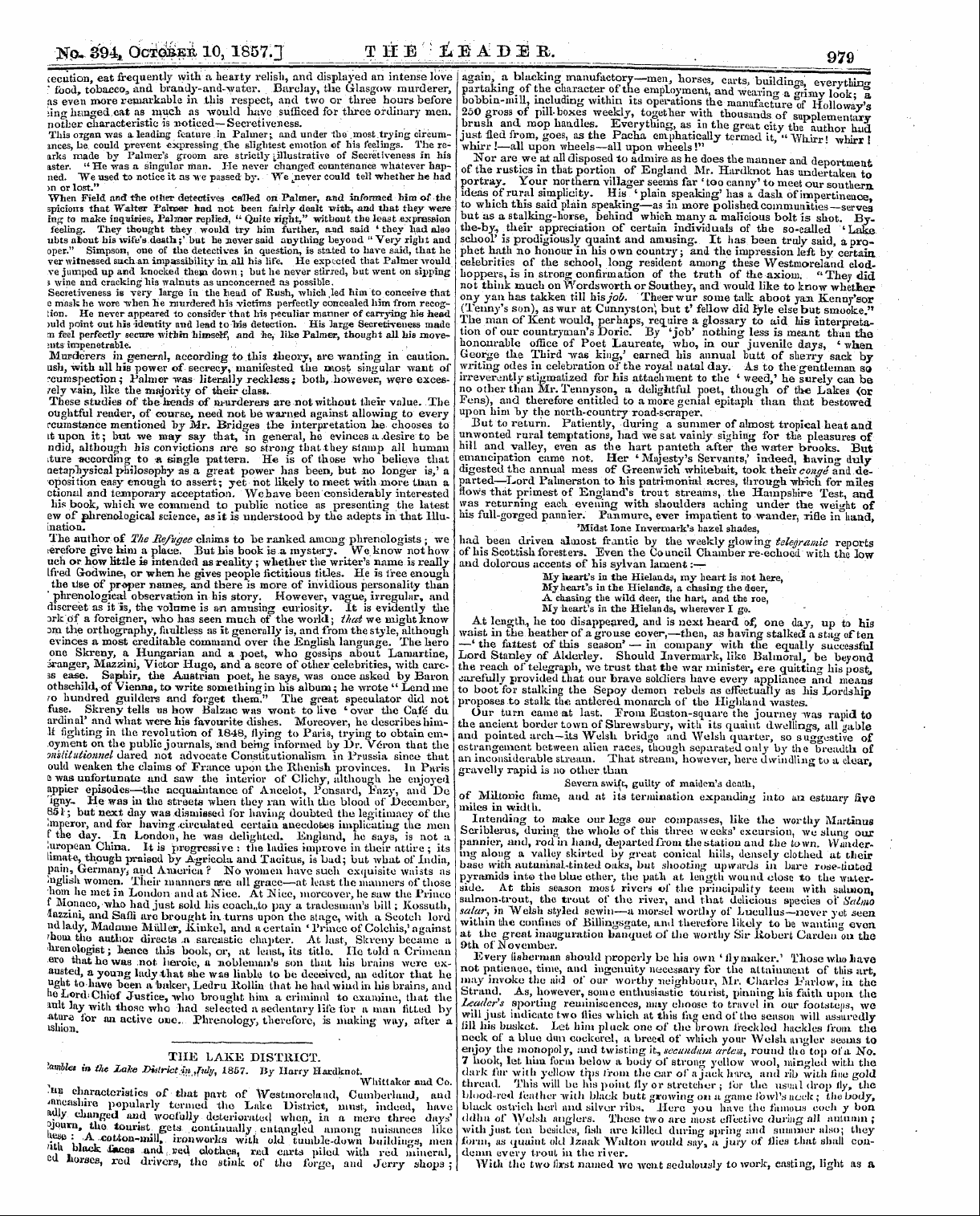
cecution , eat frequently with a hearty relish , and displayed an intense love ' food , tobacco 3 and brandy-and-water . Barclay , the Glasgow murderer , fis eveu more remarkable in this respect , and two or three hours before jing hanged eat as mueli as -would luive sufficed for three ordinary men . notber characteristic is noticed—Secretiveiiess . This OTgan was a . leading feature , in Palmer ; and under the most trying circummces , be could prevent expressing tlie slightest emotion of his feelings . The reirks made by Palmer's groom are strictly ^ illustrative of Secretivene 9 s in his ister . "He -was a singular man . He never changed " . countenance -whatever hapned . We used to notice it as "we passed : by . We never could tell "whether he had > n or lost . "
When Field and the other detectives called on Palmer , and informed him of the spicions that Walter Palmer bad not been fairly- dealt ¦ svitb , and that they were ing to make inquiries ^ Palmar replied , li Quite right , " without the least expression feeling . They thought they would try him further , and said ' they had alao ubts about his wife's death ; ' but he never said anything beyond " Very right and aper . " Simpson , one of the detectives in question , is stated to have said , that he ver witnessed such an impassibility in . all his life . He expected that Palmer -would ve jumped up and knocked thejn down ; but he never stirred , but went on sipping 5 vine and cracking his walnuts as unconcerned as possible . Secretiveness is very large in the head of Rush , which led him to conceive that
a mask he wore -when he murdered his victims perfectly concealed him from recogiion . He never appeared to consider thnt his peculiar manner of carrying his heed . mid point out his identity and lead to Iris detection . His large Secretiveiiesa made m feel perfectly secure within himself , and he , like Palmer , thought all his moverjnts impenetrable . Murderers in general , according to this theory , are -wanting in caution . ash , -with all his power of secrecy , manifested the most singular want of rcumspection ; Palmer was literally recklessi both , howevec , were excesrely vain , like the majority of their class . These studies of the heads of aHirderexs are not without their value . The
oughtful reader , of course , need not be warned against allowing to every rcurastance mentioned by Mr . Bridges the interpretation hie chooses to it upon it ; but we may say that , in general , he evinces a . desire to be ndid , although his convictions are so strong that they stamp all human ture according to a single patera . H « is of those who believe that aetaphysical philosophy as a great power has been , but no longer is , ' a oposition easy enough to assert ; yet not likely to meet with . more tiian a ctional and temporary acceptation . Wehave been considerably interested his book , which we commend to public notice as presenting the latest ew of phrenological science , as it is understood by the adepts in that llluinatio-n .
The author of The Re fugee claims to be ranked among phrenologists ; we rerefore give him a place . But bis book is a mystery . We know not how uch or how little is intended as reality ; whether the writer's name is really Ifred GJ-odwine , or ¦ when he gives people fictitious titles . He is free enough the Use of proper names ,, and there is more of invidious personality than ' p hrenological observation in his story . However , vague , irregular , and discreet as it is , the volnme is an amusing euriosity . It is evidently the ark of a foreigner , who has seen much of the world ; ihed we might lenow Dm the orthography , faultless as it generally is , and from the style , although evinces a most creditable command over the JGnglish language . The hero
one Skreny , a Hungarian and a poet , who gossips about Lamartine , Granger , MazzinJ , Victor Hugo , and a score of other celebrities , with care-3 s ease . Saphir , the Austrian poet , he says , was once asked by Baron othsehild , of Vienna , to -write soniethingin his album ; he wrote Lend me to hundred guilders and forget them . " The great speculator did not fuse . Skreny tells us bow Balzac was wont to li \ e ' over the Cafe du ardinar and what were his favourite dishes . Moreover , he describes him-¦ U fighting in the revolution of 1848 , flying to Paris , trying to obtain craoyment on the public journals , and being informed by l ) r . Veron that the jn ' slitutiotinel dared not advocate Constitutionalism , in Prussia since that
ould weaken the claims of France upon the Rhenish provinces . In Paris a was unfortunate and saw the interior of Clichy , although he enjoyed appier episodes—ithe acquaintance of Ancelot , Ponsard , Eazy , and De igny- He-was iu the streets when they ran with tbe blood of . December , B 51 ¦ ; but next day was dismissed for having doubted tbe legitimacy of the Imperor , and for havin-g circulated certain anecdotes implicating the men f the day . In London , he was delighted . England , he says , is not a luropean China . It is progressive : the ladies improve in their attire ; its limat-e , though praised by Agricola and Tacitus , is bad ; but what of India , pain , Germany ^ and America ? No women have such exquisite waists as
English women . Their manners aa-e all grace—at least the manners of those horn he met in London and at Nice . At ! Nice , moreover , he saw the Prince t Monaco , who had just sold his coach ,, to pay a tradesman ' s bill ; Kossuth , lazzini , and Safli are brought in , turns upon the stage , with a Scotch lord ml lady , Madame Muller , lunkul , and a certain 'Prince of Colchis , against rhoiu the author directs , a sarcastic chapter . At last , Skreny became a hronologist ; Imuicq this book , or , at . least , its title . He told a Crimean ero that he was not heroic , a aioblenmnfs son that his brains were cxausted , a young lady that she was liable to bo deceived , an editor that he ught to have "been a baker , Ledru ltollin that he had wiud in his brains , and
bo Lord : Chief Justice , who brought him a criminal to examine , that the iwlt Jay with those who had selected a sedentary life for a man filled by ature for an active owe . Phrenology , therefore , is making way , after a
Untitled Article
THE LAKE DISTRICT . " amble * m Hie Zahe District in July , 1857 . By Harry H-acdknot . Whittalcor and Co . me characteristics of that part of Westmoreland , Cumberland , and Lancashire popularly tunned tho Lake District , must , indeed , have wuy changed and woefully deteriorate *! when , ia a nicro three days ' j > jqurn the tourist gets ... continually . entangled among nuisances like ixea ^ : a cotton-inill , ironworks with old tumble-down buildups , men 'UU black i * cea and , » ed « lotUefi , red carts piled with red mineral , ea Horses , red drivers , the stink of tho forge , and Jerry shops ;
again , a blacking manufactory—men , horses , carts , buildings , everything partaking of the character of the employment , and wearing a grimy look ; a bobbin-mill , including within Us operations the manufacture of Hollowav ' s 250 gross of pill-boxes weekly , together with thousands of supplementary brush and mop handles . Everything , as in the great city the author had just lied from , goes , as the Pacha emphatically termed it , " Whirr ! whirr I whirr I—all upon wheels—all upon wheels !" Nor are weal all disposed to admire as he does the manner and deportment of the rustics in that portion of England Mr . Hardknot has undertakea to 1
portray . 1 our northern villager seenis far ' too cannyto meet our southern ideas of rural simplicity . His 'plain speaking' has a dash of impertinence to which this said plain speaking—as in more polished communities—ser ves but as a stalking-horse , behind whict many a malicious bolt is shot . B ythe-by , _ their appreciation of certain individuals of the so-called 'Lake school' is prodigiousl y quaint and amusing . It lias been truly said , a prophet hath oxo honour in his own country ; and the impression left by certain , celebrities of the school , long resident among these Westmoreland clodhoppers , is in strong confirmation of the truth of the axiom . "They did not think much on Wordsworth or Southey , and would like to know whether
ony yan has takken till his job . Theerwur some talk aboot yaoi KLenny ' sor ( Tenny ' s son ) , as wur at Cunnyston ^ , but t' fellow did fyle else but smooke . " The man of Kent would , perhaps , require a glossary to aid his interpretation of our countryman ' s Doric . By ' job' nothing less is meant than the honourable office of Poet Laureate , who , in our juvenile days , * when , George the Third -was king , earned his annual butt of sherry sack by writing odes in celebration of the royal natal day . As to the gentleman so irreverently stigmatised for his attachment to the ' weed , ' he surely can be no other than Mr . Tennyson , a deliglitful poet , though of the Lakes < or Fens ) , and therefore entitled to a more genial epitaph than that bestowed upon him "b y the north-country road-scraper . J 3 ut to return . Patiently , during a summer of almost tropical heat and unwonted rural temptations , had we sat vainly sighing ; for the pleasures of hill and valley , even as the hart panteth after the water brooks . But emancipation came not . Her ' Majesty ' s Servants , ' indeed , laving dulydigested the annual mess of Greenwich whitebait , took their coiige and departed—Lord Palmerston to his patrimonial acres , through -winch for miles Hows that primest of England ' s trout streams , the Hampshire Test , and was returning each evening with shoulders aching under tbe weight of his full-gorged pannier . Panmure , ever impatient to wander , rifle in ° liaad ,
'Midst lone Inverniark ' s hazel shades , had been driven almost frantic by the weekly glowing telegramic reports of his Scottish foresters . Even the Council Chamber re-echoed with the low and dolorous accents of his sylvan lament : — My heart's in the Hielands , my heart is not here , My heart ' s in the Hielands , a chasing the deer , A chasing the wild deer , the hart , and the roe , My heart's in the Hielands , wherever I go . At length , he too disappeared , and is next heard of , one day , up to his waist in the heather of a grouse cover , —then , as having stalked a stag often — ' the fattest of this season' — in company with the equally successful Lord Stanley of AWerley . Should Invermark , like Balmoral , be beyond the reach of telegraph , we trust that the war minister , ere quitting his post ., carefully provided that our brave soldiers have every appliance and means to boot for stalking the Sepoy demon rebels as effectually as his Lordshi p proposes to stalk th « antlered monarch of the Highland wastes .
Our turn came at last . From Euaton-square the journey was rapid to the ancient border town of Shrewsbury , with its quaint dwellings , all gable and pointed arch—its Welsh bridge and Welsh quarter , so suggestive of estrangement between alien races , though separated only by the breadth of an inconsiderable stream . That stream , however , here dwindling to a clear , gravelly rapid is no other than Severn swift , guilty of maiden ' s death , of Miltonie fame , and at its termination expanding into an estuary five miles in width .
Intending to make our legs our compasses , like the worthy Martinus Scriblerus , during the whole of this three weeks' excursion , we slun <» - our pannier , and , rod in hand , departed from the station and the town . Wandering along a valley skirted by jrreat conical hills , densely clothed at their base with autumnaLtinfced oaks , but shooting upwards in bare rose-liufced pyramids into tho blue ether , the path at length wound close to the waterside . At this season most riven * of the principality teem with salmon , salmon-trout , the trout of the river , and that delicious species of Sctltno salar , in Welsh styled sewin—a morsel worthy of Lucullus—never yet seen within the confines of Billingsgate , ami therefore likely to be wanting even at the great inauguration banquet of the worthy Sir lioberfc Garden ° ou the J ) th of ^ November .
Every lieherman should properly be his own 'fly maker . ' Those who liave not patience , time , and ingenuity necessary for tho attainment of this art , may invoke the aid of our worthy neighbour , Mr . Charles Farlow , iu the Strand . As , however , some enthusiastic tourist , pinning his faith upon the Leader ' s sporting reminiscences , im » y choose to travel in our footsteps , we will just indicate two Hies which at this fag end of tho season will assuredly fill his basket . Let him pluck one of the brown 1 reck led hackles from , the neck of a blue dun cockerel , a breed of which your AVelsh angler seems to enjoy the monopoly , and twisting it , secundani artem , round tho top oi ' a No . 7 hook , let him form below a body of strong yellow wool , mingled with tho dark fur with yellow tips from the our of a jack hare , and rib with h ' ne gold thread . This will be his point ily or stretcher ; for the usual drop lly , the blood-red feather with black butt growing on a game fowl ' s ikjoIc ; tho body , blade ostrich herl and silver rib . s . Here you have the famous coch y bon < ldhu of Welsh anglers . These two arc most effective during all autumn ; with just ten besides , fi . sh are killed during spring : md summer also ; they form , as quaint old Jzaalc Walton would suy , a jury ° f lies that shall condemn every trout in the river . With the two first named wo went sedulously to work , casting , light as a
Untitled Article
; Npu 394 * dcicl&Ei 10 , 1857 . 3 THE ' ItlADiB . 979
-
-
Citation
-
Leader (1850-1860), Oct. 10, 1857, page 979, in the Nineteenth-Century Serials Edition (2008; 2018) ncse.ac.uk/periodicals/l/issues/vm2-ncseproduct2213/page/19/
-