On this page
-
Text (2)
-

Untitled Article
-

Untitled Article
Note: This text has been automatically extracted via Optical Character Recognition (OCR) software. The text has not been manually corrected and should not be relied on to be an accurate representation of the item.
-
-
Transcript
-
Note: This text has been automatically extracted via Optical Character Recognition (OCR) software. The text has not been manually corrected and should not be relied on to be an accurate representation of the item.
Additionally, when viewing full transcripts, extracted text may not be in the same order as the original document.
Untitled Article
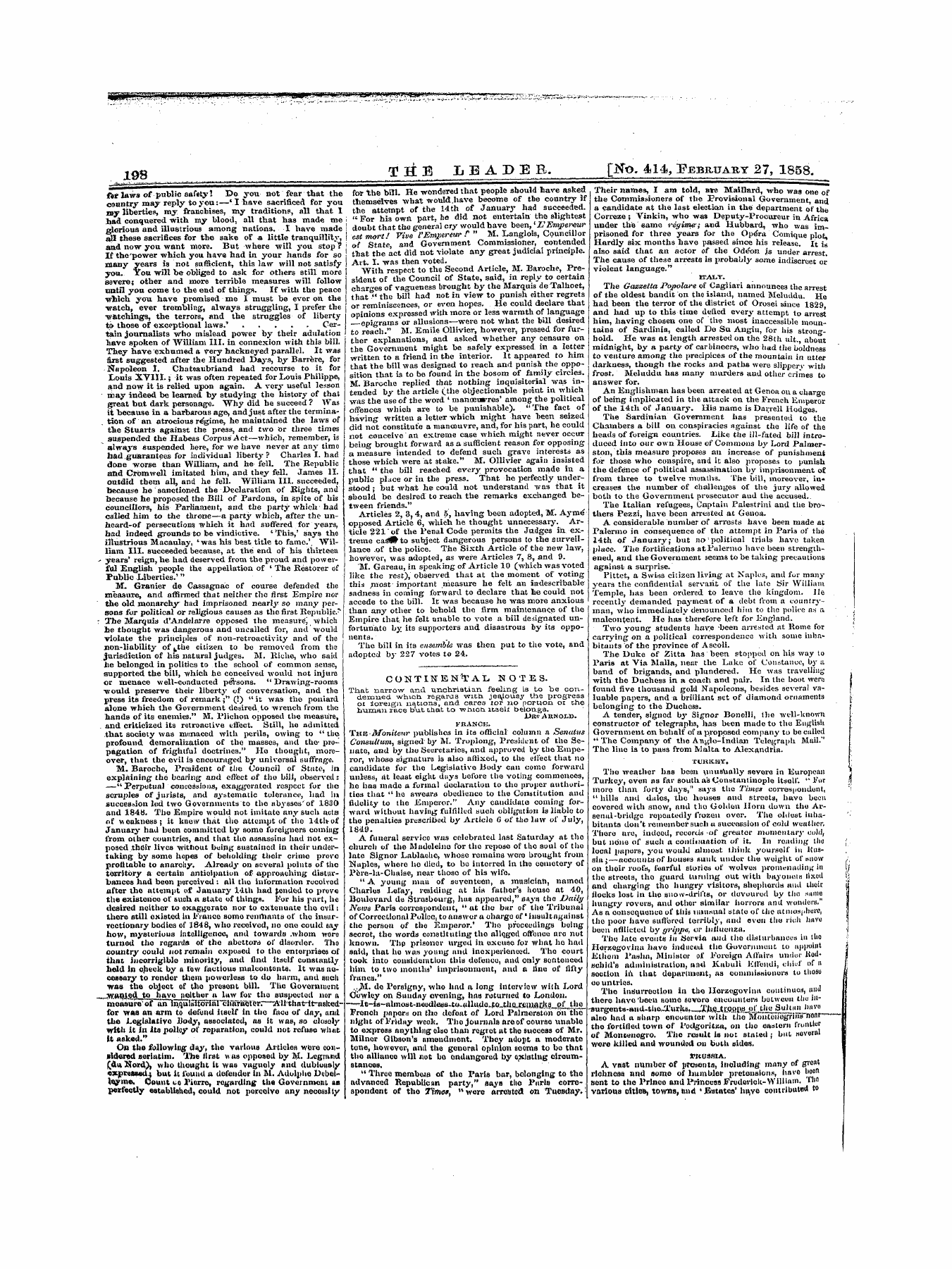
for laws of public safety ! Do you not fear that the country may reply to you : — ' I have sacrificed for you ray liberties , my franchises , my traditions , all that . I had conquered with my blood , all that has made me glorious and illustrious among nations . I have made all these sacrifices for the sake of a little tranquillity , and now you want niore . But where will you stop ? If the ' power which you have had in your hands for so many years is not sufficient , this law will not satisfy you . You will be obliged to ask for others still more severe ; other and more terrible measures will follow until you come to the end of things . If with the peace which you have promised me I must be ever on the -watch , ever trembling , always struggling , I prefer the -watchings , the terrors , and the struggles of liberty
to those of exceptional laws . ' Certain journalists who mislead power by their adulation have spoken of William III . in connexion with this bill . They have exhumed a very hackneyed parallel . It was first suggested after the Hundred Days , by Barrere , for Napoleon I . Chateaubriand had recourse to it for Louis XVIII . 5 it was often repeated for Louis Philippe , and now it is relied upon again . A very useful lesson may indeed be learned by studying the history of that great but dark personage . Why did he succeed ? Was it because in a barbarous age , and just after the termination of an atrocious regime , he maintained the laws of the Stuarts against the press , and two br three times suspended the Habeas Corpus Act—which , remember , is alwaj's suspended here , for we have never at any timo
had guarantees for individual liberty ? Charles I . had done worse than William , and he fell . The Republic and Cromwell imitated him , and they fell . James II . outdid them all , and he fell . William III . succeeded , because he ' sanctioned the Declaration of Eights , and because he proposed the Bill of Pardons , in spite of his councillors , his Parliament , and the party which- had called him to the throne—a party which , after the unheard-of persecutions which it had su-ffered for years , had indeed grounds to be vindictive . ' This , ' says the illustrious Macaulay , ' was his best title to fame . ' , William III . succeeded because , at the end of his thirteen years' reign , he had deserved from the proud and powerful English people the appellation of ' The Restorer of Public Liberties . '"
M . Granier de Cassagnac of course defended the measure , and affirmed that neither the first Empire nor the old monarchy had imprisoned nearly sq many persons for political or religious causes as the first Republic . ^ The Marquis d'Andclarre opposed the measurej which " he thought was dangerous and uncalled for , and would violate the principles of non-retroactivity and of the non-liability of the citizen to be removed from the jurisdiction of his natural judges . M . Riche , who said lie belonged in politics to the school of common sense ,
supported the bill , which he conceived would not injure or menace well-conducted pel-sons . " Drawing-rooms would preserve their liberty of conversation , and the press its freedom of remark ; " (!) "it was the poniard alone which the Government desired to wrench from the hands of its enemies . " M . Plichon opposed the measure , and criticized its retroactive effect . Still , he admitted that society was menaced with perils , owing to " the profound demoralization of the masses , and the- propagation of frightful doctrines . " Ho thought , moreover , that the evil is encouraged by universal suffrage .
M . Baroche , President of the Council of State , in explaining the bearing and effect of the bill , observed : — " Perpetual concessions , exaggerated respect for the scruples of jurists , and systematic tolerance , had in succession led two Governments to the abysses ' of 1880 and 1848 . The Empire would not imitate any such acts of weakness ; it knew that the attempt of the 14 tlvof January had been committed by some foreigners coming from oiher countries , and that the assassins had not exposed their lives without being sustained in their undertaking by some hopes of beholding their crime prove profitable to anarchy . Already on several points of the territory a certain anticipation of approaching disturbances had beon perceived : all the information received after the attempt of January 14 th had ( ended to prove the existence of such n state of thing" . For his part , ho dcaired neither to exaggerate nor to extenuate the evil i there still existed in France some remnants of the intmrrectionary bodies of 1848 , who received , no one could say
how , myeierious intelligence , and towards . whom wore turned the regards of the abettors of disorder . Tho country could not remain exposed to tho enterprises of that incorrigible minority , and find Itself constantly held In check by a low factious malcontents , it waa necessary to render thorn powerless to do harm , and micli was the object of tho present bill . Tho Government WWW& di _ tJi _ Jittvc __{) eltlior a luw for tho suspected nor a measure of dnln . < lulSifSrlSl ~ cini [ r " a" < 5 tOr . — 'AHthnt'ifr-asked for was an arm to defend itself in tho fuco of day , and tho Legislative JJody , associated , as it was , so closoly with it in its polioy of reparation , could not refueo vthnt It waked . " On tho following tiny , tho various Articles wore considered seriatim . The first was opposed by M . LcgraixJ Qdu Nord ) , who thought it was vaguely and dubiously e * pr < sBMdj but it found a defender in M . Adolplio Dobeitayrne . Count i * q l'icrro , regarding the Government « a perfectly eatubllahcd , could not porcoivo any nocosuity
for the bill . He wondered that people should have asked themselves what would have become of the country if the attempt of the 14 th of January had succeeded . " For his own part , he did not entertain the slightest doubt that the general cry would have been , 'EEmpereur est mort ! Vive VEmperewr P " M . Langlois , Councillor of State and Government Commissioner , contended that the act did not violate any great judicial principle . Art . I . was then voted . With respect to the Second Article , M . Baroche , President of the Council of State , said , in reply to certain charges of vagueness brought by the Marquis de Talhoet , that . " the bill had not in view to punish either regrets or reminiscences , or even hopes . He could declare that opinions expressed with more or less warmth of language epigrams or allusions—were not what the hill desired to reach . " M . Emile Ollivier , however , pressed for further explanations , and asked whether any censure on
the G overnment might be safely expressed in a letter written to a friend in the interior . It appeared to him that the bill was designed to reach and punish the opposition that is to be found in the bosom of family circles . M . Baroche replied that nothing inquisitorial was intended by the article ( . the objectionable point in which was the use of the word ' manoeuvres' among the political offences which are to be punishable ) . " The fact of having written a letter which might have been seized did not constitute a manoeuvre , and , for his part , he could not conceive an extreme case which might never occur being brought forward as a sufficient reason for opposing a measure intended to defend such grave interests as those which were at stake . " M . Ollivier again insisted that " the bill reached every provocation made in a public place or in the press . That he perfectly understood ; but what he could not understand -was that it should be desired to reach the remarks exchanged
between friends . " Articles 2 , 3 , 4 , and 5 , having been adopted , M . Aym £ opposed Article 6 , which he thought unnecessary . Article 221 of the Penal Code permits the Judges in extreme cagf&to subject dangerous persons to the surveillance . of the police . The Sixth Article of the new law , however , was adopted , as were Articles 7 , 8 , and 9 . M . Gareau , in speaking of Article 10 ( which was voted like the rest ) , observed that at the moment of voting this most important measure he felt an indescribable sadness in coming forward to declare that lie could not accede to the bill . It was because he was more anxious than any other to behold the firm maintenance of the Empire that , he felt unable to vote a bill designated unfortunate by its supporters and disastrous by its
oppo-. The bill in its ensemble was then put to the vote , and adopted by 227 votes to 24 .
Untitled Article
CONTINENTAL . NOTES . That narrow and unchristian , feeling is to be condemned which regaras with jealousy the progress oi loreign . nations , and carea xof no portion ox the human race b'utthat to whicn itself belongs . Dim AuNOiiD .
1 'KANCK . The Afoniteur publishes in its official column a Senuius Consultant , signed by M . Troplong , President of the Senate , and by the Secretaries , nnd approved by the Emperor , whose signature is also affixed , to the cifect that no candidate for tho ' Legislative Body can come forward unless , at least eight duys before the votiny commences , he bus made a formal declaration to the proper authorities that " ho swears obedience to the Constitution and fidelity to the Emperor . " Any candidate coming forward without having fulfilled such obligation is liable to the penalties prescribed by Article 0 of the law of July , 184 $ ) . A funeral servico was celebrated last Saturday at tho church of the Madeleine for the repose of tho soul of tho late Signor Lablaulic , whoso remains wore brought from Naples , where ho died , to bo interred in tho cemetery of Pero-ki-Chuiso , near those of his wife .
" A young man of seventeen , a musician , named Charles Lofay , residing at bin father ' s house at 40 , Boulevard do Strasbourg , has appeared , " eftys . tho Daily News Paris correspondent , " at the bur of the Tribunal of Correctional Police , to answer a charge of' iiiaultoguinst tho person of tho Emporor . ' Tho proceedings being secret , tho words constituting tho alleged offence aro not known . Tho prisoner urged in oxcuao fox what ho had said , that ho was young and inexperienced . Tho court took into consideration this defence , and only sentenced him to two months' imprisonment , and a lino of fifty franca . " ,, JVI . do Porsigny , who had a long interview with Lord Gtmley on Sunday owning , has returned to London . —•^ Ie-48-almosfc-nfledle 8 S . to-ttlliido ,. to _ thq , r « ui ^^^ French pnpor . n on tho dofout of Lord Palmers ton on the " night or Friday woolc . Tliojournalfl aro of course unable to express anything olso than regret at tho success of Mr . Milnor Gibson ' s amendment . They adopt a moderate tone , however , und tho gonoral opinion Booma to bo that tho allianoo will not bo ondangorod by oxlstlug
clroum-Their names , I am told , a * e MaiTlard , who was one of the Commissioners of the Provisional Government , and a candidate at the last election in the department of the Correze ; " Vinkin , who was Deputy-Procureur in Africa under the same regime ; and Hubbard , who was imprisoned for three years for the Ope ' ra Comi que plot , Hardly six months have passed since his release . It is also said that an actor of the Odebn js under arrest . The cause of these arrests is probably some indiscreet or violent language . "
ITALY . The Gazzetta Popolare of Cagliari announces the arrest of the oldest bandit on the island , named Meluddu . He had been the terror of the district of Orosei since 1829 and had up to this time defied every attempt to arrest him , having chosen one of the most inaccessible mountains of Sardinia , called De Su Angiu , for his stronghold . He was at length arrested on the 28 th nit ., about midnight , by a party of carbineers , who had the" boldness to venture among the precipices of the mountain in utter darkness , though the rocks and paths were slipperv with frosr . Meluddu has many murders aud other crimes to answer for . An Englishman has been arrested at Genoa on a charge of being implicated in the attack on the French Emperor of the 14 th of January . His name is Darrell Hodges .
The Sardinian Government has presented to the Chambers a bill on conspiracies against the life of the heads of foreign countries . Like the ill-fated bill introduced into our own House cf Commons by Lord Palmerston , this measure proposes an increase of punishment for those who conspire , and it also proposes to punish the defence of political assassination by imprisonment of from three to twelve months . The bill , moreover , increases the number of challenges of the jury allowed both to the Government prosecutor aud the accused .. The Italian refugees , Captain Palestfini and the bro - thers Pezzi , have been arrested at Genoa . A considerable number of arrests have been made at Palermo in consequence of the attempt in Paris of the I 4 th of January ; but no political trials have taken place . The fortifications atPalernio have been strengthened , and the Government seems to be taking precautions against a surprise .
Pittet , a Swiss citizen living at ISaples , and for manyyears the confidential servant of the late Sir William Temple , has been ordered to leave the kingdom . He recently demanded payment of a debt from a countryman , who immediately denounced him to the police as a malcontent . He has therefore left for England . Two young students have -been arrested at Rome for carrying on a political correspondence with some inhabitants of the province of Ascoli . The Duke of Zitta lias been stopped on his way to Paris at Via Mai la , near the Lake of Constance , by a band of brigands , and plundered . He was travelling with the Duchess in a coach and pair . In the boot were found five thousand gold Napoleons , besides several valuable papers , and a brilliant set of diamond ornaments belonging to the Duchess .
A tender , signed by Signor Bonelli , the well-known constructor of telegraphs , has been made to the English Government on behalf of a proposed company to be called * ' The Company of the Anylo-Indian Telegraph Mail . ' Tho lino is to puss from Malta to Alexandria .
TUKK . IflY . Tho weather has been unusually severe in European Turkey , even as far south , a ' s Constantinople itself . " Fur more " than forty days , " suys the Times correspondent , " hills and dales , tho houses and streets , havo been covered with snow , and the Golden Horn down tho Arsenul-bridge repeatedly frozen over . Tho oldest inhabitants don ' t remember sueh u succession of cold wcuthcr . There uro , indeed , records of greater momentary uuhi , but none of such a continuation of it . In rending the local papers , you would almost lhink yourself in Kussia;—accounts of houses sunk undor tho weight of miow on their roofs , i ' oarful stories of wolves prom « nuUiiih r i " tho streets , the guard turning out with bayonets llxetl and charging tho hungry visitors , shophordo aud their flocks lost in tho snow-drifts , or devoured by tho . same hungry rovers , and othor similar horrors and wonders . " As a consequence of this imutmal state of the atnio . t |/ here , tho poor havo suffered terribly , and evon tho rich havo been ofnictod by yrippa , or iniiucMiza . Tho late events in Servia and tho disturbances in tho Horxegovina have indiicotl tho Government to appoint Etliom Pasha , Minister of Foreign AlFuira undor Kodschid ' s administration , aiul Kubuli Efi ' endi , chiuf of n section in . that departmont , as eoniniitmiunora to thosu countries . Tho insurrection in the Horssagovina continuos , and there havo'been some bovci'o encounters between tho i »" BurOTnto- » ucUtUoJL'MyltB , ^ CMs _ tLftttl ^ jy > Lt . ! . ' . < r Qult "" . '" " also had a sharp encounter with tho Montenegrins nonr- ^ - tho fortified town of I ' odgoritssa , on tho eastern froiUior of Monoenogro . Tho result Is not stated ; but sovoral wore killed and woundod on both sides , PRUSSIA . A vnst number of iiresents , including many of groat richness and some of humbler pretonsionH , have l > oon sent to tho Prince and Prhtoeaa Frederick-William . I ' various cities , towns , mid » JBatatcs' have contribut »« W
stances . " Three mombtus of tho Paris bar , belonging to tho advanced Republican party , " flayu tho Purls correspondent of tho THmes , " were arrested on TucBday .
Untitled Article
198 T H B LEADE R . ffio . 414 , February 27 , 1858 .
-
-
Citation
-
Leader (1850-1860), Feb. 27, 1858, page 198, in the Nineteenth-Century Serials Edition (2008; 2018) ncse.ac.uk/periodicals/l/issues/vm2-ncseproduct2232/page/6/
-