On this page
-
Text (1)
-

Untitled Article
Note: This text has been automatically extracted via Optical Character Recognition (OCR) software. The text has not been manually corrected and should not be relied on to be an accurate representation of the item.
-
-
Transcript
-
Note: This text has been automatically extracted via Optical Character Recognition (OCR) software. The text has not been manually corrected and should not be relied on to be an accurate representation of the item.
Additionally, when viewing full transcripts, extracted text may not be in the same order as the original document.
Untitled Article
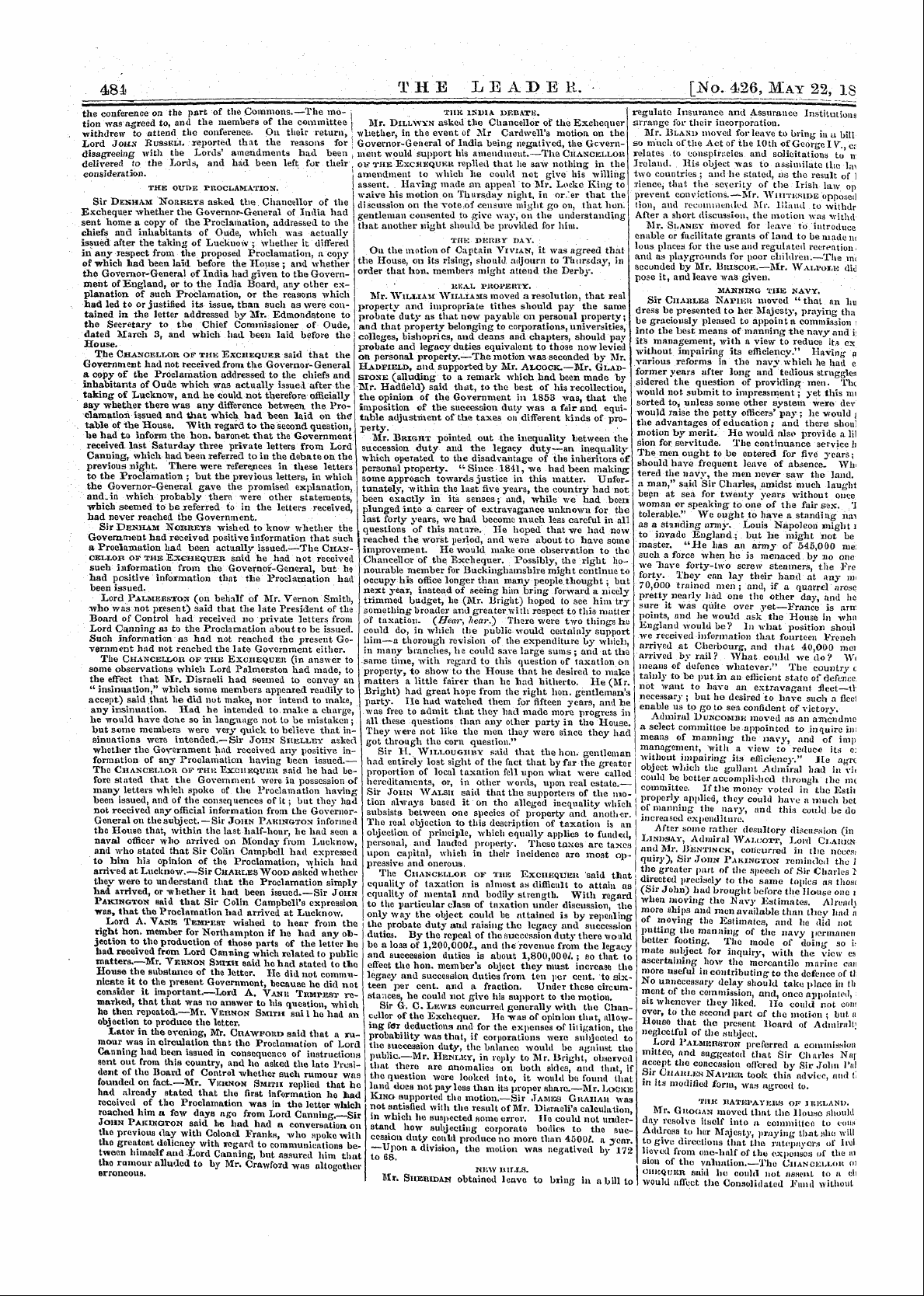
the conference on the part of the Commons . —The motion was agreed to , and the members of the committee withdrew to attend the conference . On their return , Lord Jottx Russell , reported that the reasons for disagreeing with the Lords' amendments had been delivered to the Lords , and had been left for their consideration .
OUI ) E PROCLAMATION . Sir Dekhamc Norreys asked the Chancellor of the Exchequer whether the Governor-General of India had sent home a copy of the Proclamation , addressed to the chiefs and inhabitants of Oude , which was actually issued after the taking of Lucknow ; whether it differed in any respect from the proposed Proclamation , a copy of which had been laid , before the House ; and whether the Governor-General of India had given to the Government of England , or to the India Board , any other explanation of such Proclamation , or the reasons which had led to or justified its issue , than such as were contained in the letter addressed by Mr . Edmondstone to the Secretary to the Chief Commissioner of Oude , dated March 3 , and which had . been laid before the Souse .
The Chancellor of the Exchequer said that the Government had not received from the Governor- General a copy of the Proclamation addressed to the chiefs and inhabitants of Oude which was actually issued after the taking of Lucknow , and he could not therefore officially say whether there was any difference between , the Proclamation issued and that which had been laid on the " table of the House . "With regard to the second question , he had to inform the hon . baron « t that the Government received last Saturday three private letters from Lord Canning , which had been referred to in the debate on the previous night . There were references in these letters to the Proclamation ; but the previous letters , in which the Governor-General gave the promised explanation , and . in which probably thero -were other statements , which seemed to be referred to in the letters received , had never reached the Government .
Sir Dekham Norreys wished to know whether the Government had received positive information that such a Proclamation had been actually issued . —The Chancellor of the Exchequer said he had not received such information from the Governor-General , but he had positive information that the Proclamation had been issued . Lord Palmebston ( on behalf of Mr . Vernon Smith , who was not present ) said that the late President of the Board of Control had received no private letters from Lord Canning as to the Proclamation about to be issued . Such information as had not reached the present Government had not reached the late Government either . The Chancellor of the Exchequer ( in answer to some observations which Lord Palmerston had made , to the effect that Mr . Disraeli had seemed to convey an " insinuation , " which some members appeared readily to
accept ) said that he did not make , nor intend to make , any insinuation . Had he intended to . make a charge , he -would have done so in language not to be mistaken ; but some members were very quick to believe that insinuations were intended . — Sir John Shelley asked whether the Government had received any positive information of any Proclamation having "been issued . — - The Chancellor of this Exchequer said he had before stated that the Government were iu possession of many letters which spoke of the Proclamation having been issued , and of the consequences of it ; but they had not received any official information from the Governor-General on the subject . — Sir John Pakinoton informed the House that , within the last half-hour , he had seen a naval officer wlio arrived on Monday from Lucknow , and -who stated that Sir Colin Campbell had expressed to him his opinion of the Proclamation , which had arrived at Lucknow . —Sir Charles Wood naked whether
thoy were to understand that the Proclamation simply had arrived , or -whether it had been issued . —Sir John Pakinoton said that Sir Colin Campbell's expression was , that the Proclamation had arrived at Lucknow . Lord A . Vame Tempest wished to hear from the right hon . member for Northampton if he had any objection to the production of those parts of the letter lie had received from Lord Camiing which related to public matters . —Mr . Tkrnon Smith said ho had stated to tlio House the substance of the letter . He did not communicate it to the present Government , because he did not consider it important . —Lord A . Vank Tempest remarked , that that waa no answer to his question , which ho then repeated . —Mr . Version Smith sai I ho had an objection to produce the letter .
Later in the evening , Mr . Crawford said that a rumour waa in circulation that the Proclamation of Lord Canning had been issued in consequence of instructions 8 ont out from this country , and ho asked the lato President of the Board of Control whether such rumour was founded on fact . —Mr . Vjcunon Smith replied that ho had already stated that the fust information ho had received of the Proclamation was in the letter which reached him a few daya ago from Lord Canning . Sir John Paiuncjton said he hod had a conversation , on the previous day with Colonel FranltH , who spoko with tho greatest dolicacy with regard to communications between himaolf and Lord Canning , but fissured him that tho rumour alluded to by Mr . Crawford was altogether erroneous .
Untitled Article
THE INDIA DEBATE . Mr . Diliavyn asked tlie Chancellor of the Exchequer ^ Ybethel , in the event of Mr Cardwell ' s motion on the Governor-General of India being negatived , the Government would support his amendment . — -The Chancellor ok the Exchequer replied that he saw nothing in the amendment to which lie could not give his willing assent . Having made an appeal to Mr . Locke King to waive his motion on Thursday night , in or . ' er that the discussion on the vote ; of censure might go on , that hon . gentleman consented to-give way , on the understanding that another night should be provided for him .
THE DERBY BAY . On the motion of Captain Vivian , it was agreed that the House , on its rising-, should , adjourn to Thursday , in order that hon . members might attend the Derb \\
KEA . L PROPERTY . Mr . Wilmam Williams moved a resolution , that real property and impropriate tithes should pay the same probate duty as that now payable on personal property ; and that property belonging to corporations , universities , colleges , bishoprics , and deans and chapters , should pay probate and legacy duties equivalent to those now levied on personal property .- —The motion was seconded by Mr . Hadfield , and supported by Mr . Alcock . —Mr . Gladstone ( alluding to a remark which had been made by Mr . Hadfield ) said that , to the best of his recollection , the opinion of the Government in 1853 "Was , that the imposition of the succession duty was a fair and equitable adjustment of the taxe 3 on different kinds of property .
Mr . Bright pointed out the inequality between the succession duty and the legacy duty—an inequality which operated to the disadvantage of the inheritors of personal property . ¦ " Since 1841 , we had been making some approach towards justice in this matter . Unfortunately , -within the last five years , the country had not been exactly in its senses ; and , while we had been plunged into a career of extravagance unknown for the last forty years , we had become much less careful in all questions of this nature . He hoped that-we had now reached the worst period , and were about to have some improvement . He would make one observation to the Chancellor of the Exchequer . Possibly , the right honourable member for Buckinghamshire might continue to occupy his office longer than many people thought ; but
next year , instead of seeing him bring forward a nicely trimmed budget , he ( Mr . Bright ) hoped to see him try something broader and greater ¦ with respect to this matter of taxation . ( Hear , hear . ' ) There were two things his could do , in which the public would certainly support him—a thorough revision of the expenditure by which , in many branches , he could save large sums ; and at the same time , with regard to this question of taxation on property , to show to the House that he desired to make matters a little fairer than he had hitherto . He ( Mr . Bright ) had great hope from the right hon . gentleman ' s party . He had watched them for fifteen years , and he was free to admit that they had made more progress 5 n till these qxiestions than any other party in the House . They were not like the men they were since they had got through the corn question . "
Sir H . WiLLOUGHMY said that the hon . gentleman had entirely lost sight of the fact that by far the greater proportion of local taxation fell upon what were called hereditaments , or , in other words , upon real estate . — Sir John Walsh said that the supporters of the motion always based it on tho alleged inequality which subsists between one species of property and another . Tho real objection to this description of taxation is an objection of principle , which equally applies to funded , personal , and landed property . These taxes are taxes upon capital , which in their incidence are most oppressive and onerous ,
The Chancellor of the Exchequer said that equality of taxation is almost as difficult to attain as equality of mental and bodily strength . With regard to the particular class of taxation under discussion , the only way the object could be attained is by repealing the probate duty and raising tho legacy and succession duties . By tho repeal of tho succession duty there would be a loss of 1 , 200 , 000 / ., and the revenue from the legacy and succession duties is about 1 , 800 , 00 0 £ ; so that to effect the hon . member ' s object they must increase tho legacy and succession duties from ten per cent , to sixteen per cent , and a fraction . Under these circumstances , he could not give his support to the motion .
Sir Gr . C . Lewis concurred generally with the Chancellor of the Exchequer . Ho this of opinion that , allowing for deductions and for tho expenses of litigation , tho probability was that , if corporations were subjected to tho succession duty , the balnnco would bo against tho public . —Mr . Henley , in reply to Mr . Bright , observed that there are anomalies on both sides , and that ,, if tho question wore looked into , it would bo found that land does not pay loss than its proper shave . —Mr . Lockk Kino supported tho motion . —Sir Jamics Graham was not satisfied with tho result of Mr . Dimaoli'a calculation , in which ho suspected oomo error . Ho could not understand how subjecting corporate bodicft to tho succession duty could produce no more than 4500 / . a year . —Upon a division , tho motion was negatived by 172 to 68 . NKW 1 MLLB . Mr . Sheridan obtained leave to bring in a bill to
Untitled Article
regulate Insurance and Assurance Institutions arrange for their incorporation . Mr . Blani > moved for leave to bring in a bill so much of the Act of the 10 th of George IV ., cr relates to . ' conspiracies , and solicitations to n Ireland . His object was to assimilate the hr two countries ; and he stated , us the result of aience , that the severity of the Irish law op prevent convictions . —Mr . Wiutkkide opposed tion , and recmninciulod Mr . Bland to withdr After a short discussion , the motion was vithd Mr . Slaney moved for leave to introduce enable or facilitate grants of land to be made in lous places for the use and regulated recreation and as playgrounds for poor children . —The im seconded by Mr . Briscoe . —Mr . Walpoi-k dii pose it , and leave was given .
MANNING THE NAVY . Sir Charles Napieu moved " that an hi dress be presented to her Majesty , praying tha be graciously pleased to appoint a commission into the best means of manning the navy and i its management , with a view to reduce its ex without impairing its efficiency . " Having a various reforms in the navy which he had e former years after long and tedious struggles sidered the question of providing men . Tin would not submit to impressment ; yet this mi sorted to , unless some other system were dev would raise the petty officers' pay ; he would j the advantages of education : and there shou '
motion by merit . He would also provide a lil sion for servitude . The continuance service Ii The men ought to be entered for five years ; should have frequent leave of absence- Wb tered the navy , the men never saw the land . a man , " said Sir Charles , amidst much laughi been at sea for twenty years without once woman or speaking to one of the fair sex . 'J tolerable . " We ought to have a standing nai as a standing army . Louis Napoleon might i to invade England ; but he might not be
master . " He lias an army of 545 , 000 me such a force when he is menaced by no one we "have forty-two screw steamers , the Fre forty . They can lay their hand at any m 70 , 000 trained men ; and , if a quarrel arose pretty nearly had one the other day ^ and he sure it was quite over yet—France is nrn points , and lie Mould ask the House in wha England would be ? In -what position shoul we received information that fourteen French arrived at Cherbourg , and that 40 , 000 mei arrived by rail ? What could we do ? Wi
means of defence whatever . " The country c tainly to be put . in an efficient state of defonte not want to have an . extravagant feet—tl necessary ; but he desired to have such a flee : enable us to goto sea confident of victory . Admiral Dujjcombe moved as an amendmc a select committee be appointed to inquire in means of manning the ' navy , and of imp management , with a view to reduce its e : without impairing its eilicitmcy . " He aj-rc object which the gallant Admiral had in vi < could be better accomplished through' the m < committee . If tbe money voted in the Estii properly applied , they could have a much bet of manning the navy , and this coukl . be do increased expenditure .
After some rather desultory discussion ( in Lindsay , Admiral Wau : ott , Lord Ci . aiucn and Mr . Bisntinck , concurred in tbe nceesj quiry ) , Sir John Pakington rein in tied the 1 the greater part of the speech of Sir Charles 2 directed precisely to the same topics as thoai ( Sir John ) hud brought before the House one i when moving tho Navy Estimates . Alremlj moro ships and men available than thev had n of moving tho Estimates , and lie did not
putting the manning of the navy permaneii better footing . The mode of doing so i : mate subject for inquiry , with the view es ascertaining how the mercantile marine car more useful in contributing to tho defence of tl No unnecessary delay should taku place in th ment of the commission , and , once appointed , sit whenever they liked . lie conk ! not , com over , to the second part of the motion ; but n House that the present Board of Adminilt neglectful of the Hiibject .
Lord PALBiKRsroN preferred a commission mittee , and suggested that Sir Charles Nnj accept the concession offered by Sir John Till Sir Ciiarlks Nai'iicr took this advice , and t m its modified form , was agreed to . THK IlATKl'AYKRS OF IltlCLANI ) . Mr . Grooan moved that tho llouao should day resolve itself into a committee to conn Address to her Majesty , praying tbaitsho Avill to give directions that the ratepayers of lrol lioveil from one-half of the expenses of tho ai sion of tho valuation . —Tho Ciianckllok o : oiikquicr snid ho could not assent to a cl would affect tho Consolidated Fund without
Untitled Article
484 . THE LEADER .- [ No . 426 , May 22 , IS
-
-
Citation
-
Leader (1850-1860), May 22, 1858, page 484, in the Nineteenth-Century Serials Edition (2008; 2018) ncse.ac.uk/periodicals/l/issues/vm2-ncseproduct2243/page/4/
-