On this page
-
Departments (1)
-
Text (5)
-

Untitled Article
-

Untitled Article
-

Untitled Article
-

^ . ^1 tl Pt*lTllTPP 2!-/UHrUUUrW ¦
-

Untitled Article
Note: This text has been automatically extracted via Optical Character Recognition (OCR) software. The text has not been manually corrected and should not be relied on to be an accurate representation of the item.
-
-
Transcript
-
Note: This text has been automatically extracted via Optical Character Recognition (OCR) software. The text has not been manually corrected and should not be relied on to be an accurate representation of the item.
Additionally, when viewing full transcripts, extracted text may not be in the same order as the original document.
Untitled Article
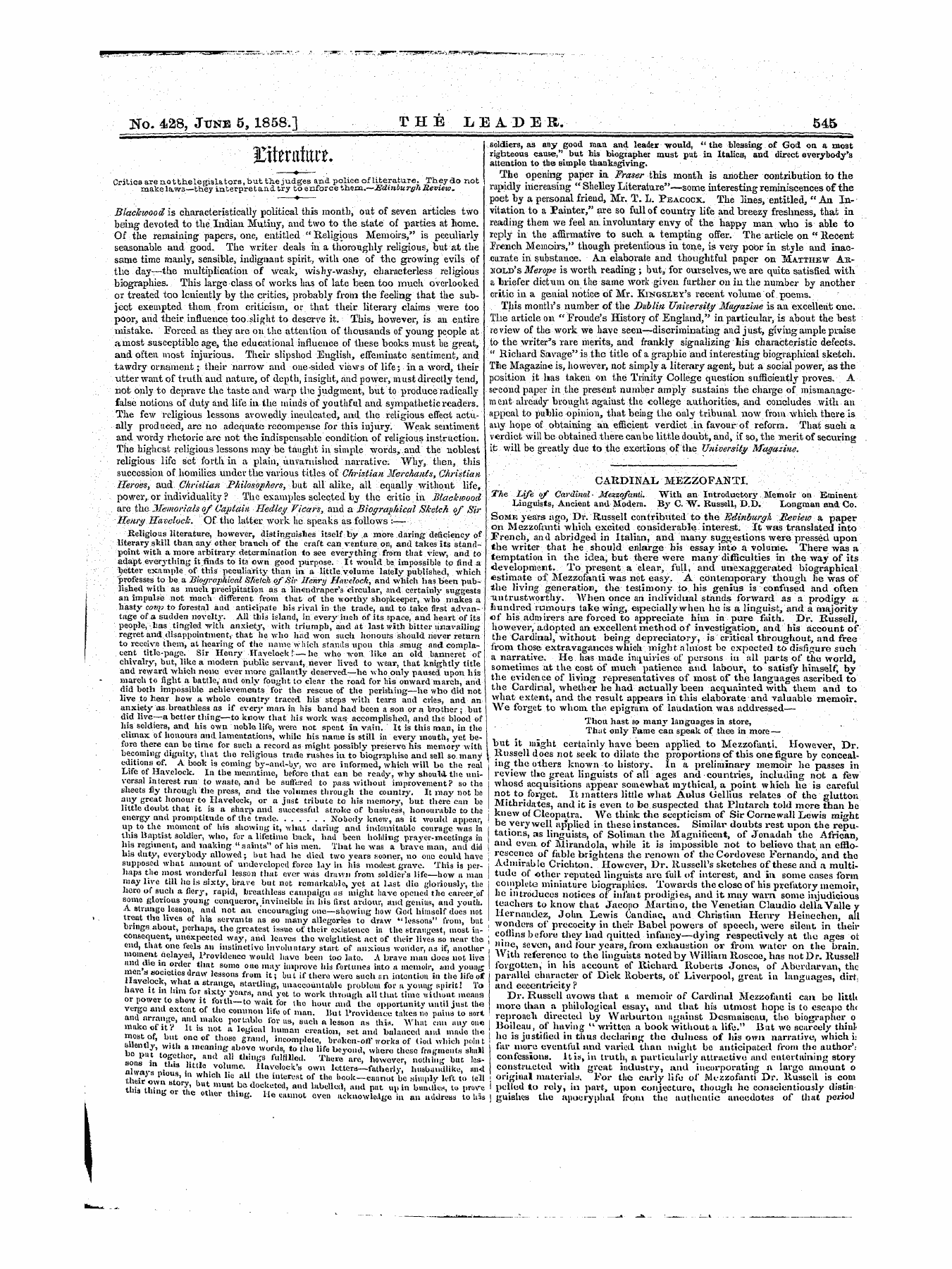
BlacJcwood is characteristically political this month , out of seven articles two being devoted to the Indian Mutiny , and two to the state of parties at liome . Of the remaining papers , one , entitled " Religious Memoirs / ' is peculiarly seasonable and good . The writer deals in a thoroughly religious , but at the same time manly , sensible , indignant spirit , with one of the growing evils of the day—the multiplication of weak , wishy-washy , characterless religious biographies . This large class of works has of late been too much overlooked ot treated too leniently by the critics , probably froin the feeling that the subject exempted them from criticism , or that their literary claims were too poor , and their influence too flight-to . deserve it . This , however , is an entire mistake . Forced as they are on the attention of thousands of young people at
arnost susceptible age , the educational influence of these books must be great , and often most injurious . Their slipshod English , effeminate sentiment , and tawdry ornament ; their narrow and one-sided views of life- in a word , their utter want of truth and nature , of depthj insight , and power , must directly tend , not only to deprave the taste and warp the judgment , but to produce radically false notions of duty and life in . the minds of youthful and sympathetic readers . The few religious lessons avowedly inculcated , and . the religious effect actually produced , are no adequate recompense for this injury . Weak sentiment and . wordy rhetoric arc not the indispensable condition of religious instruction . The highest religious lessons may be taught in simple words ,. and the noblest religious life set forth , in a plain , unvarnished narrative . Why , then , this succession of homilies under the various titles of Christian Merchants , Christian Heroes , aud Christian Philosophers , but all alike , all equally without life , power , or individuality ? The examples selected by the critic in Blackwoocl are the \ Memorials of"Captain Tledley Vicars , and aBiograpliical Sketch of Sir lleiiry Haveloclc . Of the latter work he speaks as follows : ——
Religious literature , however , distinguislies itself by a more daring deficiency of literary skill than any other branch of the craft can venture on , and takes its standpoint with a more arbitrary determination to see everything from that view , and to adapt everything it finds to ita own good isurpose . It would be impossible to find a better example of _ this peculiarity tlian in a little . volume lately published , -which professes to be a Biographical SFietch of Sir Henry Havelock , and which has been published with as mucli precipitation as a linendraper's circular , and certainly suggests an impulse not much different from that of the worthy shopkeeper ,-who makes a hasty covp to forestal and anticipate his rival in the trade , and to take first advantage of a sudden novelty . All this island , in every inch of its space , and heart of its people , has tingled -with anxiety , with triumph , and at last with bitter unavailing regret and disappointments that he who had won sucli honours should never return
to receive them , at heaving of the name winch stands upon this smug and complacent title-page . Sir Henry Havelock !—he who -won like an old banneret of chivalry , but , like a modern public servant , never lived to -wear , that knightly title and reward which none ever more gallantly deserved—lie who only paused upon his march to fight a battle , and only fought to clear the road for his onward march , and did both impossible achievements for the rescue of the perishing—he who did not live to hear how a whole country traced his steps with tears and cries , and an anxiety as breathless as if every man in his band had been a son or a brother ; but did live—a better thing—to know that his work was accomplished , and the blood of his soldiers , and his own noble , life , were not spent in vain . It is this man , in the climax of honours and lamentations , while his name is still in every mouth , yet before there can be time for such a record as might possibly preserve his memory with becoming dignity , that the religious trade rushes in . to biographiso and sell so . many
editions of . A book is coming by-and-by , we are informed , which will be the real Life of Havelock . In the meantime , before that can be ready , why should- the universal interest run to waste , and be suffered to pass without improvement ? so the sheets fly through the press , and the volumes through the country . It may not bo any great honour to Havelock , or a just tribute to his memory , but there can bo little doubt that it is a sharp and successful stroke of business , honourable to the energy and promptitude of the trade . ...... Nobody knew , as it would appear , up to the moment of his showing it , what daring and indomitable courage was in this Baptist soldier , who , for a lifetime back , had been holding prayer-meetings in his regiment , and making " sainta" of his men . That he was a brave man , and did his duty , everybody allowed ; but had he died two years sooner , no one could have supposed what amount of undeveloped force lay in his modest grave . This is perhaps the most wonderful lesson that ever was drawn from soldier ' s life—how a man
may lire till he is sixty , brave but not remarkable , yet at last die gloriously , the hero of such a fiery , rapid , breathless campaign as might have opened the careerj > f some glorious young conqueror , mviuciblu in his first ardour , and genius , and youth . A strange Reason , and not an . encouraging one—showing how God himself does not treat the lives of his servants as so many allegories to draw " lessons" from , but brings about , perhaps , the greatest issue of their existence in the strangest , most inconsequent , unexpected way , and leaves the weightiest act of their lives so near the end , that one feels an instinctive involuntary start of anxious wonder , as if , another moment oelayed , Providenco would lmve been too late . A brave man does not live unci clie in order that some one may improve his fortunes into a memoir , and young men alaocieUes draw lessons from it : but if there were auch an intention in the life of iiaveiock
, what a strange , startling , unaccountable problem for a young spirit ! To Jiave it m Jam for sixty years , and yet to work through all that time without means or power to show it lorth-to wait for the hour and the opportunity until just the verge and extent of the common lite of man . But Providence takes no pains to sort mnlr " ? " ^ ' f nd . Mlak 0 Portable for us , such a lesson an this . What cnu any on « mluf p i \ ^ ° \ U logical hlllnan crc » tion , set and balanced and made th « Swi ' •!• ° " ' ° gra " ) inc (> m P lotc , brolcen-oir works of ( Jod which point lii « \ \ VT M ™ J e « bove words , to the lif « beyond , where these fragments shall Iff f ' , " , "" tUUIferS fuIttlIed ' Tll ( ir ( i ftrc > however , nothing but lcs-Xaiinl . * ! httl ? . , . \ " ^ clock ' s own lcittew—fatherly , husbaiiUHke , an < l thdr own «» i * llC aU the ilUere 8 t of thu >> ook-cai » not bo simply lef t to tell t L th »? r J' , f bc d 0 ckctC < 1 ' luul libelled , and put up in bundle * , to prove tins tiling or the other thing . He c . umot even acknowledge in an address to h 3 »
soldiers , as any good man and leader would , " the blessing of God on a most righteous cause , " but \ a& biographer must put in Italics , and direct everybody ' s attention to the simple thanksgiving . The opening paper in Fraser this month is another contribution to the rapidly increasing " Shelley Literature "—some interesting reminiscences of the poet by a personal friend , Mr . T . L . Peacock . The lines , entitled , " An , Invitation to a Painter , " are so full of country life and breezy freshness , that in reading them we feel an involuntary envy of the happy man who is able to reply in the affirmative to such a tempting offer . The article on " Recent French Memoirs , " though pretentious in tone , is very poor in style and inaccurate in substance . An . elaborate and thoughtful paper on Matthew Aitkold ' s Merope is worth , reading ; but , for ourselves , we are quite satisfied with a Ittiefer dictum on the same work given furtlier on in the number by another critic in a geaial notice of Mr . KihgsIjE y ' s recent volume of poems . This month's number of the Dublin University Magazine is an excellent one . The article on " Froude ' s History of England , " in particular , is about the best review of the work we have seen—discriminating aud just , giving ample praise ta the writer ' s rare merits , and frankly signalizing liis characteristic defects . " Richard Savage" is tlie title of a graphic and interesting biographical sketch ' . Tlie Magazine is , however , not simply a literary agent , but a social power , as the position it lias taken on the Trinity College question sufficiently proves . A second paper in the present number amply sustains the charge of mismanagement already brought against the college authorities , and concludes -. with . au appeal to puJblic opinion , that being the only tribunal now from which there is . auy hope of obtaining an . efficient verdict in favour of reform . That such a verdict will be obtained there canbe little doubt , and , if so , the merit of securing it will be greatly due to the exertions of the University Magazine .
Untitled Article
CARDINAL , MEZZOFANTI . The Life of Cardinal- Mezzofanti . With an Introductory Memoir oh Eminent Linguists , Ancient and Modern . By C . "W . Russell , D . D . Longman and . Co . Some years ago , ' Dr . 'Russell contributedto the Edinburgh Heoiew a paper on Mezzofanti which excited considerable . interest . It was translated into French , and abridged in Italian , and many suggestions were pressed upon the writer that he . should enlarge his essay into a volume . There was a temptation in the idea , but there were many difficulties in the way of its . ^ development . To present a clear , full , and unexaggerated biographical estimate of ! Mezzofanti was not easy . A contemporary though he was of * he living generation , the testimony to his genius is confused and often -untrustworthy . When once an individual stands forward as a prodigy a , Jmndred rumours take wing , especially when he is a linguist , and a majority of his admirers are forced to appreciate him in pure faith . Dr . KusseU , however , adopted an . excellent method of investigation , and his account of the Cardinal , without being depreciatory , is critical throughout , and free from those extravagances which might almost be expected ' to disfigure' such a narrative . He has made inquiries of persons iii all parts of" the world , sometimes at the cost of much patience and labour , to satisfy himself , by the evidence of living representatives of most of the languages ascribed to the Cardinal , whether he had actually been acquainted with them and to what extent , and the result appears in this elaborate and valuable memoir . We forget to whom the . epigram of laudation was addressed . — Thou hast so many languages in store , That only Fame can speak of thee in more — but it might certainly have been applied to Mezzofanti . However , Dr . llussell does not seek to dilate the proportions of this one figure by concealingthe others known to history . In a preliminary memoir he passes in review the great linguists of all ages and countries , including not a few whose" acquisitions appear somewhat mythical , a point which he is careful not to forget . It matters little what Aulus Uellius relates of the glutton Mithridates , and it is even to be suspected that Plutarch told more than he knew of Cleopatra . We think the scepticism of Sir Come wall Lewis might be very well applied in these instances . Similar doubts rest upon the reputations , as linguists , of Soli roan the Magnificent , of Jonadah the African , and even of Mirandola , while it is impossible not to believe that an efflorescence of fable brightens the renown of'theCordovesc Fernando , and the Admirable Crichton . However , Dr . Russell's sketches of these and a multitude of other reputed linguists are fulL of interest , and in some cases form complete miniature biographies . Towards the close of his prefatory memoir , he introduces notices of infant prodigies , and it may warn some injudicious teachers to know that Jacopo Martino , the Venetian Claudio della Valle y Hernandez , John Lewis C ' andiac , and Christian Henry Heinechen , all wonders of precocity in their Babel powers of speech , were silent in their coffins before they- had quitted infancy—dying respectively at the ages ot nine , seven , and lour years , from exhaustion or from water on the brain . With reference to the linguists noted by William Roscoe , has not Dr . llussell forgotten , in his account of ltichnrd Roberts Jones , of Aberdarvan , the parallel character of Dick Roberts , of Liverpool , great in languages , dirt , and eccentricity ? Dr . Russell avows that a memoir of Cardinal Mezzofanti can bo litth more than a philological essay , and that his utmost hope is to escape tlu reproach directed by Warburton against Desmaiseau , tlio biographer o Boilcau , of having written a book without a life . " But wo scarcely thin ! I he is justified in tUus declaring the dulness of his owa narrative , which i : far more eventful and varied than might bo Anticipated from the author ' .-confessions . Itia , in truth , a particularly attractive and entertaining story constructed with great industry , and incorporating a largo amount o i original materials . For the early life of JVlczzofanti Dr . Russell is com I polled to rely , in part , upon conjecture , though he conscientiously distin l guiahes the apocryphal from the authentic anecdotes of that period
Untitled Article
. .. . ?— ¦ — . . - Critics are not thelegislators , but the judges and . police of li . teratu . re . They do not rn . akela . W 3—they interpret and try to enforce them . —EdinburgTiReview .
^ . ^1 Tl Pt*Ltlltpp 2!-/Uhruuurw ¦
¦ ¦ literate .
Untitled Article
No . 428 , Junk 5 , 1858 ] T H E L E A . D E R . 545
-
-
Citation
-
Leader (1850-1860), June 5, 1858, page 545, in the Nineteenth-Century Serials Edition (2008; 2018) ncse.ac.uk/periodicals/l/issues/vm2-ncseproduct2245/page/17/
-