
On this page
-
Text (2)
-
Untitled Article
-

Untitled Article
Note: This text has been automatically extracted via Optical Character Recognition (OCR) software. The text has not been manually corrected and should not be relied on to be an accurate representation of the item.
-
-
Transcript
-
Note: This text has been automatically extracted via Optical Character Recognition (OCR) software. The text has not been manually corrected and should not be relied on to be an accurate representation of the item.
Additionally, when viewing full transcripts, extracted text may not be in the same order as the original document.
Untitled Article
that Havelock had neither failed them nor miscalculated , and that his forces were at hand . Ibis the sound of field artillery at no great distance seemed to corroborate . The . enemy soon began to evacuate ' his position } hurling a fearful farewell hurricane of shot and shell into the Residency , he melted away at last across the river , and was succeeded by the relieving forces . " It is impossible , -says the Commissioner , " to describe the scene within the " entrenchments that evening "—and we feeheve 1 W ™ But every reader of this spirit-stirring aiarrative can picture for himself the sensations of the worn-out garrison , and the no less harassed reliefand to admire the good , taste of the historian
him , and . lie dismisses it with arguments which , m our opinion , should have led him to combine it with the fifth and sixth alleged causes , which he believes solely to have originated and stimulated the revolt . , Alarm on the subject of caste and religion , had long previously b' een growing in the native mind . In the April before the mutiny ,, the surgeon of the 48 th Native Infantry had so deeply irritated the Sepoys by applying to his mouth a regimental medicine bottle , thus violating their caste , that , his colonel felt obliged to destroy the desecrated flask , and publiclv to rebuke the . offender , whose house and property were a few nights after burnt over his head . Government , it was extensively believed , had
hear with the ears and see with the eyes of the native sub-officials , and when these arc venal , as they always are , they will put to usance the power and the influence thus thoughtlessly demised to _ them , and the middle man saplaccdinust each day inevitably become a-greater scourge' to those below and a more necessary evil to an indolent superior . It is the modern system of withdrawing a large number of regimental officers from staff employment that
has fostered , if it has not created , this indifference . Men sure of Leadenlmll-street influence have found it better worth their while to study for staff appointments than to become thorough regimental officers ; and men sure of no advancement have been prone to neglect routine duties in the absence of all prospect of reward for exertion . May it not be so , and tenfold worse than so , in the days yet to come ? ( To ha continued . ')
sent cargoes of bone-dust up the country for admixture with flour and sweetmeats , so that all who ate of it might lose their caste . Others believed in the intention of the Europeans to import Crimean widows wholesale , force them as -wives upon the zemindars , and declare ' the offspring of such matches heirs to the various properties of their native fathers , thus supplanting in course of time the Hindoo proprietary . A propitious soil is the native mind for the growth of superstitions , and when information was given to the Sepoys by a low caste labourer in the arsenal that each who had used a rifle cartridge had taken to his
lips the fat of bulls and had so lost his caste for ever , can we wonder any longer at the explosion . The greased cartridge affair , in fact ,. which men long viewed here as a mere pretext , should be regarded somewhat as the " last feather , " or the portfire to a charged petard . The native prejudices had for years , we can learn from the Commissioner ' s luminous pages , been outraged , not soothed , by the well-intentioned educational measures which , went , it must be confessed , to a maniacal length . Contributions were levied upon villages for the purpose ... Criminals actually , in default of voluntarv scholars , were educated in
astronomy and the arts , as well as in elementary knowledge , and " when proficient were sent from gaol to gaol as professors ! Missionary enterprise , again , was favoured here and there to an jextrnvagaut extent , and sometimes , since IS 5 , 0 , forced upon the people by over zealous propagandists , in a far 4 oo fervent manner . The Legislature , again , had legalised the marriage of Hindoo widows , confirmed converts in their inheritances , in defiance of the native tradi-, tional law , and was threatening the institution of polygamy . The organisation of the Bengal army offered ample scope for the development of discontent once sown . Our Bengal Sepoys were nearly
all Oudh men of a few of the highest castes , and drawn from the same families . Consanguinity bound them to one another no less than fanaticism . Discipline had of late years been relaxed . The lash had been abolished under Lord William Bentinck , and , in the words of an old native officer , "the army ceased to fear . " Centralisation of command at head-quarters , which though well enough in countries blessed with telegraph and penny-post , is an absurdity in the vast territory of British India , had reduced commandants to the rank of cyphers . Deprived of power and responsibility , many of them , as might be expected , had drifted into indifference . The extension of the limits within which the
native soldier was formerly compelled to serve by the articles of his enlistment , was another ground for discontent . While servioe beyond the world of his i'deas was paid for by double batta , he was soothed and consoled for the violence done to jiis intense religio loci , but when service in China , Burnuih , and Java were made part of India for tho purposes of those articles , and foreign service pay ceased from him , he murmured lor his antique shrines and holy rivers . The option of invaliding upon pension af ' ter fifteen years' service was practically withdrawn from men not actually disabled , and their compulsion , under Lord Haraingo ' s Government , to remain by the colours as camp servants was another grievanoe which wo oan imugino to have nearly touched tho homo-Biok Bengalee Sepoy . But the diminished interest of tho European
jrfu& £ &jUUl ( h £ ^^ if proven , do admitted as a yet moro obvious . cause of disorganisation , " "I have long " says Gubbins , " noted tho improper distance winch separates tho young British subalterns from the grey-board subahdar or the young Sopoy of his company , I have often remonstrated with my young military friends on the subject , ' How can you expect devotion iu the flold , ' I havo asked , ' wliou you arc a stranger to your men in cantonment 1 "" Unless the European officer take pains to make himself readily accessible to tho people ho can but
, -who has not robbed imagination of her privilege . The second period of the siege , termed by General Havelock " the blockade , " now commenced . Having left their stores outside at Alumbagh , and having with them no means of transport , that officer and General Outram . had no means whatever of carrying off the relieved force in face of the enemy , through whom they had just now with such difficulty cut their own way . They remained therefore within the walls to share the provisions and the dangers of the old garrison in a far more extended position . This , as is now well known , they did until finally all got clear
-away , on the second relief by Sir Colin Campbell . During this epoch Gubbins ' s post was one ot less . prominence and danger . The author had therefore time for civil pursuits , and among others superintended the erection of a telegraph between the Residency and the Alumbagh , which isolated post Avas sustaining a siege of its own . At the end of < 3 ctoberSir C . Campbell ' s advance was a matter of ^ certainty , on the 12 th of November he was at the Alumbagh , and such was' the tenacity of the - mutinous army ^ that lie did not _ perfect his communications with the Residency till the 17 th , when
he ordered its immediate evacuation . On the 19 th this commenced , _ and on the 22 nd the relieving" force , of 4550 men , carried off the'remnant of the garrison in the face or " , 000 enemies . Sir Cfolin Campbell , who douM neither brinJEj himself-to storm the Royal Palace , where also all was ready for an evacuation , nor to continue the ^ occupation of the Residency , took-the = proud little band , who " can well imagine were hardly grateful ^ i . the moment , in his train to the Alumbagh , and within a week relievers and relieved were rejoicing and mourning together at that well of bitterness—Cawnpore .
We have been led into the foregoing lengthy , though sadly meagre , analysis of Mr . Gubbins ' s military chronicle , for the simple reason that it deserved no less at the hands of a conscientious reviewer ; but there is yet in his pages abundant store of very interesting and important material for consideration , to which we must , however briefly , aEude . Chapters IV ., V ., and VI . of the work are devoted to an elaborate consideration of the causes of the mutiny which , the rule of the India Company
being now ended , must henceforth more—not , as some would say , less—than ever be a subject for reflection for all who take , any interest in the extension of our power , our trade , and civilisation generally . Mr . -Gubbins ' s Memoir , which contains , we apprehend , the substance of an " opinion" prepared by him for Mr . Colvin , then Lieutenant-Governor of Agra , is ¦ entitled to the more weight that it met with the approval of Sir Henry Lawrence , who had himself contributed papers on the condition of the Bengal Native Army to the Calcutta lieview .
Tho following ( says tho author ) embrace all tho causes that have been adduced , so far aa I have heard or read , to account for this wide-spread and unlookedfor mutiny ; 1 . It has been attributed to Russian intrigue . 2 .. To a long-matured conspiracy on the part of tho Mahommedana . 8 . It baa been viewed by others as a national . revolt . 4 . Not a few attribute the mutinies to the British ' -annexation of the Province of Oudh .
5 . Some regard it . to be a religious outbreak of tho soldiery , aroused by our interference with their prejudices ^ RdM ^ gi ^ JUUE ^ ,,,, „ Lastly . It is regarded by others « a chiefly attributable to the absence of a sufficient European force ; to tho condition and management of the Bengal army having been unsound and bad ; and to the Sepoy having boon too much freed from the bonds of discipline , and having Jbecomo discontented . - ¦ , ¦
Tho first three of these causes Mr ., Gubbins shows to bo clearly insufficient , and nearly without founda * tion . To the relation of tho fourth to tho result his very intimate connexion , as a civilian of high standing , with the annexation soema to have blinded
Untitled Article
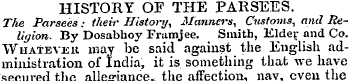
HISTORY OF THE PARSEES . 'The Parsees : their History , Manners , Customs , and Religion . By Dosabhoy Framjee . Smith , Elder and Co . WiiAi'EYEii may be said against the English administration of India , it is something that we have secured the allegiance , the affection , nay , even the devotion , of its wealthiest and most ¦ intelligent race . The Parsees , though comparatively few in numbers , are valuable supports to a Government . They are not military , though during the mutinies , they did offer to enlist at Bombay on the proud condition
that they should be paid as English soldiers ; but their influence is gi-eater than any mere physical strength could give them . The very grounds on which they have clung to us , even in our darkest hours , are equally complimentary to them and to ourselves . When we hear , indeed , a people of merchants , in a country where we have been accused of endeavouring to suppress all native development , coming forward and thanking us for an enlightened and liberal sway under which they have doubled their wealth and their numbers , we may well be
ea g er to accept such a suffrage . The community , too , " which , in a land of prejudice * and passion , is actuated by such motives , places itself on a very high levcL We could easily understand , therefore , why a volume like that before us should be read with eager and gcneraHnterest . ¦ ~~ A book written by a fire-worshipper , a follower of Zoroaster , in the nineteenth century , in English , and published within- a hundred yards of the Bank , is iu itself a curiosity . . Dosabhoy Pramjee , however , is a clear and sensible writer , and requires no adventitious circumstances to secure attention .
His knowledge of our language is remarkable . In his pages we are never startled by any na ' iveth , nor offended by the slang which foreigners who fancy they know our language frequently employ in order to seem more English than the English themselves . His object is to make the race to which he belongs moro popularly known in Europe , where , indeed , he somewhat too modestly supposes its very existenco is problematic to many . The historical sketch with which he commences is well done . He
does not give more than due importance to legcuds , however iutciesting ; but tells , in a brief , picturesque manner , how the Parsees , the descendants of the ancient Persians , were oppressed by Mohammedan incursion , and how the majority were forced to adopt tho now religion , whilst a faithful few either retreated into Khorassan or retired first to Ormuz in the Persian Gulf , and ultimately to India . The account of their reception at Soujau is singuarly interesting and romuuiic , though ruther in tone than in details . " The Tarao . es underwent
various vicissitudes in their now country , aud were gradually dispersed and trodden down , until at ; ength , when tho English became possessed of Bombay , they found their natural protectors . Tho numerical strength of tho Parsees docs not at present exceed one hundred and fifty thousand , including tho small remnant left jn Persia . They are rapidly increasing , and Dosab ' ioy Framjee states that this is in consequenco of their attending to
sanitary rules far more than tho oilier races of luuiu . JTjieyaiX&aliAuUc ^ tho Kudmis , buttho ground of d fie -once seouia merely to bo as to the correct chronological date for tho computation of the era of Zeydozond , tho laat King of tho anoiont Persian Monarchy . Equally futilo subjects of dispute have ' led , in other religious , to sanguinaryandinterminable wars ; but tho Pnrsocs , though oao'h sect obstinately slicks to its opinion , mingle freely in society , and in ovory relation iu life , without exhibiting anything liko tho Qitiuni tkoologioum . One most interesting part of tho present work
Untitled Article
906 THE LEA PER . [ No . 441 , September 4 , 1858 .
-
-
Citation
-
Leader (1850-1860), Sept. 4, 1858, page 906, in the Nineteenth-Century Serials Edition (2008; 2018) ncse.ac.uk/periodicals/l/issues/vm2-ncseproduct2258/page/18/
-