On this page
-
Text (3)
-
Untitled Article
-

Untitled Article
-

Untitled Article
Note: This text has been automatically extracted via Optical Character Recognition (OCR) software. The text has not been manually corrected and should not be relied on to be an accurate representation of the item.
-
-
Transcript
-
Note: This text has been automatically extracted via Optical Character Recognition (OCR) software. The text has not been manually corrected and should not be relied on to be an accurate representation of the item.
Additionally, when viewing full transcripts, extracted text may not be in the same order as the original document.
Untitled Article
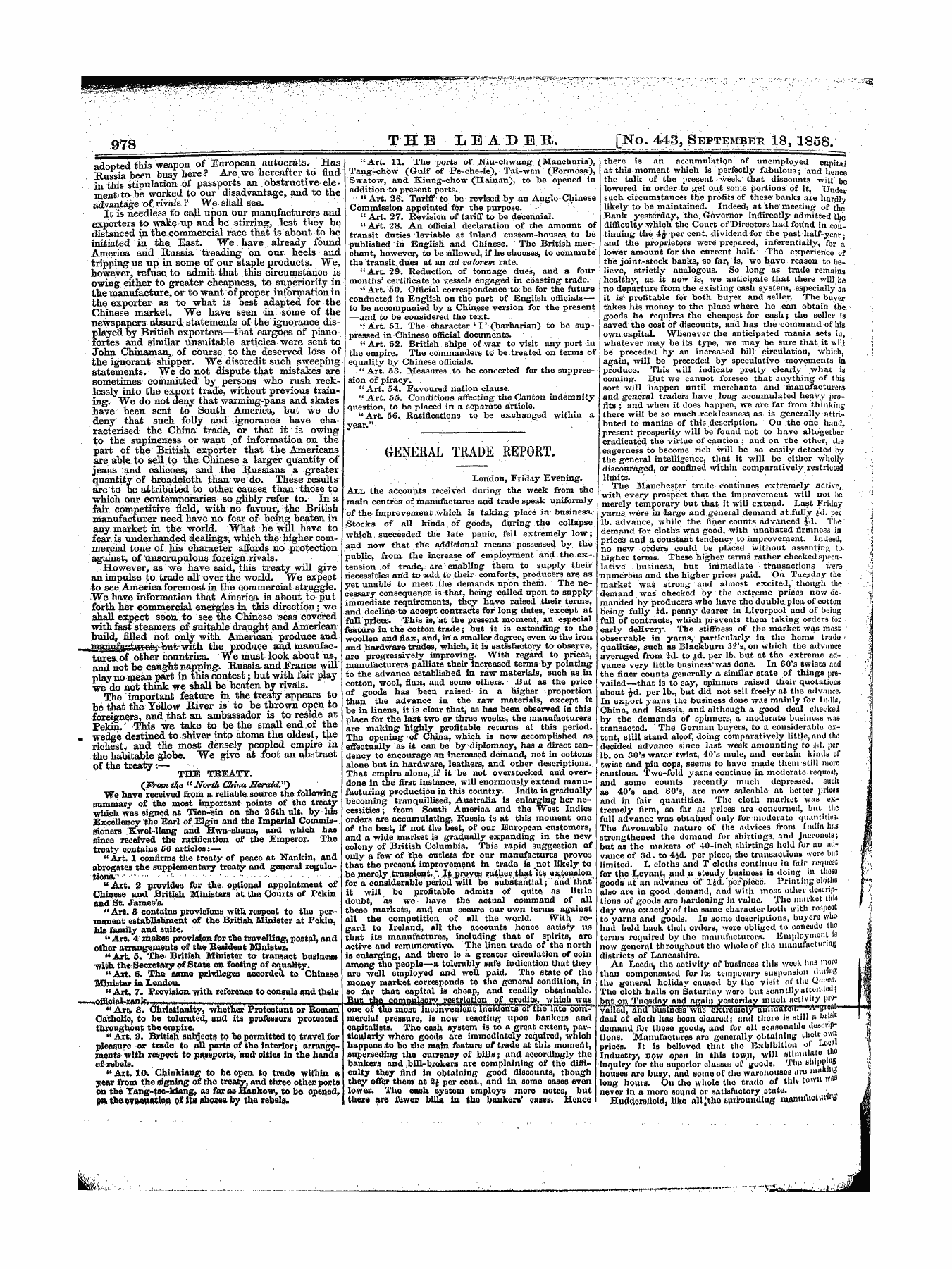
adopted this weapon of European autocrats . Has Kussia been busy here ? Are we hereafter to find in this stipulation of passports an obstructive element ; to be worked to our disadvantage , and to the advantage of rivals ? We shall see . It is needless to call upon our manufacturers and exporters to wake up and be stirring , lest they be distanced in the commercial race that is about to be initiated in the East . We have already found America and Russia treading on our heels and tripping us up in some of our staple products . We , however , refuse to . admit that this circumstance is owing either to greater cheapness , to superiority in the manufacture , or to want of proper information in the exporter as to what is best adapted for the Chinese market . We have seen in some of the
newspapers absurd statements of the ignorance displayed by British exporters—that cargoes of pianofortes and similar unsuitable articles were sent to John Chinaman , of course to the deserved loss of the ignorant shipper . We discredit such sweeping statements . We do not dispute that mistakes are sometimes committed by persons who rush recklessly into the export trade , without previous training . We do not deny that warming-pans and skates have been sent to South America , but we do deny that such folly and ignorance have characterised the China trade , or that it is owing to the supineness or want of information on the
" Art . H . The ports of Niu-chwang ( Manchuria ) , Tang-chow ( Gulf of Pe-che ^ le ) , Tai-wan ( Formosa ) , Swatow , and Kiung-chow ( Hainan ) , to be opened in addition to present ports . " Art . 26 . Tariff to be revised by an Anglo-Chinese Commission appointed for the purpose . - " Art . 27 . Revision of tariff to be decennial . " Art . 28 . An official declaration of the amount of transit duties leviable at inland custom-houses to be published in English and Chinese . The British merchant , however , to be allowed , if he chooses , to commute the transit , dues at an ad valorem rate . " Art . 29 . Reduction of tonnage dues , and a four months' certificate to vessels engaged in coasting trade . " Art . 50 . Official correspondence to : be for the future conducted in English on the part of English officials*—to be accompanied by a Chinese version for the present ^ and be considered the text .
" Art . 51 . The character ' I' ( barbarian ) to be suppressed in Chinese official documents . . " Art . 52 . British ships of war to visit any port in the empire * The commanders to be treated on terms of equality by Chinese officials . " Art . 53 . Measures to be concerted for the suppression of piracy . " Art . 54 . Favoured nation clause . " Art . 65 . Conditions affecting the Canton indemnity question , to be placed in a separate article . " Art . 56 . Ratifications to be exchanged -within a year . "
part of the British exporter that the Americans are able to sell to the Chinese a larger quantity of jeans and calicoes , and the Russians a greater quantity of broadcloth than we do . These results are to be attributed to other causes than those to which our contemporaries so glibly refer to . Ina fair competitive field , with no favour , the British manufacturer need have no fear of being beaten in any market in the world . What he will have to fear is underhanded dealings , which the higher commercial tone of Jiis character affords no protection against , of unscrupulous foreign rivals . However , as we have said , this treaty will give an impulse to trade all oyer the world . We expect to see America foremost in the commercial struggle . We have information that America is about to put forth her commercial energies in this direction ; we
shall expect soon to see the Chinese seas covered with fast steamers of suitable draught and American build , filled not onl y with American produce and ^ jnamif ^ sfettie ^ -Wt with the produce and manufactures of other countries . We must look about us , and not be caught napping . Russia and France will play no mean part in this contest ; but with fair play we do not think we shall be beaten by rivals . The important feature in the treaty appears to be that the fellow Biver is to be thrown open to foreigners , and that an ambassador is to reside at Pekin . This we take to be the small end of the , wedge destined to shiver into atoms the oldest , the richest , and the most densely peopled empire in the habitable globe . We give at foot an abstract of the treaty :-
—THE TREATY . ( From the" North China Herald , " ) We have received from a reliable source the following summary of the moat important points of the treaty ¦ which was signed at Tien-sin on the 26 th ult . by his Excellency the Earl of Elgin and the Imperial Commissioners Kwei-liang and Hwa-sbana , and which has since received the ratification of the Emperor . The treaty contains £ 6 articles : — " Art . 1 confirms the treaty of peace at Nankin , and abrogates the supplementary treaty and general regulations . ¦ ¦•; - ¦• ' ¦ •¦ ¦ ¦ ¦ ¦¦ ¦¦ - - ¦¦ ¦ ¦¦ ¦ ¦¦ . ¦¦ ¦ ¦ • - " Art . 2 provides for the optional appointment of Chinese and British . Miniatara at . the Courts of Pekin and St . James ' s .
"Art . 8 contains provisions with respect to the permanent : establishment of the British Minister at Pekin , his family and suite . " Art . 4 makes provision for the travelling , postal , and other arrangements of the Resident Minister . " Art . 5 . The British Minister to transact business with the Secretary of State on . footing of equality . " Axt . 6 . The same privileges accorded to- Chinese Minister in London . " Art . 7 . Provision , with reference to consuls and their offloinlUrBnki .. t i .. l .,. u ... i » ,-
" Art . 8 . Christianity , whether Protestant or Roman Catholic , to bo tolerated , and its . professors protected throughout the empire . " Art . 9 . British subjects to be permitted to travel for pleasure or trade to all parts of the interior ; arrangements with respect to pasaporta , and oities in the hands of rebels , ?* Art . 10 . Ctoinkiang to be opea to trade within a year from the signing of the treaty , and three other poets on the Yang-tae-kiang , as far aa Hankow , to be opened , on the evacuation of its shore * by the . rebel * ,
Untitled Article
London , Friday Evening . All the accounts received during the week from the main centres of manufactures and trade speak uniformly of the improvement which is taking ; place in business . Stocks of all kinds of goods , during the collapse which succeeded the late panic , fell , extremely low ; and now that the additional mean 3 possessed by the public , from the increase of employment and the extension of trade , are enabling them to supply their necessities and to add to their comforts , producers are as yet unable to meet the demands upon them . The necessary consequence is that , being called upon to supply immediate requirements , they have raised their terms , and decline to accept contracts for long dates , except at
there is ah accumulation of unemployed capital at this moment which is perfectly fabulous ; and hence the talk of the present week that discounts will be lowered in order to get out some portions of it . Under such circumstances the profits of these banks are hardly likely to be maintained . Indeed , at the meeting of the Bank yesterday , the . Governor indirectly admitted ' the difficulty which the Court of Directors had foiind in continuing the 4 j per cent , dividend for the past half-year ^ and the proprietors were prepared , inferentially , for a lower amount for the current half . The experience of the joint-stock banks , so far , is , we have reason to believe , strictly analogous . So long as trade remains healthy , as it now is , we anticipate that there will be no departure from the existing cash system , especially as it is profitable for both buyer and seller . The buyer takes his money to the place where he can obtain the
goods he requires the cheapest for cash ; the seller is saved the cost of discounts , and has the command of his own capital . Whenever the anticipated mania sets in , whatever may be its type , we may be sure that it will be preceded by an increased bill circulation , which ,, again , will be preceded by speculative movements i o produce . This will indicate pretty clearly what is coming . But we cannot foresee that anything of thi 3 sort will happen until merchants and manufacturers and general traders have long accumulated heavy i > rofits ; and when it does happen , we are far from thinking there will be so much recklessness as is generally attributed to manias of this description . On the one hand ,, present prosperity will be found not to have altogether eradicated the virtue of caution ; and on the other , the eagerness to become rich will be So easily detected by the general intelligence , that it will be either wholly discouraged , or confined within comparatively restricted
limits . . The Manchester trade continues extremely active , with every prospect that the improvement will not be merely temporary but that it will extend . Last Friday yarns were in large and general demand at fully £ d . per lb . advance , while the finer counts advanced id . The demand for cloths was good , with unabated firmness in . prices and a constant tendency to improvement . Indeed , no new orders could be placed without assenting to higher terms . These higher terms rather checked spuculative business , but immediate ¦' ¦ transactions % vere numerous and the higher prices paid . On Tuesday the market was strong and almost excited , though , the demand was checked by the extreme prices now
demanded by producers who have the double plea of cotton being fully id . penny dearer in Liverpool and of being full of contracts , which prevents them taking orders for early delivery . The stiffness of the market was most observable in yarns , particularly in the home trade qualities , such as Blackburn 3 ' 2 ' s , on which the advance averaged from id . to jd . per lb . but at the extreme advance very little business was done . In 60 's twists and the finer counts generally a similar state of things prevailed— -that is to say , spinners raised their quotations about £ d . per lb ., but did not sell freely at the advance . In export yarns the business done was mainly for India , China , and Russia , and although a good deal checked
by the demands of spinners , a moderate business was transacted . The German buyers , to a considerable oxtent , still stand aloof , doing comparatively little , and tlio decided advance since last week amounting to | d . per lb . on 30 ' s water twist , 40 ' s mule , and certain kinds of twist and pin cops , seems to have made them still nioro cautious . Two-fold yarns continue in moderate requost , and some counts recently much depressed , such as 40 ' s and 80 ' s , are now saleable at better pices and in fair quantities . The cloth market was extremely firm , so far as prices are concerned , but the full advance was obtainecf only for'moderate quantities . The favourable nature of the advices from India has
strengthened the demand for shirtings , and jaceonols but as the makers of 40-inch shirtings held for an advance of 3 d . to 4 , Jd . per piece , the transactions wore but limited . L cloths and T cloths continue in fair request for the Levant , and a Bteady business is doing in thoso goods at an ' advance of IJd . ' pWpiece . Printing cloths also are in good demand , and with most other descriptions of gooda are hardening in value . The innrltot this day was exactly of the sftino character both with msjiuot to yarns and gooda . In some descriptions , buyers \ vl » o had hold back their orders , wore obliged to concede I no terms required by the manufacturers . Employment u now general throughout the whole of the manufacturing districts of Lancashire .
At Leeds , the activity of business this wook has mow than compensated for its tompornry suspension during the general holiday caused by the visit of the Qu * 'on . The cloth halls on Saturday wore but scantily ultomloui but on Tuesday and again yesterday much activity l > r «* " vailed , and business was extremely' aniina < TO ! r- ™ A gi'o «» " ----doal of cloth has boon cleared j mid thero la atill ft ui'WK demand for theBe goods , and for all soaHOuablo descriptions . Manufactures aro gonorally obtaining iholr own prices . It is bolluvod that the Exhibition « l W " Industry , npw open in this tpwji , will stimulate iu « inquiry for the superior olaasos of goods . Thu ""' I' ! , " housos aro busy , and some of the warehouses tiro »»«"'" & long hours . On the whole tlio trade of thJs town woo never in a more sound or satisfactory . stato . ¦ Huddersaold , Hko alljtho surrounding nuiniiftwturinff
full prices . This is , at the present moment , an especial feature in the cotton trade ; but it is extending to the woollen and flax , and , in a smaller degree , even to the iron and hardware trades , -which , it is satisfactory to observe , are progressively improving . With regard to prices , manufacturers palliate their increased terms by pointing to the advance established in raw materials , such as in cotton , wool , flax , and some others . But as the price of goods has been raised in a higher proportion than the advance in the raw materials , except it be in linens , it is clear that , as has been observed in this place for the last two or three weeks , the manufacturers are making ; highly profitable returns at this period . The opening of China , which ia now accomplished as h direct ten
effectually as it can be by diplomacy , as a - dency to encourage an increased demand , not in cottons alone but in hardware , leathers , and other descriptions . That empire alone ,, if it be not overstocked and overdone in the first instance , will enormously extend manufacturing production in this country . India is gradually becoming tranquillised , Australia is enlarging her necessities ; from South America and the West Indies orders are accumulating , Russia is at this moment one of the best , if not the best , of our European customers , and a wide market ip gradually expanding in the newcolony of British Columbia . This rapid suggestion of only » few of the outlets for our manufactures proves that the present improvement in trade is not likely to
be . merejy transient . * J ! t proyep rather that its extension for a considerable period will be substantialj and that it will be profitable admits of quite as little doubt , as we have the actual command of all these markets , and can secure our own terms against all the competition of all the world . With regard to Ireland , all the accounts hence satisfy us that its manufactures , including that of spirits , are active and remunerative . The linen trade of the north is enlarging , and thero is a greater circulation of coin among the people—a tolerably safe indication that they are well employed and well paid . The state of the money market corresponds to tho general condition , in so far that capital is cheap , and readily obtainable .
n , u ^ fthj p ^ pfflp u ^ aq ry rflfltrlouon of cyQ" * Mfy w u ou wa . ,, nj ™ q jp ^ ^^ ^ J ^^ ^ g ^ oivv r onil o » t in ciUo n t s or tJU o la to o ibVri- " meroiol pressure , is now reacting upon bankers and capitalists . The cash system is to a great extent , particularly where goods are immediately required , which happens to bo the main feature of trade at this moment , superseding the currency of bills ; and accordingly tho bankers and ( bill-brokers are complaining of the difficulty they find in obtaining good discounts , though they offer them at 24 per cent ., and in some cases even lower . The cash , system employs more notes , but tUex « are fewer bjUla in the bankers' cases . Hence
Untitled Article
978 THE IiEADEB , [ No . 443 , Septembeii _ 18 ^ 1858 .
Untitled Article
GENERAL TRADE REPORT .
-
-
Citation
-
Leader (1850-1860), Sept. 18, 1858, page 978, in the Nineteenth-Century Serials Edition (2008; 2018) ncse.ac.uk/periodicals/l/issues/vm2-ncseproduct2260/page/26/
-