On this page
-
Departments (1)
-
Text (4)
-
Untitled Article
-

Untitled Article
-

w% ? cv i it* 4krjt*1>tlttt ^ttll^lltnBtir^ fl UVV*y** / ^M-4-V4-+*^y»*vv* +——
-

Untitled Article
Note: This text has been automatically extracted via Optical Character Recognition (OCR) software. The text has not been manually corrected and should not be relied on to be an accurate representation of the item.
-
-
Transcript
-
Note: This text has been automatically extracted via Optical Character Recognition (OCR) software. The text has not been manually corrected and should not be relied on to be an accurate representation of the item.
Additionally, when viewing full transcripts, extracted text may not be in the same order as the original document.
Untitled Article
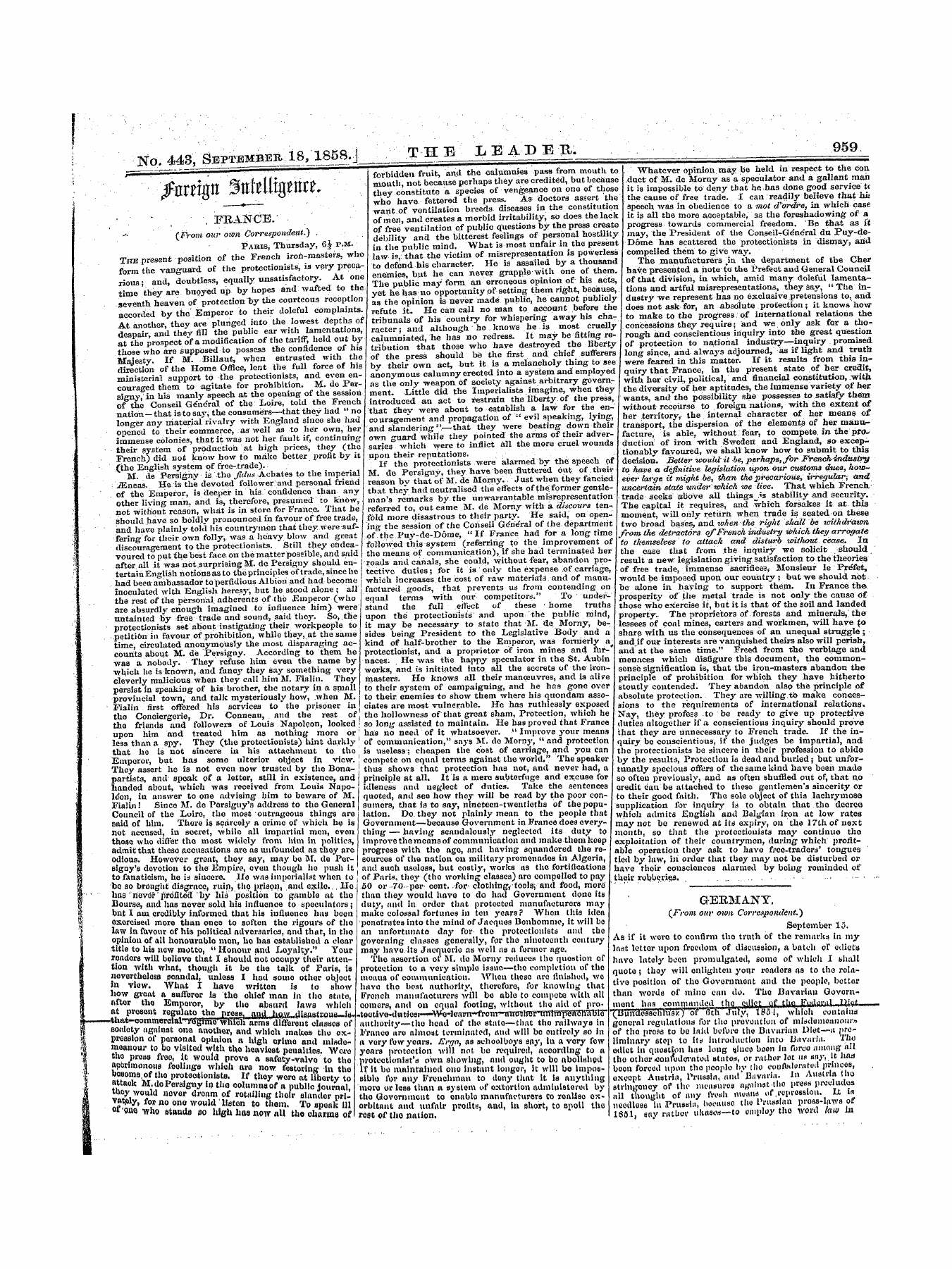
, FRANCE . ( From our own Correspondent . ) . Paris , Thursday , Gj p . m . The present position of the French iron-masters , who form the vanguard of the protectionists , is very precarious ; and , doubtless , equally unsatisfactory . At one time they are buoyed up by hopes and wafted to the seventh heaven of protection by the courteous reception accorded by the Emperor to their doleful complaints . At another , they are plunged into the lowest depths of despair , and they fill the public ear with lamentations , at the prospect of a modification of the tariff , held out by those who are supposed to possess the confidence of his
Whatever opinion may be held in respect to the con duct of M . de Morny as a speculator and a gallant man it is impossible to deny that he has done good service t < the cause of free trade . I can readily believe that bh speech was In obedience to a mot d ' ordre , in which case it is all the more acceptable , as the foreshadowing of a progress towards commercial freedom . "Be that as it may , the President of the Conseil-Ge ' neral du [ Puy-de-Dome has scattered the protectionists in dismay , and . compelled them to give way . The manufacturers in the department of the Cher have presented , a note to the Prefect and General Council of that division , in which , amid many doleful lamentations and artful misrepresentations , they say , " The in-• Tnm . ^ j - z * + ~ *« a . » 1 < n K ^ I / 1 in i « oefiis *¦» # :. 1 ~ . f \ ¦ f . liA f * ntl
dustry tve represent has no exclusive pretensions to , and does not ask for , an absolute protection ; it knows howto make to the progress of international relations the concessions they require ; and we only ask for a thorough and conscientious inquiry into the great question of protection to national industry—inquiry promised long since , and always adjourned , as if light and truth were feared in this matter . If it results from this inquiry that France , in the present state of her credit , with her civil , political , and financial constitution , with the diversity of her aptitudes , the immense variety of her wants , and the possibility she possesses to satisfy them without recourse to foreign nations , with the extent of her territory , the internal character of her means of
transport , the dispersion of the elements of her manufacture , is able , without fear , to compete in the production of iron with Sweden and England , so exceptionably favoured , we shall know how to submit to this decision . Better would it be , perhaps , for French industry to have a definitive legislation upon our customs dues , however large it might be , than the precarious , irregular ^ and uncertain state under which we live . That which French trade seeks above all things _ . ' " s stability and security . The capital it requires , and which forsakes it at this moment , will only return when trade is seated on these two broad bases , and when the right slvall be withdrawn from the detractors of French industry which they arrogate to themselves to attack and disturb witliout cease . la
the case that from the inquiry we solicit should result a new . legislation giving satisfaction to the theories of free trade , immense sacrifieesj Monsieur le Prefet , would be imposed upon our country : but we should nbt be alone in having to support them . In France the prosperity of the metal trade is not only the cause of those who exercise it , but it is that of the soil and landed property . The proprietors of forests and minerals , ' lessees of coal mines , carters and workmen , will have $ o share with us the consequences of an unequal struggle ; and if our interests are vanquished theirs also will perish , and at the same time . " Freed from the verbiage and menaces which disfigure this document , the commonsense signification is , that the iron-masters abandon the
principle of prohibition for which they have hitherto stoutly contended . They abandon also the principle of absolute protection . They are willing to make concessions to the requirements of international relations Nay , they profess to be ready to give up protective duties altogether if a conscientious inquiry should prove that they are unnecessary to French trade . If the inquiry be conscientious , if the judges be impartial , and the protectionists be sincere in their profession to abide by the results , Protection is dead and buried ; but unfortunatly specious offers of the same kind have been made
so often previously , and as often shuffled out of , that no credit can be attached to theso gentlemen ' s sincerity or to their good faith . The sole object of this lachrymose supplication for inquiry is to obtain that the decree which admits English and Belgian iron at low rates may not bo renewed at its expiry , on the 17 th of next month , so that the protectionists may continue the exploitation of their countrymen , during which profitable operation they ask to have free-traders' tongues tied by law , hi order that they may not be disturbed or have their consciences alarmed by being romindeU of thoir robberies . , .
forbidden fruit , and the calumnies pass from mouth to mouth , not because perhaps they are credited , but because they constitute a species of vengeance on one of those who have fettered the press . As doctors assert the want of ventilation breeds diseases in the constitution of men , and creates a morbid irritability , so does the lack of free ventilation of public questions by the press create debility and the bitterest feelings of personal hostility in the public mind . What is most unfair in the present law is , that the victim of misrepresentation is powerless to defend his character . He is assailed by a thousand enemies , but he can never grapple with one of them . The public may form an erroneous opinion of his acts , yet he has no opportunity of setting them right , because , as the opinion is never made public , he cannot publicly to account before the ^— ' ^^^ ' ^^ ' ^^^^^ _ * « , i _ , _
refute it . He can call no man tribunals of his country for whispering away his character ; and although he knows he is most cruelly calumniated , he has no redress . It may be fitting retribution that those who have destroyed the liberty of the press should be the first and chief sufferers by their own act , but it is a melancholy thing to see anonymous calumny erected into a system and employed as the only weapon of society against arbitrary government . Little did the Imperialists imagine , when they introduced an act to restrain the liberty of the press , that they were about to establish a law for the encouragement and propagation of " evil speaking , lying , and slandering "— that they were beating down their own guard while they pointed the arms of their adversaries which were to inflict all the more cruel wounds
upon their reputations . If the protectionists were alarmed by the speech of M . de Persigny , they have been fluttered out of their reason bv that of M . de Morny . Just when they fancied that they had neutralised the effects of the ; former gentleman ' s remarks by the unwarrantable misrepresentation referred to , out came M . de Moray with a discours tenfold more disastrous to their party . He said , on opening the session of the Coriseil GCneral of the department of the Puy-de-D 6 me , "If France had for a long time followed this system ( referring to the improvement of the means of communication ) , if she had terminated her roads and canals , she could , without fear , abandon protective duties ; for it is only the expense of carriage , whieh increases the cost of raw materials and of
manuactured goods , that prevents us from contending on equal terms with pur competitors . " To understand the full effect of these home truths upon the protectionists and upon the public mind , it may be necessary to state that M . de Morny , besides being President to the Legislative Body and a kind of half-brother to the Emperor , was formerly a protectionist , and a proprietor of iron mines and furnaces . He was the happy speculator in the St . Aubin works , and is initiated into all the secrets of the ironmasters . He knows all their manoeuvres , and is alive to their system of campaigning , and he has gone over to their enemies to show them where his quondam associates are most vulnerable . He has ruthlessly exposed
the hollowness of that great sham , Protection , which he so long assisted to maintain- He has proved that France has no need of it whatsoever . " Improve your means of communication , " says M . do Morny , " and protection ia useless ; cheapen the cost of carriage , and you can compete on equal terms against the world , " The speaker thus shows that protection has not , and never had , a principle at all . It is a mere subterfuge and excuse for idleness and neglect of duties . Take the sentences quoted , and see how they will be read by the poor consumers , that is to say , nineteen-twentieths of the population . Do . they not plainly mean to the people that Government—because Government in Frunce does
everything — having scandalously neglected its duty to improve the means of communication and make them keep progress with the ago , and having squandered the resources of the nation on military promenades in Algeria , and such useless , but costly , works as the fortifications of Paris , they ( the working classes ) aro compelled to pay 50 or 70 per cent , for clothing , tools ; and food , more than they would have to do had Government done its duty , ami in order that protected manufacturers may make colossal fortunes in ton years ? Whon this idea ponotnites into the mind of Jacques Bonbomnie , it will bo an unfortunate day for the- protectionists and the governing classes gonerully , for the ninotoonth contury may hove its Jacquerie as well as a former age .
The assertion of M . do Morny reduces tho question of protection to a very simple issuo—tho completion of tho moaua of communication . When thoso are finished , wo have tho best authority , thoroforo , for knowing that French manufacturers will t » o able to compote with all comers , and on equal footing , without tlio aid of pro-« tgqUvo'dut > esr- ^ Wo loarTr ^ Vom' ^^ irotlltft nTn"tfnpon 6 li ' ablo " authority—the hoad of tlio state—tliot tho railways in Franco aro almost terminated , and will bo entirely so in a vory few years . Errjo , as schoolboys say , in a very few years protection will not bo required , according to a protectionist ' s own showing ' , nnd ought to bo abolinhod If it bo maintained ono instant longer , it will bo impossible , for any Frenchman to dony that it ia anything moro or loss than a system of extortion administered by tho Govornmont to enable manufacturers to roaliso osorbitant and unfair prollta , and , Lu short , to spoil tlio rogt of tho nation .
Majesty If M . Billaut , when entrusted with the direction of the Home Office , lent the full force of his ministerial support to the protectionists , and even encouraged them to agitate for prohibition . M . de Persifmy , in bis manly speech at the opening of the session of the Conseil General of the Loire , told the French nation— that is to say , the consumers—that they had " longer any material rivalry with England since she had opened to their commerce , as well as to her own , her immense colonies , that it was not her fault if , continuing their system of production at high prices , they ( the French ) did not know how to make better profit by it fthe English system of free-trade ) .
M . de Persigny is the Jidiis Achates to the imperial . / Eneas . He is the devoted follower and personal friend of the Emperor , is deeper in his confidence than any other living man , and is , therefore , presumed to know , not without reason , what is in store for France . That he should have so boldly pronounced in favour of free trade , and have plainly told his countrymen that they were suffering for their own folly , was a heavy blow and great discouragement to the protectionists . Still they endeavoured to put the best face on the matter possible , and said after all it was not surprising M . de Persigny should entertain English notions as to the principles of trade , since he had been ambassador to perfidious Albion and had become
inoculated with English heresy , but he stood alone ; all the rest of the personal adherents of the Emperor ( who are absurdlv enough imagined to influence him ) were untainted by free trade and sound , said they . So , the protectionists set about instigating their workpeople to petiti 6 n in favour of prohibition , while they , at the same time , circulated anonymously the most disparaging accounts about M . de Persigny . According to them he was a nobody . They refuse him even the name by wh , ich ho Is known , and fancy they say something very cleverly malicious when they call him M . Fialin . They persist in speaking of his brother , the notary in a small provincial town , and talk mysteriously how , when M .
Fialin first offered his services to the prisoner in the Conciergerie , Dr . Conneau , and the rest of the friends and followers of Louis Napoleon , looked upon him and treated him as nothing more or less than a spy . They ( the protectionists ) hint darkly that ho is not sincere in his attachment to tho Emperor , but has some ulterior object in view . They assert he is not even now trusted by the Bonapartists , and speak of a letter , still in existence , and handed about , which was received from Louis Napo-Itfon , in answer to one advising him to beware of M . Fialin ! Since M . de Persigny ' s address to the General Council of the Loire , tho most outragoous things are
said of him . There is scarcely a crime of which ho is not accused , in secret , while all impartial men , even thoso who differ tho most widely from him in politics , admit that theso accusations aro as unfounded as they aro odious . However groat , they say , may bo M . de Porsigay ' a dovotion to tho Empire , oven though ho push it to fanaticism , ho is sincere lie was imperialist when to bo so brought disgrace , ruin , tlio prison , and exile . , Ho has novor' profitod 'by his position to gamble at tho Bourse , and has novor sold his influence to speculators ; but I am credibly informed that his influence has been exorcised more than onco to soften tho rigours of tho law in favour of his political adversaries , and that , in tho opinion of all honourable men , ho baa established a clear title to his now motto , " Honour and Loyalty . " Your
readers will bpliove that I should not occupy their attention with what , though it bo tho talk of Paris , is nevertheless scandal , unless I had somo other objoat in view . What I have written is to uiiow how groat a sufferer is tho ohiof man in tho state , aftor tho Emporor , by tlio absurd laws which at prosont regulate tho prose , and liQw _ dIsaatroua > . ifl that ~ comm 6 r 0 lal ^ e ^ h ^ of society against one , another , and wliioh makes tho expression of personal opinion ft high crime ftnd mitulomeanour to bo visited with the heaviest penalties . Wca-o tho press froo , it would prove a safety -valve to tho acorlmonous feelings which aro now fostering In tho ?? ° t » ° protectionists . If they wore at liberty to attack M . doPorsigny in tho columns of a public journal , they would novor droam of retailing tliolr slandor privacy , fov no ono would liston to thorn . To snoak ill WQue who stands eo high has now all the charms of
Untitled Article
GERMANY , { From our own Correspondent . ) September 15 . As if it wovo to confirm tho truth of tho remarks in my last letter upon freedom of diacussion , a batch of odicts have lately been promulgated , somo of which I shall quoto ; thoy will onlightcn your readers as to the relative position of tho Govornmont and tlio people , bettor than words of mine can do . Tho Bavarian Govornmont has commanded tho o ^ t qf Hm JFuiliiT' ^ l , MW — ( TBuiTHo ' s ' s ' clil ' usz ) " of ~~ G W"July , " 1851 , whioh contains general regulations for tho prevention of misdemeanour * of tho pross to bo laid before the Bavarian Diet—a preliminary step to ltd introduction into Bavaria . T / jo edict lu question has long ijineo boon in force among all tho othor ^ onrodoratod Btatos , or rather lot us say , it has boon foreod upon tlio pooplo by tlio couAidoratod nrincos , except Austria , Prussia , and ' Bavaria . 1 » Austria tlio stringency of tho measures njjnlwt tho pws nrocludus all thought of any IVeah muaua of . repression . I . t la noodloss In Prussia , because tlio Prussian pro 8 s-l , iws of . 1851 , say rutUov ukaaort—to omnloy the word law In
W% ? Cv I It* 4krjt*1≫Tlttt ^Ttll^Lltnbtir^ Fl Uvv*Y** / ^M-4-V4-+*^Y»*Vv* +——
jfnmgtt Stttelltgettre . ' ' ¦ ' _ « r—
Untitled Article
¦ T * n . 443 . S ^ emb eu 18 , 1858 . J __ T H E MME ^ 959 _ 1 ¦ - ——— - ^ - ^——^ ¦ ¦ ¦
-
-
Citation
-
Leader (1850-1860), Sept. 18, 1858, page 959, in the Nineteenth-Century Serials Edition (2008; 2018) ncse.ac.uk/periodicals/l/issues/vm2-ncseproduct2260/page/7/
-