On this page
-
Text (1)
-

Untitled Article
Note: This text has been automatically extracted via Optical Character Recognition (OCR) software. The text has not been manually corrected and should not be relied on to be an accurate representation of the item.
-
-
Transcript
-
Note: This text has been automatically extracted via Optical Character Recognition (OCR) software. The text has not been manually corrected and should not be relied on to be an accurate representation of the item.
Additionally, when viewing full transcripts, extracted text may not be in the same order as the original document.
Untitled Article
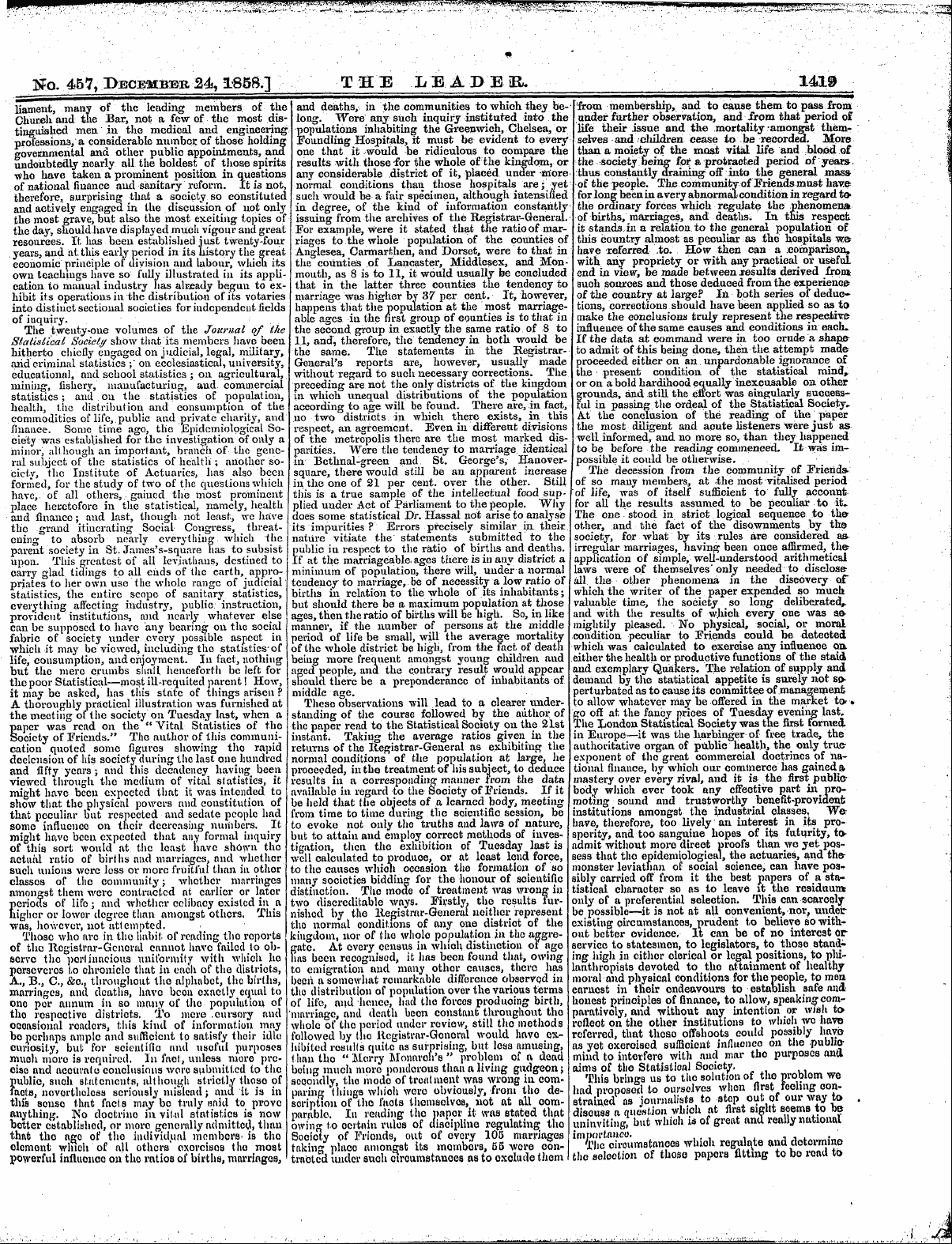
liament , many of the leading members , of the Church and the Bar , not a few of the most distinguished men in the medical and engineering professions , ' a considerable number , of those holding governmental and other public appointments , and . undoubtedly nearly all the boldest of those spirits who have taken a prominent position in questions of national finance and sanitary reform . It is not , therefore , surprising that a societ y so constituted and actively engaged in the discussion of not only the most grave , but also the most exciting topics of
the day , should have displayed much vigour and great resources . It lias been established just twenty-four years , and at this early period in its history the great economic principle of division and labour , which its own teachings have so fully illustrated in its application to manual industry has already begun to exhibit its operations in the distribution of its votaries into distinct sectional societies for independent fields of inquiry .
The twenty-one volumes of the Journal of the Statistical Society show that its members have been hitherto chiefly engaged on judicial , legal , military , and criminal statistics ; ' on ecclesiastical , university , educational , and school statistics ; on agricultural , mining , fishery , manufacturing , and commercial statistics ; and on the statistics of population , health , the . distribution and consumption of the commodities of life , public and private charity , and finance . Some time ago , the Epidemiotogical Society was established for the investigation of only a minor , although an important , branch of the general subject of . the statistics of health ; another society , the Institute of Actuaries , has also been formed , ' for the study of two of the questions which
have , of all others ,.- ' gamed the most prominent place heretofore in the statistical , namely , health and finance ; and last , though not least , \ ye have the grand itinerating Social Congress , threatening to absorb nearly everything which the parent society in St . James ' s-square has to subsist upon . This greatest of all leviathans , destined to carry glad tidings to all ends of the earth , appropriates to her own use the whole range of judicial statistics , the entire scope of sanitary statistics , everything a ffectin g industry , public instruction , provident institutions , and nearly whatever else can be supposed to have any bearing on the social fabric of society under , every possible aspect in which it may be viewed , including the statistics * of life , consumption , and enjoyment . In fact , nothing but the mere crumbs shall henceforth be left for
the poor Statistical- —most ill-requited parent ! How , it may be asked , has this state of tilings arisen ? A thoroughly practical illustration was furnished at the meeting of the society on Tuesday last , when a gaper was read on the " Vital Statistics of the ocicty of Friends . " The author of this communication quoted some figures showing tho rapid declension of his society during the last one hundred and ' fifty'years ' ; and this decadency having been viewed through the medium of vital statistics , it might have been expected that it was intended to show that the physical powers and constitution of that peculiar but respected and sedate people had some influence on their decreasing numbers . It might have been expected that any formal inquiry of this sort would at the least have shown the actual ratio of births and marriages , and whether such unions were less or more fruitful than in other
classos of tho community ; whether marriages amongst them were contracted at earlier or later periods of lifo ; and whether celibacy existed in a higher or lower degree than amongst others . This ¦ was , however , not attempted . Those who nro in tho habit of reading tho reports of tho Kegistrar-Gencnu cannot have failed to observe the pertinacious uniformity with which ho persovcros to chronicle that in each of the districts , A ., B ., C , &c , throughout tho alphabet , tho births , marrioges , and deaths , have boon exactly equal to one per annum in so many of the population of
from membership , and to cause them to pass from under further observation , and Jrom that period of life their issue and the mortality amongst themselves and ' . ' . children cease to be recorded . More than a moiety of the most vital life and blood of the society being fo ? a protracted period of years thus constantly draining off into the general mass of the people . The community of Friends must hav . & for long heeninaveryabnormalcondition in regard tf > the ordinary forces which regulatp the phenomena of births , marriages , and deaths . In this respect it stands , in a relation , to the general population of this country almost as peculiar as the hospitals we ? have referred to . How then can a comparison , with any propriety or with any practical or useful end in view , he made between Jesuits derived front such sources and those deduced from the experience *
of the country at large ? In both series of deductions , corrections should have been applied so as to pake the conclusions truly represent jtne respeeiiv , e influence of the same causes and conditions in each . If the data at command were in too crude a shapeto admit of this being done , then the attempt made proceeded either on an unpardonable ignorance of the present condition of the statistical mind , or on a bold hardihood equally inexcusable on other grounds , and still the effort was singularly successful in passing the ordeal of the Statistical Societ y-At the conclusion of the reading of the paper the most diligent and acute listeners were just as well informed , and no more so , than they happened to be before the reading commenced . It was impossible it could be otherwise .
The decession from the community of Friends , of so many members , at the most vitalised period of life , was of itself sufficient to fully acconnt for all the results assumed to be peculiar to it-The one stood in strict logical sequence to the other , and the fact of the disownments by the society , for what b y its rules are considered as irregular marriages , having been once affirmed , the application of simple , well-understood arithmetical laws were of themselves' only needed to discloseall the other phenomena in the discovery of which the writer of the paper expended so much valuable time , the society so long deliberated ^ and with the results of which every one was aa
and deaths , in the communities to which they belong . Were any such inquiry instituted into the populations inhabiting the Greenwich , Chelsea , or Foundling Hospitals , it must be evident to every one that it would be ridiculous to compare the results with those for the whole ofthe kingdom , or any considerable district of it , placed under more normal conditions thail those hospitals are ; yet such would be a fair spe ' eitnen , although intensified in degree , of the kind of information constantly issuing from the archives of the Registrar-General . For ( example , were it stated that the ratio of ^ marriages to the whole population of the counties of Anglesea , Carmarthen , and Dorset , were to that in the counties of Lancaster , Middlesex , and
Monmouth , as 8 is to 11 , it would usually be concluded that in the latter three counties the tendency to marriage was higher by 37 per cent . It , however , happens that the population at the most marriageable ages in the first group of counties is to that in the second group in exactly the same ratio of 8 to 1 . 1 , and , therefore , the tendency in both would be the same . The statements in the Registrar-General's reports are , however , usually made without regard to such necessary corrections . The preceding are not the only districts of the kingdom
in which unequal distributions of the population according to age will be found . There are , in fact , no two districts in which there exists , in this respect , an agreement . Even in different divisions of the metropolis there are the most marked disparities . Were the tendency to marriage identical in Bcthnal-green and St . George ' s , Hanoversquare , there would still be an apparent increase in the one of 21 per cent , over the other . Still this is a true sample of the intellectual food supplied under Act of Parliament to the people . Why
does some statistical Dr . Hassal not arise to analyse its impurities ? Errors precisely similar in their nature vitiate the statements submitted to the public in respect to the ratio of births and deaths . If at the marriageable , ages there is in any district a minimum of population , there will , _ under a normal tendency to marriage , be of necessity a low ratio of births in relation to the whole of its inhabitants ; but should there be a maximum population at those ages , then the ratio of births will be nigh . So , in like manner , if the number of persons at the middle
period of life be small , will the average mortality of the whole district be high , from the fact of death being more frequent amongst young children and aged people , and the contrary result would appear should there be a preponderance of inhabitants of middle age . These observations will lead to a clearer understanding of the course followed by the author of the paper read to the Statistical Society on the 21 st instant . Talcing the average ratios given in the returns of the Registrar-General as exhibiting the normal conditions of the population at large , he proceeded , in the treatment of his subject , to deduce results in a corresponding manner from the data available in regard to the Society of Friends . If it
mightily pleased . No physical , social , or moral condition peculiar to Friends could be detected which was calculated to exercise any influence ou either the health or productive functions of the staid and exemplary Quakers . The relation of supply and demand by the statistical appetite is surely not sopert urbated as to cause its committee of management to allow whatever may be offered in the market to * go off at the fancy prices of Tuesday evening last . The London Statistical Society was the first formed , in Europe—it was the harbinger of free trade , the authoritative organ of public health , the only
trueexponent of the great commercial doctrines of national finance , by which our commerce has gained a , mastery over every rival , and it is the first publicbody which ever took any effective part in promoting sound and trustworthy benefit-provident institutions amongst the industrial classes . We ? have , therefore , too lively an interest in i £ s prosperity , and too sanguine hopes of its futurity , toadmit without more direct proofs than we yet possess that tho epidemiological , the actuaries , and themonster leviathan of social soience , can have poasibly carried off from it the best papers of a
starbe held that the objects of a learned body , meeting from time to time during the scientific session , be to evoke not only the truths and laws of nature , but to attain and employ correct methods of investigation , then the exhibition of Tuesday last is well calculated to produce , or at least lend force , to the causes which occasion the formation of so many societies bidding for the honour of scientific distinction . The mode of treatment was wrong in two discreditable ways . Firstly , the results iurnished by the Registrar-General neither represent
tistical character so as to leave it the residuum only of a preferential selection . This can scarcely be possible—it is not at all convenient , nor , undeir existing oircumstanoes , prudent to believe so -without better evidence . It can be of no interest or service to statesmen , to legislators , to those standing high in cither olerical or legal positions , to philanthropists devoted to tho attainment of healthy moral and physical conditions for the people , to men earnest in their endeavours to establish safe and honest principles of Bnance , to allow ,
speaking-comtho normal conditions of any one district ot the ciugdom , nor of tho whole population . in the aggregate . At overy census in which distinction oi ago has been recognised , it lias been found that , owing to emigration and many other causes , therq has been a somewhat remarkable difference observed in the distribution of population over the various terms of lifo , and hence , had the forces producing birth , mnrriftgc , and death been constant throughout tho still the methods
paratively , and without any intention or wish to rofleot on the other institutions to wliioh \ vo have referred , that theso offshoots could possibly hay © as yet exercised sufBoient influence on the publicmind to interfere with and mar tho purposes and aims of the Statistical Society . This brings us to tho solution of the problom we had proposed to ourselves when first feeling constrained as journalists to * top out of our way to discuss a question which at first sight seems to bp uninviting , but which is of great and really national importance . . The ciroumatances which regul a te and cietormino the selection of those papers fitting to bo road to
whole of tho period under review , followed by the Registrar-General would have exhibited rosulls quite us surprising , but less amusing , than tho " Merry Monarch ' s " problem of a dead being much more ponderous than a living gudgeon ; soQondly , tho mode of treatment was wrong in comparing things wliioh were obviously , from tho desoription of tho laots themselvos , not at all comparable In reading tho paper it svas stated that owing to ocrtnin rules of discipline regulating tho Society of Frionds , out of every 105 marriages taking plaoo amongst its members , 55 were contracted under such ciroumstances as to exclude them
tho respective districts . To mere cursory and occasional readers , this kind of information may bo perhaps ample and sufficient to satisfy thoir idle curiosity , but for scientific and useful purposes nuioh more is required . In fact , unless more precise and acoumto conclusions were submitted to the public , such statements , although strictly those of facts , novortlioloss seriously mislead ; ana it is in this souse that facts may bo truly said to provo anything . ] S o dootrino in vital statistics is now better established , or more generally admitted , than that tho ago of tho individual members' ia tho element wluoh of all others oxovcisos tho most powerful influence on tho rntios of births , marringes ,
Untitled Article
Ko . 457 v 3 > ECEMBErR 24 , 1 S 58 . ] THE L E A D EIEL 14 jJL .
-
-
Citation
-
Leader (1850-1860), Dec. 24, 1858, page 1419, in the Nineteenth-Century Serials Edition (2008; 2018) ncse.ac.uk/periodicals/l/issues/vm2-ncseproduct2274/page/19/
-