
On this page
-
Departments (1)
-
Text (3)
-
Untitled Article
-

tt+riTTt rt rtiY*rt lU^UJlJ Cnrr. ~ __^__ ' ¦ "?'
-

Untitled Article
Note: This text has been automatically extracted via Optical Character Recognition (OCR) software. The text has not been manually corrected and should not be relied on to be an accurate representation of the item.
-
-
Transcript
-
Note: This text has been automatically extracted via Optical Character Recognition (OCR) software. The text has not been manually corrected and should not be relied on to be an accurate representation of the item.
Additionally, when viewing full transcripts, extracted text may not be in the same order as the original document.
Untitled Article
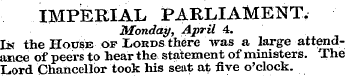
IMPERIAL PARLIAMENT . Monday , April 4 . Is the House of Lords there was a large attendance of peers to hear the statement of ministers . The Lord Chancellor took his seat at five o ' clock .
JIJ . XISTEBIAL EXPLANATIONS . The Earl of Derby recalled to the memory of tlieir lordships that on the preceding Thursday night the House of Commons had , after a debate of seven nights , characterised by the greatest ability and courtesy on both sides , adopted the Resolution of Lord John Russell , and pronounced a decision adverse to the bill introduced by the Government for amending the representation of the people . There were , in consequence of this decision , but two alternatives left for himself and colleagues , —either to resign office , or to dissolve the present P arliament and appeal to the country . It had been suggested , both bv their friends and by their enemies , that
another course was open to the Government , but § Ti " ch a course would riot have been respectful to the House of Commons , nor in unison with constitutional practice . Besides , it was impossible for her Majesty ' s Government to conceal from themselves that the vote of the House of Commons was equivalent to a vote of want , of confidence , and he thought . the Government would have laid themselves . open ¦ to a charge of indifference , if they took no notice of such a decision . Before stating the course which- the Government intended to pursue , he begged their lordships to remember the circumstances under which he lmd accepted office , and the difficulties with which he had had to
contend . The present distracted state of parties in the House of Commons rendered it . almost impossible to administer the affairs of the nation . He excepted , indeed , the Conservative party from this censure , whose unwavering , cordial , and generous support he had received for so many years , and then proceeded to enumerate the various political achievements of Lord John Russell . "I desire" said Lord Derby , "to speak of the noble lord with all that respect and esteem which I unfeignedly feel for his many valuable and statesmanlike qualities . I am not slow to recognise the advantages which he has conferred on the country , or the service Arliich in his time he hasrendered in Parliament . To the question of
parliamentary reform he has been constantly attached , but attached , I think . I may say less with the affection of a parent anxious for the advantages and prosperity of his offspring , than with the somewhat jealous and exacting affection of a lover . I have spoken of his high and distinguished qualities ; but there is in that noble lord a restless energy and in insatiable craving for being always doing something—a determination that every tiling shall be lone by himself , or not done at all—an indomitable perseyerauce iu business , which can hardly find sufficient scope for its energies and activity in the discharge of official duties , but which , when out of office , renders him to such a degree restless , that he
cannot be for a moment satisfied unless lie is seeking to do some injury to the cause of those who are opposed to him . The noble lord has had the sing-alar fortune— 'I do not know whether I may call it the good fortune—of overthrowing more successive Governments than any other man ( laughter ) , and he has had the still more singular fortune of once overthrowing the Government of which he himself was a member . " ( Hear , hear , ) The consequence of such conduct ( tho Premier continued ) was , that hardly a year now passed without a Ministerial crisis , and if tho system wore persevered in it would put an end to all Government , for it inflicted injury at homo nnd damaged tho influence of the
country abroad . In accepting offl . ee , ho had endeavoured to carry on tho Government , not by embittering , but by conciliating all parties , until a party should bo formed capable of carrying out a fixed and definite policy . One of the questions bequeathed to him by tho late Government was the dumnosa hareditas of Parliamentary Reform . Ho lmd in consequence introduced a bill to meet that question . Tho way that bill had been received was well known to their lordships . It had not been suffered to bo road a second timo , and to \> q amended
in comniittoe , but had boon mot by a Resolution , which , according to some authorities , was contrary to parliamentary practice , and had boon swamped without discussion , Hod tho bill been proceeded ¦ w jUh in committee , ho and his colleagues wove prepared to vindicate its principles , as well as to consider proposed alterations , which , if admissible , no iUlso prido' > ypuld have prevented them fvom accepting . An opportunity had thus been given to the House of Commons to settle this quostlon , but thoy had proforrod tho interests of party to the Interests of tho country . " Amongst those who proteased that thoy had no intontlon
to destroy the bill ( said Lord Derby ) stood preeminent the noble lord , Viscount Palmerston , now , 1 believe by courtesy , the leader of the opposition . 1 must refer to that advice which the noble lord considered it consistent with his position to offer , and consistent with our honour to listen to—namely , that we should be permitted neither to retire nor to dissolve , nor yet to withdraw the bill ; but that we should be condemned to keep our places , and to do his bidding . My lords ; I believe he said , to do our bidding . ' " I should be glad to know whose bidding he referred to ? ( Cheers . ) Was it the bidding of the noble viscount , who preferred a 20 / . county franchise to a 101 . one , and who was a very late , and not below 10
an enthusiastic , convert to any reduction * . in the boroughs ? Was it the bidding of thejiODle lord , the member for the City of London ? Was it the bidding of the right hon . baronet ( Sir J . Graham ) , who admitted that he had assisted the noble lord m the concoction of this precious amendment ? ( Laughter and cheers . ) But , my lords , whose bidding was it ? Whose slaves were we to be ? Were we to be servants of the noble viscount , of the noble lord , of the right hori . baronet , or of the member for Birmingham ? ( Cheers . ) ' Our bidding ! ' Why if the motley and heterogeneous assembly winch , calls itself the opposition in the House of Commous liad been asked to tell us what they meant by " our
bidding , " ' . there would probably not be five and twenty members who would agree as to what injunction should be laid upon tlieir submissive , humble slaves , her Majesty ' s Government . ( Loud cheers . ) It is hardly necessary for me to say that so long as we have the honour to serve her Majesty as the responsible and constitutional ministers of the Crown , and so long as we are honoured with her confidence , we do no one ' s bidding but the bidding of our Sovereign , the bidding of our own conscience , and of our own honour , ( Loud cheers . ) ' You shall not retire from office ! ' Why , my lords , how does the noble viscount intend to prevent us from retiring , if we think fit ? I graniyou that the noble viscount ' words have
perhaps another meaning . He may have intended to say , " You cannot resign your office , because if you do , it is impossible to find a minister to succeed you . " I may perhaps , therefore , have put a wrong ^ meaning upon the noble viscount ' s -words and , if so , I humbly apologise to him . But the noble viscount went a-little further , and said that Parliament would not permit us to resign , and . would not allow Parliament to be dissolved . I should like to know -where the noble viscount found that doctrine . I liad always thought that it was the prerogative of the Crown to say whether and when Parliament should be dissolved . " ( Hear , hear . ) He would not disguise from the House the difficulty in which -the Cabinet
was placed by the refusal of the second reading of the bill . There were but two courses open to them , —the first was to dissolve Parliament , and the second to tender thoir resignation to her Majesty . Considering , however , the present grave condition of European affairs , and the domestic interests of the country , he had deemed it his duty to recommend to her Majesty as early a dissolution of Parliament- as was consistent with the public service . Her Majesty had consented to this proposal , and ho looked with confidence to the appeal about to be made to t ; he country . The Ministers , he considered , had redeemed their promise by the introduction of the bill , and held themselves free on that ground .
He was not afraid to go to the hustings on this question , for the measure , which had been by the decision of tho other House deferred to another session ,, was a largo and liberal measure ; much mischief had been done by that decision , and no principle produced on which a future Reform J 5 ill could be based . Lord Derby concluded in those words : — "My Lords , I say that we do not appeal to the country on the subject of parliamentary reform—still less upon tho quostlon of the particular provisions of tho Government bill ; ¦ w o appeal to them on a much larger and broader basis . We appeal to them to know whether tho present State of the- House of Commons , split up as it is into hundreds almost of petty parties , neither of them strong enotigh to condupt the business of tho country , but each of thorn capable of obstructing that business—whether such a stato of things will continue to receive tho support and countenance of the people ? ¦ ( Cheers , ) Wo appeal to thorn as mon who are conscious of having faithfully and honestly endeavoured to discharge tho important duties which have been entrusted to us by our Sovoroign—wel appeal to them to know whether they wifl withhold that confidence which tho Sovereign has been pleased to ronow , and whothor thoy will entrust tho preparation of measures of parliamentary reform , if such monsuros are to bo introduced , to those who have approached the subjocti in a calm n , nd deliberate spirit , and in a moderate and temperate tono , or whothor thoy will entrust tho preparation of such measures , nn < l tho carrying of them through l ' orliainont , to mon who ontortain tho wild and visionary sohoino prcparod by tho hon , monitor for
sibly the anticipated success—of what I will venture to call an ingenious manoeuvre . " ( Hear . )—Earl Granviixe confessed that the days of party government , in the old acceptation of the term , were pass ed away . He nevertheless contended ' that no administration could properly fulfil their duties if they did not possess a policy , and enjoy the confidence of a majority iu the House of Commons . There was , he maintained , nothing in the information before the House Avhich j ustified the assertion that peace would be endangered if the present administration were
Birmingham , or the hardly less dangerous or less democratic scheme shadowed forth by the ri ght hon . baronet the member for Carlisle , who assisted in concocting the resolution of the noble lord the member for London . ( Hear . ) We appeal to them further to know Avhether as lovers—as all Englishmen are lovers—of fair-play and plain straightforward conduct , they will sanction the overthrow of a ministry who were honestly and faithfully endeavouring to discharge their duty , not in pursuance of any expressed difference of opinion on the part of a majority of the House of Commons—not as the result of a fair parliamentary opposition , but in consequence of the success ^—the undeserved though
posforccd to resign . ' Respecting- the Reform Bill , he observed that its principles had been objected to by two former colleagues of the Government , condemned by a majority of the Commons , and now , it appeared , abandoned by its own authors . ' . The course adopted by the ministry ,-though involving a serious responsibility , was , lie admitted , perfectly legitimate and constitutional . He wished at the same time to know on what precise issues the appeal to the country was to be rested . —The subject then dropped . Some fitrther business was disposed of . and their lordships adjourned .
In the House op Commons , the Speaker took . ' . tlie chair at -four o ' clock , and several questions on public business were asked and replied to by ministers .
THE MINISTERIAL ' -STATEMENT . The CiiAXCEi .. r , O : R of the ExChki'ikkk , moving , as a matter of form , that the House do adjourn , announced that , after the vote of tire House . on Thursday evening , it was not the inte ? ition of the Government to proceed with their bill to amend the representation of the people , or to propose any other measure with the same object . IJc protested against the doctrine that the question of parliamentary reform was the appanage of any individual , or the privilege of any particular party . It was in the power of the Government to deal with this or any other public question in the manner which they deemed most expedient for the public welfare , or most
conducive to the public interests . The question of parliamentary reform , he observed , might be viewed in two lights—conservative and revolutionary . Those who regarded it , like the Government , in the first point of view , would wish , in i \ ny change , to preserve the present character of the House of Commons , as representing various intercuts ; those who looked at it in the other light would attempt to change its character , and make it the representative of the voice of the' ' numerical majority . After adverting to the motives which had on themtrom
former occasions of the sort prevented , taking any positive ' step , and which , he observed , arose from three sources—first , tho nmiutcst disunion among tho Liberal party ; secondly , the critical state of aftairs in Europe ; and , thinly , the wish to fulfil their promise to introduce a Hdpnn Hill—mi . LMsraeli remarked , that the vote of lhursdny , being proposed and accepted as a vote ot censure , admitted of no compromise or delay . He ^' lcno y lodged tho forbearance which the House , ana especially the opposition , had exorcised towirus uio Government , and himself personally , wlwm attemptilisam
ing to conduct public affairs under tho mtagcous circumstances of thoir position . liecuiniu , to tho vote , ho contended that it had boon brought forward by loaders who advocated a contrary l > o » "V { and supported by a majority whoso union oaa * w from the moment that tho ' result wus proc JaimeO . That vote was , he believed , prejudlqlnlto tho wmw of Parliament and injurious to tho interests of JJ country . Finally , ho statod that , as tho nniusny did not believe that thoy had forfeited tlio confldunco of the countrv . thov had advised hor Miviosty w wiiioii
dissolve I ' wliamont at tho earliest period « ' « timo required for tho completion of boiuo in ( t | fl P" J " sable business , such as the passing of cuntmunnwj bills and votes of money on account , woxiIiipomiH . Lord PAMttiansxow said ho was sure liocxpvow " gonorul foolinfr of tho IIouso in ( ioknowlu | lK '" tf J , '' courtesy and fairness of the Chancellor ot tno j < a chequer , Ho did not consider tho last vote as onei ox consuro ; as such" ho would not have suijiiprtoa »¦ L * it was only an expression of tho fooling ot thu \ HOiuwupon a luoasuro-, or parts of a measure . » ° » ° ' r Ills opinion was , that If tho Govornmont tolt It «" duty to rqtain their ofllco , they should either hoc withdrawn tho bill or altorod ft in committee , so as to adapt it to tho opinion of tho llouso , mui no «» " .
Tt+Rittt Rt Rtiy*Rt Lu^Ujlj Cnrr. ~ __^__ ' ¦ "?'
game Ji ^ lHjgqnr ^ ' : ? -
Untitled Article
452 THE LEADER , [ No . 472 , April 9 , 185 9 ^
-
-
Citation
-
Leader (1850-1860), April 9, 1859, page 452, in the Nineteenth-Century Serials Edition (2008; 2018) ncse.ac.uk/periodicals/l/issues/vm2-ncseproduct2289/page/4/
-