
On this page
-
Text (3)
-
Untitled Article
-

Untitled Article
-

Untitled Article
Note: This text has been automatically extracted via Optical Character Recognition (OCR) software. The text has not been manually corrected and should not be relied on to be an accurate representation of the item.
-
-
Transcript
-
Note: This text has been automatically extracted via Optical Character Recognition (OCR) software. The text has not been manually corrected and should not be relied on to be an accurate representation of the item.
Additionally, when viewing full transcripts, extracted text may not be in the same order as the original document.
Untitled Article
deprived of resort to their fin 3 climate and magnifi-Ce Gonffe ? Ss still continue between the Kashmeer authorities and the English authorities m the Puniaub . The sooner Kashmeer is annexed the better it will be for nati * e _ andJBaperial interests . ^ f \ nieer deservesjtSe strictest attention . Maha iiajah EiuJgBfeer-SiSg should be remHft 3 /__ . , ^ nirt ( id Ancff newspaper , twice weeElyTfeHcJ ^ started ai&ucknow , in Oude , under the title of tifo Lucknor * Herald . At Delhi a new paper is talked of . W e have already reported other newspapers , . and we need scarcelf P that the extension of the Enghsh
say press is of the greatest moment for the extension of English civilisation , and for the advancement of the native population . , . . It is deeply to he regretted that hostility is still shown to the reinforcement of the Royal Artillery in India , and seventy-two guns are spoken of , as if they constituted some enormous artillery corps ; whereas there are not field artillery enough in , India to cope with a Russian army of 100 , 000 men , or aFrench army from Cochin-Chica—contingencies which have to be ¦ provided for . We are soTry to see a fight has been got up about patronage between the old claimants on Indian patronage and the hangers-on in
Parliament . • , The Munnefepore rajahs , who have been removed from their territory and sent to Kishnagur , and received an equivalent allowance , having petitioned for an increase on account of the rise of prices , the Governor-General has graciously cbnceded to them an additional sjrant during their stay in Kishriagur . There is some talk of the old palace and fortifications of Delhi being pulled down—a most desirable measure , for no stronghold is wanted there . Barracks Avill be biiilt on the sitebf the palace or citadel . We regret that a strong desire was expressed to maintain such a source of danger . In the last revolt the fortifications of Delhi were a help to the revolters and a danger to ourselves .
The Martiniere College at Lucknovr is about to be restored— -a most desirable measure , for the great number of English residents much vrant education for their children . Public works in Seinde are going on actively . The canals are being cleaned Out . The Sukkurund Talooka , bordering on the Narra , has been visited by the collector , who was much struck by the large amount of . rich land lying waste purely from want of water , a sight common enough in India , and
likely to continue , so long as the population are dependent on the casual exertions of the Government , instead ofhaving the active operation of private enterprise . The Sukkurund district is a dead level , with hardly any jungle requiring clearing , presenting facilities for clearing , and being able to repay any outlay . It is a worthy comment on this that ¦ water is now running to waste in the Narra Dunds . A plan for irrigation is to be drawn up ,. and to travel its slow journey to and from India .
The Munchur Lake district in Scinde is attracting attention . On its borders are grown thefinest wheat , barley , jumba , sursee , and other crops , but the rivers connected with it act imperfectly , ' and large districts , as those of the Narrn , are left in astate of desolation . A canal is in progress from the deep part of the Munehur Lake , near Boobuk , to the Arul river , nearSehwan—a distance of about fourteen miles . In the Sliikarpore districts canals are likewise much wanted . Where they are in progress a great extent of now land is brought under cultivation .
As a seasonable and fitting accompaniment to this narrative , which expresses tho condition of countries larger than Franco , Spain , and Italy put together , the Government Gazette contains what some consider " a sensible hint , " in the shape of a warning to officers in the Public Works Depot , against indiscriminate correspondence with projectors of railway and public improvements , who , it seems , according to tho Gazette , sometimes make capital out of tho opinions of public officers . The Gazette goes on to libel Lord Stanley , by affirming that ho disapproves the practice , and desires that all officers may conform to this advice . The concootors of this remarkable document dtvre not , of course , forbid public oiflcors from giving advice and assistance for
the improvement of the country , but they know very well what tho effect of this order will bo ; for to escape tho disploasure of tho authorities for holding ' indiscriminate correspondence , " the officers will , as is wishod , abstain from correspondence altogether . To tho public officers of India we aro indebted for the promotion of many Improvements $ for , being acquainted with the wants of particular districts , they have considered it a noble duty to obtain a remedy for tho sufferings of the population , and when they have beon unable to obtain assistance from the Government , thoy have sought for tho aid of private enterprise , and stimulated oxortion . It is by the information communicated by Indian officers and their noble and disinterested labours , thut so many public undertakings have boon ablo to bo
successfully formed and to prosecute their labours ; and many names will occur to our readers to keep company with those of Sir Proby Cautley , Col . Everist , Gen . Trenienheere , Col . Frith , Col . Cotton * and Col . French . Such , men likewise render invaluable aid when they become directors and managers of companies . India is by no means in a situation to have the zeal and sympathies of its officers damped by ill-advised restrictions ; and it is a melancholy commentary on the present system of in India that it is for such
administration possible an order to be published . If we conceive Lord Stanley to be Secretary of State for the Colonies , and issuing such an order in Canada , Australia , or the Cape colonies , we should be prepared for the expression of just indignation by the individuals assailed , and the communities with which they were connected . Unhappily , in India such insolence is possible , although it is to be hoped Lord Stanley has nothing tp do with this act , in which his name lias been so freely handled .
Lord Stanley ' s name is connected with another act much more in keep ing with his character , and that is , that he has undertaken to forward , free of charge , all cases of books and tracts which may be sent for the use of our soldiers by the Soldiers ' Friend and Army Scripture Readers' Society .
Untitled Article
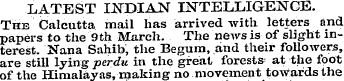
LATEST INDIAN INTELLIGENCE . The Calcutta mail has arrived with letters and papers to the 9 th March . The news is of slight interest . Nana Sahib , the Begum , and their followers , are still lying perdu in the great forests ^ at the foot of the Himalayas , making no movement towards the South . It is said that the Begum is trying to negociate for an asylum with Jung Bahadoor , or through him to obtain some merciful consideration from the Governor-General of India . The Nana can expect nothing , and is no doubt seeking for some place where he can escape to , with life and means , to give trouble in the future if he can . He will find this difficult . The Hurkaru thinks that the prestige of the British army suffers from the failure to obtain pos ^ session of the Nana , the Begum , and Iheir
followers . Tantia Topee and Feroze Shah continue to elude their pursuers ; there are now eight columns in full cry hunting him , yet the light condition and speed of the fugitives enable them to get well away . Tantia Topee and his followers have either quarrelled , as the official reporters believe , or he is trying a most subtle scheme . According to the received statement , the rebels headed by Feroze Shah and the Rao Sahib , weary with marching , resolved to yield . They made their way , with their usual promptitude , west of Ajmeer tp Jeerun , where they entered into negotiations with Colonel Somerset , the result of which is not yet known . Tantia , either more resolute or despairing of pardon , left the main body , with 300 followers , and marched for Bundelcund , where he hopes to be joined by the remaining bands of rebels scattered over that province .
The trial of the Nawab of F- urruokabad proceeds . He is defended by an attorney of the Supreme Court of Calcutta , Mr . Carruthers , assisted by two natives and an interpreter . The Calcutta Englishman says : — "The disclosures on this trial may help to enlighten people in England on the subject ef tho cruelties practised by the rebels and mutineers on the unhappy English , men , women , and children , who foil into their hands . The philanthropise in England have shamed all of the
Anglo-Indians into silence . on the subject usage poor Englishmen have suffered , and have completely put down the vpicq of complaint becauso a great many exaggerations found their way into the papers in England . " The finance question continued to be much discussed . The Hurharu thinks it likely that when tho loan is open the five crores of rupees will be forthcoming—especially if Government will take the 4 percent , paper as well as tho 5 per cent .
WHAT HAS UEEN liONE JFOJt INDIA ? The following remarks of an eye-witness are not without valuo . —The first thing which struck mo after leaving Calcutta on my first arrival in India was the general iloeay . At first I attributed it to the ravages of war , —for it was at Allahabad , at Cawriporo , at Delhi , at Futtehghur , at Lueknow , at Baroluy I observed it ; but closer observation and more extended researches lead mo to tho conclusion
that it is a condition of India independent of tho mutiny and its rosults . Our orderly cantonments , our splendid stations , our rising cities aro not for the people , and servo but to mock the fading splendour of tho best portions of the , neighbouring native towns , from which wo are apart in our residences as in our lives . It is scarcely possible that tltoso cities were In ruins when thoy wero built . Certainly , with the exception of tho Grand Trunk load , that oheval do butuillo on which every Bust
Untitled Article
India director rode triumpliantly through every Indian debate ^ th ere has been nothing done to develope their resources or to arrest their ruin , ta promote or revive trade , by opening good thoroughfares . Shall I tell you a truth ? Well , then , it is a fact , so far as m ' i /\ observation goes , that in no part of the late Company ' s dominions in Which I have been are the roads and small bridges nearly so good or so numerous as in the ill-governed , mismanaged , miserable kingdom of Oude . The road from Cawnpore to Lucknpw rivals the Grand Trunk Road . The road from Lucknow to Fyzabad is better than the road from Kurnaul to Umballah , or from Futtehghur to the main Trunk Road . Mr . Woodrow , inspector of schools , remarks : — " During the course of 100 miles I did not see a single bridge , even of bamboo ( on the decayed towing-path from
Calcutta to Cobbabuck River ) . " "No one would dream of taking a wheeled conveyance 16 miles from Calcutta ( in East Bengal ) , as metalled roads fade into mud at that distance . " This , is in his last report . All our talk about the mischief of caste and the blessings of civilisation—nay , all our efforts to remove the one and introduce the other , will have little effect till the material condition of the people is improved , and trade and commerce and agriculture are devolped . Any successful attempt to do these things will earn the gratitude , secure the attachment , and fix the sympathies of the people ; but they do not understand the nature oi the benefits which accrue to . them by working for a mau who has come to India to make a fortune out of the soil , and who goes out of India with the money drawn from the soil to spend it in his native land "
ELEPHANTS AT THE BATH . Mr . Russell writes : —Beyond the dhoby , in cleaner water by comparison , a bevy of elephants are enjoying their morning bath . And they do enjoy it indeed ! See how they roll aw ; ay like so many porpoises , right under the flood , and leave the mahouts shouting and groping with their feet , for the unstable black islands which after a time rise up above the surface . Look at the great jets they blow up over their backs ; and listen to the deep breath of pleasure or the shrill flourish of deiight with which they lie down on the sand , while their attendants knead them all over . These great creatures are so sagacious , so sensitive to kindness , that even in their wild state I cannot
feel any sympathy for those who delight in killing them and call it " sport . " But these elephants , fond as I am of them , are , it must be admitted , dangerous ^ p laymates . In our camp there were no less than nine " ltoonies , " " murderers , " —beasts which have killed their mahouts , or other attendants . One huge criminal , with a speckled forehead and proboscis , is guilty of the murder of no less than three unfortunate natives . The magnificent mild monster , which belonged to Sir Hugh Wheeler , was carried off by the Nana , and was delivered up to us by the Rajah of Furruckabad , died a few days ago , immediately after carrying some officers to church . He was a fine courageous creature , and his trunk and forehead
bore marks of the claws of more than one tiger which had charged him and then been trampled to pulp by his ponderous feet . His " weakness" was fine-French rolls , which he swallowed as an alderman would take Cockle ' s pills ; and the twinkle of his eye , as he gulped the loaf down , and gave a gentle sigh out ; of his proboscis , proclaimed tho Sybarite . I used to take great delectation in obsorving the creatures at the bath in tho river which flows by pur camp . They came down in flies , trumpetting gaily in anticipation of the treat , nnd floundered into the waters oft lie Goomtee , like so many portly Bruxellers enjoying the pea-soup sea of Ostend . Each takes a his into thwater
long deep drink , putting proboscis e , and then discharging the contents of it , when filled by suction , into his cavernous maw . Having thus flllod up a , wrinkle or two in his side , he deposits himself bodily in , tho stream , so that one side lies out of wator and the tip of his proboscis is kept above tho surface for tho . air . On this exposed islund , the mahouts labour diligently , washing tho b
Untitled Article
i ^^ Apmt 16 . 1859 . 1 ™ LEADER 503
Untitled Article
Rbsxokation of Peach in Innia . — At a Court holden at Buckingham Puluco on tho 13 th inst ., ' tho Queen in Council fixed Sunday , tho 1 st of May , as the day of . public thanksgiving . Dri'LOMATio . —Wo have reason to boliove that Sir Henry Kawllnson , ifcCH ., will succeed the Hon . Charles Murray as Minister , at tho Court of Teheran No bbttor flold could be oliason on which tho deep knowlodgo of Oriental oharaotor and customs possessed by tho now Minister may bo usefully employed for the advantage of tho country . — \ mes >
-
-
Citation
-
Leader (1850-1860), April 16, 1859, page 503, in the Nineteenth-Century Serials Edition (2008; 2018) ncse.ac.uk/periodicals/l/issues/vm2-ncseproduct2290/page/23/
-