
On this page
-
Departments (1)
-
Text (3)
-

COM MERCIA I
-
Untitled Article
-

Untitled Article
Note: This text has been automatically extracted via Optical Character Recognition (OCR) software. The text has not been manually corrected and should not be relied on to be an accurate representation of the item.
-
-
Transcript
-
Note: This text has been automatically extracted via Optical Character Recognition (OCR) software. The text has not been manually corrected and should not be relied on to be an accurate representation of the item.
Additionally, when viewing full transcripts, extracted text may not be in the same order as the original document.
Com Mercia I
C O M M E R C iA . L
Untitled Article
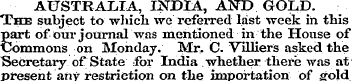
AUSTRALIA , INDIA , AKD GOLD . The subject to which we referred last -week in this part of our journal was mentioned in the House of Commons on Monday . Mr , C . Vllliers asked the Secretary of State ibr India whether there was at present any restriction on the importation of gold into British India ; and whether the tender of gold was lawful in payment of debt in that country ; and further , if these restrictions existed , -whether It was the intention of the Indian Government that they should continue ? Lord Stanley said that no restriction at present existed upon the importation of gold into British India ; but gold was not a legal tender there . The House would be aware that the
question whether gold should be made a legal tender or not . in India was one of very great difficulty and complication , which had again and again been considered by those . versed in finance .. He could not say that at present it was the intention of the Indian Government to make any change in the present system . The regulations on this point , then , are , as we stated last week ; and the evil consequences of those regulations nobody will deny . Thatj as Lord Stanley says , the question , " whether gold should be made a legal tender or not in India , " is one of very great difficulty , we readily admit , as long as it is encumbered by all the false
and universal currency . They are as much the ordained measure of value , by which commodities , including all subsistences , can be conveniently divided into very minute portions , or aggregated into vast masses , and readily exchanged und distributed , as motion , by which we learn distance is the ordained measure—and there is no other—of inches , yards , leagues , and degrees . Everywhere , accordingly , and almost at all times , they have been employed as money . They must be had ; and as po 2 " > ulation , wealth * and exchange all increase , the desire for them , and the
necessity to possess them , becomes more urgent in spite of the many inventions we adopt to spare them in use and diminish the cost of . employing them . Everywhere the desire to ^ obtain these metals , and the common use to which'they are put , established an . almost uniform and general estimate of their value , which , as a phenomenon of mind is itself a curiosity . It exists in almost all countries , and has existed for ages , and determines the relative value of these two metals to one another and to other things , and has made them the media of exchanging commodities amongst all the people of the earth .
Alloy them , coin them , as Governments may— - and they have made innumerable experimentsthese metals everywhere exchange for one another , and will only exchange for and command certain quantities of other commodities in proportion to their fineness and their weight . \ Vhetlier the coin be stamped with a fleur-de-lis , or an eagle , or the arms of England , and whatever may be its name , it will soon circulate for what it is worth by weight , and no nipre . The necessity of currency is indeed so insurmountable , that if an authority ,
theories and antiquated claims of prerogative on which the Mint regulations , both of England and India , are founded . Whatever , evils they may avoid they cannot be so disastrous as the continual waste of the present system . The well-informed public heeded not the evidence supplied by the transmission of gold from Australia to England wherewith to buy silver hero and send to India , instead of supplying an indispensable coinage for India by gold direct from Australia , to learn that the Mint regulations of both countries are founded on false assumptions and long-ascertained errors . They had been detected and exposed before gold was
respected by the people , and submitted to by them , limits the quantity in use , as our Government limits the quantity of the silver coinage , it may be made to exchange for nioi-e of other things than the metal in it would naturally command . This , however , is a forced exception to the rule—a political constraint which puts the community to inconvenience and expense ; and apart from such constraints the precious metals are , in the estimation of neai-ly all men , of a similar and equal value , determined everywhere not by coinage regulations , but b y the inherent qualities of the metals .
discovered in Australia , and before the confirmation of them which it supplied came to astonish and confound the supported , in the press . and in Parliament , of those high prerogative regulations . These consequences were wholly unlooked for . Nobody could foresee that gold would be found in great abundance in two places within a comparatively short distance from India ; and that these regular tions would operate to prevent India getting ^ at a small cost a continual and indispensable supply of the precious metals , of whicli , she produces little or none herself , and has always a great need of them . Before these conseqitences were
All , then , that Governments have to do , or ought to do , in forming a coinage , at any time , and at all times- —and this principle which applies to India at this moment and to England , will at once supply a clue out of the present difficulties—^ -is to divide the metals into aliquot parts , by weight , and by their image and superscriptions certify that the pieces are of a certain weight and fineness . Whether people buy and sell by moans of one metal or the other , is no business of Government ,
known , the Act of 1844 , passed in violation of the principles of free trade , while the authors and advocates of that measure claimed credit as free tradfers , was denounced because , in conformity to the claims of old prerogative , it confirmed here , justifying the contimmnce in India of coinage regulations which have eventuated in the circumlocutory * waste we noticed lnst week . Considered in relation to these regulations in both countrios , the theories on which they were founded , and the habits of our statesmen and public writers , Lord Stanley is quite correct in saying , the qijcstion of making gold a legal tender in India is a very difficult one ; but , considered in relation to the great facts of existence , which will dominate
any more than it is its business to prescribe what they shall buy or sell , or that they shall use the precious metald as money . A different' rule of conduct grew from the fact that Government was established by conquest ; and though this rule has now no foundation in reason , the people of England ^ and Ilindostan equal ly sufl ' er from this old and improper rule being continually acted on . As the services which bondsmen wore accustomed to pay in kind , or in the direct produce of labour , to their masters , wero commuted into fixed money payments , the masters , or the Government , fixed I * * "J »^ «***«*¦ v ** f V « AV | llia || iMtlV * * - 'f W * !¦ ¦ W >« J 1 V 1 - * »* ¦ i * W W fn 114 k V M
changes . To tell the merchant of either India or England that he shall use oi : ly one of the precious metals wherewith to buy and sell , is an attempt to dictate to commerce , after lib has become iree , if not the master , as Government dictated to its slaves A Just tender is what buyers and sellers agree on and it is the business of Government to make that ' whatever it may be , the legal tender . It maybe sure that buyers and sellers will measure all their business by one or other , or both these metals , and that which they find most convenient should be recognised by Government as the- legal means for acquitting the obligations of the people to tie State , and to one another .
That n uniform coinage is . advantageous cannot be denied , but this would bo established , as the precious metals are invariably chosen for money , if Government did not interfere in the matter , or if , in interfering , it followed the light of nature . If the Government of India , acting on the old slave-derived prerogative of European Sovereigns , still dearly cherished by our Chancellors of the Exchequer and some of our public writers , persists in retaining in its own hands , the regulation of the coinage , though it can neither regulate the
quantity wanted , nor the quantity actually in use , then it ought at once to set about supplying Ilindostan with a gold coinage . . If . need not trouble itself about legal tenders , or settling the relative value of the two metals , for whatever form or size it may give its gold coins , commerce will soon determine their relative value to rupees , legal tenders , and other more useful things . ' ' Neither need it trouble itself about securing the value of its obligations , for the relative value of the two metals to one another and to other eominodifios . unP . ev < socs sue !)
small and slow alterations , that it never exceeds , from-the course of trade , 2 or ; 3 per cent , in the life of a generation . Used all over the . world , and at all times , nothing bought and sold is subject to such slig ht variations ¦ hi-value-as the precious metals , and if the week ' s wages of the labourer , or the stock of the shopkeeper , cannot be protected against such variations ,-wh y . should an attempt be made to protect the fixed incomes of landlords , or of Government annuitant ? , against them ? The Government will , if it be reasonable , leave all these matters to be settled by trade , as it must in the end leave them ; and will think only of the means by which it can best cense to be an obstacle to the peoplq , of llindostun obtaining in the cheapest manner the use of n gold coinage . allow to be used
We contend thai ; it should gold in all tho business of buying nnd selling m India , as well as silver ; and that it should no longer declare that silver alone is a , legal tender in such business . That the people would u :-g gold , it tlic G-overmont did not stand in their way , w demonstrated . They- did use it ; it is mutable to their circumstances ; they arc in close eoiuinercia connoxiun with other countries where it is use ; tor largo transactions it in infinitely preferable to silver ; the weight of a silver currency , nnu the trouble and expense of moving it from place to place , are continually complained ol ; tliesc eneumstanccs impose on tho Government great am continued losses , and it would l > e equally to tne advantage of Government and people , under existing circumstances , were the ( .. uveniinent at once to supply Hindostan with a gold coinage . aim
equally over writers and statesmen , in spite of all they can say and do , and which intelligent men out of office , always consult rather than their theories and habits , tne matter is extremely simple and scarcely requires an hour ' s consideration to airivo at a sound practical conclusion . Discarding , then , tho theories which require Governments to supply a standard or measure of value , and enforce the use of that alone on all their subjects , in all buying and selling , — the same Government selecting gold in England and silver in India , enhancing the exchangeable value of the former hero and of tho latter there , and by regulations increasing the flow of ono metal jfiithtr and tho flow of another thither , —and disregarding the claims of old and . high prerogative to regulate money as it used to regulate , or rather Attempt to regulate , every kind or trade—tho faot is that tho precious metals are natural , neoessary ,
the quantity and fineness of the precious metal they would receive for those servicos . For tho conqueror , or master , this was legal payment , and the metal ho selected and agreed for became , in his view , a legal tender . In modern times , in our country , tho idea of oomnmting the services of slaves into taxes for tho Crown has pussod into oblivion , and tho money which tho Crown , dr the Government , requires for the services it renders to the people is levied by taxes . As this change took place , the Government was , nnd is now , obliged to eontent itself with receiving tho money used by the merchant , and of which the value ie determined by commerce . Practically , 'it settled tho _ legal tender for commuting tho personal services of its retainers , but it oould never sottle the terms on whioh oommeroo should make its
ox-It might erect one Mint at Sydney an ^» - jit Calcutta . There is no othor reason , we belicu , but . a desiro to retain power , why it */«?»« " » J [ have money coined for it in Australia , i * wherever it bo coined , thu Government riiouu avoid our plan of dividing the pound troy ot O o «* into forty-six sovereigns and - /!
avoid those minute fractions aru u . ^ - ; and tho inponvenionoe of' our svfltoni . in * puzzle antiquarians to account lor them , " » monoy-ehangors to rookon them . w »"» call these piooos unvoroUjntf , or m 0 ' ' , * ft ij a half-ounce is a neiirer approach to xno «•
Untitled Article
5 Q 4 THE LEADER . FNVx 473 , April 16 , 1850 , I
-
-
Citation
-
Leader (1850-1860), April 16, 1859, page 504, in the Nineteenth-Century Serials Edition (2008; 2018) ncse.ac.uk/periodicals/l/issues/vm2-ncseproduct2290/page/24/
-