On this page
-
Departments (1)
-
Text (3)
-

Untitled Article
-

Untitled Article
-

ftjv A ,tv cxy i^if* ' - _ m OWH ^lUmUWldO* "S? w . t. . ^ u *•• - .
Note: This text has been automatically extracted via Optical Character Recognition (OCR) software. The text has not been manually corrected and should not be relied on to be an accurate representation of the item.
-
-
Transcript
-
Note: This text has been automatically extracted via Optical Character Recognition (OCR) software. The text has not been manually corrected and should not be relied on to be an accurate representation of the item.
Additionally, when viewing full transcripts, extracted text may not be in the same order as the original document.
Untitled Article
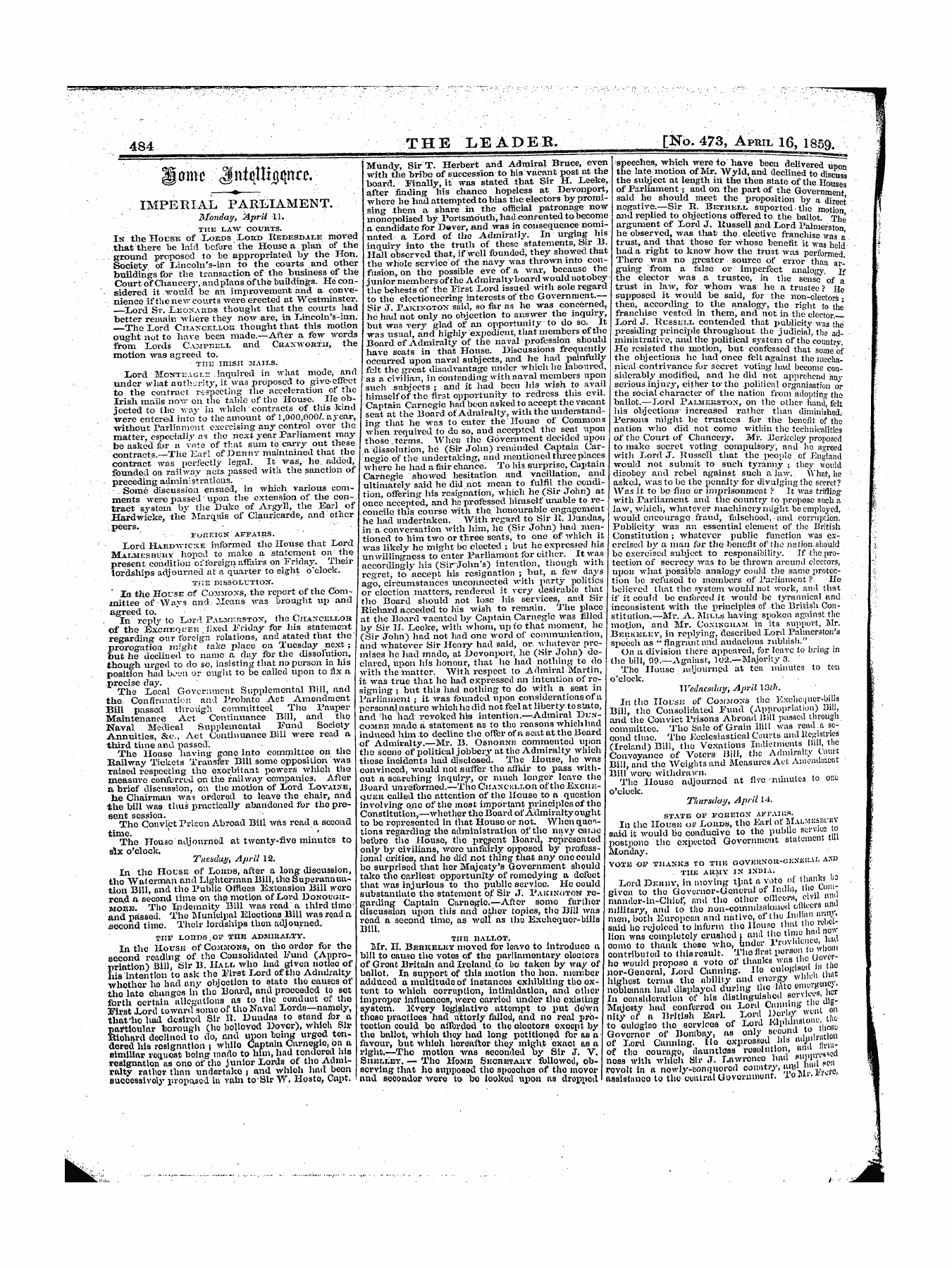
IMPERIAL PARLIAMENT . . Monday t April 11 . THE LAW COUKTS . In the House of Lords Lokd Redesdale moved that there "be laid before the House a plan of the ground proposed to be appropriated by the Hon . Society of Lincolu ' s-inn to the courts and other buildings for the transaction of the business of the Court of Chancery , and plans of the buildings . He considered it -would be an improvement and a convenience if the new courts were erected at Westminster . —Lord St . Luoxaeds thought that the courts had better remain -where they now are , in Lincoln ' s-inn . —The Lord Chancellor thought that this motion ought not to have been made . —After a few -words from Lords Cvr-ipnisLL and Cranavoktii , the
motion was agreed to . Tins misn mails . Lord ¦ Mokte-agle . inquired in what mode , and under what authority , it was proposed to give-effect to the contract' respecting the acceleration of the Irish mails now on the table of the House . He objected to tlie way in which contracts of this kind were entered into to the amount of 1 , 000 , 000 / . a year , without Parliament exercising any control over the matter , especi : div as the next year Parliament may be asked for a vote of that sum to carry out these contracts . —The Earl of Derby maintained that the contract was perfectly legal . It was , he . added , founded on railway acts passed with the sanction of preceding administrations .
Some discussion ensued , in which various comments were passed " upon" the extension of . the contract system by the Duke of Argyll , the Earl of Hardwicke , the " Marquis of Clanricarde , and other peers . lfOREIGN AFFAIRS . Lord Haedivicke informed the House that Lord Malmesbukv hoped to make a statement on the present condition of foreign affairs on Friday . Their iordshins adjourned at a quarter to eight o ' clock .
T 2 IE DISSOLUTION . ' la the House of Coanroxs , the report of the Committee of . Ways and gleans was brought up and agreed to . , ¦ * -, '¦ ' In reply to Lord Palmkkstox , the Chancellor o the Exchequer fixed lYiday fqr his statement regarding our foreign relations , and stated that the prorogation , might take place , on Tuesday next ; but he declined to name a day f or the dissolution , though urged to do so , insisting that no person in his position had bc . -n or ought to be called upon to fix a precise day . ¦ , . ¦ _ , l tal Billand
The Local Government Suppemen , the Confirmation and Probate Aet Amendment Bill passed through committee ! The Pauper Maintenance Act Continuance Bill , and the Naval Medical Supplemental Fund Society Annuities , &c , Aet Continuance Bill were read a third time and passed . The House having gone into committee on the Railway Tickets Transfer Bill some opposition wis raised respecting the exorbitant powers which the measure conferred pn the railway companies . After a brie discussion , o : v the motion of Lord Lovaijce , he Chairman was ordered to leave the chair , and the bill was thus r > ractically abandoned for the
present session- , _ Tho Convict Prison Abroad Bill was read a second time . ' ' The Houso adjourned at twenty-five minutes to six o ' clock , Tuesduy , April 12 . In the House of Lords , after a long discussion , tho Waterman and Lighterman Bill , tho Superannuation Bill , and tho Public Offices Extension Bill vroro read a second time on the motion of Lord Donouoii-MOItB . The Indemnity Bill wasi road a third timo and passed . Tho Municipal Elections Bill was road a . second time . Their lordships then adjourned . TIIF LORDS OP TUB ADMIKAI . TY .
In tho House of Commons , on tho order for the second reading of the Consolidated Fund ( Appropriation ) Bill , Sir B . ILux who had given notice of tils'intention to ask the li ' irst Lord of the Admiralty whether ho had any objection to state tho causes of tho late changes in tho Board , and proceeded to sot forth certain allegations as to tho conduct of tho First X-ord toward some of tho Naval XordB—namoly , that'ho hail doalrod Sir K . Dundas to stand for a particular borough ( ho believed Dover ) , which Sir lliohard declined to do , and upon being urged tendered his resignation } while Captain Carnegie , on a simUlar roaucat being tiinrto to him , hud tondorpa Ills resignation fts one of tho junior Lords or tho Admiralty rntlior thnn undertake ; and which had boon successively proposed In vain to'Slr W , Hoste , Capt .
Mundy , Sir T . Herbert arid Admiral Bruce , even with the bribe of succession to his vacant post at the board . Finally , it was stated that Sir H . Leeke , after finding his chance hopeless at Devonport , where he had attempted to bias the electors by promisin g them a share in the official patronage now monopolised by Portsmouth , haclconfented to become a candidate for Dever , and was in consequence nominated a Lord of the Admiratly . In urging his inquiry into the truth of these statements , SirB . Hall observed that , if well founded , they showed that the whole service of the navy was thrown-into confusion , on the possible eve of a war , because the junior members of the Admiralty board would notobey
the behests of the First Lord issued with sole regard to the electioneering interests of the Government . — Sir J Pakixotxkj said , so far as he was concerned , he had not only no objection to answer the inquiry , but was very glad of an opportunity to do so . It was usual , and highly expedient , that members of the Board of Admiralty of the naval profession should have seats in that House . Discussions frequently occurred upon naval subjects , and he had painfully felt the great disadvantage under which he laboured , as a civilian , in contending with naval members upon such subjects ; and it had been his wish to avail himself of the first opportunity to redress this evil . Captain Carnie had been asked to accept the vacant
eg seat at the Board of Admiralty , with the understandin" - that he was to enter the House of Commons when required to do so , and accepted the seat upon those terms . When the Government decided upon a dissolution , he ( Sir John ) reminded Captain Carnegie of the undertaking , and mentioned three places where he had a fair chance . To his surprise , Captain Carnegie showed he sitation and vacillation , and ultimately said he did not mean to fulfil the condition , offering his resignation , which lie ( Sir John ) at once accepted , and he professed himself unable to reconcile this course with the honourable engagement he had undertaken . With regard to Sir 11 . Dundas , in a conversation with him , he ( Sir John ) had
mentioned to him two or three seats , to one of which it was likely he might be elected . ; . but he expressed his unwillingness to enter Parliament for either . It was accordingly his ( Sir" : John ' s ) intention , though with regret , to accept his resignation ; but , a lew days ago , circumstances unconnected with party politics or election matters , rendered it very desirable that the Board should not lose his services , and Sir Richard acceded to his wish to remain . The place at the Board vacated by Captain Carnegie was Idled by Sir II . Leeke , with whom , up to that moment , lie ( Sir John ) had not had one word of communication , and whatever Sir Henry had said , or whatever premises he had made , at Devonport , he ( Sir John ) deto do
clared , upon his honour , that no had nothing with the matter . With respect to Admiral Martin , it was true that he had expressed an intention of resigning ; but this had nothing to do with a seat in Parliament ; it was fiwnded upon considerations of a personal nature which ho did not feel at liberty to state , and he had revoked his intention . —Admiral BuncoMn * : made a statement as to the reasons which had induced him to decline the offer of a seat at the Board of Admiralty . —Mr . B . Oshoknk commented upon the scene of political jobbery at the Admiralty which these incidents had disclosed . The House , he was convinced , would not suffer the affliir to pass without a searching inquiry , or much longer leave the Board unreformed . — -The Ci-iaxc-mli-oh of the
Exchequer called the attention of the House to a question involving o ; io of the most important principles of the Constitution , —whether the Board of Admiralty ought to bo represented' in that House or not . When questions regarding the administration of tho navy cokio before tho House , tho prgsont Board , represented only by civilians , wore unfairly , opposed by professional critics , and he did not tiling tliafc any one could bo surprised that her Majesty ' s Government should take tho oarllest opportunity of remedying a defect that was injurious-to , tho public service . He could substantiate the statement of Sir J . Pakinuton regarding Captain Carnegie . —After somo further discussion upon this and other topics , tho Bill was road a second timo , as woll as the Exohcquor-bills
Bill . THE MALLOT . Mr . II . BnnKELKV moved for leave to introduco a bill to oftuso the votoa of the parliamentary doctors of Great Britain and Ireland , to be taken by way of ballot . In support of this motion tho hon . inomber adduced a multitude of instances exhibiting tho extent to which corruption , intimidation , and other inil > roi > or influences , woro carried under the existing system . Kvery legislative attompt to put down those practices had uttorly failed , and no real protection could bo afforded to tho electors , except by tho ballot , which thoy had long petitioned for as a favour , but which hor 0 aftor thoy might exact as a right .- *—Tho motion was seconded by Sir « T . V . Snicr ^ Er . — Tho Hoaua SuonioTAUY followed , obsorving that ho supposed tho speeches of tho movor and seconder woro to bo looked upon as dropped
speeches , which were to have teen delivered ubon the late motion of Mr . WyId , and declined to discus ^ the subject at length hi the then state of the Houses of Parliament ; and on the part of the Government said he should meet the proposition by a direct negative . —Sir R . Bethkm . s . uported . the motion and replied to objections offered to the ballot . The argument of Lord J . llusseii and Lord Palmerston he observed , was that the . elective franchise was a trust , and that those for whose benefit it was held had a right to know how the trust was performed There was no greater source of error than arguing from a false or imperfect analogy , If
the elector was a trustee , in the sense of a trust in law , for whom was he a trustee ? He supposed it would be said , for the non-electorsthen , according to the analogy , the right to the franchise vested in them , and not in the elector . Lord J . Rl'sskll contended that publicit y-was the presiding principle throughout the judicial , the administrative , arid the political system of the country . He resisted the motion , but confessed that so me of the objections he had once felt against the mechanical contrivance for secret voting had become considerably modified , and he did hot apprehend am--serious injury , either to ' the political organisation or
the social character of the nation from adopting- the ballot . —Lord Palmekstox , on the other hand ) felt his objections increased rather than diminished . Persons might be trustees for the benefit of the nation who did not come within the technicalities of the Court of Chanceryi Mr . . Berkeley proposed to make secret voting compulsory , and he agreed with Lord J . Russell that the people of England would not submit to such tyranny ; they . would disobey and rebel against such a law . What , lie asked , was to be the penalty for divulging the secret ? Was it to be line or imprisonment ? It was trifling with Parliament and the country to propose such a law , which , whatever macliinery might be employed ,
would encourage fraud , falsehood , and corruption . Publicity was an essential element of the British Constitution ; whatever public function was exercised by a man for the .-benefit of" the na ( ion . should be exercised subject to responsibility . If the protection of secrecy was to be thrown around electors , upon what possible analogy could the same protection be refused to members of Parliament ? . He believed that the system would not work , ami that if it could be enforced it would be tyrannical and inconsistent with the principles of the British Constitution . —Mr . A . Mn . ua having spoken against the motion , and Mr . Coxinghaji in its support , Mr . Berkeley " -, in replying , described Lord Pahnerston ' s speech as " flagrant and audacious rubbish . "
On a division there appeared , for leave to bring m the bill , 99 . —Against , 102 . —Majority 3 . The House adjourned at ten minutes to ton o ' clock .
Wednesday , April ISlJi . In tho IIovsb of Commons tho- Exehe-. jucr-bills Bill , the Consolidated Pund ( Appropriation ) Bill , and the Convict Prisons Abroad Uill passed through committee . The Sulc of Grain Bill was read , a second time . The Ecclesiastical Courts and lvCtfisinos ( Ireland ) Bill , tho Vexatious Indictments Kill , the Conveyance of Voters Bill , the Admiralty Court Bill , and the Weights and Measures Aet Amendment Bill wore withdrawn . . The House adjourned at five 'minutes to o . x o ' clock . Thursday , April 14 . STATE OP l'OKEXOX AKFA 1 US . \
In the House oj ? Lords , tho Earl ot Mai ... tani n said it would bo conducive to tho »" » V ^ l t 5 postpone tho expocted Government statement tin Monday . VOTE Off THANKS TO THl' 3 GOVKHNOR-CIKXiilU' . A 5 » TJUJ AK 3 KY IX INDIA . Lord Dkudy , in moving that a vote <» f tlmnks W givon to tho Governor-General of India , tl o U » mandor-in-Chiof , and tho other ofllcern , c v » l militury , and to tho non-cominiBsioued oi ttis um men , both European and native , of tho Iiul » " " ^ said he rejoiced to inform tho IIoujp t « n " J J lir .,, wn « Ami . lntnW nrusliod : aild tllO tllllO IllXtl nO >\
oo . no to thank thoso who , under I ' rovld nca « j contributed to thisrosult . Thoilrst poreo . to m » om ho would propose a vote of thiuika wna the W c nor-Genoml , Lord Canning- I « o oulog bc I n j « o highoBt terms tho ability and onorgyv n « nobleman had displayed during tho l . Jto e "«* In conHidoration of his distinguished sor ^ u s , J * Majesty had conferred on Lord Cimnii tf tlo uiff nity J ft BrHisli Earl . Lord Derby uml on to ouloglBO tho sorvlcos of Lord Wpl » 18 lolK ^ ' Governor of Bombay , us only seooniI to ^ of Lord Canning . Ho oxprossod ln » ' 3 ' .,,. of tho courage , dauntless rosohition , i n '"»»' noss with which Sir J . Lawronco luwl , i ml en rovolt in a nowly-conquororl country , und ' « ' ^ assistimco to tho cwutralGovonunynt . IoJUi .
Untitled Article
484 THE LEADER . [ No . 473 , April 16 , iggg ^
Ftjv A ,Tv Cxy I^If* ' - _ M Owh ^Lumuwldo* "S? W . T. . ^ U *•• - .
game Jnt ^ Ii |)^ rre / . <« . : ' .
-
-
Citation
-
Leader (1850-1860), April 16, 1859, page 484, in the Nineteenth-Century Serials Edition (2008; 2018) ncse.ac.uk/periodicals/l/issues/vm2-ncseproduct2290/page/4/
-