
On this page
-
Departments (1)
-
Text (4)
-

Untitled Article
-

Untitled Article
-
Untitled Article
-

INDIA, INDIAN PROGRESS.
Note: This text has been automatically extracted via Optical Character Recognition (OCR) software. The text has not been manually corrected and should not be relied on to be an accurate representation of the item.
-
-
Transcript
-
Note: This text has been automatically extracted via Optical Character Recognition (OCR) software. The text has not been manually corrected and should not be relied on to be an accurate representation of the item.
Additionally, when viewing full transcripts, extracted text may not be in the same order as the original document.
Untitled Article
India . ] ' '¦ ' THE LEADER . 765
Untitled Article
press their insubordination ; and it seems that at Meerut the Queen ' s 75 th so much 83 'mpathised "with the grievances of the . Company ' s trooi > s as to iatimate that they would not act against them . Lord Clyde came down from the hills at once , and . issued a general order which shows that the danger must be met in the spirit of concession . The Government at Calcutta also felt it their duty to publish an account of the state of things , so that the European communities in India might be apprised of what really had occurred . Both documents afford evidence of much danger , and allude to a court of inquiry which has been set up at Meerut , so that all the grievances of the soldiers may be fully investigated . The soldiers chiefly complain that they have
been transferred from the Company ' s to . the Queen ' s service without being presented with the new bounty to which they deemed themselves entitled . The men demand that they shall be reenlisted . The Bombay Gazette , however , says that hitherto no violence has been attempted by the malcontents , nor has it become necessary to employ force for their coercion ; and from the example of Meerut and of Lahore , where the failure of discipline was but momentary , it was believed that tliese dissatisfied men would give way to reason , and return to their duty . By a telegram from Aden , dated the 10 th , we are happy to learn that the discontent is arrested . In Oude operation * , are continued in the district to the north-west of Lucknow
lying between the Gogra and the Raptee . The process of driving the broken detachments of rebels out of the jungles and hills is proceeding without a check . The aggregate number of rebels which our forces have yet to deal with or disperse is variously stated at 8 , 000 , 10 , 000 , arid 15 , 000 men ; but : most of them are said to have already retired beyond the Raptee , and all of them have hitherto been prevented from penetrating into Lower Oude . Bala Rao was reported in a Government bulletin to have passed with a body of men into the district of ToOlseypore on the . 3 rd of May , and by the last intelligence , of the 10 th of that month , he tvaa reported to be in the neighbourhood of Bulrampore with six guns . Sir Hope Grant is at the" latter
place watching his movements . Ihis chieftani 13 the brother of Nana Sahib , and is supposed to have been even more fiendish in his barbarities at Cawnpore than the Nana himself . In sin officer ' s letter from Nepaul , dated the 30 th of April , it was announced , as a piece of news that might be almost implicitly relied on , that the Naiia and his family , with the Begum , and about 30 O personal followers , were prisoners in the hands of two Nepaulese regiments , in the fort of Niakote , or Niskilla , a little to the north of Bootwul ; but the news has never been confirmed , and there is now a counterreport abroad that the Nana is wandering about the country in disguise , having shaved his head , painted . his face , and adopted a European dress . in
The outbreak in the Nugger Parkur districts , , Scindo , has been quelled with great promptitude . Lieutenant-Colonel Evans telegraphed on the 12 th . of May that " the district wap quite quiet , " and the fugitive population returning to their homes-A strict inquiry is being instituted into the causes of the outbreak , One rumour attributes it to an insult offered to a Rajpoot woman . But the designs of the rebellious Thakoors pointed rather to ^ tho attainment of some permanent political object . The Nuggur Parkur rebels destroyed about twenty-four miles of tJu ? cloctric telegraph connecting Bombay and Kurrnchee . It is already partially restored , and . the electric communication between the two places will soon be entirely renewed .
Thero has been uneasiness in the Nizam ' s dominions for some time past . The British Government has been compelled to demand the expulsion from the Court and capital of somcof his tending courtiers . It has been discovered that others ofthom havo corresponded with one of the Nuna ' s emissaries . The latest rumour is . that ft great conspiracy Ims bcondetected iii Hyderabad to massacre all the huropeans . Her Majesty ' s 31 st llogimont are leaving Poonali , probably to join the Doccnn Field Force , and the lUli Enniskillen Dragoons , who uro at Klrkce , are said to bo under orders to take the flold m 1 I 10 Niibdis territories . The Nawab of Furruekabad had been sentenced to bo hanged , but it came out on tho trial had been written
that beforo his surrender a letter to him by Major Barrow , tho special commissioner with tho onmn of liia Excellency the Commnnuor-jn-Chief in which ho was invitod to surrender * ana that ' in this Jotter ho was told that pardon lmd boon , extended to all who had not personally committed tho niurdor of British subjects , and that if lio had not personally conunitod tho murdor ot JJritish subjects , ho might surrender without apprehension . On > tho receipt of this letter lie immediately surrendered . Ho now cluirns tho fulfilment of tho promise of i > ardon , being foui ; d guilty , not of having personally committed , tho murder of British subjects , but of having boon fin accessory betbro the fact . Tho Govornor-Ck'nornl
LATEST INDIAN INTELLIGENCE . Tins Bombay letters and papers of the 23 rd ult . bring accounts of the discontent which hns arisen among tho European troops of the Into East India Company at being transferred without re-enlistment into tho Queen ' s service . The despatches speak aa If mutiny had already broken out , and Mcdrut is namodas tho place where It was first seen . Jtt | ias also been oxhlblted at Gwallor , Borhamporo , Allahabad , and Lahore . At Allahabad tho European cavalry had gono no'far us to flro In tho air , so that they might ox-
Untitled Article
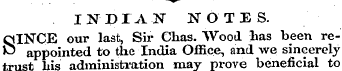
INDIAN NOTES . SINCE our last , Sir Chas . Wood lias been reappointed to the India Office , and we sincerely trust his administration may prove beneficial to Indian interests . There is one subject he may at once take in hand ; for the Criminal Code Procedure Bill , best known as the Black Act , and which bad been suspended during the mutiny , is being proceeded with in tlie Legislative Council , and the last mail brings the alarming intelligence that it is being
pushed as rapidly as possible through all its stages . This bill is for the 2 > urpose of depriving English citizens of the protection they enjoy of living under English law , with the benefit of judge and jury , and placing them , in common with the natives , under the criminal jurisdiction of the native courts , and thereby under the native officials . When this bill was brought forward in 1857 it was met with the just indignation of the Eng lish settlers and a resolute opposition ; but since then events have occurred which render such a measure more
dangerous and less justifiable . First of all we place the mutiny , showing the hostility of large classes of the population to Europeans ; second , the indisputable determination of the practice of torture by native officials ; third , the well-grounded conviction of the deep-rooted perjury of the natives in legal proceedings ; fourth , the hostility to Europeans of the Mahbmedans , who afford so large a portion of the anilali ; and fifth , that since then the country has been really thrown open to English settlers * ' Tims at the time when protection is most wanted for the settler , when it is req uisite for the encouragement of settlers that they should have the same privileges as in pur other colonies , they are t f
petit jury panel ? We say that it is monstrous that the settlers should be so subjected , or that the whole of the indigo planters in their several districts sliould thus be at the mercy p f a man over whom they have no control , who is not responsible to their parliament , nor can be impeached in their legislative assembly . What , however , is the condition of the indigo planter , the coffee grower , the tea planter , the merchant , or the clergyman who may be travelling in some remote district , and who may have a false charge trumped up against him before a Mahomedan judge , and supported by perjury ? What
wovld be the fate of the railway workman or the soldier ' swife hi a bye town , brought before such a man on a charge of drunkenness , or any other that may be framed , ignorant of the court language , ignorant of the foreign law and procedure , haying a court full of enemies and no protector ? We' shudder when we think of the oppression which may be exercised by remands even , -when the magistrate fears to impose a sentence . There will be no solicitor to whom the accused can apply ; no one perhaps
knowing his or her language except the Judge and his amlah ; arid the evidence will be g iven in all kinds of languages , and recorded in a technical jargon . It has not been unreasonably urged that such a system is -well calculated to provoke a war of races ; for the first Englishwoman , truly or falsely accused , who shall be dealt with by its administrators , will bring down on the perpetrator the unrelenting vengeance of our countrymen . Such a system is what we have never been called upon to endure , and one from which our feelings teach us to revolt .
If this Act passes the Legislative Council it will be the bounden duty of Parliament to reject it , and to impeach its authors for high crimes and misdemeanours , and we trust it will receive the strenuous opposition , not only of every one interested in India , but of all classes in this country . The step , too , is so illtimed and so i Had vised , coming , at the very moment-when the opportunity offered for raising the native in the political ; and social scale , by giving commissions of the peace to various districts , and associating the native gentlemen in the administration of the law ; they , too , are to be made the serfs of the amlah .
From the hills hut little news has been received by the last mail . In consequence of the disaffection produced among the Company ' s European soldiery , by the illiberal conduct o f the Government , Lord Clyde has been obliged to leave Simla to save the country from the disgrace of a revolt by Englishmen . This necessity causes a considerable loss to Simla and the neighbourhood . Captain W . € . Green , 60 th B . N . I ., has leave to Simla , and Assistant-Surgeon Knipe to the 88 th Foot .
Leave for the Dcyrah hills has been given to Lieut .-Col . J . Laughton of the Engineers ; Lieut .-Col . W . C . Campbell , 80 th B . N . I . ; Licut .-Col . P . Abbott , 72 nd B . N . I . ; Lieut .-Col . IT . E . S . Abbott , 74 th B . N . I . ; Lieutenants S . Mortimer , II . M . 60 th Foot , F . Austin , II . M ; . 60 th Foot , and C . Ashburnham , II . M . 60 th Toot . Lieut .-Col . A . S . Campbell , 3 rd European L . C ., has leave to reside permanently at Mussoorie . Lieut , C . Campbell , II . M . 48 th Foot , has leave for Landour and Mussoorie . For Chirrapoonjce , Major G . B . Jennings , II . M . 19 th Foot , haa leave . It has boon seldom of late that leave has been given to Chirrapoonjoo' or
Sylhet . For Nynco Tnl ; leave has been given to Capt . II . C . Lee , II . M . 35 th Foot , Capt . F . C . Scott , II . M . 42 nd Foot , and to Qn . pt . E . Smyth , 13 th B . N . I . For Murrec , leave has been given to Lieut . W . L . Lewes , H . M . 98 th Foot . # For Dhunnsnln , leave has been given to Ensign S . L . Pidsloy , H . M . 52 nd Foot . Leave for Bangalore has been given to Major J . Fowler , 8 th Madras L . C .
to be deprived of their birthright as ciizens o England , and subjected to the enmity of an inferior race , under debased institutions . Nowhere in our colonies has a course of this kind been adopted , for where , as in Lower Canada , French law has been guaranteed by , treaty—or , as in the Cape of Good Hope , Dutch law—the population were treated as Europeans and as citizens , and their institutions have been raised to the English level ; but neither in Canada were Englishmen placed under the dominion of the Hurons , nor at the Cape under the Kaffirs or Hottentots , or in New Zealand under Maori law and magistrates . The native has been raised in time to English privileges , but he has not been allowed to administer a local code to English
citizens . The Indian code is objectionable , because it is not the law of England ; which is the inheritance ot our citizens , and which they have the right ^ to enjoy wherever their jurisdiction , extends . The civil administration of the law varies in Scotland , the Channel Islands , and Man , from that of England and Ireland , but the criminal administration , which is that which affects the rights of persons , and which is dealt with by the new bill , is of like origin and constitution throughout , founded on tho safeguard of a jury . For tins , which has been recognised in
the empires and states we have founded or protected—which is ns sacred in the United States as in those countries which arc yet colonies—which Ims boon extended even to Hawaii , Mosquitin , and Liberia , newest in tho family of nations—fin this law of guarantee and protection , is substituted a now system , leaving no security for our citizens , but giving to a native the power of sentencing one of them to two years' imprisonment » a common jail—a sentence which in India is in its ) effects on a European equivalent t , o death .
We object to such powers being given to English officials as unnecessary , because now in most stations in the hills or plains , whore there are Europeans , there nro enough to aflbi'd justices of the peaco and jurors for quarter sessions , and there is no reason why assizo courts should not bo hold in tho chief towns . Why arc English men , women , ami children in Simla , Landour , Mussoorie , and JDoyrnh to bo subject to an English stipendiary magistrate , or his native official , when there are men enough qualified to fill tho commission of tho peace , to furnish a- grand jury , ' and to . supply tho
India, Indian Progress.
INDIA , INDIAN PROGRESS .
-
-
Citation
-
Leader (1850-1860), June 25, 1859, page 765, in the Nineteenth-Century Serials Edition (2008; 2018) ncse.ac.uk/periodicals/l/issues/vm2-ncseproduct2300/page/9/
-