
On this page
-
Text (2)
-
ALESSANPRO MANZOITC
-

Untitled Article
Note: This text has been automatically extracted via Optical Character Recognition (OCR) software. The text has not been manually corrected and should not be relied on to be an accurate representation of the item.
-
-
Transcript
-
Note: This text has been automatically extracted via Optical Character Recognition (OCR) software. The text has not been manually corrected and should not be relied on to be an accurate representation of the item.
Additionally, when viewing full transcripts, extracted text may not be in the same order as the original document.
Untitled Article
tions—lies the origin of division of labour . Tma may be . more widely expressed as the adaptability of each individual to perform some one task ; better than another ; and thus expressed , it prevails at all times , and continually extends division of labour in all ages and countries . # . Before knowledge can be imparted it must be acquired . A certain age must be reached before a man can be a teacher . The aged , therefore , are necessarily teachers— the young are _ learners . Another specimen of the adaptability of individuals to perform peculiar tasks is found in what is
called genius , or strong liking to do a particular thing . Some men can pamt better than others ; some have uncontrollable attachment to machinery , and become Watts , Houdins , or Stephensons ; others like only the work of authorship ; they have a strong desire to express peculiar thoughts —to reason and instruct , or to amuse others ; and we have a great abundance of McCullochs , Mills , Dickenses , Albert Smiths . Distinctions such as as those noted pervade all society . Every man and woman haying peculiar talents , these are ever welling sources of further and continual labour . .
All the sources of division of labour now mentioned axe in the s human being . They arise from individual peculiarities , of which the distinction of sex and age are amongst the most remarkable and important , but they all tend to the same end . Man , however , is part of the material world , and is adapted to it . He works with and in it ; and in its peculiarities , as they affect him , lie other sources of division of labour and of its continued extension .
As he lives on a mountain , or on the side ^ of a river , or on the sea shore , he becomes a hunter or a fisher . In plains he rears cattle and grows corn . In mineral districts he becomes a miner . In countries were forests are more plentiful than minerals he uses wood for all purposes . In Switzerland , where bounding streams woo him to use water power and where wood is plentiful , he becomes a master in the art of wheel and wood work . In the Netherlands , where there are no rushing streams , he makes windmills . As theclimate is warm , he becomes a cultivator of delicious fruits or of herbs ^—grows coffee or tea , and
provides the " drink which cheers but not inebriates . " As the climate is cold he becomes a great distiller , a breeder of sheep , and a woollen cloth manufacturer ; or , requiring a great deal of clothing for comfort , he learns to make it for himself , and others . Thus all the endless varieties ^ of climate and situation throughout the globe dictate different employments to different individuals . Territorial peculiarities are sources of territorial division of labour ; personal peculiarities are the sources of personal division of labour ; and , as the latter adapt all the members of each community to help and serve each other , thereby procuring more
hire fighters and employ collectors , or support an established church— -it determines the income . : In the different physiology and functions of the sexes lie the germ , of different employments for them . Throughout the . whole history of mankind , accordingly , there is only one example , and that , probably a myth , of women , the amazons , being the regular and distinct fighters of the community . How can it be ?—how could it ever be ?^—that the mothers of all , who bear , and rear , and nurse mankind , whose great natural function is to preserve the human species , should at the same time be the soldier , the destroyer of the species ? Every where infanticide , though sometimes practised , as amongst the " Rohillas , from a mistaken
theory , is condemned ; instinct in the males corresponding with the functions of the females , teaches them that the mothers are also the nurses and conservators of society . The affections as well as the functions of females mark out , independently of all law , broadly and minutely , occupations for them different from those of males . In like manner other peculiarities adapt other individuals to peculiar occupations . While we express our agreement with the Review , and our disagreement from Mr . Mill , on the subject of law determining the occupation of the sexes , we must however say that the Review seems , like Mr . Mill , not to believe in abstract rights and a law of nature for society , and not to know that society , like any other portion of natural history , should be described and cannot be regulated .
It must be admitted that the knowledge of the natural laws of society does not so much contribute to increase as to restrain the activities . There is nothing in it like the knowledge of astronomy , which teaches us to navigate the ocean ; or of electricity , which enables us to talk to each other across the globe . Oh the eoritraryj all the knowledge of the natural order of society teaches us not to be politically active- —teaches ^ that all the activities of the thousand political meddlers who fill our streets and councils-r-r-who sit in Parliaments or
Cabinets , and undertake to regulate mankind , are useful only to themselves . There is an activity well and instinctively employed to preserve life or health , but there is no corresponding natural activity destined to preserve or benefit society . Activity to mend society has no object . For its improvement , division of labour is essential . No separation of employments decreed by laws or intended to work out the purposes of men , can be compared for utility to the great division of labour , which is decreed and always carried into effect by nature . The subject is well worthy of being thought about , though it run counter to many prejudices . All that we care now to affirm of it is , that if our view be correct , the scientific politician is a natural philosopher of the noblest description , having for the object of his study the noblest part of creation beneath the heavens .
wealth for all , so the former adapt communities , or portions of the human race who live apart , to help and promote the welfare of each other . If the naturalist would consider the world as a vivarium , ready-made to his hand , he would certainly find this wonderful adaptation of individuals to each other , and of communities to communities , forming one vast ant or bee-like community of the whole of human society , filling the earth its natural hive , as well worthy of being studied as the artificial vivarium lie prides himself on making . The individual ( homo ) finds a place in the naturalist ' s zoology , the relations and liabjts of the species he entirely neglects , and leaves them to be studied by the soientifio politician . To this theory there are many objections .
We are told , for example , by a weekly contemporary , in a notice of Mr . T . S . Mill ' s essays , that this great writer is " no believer in abstract rights , the jaw of nature , the inherent equality of man , " but " is a Benthamite of the severest kind , " or a believer in the theory thot social order is the result of legislation . Accordingly , Mr . Mill refers , as the Saturday Review states , most of the distractions of employments whioh prevail In society between the sexes , to the operations of law . The Review ia of a different opinion , and accuses Mr . Mill of overrating the effect of law in producing the existing distinctions between the occupations of the Boxes . In this respect we agree with the Review , and believe that positive law has very little to do with , determining the diverse occupations of the sexes , or of any portion of society other than that of which by taxation or institutions ^ -direoted to
Alessanpro Manzoitc
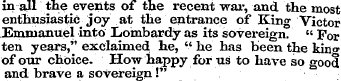
in all the events of the recent war , and the most enthusiastic joy at the entrance of King Victor Emmanuel into Lombardy as its sovereign . " For ten years , " exclaimed he , " he has been the kino of our choice . How happy for us to have so good and brave a sovereign !" It is now many years since Manzoni , in sweet poetic accents , celebrated the day which had seen the fall of the barriers erected at the Ticino by foreign tyranny . His patriotic hopes have been often disappointed , but he accepts th e present happy change as a good onien for the future . That which still remains unaccomplished will , we trust .
hereafter be effected by the united forces of Italy herself who at this moment , in spite of niany disappointed hopes , maintains an attitude of patriotic and energetic protest against tyranny and against the fresh / dismemberment which it is sought to impose upon the peninsula . All Italy unites in applauding the idea of Victor Emmanuel who designed to honour the country by conferring a decoration upon a man who is the greatest of her literary celebrities no less than the warmest of her patriots . By showing themselves thus united in sentiment , the Italians have given an additional proof that they are and will be one in every
elevated and patriotic demonstration . Not only does all Italy rejoice but every individual in Europe and the civilised world who can appreciate Italian genius , and who values progress whether in art , literature , or social science . The honours awarded to the poet a * Milan is one of the first fruits of the change of government in Northern Italy . ' While the whole world of letters nourished sincere respect and veneration for the author of " I Proinessi Sp _ , " the Austrian Government all but ignored his existence , and proved itself in any degree aware of it only by making him the object of suspicion , by pointing him out to the police , and checking the spread of his writings ,
which breathe the purest virtue and the most ardent patriotism . How could a foreign government tolerate the expansion and diffusion of liberal ideas and patriotic sentimentsin the territory itgoverned ? How , above all , could such tolerance be looked for from the Austrian Government which has oppressed genius and letters in its own country , exiled its own loftiest intellects , or rendered them the objects of contempt to their fellow countrymen by employing them as instruments of tyranny , and conferring upon them the post of censors and revisors of the press , and judges of public education , which is in Austria reduced to mere forms of examination and bare attendance at schools . and
churches ? When the Archduke Ferdinand Maximilian came to Italy he feigned friendly sentiments towards the Italian provinces subject to Austria , in order to comply with the diplomatic requirements of his position . In accordance with this policy he paid an ostentatious visit to Alessandro Manzoni , who was then l'ecovering from sickness , and the hireling Austrian press loudly called attentothe condescension . Had the Archduke been actuated by sincere respect he would not have stopped short at so common place a civility ; but even this was a great step for Austria , who had
previously taken no heed of any of the literary celebrities on whom Italy prided herself . Some twenty years ago the lamented Duke of Orleans , and his brother , the Duke of Nemo , paid a visit to Lombardy and , upon arriving at Milan , were honoured and feted by the Austrian governor , Count Hartig . One evening the princes were splendidly entertained at the governor ' s residence . Many Austrian employes and foreigners of other countries were present , but vory few members of the Milanese aristocracy . The Duke of Orleans appeared struck with the magnificence of the preparations and the number of the guests tnosc most
ALESSANDRO MANZOOT . The literary and social honours conferred , during his visit to Milan , by King Victor Emmanuel upon the first of living Italian poets , represent the gratitude of the nation towards those illustrious men who remind the civilised world that Italian genius is still unexhausted , notwithstanding the humiliating servitude and long prostration of past times . To honour the men who honour their country has always been felt' a sacred duty by Italians , though one which Italy has too often been prevented from fulfilling by foreign oppression . The darkness which has so long enveloped the peninsula is now becoming partially dispelled , and though fuJU light is still far from being enjoyed yet the dawn of brighter destinies has certainly appeared , and to his countrymen it seemed but right that the name of Alessandro Manzoni , whioh shone so
resplendently by its own light , should mingle its rays with those of his reviving country . The attention paid to the veteran poet by the King , Prince Carignan , Ratasszi , and other men of mark during the festivities- —his appointment to the presidentship of the Institute of Milan , with a salary of 12 , 000 lire , or about 500 / .. a-yoar—his investiture with the Grand Cordon of the Order of Mauriziano—and his nomination as senator of the kingdom—rhave given the greatest satisfaction possible . Throughout all classes and ranks the announcement of the complimentary and material marks of favour shown to Manzoni were received with the liveliest demonstrations of delight , In spite of his failing health he has felt and oxpressed the deepest interest
present , and expressed , the desire tuat celebrated among the Milanese notabilities , particularly in the department of letters , should bo presented to him . Count Hartig summoned t » o Chevalier Maffei , " But where is Alessandro Manzoni P " asked the duke . " He does not frequent my conversazione ; " replied Count Hurtig . tf liis son-in-law , Massimo d'AzeglioP" " Nor he either . " " Tommaso GrossiP" "No ; but A have the honour to present to your Royal Hig" - ness the Chevalier Maffoi . " The prince , who read the works of Sohiller in the original , ana might well be exoused if he was . ignorant < rt tuo name of their excellent translator , bowed with an expression whioh Boomed to say , " And who i » tuo
Untitled Article
q THE LEADEE [ No . 492 . Aug . 27 , 1859 .
-
-
Citation
-
Leader (1850-1860), Aug. 27, 1859, page 988, in the Nineteenth-Century Serials Edition (2008; 2018) ncse.ac.uk/periodicals/l/issues/vm2-ncseproduct2309/page/16/
-