On this page
-
Text (2)
-

Untitled Article
-

Untitled Article
Note: This text has been automatically extracted via Optical Character Recognition (OCR) software. The text has not been manually corrected and should not be relied on to be an accurate representation of the item.
-
-
Transcript
-
Note: This text has been automatically extracted via Optical Character Recognition (OCR) software. The text has not been manually corrected and should not be relied on to be an accurate representation of the item.
Additionally, when viewing full transcripts, extracted text may not be in the same order as the original document.
Untitled Article
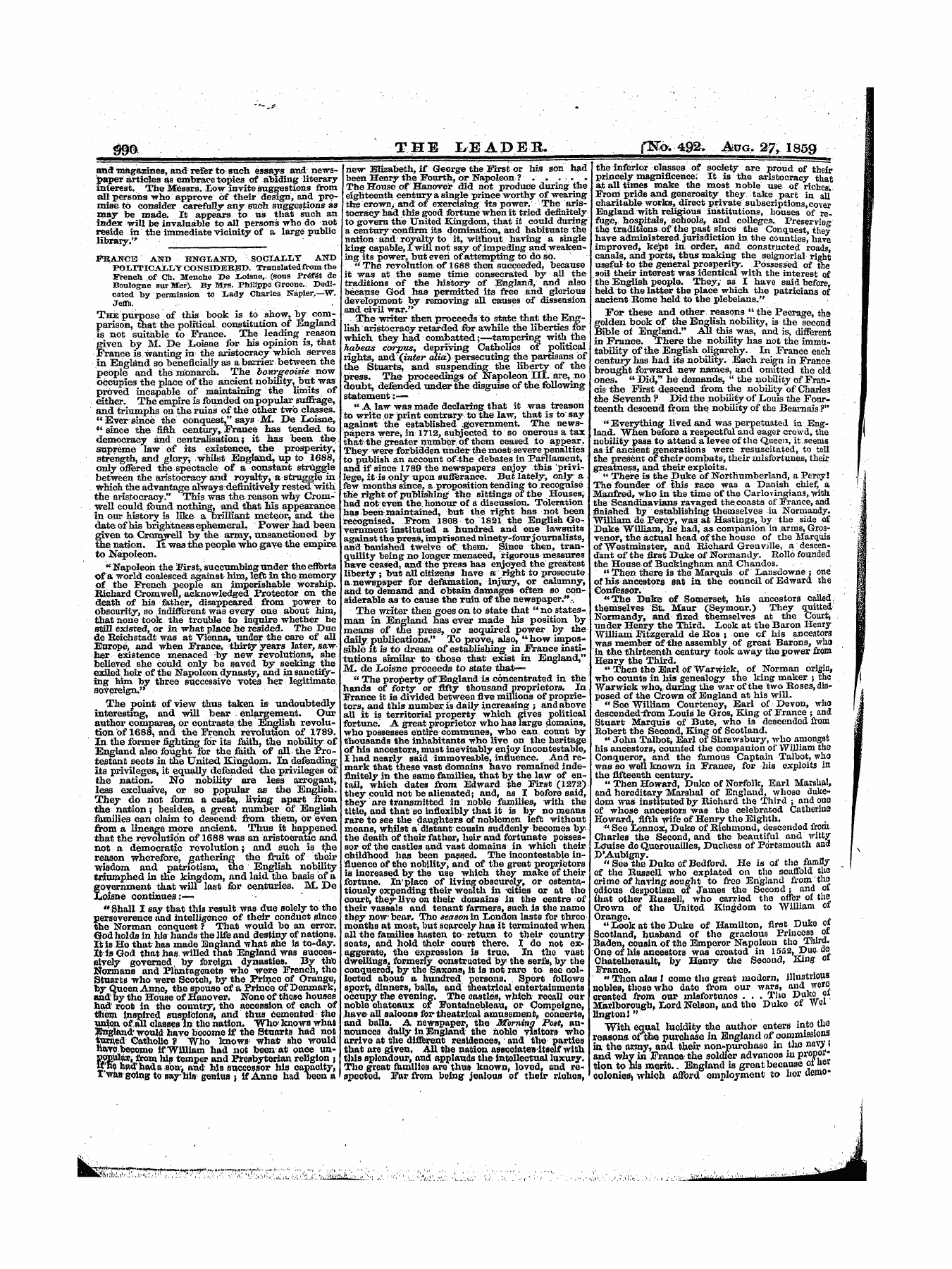
and magazines , and refer to such essays and newspaper articles $ s embrace topic 3 of abiding literary interest . The Messrs . Ik > w invite suggestions from all persons who approve of their ' design , ' . and promise to consider carefully any such suggestions as rnay be made . It appears to us that such an index will be invaluable to all persons -who do not reside in the immediate vicinity of a large public library . "
Untitled Article
FKAJiTCE ASTD ENGIiAOT > , SOCIALLY AND POLITICALLY CONSIDEKED . Translated from the French of Ch . Menche I » e Loisne ,: ( sons Pr 6 fSt de Boulogne surMer ) . By Mrs . Philfpps Greene . Dedicated by permission to Lady Charles Napier , —W . Jeffs . . . , The purpose of this book is to show , by comparison , that the political constitution of England is not suitable to France . The leading reason given by M . De Lioisne for his opinion is , that France is wanting in the aristocracy which Serves in England so beneficially as a barrier , between the people and the monarch . The bourgeoisie now occupies the place of the ancient nobility , but was proved , incapable of maintaining the limits of
either . The empire is founded on popular suffrage , and triumphs on the ruins of the other two classes . " Ever since the conquest , " says M . De Loisne , " since the fifth century , JFronee has tended to democracy and centralisation ; it has been , the ; supreme law of its existence , the prosperity , strength , and glory , whilst Engl and , tip to 1688 , only offered the spectacle of a constant struggle between the aristocracy and royalty , a struggl e in trhich the advantage alwaysd ^ finitrvely rested with the aristocracy . " This was the reason why Cromwell could found nothing , and that his appearance in our history is like a brilliant meteor , and . the dateofhis brightness ephemeral , Power had been given to . Cromwell by the army , tmsanctioned by the nation . It was the people who gave the empire to Napoleon .
* Napoleon the First , succumbing tinder the efforts of a world coalesced against him , left in the . . memory of the French people an imperishable worship . Richard Cromwell , acknowledged Protector on the death of his father , disappeared from power to obscurity , so indifferent was every one about him , that hone took the trouble to inquire whether he still existed , or in what place he resided . The Due de Keichstadt was at Vienna , under the care of all Europe , and when France , thirty years later , saw her existence menaced by new revolutions , she believed she could only be saved by seeking the exiled heir of the Napoleon dynasty , and in sanctifying him by three successive votes her legitimate sovereign . "
The point of view thus taken is undoubtedly interesting , and will bear enlargement . Our author compares , or contrasts the English revolution of 1683 , and the French revolution of 1789 . In the former fighting for its faith , the nobility of England also fought for the faith of all the Protestant sects in the United Kingdom . la defending its privileges , it equally defended the privileges of the nation . No nobility are less arrogant , less exclusive , or so popular as the English . They do not form a caste ,, living apart from the nation ; besides , a great number of English
families can claim to descend from them , or even from a lineage more ancient . Thus it happened that the revolution of 1688 was an aristocratic and not a democratic revolution ; and such is the reason wherefore , gathering the fruit of their wisdom , and patriotism , the English nobility triumphed in the kingdom , and laid the . basis of a government that will last for centuries . M . De Xioisne continues : —
" Shall I say that this result was due solely to the persovorence and intelligence of their conduct since the Norman conquest ? That would be an error . Qod holds in his hands the life and destiny of nations . It is He that has made England what she is to-day . It is Goa that has willed that England wan successively governed by foreign dynasties . By the Normans and Planfagenets who were French , the Stuarts who were Scotch , by the Prince of Orange ,
the inferior classes of society are proud of their princely magnificence . ' It is the aristocracy that at all times make the most noble use of riches . From pride and generosity they , take part in all charitable works , direct private subscriptions , cover England with religious institutions , houses of refuge , hospitals , schools , and colleges . Preserving the traditions of the past since the Conquest , they have administered jurisdiction in the counties , have improved , kept in order , and constructed roads , canals , and ports , thus making the seignorial right useful to the general prosperity . Possessed of the soil their interest was identical with the interest of . the English people . They ,- as I have said before , held to the latter the place which the patricians of ancient Borne held to the plebeians . "
For these and other reasons " the Peerage , the golden book of the English nobility , is the second Bible of England . " All this was , and is , different in France . There the nobility has not the immutability of the English oligarchy . In France each century has had its nobility . Each reign in France brought forward new names , and omitted the old ones . " Did , " he demands , " the nobility of Francis the First descend from the nobility of Charles tie Seventh ? Did the nobility of Louis the Fourteenth descend from the nobility of the Bearnais ?"
" Everything : lived and was perpetuated in England . When before a respectful and eager crowd , the nobility pass to attend a levee of the Queen , it seems as if ancient generations were resuscitated , to tell the present of their combats , their misfortunes , their greatness , and their exploits . " There is the Duke of Northumberland , a Percy ! The foundfer of this race was a Danish chief , a Manfred , who in the time of the Carlovingians , with the Scandinavians ravaged the coasts of France , and finished by establishing themselves in Normandy William de Percy , was at Hastings , bv the side of Duke William , he had , as companion in arms , Grosvenor , the actual head of the house of the Marquis of Westminster , and Bichard Grenville , a descendant of the first Duke of Normandy . Kollo founded the House of Buckingham and Chandos .
" Then there is the Marquis of JLansdowne ; one of his ancestors sat in the council of Edward the Confessor . "The Duke of Somerset , his ancestors called themselves St . Maur ( Seymour . ) They quitted Normandy , and fixed themselves at the Court , under Henry the Third . Look at the Baron Henry William Fitzgerald de Bos ; one of his ancestors was member of the assembly of great Barons , who in the thirteenth century took away the power from Henry the Third .
" Then the Earl of Warwick , of Norman origin * who counts in his genealogy the king maker 5 the Warwick who , during the war of the two Boses , disposed of the Crown of England at his will . "See William Courteney , Earl of Devon , who descended-from Louis le Gros , King of France ; and Stuart Marquis of Bute , who is descended from Robert the Second , King of Scotland . * ' John Talbot , EarJ of Shrewsbury , who amongst his ancestors , counted the companion of William the Conqueror , and the famous Captain Talbot , who was so well known in France , for his exploits in the fifteenth century . " Then Howard , Duke of Norfolk , Earl Marshal , and hereditary Marshal of England , whose dukedom was instituted by Bichard the Third ; and one of whose ancestors was the celebrated Catherine
new Elizabeth , if George the First or bis son had been Henry the Fourth , or Napoleon ? . . . . . . The House of Hanoner did not produce during the eighteenth century a single prince worthy of wearing the crown / and of exercising its power . ' The aristocracy had this good fortune when it tried definitely to govern the United Kingdom , that it could during a century confirm its domination , and habituate the nation and royalty to it , without having a single king Capable , I will not say of impeding and weakening its power , but even of attempting to do so . " The revolution of 1688 then succeeded , because it was at the same time consecrated by all the traditions of the history of England , and also beeause God haa permitted its free and glorious development by removing all causes of dissension and civil war . "
The writer then proceeds to state that the English aristocracy retarded for awhile the liberties for which they had combatted;—tampering with the habeas corpus , depriving Catholics of political rights , and ( inter alia ) persecuting the partisans of the Stuarts , and suspending the liberty of the press . The proceedings of Napoleon TEL are ^ doubt , defended under the disguise of the following statement : — A law was made declaring that it was treason to write or print contrary to the law , that is to say against the established government . The news ^ papers were , in 1712 , subjected to so onerous a tax that the greater number of them ceased to appear . They were forbidden under the most severe penalties in Parliament
to publish an account of the debates , and if since 1789 the newspapers enjoy this privilege , it is only upon sufferance . But lately , only a few months since , a proposition tending to recognise the right of publishing the sittings of the Houses , had not even the : honour of a discussion . Toleration has been , maintained , but the right has not been recognised . From 1808 to 1821 the English Government instituted a hundred and one lawsuits against the press , imprisoned ninety-four journalists , and banished twelve of them . Since then , tranquility being no longer menaced , rigorous measures has the
have ceased , and the press enjoyed greatest liberty ; but all citizens have a right to prosecute a newspaper for defamation , injury , or calumny , and to demand and obtain damages often so considerable as to cause the ruin off the newspaper . " .-. The writer then goes on to state that " no statesman in England has ever made his position by means of the press , or acquired power by the daily publications . " To prove s also , " how impossible it is to dream , of establishing in France institutions similar to those that exist in England , " M . de Loisne proceeds to state
that" The property of'England is concentrated in the hands of forty or fifty thousand proprietors . In France it is divided between five millions of proprietors , and this number is daily increasing j and above all it is territorial property which gives political fortune . A great proprietor who has large domains , who possesses entire commnneSji who can count by thousands the inhabitants who live on the heritage of his ancestors , must inevitably enjoy incontestable , I had nearly said immoveable , influence . And remark that these vast domains have remained indefinitely in the same families , that by the law of enta il , which dates from Edward the First ( 1272 ) they could not be alienated ; and , as I before said , with
they are transmitted in noble families , the title , and that so inflexibly that it is by no means rare to see the daughters of noblemen left without means , whilst a distant cousin suddenly becomes by the death of their father , heir and fortunate possessor of the castles and vast domains in which their childhood has been passed . The incontestable influence of the nobility , and of the great proprietors is increased by the use which they make of their fortune . In'place of living obscurely , or ostentatiously expending their wealth in cities or at the court ; , they live on , their domains in the centre of their vassals and tenant farmers , such is the name they now bear . The season in London lasts for three months at most , but scarcely has it terminated when
Howard , fifth wife of Henry the Eighth . ¦" . See Lennox , Duke of Bichmond , descendod from Charles the Second , and the beautiful and witty Louise de Querouailles , Duchess of Portsmouth ana D'Aubigny . " See the Duke of Bedford . He is of the family of the Russell who expiated on the scaffold the crime of having sought to free England from , the odious despotism of ^ Tames the Second ; ana ot ihat other Russell , who carried the offer of tlio Crown of the United Kingdom to William of Orange . „ , « Look at the Duke of Hamilton , first Duke ot Scotland , husband of the gracious Princess or Baden , cousin of the Emperor Napoleon the Tiara . One of his ancestors was croated in 1552 , Duo . ao Qhatelheraulfc , by Honry the Second , lung 01 France .
all the families hasten to return to their country seats , and hold their courb there . I do not exaggerate , the expression is true . In the vast dwellings , formerly constructed by the serfs , by the conquered , by the Saxons * it is not rare to see collected about a hundred persons . Sport follows sport ? , dinners , balls , and theatrical entertainments occupy the evening . The castles , which recall our noble chateaux of Fontalnebleau , or Compeigne , have all saloons for theatrical amusement , concerts , and ballet , A newspaper , the Morning Post , announces daily in England the noble visitors who arrive at the different residences , ' and the parties that are given , All the nation associates itself with this splendour , and applauds the Intellectual luxury . The great families are thus known , loved , and . respected . Far from being jealous of their richer ) ,
« Then alas r come the great modern , illustrious nobles , those who date from our wars , and wore created from our misfortunes . . . The D « "W Y Marlborougb , Lord Nelson , and the Duke of wol lington !" With equal luoidity the author enters into tbfl reasons , ofthe purchase in England of commissions in the army , and their non-purchase in the navy and why in Franco , the soldier advances in PV ° WV ' tion to his merit .. England ia groat because ot w » colonies , which afford employment to hex «
omotoy Queen Anno , the spouse of a Prince of Denmark , and' by tho House of Hanover . ITono of those houses had root in the country , the accession of each of them inspired suspicions , and thus cemented tho union of all classes in the nation . Who' knows what Itagland' would have bqcomo if the Stuarts had not turned Catholic ? Who knows 1 what oho would nftva "become If William had not been at once unpotoulai ? , flcom his temper and Presbyterian religion j Itn ? had' hada . ^ ftTJld his successor his capacity , I wan going to say his genius ; if Anno had T > een a
Untitled Article
ggf t THE LEABEB . fHo . 492 , Aug . 2 ?> 185 9
-
-
Citation
-
Leader (1850-1860), Aug. 27, 1859, page 990, in the Nineteenth-Century Serials Edition (2008; 2018) ncse.ac.uk/periodicals/l/issues/vm2-ncseproduct2309/page/18/
-