On this page
-
Text (2)
-
Untitled Article
-

Untitled Article
Note: This text has been automatically extracted via Optical Character Recognition (OCR) software. The text has not been manually corrected and should not be relied on to be an accurate representation of the item.
-
-
Transcript
-
Note: This text has been automatically extracted via Optical Character Recognition (OCR) software. The text has not been manually corrected and should not be relied on to be an accurate representation of the item.
Additionally, when viewing full transcripts, extracted text may not be in the same order as the original document.
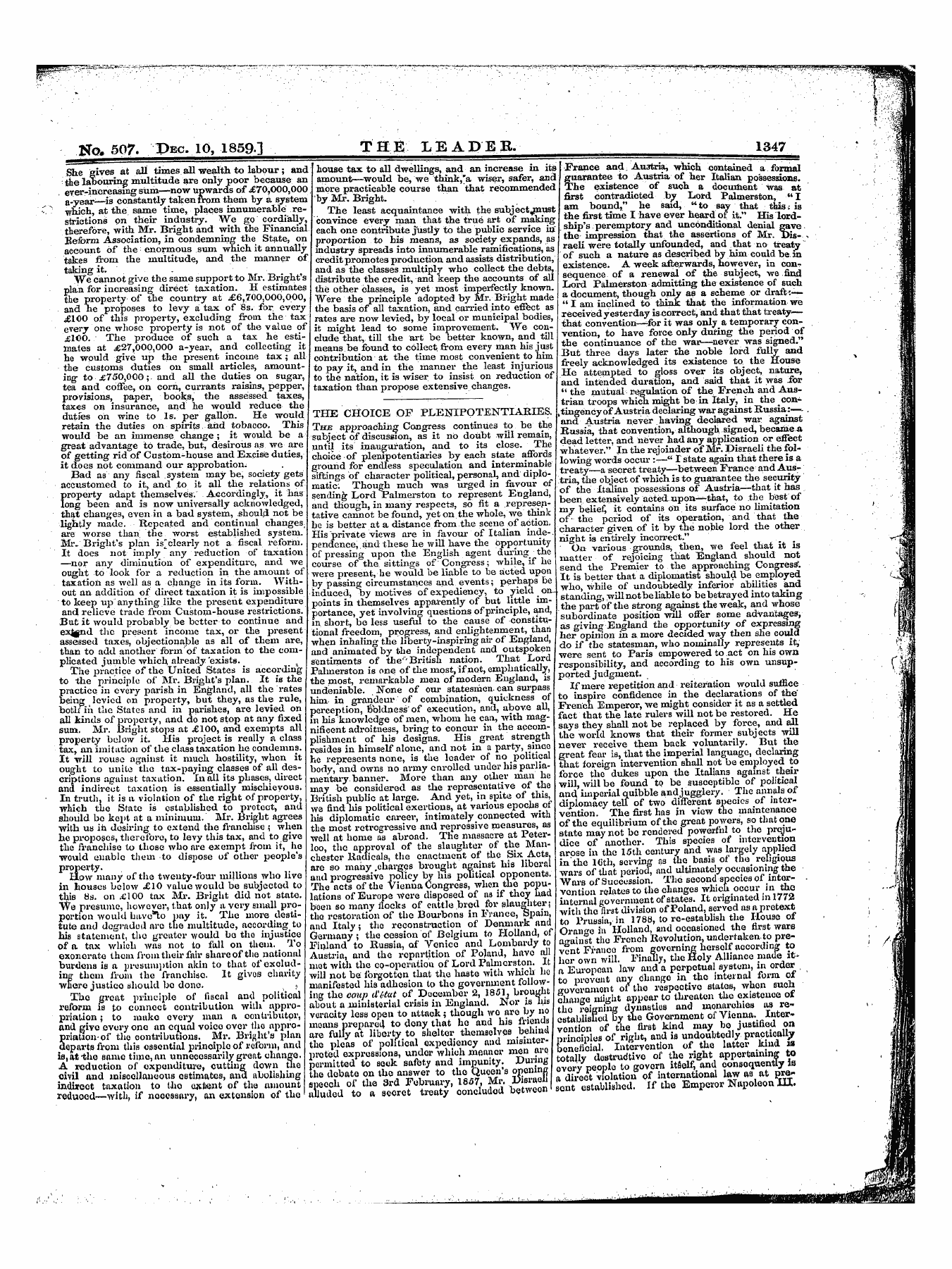
Untitled Article
She gives at ail times all wealth to labour ; and the laoouring multitude are only poor because an eve r-increasing sum—now upwards of ^ £ 70 , 000 , 000 a-year- —is constantly taken from them by a system which , at the same time , places innumerable restrictions on their industry . We go cordially , therefore , with Mr . Brig ht and with the Financial Keform Association , in condemning the State , on account of the enormous sum which it annually takes from the multitude , and the manner of taking it . L >
; We cannot give the same support to Mr . Bright ' s plan for increasing direct taxation . H estimates the property of the country at . £ 6 , 700 , 000 , 000 , and he proposes to levy a tax of 8 s- for every . £ 100 of this property , excluding from the tax every one whose property is not of the value of £ 100 . The produce of such a tax he estimates at £ 27 , 000 , 000 a-year , and collecting it he would give up the present income tax ; all the customs duties on small articles ,
amounting to . £ 750 , 000 ; and all the duties on sugar , tea and coffee , on corn , currants raisins , pepper , provisions , paper , books , the assessed taxes , taxes on insurance , and he would reduce the duties oh wine to Is . per gallon . He would retain the duties on spirits . and tobacco . This would be an immense change ; it would be a great advantage to trade , but , desirous as we are of getting rid of Custom-house and Excise duties , it does not command our approbation .
Bad as any fiscal system may be , society gets accustomed to it , and to it all the relations of property adapt themselves . Accordingly , it has long been and is now universally acknowledged , that changes , even in a bad system , should not be lightly made . Repeated and continual changes are worse than the worst established system . Mr . Bright ' s plan is ^ clearly not a fiscal reform . It does not imply any reduction of taxation
—nor any diminution of expenditure , and we ought to look for a reduction in the amount of taxation as well as a change in its form . Without an addition of direct taxation it is impossible to keep up anything like the present expenditure and relieve trade from Custom-house restrictions . But it would probably be better to continue and ex ^ nd the present income tax , or the present assessed taxes , objectionable as all of them are , than to add another form of taxation to the
complicated jumble which already exists . ^ The practice of the United States is according to the principle of Mr . Bright ' s plan . It ie the practice in every parish in England , all the rates being levied on property , but they , as the rule , both' iii the States and in parishes , are levied on all fcinds of property , and do not stop at any fixed sum . Mr . Bright stops at £ 100 , and exempts all property below it . His project is really a class
tax , an imitation of the class taxation he condemns . It will rouse against it much hostility , when it ought to unite the tax-paying classes of all descriptions against taxation . In all its phases , direct and indirect taxation is essentially mischievous . In truth , it is u violation of the right of property , which the State is established to protect , and should be kept at a minimum . Mr . Bri g ht agrees with us in desiring to extend the franchise ? when he proposes , therefore , to levy this tax , and to give the franchise to those who are exempt from it , he would eunblo them to dispose of other people ' s
property . How many of the twenty-four millions who live in liouscs below -CIO value would be subjected to this 8 s . on £ 100 tax Mr . Bright did not state . We presume , however , that only a very small proportion would huvo * to pay it . The move destitute and degraded are the multitude , according to his statement , tho greater would be the injustice of a tax which was not to fall on thorn . To exonerate than , from their fair share of the national burdens is a presumption akin to that of
excluding thorn from the franchises . It givos charity where justice should bo done . ( ? Tho great principle of fiscal and political reform is to connoct contribution with appropriation ; to muko every man a contributor , and give every one an equal voice over tho nppro-Snation-of tho contributions . Mr . Bright ' s plan oparte from this essential principle of reform , and is , at the eanxo time , an unnecossarilv groat change A reduction of expenditure , cutting clown tlio civil and miscellaneous estimates , and abolishing indirect taxation to tho extent of the amount reduood , —with , if nocesaary , an extension of tho
house tax to all dwellings , and an increase in . its amount—would be , we think , " a wiser , safer , and , more practicable course than that recommended by Mr . Bright . The least acquaintance with the subject niust convince every man that the true art of making each one contribute justly to the public service i « f proportion to his means , as society expands , as industry spreads into innumerable ramifications , as credit promotes production and assists distribution , and as the classes multipl y who collect the debts , distribute the credit , and keep the accounts of all
the other classes , is yet most imperfectly known . Were the principle adopted by Mr . ^ Bright made the basis of all taxation , and carried into efiect ^ as rates are now levied , by local or municipal bodies , it might lead to some improvement . We conclude that , till the art be better known , and till means be found to collect from every man his just contribution at the time most convenient to him to pay it , and in the manner the least injurious to the nation , it is wiser to insist on reduction of taxation than propose extensive changes .
Untitled Article
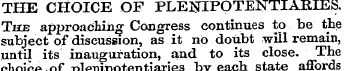
THE CHOICE OF PLENIPOTENTIARIES . The approaching Congress continues to be the subject of discussion , as it no doubt will remain , until its inauguration , and to its close . The choice of plenipotentiaries by each state affords ground for endless speculation and interminable siftings of character political , personal , and diplomatic . Though much was urged in favour of sending Lord Palmerston to represent England , and though , in many respects , so fit a representative cannot be found , yet on the whole , we think he is better at a distance from the scene of action .
His private views are in favour of Italian independence , and these he will have the opportunity of pressing upon the English agent during the course of the sittings of Congress ; while , if he were present , he would be liable to be acted upon by passing circumstances and events ; perhaps be induced , by motives of expediency , to yield on points in themselves apparently of but little importance , yet involving questions of principle , and , in short , be less useful to the cause of constitutional freedom , progress , and enlig htenment , than when inhaling the liberty-inspiring air of England , and animated by the independent and outspoken sentiments of the "' British nation . That _ Lord Palmerston is one of the most , if not , emphatically , the most , remarkable men of modern England , is
undeniable . None of our statesmen- can surpass him in grandeur of combination , quickness of perception , Boldness of execution , and , above all , n \ his knowledge of men , whom he can , with magnificent adroitness , bring to concur in the accomplishment of his designs . His great strength resides in himself alone , and not in a party , since he represents none , is the leader of no political body , and owns no army enrolled under his parliamentary banner . More than any other man he may be considered as the representative of the British public at large . And yet , in spite of this , we find his political exertions , at various epochs ot his diplomatic career , intimately connected with the most retrogressive and repressive measures , as
well at home as abro ad . The massacre at I eterloo , the app roval of the slaughter of the Manchester lindicals , the enactment of the Six Acts , are so many . charges brought against his liberal and progressive policy b y his political , opponents . The acts of the Vienna Congress , when the populations of Europe Were disposed of aa if they had boen so many flocks of cattle bred for slaughter ; the restoration of tho Bourbons in France , Spam , and Italy ; tho reconstruction of Denmark and Germany ; the cession of Belgium to Holland , of Finland to Russia , of "Venice and Lombardy to Austria , and tho repartition of Poland , havo all mot with tho co-operation , of Lord Palmerston . It will not be : forgotten that tho haste with which ho mnnifafitod his adhesion to tho covernment
following the coup dotut of December 2 , 1851 , brought about a . ministerial crisis in England . Nor is ms voracity loss open to attack ; though wo are by no moans prepared , to deny that ho and his mends are fully at liberty to shelter themselves behind tho ploas of political expediency and misinterpreted expressions , under which meaner men are permitted to seek safety < md impunity . During the debate on tho answer to the Queen ' s opening speech of the 3 rd February , 1857 , Mr . Disraeli alluded to a secret treaty concluded between
France and Austria , which contained a formal guarantee to Austria of her Italian possessions . The existence of such a document was at first contradicted by Lord Palmerston , "I am bound , " he said , "to say that this ; is the first time I have ever heard of it . " His lordship ' s peremptory aud unconditional denial gave the impression that the assertions of Mr . Disraeli were totally unfounded , and that no treat y of such a nature as described by him could be . in existence . A week afterwards , however , in consequence of a renewal of the subject , we find Lord Palmerston admitting the existence of such a document , though only as a scheme or draft : — "I am inclined to think that the information we
received yesterday iscorrect , and that that treatythat convention— -for it was only a temporary convention , to have force only during the period of the continuance of the war— -never was signed . " But three days later the noble lord fully and freely acknowledged its existence to the House He attempted to gloss over its object , nature , and intended duration , and said that it was ibr " the mutual regulation of the French and Austrian troops which might be in Italy , in the contingency of Austria declaring war against Russia : — - and Austria never having declared war against
Russia , that convention , although signed , became a dead letter , and never had any application or effect whatever . " In the rejoinder of Mr . Disraeli the following words occur : — " I state again that there is a treaty—a secret treaty— -between France and Austria , the object of which is to guarantee the security of the Italian possessions of Austria—that it has been extensively acted upon—that , to the best of my belief , it contains on its surface no limitation of the period of its operation , and that the character given of it by the noble lord the other ni ^ ht is entirely incorrect . " feel that it is
On various grounds , then , -we matter of rejoicing that England should not send the Premier to the approaching Congress ? . It is better that a diplomatist should be employed who , while of undoubtedly inferior abilities and standing , will not be liable to be betrayed into taking the part of the strong against the weak , and whose subordinate position will offer some advantages , as giving England the opportunity of expressing her opinion in a more decided way then she could do if the statesman , who nominally represents it , were sent to Paris empowered to act on his own responsibility , and according to his own unsupported judgment .
If mere repetition and reiteration would suffice to inspire confidence in the declarations of the French Emperor , we might consider it as a settled fact that the late rulers will not be restored . He says they shall not be replaced by force , and all the world knows that their former subjects will never receive them back voluntarily . But the great fear is , that the imperial language , declaring that foreign intervention shall not be employed to force the dukes upon the Italians against their will , will be found to be susceptible of political nnrl imnorial auibble and . lusfflery . The annals of
diplomacy tell of two different species of intervention . The first has in view the maintenance of the equilibrium of the great powers , so that one state may not be rendered powerfnl to the prejudice of another . This species of intervention arose in tho 15 th century and was largely applied inthe 16 th , serving as the basis of the religious wars of that period , and ultimately occasioning the Wars of Succession . The seoond speoies of intervention relates to the changes which occur in , the internal imvermnent of states . It originated in 1772
with the first division of Poland , served as a pretext to Prussia , in 1788 , to re-establish the House ot Oran ge to Holland , and occasioned the nrst wars against tho Fronch Revolution , undertaken . to prevent Franco from governing herself according to her own will . Finally , the Holy Alliance made it a European law and a perpetual system , in order to prevent any change in the internal form ot nivowunont of tho respective states , when such change might appear to threaten tho existence of tho reigning dynasties and monarchies as reestablished by tho Government of Vienna . Intervention of the first kind may be justified on
principles of right , and is undoubtedly practical ^ Conefioial . Intervention of tho latter kind i * totally destructive of the right appertaining to every people to govern itself , and consequently is a direct violation of international law as at present established . If the Emperor Napoleon IU .
Untitled Article
No , 507 . Pec . 10 , 1859 ] THE LEADER . 1347
-
-
Citation
-
Leader (1850-1860), Dec. 10, 1859, page 1347, in the Nineteenth-Century Serials Edition (2008; 2018) ncse.ac.uk/periodicals/l/issues/vm2-ncseproduct2324/page/15/
-