On this page
- Departments (1)
-
Text (4)
-

Untitled Article
-

Untitled Article
-

Untitled Article
-
IIUMBOLDT'S BETTERS.*
Note: This text has been automatically extracted via Optical Character Recognition (OCR) software. The text has not been manually corrected and should not be relied on to be an accurate representation of the item.
-
-
Transcript
-
Note: This text has been automatically extracted via Optical Character Recognition (OCR) software. The text has not been manually corrected and should not be relied on to be an accurate representation of the item.
Additionally, when viewing full transcripts, extracted text may not be in the same order as the original document.
Untitled Article
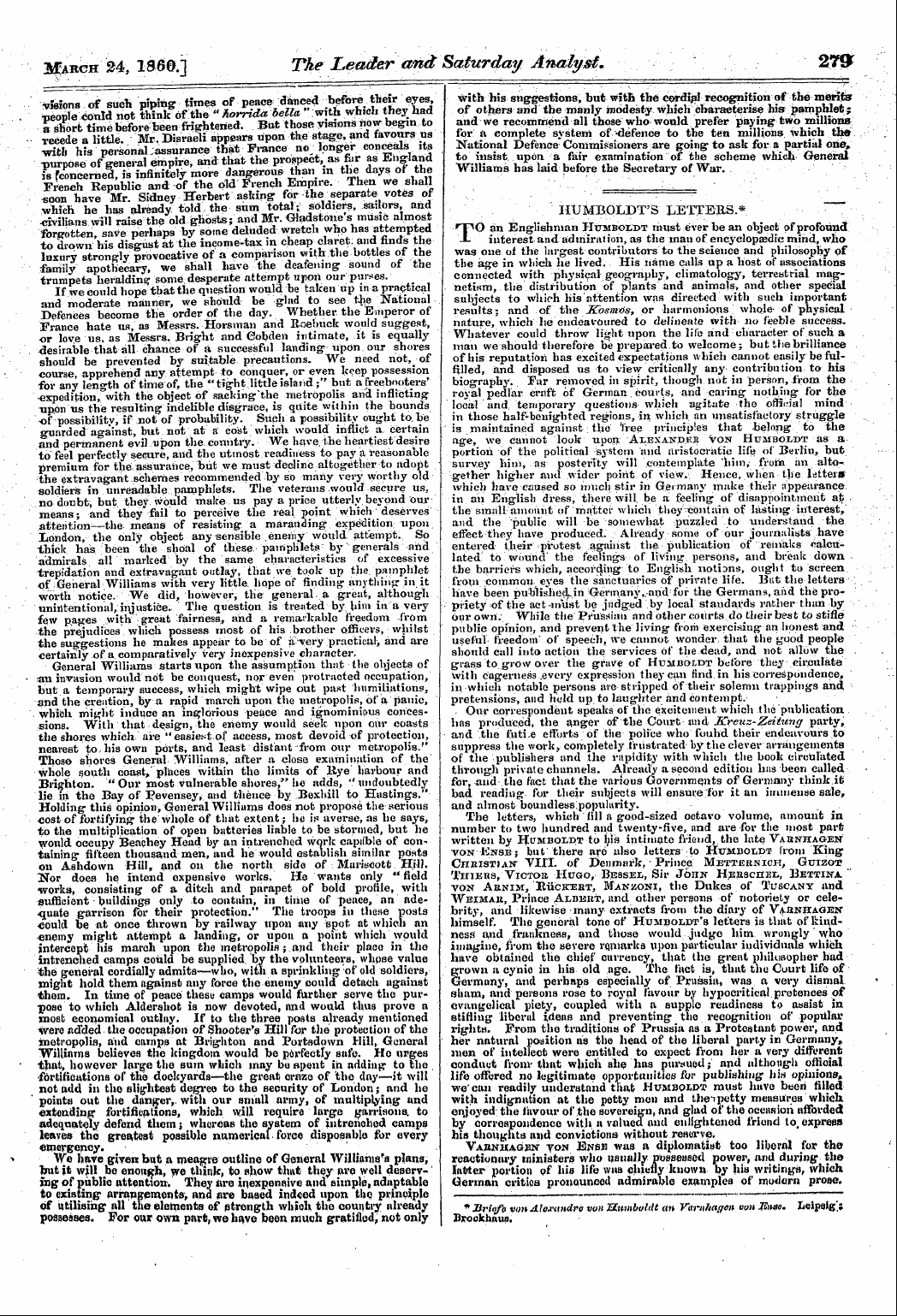
T O an Englishman HttmboIiBT must ever be an object of profound interest and admiration , as the man of encyclopedic mind , who was one of the largest contributors to the science and philosophy of the ag-e in which he lived . His name calls up a host of associations connected with physical geography , climatology , terrestrial magnetism , the distribution of plants and animals , and other special subjects to which his attention was directed with such important results ; and of the Kbsmtis , or harmonious whole of physical nature , which lie endeavoured to delineate with no fieeble success . Whatever could throw lig htupon the life and character of such a man we should therefore be prepared , to welcome ; but the brilliance of his reputation has excited expectations which cannot easily be
fulfilled , iand disposed us to view critically any contribution to his biography . Far removed in spirit , though not in person , from the royal pedlar craft of German courts , and caring nothing for the local and temporary questions which agitate the official mind in those half-benighted regions , in which an unsatisfactory struggle is maintained against the 'free ¦ principles that belong to the age , we cannot look upon . A : lexa : n \ dee von Hombolct as a portion of the political system and aristocratic life of Berlin , but survey him , as posterity will contemplate 'him ,- from an alto- * gether higher and wider point of view . Hence , when the letters which have caused so much stir in Germany make their appearance in ail English dress , there will be a feeling of disappointment at the small amount of matter which they contain of lasting interest .
and the public will be somewhat puzzled to understand the effect they have produced . Already some of our journalists have entered their protest against the publication of reinaks calculated to wound the feelings of living persons , and break down the barriers which , according to English notions , ought to screen from common . eyes the sanctuaries of private life . But the letters liave been published ^ in Germany ,-and for the Germans , and the propriety of the act-must be judged by local standards rather than by our own . While' the Prussian and other courts do their best to stifle public opinion , and prevent the living f rom- exercising an honest and useful freedom' of speech , \ ve cannot wonder , that the good people should call into action the services of the dead , and not allow the grass to grow over the grave of Huiiboldt before they circulate
with eagerness . every expression they can find in his correspondence , in which notable persons are stripped of their solemn trappings and , pretensions , and held up to laughter and contempt . - Our correspondent speaks of the excitement which the publication has produced , the anger of the Court and Kveuz-Zeitung party , and the ftiti . e efforts of the police who fouhd their endeavours to suppress the work , completely frustrated by the clever arrangements of the publishers and the rapidity with which the boolt circulated through private channels . Already a second edition bus been called for , aud the fact that the various Governments of Germany think it bad reading for their subjects will ensure for it an immense sale , and almost boundless . popularity . The letters , which ( ill a good-sized octavo volume , amount in
number to two hundred and twenty-five , and are for the most part written by J-Jumboxdt to l ; is intimate friend ,, the late VahnhageN ' von Ense ; but there are also letters to HUMBOfcDT from King Chkistjan "VHX of Denmark , Prince Mettjernich , Gtjxzox Tiukhs , Victoe . Hugo , Bessei ,, Sir John HEnscniJL , Bettina . von Aenim , RiicrcEET , Manjsoni , the Dukes of Tuscany and Weimab , Prince Albekt , and other persons of notoriety or celebrity , and likewise many extracts from the diary of Vahnhagen himself . The general tone of Humboldt ' s letters is Unit of kindness and frankness , and those would judge him wrongly who imagine , from the severe rqmarks upon particular individuals which hitive obtained the chief currency , that the great philosopher had grown a cynic in his old nge . The fact is , that the Court life of Germany , and perhnps especially of Prussia , was a very dismal sham , and persons rose to royal favour b y hypocritical pretences of evangelical piety , coupled with a supple readiness to assist in
stifling liberal ideus and preventing- the recognition of popular rig-htH . From the traditions of Prussia a 9 a Protestant power , and her natural poaition as the head of the liberal party in Germany , men of intellect were entitled to expect from her a very different conduct from-that which site ' has pursued ; and ulthoiigrli official life offered no legitimate opportunities for publishing 1 his opinions , we / can readily understand that JHumbomw must hnve been filled with indignation at the potty men and theT petty measures which enjoyed the favour of the sovereign , and glad of the occasion afforded by correspondence with a valued and enlightened friend to . express his thoughts and convictions without reserve . Vabnhagjjn yoN JEjjse was a diplomatist too liberal for the reactionary ministers who usually poeseaacd power , arid during the latter portion of his life wub chiefly known by his writings , which German critics pronounced admirable examples of mudurn prose .
Untitled Article
3 ^ arch 24 , 1 S 6 & ] The Leader and Saturday AnalyM . 270
Untitled Article
visions of such piping times of peace . danced More tteir eyes people conld not think of the " horrida bella with which they had 5 short time before been frightened . But those visions now begin to recede a little . Mr . Disraeli appears upon the stage , and favours us with his personal . assurance that France no longer conceals its purpose of general empire , and that the prospectus far as England is feoncerhed , is infinitely more dangerous than in the days of the French Republic and of the old French Empire . Then we shall soon have Mr . Sidney Herbert asking for the ^ separate votes of which he has already told the sum total ; soldiers , sailors , and Lilians will raise the old ghosts ; and Mr . Gladstone s . music almost forgotten , save perhaps by some deluded wreteh who . has ^ attempted to drown his disgust at the income-tax in cheap claret , and finds the luxury strongly provocative of a comparison with the bottles o . t the family apothecary , we shall have the deafening sound of the trumpets heralding some desperate attempt upon our purses . If we could hope that the question would be taken up in a practical and moderate manner , we should be glad to see the National Defences become the order of the day . Whether the Emperor of France hate us , as Messrs . Horsman and Roebuck would suggest , or love us . as Messrs . Bright and < 3 obden intimate , it is equally desirable that all chance of a successful landing upon our shores should be prevented by suitable precautions . We need not , of course , apprehend any attempt to conquer , or even keep possession for any length of time of , the "tight little island ; " but a freebooters ' expedition , with the object of sacldng ' the metropolis and inflicting upon us the resulting indelible disgrace , is quite within the bounds of possibility , if not of probability . Such a possibility ought to , guarded against , but not at a cost which would inflict a certain and permanent evil upon the Country . We have , the heartiest desire to feel perfectly secure , and the utmost readiness to pay a reasonable premium for the assurance , but we must decline altogether to adopt the extravagant schemes recommended by so many very worthy old soldiers in unreadable pamphlets . The veterans would secure us , no doubt , but they would make us pay a pi-ice utterly beyond our means ; and they fail to perceive the real point which deserves attention—the means of resisting a marauding expedition upon London , the only object any sensible enemy would attempt . So thick has been the shoal of these pamphlets by generals and admirals all marked by the same characteristics of excessive trepidation and extravagant outlay , that we took up the pamphlet of General Williams with very little hope of finding anything in it worth notice . We did , however , the general a great , although unintentional , injustice . The question is treated by him in a very few pages with great fairness , and a remarkable freedom from the prejudices which possess most of his brother officers , whilst the suggestions he makes appear to be of a very practical , and are certainly of a comparatively very inexpensive character . General Williams starts upon the assumption that the objects of an invasion would not be conquest , nor even protracted occupation , but . a temporary success , which might wipe out past humiliations , and the creation , by a rapid march upon the metropolis , of a panic , which might induce an inglorious peace and ignominious concessions . With that design , the enemy would seek upon our coasts the shores which are " easiest of access , most devoid of protection , nearest to . his own ports , and least distant from our metropolis . ' ' Those shores General Williams , after a close examination of the whole south coast , places within the limits of Rye' harbour and Brighton . " Our most vulnerable shores , " he adds , " undoubtedly lie in the Bay of Peverisey , and thence by JBexhitl to Hastings . " Holding this opinion , General Williams does not propose the serious cost of fortifying the whole of that extent ; he >> averse , as he says , to the multiplication of open batteries liable to be stormed , hut he would occupy Beai ? hey Head by an intrenched work capiible of containing fifteen thousand men , and he would establish similar posts on Ashdown Hill , and on the north side of Mariscotfc Hill . ISTor does he intend expensive works . He wants only " field works , consisting of a ditch and parapet of bold profile , with sufficient buildings only to contain , in time of peace , an adequate garrison for their protection . " The troops in these posts < j 6 uld be at once thrown by railway upon any - ' spot at which an enemy might attempt a landing , or upon a point which would intercept his march upon the metropolis ; and their place in the intrenched camps could be supplied by the volunteers , whose value the general cordially admits—who , with a sprinkling of old soldiers , might hold them against any force the enemy could detach against them . In time of peace these campa would further serve the purpose to which Aldershot is now devoted , and would thus prove a most economical outlay . If to the three posts already mentioned were added the occupation of Shooter ' s Hill for the protection of the xnetropplis , and camps at Brighton and Portsdown Hill , General Williams believes the kingdom would be perfectly safe . Ho urges that , however larjje the sum which may bo spout in adding to the , ¦ fortifications of the dockyards—the great craze of the day—it will not add in the slightest degree to the security of London ; and he points out the danger ,, with our small army , of multiplying 1 and extending fortifications , which will require large garrisons , to adequately defend them ; whereas the system of intrenched camps leaves the greatest possible numerical force disposable for every emergency . Wo have given bu , t a meagre outline of General Williams ^ plans , but » t will be enough , we think , to show thut they are well deserving of public attention , They ore inexpensive and simple , adaptable to existing 1 arrangements , and are based indeed upon the principle of utilising 1 all the elements of strength which the country already possesses . For our own part , we have been much gratified , not only
with his suggestions , but with the cordial recognition of the merits of others and the manly modesty which characterise his pamphlet ; and we recommend all those who would prefer paying two millions for a complete system of defence to the ten millions which the National Defence Commissioners are going ; to ask for a partial one , to insist upon a fair examination of the scheme which General Williams has laid before the Secretary of War .
Untitled Article
* JSriafl ) von Alexundro von JXnmbuMt cm Vivmhagon von JfSinio . Leipeig '; Brookhnua .
Iiumboldt's Betters.*
IIUMBOLDT'S BETTERS . *
-
-
Citation
-
Leader (1850-1860), March 24, 1860, page 279, in the Nineteenth-Century Serials Edition (2008; 2018) ncse.ac.uk/periodicals/l/issues/vm2-ncseproduct2339/page/11/
-