On this page
-
Text (2)
-

Untitled Article
-

Untitled Article
Note: This text has been automatically extracted via Optical Character Recognition (OCR) software. The text has not been manually corrected and should not be relied on to be an accurate representation of the item.
-
-
Transcript
-
Note: This text has been automatically extracted via Optical Character Recognition (OCR) software. The text has not been manually corrected and should not be relied on to be an accurate representation of the item.
Additionally, when viewing full transcripts, extracted text may not be in the same order as the original document.
Untitled Article
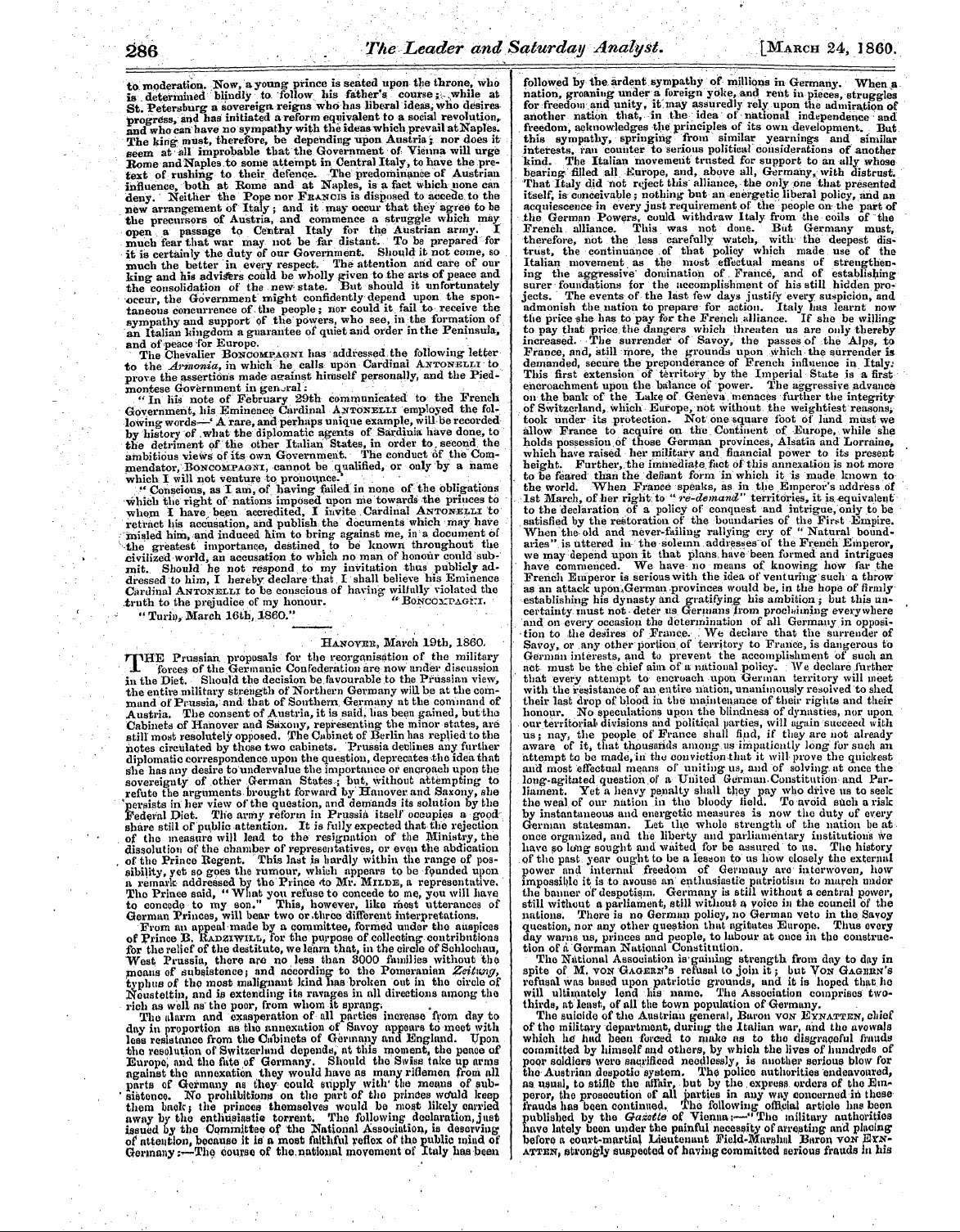
to moderation . Now , a young prince is seated upon tlie throne , who is determined blindly to follow his father ' s course ; -. while at St ^ Petersburg a sovereign reigns who has liberal ideas , who desires progress ,: and has initiated a reform equivalent to a social revolution , and who cani have no sympathy with the ideas which prevail atNaples . The king must , therefore , be depending ; upon Austria ; nor does it seem at all improbable that the Government of Vienna will urge Home and Naples to some attempt in Central Italy , to have the pretext of rushing to their defence . The predominance of Austrian influence , both at Borne and at Naples , is a fact which none can deny . Neither the Pope nor Fbancis is disposed to accede to the new arrangement of Italy ; and it may occur that they agree to be
the precursors of Austria , and commence a struggle which may open a passage to Central Italy for the Austrian army . I much fear that war may not be far distant . To be prepared for it is certainly the duty of our Government . Should it not come , so much the better in every respect . The attention arid care of our king and his advisers could be wholly given to the arts of peace and the consolidation of the new state . But should it unfortunately occur , the Government might confidently depend upon the spontaneous concurrence of the people ; nor could it fail to receive the sympathy and support of the powers , who see , in the formation of an Italian kingdom a guarantee of quiet and order in the Peninsula , and of peace for Europe . _ . . ' . m addressedthe letter
The Chevalier Boncomceagni has ' .. following to the Ai * monia , in which he calls upon Cardinal AjfTONELLi to prove the assertions made asrainst himself personally , and the Pi edmontese Government in gen w-ral : " In his note of February 29 th communicated to the French Governmen t ^ his Emineaee Cardinal Antonelm employed the following word s '— A rare , and perhaps unique example , will be recorded by history of what the diplomatic agents of Sardinia have done , to the detriment of the other Italian States , in order to , second ; the ambitious views of its own Government . The conduct of the Commendator , BoNCOMPAGNi , cannot be qualified , or only by a name which I will not venture to prouoimce . '
" Conscious , as I am , of having failed in none of the obligations ¦ which the right of nations imposed Upon nie ' towardsthe princes to whom I have been accredited , I invite . Cardinal Anton ^ elli to retract his accusation , and publish the documents which may have misled him , and induced Urn to bring against me , in a document of the greatest importance , destined , to be known throughout the civilized world , an accusation to which no man of honour coiild sub ? mit . Should he not respond to my invitation thus publicly addressed to him , I hereby declare that I shall believe his Eminence Cardinal Antonelli to be conscious of having wilfully violated tlie truth to the prejudice of my honour . " Boncoscpagiti . " Turin , March 16 th , 1860 . "
Untitled Article
Hanover , March 19 th , 1860 . rpHE Prussian proposals for the reorganisation of the military X . forces of the Germanic Confederation are now under discussion in the Diet . Should the decision be favourable to the Prussian view , the entire military strength of Northern Germany will be at the command of Prussia , and that of Southern , Germany at the command of Austria . The consent of Austria , it is said > lias been gained , but the Cabinets of Hanover and Saxony , representing the minor states , are still most resolutely opposed . The Cabinet of Berlin has replied to the notes circulated by those two cabinets . Prussia declines any further diplomatic correspondence upon the question , deprecates the idea that she has any desire to undervalue the importance or encroach upon the
sovereignly of other German States ; but , without attempting to refute the arguments brought forward by Hanover and Saxony , she persists in her view of the question , and demands its solution by the Federal Diet . The aririy reform in Prussia itself occupies a good share still oF public attention . It is fully expected that the rejection of the measure will lead to the resignation of tlje Ministry , the dissolution of the chamber of representatives , or evqn the abdication of the Prince Regent . This last is hardly within the range of possibility , yet so goes the tumour , which appears to be founded upon a vemavlc addressed by the Prince 4 o Mr . Mjlde , a representative . The Prince said , " What you refuse to concede to me , yoii will have to concede to my son . " This , however , like most utterances of German Princes , will bear two or . three different interpretations . From an appeal made by a committee , formed under the auspices of Prince B , KADz ; iwit . T » , for the purpose of collecting- contributions for the relief of the destitute , we learn that , in the circle of Sohloolmu ,
West Prussia , there are no less than 3000 families without the moans of subsistence ; and according 1 to the Pomeranian geitwg typhus of the most malignant kind has broken out in the circle of Neustettin , and is extending its ravages in all directions ainong the rich as well as the poor , from whom it sprang ; The ulnvm and exasperation of all parties increase from day to day in proportion as tho annexation of Savoy appears to moot with lesB resistance from the Ciibinets of Germany and England . TJpon the resolution of Switzerland depends , at this moment , the peace of Europe ; n « d the fate of Germany . Should tho Swiss take up arms against the annexation they would have as many riflemen , from all parts of Germany as they could supply with' tlio means of subsistence . Wo prohibitions on the part of the prindes wduld keep them bftokj the princes themselvos would be most likely carried awny by the enthusiastic torrent . The following declaration , just issued by tho Committee of the National Association , is deserving 1 of attention , because it is a most faithful reflex of the public mind of Germany ; i—The cou . vso of the . national movement of Italy has been
Untitled Article
followed by the ardent sympathy of millions in Germany . When a nation , groaning under a foreign yoke , and rent in pieces , struggles for freedom arid unity , it may assuredly rely upon the admiration of another nation that , in the idea of national independence and freedom , acknowledges the principles of its own development . But this sympathy , springing . / from similar yearnings and similar interests , rati counter to serious political considerations of another kind . The Italian movement trusted for support to an ally whose bearing filled all Europe , and , above all , Germany , with distrust . That Italy did not reject this alliance , the only one that presented itself , is conceivable ; nothing but an energetic liberal policy , and an acquiescence in every just requirement of the people on the part of the German Powers , could withdraw Italy from the coils of the
French alliance . This was not done . But Germany must , therefore , riot the less carefully watch , with the deepest distrust , the continuance of that policy which made use of the Italian movement as the most effectual means of strengthening the aggressive' domination of France , and of establishing surer foundations for the accomplishment of his still hidden pro ? jects . The events of the last few days justify every suspicion , and admonish the nation to prepare for action . Italy lias learnt now the price she has to pay for the French alliance . If she be willing to pay that price , the dangers which threaten us are only thereby increased . The surrender of Savoy , the passes of the Alps , to
France , and , still : m ore , the grounds upon which the surrender is demanded , secure the preponderance of French influence in Italy . This first extension Of territory by the Imperial State is a first encroachment upon the balance of power . The aggressive advance on the bank of the Lake of Geneva menaces further tlie integrity of Switzerland , which Europe , not without the weightiest reasoiisi took under its protection . Not one square foot of land must we allow France to acquire on the . Continent of Europe , while she holds possession of those German provinces , Alsatia and Lorraine , which have raised her military and financial power to its present height . Further ,. the immediate .. fact of this annexation is not more to be feared than the deJiarit form in which it is made known to
the world . When France speaks , as in the Emperor s address of 1 st March , of her right ; to " re-demand , " territories , it is . equivalent to the declaration of a policy of conquest and intrigue , only to be satisfied by the restoration of the boundaries Of the First Empire . When the old and never-failing rallying cry of " Natural boundaries" is uttered in the Solemn addresses " of the French Emperor , we may depend upon it that plans , have been formed and intrigues have commenced . We have no means of knowing how far the French EmperOr is serious with the idea of venturing such a throw as an attack upou j German . provinces would be , in the hope of firmly establishing his dynasty and gratifying his ambition ; but this uncertainty must not- deter us Germans irom proclaiming everywhere and on every occasion the determination of all Germany in opposition to the desires Of France . . We declare that the surrender of
Savoy , or any other portion of territory to France , is dangerous to German interests , and to prevent the accomplishment of such an act must be the chief aim of a national policy ; . We declare . further that every attempt to encroach upon German territory will meet with the resistance of an entire nation , unanimously resolved to shed their last drop of blood in the lnaintenance of their rights and their honour . No speculations upon the blindness of dynasties , nor upon our territorial divisions and political parties , will again succeed with us ; nay , the people of France shall find , if they are not already aware of it * that thousarids among us imputionUy long 1 for such an attempt to be made , in the conviction that it will prove the quickest and most effectual means of uniting us , and of solving at once the long-agitated question of a United German . Constitution and
Parliament . Yet a heavy penalty shall th . ey pay who drive us to seek the weal of our nation in the bloody field . To avoid such a risk by instantaneous and energetic measures is now the duty of every German statesman . Let the wholo strength of the nation be at once organized , and the liberty and parliamentary institutions we have so long sought and waited , for be assured to us . The history of the past year ought to be a lesson to us how closely the external power and internal freedom of Germany arc interwoven , how impossible it is to avouso an enthusiastic patriotism to march ua < ier the banner of despotism . Germany is still without a central power , still without a parliament , still without a voice in the council of the nations . There is no German policy , no German veto in the Savoy question , nor any other question Unit agitates Europe . Thus every day warns us , princes and people , to labour at once in the construction of d German National Constitution . Tho National Association is gaining 1 strength from day to day in
spite of M , von Gaoebw ' s refusal to join it ; but Von Gagijkn's refusal \ yas based upon patriotic grounds , and it is hoped that he will ultimately lend lus name , The Association comprises twothirds , at least , of all the town population of Germany . The suicide of the Austrian general , Baron von Eynatten , chief of tho military department , during the Italian war , and the avowals which he' hud been forced to make as to the disgraceful frauds committed by himself mid others , by which the lives of hundreds of popr soldiers were saqrjftced needlessly , is another serious Wow for the Austrian despotic system . The police authorities endeavoured , as usual , to stifle the affair , but by the , express orders of the Emperor , tho prosecution of all parties in any way concerned in these frauds has been continued . The following official article has been published by the Gazette of Vienna ;— " Tho military authorities have lately been under the painful necessity of arresting and placing : before a cou , rt-martiaj Lieutenant Field-Iftarshitl Jtoron vow Etnatten , strongly suspected of having committed serious frauds in his
Untitled Article
2 & ( 5 TheLeader and Saturday Analyst . [ March 24 , I 860 .
-
-
Citation
-
Leader (1850-1860), March 24, 1860, page 286, in the Nineteenth-Century Serials Edition (2008; 2018) ncse.ac.uk/periodicals/l/issues/vm2-ncseproduct2339/page/18/
-