On this page
-
Text (1)
-
Untitled Article
Note: This text has been automatically extracted via Optical Character Recognition (OCR) software. The text has not been manually corrected and should not be relied on to be an accurate representation of the item.
-
-
Transcript
-
Note: This text has been automatically extracted via Optical Character Recognition (OCR) software. The text has not been manually corrected and should not be relied on to be an accurate representation of the item.
Additionally, when viewing full transcripts, extracted text may not be in the same order as the original document.
Untitled Article
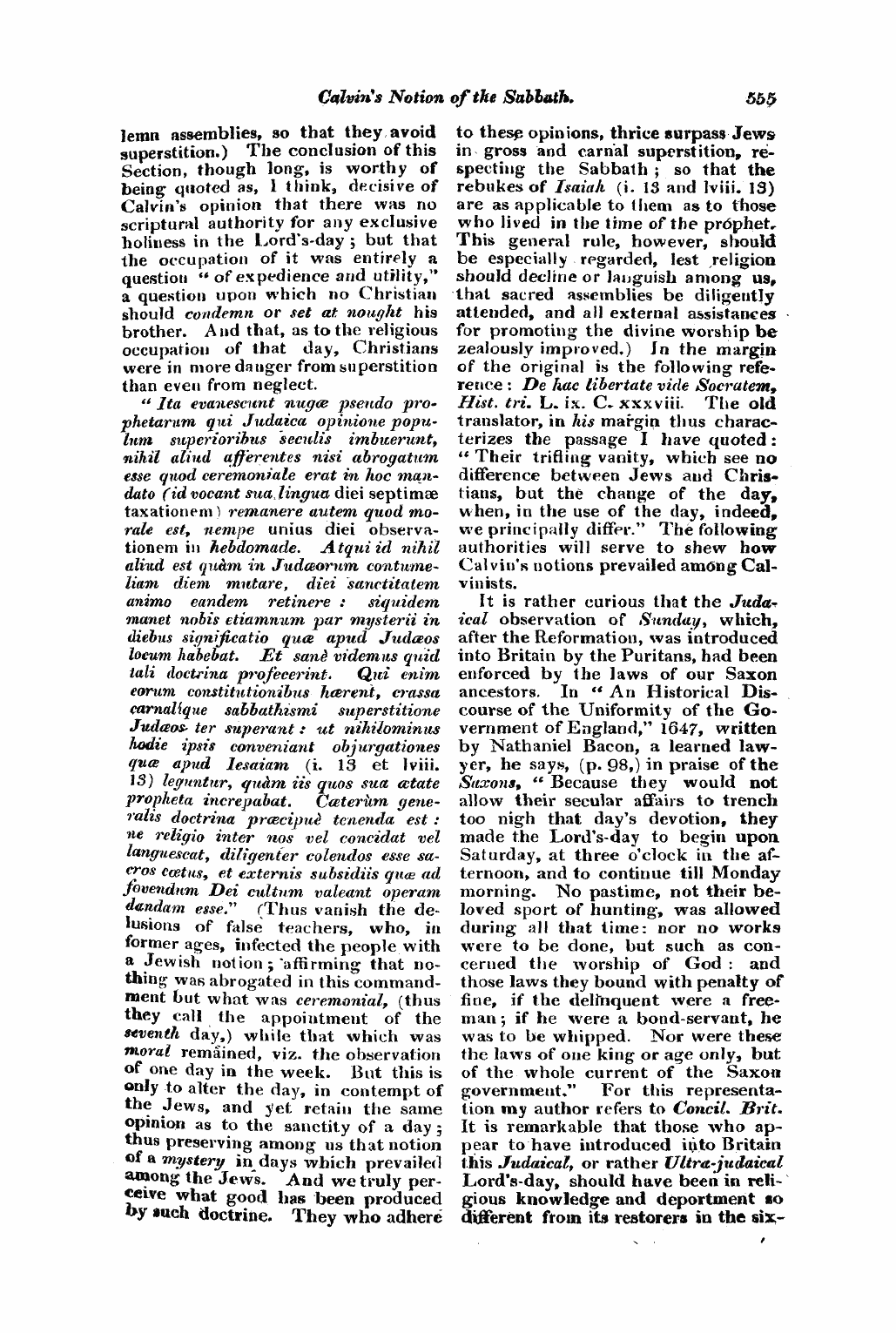
lemn assemblies , so that they avoid superstition . ) The conclusion of this Section , though long , is worthy of being : quoted as , 1 think , decisive of Calvin ' s opinion that there was no
scriptural authority for any exclusive holiness in the Lord ' s-day ; but that the occupation of it was entirely a question " of expedience and utility , ' a question upon which no Christian should condemn or set at nought his
brother . And that , as to the religious occupation of that day , Christians were in more danger from superstition than even from neglect * ' Ita evanescunt nug < & pseudo prophetarum qui Judaica opinione populutfi snperioribns seculis imbuerunt ,
nihil aliud ajferentes ntsi abrogatnm esse quod ceremoniale erat in hoc mandato ( idvocant suajingua diei septimae taxationem ) remanere autem quod morale estf nempe unius diei observationem in hebdomade . Atquiid nihil aliud est quttm in JudcBorum contume-Ham diem mutare , diet sanctitatem
ammo eandem retinere : siquidem rnanet nobis etiamnum par mysterii in diebus significatio quce apud Judceos locum habebat * Et sand videmus quid tali doctrina profecerint . Qiri enim eorum constitntionibus hcereni , crassa
carnalique sabbathismi superstitione Judaos * ter suyerant : ut nihilominiis hodie ipsis canveniant objurgationes qua apud lesaiam ( i . 13 et lviii . 13 ) leguntur , quant iis quos sua cctate propheta increpabat . Cteteriim generalis doctrina prcecipue * tenenda est : ne religio inter nos vel concidat vel fan guescat , diligenter colendos esse
sacros ccetus , et externis subsidiis quce ad jGvendum Dei cultnm valeant operam dandam esse . " ( Thus vanish the delusions of false teachers , who , in former ages , infected the people with
a Jewish notion ;' affirming that nothing was abrogated in this commandment but what was ceremonial , ( thus they call the appointment of the stventh day , ) while that which was
moral remained , viz . the observation of one day in the week . But this is only to alter the day , in contempt of the Jews , and yet retain the same opinion as to the sanctity of a day 5 thus
preserving among us that notion of a mystery in days which prevailed * u » ong the Jews . And we truly perc « ive what good lias been produced <> y * uch doctrine . They who adhere
Untitled Article
to thes £ opinions , thrice surpass Jews in gross and carnal superstition , respecting the Sabbath ; so that the rebukes of Isaiah ( i . 13 and lviii . 13 ) are as applicable to them as to those who lived in the time of the prdphetr This general rule , however , should
be especially regarded , lest religion should decline or languish among us , that sacred assemblies be diligently attended , and all external assistances for promoting the divine worship be zealously improved . ) in the margin of the original is the following refe * rence : De hac libertate vide Sowatem * Hist , trL L . ix . C ^ xxxviii . The old
translator , in his margin thus characterizes the passage I have quoted : u Their trifling vanity , which see no difference between Jews and Christians , but the change of the day t when , in the use of the day , indeed , we principally differ . " The following authorities will serve to shew how
Calvin ' s notions prevailed among Calvinists . It is rather curious that the Juda-r ical observation of Sunday , which , after the Reformation , was introduced into Britain by the Puritans , had been enforced by the laws of our Saxon ancestors . In " An Historical
Discourse of the Uniformity of the Government of England , " 1647 , written by Nathaniel Bacon , a learned lawyer , he says , ( p . 98 , ) in praise of the Saxons * " Because they would not allow their secular affairs to trench
too nigh that day ' s devotion , they made the LordVday to begin upon Saturday , at three o ' clock in the afternoon , and to continue till Monday morning . No pastime , not their beloved sport of hunting * , was allowed during ; all that time : nor no works
were to be done , but such as concerned the worship of God : and those laws they bound with penalty of fine , if the delinquent were a freeman j if he were a bond-servant , he was to be whipped . Nor were these the laws of one king or age only , but of the whole current of the Saxoit
government , " For this representation my author refers to ConciL JBrit . It is remarkable that those who appear to have introduced ipto Britain this Judaicalf or rather Ultra-judaical LordVday , should have been in religious knowledge and deportment to different from its restorers iu the six-
Untitled Article
Calvin s Notion of the Sabbath . 55 $
-
-
Citation
-
Monthly Repository (1806-1838) and Unitarian Chronicle (1832-1833), Sept. 2, 1819, page 555, in the Nineteenth-Century Serials Edition (2008; 2018) ncse.ac.uk/periodicals/mruc/issues/vm2-ncseproduct1776/page/31/
-