On this page
-
Text (1)
-
Untitled Article
Note: This text has been automatically extracted via Optical Character Recognition (OCR) software. The text has not been manually corrected and should not be relied on to be an accurate representation of the item.
-
-
Transcript
-
Note: This text has been automatically extracted via Optical Character Recognition (OCR) software. The text has not been manually corrected and should not be relied on to be an accurate representation of the item.
Additionally, when viewing full transcripts, extracted text may not be in the same order as the original document.
Untitled Article
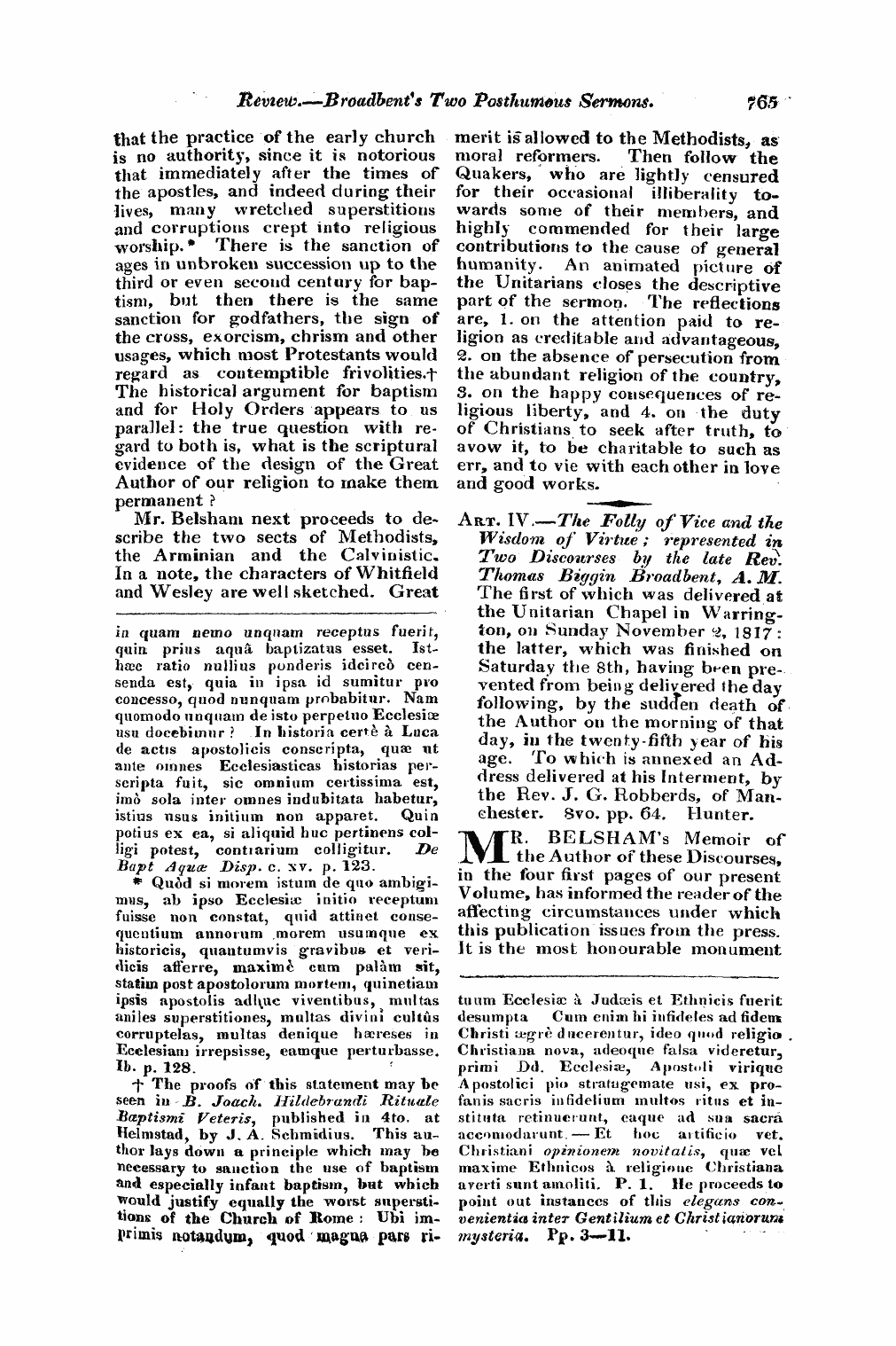
that the practice of the early church is no authority , since it is notorious that immediately after the times of the apostles , and indeed during their lives , many wretclied superstitions and corruptions crept into religious
worship . * There is the sanction of ages in unbroken succession up to the third or even secotid century for baptism , but then there is the same sanction for godfathers , the sign of the cross , exorcism , chrism and other usages , which most Protestants would
regard as contemptible frivolities . t The historical argument for baptism and for Holy Orders appears to us parallel : the true question with regard to both is , what is the scriptural
evidence of the design of the Great Author of our religion to make them permanent ? Mr . Belshani next proceeds to de ~ scribe the two sects of Methodists , the Arminian and the Calvinistic , In a note , the characters of Whitfield and Wesley are well sketched . Great
in quani nemo unqnam receptus fuerit , quiii prius aqua baptizatus esset . Isthaec ratio nullius ponderis idcirco censenda est , quia in ipsa id sumitur pio concesso , quod nunquam probabitnr . Nam quomodo unquam de isto perpeluo Ecclesioe usu docebimur ? In liistoria certe a Luca
de actis apostolicis conscripta , qua * nt ante omnes Ecclesiasticas historias perseripta fuit , sic omnium certissima est , imo sola inter omnes indubitata habetur , istius lisas initiuin non apparet . Quin potius ex ea , si aliquid hue pertinens colligi potest , contrariuin collig-itur . De Bapt Aqua ; Disp . c . xv . p . 123 .
* Quod si morem istum de quo amhigim « Sj ab ipso Ecclesiac initio receptum fuisse non constat , quid attinet consequentium annoruni morem usumque ex historicis , quautumvis gravibus- et veritlicis afferre , maxim e cwna pal am sit ,
statiin post apostoloium mortem , quinetiatn ipsis apostolis adl \ uc viventibus , multas aniles superstitiones , multas diviru cultus corruptelas , multas denique hsereses in Ecclesiam irrepsisse , eamque perturbasse * Ib . p . 128 .
-f The proofs of this statement may be seen in JB . Joach . Hildehrandi Rituale Baptismz Veteris ^ published in 4 to . at Helmstad , by J , A . Scbmidius . This slutbor lays down a principle which may be necessary to sanction the use of baptism &ii 4 especially infant baptism , but which ^ vould justify equally the worst superstitions of the Church of Rome : Ubi imprimis itoUudvjm , quod lua ^ ui ^ pure ri-
Untitled Article
Rtvieib . —Broadbent ' s Two PosthuMmis Sermons * f 65
merit is allowed to the Methodists , as moral reformers . Then follow the Quakers , who are lightly censured for their occasional illiberality towards some of their members , and highly commended for their large contributions to the cause of general humanity . An animated picture of the Unitarians closes the descriptive part of the sermon . The reflections are , 1 . on the attention paid to religion as creditable and advantageous ,
2 . on the absence of persecution from the abundant religion of the country , S . on the happy consequences of religious liberty , and 4 . on the duty of Christians to seek after truth , to avow it , to be charitable to such as err , and to vie with each other in love and good works .
tuum Eeclesiac a Judoeis et Ethnicis fuerit desumpta Cum cnim . hi infidetes ad fide it * Cliristi aigre dncerentur , ideo quod religion Christiana nova , adeoque falsa videretur primi X > d . Ecclesiae , Apostoli viriqiie Apostolici pi « stratag-emate usi , ex . profan is sacris infidelium multos ritus et
institiita retinuerunt , eaque ad sua sacra acconiodarunt . — Et hoc aitificio vet . Christian ! opinionern novitatis , quac vei maxime Ethnicos a . religioue Christiana averti snnt aiaoliti . P . 1 . He proceeds to point out instances of this elegans convenientia inter Gent ilium et Christ iqniorum mysterlet * Pp . 3 ~ 11 *
Untitled Article
—¦ Art . IV—The Folly of Vice and the Wisdom of Virtue ; represented in Two Discourses by the late Rev . Thomas Biggin Broadbent , A . M . The first of which was delivered at the Unitarian Chapel in Warrington , ou Sunday November % 1817 : the latter , which was finished on Saturday the 8 th , having b ^ en prevented from being delivered the day following , by the sudcTen death of the Author on the morning of that day , iu the twenty-fifth year of his age . To which is annexed an Address delivered at his Interment , by the Rev . J . G . Ftobberds , of
Manchester . 8 vo . pp . 64 . Hunter . MR . BELSHAM ' s Memoir of the Author of these Discourses , in the four first pages of our present Volume , has informed the readerof the affecting circumstances under which this publication issues from the press . It is the most honourable monument ** ' •¦ *• ¦»•*•* ¦¦ ill *—*¦¦• 'Hi" ¦ ¦¦ "' ¦ ¦¦••¦ »¦ - ' - ¦¦¦¦¦»•— . ifc ¦¦ ta . ii . ¦ i ¦ _ , * - ¦< ¦ 'i ,. t . i .,, M' « m —« .. , „„ i , « , „ ^
-
-
Citation
-
Monthly Repository (1806-1838) and Unitarian Chronicle (1832-1833), Dec. 2, 1818, page 765, in the Nineteenth-Century Serials Edition (2008; 2018) ncse.ac.uk/periodicals/mruc/issues/vm2-ncseproduct2483/page/37/
-