On this page
-
Departments (4)
-
Text (18)
-

Untitled Article
-

Untitled Article
-

3po*trg.
-

Untitled Article
-

Untitled Article
-
Untitled Article
-

Untitled Article
-

Untitled Article
-

Untitled Article
-
Untitled Article
-

ghrtgrnal €6rr*ft»m>*ntf Anftirttf Al dTA1*t»*<iVW*»rt» *»**»
-

&tte*ar» Entices
-

Untitled Article
-
Untitled Article
-
Untitled Article
-

3Etnvertal idntltament
-

Untitled Article
-
Untitled Article
Note: This text has been automatically extracted via Optical Character Recognition (OCR) software. The text has not been manually corrected and should not be relied on to be an accurate representation of the item.
-
-
Transcript
-
Note: This text has been automatically extracted via Optical Character Recognition (OCR) software. The text has not been manually corrected and should not be relied on to be an accurate representation of the item.
Additionally, when viewing full transcripts, extracted text may not be in the same order as the original document.
Untitled Article
10 THB KDITOB OF THB KOBTHK&X STAB . Manchester , May seth , 1840 . giB , —I beg to enclose yon s letter which I hare received from Dr . M'Douall , who is now imprisoned in Chester Ca « fle . I feel confident that the facts eon . ^ jjued in hiB letter need only to be known by your jpjjuerons readers and supporters to secure for bom that ^ mpathy and support from his fellow-countrymen Tfbidi be so justly deserves . Ihe importance of bis aitnation ia the best excuse I on plead for troubling yon with these observationa .
Toms most respectfully , Abel Hbtwood . Chester Castle , May 19 , 1846 . jjt Deab Hetwood , —I have received a letter ttsis day from Mr . Cobbett , of Manchester , in which he ¦ presses me to get his account settled by the people of ABbton . I , Sir , find my position becoming erery day sore and more critical ; it is true I am so trading politician . I have served the people of Ashfcon « itA and trilh&id a salary ; I was assisted on my defence , with ao funds or contributions , public or private , from any quarter , excepting from one general defence fund in tiu bands of the Convention , and from that source I via supplied "with ten PochDS . I have been now
npwards of kij « e homes in a prison , and the whole support I hare received from the public amounts to £ 15 . 4 s . lid ., which I receiTed in the following sums , from the following places : —from Ashton and Duckinfield £ 5 7 s . 6 d . ; from Dumfries £ 3 ; from Hyde and Sewton iloor £ 2 15 s . 3 d . ; from Montrose £ 2 5 a . 2 d . ; from the Masons of London £ l ; from Anderahaw 10 s . ; bom Oldham 2 s . ; and from Salford 5 s . As far as I can remember , these are the only sums I haTe received from the public I hare nerer asked the people to support me , and I hare such a contempt for trading politicians that I never , under ordinary circumstances , Tronld haTe mentioned these particulars . 1 will not mention what sums I hare expended in the past agitation , nor enumerate the sacrifices I hare made . No ; I
bare done allot my own tree will . I have made my offering at the altxr of liberty , and I am willing again to repeat it if I had the means . 1 am deprived of these by the bet and imnfta « iny pursuit of my enemies , -and after aiming at the prospect of liberty with honour tod with pride , I am confronted with an attorney ' s bill . The people will surely not allow this indignity to be offered to one of their warmest and attached adTocates , and suffer him to devote the poor remnants of his ruined means to the payment of a law account I must , in common justice , complain of this . This is too , too bad . I cannot snpp « se that , after I haTe struggled so bard for popular principles , that I will be left to the mercy of the debtor ' s law on my liberation from the fr-ng * of the Government . I am proud of the small
support I hare receiTed . It is the Tery best proof I can offer to the people that I an sincere in my professions and unchanged in my principles . Yes , 1 »> mii stand firm upon the Charter , and although persecuted by the Government , deserted by the people , I will still continue to ding to the last remnant of my opinions . I am proud 6 f my small pay , for my reward will not consist in the receipt of money , but in the fulfilment at freedom . All I ask is , not to be chained down by the attornies on my liberation—not to be destroyed by the harpies of the law . I shall hare enough to contend against in > ^ W ^ c to raise up the old standard—enough to do with the wily Tories and the bloody Whigs , ¦ ffhy should my burdens be increased by my friends utd a weight added by the people to my footsteps ? I
tare asked for no money ; I hare complained of no neglect ; I haTe had only one object in view from first to last , and that wai the establishment of the Charter as the law of the land , and with the help of God 1 mean to proceed with all my might in the same glorious eosne , proTided I am . not compelled to sit down by the force of debt Is it unjust in me to ask the people to pay my attorneys bffl ? I think not . I think it reasonable , just , and proper in tkem to settle that- It is a xmall faTour to ask . It is the first , because I am in priaoa , and will be the last , because 1 want not the peopk"i money . I want their co-operation with me in
the same cause . I demand their rights with the same easgy I haTe always done , and -whether they will conjjdsr me worthy of being saTed from debt or not ; whether they will be just enough to a man who has been unjust to lumself to serre their interests ; whether ikey will really haTe any sympathy for the prisoner , or tarn from their pursuits to rescue their advweate , I know not , neither do I care . I haTe but one patriotic duty to perform , that I am determined to do , and it is to contend for the rights of posterity , despising and defying the animosity of the GoTernment on one hand , tad disregarding and overlooking the desertion of the people on the other .
I remain , dear Heywood , Tours respectfully , P . M . M-Douall .
Untitled Article
TO THE EDITOB OP THE SOBTHKBS STAB . Sib , —The Taxied drcumstanees of late which has given rise to so much interesting matter in your journal , eke an impetuous torrent ^ is producing effects which those who haTe the Management of ite publication are not altogether conscious of . In my own mind it has , far the last twe months , caused emotions of a mingled character—joy and sorrow—hope and despair forbeszance and revenge . Joy ! l when I reflect on some who are concerned for the welfare of the oppressed thousands , e-rinced by © abating manly the difficulties whieh the publishing inch , a paper as the Nor&ern Star , subject its editors too , in opposing a despotic aristocracy , by unTeiling fcst legislature tyranny by which we are enthralled , vhose columns teem with soul-reTiring eloquence , emanating from hearts burning with intense zeal in Hx cause of philanthropy .
Sorrow : !! when I think of the dungeon , and picture to my view so many noble patriots , robbed of their freedom and liberty , for fearlessly asserting , and boldly defending the people ' s rights—yes , I could shed tears of sorrow when I know such a self-diEinter&rted and undaunted champion of liberty as Feargus O'Connor is to be incarcerated within the cheerless dungeon—what for ? Is H fer forgery , or highway robbery , or say flther injury to his fellow-creatures ? ~ No ; a thousand times , no . He is to be punished for standing up as the nnfiinching adToeate of the British slave , and for un-¦ PMingly exposing the infamous , yea , the heart-revGltmg proceedings of a WTiig faction , they hare robbtd tarn of nis Hberty ; and could any scheme be devised thereby he might be secretly assassinated , there arc thousands who would guide the dagger to his heart *» J revenge for his wrongs not be far distant . !
_ Hope ! when I see yonder the brilliant star of liberty jnst merging atore the horizon of despotism , especially ? nen I kcow the strides which Chartist principles are BaiiBg in the length and breadth of the land , and uuwugh its course , in some places , is like the silent s&eam pursuing its stilly way almost unnoticed , in eoaasqnence of fear tand perhaps the stave of some demagogue ) many are kept in the back grousd ; if they " we to offend these task masters , they would be de-PHvwl of the means of sustenance , and thrust into Ksaebastile . i a ^ ure you , Sir , from what I know of ™ "Wality , that there arc thousands of noble-m nded indrriduals here who , had they the exercise of their « £ & * , would convince the people of the north that Hay hsTe nut been unmindful of what has been going « tb = ie , and are cherishing a hope that the time is not » dutant when they shall haTe as opportunity of nauig in the cause of humanity and aTenging their
Despair !!! when I see the leaders of our glorious « u « banspwted , incarcerated , &c for adTocating the pedom of their fellow countrymen ; and on the other Jjad , perceiTe the want of determination to put down tte giant-form « f that cmed tyranny by which the tangry leriathans at the head of the GoTernment ° PPre » and gull the people r if the millions of our ana would but awake from their lethargic slumbers , « ad emulate the spirit of these untiring patriots who hare , and are now sufleriag unjust imprisonment , altboogh aO eannet exercise their foflpfmcp in the same *» 7 i yet there are plenty of springs , when pat into Peation , that will flow to the principal fountain til as espousing and explaining the cause of Chartism
a oar circles and amongst our immediate neighbours ; ** S bg them to become subscribers of that brilliant $ <* & * > calculated to tt * n ™ frn «* fl the dark mind , the f * ®** Sfff i by convening social meetings in order *> & ¦«¦ and elucidate the claims which working Z ?\ ° " »> but an < topriTed ef ; and tint their wretched rr" * * i » not from the want of a w » y to improre ™» «* cliSon , bat entirely through the rottenness of gg poHaeal system in the upholding bad laws . * f *« jseH when I pereeiTetbe dastardly contempt 7 « n * ttcathe poor nan ' s gneranee * are recerre * by "JtfoleBt nirtocaey , who are fattening upon the JaT * * thonnndi rolling in tbavt sptondggr which , _• « e « are , is daiYedfran the noor mta ' i ( nm .
T ^ WwaditKm ; wltrntinginthairdeptsredminds tim" !!!!!!?? de *«™ iM * i «» not to concede roe point ZT * wld improTe that condition ; but by continued £ ?** 3 juoasions aatd excessively « ircul * tiDg "blae " ^ rolains to strengthen despotic influence , . ^ J ** i 2 aaee > 3 J when I ruminate *|* n the march of * £ j ?~ ** eaee ; with what rapidity the delusion of ^ rv TQttr accumulation is pmmiag umy , thescalea ttSf * 2 * " * *« BS . * n d thousands , m it were , g ^ fgjWn Won see the < tisttimil * tingmotiTe * by wnich „ , *¦« & moastea of infinity are influenced ; three q T ™ «« o I-waa opposed to the righteous claims of wvfr *™> and cndeaToored to defend the eondnrt nt
J ? H thank Heavrea , the scales are off my eyes , HftLi B ^^ kHan into-my souL 0 ^ "~* wta shouki com * under the notice of Feargus lejjf j ™^ ' " » ould thank him from my heart for his vf j" ™?™! conduct w noble » cause , and urge W »? - ?** *» ori'iow * million * around tst dSL !* 1 * * ' * ° * ° on J *« his reward cannot be « hUElrtJ !^ wonld " ^ ^ * *• propriety ^^» ttg tint letter printed , is the form of tracts , , jj ^» addressed to the " Men wiihFusUan Jackets , " 8 a Soif 06 addres » d to Leech in the last number of otwlT ? " * Slar . I would take one hundred copies , CTerr ^ i ^^ mOTe ° * *** " ^ circulat * them into ^ . wi and eorner of the kingdom ; it would , in-** P « l « star" to open the eye * of those who
Untitled Article
haTe neTer yet seen political light ; a more soutsUrrfnir ktter never was penned by mortal man . I enclose herewith ten ahillingB , for the benefit of the wiTea and families of the incarcerated patriots ; and let all who feel an interest in such a cause as TJni-Tersal Suffrage join band in hand , remembering that " union ia strength , " to advance its true interests by strenuous exertions and nnf » ti «> hfn g zeal , tftufr whether life or death , the conacienee may be dear in haTine di » - charged an imperative duty . I remain , Sir , Tours respectfully , Chables Fish . Withain , in Essex , May 21 , 1840 . hiw nmr nt un « 1 IK « 1 1 M « . . _ . _ i ... .
3po*Trg.
3 po * trg .
Untitled Article
THE MOUNTAIN MINSTREL'S APPEAL . ( Lines addressed to Mrs . Frost , and copied by her Son for the Ntrihern Star . ) Twm eve , and the breezes blew keenly and chCQ O ' er tie snow-coTered mountains of Wales ; When the song of the Minstrel was heard on the hill , And the sound floated far on the gales . His harp , long neglected , once more he had strung , And he look'd on his country , so dear , As the woes of her children he plaintively sung , And thus fell his sad song on the ear .
" Oh ! where are thy patriots , Cambria , say ? Oh ! where are the good and the braTe ? And why do they wander from home far away , Borne on the Atlantic ' s wide wave ? " Alas ! they are banished their dear natiTe land , Their homes and their mountains so free ; Tom from all that they lord , at , the tyrant ' s command To dwell in a land o ' er the sea . " They mourn—but 'tis not o ' er their own private ills They now shed the patriot ' s tear ; They love the brave spirits of Cambria ' s hills , And the scenes ef their country revere .
" Yes ! yes \ they are gone , and I am left to relate , And thou my lev"d lyre now must tell To the stranger who kindly enquires of their fate , Twas for loving their conntry too welL " They had generous hearts ; in their boyhood had read How Hampden and Sidney had died ; And how in the cause of the people they bled , And were taught to revere them with pride . " They had join'd in the feast of the Martyrs long dead , They bad honoured the memory of JIuir , Whose struggles for freedom a lustre will shed While history ^ page shall endure .
" They saw how the poor by their lordlings were spurn ' d^—They beheld the whole country oppress'd ; And the fire of their youth to their bosoms retum'd To aid and relieve the distress'd . " Witii a generous ardour , for prudence too strong , And regardless , though dangers oppose ; In an ill-fated hour , they were hurried along , And were caught in the toils of their foes . " Now banish'd from all that a patriot can lov»—Their country , their children , and wives ; Across the wide waves of the ocean they move , To languish the rest of their lives .
" Then rouse thee , my Cambria , rouse from thy sleep Kur let me inv » ke thee in vain ; Thy Toice can recall them , though far on the deep , And restore them to freedom again . " Bid the men of the mountains no longer to mourn , Or look on their hills in despair ; For the man of their hearts shall most surely return—They wait but the aid of their prayer . " And the bold sons of Scotia ^ good as they ' re brave , Will petition again and again : Your voices , united , are mighty to save—They will not be lifted in vain . " Remember the matron of twice forty years Is left her sad Io 3 s to ueplore ; But a generous people will pity her tears , i And the son of her bosom restore .
" And she , round whose heart his young love was en twined , E ' en . she now a suppliant kneels ; One . effurt , with peace and with prudence tombin'd , Will banish the sorrow she feels .
"And he , * too , the gallant young boy of his heart , Who shrunk not when danger distress'd ; But clung to his father , and dared e ' en the dart That was aim'd at hiB junevile breast " His innocent prayer to bis Maker ascends , His merciful blessings to craTe ^—To crown his exertions of generous friends His much-injured father to saTe . " Then Petition . ' ye sons of my dear native isle ! And she who adorns Britain ' s throne Shall freedom restore , and again ye shall smile , And blessings descend on her crown .
" And thou , my sweet lyre , in a happier sound , Shall tell of the joys of my breast -, And echo afar , for the mountains around , Shall lull the old bard to his rest .
Untitled Article
- »» - ORIGINAL VERSES TO THE PUBLICOh 1 Liberty , fair plant , My country thou hast fled ; A worthless race are we , This fair sarth to tread . - A curse before the world—A blot before high beaTen " Which man the gift of God To all alike given . God made us equal all , His law we ' re disregarded : God gave u Hberty , But bondage we ' ve awarded .
Away ye fawning wretches , Go leave my native shore , I aeon to call ye brothers , Slaves are ye o ' er and o ' er . I would a demon sprite Would sweep ye from the earth , Ye hearties * race of curs , Wh » blight the fair on *' * birth . Then mi ^ ht she rear on high Her b « auteous heavenly state ; Then might fair Liberty Her own ones elevate . Ob , slave ! thy lot accursed Fills life ' s sad , bitter cap ; Tis thou who mak ' st the worst—Tis thou should drink it up . W . Pabgitbh .
Untitled Article
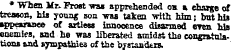
* When Mr . Frost was apprehended ok a charge of treason , his young son was taken with him ; but his appearance of artless innocence disarmed even his enemies , and he was liberated amidst the congratula tions and sympathies of the bysiandtrs .
Untitled Article
We have * large arrear of books and pamphlets , some of which have been lying on hand for a considerable length of time ; but which various circumstances prevented our noticing sooner .
THE Dr £ t £% , e CARDlNAL JOINTS OF THE PEOPLE'S CHARTER SEPARATELY EXPLAINED AND ADVOCATED . By John Watkiks , author of several works in behalf of the people . Whitby : WilliantForth . The titleof this littlebookand the name of its author sxifficientl yexplaintodrocommendit . Theauthor . Mr . John Watkins , Jun ., of Aislaby Hall , near Whitby , is one of these rare instances of devoted attachment to the cause of the working people , by individuals of a rank and Btation above them in the present corrupt order of things , which , likem a glea of sunshine on a wiater's day . surprise no less than cheer . He in th «
gentleman whose narrative of his treatment in prison has appeared in several numbers of the Northern Star . The honour—and we seriously account it to have been an honour to him—of passing some time in a Whig dungeon , was , we believe , accorded to Mr . Watkins for the offence of reading thiB little book , prior to its publication , to a company of working men . Its style is simple , homely , and perspicuous , but chaste and flawing , eminently adapted t © the class of readers for whom it is adapted . Its sentiments are of those genuine patriotism , without either violence or rant . All working men Bhould read it . Its price is threepence .
THE COMING REVOLUTION . A Poem . By Richabd Ghasham . Carlisle : Foster . A rhapsody of senseless rant . THE
S 0 E r ^^ ES IN OF CHAS . O'MALLEY , late of the Dragoous . London : Orr and Co . ; Dublin : Wm . Curry , Jun . and Co . ; Edinburgh : Crawford and Fraser . This is a new work by an old friend , Harbt Lokryqukb . We have not room for an extended notice now , but give the following rich specimen of Irish anecdote ; related among otaer electioneering stories , by Sir Harry Boyle , an Irish Mimber of Parliament , and a prominent character in the work . The person on whom the hoax is played off , is represented to be a sort of under secretary and a litterateur . come expressly to remark and write upon that omiouB specimen of the genxis homo , the Galwegia n in his own locality . " 'Peter , said Mr . Maenamara , turning to the servant behind him , ' who ' s dead hereabouts ' *
• "Sorra one , yer honour , since the scrimmage at Portunma ; the place is peaceable . ' " ' Who died lately in the ntighbourhood ?' " 'The widow Macbride , yer honor . ' ' 'Couldnt they take her up again ? Peter , my friend here never saw a wake . ' ¦ 'I ' m afeerednot , for it was the boys roasted her , and she wouldn't be a dacent corpse for to show a stranger , " said Peter , in a whisper . " Mr . Prettyman shuddered at these peaceful indicacatiens of the neighbourhood , and said nothing . '" Well , then , Peter , tell Jemmy Divine to take the old musket in my bed-room , and go over to the Clunagh bog . he cant go wrong , there ' s twelve families there that never pay a halfpenny rent , and when its done , let him give netice to the neighbourhood , as well have a rousing wake . '
" ' You dont mean , Mr . Maenamara , you don't mean to say , ' stammered out the cockney , with a face like a ghost . "' I enly mean to say , ' said Phil , laughing , 'that you ' re keeping the decanter very long at your right hand . ' " Burke contrived to interpose before the Englishman could ask any explanation of what he had just heard—and for some minutes he could only wait in impatient anxiety—wbeH a loud report of a gun close beside the house attracted the attention of the gueststhe next moment old Peter entered , his face radiant with smiles . " ' Well , what ' 8 that ?* said Maenamara . " ' Twas Jimmy , yer honour , as the evening was rainy be need to take one of the neighbours , and he hadn't to go far , for Andy Moore was going home , and he brought him down at once . '
"' Did he shoot him ? ' said Mr . Prettyman , while cold perspiration broke over his forehead . ' Did he murder the man ?' '" Sorra murder , " said Peter disdainfully ; 'but why wouldn't he shoot him when the master bid him ?'" We shall haveoccasion , from time to time . to present " Charles O'AIallet " to our readers in due form . He is a most amusing fellow , and they will be mach pleased with him we have no doubt .
Untitled Article
Ardent spirite , a » a general rule , miy be said to be more injurious than wines : there are wines , however , so vile in their compounds , and yet so largely brandied as to be even more ahwholesome , than the more open and undisguised enemy ! "It may not be uninteresting to inquire , how far the actual requirements of the animal economy may call for or justify the use of . alcohol drinks : for , according to the opinion of many , they are deemed to be , not only really . useful , but almost indispensable , for prompting and , upholding the health and vigour of the constitution . An opinion this , which has been almost universally prevalent , and has had the most extensive and even baneful influence upon the habits and destinies of mankind . Hence , it becomes a question of vital interest , and one upon which it behoves us to apply our most careful and dispassionate inquiry . It
may here be premised , that a state of health depends upon the perfect and harmonious operation of all the functions of life ; not only the great and primary ones , as digestion , circulation , respiration , and nervous energy ; but all the minor and even incidental operations of nature , must be altogether free from obstructions and irregularities . It will be readily perceived , that the entire system is supported by the Stood ; andthatuponthequality and determination of this vital fluid ; upon its fitness for the purposes of life , and its due and complete circulation , must depend , in a great degree , the proper supply of the most essential part of the system ; and so far as our present subject is concerned , it becomes a matter of paramount interest , to ascertain how far this prime fluid of the system , is enhanced , or deteriorated by the use of alcoholic drinks . Now on chemical principles , I am disposed to believe , that alc » hol is injurious to the system by its carbonization of the blood .
" The blood , be it remembered , is the vital fluid of tho body . Upon the quantity and quality of this fluid , must depend the health or disease of the system . Are you indisposed ? You ask the advice of your medical man ; and his first point of examination , is your pulse , in order that he may judge of the state of circulation ; and as this regulates the actual condition of the whole frame , whatever affects the circulation must be admitted to be a matter « f prime importance . Now , intoxicating liquors eminently tend to influence the state « f the circulation ; and they also deterioate the quality or condition of the blood . Examine the blood of a person , addicted to a free use of alcholic liquors ; and you will alwayspercive strong evidence of its deterioration ; hence , it follows , that the system , which is uninfluenced
by-such , agent , muni bo in a condition , more favourable to health than the contrary .. It has sometimes been asserted , that the advocates of total abstinence make strong appeals to feeling , and are not sufficiently open to argument On the present occasion , however , I am desirous more especially to address your reason and judgment ; for I maintain , that not only the morality , but the very philosophy of teetotalism is worthy of the most refined mind and exalted intellect ; besides , recommending itself , as closely allied to the purest Christian principle . In my own professional career , I have ever made it a point , not only to study the best writings on medical subjects , but also to read carefully the great book of Nature ; a chapter of which I have found presented , in every case that has come under my eye .
during the last twenty-five years , that I have been open to examine the immensely interesting and iniporttant data , which have tended to disabuse my own mind of ignorance and prejudice , in reference to the influence of intoxicating drinks upon the system . And now I am strongly inclined to suspect , that even the moderate , or , as it iB called , the temperate use of alcoholic liquors , is injurious in various ways . Nor is it enough , iH my opinion , to assert that they are unnecessary as articles of diet , and that their employment may be abandoned with impunity : since I fully believe that they originate a large proportion of diseases , which -would rarely appear but from their use . At the same time , it will be readily admitted , that whilst they aggravate most diseases , they cure none . All the great functions of the
system are impaired by strong drink ; more especially the circulation , respiration , nutrition , and the nervous energy . Alcoholic agency influences the circulation in two ways—by unduly augmenting the force of the circulation , and also by damaging the quality of the blood . Examine the pulse of a person who has taken a temperate meal , upon a non-alcholic diet , and you may find it ranging from 70 to 80 ; let the same individual attend a civic banquet , and respond in the supremely ridiculous , but ordinary way , to the numerous ' toasts ' which are pruposed , and then you find his pulse ranging from 90 to 100 ! And such an impetus is given to the circulation , that the only wonder is , that in such ircumstances , more ruptures of vessels of tha brain , and eonsequently moro apoplexies , do not ensue !
Respiration U also materially affected by intoxicating drinks ; and this may arise from their influence on the heart , and congestion of the lungs . How far the formation of tubercles in the lungs , may be attributed to spirituous potations , is worthy of minute investigation . It is well known , however , that many drunkards die of pulmonary and tracueal consumption . Chronic pectoral complaints are often kept up , if not produced , by the use of Alcoholic drinks ; and many teetotallers have expressed the most decided benefits , in the functions of the chest , since their adoption of this principle , in the upper classes ef society , we find dyspepsia prevalent ; and if you ask the poor man why he smokes tobacco , be will toll you he is plagued with ' water tomes '; proving , that in both classes indigestion is a
common'complaint Nor is there any wonder that the dijjesftoe wgdus should suffer from the use of alcoholic beverages , when we consider the necessary effects of Alcohol , uptn the coats and vessels of the stomach and chylopoetic organs t And if we could examine the condition of the prima via , after the administration of strong drink , we should meet with abundant evidence confirinatary of the account which my namtsake , Dr . Beaumont , of America , has given of St Martin . A young man , who had received a guuehot wound in the side , which left a large fistulous opening into the stomach , and which had not healed for several years , and through wliich , Dr . Beaumont explored , with great care and accuracy , and extraordinary perseverance , the appearances presented at different
times , and under various articles of diet When spirituous liquors bad been received , there were always present diseased appearances ; as red patches and spots upon the lining membrane of the stomach , also aphthous appearances were observable on the same surface . The gastric fluid was mixed with a ropy mucus ; and muco pendent matter , ^ resembling in some degree dyssenteric discharges , presented themselves . It is worthy of remark , however , that these appearances existed to some extent without any painful sensations being experienced ; all which only indicate the unhealthy influence of such drinks upon these important organs . And yet it must not be forgotten , Wvsk as in the case of
St Martin , who was insensible of any indisposition , even when thece morbid appearances presented them-Belves in the stomach , so in others , who indulge in these liquors ; serious misdiief m&j bo induced , without any immediate indications of deranged health . And no doubt , the pyloric portion of the stomach , as well as the biliary apparatus , and other organs of digestion , are often brought into disease by the use of spirituous liquors . The same cause , in children , often produces inflammation and induration of the glands of the mesentery , which prevents the free transmission of the chyle to the right side of the heart , and thereby causing that peculiar emaciation , attended with a tumid abdomen , known by the name of tabes Tnesenterica .
" A majority of all the cases that occupy medical attention , are connected in some way , with the use of spirituous liquors ; ami not a suiali minority of such cases , are novereven suspected of owing their origin to such a cause . Nor ia it possible for any medical man , who is not interested in the sulject uf temperance , to appreciate properly the actual phenomena , which result from the influence of alcoholic drinks . An anecdote is told of the lute Mr . Abernethy , which can only be understood , as exhibiting at once the strong conviction of his own observant mind , on this subject , and also , his natural eccentricity and occasional humour . " Do you consider spirituous liquors to be injurious , Mr . Abernethy ? " " Decidedly so ! " " Then
why do you not tell your patients so ? " " God Forbid ! by so doing , I should be cutting off a principal source of my own revenue ! " But seriously , allow me to ask , whether we , as professional men , are not bound by every honourable and humane consideration , to disabuse the public mind on this momentous subject ? Such' , at least , is my own feeling , and eould not have been prevailed upon to make tho heavy sacrifices necessary to my appearance here on this occasion . The truth is , that alcoholio drinks predispose to disease , produce dieease , aggravate disease , and prevent ( in most eases J a recovery from disease . Nearly all classes ef diseases , whether hereditary or casual , have been caused by the use of our most popular and approved beverages . "
This is one of the ablest scientific : developemehta of the mischeivous effects of alcoholio drinks that we remember to have Been . While we are now writing , on the 2 nd of June , we have received Tait ' s Magazine for May , and the British and Foreign Review for April . These are late in their arrival ; they shall be noticed next . - ^ - ^ . ^ **¦ -.. »>» . *¦¦¦—M | B ^ b W- ¦•¦'¦ ¦ ¦¦ ii ii-lr-in n . i .. . i ¦ i ¦
Untitled Article
The Ruual Polks at Kyton-upon-Dunsmoore , near Coventry . We hare now got three monsters in * humanJMiipe established in our village and th » surroundftjig district , well slothed and shod , with k pair of white gloves on their hands , and a <^ reat coat for bad weather . They go etruUinK about with a lordly gait , armed with a cutlass , brace of pistols , four rounds of ball cartridge , and a bludgeon , striking terror through all the old wemen ana children , who eee them with ltb . per week for their pay , while the labourer toils from morning till night for 10 s . per week , and is ill clothed and fed , with a wife and family to maintain . —Correspondent .
The Three Gods Cbjekd . —A short debate took place on Tuesday night in the House of Lords , oh the presentation of a petition by the Archbishop of Dublin , for some change in the Articles and Liturgy of the Church of England , during which the Bishop of Lincoln ( Dr . Kaye ) Btated that . the Rev . , M . Wodebouee . of Norfolk , one of the most distinguished of the clerical members of the Established Church , both for piety and learning , had come to a fixed determination to resign his own gown if the Athanasian Creed were not expunged lions the Liturgy of the Church .
Untitled Article
CHARTISM FROM THE POETS . SHAKSPEARE . « O England!—model to thy inward greatness , Like little body with a mighty heart ; . What might ' st thou do , that honour would ' st thou do , Were all thy children kind and nutural " " The King is but a man , as I am ; the violet smells to him as it doth to me ; the element shows to him as it doth to me ; all his senses have but human conditions ; his ceremoniea laid by , in bis nakedness he appears but a man . " . " the eause be not good , the King himself bath a heavy reckoning to make ; when all those legs , and
arms , and heads , chopped off in a battle , shall join together at the latter day , and cry all—We died at such a place ; some swearinir ; some crying for a surgeon ; some upon their wives left poor behind them ; some upon the debts they owe ; some upon their children , rawly left . I am afeard there are few die well that die in battle ; for how can they charitably dispose of anything , When blaod is their argument ? Now , if these men do not die well , it will be a black matter for the King , that led them to if King Henry the Fifth .
THE CHARTIST . " These days are dangerous ! Virtue is chok'd with foul ambition , And charity chased hence by rancour ' s hand ; Foul subornation is predominant , And equity exil'd the land . " "I shall not want false witness to condemn me ; Nor store of treasons to augment my guilt ; The ancient proverb will be well effected—A staff is quickly found to beat a dog . "
FROST ' S CASE . " Thou never did ' st them wrong , nor no man wrong ; And as the butcher takes away the calf , And binds the wretch , and beats it when it strays , Bearing it to the bloody slaughter-house ; Even so , remorseless , have they borne him h « nce . And as the dam runs lowing up and down , Looking the way her harmless young one went , And can do nought but wail her darling ' s loss ; Even so myself bewails good Gloster ' s case , With sad unhelpful tears ; and with dimm'd eyes Look after him , and cannot do him good ; So mighty are his . vowed enemies . " " Be that tbou hop ' st to bo ; or what thou art Resign to death , it is not worth the enjoying ; Let pale-faced fear keep with the mean born man , And fiud n » harbour in a patriot heart "
" What stronger breast-plate than a heart untainted ? Thric * is he armed that hath his quarrel just ; And he but naked though locked up in in steel , Whose conscience with injustice is corrupted . "
TRUE GUARD OP ROYALTT . " Dread Lord , the Commons sead you word by me , Unless false Suffolk straight be done to death , Or banished fair England ' s . territories , They will by violence tear him from your palace , And torture him by grievous lingering death . They say , by him the good Duke Humphry died ; They say , in him they fear your highness' death ; And mere instinct of love and loyalty , — Free from a stubborn opposite intent , As being thought to contradict your liking-Makes them thus forward in his banishment .
They say , in care of your most royal person , That , if your Highness should intend to sleep , And charge , that no man should disturb jour rest , Orf pain of your dislike , or pain of death ; Yet notwithstanding such a strait edict , Were there a serpent seen with forked tongue , That silly , glided towards your Majesty , It were but necessary you were waked ; Lest , being suffered in that harmful slumber , The mortal worm might make the sleep eternal ; And therefore do they cry , though you forbid , That they will guard you , whether you will or no , From such fell serpents as false Suffolk is .
Seeond Purt of King Hmry the Sixth MILTON . God only gave us over beast , fish , fowl , Dominion absolute ; that right we hold By his donation ; but man over man He made not lord ; such title to himself Reserving , human left from human free . Paradise Lost What moro oft , in nations gr « wn corrupt , And'by their vices brought to servitude Than to love boiula , s ; e more than liberty ; Bondage with ense than streamers liberty , And to despise , to envy , or suspect Whom God hath of LLs special favour raised As their deliverer ! if be aught begin , How frequent to desert him , aud at last To htiap ingratitude on worthiest deeds ! Samson Aaonistes
THOMSON . Till ? WUECK OF STATES . Unless corruption first tlejeet the pride And guardian vigour of the free-born soul , All etude attempts of violence are vain , Forfinn within , aad while at heart untouch'd , Ke ' er , yet by force was freedom vtrcome . But soon as independence stoops the head , To vice enslav'd , and vice created wants , Then to some foul coivuptiug hand , whose waste These heightea'd wants with fatal bountyfeeds From man to man the slack ' ning ruin rests Till the whole stats , unnerVd , in slavery sinks .
NOBILITY . Whoe ' er amidst the sons Of reason , valour , liberty , and virtue , Displays dist ni ; uisb / d merit ; lie ' s a aoble Of Nature ' s twn creating .
DEgVOTISM . The furious victor ' s partl . il will prevailed . All prostrate lay . And , in the stcret shade , Deep stung , but fearful indignation gnash'd His teeth . Of freedom , property , daspoil'd , And of their bulwark , arms ; with castles exush'd With ruffians quartered o ' er the bridl'd land . The shiv'ring -wretches , at the « urfew zoun& . Dejected shrunk into thvir sordid beds , Andtbro'the monvnfui gloom of ancient times Mus'dsad , or drtam'd of better ; eveu to feed Their tj rants' idle sport , the peasant stray'd To the wild herd , the pasture of the tame , The cheerful Lamlet , spiry town , was giv ' n , And the brown forest roughen'd wida ar * und >
THB PATRIOT . Nought eould his firmness shake , nothing seduce His zeal , still act ' ve for the common weal ; Nor stormy tyrants , Eor corruption ' s tools , Foul ministers , dark working by tho force Of secr « t-sapping gold , ail their vile arts , Their shameful honours , their perfidious gifts He greatly scorned .
CHURCHILL . O my poor country I weak and overpower'd , By thine own sons—eat to the bone—devour'd By vipers , which , hi thine own entrails bred , Prey on tby life , and with thy blood are fed , With unavailing gritfs thy wrongs I see , And , for myself not feeling , feel fer thee . I grieve , but can't despair—for , lo , at Land , Freedom presents a choice , but faithful baud Of chosen patriots , wen who greatly dare In such a noble cause , men fit to bear The weight of empires . IndepeDdente , vol . ii . page 318 .
Let us , impartial , with unwearied thought Try men and tl . ings ; let us as freemen ought Examine well on what all power depends , What are the general principles and ends Of Government , hew empire first began , And wherefore Man was rais'd to reign e ' er man . Idem , vol . ii . page 181
Untitled Article
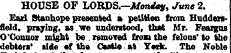
HOUSE OF LORDS . —Monday , June 2 . Earl Stanhope presented a petition from Huddersfield . praying , as we understood , that Mr . Feargus O'Connor might be removed fron the felons'to the debtors * side t the Castle aV Y * rk . The Noble Earl declared that he saw no reason , for his own part , why Mr . O'Connor should experience any different treatment te thai to which ether peneas similarly situated were exposed . : The Lord Chancellor moved Ibat the House resolve into committee on the Administratieu ef Justice ( two additional jujiges ) Bill . , The motion led to leng djstnaBion , im which Lords Lyndhurrt , Brougham , Denman , < fcc , took , part , but , in conformity with on amendment of Lord Lyndhurst , the bill was referred to a select eoBuoitfe * . The remaining business having been disposed ef , their Lordships adjparaed .
HOUSE OF COMMONS .-PAi ^ , Ma 2 d . Lord Ashl « y preeented a further report from the Select Cownitttee OiB mills audfactorles . Mr . Agltonby presented a petition from Lanarkshire ; eomplainhig of the treatment ef Feorgns O'Connor . Mr . Ewart and Mr . Pretheroe presented similar petitioMfromHaSifcx . F Mr . Langdale brought in his bill for amending the new Marriage Act It was read the first time . On motion of Sir T . Freuiantle , new write were orpered for Radnorshire , in the room of Walter De Winton , Esq ., deeefcfced ; and for Sudbury , Id lieu of Sir J . Walsh , who' has vacated , by accepting a stewardship of the ChUfcm Hundred * .
Mr . Gladstone ebterred that , in answer to a question put by him a few evenings ago , the Secretary for the Colonies declined to produee a despatch-to the Governor of British Guiana , respecting the Increased civil list . By the lastinail papers had arrived , containing the despatch in Question ; Would the Noble Lord now have any objection to produce the despatch , with such papers as he might think expedient ? : .
Untitled Article
Lord John Russell answered that he had not yet leard from the Governor , and he wisked to wait Mil te didso . ; , Mr . Gladstone asked whether asy despatches had a * - rived by the last mail ? Lord J . Russell was understood to answer that despatches had arrived . _ Mr . Fector inquired whether there was any hope of Dr . Bewringfs jeport relative to Egypt and Assyria being laid on the table of the House , and ia an " unmutilated" State ? .
Lord Palmerston answered that he eould so . fas console the Hon . Member as to state , that the report had been returned to Dr . Bowring , for the purpose of his superintending the printing of it His Lordship further remarked , that he had , however , been compelled to strike out some short passages in the report , containing political speculations of the author , considering that if the doctor wished to write a pamphlet about his own opinions upon political matters ' , he ought not to do it at the public expense . The report would contain every information of a commercial nature . , Major C . Bruce asked whether the Secretary of State for Foreign Affairs could give any information respecting the obstructions said to have been thrown in the way of Protestant worship , as regarded British residents at Naples ?
Lord Palmerston answered that difficulties had arisen in consequence of the laws of Naples forbidding any other than Roman Catholic public worship in that country . For a leng course of time the consul-general devoted an apartment in his house for Protestant worship by British residents ; and when the office of consul-general was abolished , and a consul , with a reducsd salary , was appointed , similar accommodation was still furnished in the consul ' s house . At last , however , the number of the British residents increased so much that a new building was required . The consent
of the Neapolitan Government was at first obtained for its erection , but , acted upon by other influences , after the first stone had been laid , that consent was retracted . Some British residents still endeavoured to procure a room to be fitted up as a chapel ; but even this the Neapolitan Government interfered to prevent . Negociations had been for some time proceeding , but they had been broken off by the sulphur question . He hoped , however , there would soon be effected some arrangement with the Neapolitan Government on the subject of freedom of religioms worship for the British residents at Naples .
Lord Mahon asked whether there would be any objection to lay on the table of the House the order in council recently issued on the subject of transportation to New South Wales 1 Lord John Russell answered that he should not object to ite : production if the Noble Lord would move for it . On motion of Lord Mahon , an address to her Majesty , praying that she would be graciously pleased to order the copy of the said order in council to be laid before that House , was thereupon moved , and adopted . Mr . Ewart inquired whether there would be anj objection to lay before the House the report of the Commissioners appointed to investigate into the state of Malta , more particularly with regard to the subject on which he some time since presonted a petitionnamely , regarding the establishnitnt of a representative assembly in the Island ?
Lord John Rtssell answered that the Commissioners had not made any report on the subject ; but that they had given in a statement , and had acquainted him with their reasons for postponing the preparation of a report Mr . Ewart then asked whether there was any objection to lay those reasons before the House ? Lerd John Russell rejoined , that he did not believe the reasons were mentioned in the statement , but that be wculd look it over to ascertain the fact . Mr . Goulburn , previously to the House proceeding to the Canada Government ( Union ) Bill , presented aa enormous petition , with 38 , 000 signatures , and whick he had only received two homrs before from Lower Canada , expressing an opinion adverse to the passing of the BilL The petitioners stated that , from the first , they had observed that the Governor-General had stated in his despatch that the " re-union" of the twe provinces was approved of by the inhabitants of Lower Canada . That they wew unaware of any steps taken to ascertain the feelings of the inhabitants of that province , except » y calling a special council , of whick not above half of the members were present That the council did not represent the feelings of the inhabitants . The petitioners stated their belief , that aftex the long separation of the provinces , their union would only produce disunion and confusion , and would be detrimental to the best Interests of both the Canada Also , that many of the assertions in Lord Durham ' s report relative to the disputes that had taken place in the provinces were founded in error .
Lord J . Ruasell then moved that the House resolve Into Committee on such a BilL Mr . Pakington moved , as an amendment , that the House resolve iuto such Committee en that day six months . ' This led to some discussion , after which the amendment was , negatived . The House then reselved into eemmittee , iu wnlchsome desultory conversation took place on various clauses . The report waserdered to be received on Monday . Lord J . Russell said that be proposed to proceed further with the Bill on Monday , after the Customs Duties ,, fcc Bill had been disposed of . The Frivolous Suits Bill went through committee . The Church Building Bill was read the secend time . The Indemnity Bill Was read the third time and * passed . : '
Mr . Alston moved that the petition , presented the 27 th instant , of Augustus Smith and Benjamin Martin , regarding the Berkhampstead School , be referred to the Select Committee on the Grammar Schools' BilL Mr . Hope opposed the motion * The Gallery was cleared for a division , but there being only fifteen members presfeHt , the House was , of course , " counted cut " Monday , June 1 . Mr . Sergeant Talfour * presented a petition from Mr . Sir . Sergeant Talfour * presented a petition from Mr .
Feargus O'Connor , complaining of certain gross indignities to wliich he had been subjected in Tork Gaol , and praying the House to interfere to procure hisrcmoval to the Qaeen ' s Bench prison . He bad hoped that circumstances would have occurred to prevent the necessity of presenting the petition , but he had received a letter from Mr . O'Connor , requesting him to present it without delay , which he felt it his duty to do . He moved that the pt-tU ' : on be printed , and he begged te give notice , that to-morrow he would call the attention of the House to it .
The petition was ordered to be printed . Mr . O'Connell gave notice , that by way of amendment to Mr . Sergeant Talf ourd ' s motion , he would « nove > for a committee to Inquire Into prison discipline wit * regard to the difference between misdemeanour and felony . Sir W . Follett presented a petition from Exeter in favour of church extension . The Hen . and Learned Member also presented a petition from the Provincial Press Society , complaining of the injurious operation of the libel laws as regarded the respectable portion of the press , complaining that the press was subject to vexatious actions , and that they Were subject to actions for giviag even a correct report of proceedings . They prayed the House to take into cenaid-jration the present law of libel with a view to its alteration .
Mr . T . Duncombe presented a petition from certain inhabitants of the metropolis , complaining of the imprisonment of M . H . Vincent in the Penitentiary , and praying for bis removal to some other prison . He had also a petition to present which had been agreed to at a large public meeting in Glasgow , complaining of the unprecedented number of prosecutions for politic il offences ; Instituted by the present Ministers . Th « petitioners also remarked , that this was rather inconsistent on the part of a Government which allowed the Tories of England to insult the throne without punishment , which also allowed the churchmen of Scotland to , resist the law without punishment , and which allowed certain supporters of Government ia Ireland , through the agency of Mr . O'Connell , toagitat for the dismemberment of the empire without punish ment They prayed for the release of Mr . Feuga O'Connor . ^^
Mr . Sergeant Jackson asked when it was likely that the Registration of Toters ( Ireland ) Bill would be laid on the table ? Lord John Russell answered that he hoped tha bill would be presented in the course ef that day * sitting . " .. ' ¦ '¦ : ¦ ¦ Sir R . Peel expressed surprise that the Canada Gevcrnment ( Union ) Bill bad gone through committee on Friday . He did not wish to interpose any 4 d « y to its passing , but he thought it would be more tatisfector to Canada , and te that House , If the bill received every consideration , and he therefore hoped the ICebl Lord would postpone it till after the short mesa at Whitsuntide , in enter that an opportunity might be afforded fox itedfeeussion . ^^*
Lord J . Russell said , that the proper course to diseusa thedetailaofabillwac in committee . It was far from his wish to carry the bill hactily , but he badflxadi * for Friday , because some member * wisbed to sake ob » nervations on a few of the dances . He h * d x » objec tion to accede to the proposition , if It applied to the third reading , and to poitpene the third zeadinc of tbo bllltill after the recess . . "T * " ^ - Mr . Gladstone said , that he cer tainly oonsidend tint the district classes were to be further discussed . They
were brought on in the absence of the Right Hon . Baronet , ' and he considered that a further opportonitar ef ex * amining them ought to be given . Lord J . Russell said that the details of a bill wen generally eonsldfcred In Committee , bub he "i "" gHt *^ any objection * to the clauses might be discussed upon tba motion for the third reading of the bill . T . The House then proceeded to the cosftidefltica « f the Customs' Duties , 4 e . Bin , and to the roniiftsr ation of certain amendments proposed bv dUBwMi member * "^ ^^ . * . : ^~; n *
The report was ctdered to be received this day . The report of the Canada Government BuLimi * . V ceived , and ^ Iffil ^ f ftt ? T ? TM . Urd J . Russell said , that he proposedtoSJSJ V W ^ third reading on Friday se ' nnlgbt . ^^ . ' v *~^^ TA IV The remaining business hating been d&bc ^ jBH * f ^^^^ CS House adjourned . : % * jla /^ gp ^ y li&S . ^ ¦ ¦ ; ' :-. :: ; - v v . ¦ ¦ ¦ - /¦ : . ^^ 'di ^ fitl
Ghrtgrnal €6rr*Ft»M≫*Ntf Anftirttf Al Dta1*T»*≪Ivw*»Rt» *»**»
ghrtgrnal € 6 rr * ft » m >* ntf Anftirttf Al dTA 1 * t »*< iVW *» rt » *»**»
&Tte*Ar» Entices
&tte * ar » Entices
Untitled Article
THE MECHANIC AND CHEMIST . A Magazine of the Ana and Sciences . London : Berger , Holywell-Btreet , Strand .
This is a penny scientific periodical ; and we have no hesitation in subscribing , so far as our knowledge goes , the assertion of the publisher , that it is " the cheapest scientific work published . " We have here before us the monthly part for April—comprising three ginglo numbers and one double one . There axe eight or nine Ecierilific and mechanical engravings , with orignal -descriptive articles , besides various other interestiug papers .
Untitled Article
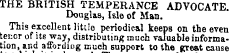
THE BRITISH TEMPERANCE ADVOCATE . Douglas , Isle of Man . This excellent litt ! e periodical keeps on the even tenor of He way , distributing much valuable information , and affording much support to the gTeat cause to which it is devoted . The present number for May 23 d , contains two good general articles , editorial ; a medical article from Dr . Hastings ; an excellent statistical communication from Dr . Corsellis , of Wakefield Lunatic Asylum , showing the relative bearing of intemperance and insanity ; an interesting biographical notice of Father Matthew ; and a great deal of information respecting the spread of fempeiance throughout the Kingdom .
Untitled Article
HULL TEMPERANCE PIONEER AND RECHABITE JOURNAL , FOR , MAY . Edited by R . Firth . The present number is almost entirely occupied with a report of the anniversary proceedings of the Hull Temperance Society . We give the following from the address of T . Beaumont , Esq ., of Bradford , in the hope that it will be universally read : — " Intoxicating liquors are of two classes : distilled and fermented . The former comprises those termed ardent spirits ; and the latter , wines snd malt liquor . Vulgar prejudice has usually conceded the attribute of strength to the woktpotent preparations ; and , on this principle , it has been thought , that brands , and the strongest wines and ales , were better adapted for
affording invigoration , than other drinks . On this mistaken principle , has hinged , in a great measure , the great delusion , by which society has been so long abused ! If , however , only a very moderate share of calm and scientific investigation of the chemical properties , and physiological action of these liquors , on the one hand ; and the true phenomena of the animal functions , on the other , ha < l been applied to this subject , long ago ; much of the evil tl » t we are called to deplore , and to remove , might have been averted ; nor Ehould we fciive now to contend , not only against indifference and apathy , where we might have expected sympathy and co-operation ; but actual opposition and bitter hostility , in quarters , where , at least , we bad no right to expect such treatment
" The general principle of intoxication In all drinks containing this property is alcohol ; which is a substance , resulting from what is tcrned the vinous fermentation of fluids containing sugar , &c , and , may be obtained , more or less , pure and concentrated , by dis . tillation . It needs but little evidence to demonstrate , that alcohol contains no single property of real strength or nutriment ; on the ether . hand , it is readily admitted —by the most eminent chemical and medical philosophers—to be a poison ! Dr . Cristison , Orflla . and others , rank Alcohol with other narcotics ; and it has been found to destroy life , as certainly , and as quickly , as any other . And yet , if by evaporation or otherwise , the spirit Is withdrawn from wines or malt liquors , they are deemed so unpalatable and worthless , as to be
utterly unfit for use ; nor has any--person ever been found disposed to drink them ! a pretty convincing proof , that their chief fascination , conaiits in their spirituous quality . The greater the proportion of spirit , therefore , which is contained inalcobclic drinks , and the more injurious to health they must become The chemical constitution of Alcohol , is sufficient to establish its own deleterious character ; and it must be impossible that such a chemical combination , can be otherwise , than injurious to the system : for whilst the important function of respiration , is essentially necessary to disengage carbon tram the blood , as being incompatible with the vital principle ; Alcohol contains in itself a very large proportion of this Tery gas ; for ( in round numbers ) Alcohol contains , of carbon £ 2 , hydrogen 13 , and oxygen 34 atomic parts in 100 .
" The philological action of alcohol is a part of the subject , which is more obvious and tangible than ite chemical constitution ; and to this our attention is HOW . more p&rtieolariy Jrawn . The first effect of spirits is ti Hat of * hot and pungent sensation in the mouth and th . « oat ; whieh circumstance alene ought to excite our npj . « ehension , as to its probable effect upon the stomach . This ' ^ quickly followed by a cense of stimulation , or excit vnent of tho animal powers ; and this again is suecet xled by a sedative influence ; so that the nervous energy , which was morbidity raised above the natural standar 4 , is now depressed below par ; and the artificial
power p toduccd by this stimulas , is no more a real accession Oi' strength , than is the accelerated speed of the horse wht ** urged by the use of the spur . The same principle ¦ ' * stimulation and subsequent depression , is the effect of alcohol , in all circumstances ; although modified , of course , by the quantity , and tho conditions under which it is exhibited . Nor is this the specific influence and primary effect of alcohol , confined to ardent spirits ; *« it is produced also by wines and malt liquors . . 6-t the same time it must be admitted that although , ia ssme general results , the effects of distilled fcptrits and fermented liquors are umllar , there are imports , it particulara in whieh they differ ,
3etnvertal Idntltament
3 Etnvertal idntltament
Untitled Article
_ T iff * NQ ^ RjT ff ; E ; feff Q 8 T A R . ¦ . " ¦ ' 7 > ' ¦ . ' ' ¦ - ¦ ' ' v '¦
Untitled Article
The " poor man . " though eondemn'd and wrought And crushed beneath the rod , Hope ' s echoes still sound o ' er his soul , Reflected high from God . Then ne ' er despair , but hope through all , Justice you stiil must have ; Oppression to the \ iust shall fall , Though tyrants' vassals rave . The instrument of slavery ' s form Can flourish but an hoiir ; Crush'd , like the moth , before the stona , How transient is their power ! The floods that roll through Egypt '« lands Are calm and sic ail at first ; But a silent heaping from nature ' s hands Must swell th * m ere they burtt
ADDRESS TO THE CHARTER . " dum spiro , sPEaa * AM hail to tby genial influences—The good , the jnst , the free ^—All hail to thy bright wave rolling on With the tide of liberty ! The wanderer forth from early home , Though darkened be his lot , Still knows be lives—still knows he hears Hope ' s voice , " forget me not . " The slave , oppress'd with canker"d r >» tinn ¦ O ' erworn with grief and care , He knows , he feels , there still remains A hope , though distant far .
So gather , ye Chartists . ' ar . d a-1 around Spread fast , till your foes be few ; So gather , ye Chartists , on England ' s ground , With your just rights still in view . Chartists ! still linger ; but stop no more . When your bright bands ripely wave ; Jtise then , from northerly , shore to shore , March o ' er the oppressor's grave . As towering waves , when the seas rise high , So roll ye vastly on ; As the stirring breeze , when the whirlwind ' s nigh Sweeps wide o ' er the torrid zo » e . A . happier year , and a brighter ray , ¦ Shall usher a glorious mom ; How happy the poor , on that free-bom daf , Who have triuinph'd o ' er proud man ' s acorn .
• p (* TT Cambridge , Miy 4 , 1840 .
-
-
Citation
-
Northern Star (1837-1852), June 6, 1840, page 7, in the Nineteenth-Century Serials Edition (2008; 2018) ncse.ac.uk/periodicals/ns/issues/king-y1kbzq92ze2687/page/7/
-