
On this page
-
Text (7)
-

' "" 'Z'L'Z' "''" M who shall be the rul...
-

b , . . .. —~ — —. — THE MURDERS BY POIS...
-

THE LATE FATAL COLLISION ON THE MERSEY. ...
-
The Self-Accused Thikf and _ Murderer. —...
-

THE STRIKE JN ' THE; BUILDING TRADES. ::...
-

THE NATIONAL TRADES.UNION. . .. (From th...
-

THE TEN HOURS' BILL. A general meeting o...
Note: This text has been automatically extracted via Optical Character Recognition (OCR) software. The text has not been manually corrected and should not be relied on to be an accurate representation of the item.
-
-
Transcript
-
Note: This text has been automatically extracted via Optical Character Recognition (OCR) software. The text has not been manually corrected and should not be relied on to be an accurate representation of the item.
Additionally, when viewing full transcripts, extracted text may not be in the same order as the original document.
' "" 'Z'L'Z' "''" M Who Shall Be The Rul...
: ^ v ; : .. : ; : ' ::::: ; . 7 "" ' 7 Z '' 'L ' .- ^ Z ' - ^ - ^ " - - : ''" t -JT ^ rb ^ M ^ mamm ^ me ^ - ___^ i : ___ : - I " " ' —_ ---- ¦_ -- ¦ -- —I- —— --M—fr—i— — - ¦ T ^ — . ¦ - .. * - - r * " - t " --. « ¦ f ^ T ^ n I i I ^_
B , . . .. —~ — —. — The Murders By Pois...
b , . . .. —~ — — . — THE MURDERS BY POISONING IS NORFOLK , Awful Disclosueeb . —As the investigation instituted by the Secretary- of State concerning the late murders by poisoning in this village progresses , the horrors seem to thicKCU , To what extent deaths have been occasioned hy paison it is impossible t « say ; it is , however , determined npoa to rxhmne seven other bodies , and Coroners ' inquests are to be held upmi them . They Will undergo a strict exansinatioii by a mo = t c—ptrioace-l < -hemist , and a rigidand searching inquiry nil ! take place into nil the circumstances connected with these extraordinary and suspicious deaths . The - * even bodies are not as yet ex-Ira . ued , consequently the Coroner has been unable to fix the day for the inquests . Amongst the bodies that are to be exhumed is that of a man named Nurse , who was a neighbour of the deceased Balls ; and with reference to this
man the girl SaraiKerrison , of Yarmouth , who it will he remembered , lived with old Balls as servant , and gave Verjtmportant ' esU : i « invattlierecentCoroners'inqnests , savsthat a short time b .-foraske left Ball ' s house , she heard Balls' and Surse have a qnr . rrel about the death of Balls' grandchildren , in which quarrel Nurse accused Balls of being the cause of their deaths . After a time this quarrel subsided , and the parties asrrerd to make it up by going to a neig hbouring public-house and having some beer . They accordingly we : ; t and had something to drink , and in three hours afterwards Nurse was a corpse , yet there was no suspicion . The body was interred and the occurrence soon forgotten . From tbatmoment ,, however , the girl suspected some foal play , anil determined on leaving tbehouse , which she did shortly after , wards , and obtained a situation at Yarmouth . As -it -tras , she nearly fell a victim to the murderous traffic . A few days prior to the death of BauVs wife , while
partaking of breakfast with old Balls and one of Iris daughters , Mrs . Greed ! she was suddenly seized with a violent sickness . Mrs . Green was attacked in a similar way , almost immediately afterwards , no doubt ihe effect of somepoisonous drwr ' - , but , happily , they had not taken sufficient to act fatally . Balls ' s parents , who were poor people living at Benristead , an adjacent village , appear to have died in a sudden and mysterious way , and their bodies , we understand , are amongst those to he taken np ; the remainder are the grandchildren of Balls , w ' . o perished very young . Since Sir James Graham ' s comrnunicatiow to the county magistracy , there has been implicated in these dreadful acts with old Balls , though there axe different opinions on the subject . We have heard nothing that would lead to its being even probable that such was the case . The coming inquiry wUl embrace the question as to whether blame attaches to any oae for not holding inquests before .
THE COKOXElt'S EfQUlBX RESUMED , HAPWSBrBGH , Monday morning . In consequence of the disclosures that have been made in tlie course of thi private inquiry instituted by Sir James Graham . J . Pilgrim . E-q ., one ofthe Coroners for the County otXorfolk , ojtened another investigation this morning , at East Huston , a Tillage three miles distant , on the bodies of < -ther persons , related to the deceased Jonathan Balls , who are supposed to have died from the efiV-cts of poison administered by him . The empannellimj of another Jury to inquire into this appalling affair is understood to be the result of very important communications from the Government officers to the Coroner . It will be remembered that at the previous inquest , held at the Hashorongh-hill House , of this viliagc , it was clearly ascertained thatfour of the bodies
exhumed at the parish church-yard , including the dec ased Jonathan Balls had died from arsenic , and although an open verdict was returned , little doubt was enter ' ained that the poison was wilfully administered bv old Balls , who was supported oyparoehial relief , and bad made himsclfTery disreputable in the neighbourhood by two or in = re suspected acts of arson , and others of an abandoned character . . As previously mentioned , owing to the suspicious nature of the deaths , Sir James Graham , at the instance of Mr . Wakley , M . P ., de-patched officers to the district , with a view not only of strictly clearing up the mystery attending this awful transaction , hut to asceitaiu the unaccountable cause , and upon whom the blame rested for the neglect that such suspicious deaths shoul d occur in one family within so short a period , and no ofikial inquiry he instituted respecting
them . The result of the officers'inquiries went to attach considsrable suspicion as to other deaths in the famil y , and it was at length arranged that their bodies should he exhumenfor thepurpose of having them minutely exa . mined . By the list that has been handed to the Coroner hy the officers , of the victims , we find , in addition to the lod es of Jonathan Balls , the snpposed murderer , his -wife Elizabeth . SamneL Ann Elizabeth , and Elizabeth Ana Pestle , his grandchildren , whose deaths were inquired into at the former inquest ; that of Ann Peggs , a ^/• audcbild , who died on the " th of June , 1839 , in her eighth year , ? nd was buried at Igham Chapel . From some unexplained circumstance it was exhumed about three weeks after it bad teen interred . , ifr . Pilgrim held an inquest on the body , hut the surgeon considering that it had died from fever , and not deeming a pest tnorkm examination tecessary , a verdict of natural death was
returned . This child , like ths rest , appears to have been taken ill immefiiately after a visit to its aged relative - nnd what is more remarkable , had no medical advice . The nt _ t on the list is Maria Green , daughter of Mrs . Green , ( another daughter of Jonathan Balis)—this victim was 15 months old , and died on the 25 th December , 2 S 3 S , and was buried at East Rushton . Tlie infant had been to the grandfather ' s house , and while there was attacked with illness , and shortly after expired , no surgeon being called to it . Xext the body of William Green , also a grandchild , aged two years , died on the 31 st of October . JSIl . and interred at East Rushton . He had , also , been to hU grandfather ' s , and was seized with illness on his return home ; and lastly , Martha Green , of the same family . She died when 15 months old , after - visiting old BaH . t' house , and was buried with the others ia the same cli arch-yard .
Oneofiljo daughters of Jonathan Balls , Mrs . Green , and mother ofthe three children , the subject of inquiry this day , is in ihe greatest distress of mind ; and having taken a portion ofthe poison given to her b y her father , she is still suffering from its pernicious effects .
LISCOTEltY OF FURTHER MURDERS . JliPPisBtracH . Tuesday morning . At the re-opened inquest—Mary Greta , a daughter of tlie deceased Jonathan Balls , was first called . She said sle had already told all she knew . She had seen the cotnus taken out of the graves that morning , and knew them to ic those ofher three children , Maria , William , and Martha . Maria ' died first , at Happisburgb , nine or tea years ago , and was buried at Huston on the 2 oth of December , 1 S 3 S- Ht-r mother ( the deceased , wife of Jonathan Balls ) took the child home in a donkey cart . Same blotches had come out about its head and face heforo it went , but it was still very well . It remained there nine days . She had not l . card that it was tinwel , but on going for it , sis she heard her mother was going au :, she found it dead . She was told that it had
"bee i dead two or three hours . She felt hurt , aud cried , End htr father told her tlut it had been sick . She thought it very strange , and was astounded , but she did not say much about it , as her suspicion was not excited , An inquest was held upon it , and Mr . Clowts , tlie surjreoa , attended snd examined it . He did not make a yosl-mortehx examination , and said the cause of death was the spotted fever . She was informed that on the morntnr of Us death her father had given it some bread and huJtcr . and it could not set it down its throat . The deceased boy William was live years old when he died . He had been sfcijing at her father ' s house a year aud a lislf . About p . month before he died she saw him there weil . Iirr father tlifn sent for her to attend the boy , as he irid fcveu taken ill . She sent another of her sons for him , and , assisted by the girl , Sarah JCerrison . He was
brought home . She had three children then at home ill with Sivrr . Mr . Clowes attended him until he died , three weeks nil . rivards . Her father came to see the child two or three times , and be visited him on the Sunday mornins . II-Tdu--3 in the evening . He did not appear to be sick , bnt the saliva kept running from his mouth . He cnaid not talk much , but " . as a very sensible child . She could not tell if i . er £ sih < -r gave anythii ; - to the child wjien he came . Her father , Balis , was in the habit of brin ^ g cakes to the child . He broug ht some on the mining of its death . The cakes were home mr . de , but tanuot say who made them . Martha died about the * nine time . Before she died she was not in good health , a sd was scarcely erei- «_!_ She was thirteen months old . Witness heard Hint htr father gave the child bread and butter and other things . She had barn ill about three weeks wlini she died . Her father used to come a i-i see heron Sunday morning , and would sar , " poor
• litcla thing , how bad it is . " She had two ^ r « i : knots in her throat , and the * ass-, eyes , and nose wouid discharge , The witness here detailed a visit to her fathei ' s house iu 1845 when her mother was ill . She stopped all night . Was up in the morning with tho young girl , Sarah Kirrfeon , and her father wished htr to have sonic breakfast . Kirrison made the tea , and her father a « kcd her to have a herring , saying , " There are two for you and Xtrrisou . " They were cooked , and they had one eaca , hut neither her father nor her mother partook of any . Btforc she had finished h * r breakfast she was siizad with sickness , threw up her meal , and in half an boar -.-. cut home . She continued sick till ten or eleven o ' clock at night , and was ill for two or three days , not knowing whether she would live or not . She told ker father and mother how ill she had been . Her father said nothing , hut her mother seemed moved . Kerrison was also very ill , throwing up for two days in a similar manner . Kerrison always behaved well to her mother and her children
. The witness was here seized with strong hysterics , and was carried out of the inquest room : She shortly recovered , but seemed in a dreadfully dejected state . Robert . Green , the father of the children , was next examined . Had no suspicion that his children came by their deaths unfairly . Maria was taken ill and died in two hours . His father-iu-law was always very fond of tlie children , and never seemed easy but when they were with htm . He also detailed as much as he knew of the two others , hat he knew very little about the symptoms . Fever was in the house three weeks , and five children were ill at tlie same time .
Ro ^ unua Peges ,. wife ofBartholomew Peggs , of Happisburgb , deposed that she recollected the deceased child Maria Green Jieiug at her grandfather ' s house for mure than a week . She saw the child the Sunday before it died . ' cJJalls came and asked her if she would go to his house , " for he thought tlie child was dying . She went directly , " and it had almost expired . She took it up in her arms !; and , after a straggle , it died . Balls says it ' hud gota hearty breakfast She thought it stroma- that a child in good health should die so suddenly , and she told
B , . . .. —~ — —. — The Murders By Pois...
him so . He made no remark , bnt when Mrs . Green came he seemed rather confused . The death . was not talked of in the vUIage particularly / at least she did not recollect any one saying anything about it , nor did she know who was the means of calling the inquest . She attended the inquest at the Swan Inn , Happisburgb . Ihe chlldhad no fever . By the Coroner—She knew Balls' daughter that died . She was very ill , but did not know if she died suddenly . She was married . The child died in two or three days , and the daughter in nine wrecks . Witness had heard that she was hurt by kicks from her husband , and that she was most grossly ill-treated by him . One of the officers sent down by Sir James Graham , named Smith , who was present watching the proceedings , informed the Coroner that he had learned that the child was much injured from these kicks , its arm was broken aud had withered . No inquest was held on it . Her name was Lacey . The circumstance occurred thirteen years ago .
Mrs . Green was re-called , and spoke to the ill-treatment her sister cxperiencid before she died—her mother never liked Lacey , her sister ' s husband , and once remarked to her , " if you get married never let me hear you complain . " Before she died she wished to say a few words , but she had not strength . There were a number of black marks on her body . Her father andLacey were friendly : the latter was still living . The Coroner observed that it was a most extraordinary thing , that although there was so much'talk about this poor woman ' s death , no inquiry should have taken place . He would have the body disinterred in the course of the following morning and ascertain what state it was in . The more they went into the inquiry the worse it became .
The Jury now adjourned tor half an hour , and on reassembling it was announced that the surgeons had only examined the body of Maria Green , the child that had been buried ten years , and , they had discovered the presence of poison . This is the body of the child on which an inquest was held at the time of death , but on which there was no internal examination . The surgeons had not proceeded with the other two , and the Coroner determined on adjourning the inquiry until to-morrow morning at nine o ' clock . The Coroner afterwards proceeded to Ingham , where he gave orders for the child Peggs to be disinterred .
The Late Fatal Collision On The Mersey. ...
THE LATE FATAL COLLISION ON THE MERSEY . inquest on thbee of the bodies . Iiiveepoql , Saturday . This morning , at ten o ' clock , an inquest was held at the Sessions-house , Chapel-street , on the bodies of John Roach , aged forty . five , ( John M'Glone , aged three months , and Patrick Geoghan , aged forty-five years , before Philip Fincy Curry , Esq ., borough Coroner . Ellen Maclean , widow , left Sligoon Sunday last by the Rambler * She belonged to a party who were about to emigrate to America . Knew the deceased , Pat Geoghan . He belonged also to the party . They were deck
passengers , of whom there were a great number . Oa Monday night , witness was sitting in the steerage with the rest of her parly about her , when there came another steamer against them , and it smashed the vessel witness was in . There were a great number of persons badly hurt , and among them Pat Geoghan . The broken parts of the iron and wood fell about in all directions . A boat came and took witness to Liverpool . Witness saw Geoghan twice alive at the hospital , and he'died yesterday ( Friday ) morning . After the collision , the captain and mate did all they could to save us .
Bryan Kelly , provision dealer , wan a passenger in the Rambler . He knew John Roach ; he was ; a passenger also . When they came inside of the rock , at the mouth of the Mersey , witness was standing near to the cabindoor , against the bulwark , ! on the Cheshire side . It was twilight . Witness suddenly heard the captain giving "great commands . " He told one of the hands to run down the gangway to the helmsman ; but witness did not understand the instruction he gave , nor . remember , the words . The man ran back again , and the cepiain called out , "Stop her . " In about two minutes after they were struck by the other boat . The whole ship was then alarmed ; and the other boat turned off from them very
quick . The' carpenter told the captain that the vessel was making water ; and he called out loudly to the engineer , "full . speed- , " aud witness shortly afterwards ascertained that there was no further danger , as they were aground . Many of the passengers were much hurt . Witness did not see Roach during the voyage , but saw him for the first time after he was dead at the hospital . Had known him for fourteen years . "Witness did not see' the other steam-boat until they had struck . The night was rather dark , and witness could not say whether the other steamer had lights about her rigging . The Rambler had two lights , one on the chimney , and another in one of the rooms adjoining the paddle-box , facing the bows .
Bernard Gallagher , butcher , of Sligo , a passenger in the Rambler , knew John Roach , and saw him on board . Between ten and eleven on Monday , when the Rambler had passed the Rock Light , she was run into by anothi r steamer . Many people were hurt ,. and witness did not sea Roach until he was landed at the pierhead . Witness had seen him since his death . When they were near the Rock Light witness was in the cabin , and did not hear any directions , about steering . Was coming up at the time the collison took place . Mr . Gildersleeves , surgeon at the Northern Hospital , said Roach was sensible when he was brought to the hospital , but Jin ji very cold and collapsed state . He died shortly afterwards . There were contusions all over the body , and both bones of the right leg were fractured ; but the patient died from collapse . Geoghan was brought to the hospital at the same time as Roach . His spine was fracture , which caused his death yesterday ( Friday ) morning .
Peter Maefarlane , second mate of the Rambler—She was commanded by Captain Wm . Maeauisttr . Her engines wtre 250-horse power . There were sis firemen , two coal-trimmers , two engineers , and eight seamen . They had on board , on Sunday , when they sailed from Sligo , 300 deck passengerr , one or two cabin passengers , and GOO pigs and 14 black cattle . Had a good-passage , and they arrived at the Bell Buoy , off tho mouth of the Mersey , at balf-past nine on Monday night . The tide was about an hour from high water , and the wind was westerly . On leaving the Bell Buoy , the course of the Rambler was about S . E ., which was continued until they were about half-way in , and then the course was altered to E . S . E . Witness was standing by theman a t the helm . They had a light at the funnel head , a red light on the larboard , and a white one on the starboard , in front of
each paddle-box . That was the usual number and arrangement of lights when coming into Liverpool . They had a watch forward , consisting of the mate and two men . The captain was on the gangway between the the paddle-boxes ; he had the speaking trumpet in his band . They came up the Rock Channel and continued their course E . S . E ., until tbey came to the Rock Light ; and t '! ey passed two steamers a little below the Rock Light . As they rounded the Rock Light they passed within a breadth . and half of the small buoy opposite ; they then steered due south for about a minute , or not quite so long ; they then steered south-half-west . Witness then heard the mate report a steamer a-head ; aud witness observed to the man at the wheel that he saw her smoke , but no lights ; and just a moment afterwards witness saw her starboard light and funnel light off our
larboard side . Witness was looking over the larboard quarter . Directly . afterwards witness saw her red light on the larboard side . She appeared to be about two points off our larboard bow . Witness then said to the man at ^ the ' wheel , " She is coming towards us . " He replied , " We are pretty close on tlio Cheshire shore , ' implying that he could not go much closer . Witness then lost sight of the larboard light of the approaching steamer . Witness then heard the captain sing out " Port , " and witness sang it out himself after the captain , and the helmsman ported . The next word from the gangway was " Port" again . Witness stood close to the hi-laisman and he obeyed the order . At this lime
witness began to be frighten' . d , and in a moment or less it was [" Hard a port . " Witness laid hold of the wheel hiuisclrj and called another man , and there were three of them holding the wheel " hard a port , " when the ether steamer ran aboard of us on our larboard bow , cutting us down below the water ' s edge , capsizing the windlass , and tearing up the deck , or cutting throttgh . it . There were u gri-at number of persons hurt , and some lulled on the spot . The other steamer backed away and got clear of the Rambler , which was run on shore . TJTitness did not hear any order given to stop the engines , but it might have been , as there was so much noise among the passengers .
John Hunter . chicf mate ofthe Rambler , said they took the pilot on board at twenty minutes past nine on Monday night , a little to the westward of the N . W . lightship ; his name was Wm . Daniels . He took charge of the ship at once , and stood on the bridge alongside the captain . The pilot , from the time he came on board , directed the steering Of tile VCSSel . Directly after passing the ltipraff Buoy at the Rock Light , witness saw a light two points on the larboard bow . Witness called to the master and pilot to port the helm , " Witness heard thti captain call " port , " and then " hard-a-porf , " which was done .
Witness saw all the lights ofthe vessel which was approaching , after the helm was ported , aud shortly after she ran in on the larboard bow . Witness told the passengers to go over to the other side of the deck , when he saw that a collision was inevitable , but they bad not time . Vessels coming into Liverpool with a flood tide keep in close to the Cheshire shore , and vessels going out take cither side of the river , but there is no rule . The lights of the Sea Nymph might have been halfainilc off when witness first saw her . If both vessels had pursued the course they were in when witness first saw the light , they would have passed clear of each other .
By Mr . Duncan—When the vessels struck , witness got on board the Sea Nymph . AVitness went to tho captain on the gangway and asked him for God ' s sake to stand by the other vessel , lest she should sink ; and nil the answer witness received was , " Stand out of the way , Sir . " By Mr . Ardeu—There would have been no collision if they find held their courses ; hut the SeaNjniph appeared to be coming in , and witness called out at oiice to port the helm . Witness did not report " steamer a-head , which was the usual course . Witness heard the captain eagerly call to the engineer , " Stop her , " and the engines were stuped not more than half a minute before the collision . There was no time to order the engines to be rev-rsed . About five minutes . chipsed from the time witness firstsaw the light to ihe collision . Witness did not know how he got on to the Sea Nymph ; two of the crew and two passengers did the same . The Sea N imph bucked
The Late Fatal Collision On The Mersey. ...
right away , and returned to the dock without standing by to help the Rambler . He did not stay to see if he could render any assistance . Had seen the Sea Nymph since , and she was much injured . The Court then adjourned until Monday , morning at half-past nine o ' clock . Mondat . —^ The inquest on the bodies of John Roach and Patrick Geoghan , was resumed before the Borough Coroner at half-past nine o ' clock this morning . Mr . Harden and Mr . Myers attended , as before , on behalf of the captain , mate , and owners of tbe Sea Nymph . ; and Mr . Duncan and Mr , Hassell , for the captain and owners of the Rambler . Fourteen of the jury answered ¦ to their names : the fifteenth had met with an accident , and was unable to atttnd .
William Daniels , the pilot , was the first witness called . He said—I am a licensed pilot belonging to the port of Liverpool . I was taken on board the Rambler at twenty minutes after nine o ' clock on Monday night last ., I was then three miles distant from the North-west Light-ship , rtook , charge of the , Rambler for the purpose of bringing her into port . . The winds were light from the W . N . W . The night was very fine and clear . As soon as I got on board , I went to the man at tho wheel and directed him what course to steer . Then I took my position on the gangway between the two paddle boxes . This is the best position I could take for observation . As wo proceeded towards the Rock Light , three steamers passed us on the larboard side . They ported their helms and we ported ours . They passed us by the Wharf Buoy , a long way at this side ofthe Spencer Buoy . We rounded the
Rock Light about a quarter past ten . We passed within a ship ' s length of the light . We ported our helm , steered for the Ripraps Buoy , and kept clofcin to tho Cheshire shore , in two fathoms of water . We kept still porting our helm , and passed so closely to the New Brighton stage thatyeu might have gone ashore there . Then we saw three lights on our laboard' bow , bearing about S . E . in a minute or so afterwards we lost her larboard light , but . still saw her starboard light and the light at the mast-head . I then called out to the helmsman to port , and at the same time I ordered tbe engines to be stopped . I called out twice to the helmsman to port , and the " captain called "hard-a-port . " Our head was'then
S . E . We kept the lead constantly going . The engines were stopped . They were not reversed . The other steamer struck us on our larboard bow in less than a minute after we had stopped the engines . She came stem on our larboard . bow , cutting , us .. down to the water's edge . When I first observed the three lights , tho head of the Sea Nymphw as about . N . W . and by . W .,, lf she had continued that course , she would have gone ashore . Had she continued the course she was on when she struck us she would have go ^ e , ashore iu half a minute . If she had ported her helra she would have avoided us . She was not upon the right course ; her course to the Rock LightwasN . W .
William Jones—I am one of the sailors belonging to the Rambler , and ; took the helm at the North-west Lightship . The pilot was taken on board soon after , and tyoli charge of the steering of the vessel at once . Whilst steering for the Rock , two steamers passed us on the larboard side . We passed so near to the Rock Light that the vessel could hardly get clear off . As we neared the light , two steamers passed us , and I was ordered " by the pilot to port , in order to make room for those steamers to pass . That was my reason for going so near the Rock Light . We steamed very close to the New Brighton stage ; and after we rounded the Riprap buoy we kept close in to the Cheshire shore . I . did not observe that the lead was going . I saw two bow lights
a-head after I had passed the New Brighton stage . They were two points clear of our larboard paddle-bo . x Word was iinmediately . passed to me to port the helm . The order was obeyed . A second time I was ordered to port , which I did . Hard-a-port was the next order ; and then two other , sailors assisted me , and we put . the helm hard-a-port . I could not , from the place . where I was , and the noise of the passengers and pigs , hear any order given to stop the engines . The Sea Nymph then came right aboard of us . She came stem on , on our . larboard bow , and then she reversed , got clear of us , and came up again towards our stern . I hailed her , and asked what she was going to do—whether she was going to . run ns down a second time or not ? I got no answer , and she went away into the river .
John Walker—I am a fireman on board the Rambler . I was standing on the crank hatches immediately before the collision took place . Myparticular duty was to pass the word from the captain to-. the engineer . Iheard the mate sing out to the captain that there was a steamer coming out of < the docks ; and I then observed the steamer's mast-head light bearing on our larboard bow . I did not observe either her starboard or larboard lights . The captain ordered the helm to be ported , and ho repeated the order afterwards . Both the captain and pilot gave the order to port , botb at the same time . They called out , " Port—hard-a-port ; and shortly after the engines were ordered to be stopped . I passed the order down to the engine-room . The engines were stopped . I saw them stopped ; and then , in about a minute and a half after , the Sea Nymph struck US Oil olll larboard bow . ' V- ' .
Jolin Brodie—I am a seaman on board the Rambler , and recollect making the North-west Light-ship on Monday night last . We took a pilot in there , and betook charge of the vessel then . I was stationed on the forecastle head , keeping a look-out , and was on the gangway afterwards . After rounding tho Rock , I had to pass the word from the mate , who was on the forecastle-head , to the captain who was on the bridge . We kept close in to the Cheshire shore . I saw a light and smoke a-head upon ourlavboard bow . The mate reported at the same time , and gave the order for me to port . I called out " port " to the captain and pilot , who , in turn , gave similar
orders to the man ( Campbell ) who was stationed between ' them and the helmsman . The captain ordered to port twice , and then he called out "hard a port , " and ordered the engines to be stopped . The engines were ( topped almost immediately : and , in about half a minute or so after , the collision took place . The force of it knocked me down by the gangway plank , and when I came to my senses I found myself on board the Sea Nymph . I then found tbe bowsprit of the' Sea Nymph right across the foredeck of the Rambler . I cannot tell how I got on board tbe Sea Nymph . I did not see the captain of the latter . I was lauded iu the Sea Nj'inph at the Clarence pier-head ,
Mr . Hassell said the captain of tho Rambler would bo present to give evidence , but that ho was confined to his bed , and labouring under injuries received at the time of the collUion . The Coroner , in reply to an observation from Mr . Duncan , thought it better not to examine the captains . This closed the evidence on the part of the captain and owners of the Uumhler . Samuel Easter was then called—I am chief mate to the Sea Nymph . She is of 350 horse power . She sailed from the Clarence Dock at twenty minutes past ten o ' clock on Monday night . I looked at my watch , passing through the gates . We were bound for Warrenpoint Newry , We had a general cargo on board , and from eighty to one hundred passengers . Captain Joseph Thompson is our commander . The night was fine and
clear . The wind was moderate , and from the N . W . ft was about a three-quarters flood-tide when we started from tho dock . We advertised to sail at half-past nine , but we were fifty minutes past our time . The tide carried us up the river , and tho helm was put hard a-port to bring her head on . We took our course down the river , outside tbe vessels at anchor , on the Cheshire shore , and we steered North and a little East . We passed a ship ' s length and-a-half outside tho coal hulk , which is stationed off the Magazines , and from which the New Brighton vessels are supplied with coals . We then made for the Rock Light , which was about a-hulf or three quarters of a point on our starboard bow . I was on the forecastle head ; and , shortly after passing tho coal hulk , I saw a- light round the Rock Light house . It proved to be the Rambler ' s masthead light . I reported
the light to the captain , and asked him if he saw it . lie said " I do—aU right . " The lijjht shot across from the Lighthouse at a tremendous rate . 1 did not hear the captain speak , for he was one hundred feet from me . The next thing I heard was the blowing off of the steam . The captain was on the bridge between the paddle-boxes . Jn about a'minute and a half after I hud spoken to tho captain , I observed the Rambler ' s starboard bow white light , and then I knew that it was a steamer . I then called out to the captain again , and told him that it was best to keep the helm hard a-port . I did not hear him make any answer , nor do I know whether ho heard me or not , I rather think he did not , tho steam was making such a noise . I then saw the Rambler ' s red light on her larboard bow . I could then see the full length of the Rambler's hull , and that she was fl ying up to the
westward , ' with her helm hard a-port . I could also notice our vessel ' s head ,-b y the Rock light , going off to the eastward , but we had lost a great deal of her way by this time . We were only going at the rate of three or four knots an hour . I sung out to the captain again that it was impossible for the vessels to clear in the way they were going , for with both helms a-port , they were running fairly into each ether . The captain never answered , and in half a minute afterwards , the collision took place . We struck her nearly stem-on , on her larboard bow . We were entangled together about half a minute , I went down , after we got clear of her , to see ifwe were making water any where . I found the stem , the cutwater , and both bows gone . I came up again and told the captain he had bettor run her ashore or into dock , hut he would not do that , but ran his bowsprit into the rigging of the Rambler aft . At this hour , ten minutes to six o ' clock , the Court adjourned to twelve o ' clock to-day .
The Self-Accused Thikf And _ Murderer. —...
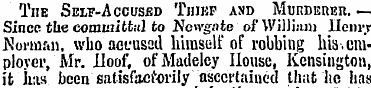
The Self-Accused Thikf and _ Murderer . — Since the committal to Newgate of William Henry Norman , who aorusod hirasolt' of robbing hia . employer , Mr . Hoof , of Madelcy House , Kensington , it has been ' satisfactorily " ascertained that lie has been in no way concerned in the murder of Mr . Westwood , the watchmaker , in Princes-street , Soho , as was at first believed , he .. having buen ftbsout from England , from September , x 838 , ' . until 18 H , in the customs in Jamaica , and the' murder having been committed on the night of tii c 3 rd of Juno , 1 S 39 . There is no doubt , however , tt , 'ta Norman ' s statement relating to the evtensive I'obliery committed by him at New York , is true . It is a singular fact , that in consequence of a belief exp voased in the reports tha , t Norman - was concerned in the . ' murder of Mr . Wesiwoud , circumstanccs . havo b , * en communicated to the police which lead-to a hop c of an elucidation of the . mystery in which that drx . tdful crime has been so long enveloped .
The Strike Jn ' The; Building Trades. ::...
THE STRIKE JN ' THE ; BUILDING TRADES . ::: . " ( F ^ m the Times . ) , ' ' ;'¦¦ ¦ : '¦ LIVERPOOL , 'MatM . On Thursday morning this town was P **™** find that the strike in the building trades had ended and that work would be immediately resumed It appears that a deputation of wOl'lM WlM , « £ >» Mr R ushton , our excellent stipendmry magutog , S stated that the only inipefimcn t to thefiettle-¦ S __ of the dispute was tbe desire of themse ves and S fellow-workmen t hat the masters shouldl with-5 raw the "declaration" which they r equired the Sinen to sign , and of which we stated the nature Hstweek . Mr . -Riishton , with his usual benevolence of character , promised to bring about , if possible , a mpetintr of the masters and workmen , and use his best endeavours to reconcile tlie unhappy diflerences that existed . He immediately opened a communication w ith some of the most eminent of the builders ; and at an appointed hour the various parties met in the magistrates' room at the Sessions House . Mr . Rushton desired the workmen to keep nothing ^ in the back-ground ; and in a few pithy words , stating tlio distress and inconvenience which had resulted from the strike , advised all parties to enter into , the conference with i friendly feelings , and to make such arran gements as would be conclusive , so that the trade ofthe town might again resume its usual and natural course . Mr . Holme , thebuilder , asked whether the persons then present were duly authorized by their respective societies to enter into such negotiations as would he finaland would be agreed to by the great
body of the workmen . The deputations of workmen , comprising members from the masons ' , bricklayers' , joiners ' , plasterers ' , and plumbeva' associations , respectively rose and declared that they were duly authorized , and were prepared , on behalf of their fellow workmen , to enter into negotiations which should be conclusive . On this assurance the negotiation proceeded : After some conversation , in which tlie masters argued that no club or society had a right to dictate to any man , or to compel him to join such a society against his will , and that labour , like other commodities , should be perfectly free , and that they could not enter into contracts with security to themselves , or with advantage to the public , unless such a principle as the freedom of labour was fully recognized , it ' was . unanimously agreed as a base for subsequent negotiation--.,,: ; .- -. - ¦ " -.. ; - u . ' ' . -w- . xi ' .
. That a full-and free disclaimer be made of the rights of any man , or'body of men , to interfere with the freedom of labour ; and -that all men may work for whomsoever they please , and on whatsoever terms they may think right . ' : ¦ ; The masters then proposed—That'the connexion with the National and General Trades' Union should be dissolved , they offering no opposition whatever to local associations , if the operatives deemed such to be necessary for the preservation of their own privileges . The workmen present all declared , with the exception of the labourers ( here generally known , we believe , as hod carriers ) , that their respective trades did not belong to the National Trades' Union ; and , as this disclaimer was strongly made in the presence
of Mr . Rushton , ofthe magistrate ' s clerk , and of the reporter , Mr . Rushton recommended the masters to withdraw the proposition , which they immediately agreed to , on thedistinct disclaimer of the delegates , one of the masters observing that the word of the representatives of the workmen was considered sufficient . ¦ * ' - . It was then agreed to on the part of the operatives That no molestation be offered to those workmen who are now employed iarid have signed the declaration { in number , we believe , nearly 1 , 000 ) , and that the deputation Of wprkmen here present agree most earnestly to impress upon the minds of their fellow workmen the propriety of abstaining from the use ' of any 'terms of reproach to those men who have already agreed to the masters' terms , and who arenow employed .
The masters then proposed that , as some of the branches of the building trade commenced work at 6 o ' clock on the Monday morning , and left off at halfpast 3 o ' clock on a Saturday afternoon , while , others commenced at 1 o ' clock on Monday morning , and worked until 4 o ' clock on the Saturday , a practice which had been found most inconvenient , an uniformity of commencing and leaving off should take place , and that thewhole ofthe trades should commence at 6 o ' clock on the Monday , and leave off at 4 on the Saturday , which would be more convenient to all parties . To this the masons strongly objected ; and , after a long discussion , it was agreed that the hours of labour should remain the same as heretofore ; but that the distribution of the time should be arranged between the various trades and their employers , and should form no part of the present negotiation .
Tlie masters then agreed to withdraw tho " declaration , " and Mr . Rushton congratulated all parties on the termination . of the differences . To prevent any mistake , Mr . Rushton reduced it to writing , and added it to the foregoing . It was as follows : — That the above conditions being acceded to , the declaration shall be withdrawn . The whole ofthe resolutions were then read over seriatim ; and , after a vote of thanks had passed to Mr . Rushton , all the parties left the conference under the impression that the affair was ended ,
Combinations and strikes have previously and frequently been heard of in this town . The shipwrights used to be the grand disturbers ; and we recollect that on one occasion the Duke of Lancaster , a large East India ship , belonging to Mr . Gladstone , the father of the present Colonial Secretary , was repaired and caulked by the master shipwrights , because no journeyman shipwright would work without an exorbitant rate of wages . The natural result has been , that shipbuilding has departed from the shores of the Mersey , except to a small extent . Vessels , are built at Worthington , Maryport , Whitehaven , and also at various small ports on the eastern coast of England ; and through the folly and combination of the shipcarpenters little of consequence is don e in the Mersey
except the repair of vessels ; and even where an extensive repair is necessary , vessels are frequently sent to other places , on account of the exorbitant charges made for repairs in Liverpool . " But no strike in any trade , within our memory , has caused a greater sensation than this amongst the buildersi because it affects so many classes beyond their own sphere . Not only have the timber , lead , and glass dealers felt it , but it has affected the carriers—persons who obtain their livelihood by carting for hire , shopkeepers , spirit merchants , limeburners , and others ; all of whom are more or less dependent upon the demand for materials used in the building department , or on the expenditure of the weekly wages , which to such a great extent are disbursed in this town . Your readers will therefore be pained to
hear , that on the very evening of the day on which the arrangements were amicably come to between the master builders and workmen , the clubs of the various trades met , and thrt w overboard all the resolutions which had been agreed upon , principally instigated , it is said , by the stonemasons . The resolutions were consequently not acted upop , and the next morning not one man returned to his work . An instruction was forwarded to Mr . Tomkinson , one of tlio oldest and most eminent of fhe master masons , and a gentleman who has been for many years engaged as a contractor for public works , that a diminution of working hours and an increase of wages were required
on the pact of the masons , and that unless he acceded to the demand the men would not resume their work . Mr . Tomkinson , naturally indignant at such a breach of faith , refused to entertain the demand , and desired the workmen to meet hiin again in the presence of tho stipendiary magistrate , Mr . Rushton . They did so ; and finally lowered their demand fov increased wages to Is . per week additional , but stipulated that they should have half an hour at four o ' clock every afternoon for " recreation . " Mr . Tomkinson-promised an answer at six o ' clock the same evening ; and in the meantime summoned a meeting of masters to consult as to the most advisable steps to be pursued in -this sew and unlooked-for
emergency . After Mr . Tomkinson , and tlie other masters who had been present at the conference , had stated the concessions made by the masters before Mr . Rushton to put an end to the turn out , and the solemn obligation into which the delegates had entered , followed by such new demands , so contrary to the stipulations agreed upon , it was unanimously resolved that concession had been carried to its utmost limits , that Wi faith could be kept with the clubs , and that , as the masters had agreed to withdraw "the declaration , " it should be religiously observed on their part ; but that no further concession , either on the score of Wfl » es , or a reduction in the hours of labour should be made , us it was then perfectly clear that every
concession was on ! y followed by an mcrc & sed demand . Tii as , instead ofa termination ofthe strike , matters seemed as far as ever removed from a settlement . Tlie bricklayers and plasterers seem to follow in the wake of the masons ; the joiners , plumbers , and some others , with more wisdom , seem anxious for a settlement , and some of them have left the ciuhs and resumed theirwork . But the masons are in demand for the various railway contracts , especially on the Holyhead , Carlisle , and East Lancashire linea , and many of them have found employment on those , milways . Tlie Liverpool Dock Trustees , tlie Birkenhead Dock Company , and the Liverpool and Bury and Grand Junction Railway Companies , also have been proceeding with their works , which arc principally masonry ; and , so long as there was no demand for
increased wages , those four large companies did not think it necessary to suspend their works . The course now pursued , however , by the maeons , has altered the complexion of the whole strike ; and the clubs must now sonn come to issue with these largo and formidable companies . The press , with one exception , has condemned the unwise proceedings of the unions ; ami , aa the masters have withdrawn the declaration , which by some was considered-oppressive , notwithstanding that it was originally suggested by some ol the mechanics , themselves , - to give them a feasible excuse for seceding from the unions , which they found to bo-both -tyrannical and oppressive , the Vitrcggle lias narrowed itself into one for advanced wsges and diminished time ; and , instead of i ' . s being a question between masters and workmen , as to
The Strike Jn ' The; Building Trades. ::...
who shall be the rulers , it has really bacomo a question between the workmen and the public , . as to . what the former shall receive and the latter , shall pay . The workmen do not appear to see that the masters haye really little ito do with the question of wages , especially in such departments as building- ; It is . a question between the mechanic and . the . man . who invests his money in building , instead of investing it in cotton , corn , British or foreign railways , English or foreign , securities , lands , or other investments ; and master builders have , in reality , just as much to do with the rate of wages , as the broker , who is the medium of sale between the merchant and consumer , has to do with the price of cotton , sugar , or indigo . The effects of this strike are becoming apparent . _ . __ . _ t . _ li __ _ it _ ¦ % » a \ 11 _ Lk <*/ inmn o mi _ t _ a
The masons are the most difficult hotly to deal with , and they are , it is said , under the control of a secretary , to whom' they allow a handsome salary-for managing their affairs . One of our first architects lias resolved to abandon the ii . se of stone in building as much as possible ; and at this time wc are credibly informed that several piles of building are proceeding where iron has been substituted for stone . We perceive by one of our local prints that a gentleman from Wales has waited on some of the principal builders , and offer ed to supply a substitute for stone in the shape of door and window heads , cornices / and other things , made out of the Welch fire clay , and which can be-produced at about half the cost of stone ; and we doubt not , in this age of mechanical
skill , that various expedients will be devised to anolish masonry , if the masons themselves shall render the stone too expensive . There is one passage in the conference between the masters and workmen that struck us as peculiarly significant . Carter , the union secretary , boasted that the masons' union was strong and powerful . Mr . S . Holme replied , " that union might give strength for a time ; but union could not give employment or create work , but the reverse ; and that if by the strength of the masons' union they imposed terms which the public refused to pay , a diminution of their peculiar work would be the consequence , and they themselves would eventually be the sufferers . " " This really is thecasc , and whatever may be the result of the strike . —and after : the attempt at arrangement which has been made , and has so signally failed through the insincerity and treacherous dealing ofthe workmen , of that result there can
be no doubt—the consequence must fall upon the workmen who-have been duped by their leaders—for thoseleadera will , unquestionably , take care of themselves . ¦ ' ¦ That many men and their families are much distressed there can be no doubt , and several letters from ithe various secretaries have been shown to us , imploring aid from other trades , one of which , signed by " Francis-Bradbury , of Birkenhead , " states that they are "in great Want of assistance ; " and implores that " money may be immediately forwarded to him at the Manchester . Arras , Birkenhead . " We are at a loss to understand how respectahle and skilful workmen . can place themselves in such a humiliating position , or of what benefit trades' unions can be , if every trade is called on to assist others with which it is not connected ; for the letter which we have alluded to was writted to some glass-manufacturers at St . ' Heleii ' s , who are addressed as " brotherunionists !"
We hope that next week we may have to announce the termination of these insane proceedings , destructive alike to the best interests of individuals as well as to the community ^ and condemned by every man of penetration or ceminon sense . \ Since the above was written , the masons have had a general meeting , and have come to the resolution that they will only work nine hours a day , instead of ten hours and a half , as heretofore . - This is , of course , declined on the part of the masters ; and is considered as a further infraction of the contract entered into before Mr . Rushton , and no one can now pretend to toll the ultimate effect of this new demand .
The National Trades.Union. . .. (From Th...
THE NATIONAL TRADES . UNION . . .. ( From the Weekly Dispatch . ) ' ' We are all familiar with the cry of " class legislation . " Vehemently it has been denounced , often has the nation heard-its vices-magnified in all the figures of speech which pie-ball the patched eloquence of travelling oratory . It baa bees , from tbe beginning , the chief argument for the adoption of the People ' s Charter ; Physical Force and ^ Moral Force Constitution tinkers have " alike made it the premise of their great political corollary ; and both Complete Suffrage and .. Universal Suffrage apostles have claimed its existence as the foundation of their
principles , and the common root of their deductions . Indeed , since "corporation privileges , and the exclusive prerogatives of guild brethren , have been destroyed—since'the manufacturing capitalists have themselves demanded . the abolition of all peculiar advantages to homo production , and the very Peers themselves are about . to resign the dishonest perquisites of agricultural protection , there is left manifestly every day narrower ground , and a more splendid apology for saying tbe same thing over again on this exciting , theme . Although , ' . ' however , the name is dropped out of . common utterance , we are not sure that the tiling is less vital than ever it was ; and if the
" Lfps are now forbid to speak ' That once familiar , word . " to which it came as naturally as " applesauce " after " roast goose , "' we suspect it simply arises from the circumstance that after "the offence which . it expresses has been abandoned by every body else , it has become the " pleasant vice , " and the besetting sin of the very men . by whom it was most violently denounced . . The . term "Trades Union , " does not fairly express the thing which the words imply . It means neither an association of handicrafts , nor a combination of nil the various human elements of which any single trade consists . It entirely excludes from the limits of its definition , the capitalists and masters , the heads , inventors , directors , and movine
power of all industrial art ; generally it does not even embrace the order of apprentices , but uniformly it is entirely confined to the one sole hotly of working operatives , and is , in truth , neither more nor less than a self-elected industrial legislature , associated to make laws , less for its own regulation than for its own profit , at the expense ofthe public in general , and to the prejudice of master ; capitalists in particular . When these trades unions are local aud denominational , they wear that snug , close Corporation aspect to which even employers seem to have no great objection , since they , in effect , simply operate to compel masters all to do business on one uniform scaleto adhere to one common list of prices , and to avoid competition iind underselling , as injurious to
themselves and beneficial only to their common customers ( we should not say their common prey ) the general public of consumers . But a new trades gospel is now revealed . A general and national trades union has been silently , but universally organized , not confined to particular handicraft , but extending to the whole circle of industrial arts of skilled labour , and having for its distinctive object the array of the whole labouring order of tho nation against its masters and capitalists . Under the specious name of Protection , of which even Lords have become ashamed , this great conclave of artizans proposed to become forestalled and regraters of the labour market , for the
mutual profit of their body , at the common expense ofthe public . By means of a perfect and universal organization , a vast revenue , an iron discipline , and the assumption of absolute power over all artizans whatsoevej ^ they expect to be enabled tfe suspend the entire labWrof the kingdom for any length of time they think fit , to throw , if necessary , the whole country into panic and confusion by an universal stagnation of industry—to dictate any terms and any wages they please to their customers and masters ; and to exact from the necessities ofthe Legislature any laws which they may consider conducive to the profit or social influence of thcirorder . Thepresiding genius , who is " to ride this whirlwind and direct this
storm , 13 the Hon . Member for Finsbury . Tho puller of the wires is the disinterested patriot whom the colliers " remember in their prayers . " This union is a class combination , for class objeefs , to enforce class legislation by class organization . It is to create a class monopoly in favour of an exclusive class , by that order which was the most vehement in its denunciations of class privileges ; and contrary to ihe advancing spirit of the age , to the impartial and Catholic tendency of ' modcrn government and of public opinion , ic is not more necessary for the character of the working classes themselves than for the safety of the State , and the security ofthe public against dictation and exaction , that the conspiracy should be exploded , and the bubble exposed . It is an
Association for practically carrying out an impossible object , and which ,. were it possible , would be pernicious . We arc , indeed , surprised that tha intelligent artizans of this country should , in the face of every principle of , political economy , and every dictate of experience and common sense , yet suffer themselves to be magnetised by the gesticulations of quacks , into the day dreams in which they now indulge . Thev have tried to put down machinery b y Act of ParJiflMoiit , —to prevent women and children from earning their own subsistence , and masters from the liberty of making contracts with them , —thov have sinigghd to prohibit tfte working of factories for a lonqcr period than ten hoars per day , thus confiscating a sixth ofthe whole income , interest on capital and property of the owner , without remorse or compensation , —they have limited the mimber of apprentices
whom masters are to instruct , m order to preserve a monopoly of their trade , and now , at last , they have organized a grand universal National Union , into the joining of which every working man is to be coaxed , persecuted , threatened , and bribed , in order to lay the nation prostrate at their foot , —to place the consumer ? , masters , and capitalists , at the mercy of the working classes , and to dictate to every other order of society whatever conditions they please of remuneration for labour , irrespective of the legitimate demand , aud the value of the commodity . ¦ Aithou"h their own denomination .-are the greatTonsumers ° of all th ' ir own productions , and Have enormou-ly benefitted by the cheap c / othinsr , and housing , and literature , and-iranstiort by land and . water which machinery has clfcetea , they still cannot be convinced ot the injury which would be inflicted on their class by raising the cost of production , or see that if
The National Trades.Union. . .. (From Th...
the price of the first , and secondary , necessaries ' awt luxuries'Jof life 'is ' raised b ^ raisin g " wages , theyl ' ruj a their foreign market , 'wliile * they make the money value of higher :. wages ~ diminish by the enhance ^ value ofthe commodities to be given in exchange-Have they , not long ago ,. and under the , powerful ' , stimulus of political and democratic passions , tried ' oyer the whole kingdom to enforce the observance of a " saired month , " which was to put an end , to the entire labour of the kingdom , and compel tha rest of society to sue for mercy I What did it end in but in making , the working classes ridiculous in the eyes of the whole nation ? - Did not the tailors discontented with 30 s . or even < 40 s . a week , ( six times the wages of their agricultural brethren ) seize 4 > Ua „«!„« ~ . C i-l * n . £ _»^ nnJ _ anAM # 1 niM « « aaa ^» . _! :: * " •¦ - * ~ . _
, the occasion of a fashionable season to turn out for a rise ? What was the effect of this , but to lose many a job by customers making the crisis an apology for contenting themselves with wearing out their old clothes , and to call so many women into the field of trade—that what with Moses , and Doudney . and other large establishments , the trade is threatened with such an inundation of tailoresses , that the unioa " will too late , and to tho last , repent a strike which theactual redundancy of labour rendered totally without apology . In . a country where ihe wages of ihe peasantry range from 6 d . to Is . 6 d . per , day , and four millions of the population are permanentl y witJiout employment , there NEVER CAN Be either occasion fob a protective ukion op artizans or for a strike
to regulate wages . Capital is so abundant that it is sure to be embarked wherever it is profitable ; and the competition of capitalists for po / b , ana for fa bourers will always keep wages at the level determined by the infallible principles of political economy . Since the publication , of our former observations on this subject , they have been strikingly corroborated by the actual facts of the case , as detailed in an elaborate article in the Times . It is stated thafc the chief complaint of masters is , that not only will the unionists not work themselves , but that they forcibly prevent those who are perfectly willing to do so , that they keep every trade in the bauds ofa few monopolist workmen by restricting the number of apprenticesand also the choice of them to their
, own families , and that tbey compel the mass of the young to grow up without acquiring any craft whatever , depriving thousands of the means of earning their bread . As we predicted , " Some of the large employers ' liave now a great many men at work wlu > have left the ; I 7 nions , and numbers of strangers , not ^ withstanding , ' , tho vigilance of the , pickets , havfli sought' and obtained work ; and the masters most determinedly refuse to discharge one of them . The club men have threatened that they will not work with these men , and . some o f them have gone so far as to go to buildingswhere they were at work , and succeeded in frightening the men away . " For the reasons which we formerly assigned , there is a universal concurrence in our opinion , that the present
strike "has been most ill-timed , " that it has not onlystopped employment in the building trade , bnt thrown all out of work who were engaged in its auxiliary departments—that it has roused all the capitalists and employers to a most determined and permanent resistance , and the adoption of measures which will certainly leave the Unionists in a worseand more humble state than ever they were before , " and that it will , take many months of industry and prosperity to rtsaidy the mischiefs which have been entailed upon a large portion of the community by the unwise acts of men who , in these days , were attempting to establish monopolies of trade more in accordance with the spirit ofthe guilds in the days of Elizabeth than with the freedom of trade
peculiar to the days , of Victoria . " The statement of Afr . Holme , ' a large employer , proves that the declaration so much complained ot was suggested by workmen smarting under the intolerable tyranny of clubs . " They told me , " he observes , V that our premises were so well watched until late in the evening , that they had come at that untimely hour to avoid being seen by any of the other turn-outs ; that they were in great distress ; tliatthe tyranny of the club was beyond all endurance ; and that many of our . men , as well as themselves , were determined to go to work , if they could get any excuse for quitting the club . They added , that if they
could sign any document which' could be binding upon them , it would give'them the opportunity they wanted . During a long conversation , one of them admitted that both himself and his family were in actual want , when another replied that ' they might as well be killed as starved , and he strongly urged upon me the necessity of devising , some mode by which he might escape from the clubs . " Almost in our very words he continues— " Our town will be filled by strangers , who will have acquired a footing here ; and I seriously ask , what will be the consequences to many of the Liverpool workmen . I wish that some of the leaders of these combinations could
know the risks and feel the anxieties ot those -who have to undertake large . contracts ; and if they would consider well the ultimate results of afl , strikes , they would soon confess that the best friends of the operative classes are those who , by intelligence , economy , and enterprise , succeed in inducing capitalists to invest their money in building ; and that their worst enemies are those who drive capital into other channels ( not a difficult thing ) , by inducing measures which would render building anything but a profitable investment . I think that neither Mr . T . S . Buncombe , nor a committee without responsibility , sitting in London or elsewhere , had any right to interfere between my workmen and myself ; nor has any man a right to insult or abuse another because he chooses to be
independent and stand aloof from a club . " This is the language of justice and common sense . The primeval curse sentenced man to a life of labour , and hard labour too—earning his bread only by the sweat of hia brow—and every scheme for getting large ivages for little work , and all royal roads to leisure , ease , and comfort , and all industrial lubberJauds of nothing to do and plenty to eat , are the visiotis of quacks , and the delusions of impostors . They may find £ 1 . 000 a-year for Afr . Roberts , a landed estate for Mr . Buncombe , and 30 s . a week for a score or two of Chartist peripatetic bags of * wind , to help to blow the bellows of their disinterested and indignant patriotism ; but their only effect upon the fortunes of the working man must be to help him out of his money , and into a union of a very different kind h-oni that which ho has been asked to join—we mean the Union Workhouse
The Ten Hours' Bill. A General Meeting O...
THE TEN HOURS' BILL . A general meeting of the Central Short Time Committee ofthe West Riding , was held at Bradford by adjournment on Saturday night , for the purpose of receiving the report of the division of the House of Commons on the Factory Bill , and as a majority for the second reading was confidently expected , on the announcement lhat the bill was lost by a . majority of 10 , the greatest indignatio . and disappointment , was manifested by all present , and after reading over some ofthe speeches of the opponents of the bill , the greatest disgust was felt by the Committee at the sophistry which had been put forth by them , and after a long conversation , it was resolved— .
That this meeting be adjourned to the Wednesday fallowing , in order to afford every member an opportunity to read over the report ofthe whole debate , so that they may be better prepared to express their opinion thereon at our nest meeting . Agreeably to the above resolution , a numerous meeting of the Committee was held on Wednesday last , Mr . John Rawsoii in the chair . The following resolutions were unanimously adopted : — 1 st . Thatthis committee having learnt the decision of the House of Commons , on the 2 nd reading ofthe Factories Regulation Hill , feel the most pungent sorrow antl disgust to learn that u small majority of tho British House of Commons , have again decreed that young persons ' and children , most of whom are females under IS years ofi \ ge , shall be subjected to work in factories for 12 hours ia
each day , exclusive of time for meals , which must average from 11 to 15 hours a day occupation , thereby leaving only about 9 hours for sleep , recreation , and moral and intellectual culture . That by this decision fhe expectations of many hundreds of thousands of factory workers are dis- ' appointed in their hope that at this time an . abatement of their , protracted labour would be afforded , and that this committee having carefully read ovi-r the three days debate on this question , are further of opinion , Packed by . long practical experience , that the sentiments expressed by our opponents ( enemies ) , are as totally at variance with facts as their priuciplts are groundless and false , and are more and more fully convinced that no sound argument either commercial , political , or economical , has been urged against the adoption of the Ten Hours * Bill , but on the contrary , are convinced that this measure is on every consideration entitled to the universal support of every humane and enlightened individual .
2 nd . That , notwithstanding the defeat of last Friday night— a defeat brought about by the official influence of the Government , backed as we regret to find it , by the influence of the leading members of a party from whom the working classes might have expected butter thingswe are nevertheless resolved never to relax in our exertions until this measure has passed through Parliament . Itelyihg oh the zeal and ability of our Parliamentary . friends , we believe that the time is not far distant , when , spite of any government hacked by whatever party they may be , it will ho impossible to resist . the passing of the Ten Hours' Bill ; being , as we believe it is , a measaro alike demanded by justice , humanity , and sound commercial policy .
< Jrd . i hat the grateful thanks of the operatives ofthe manufacturing districts are due to Lord Ashley and J { r , John Piclden , for their uncompromising zeal and perseverance in conducting our measure , as well as to Lord John Russell , Lord G eorge Beiitinck , Lord J ol-. n Manne-= lion . Mr , Cowpcr , Sir George Grey , Sir Robert luglis , Sir George Strickland , Right Hon . T . l ) . Macaulay , Messrs . K . B . Denison , Banks , dlquhoun . Brotherton , Jfc wdigate , Crawford , Wakley , Wodehouse . J . O'Conncll , Slant * , Ainsworth , and ail other members who have voted for tho second reading of tlie Factory Bill .
4 ih . That this meeting , cannot , separate without expressing their . deepest souse of the cruelty exhibited by those members who -spoke and voted ag-ainst the improvement Of the condition of the factory children , and especially are they grieved at the course pursued bythe' nobis lord the lately eU-eted member for the West Riding , as well as the members for Halifax and Huddersfield ..
-
-
Citation
-
Northern Star (1837-1852), June 6, 1846, page 6, in the Nineteenth-Century Serials Edition (2008; 2018) ncse.ac.uk/periodicals/ns/issues/ns2_06061846/page/6/
-