On this page
-
Departments (3)
-
Text (11)
-

April 14, 1840. . THE NORTHERN STAR. 3
-

Sportrg.
-

a$?Dt£U)$.
-

THE PBOSE WORKS OF JOHN MILTOX. "With a ...
-
Tiuelfe Essays. By Ralph Waldo Emeuson. ...
-
SUXSHINE AJfD SHADOW; A TALE OF THE NINE...
-
SOCIAL EFFECTS OF PEASANT PROPRIETORSHIP...
-
Curnous Witt.—Tho following curious extr...
-

Iftrfrtitt.
-
jkhskcb ot a Uovkrnment's SEcnimr.—The s...
-
lie r commontt. vcOTtJga<N: " ST ^Mr^ of...
Note: This text has been automatically extracted via Optical Character Recognition (OCR) software. The text has not been manually corrected and should not be relied on to be an accurate representation of the item.
-
-
Transcript
-
Note: This text has been automatically extracted via Optical Character Recognition (OCR) software. The text has not been manually corrected and should not be relied on to be an accurate representation of the item.
Additionally, when viewing full transcripts, extracted text may not be in the same order as the original document.
April 14, 1840. . The Northern Star. 3
April 14 , 1840 . . THE NORTHERN STAR . 3
Sportrg.
Sportrg .
California i ( From , tlie New York Tribune . ) From every shore they gather in , From every clime they come , O ' er weary miles of desert land And leagues of ocean foaaa . Through the passes of the mountains Pour in an eager horde , For the first time bent on labour , E ac h savage f orest lord . The Leaver and the buffalo May unmolested run , Tor the lonely mountain trapper Has laid aside his gun ; Aside the hardy pioneer His trusty axe has cast , The iron hands of labour
Clip the golden fleece at last ! From the sunny Southern Island , From the Asiatic coast , The Orient and Occident Are mingled in the host . The gleaming Star of Empire Has for ever stayed its way , Arid its vrestern limb is resting O ' er San Francisco Bay . A hundred sails already swell To catch the Trilling breeze , A hundred heels are clearing Through the blue Atlantic seas ; Full many a thousand leagues behind Their tardy course is borne , Joy a hundred masts already strain Revond the stormv Horn .
Soon from the Channel of St . George , And from the Levant shore , To swell the emigrating tide Another host shall pour To that far land beyond the West " Where Labour lords the Soil , And thankless tasks shall ne ' er b e done By unrequited Toil . To the giant chain of mountains Whose summits clad with snow , Dissolve their crystal treasures On the fertile vales below ; Where the golden veins are slumbering Beneath their glistening crest , Like the rich -veins of life concealed Beneath a snowy breast . To the banks of distant rivers
Whose flashing waves hare rolled For long and countless centuries Upon neglected Gold ; Where X a ture hol d s a dou b l e g ift Within her lavished hand , And teeming fields of yellow grain Strike root in golden sand . Like the Wand of an Enchantress Our starry Flag shall wave O ' er as fair a gift of Empire As Xature ever gave , Ami the people of the Nations From every distant Zone , Beneath its proudly floating folds Are gathered into one . It wa ves on hi gh ; responsive Peace Has breathed on land and sea :
It wares again : responsive spring Order , Law and Liberty . Again it waves ; a State starts up " At ence mature and young , As when from out the head of Jove The full-armed Goddess sprung . Sot to luxurious Cobles , 3 fot to degenerate Kings , The Sacramento's laden ware Its precious tribute brings ; To rear no gorgeous palaces ,
To build no jewelled fanes , The Gold of El Dorado shines Upon San Joaquin ' s plains ; But to speed the step of Progress , To nerve the arm of Strength , And yield to all a competence The time has come at length ; An image of the use it serves No tyrant ' s head shall be , The only stamp upon the ore The Eagle of the Free .
A$?Dt£U)$.
a $ ? Dt £ U ) $ .
The Pbose Works Of John Miltox. "With A ...
THE PBOSE WORKS OF JOHN MILTOX . "With a Preface , Preliminary Remarks , aud Notes , l ) y J . A . St . Joha . VoL I . London ; Henry Cr . Bohn , Yorkstreet , Covcut-gardcn . TOR the admirable series of works entitled "The Standard . Library , " the lovers of Literature , and all who desire the mental and moral elevation of the people , o w e a d ebt of gratitude to Mr . Boh > V Cheap literature , so called , is sometimes dear at any price . Nay , the cheaper printed trash or poison is set for sal e , the worse for the minds and morals of readers , especially those who , from lack of
years or education , possess not the discrimination to enable them to detect or reject that which is base and deleterious . The literary (?) abominations of the " Greenacro school " might have almost tempted one to accept a censorship , had not experience declared such a remed y worse than the disease . There is irat one true way- of saving the peop le from the evils of a prostitute press , —that of supplying them with wholesome mental food , which , Inthe long run , th e y will t a ke to , and reject the garbage . By the publication of his " Standard Library'' Mr . Boux has done much—very much—towards creating amongst the masses ' a healthy appetite for a mind-invi o r a ting Literature .
g But as wc have reason to douht that the " StandardLibrary " is as well known as it deserves to he amongst the working classes ; and as we know that many thousands of wkinff men read this journal who are not in the habit of seeing any other newspaper or literary periodical—and ,- consequently , may not have seen any review or notice of the said " Library" —we consider it a public duty to direct the attention of our readers to this admirable series , and particularl y to tho republished prose works of AliLTO > , Vol . 1 . oi which is at present hefore us .
We suppose that most persons—even the poorest—have read more or less of Milton ' s poetry , particularly his " Paradise Lost . " But we would wager a trifle ( if we Belonged to the " sporting world , " ) that many thousands of Eng lishmen never heard tell of Milton's Prose Works . We except a great many of our Radical friends , who probably have read the Treatises ( re-published some years ago by Cleave ) , " On the Best Means of Removing Hirelings from the Church , " and " On the Libertv of Unlicensed Printing . " But we fencv that even our Radical friends ( for the
most part at least ) have never gone farther in their reading of MlLTOX . If we are rig ht , we can inform our friends that Mr . Bohn has placed within their reach a store of intellectual wealth , which will at once delight and astonish them . In the volume hefore us they will find a whole amioury of Reason ' s weapons for the defence of Freedom against the assaults of Tyranny . After two hundred years , at the Tery time that the struggle for Liberty , which in Milton ' s life was confined to this country , is r a g ing over Europe , we see ( in the inimitable language of Bycos ) " the blind Old Man arise , Like Samuel from the grave , to f reez e once more The blood of ilonarchs with his prophecies . " Prophecies which assuredly will he fulfilled , in spite of royalist re-action and crowned consp iracies . The waters of the Seine , the Danube , the Vistula , and the Tiber , may he dyed crimson with the blood of the defenders of justice , and for a time the unjust may triumph ; hut , u freedom ' s battle once begun , Bcqueath'd by bleeding sire to son , Though baffled oft shall yet he won !" This volume contains the immortal "Defence of the People of England , " in answer to "Sahnasius ' s D e fence of the King ( Chaiu . es I . ) - " also , the " Second Defence of the People Of England" against an anonymous Lihel en-Med , ' The Royal Blood crying to Heaven fox Vengeance on the English Parricides ; ' and , lastl y , thfc celebrated "Eifconoklastes , " written in answer to a Book entitled " Eikon Basilifce , the Portraiture of His Sacred Majesty ia his Solitudes and Sufferings , " We have one , an . lbutone , regret to express , iu connexion with this edition of the great poet ' s works—that they are not republished in
The Pbose Works Of John Miltox. "With A ...
the order in which they Avere originally puhlished b y the author . " Eikonoklastes " placed at the end of this volume , was published a considerable time hefore the first " Defence of the People of England" was written ; and Miltox in his second "Defence , " recounts a number of works which he had published hefore he w r o te his "Eikonoklastes . " It i s qu i te imposs i ble , within the limits to
which wc must confine this notice , to attempt anything in the shape of a " review " of the imm or tal contents of this volume , which even a T o ry cr itic ha s a cknowled g ed will he held in veneration as long as the English language endures . We must refer our readers to the volume itself . For the present we can do no more than make room fer the following extracts from the " Second Defence of the Peop le o fEng land" : —
PATRIOTS AXD TTRAXTS . What can conduce more to the beauty or glory of one ' s country , than the recovery , not only of its civil but its religious liberty . " * * * Those Greeks and Romans , who are the objects of our admiration , employed hardly any other virtue in the extirpation of tyrants , ' than that love of liberty which made them prompt in seizing the sword , and gave them strength to use it . With facility they accomplished the undertaking , amid the general * shout of praise and ioy ; nor did they engage in the attempt so much as an enterprise of perilous and doubtful issue , as in a contest the most glorious in which virtue could he signalised : which infallibly led to present recompense ; which bound their brows with wreaths of laurel , and consigned
their momoriestoimmortalfame . For as yet , tyrants were not beheld with a superstitious reverence ; as yet they were not regarded with tenderness and complacency , as the vice-gerents or deputies of Christ , as they have suddenly professed to be ; as yet the vulgar , stupefied by the subtle casuistry of the priest , had not degenerated into a state of barbarism , more gross than that which disgraces the most senseless natives of Hindostan . For these make mischievous demons , whose malice they cannot resist , the objects of their religious adoration : while those elevate impotent tyrants , in order to shield them from destruction , into the rank of go d s ; and , to their own cost , consecrate the pests of the human race .
THE GLORIOUS PATRIOT , JOHN BRADSHAW . John Bradshaw ( a name which will be repeated with applause wherever liberty is cherished or is known ) , was sprung from a noble family . All his early life he sedulously employed in making himself acquainted with the laws of his country ; he then practised , with singular success and reputation , at the bar ; he showed himself an intrepid and unwearied advocate for the liberties of the people ; he took an active partinthe most momentous affairs of the State , and occasionally discharged the functions of a judge with a most invaluable integrity . At last , when he was entreated by the Parliament to preside in the trial of the king , he did not refuse the dangerous office . To a profound knowledge of tho law he added the most comprehensive views , the
most generous sentiments , manners the most obli ging , and the moat pure . Hence , he discharged that office with a propriety almost without a parallel ; he inspired both respect and awe ; and , though menaced by the daggers of so many assassins , he conducted himself with so much consistency and gravity , with so much presence of mind , and so much dignity of demeanour , that he seems to have been purposely destined by Providence for that part which he so nobly acted on the theatre of the world . And his glory is so much exalted above that ot all other tyrannicides , as it is both more humane , more j ust , an d more strikin gly grand , judicially to condemn a tyrant , then to put him to death without a trial .
Th e p a tr i ot Bradshaw , of whom Milton trul y says that "he has acquired a name which will flourish in every age , and in every country in the world , " died hefore the Restoration , hut by order of that loathsome miscreant Charles II ., his dead hody was torn from its resting place and hanged on a gallows at Tyburn . After hanging all day , at sunset his head was cut from the body , and the body thrown into a hole under the gallows . What finally became of the patriot ' s remains we do not know , hut the following ep itap h ( given in Mr . St . John ' s notes ) is said to have been inscribed on an American cannon : —
EPITAPH OX JOHN BKADSUAW . Stiuxger ! ere thou pass , contemplate this cannon , nor regardless he told that near its base lies deposited the dust ef Jonx Bradshaw , who nobly superior to selfish regards , despising alike the pageantry of courtly splendour , the blast of calumny , and the terror of regal vengeance , presided in the illustrious band of heroes and patriots who fairly and openly adjudged Charles Stuart , tyrant ofEngland , to a public and exemplary death , thereby presenting to the ama 2 ed world , and transmitting down through applauding ages , the most glorious example of unshaken virtue , love of freedom , and impartial justice , ever exhibited on the blood-stained theatre of human action . Oh ' . reader , pass not till thou hast blessed his memory , and never—never forget tliat rebellion to tyrants is obedience to God . "
Mr . St . John gives expression to many admirable sentiments iu his Preface , Remarks , and Notes . The editorshi p of this volume has b e en evide n tl y a labour of love , and he has done his work accordingly . ' We must correct one error into which Mr . St . Join * has fallen . Speaking of Dr . Sra . MOia > s ' s comparison between " Sauna sins" and Buiike , Mr . St . Joh >* observes that : "France produced no Miltox to refute Burke ; and the 'Reflections on the French Revolution' have therefore
descended to us with the reputation of being unanswerable , because they happen to have been left unanswered . " This is a most strange ass erti o n and one which we must contradict . To say nothing of the replies written by Mackintosh a nd o thers , we mu s t o bse rve that if }~ - nee produced no Milton , England produced a AlXE , who , though not a poet , is to he n aked , as a defe nd er o f civ i l and religi o u s
liberty , not lower than Milton . We know it is as fashionable at this time to deciy Paine , as it was in the reigns of Charles II . and James II . to decry Milton , hut Paine's reputation will outlive present detraction . Even alread y Burke ' s " Reflections" have shared thefateof theroyalistravingsof " Salmasius ;" whilst , on the other hand , the "Rig hts of Man" enjoys an undiminished—or , rather , we should say , an increasing—fame .
Tins volume , beautifully printed , containing some five hundred p a ges , and embellished with a portrait of the immortal author , is publi s hed a t a charge which places it within the reach of the humblest . We shall take an early opportunity to notice Vols . II . and III . Li the meantime it is our earnest recommendation to our friends to make themselves the possessors of this admirable edition of the Prose Works of John Milton .
Tiuelfe Essays. By Ralph Waldo Emeuson. ...
Tiuelfe Essays . By Ralph Waldo Emeuson . London : George Slater , 252 , Strand . The first volume of a new venture in the department of cheap literature , entitled , "Slater ' s Shilling Series . " It is not our pmpose to sit in jud gment o n the character of Emerson as a writer , heyond observing—1 st . That we esteem his lectures much more than his essays ; and 2 nd . That we could very well afford to dispense with some of his sublimities in exch a nge f o r unmist a k a bl e co mmon sense , expressed in understandable English !
To those who know Emerson onl y b y name , as must be the case with many thousands , and who may desire to know him as an author , this volume will he acceptable . EMERSON has many admirers , we might say worshippers ; hut even those readers who , like ourselves , will not "fall down and worship , " will find many true , beautiful , and original thoughts expressed iu these essays . From those portions of the volume which have best pleased us we give the followinor extracts : —
Our reading is mendicant and sycophantic . In history , our imagination makes fools of us , plays US false . Kingdom And lordship , power and estate , area gaudier vocabulary than private John and Edward in a small house and common day ' s work ; r ? , ® th 5 n S hfe are the same to both : the sum total m both 5 s the same . Whv all this deference to Alfred , and Scanderbeg , and ' Gustavus ? Sup p o se they were virtuous : did tlxy wear out virtue ?
DO WE ADVAXCE . feociety never advatieee . it recedes as fast on one side as it gams on the other . It undergoes contmual changes : it is barbarous , it is civilised , it is christianised , it is rich , it is scientific ; but this cliange is not amelioration . For everything that is given , something is taken . Society acquires new arts and loses old instincts . "What a contrast between the wcll-clnd , reading , writing , thinking American , with a waton , a pencil , and » bill of c £
Tiuelfe Essays. By Ralph Waldo Emeuson. ...
change in his pocket , and the naked New-Zealander , whose property is a club , a spear , a mat , and an undivided twentieth of a shed to sleep under . But compare the health of the two men , and you shall see that his abori g inal strength the white man has lost . If the traveller toll us truly , strike the savage with a broad-axe , an d in a da y or two the flesh shall unite and heal as if you struck tho blow into soft pitch , and the same blow shall send the white to his grave . The civilised man has built a coach , but has lost the use of his feet . He is supported on crutches , b ut l oses so muc h sup p ort o f muscle . He has got a fine Geneva watch , but he has lost the skill to tell the hour by tho sun . _ A
Greenwich nautical almanac he has , and so being sure of the information when he wants it , the m <» i in the street d oe s not k now a s t a r in the sk y . Ihe solstice he does not observe ; the equinox he knows as little ; and the whole bright calendar of the year is without a dial in his mind . His note-books impair his memory ; his libraries overload his wit ; the insurance office increases the number of accidents ; it may he a question whether machinery does not incumber ; whether wc have not lost by refinement some energy , by a Christianity ( entrenched in establishments and forms ) some vigour of wild virtue . For every Stoic ivas a Stole ; but in Christendom where is the Christian ?
TUE POWER OF LOVE . What fa stens a ttentio n , in the intercourse of life , like any passage betraying affection between two parties ?—Perhaps we never saw them before , and never shall meet them again . But we see them exchange a glance , or betray a deep emotion , and we are no longer strangers . "We understand them and take the warmest interest in tho development of ihe romance . All tnanfeinrf love a lover . —The earliest demonstrations of complacency and kindness are Nature's most winning pictures . It is the dawn of
civility and grace in the coarse and rustic . The rude village boy teases the girls about the schoolhouse door ; but to-day he comes running into the entry , and meets one fair child arranging her satchel : he holds her books to help hor , and instantly it seems to him as if she removed herself from him infinitely , and was a sacred precinct . Among the throng of girls he runs rudely enough , but one alone distances him ; and these two little neighbours , that were so close just now , have learned to respect each other ' s personality .
No man ever forgot the visitation of that power to his heart and brain which created all things new ; which was the dawn in him of music , poetry and art ; which made the face of Nature radiant with purp le li g ht , the morning and the night varied enchantments ; when a single tone of one voice eould make the heart beat , and the most trivial circumstance as soci a t e d w ith one form , is put in the amber of memory ; tvlten ivc become all eye when one was present , and all memory ivhen one ivas gone ; when the youth becomes a watcher of windows , and studious of a glove , a veil , a ri b bon , or the wheels of a carriage ; when no place is too solitary , and none too silent for him who has richer company and sweeter conversation in his new thoughts , than any old friends , though best and purest , can give him . a * *
Tho u g h the cele s tial rapture f a lling out of heaven , seizes only upon those of tender age , and although a beauty , overpowering all analysis or comparison , and putting us quite beside ourselves , we can seldom see after thirty years , yet the remembrance of these visions outlasts all other remembrances , and is a wreath of flowers on tho oldest brows . Ne a tl y printed and prettil y b o und , with the a s s urance of a sound jud gment in the selection of the works intended to he re-published in this shape , " Slatek's Shilling S e ries " can hardl y fail to enjoy an extensive circulation .
Suxshine Ajfd Shadow; A Tale Of The Nine...
SUXSHINE AJfD SHADOW ; A TALE OF THE NINETEENTH CEXTUltY . Br THOMAS MARTW WUKELER , Late Secretary to the National Charter Association amiKational Land Company . Chapter III . " Their counter is their idol , their till their God . " —Chartist Oration . " Fair was her form , and flaxen was her hair ; Her red tips pouted like a wilful child ; Her blue eye flashed more meaning than you dnre Suppose it meant : and when she blandly smil'd She won you to her feet and kept you there , Bewitched , delighted , worshi pping , beguil'd ; A n d when a sterner mo o d s ho t o ' er her face , Though not quite pleas 'd , you thought 'twas some new grace . —Beste .
The father of Walter North , was a wine merchant in the City ; he was a shrewd , though uneducated man—one of those characters common in the middle ranks of society—whose whole faculties are centred in tho acquisition of wealth—devoid of principle , jet following the max i m , that " Honesty is the best policy , " from a conviction of its truth , as evidenced by the events daily occurring within his circle ; he would not be guilty of any open act of fraud , but was an adept in all the tricks of his trade . No man could manufacture such an unequalled port , or pass off acid Madeira for genuine sherry , better than Joe North , or drive a harder bargain for logwood chips , an d t h e other etc e t era s of his trade ; yet Joe North was , in the world ' s estimation , a respectable
man—that is , he kept his horse aud chaise , gave occasional dinners or suppers to his brother-respectables— -had been only twice through the Insolvent Debtors' Court , and had never been detected in committing any flagrant breach of propriety . Such is respectability . in the world ' s estimation . So long as the exterior decencies and moralities of life are moderately observed , the blackest villain that ever disgraced humanity stands well with society , and passes current through all its multifarious vocations , provided alway that he has either wealth or its outward semblance ; but woe to the poor wretch , however honest , however virtuous he may be ,- who is destitute of this essential qualification . The wife of Joseph North , was a hclpwiaio mete for such
a man ; originally cook in the same establishment where he served as butler , their combined savings enabled them to take a small . public-house . Care and economy , at a tinw when these qualities were more attended with success than in these days of speculation , enabled them to embark in this more extensive branch of the business ; and now that rolling years had brought competence and case , the careful housekeeper was transformed into the dignified wife , forming a graceful accompaniment to his gig , a sharp mistress to his servants , and a kind mother to his children—and what did a plain man like Joe North need more ? Being an excellent manager , without extravagance , she well supported the dignity of his establishment . An educated woman would have made him feel his own inferiority ( for
experience had taught him the value of a liberal education ); she would have assumed too much the airs of a fine lady , and looked less after his servants in the cellar and the kitchen—so , at least , Mr . North informed his brother-respectables , on one of their pie-nic days , when the wine had well circulated , and the conversation grew mellow . Whether he believed this , or not , is a matter of slight importance to our talc . One thing is certain , he knew that under the present railroad system of commerce , education could not be neglected for the juniors ; so Walter and Julia were , at a fitting ago , sent to boarding-school , to pick up such fragments of learning as their masters' skill and their own organisation would allow them to imbibe ; and wc have already said that , in Walter ' s case , his stockin-trade of this commodity was small indeed .
Possessing good capacities—shrewd and quick m ordinary affairs—he was too sharp , too clever a boy , ( said Mrs . North ) , to need severe application to his studies ; and Walter , finding himself the most popular boy in the school , and the idol of Arthur Morton—the best scholar in it—buoyed himself up with these reflections , and : left College-house Academy with but a small addition to his previous stock of scholastic lore . His sister Julia was the reverse of Walter ; the whole intellect of the family seemed to be inherited by her . True , the share was not large ; but it was more than generally falls to the lot of females in her sphere of life . Girls of the middle classes are carefully initiated into all the accomplishments—so termed—of the upper classes ; but their intellectual faculties are less cultivated than those of the small tradesman or
mechanic whom they are taught to look down upon with contempt ; and to frequent whose company , or to attend the same schools , would be to lose caste with their own rank in society : so strong is prejudice , that classes sprung from the same root , and not one generation removed , arc as effectually separated , in all the social relations of life , as the goddescended Brahmin from the outcast Pariah . When will the middle classes learn their true interest , and combine their worldly influence and business habits with the strong sense , the sturdy independence , and the generous enthusiasm of tho vast democracy beneath them ? when will they abandon the False and Factitious for the True and the Real ? Julia North" was a beauteous and well-trained flower , growing in a wild and uncultivated garden , in
possessing beauty of a rare order ( beauty was - deed a characteristic of the whole family ); there was still a nameless charm about her that it was impossible to trace to any mere combination of features , a form rather short than tall hut most exquisitely proportioned , flaxen hair falling in ringlets on her delicate shoulders , eyes of tho purest blue , and a complexion in which the rose and the lily were so completely blended , thai art would try in v . ijn to imitate it . Though there was nothing decidedly intellectual in the cast of her countenance , its beauty bcin <* of the order that would attract the attention of the sensualist rather than that of tho philosopher , vet no one could gaze upon hor and not at once pronounce that Mature could noi have committed the anomaly of leaving so fair a bod y trithout ft correeponding souh
Suxshine Ajfd Shadow; A Tale Of The Nine...
Julia , at the time our story commences , was in nernfteenth year—mild and docile as a pet Iamb , yet with as laughing an eye as ever sparkled in the giddiest ot her seX , l > eaming resplendent in love but flashing disdainful in ire ; seldom , indee d , were glances of the latter seen , but , when fully aroused , there was a depth of feeling and an energy of expression m that ; usually retired and modest maid , which astonished those unacquainted with the varving characteristics of human nature . Possessing great natural abilities , she had improved them to , v , i t ? , nt , lct opportunities , and was well skilled m all the acquirements usual in female education , while her reading had been more extensive , and the selection of a higher order , than is common to the majority of the fair sex ; familiar with the best translations of the classics , she had imbibed from them a deep and thrilling love of libertv , and an acquaintance with ancient forms of government
quite unusual in a female of her age and station . Gentle as the most gentle of all created things , her heart would yet beat warmly at a tale of injustice o r wron g , and want of power alone prevented her trom redressing it ; nor did ever deed ol courage or generosity fall beneath her notice but her bosom throbbed to applaud the action , and her feelings of admiration were expressed in simple but heartfelt i ? w ,. Pl'oud were the Norths of their offspring ; but Walter , with his high spirits and rattling frolics , was their especial favourite : Julia was too docile , ™ ll \ ,. s ' „ rais 0 tueir anxieties and cares , and parents generall y—and mothers in espeeial-Iove those children most who are ever keep i ng their minds on the rack with their frolics and their follies , bucli is maternal love , it clings to us under every tuije—the more unworthy we are , the more fondly it twines its affections around us ; pureand enduring above all earthl y passions , those who have not experienced th y benign cftects , know not the depths of a parent s love ! ( To be continued . )
Social Effects Of Peasant Proprietorship...
SOCIAL EFFECTS OF PEASANT PROPRIETORSHIP ., BY MR . TUOnSTOS . ( Extracted from an article in the Commomvealih for April . ) England was never , strictly speaking , a c ountry of peasant proprietors , but always possessed among her inhabitants a considerable class of extensive landowners . Interspersed with large estates , there were , however , throughout the middle ages , afar greater number of cottage farms held ou various conditions . So general was the tenancy of land by the English peasantry previously to the accession of th e fir s t Tu d or mo na rc h , that the converse of Goldsmith's well-known distich might then have been not inapplicable . Although every rood of ground did not maintain its man , there were few rustics who
were not either owners or tenants , not merely of a roo d , but of several acres . Of the adequacy of these possessions to supply their oceupantsovith abundance of the necessaries of life , we have the most satisfactory proof , and for the hundred and fifty years ending with the fifteenth century , the cha i n o f test i mony i s particularl y complete . Fortescue , Lord Chief-Justice to Henry VI ., dilates with contagious exultation on the plenty enjoyed by the lowest class of his countrymen . " 'They drink no water , " he says , " unless it be so that some for devotion , and upon a zeal of penance , do abstain from other drink ; they eat plentifully of all kinds of flesh and fish . They we a r fine woollen c loth i n a ll their apparel : they have also abundance of bed
coverings in their houses , and of all other woollen stuff . They have great store of all hustlcments and implements of household . They arc plentifully furnished with all instruments of " husbandry , and all other things that arc requisite to the accomplishment of a quiet and wealthy life , according to their estates and degrees . " Povtcscue was an avowed panegyrist , and his statements might require considerable abatement if they stood alone , but their perfect accuracy is placed beyond dispute by the most unimaginative and matter-of-fact of all compilations , the statutes at large . Repeated enactments passed during the period we are examining , use language quite as strong , and still more precise and circumstantial than that of the patriotic Chief
Justice . In addition to laws designed to keep down the wages of agricultural labour , others were directed against the luxury of tho peasantry . In 13 G 3 , carters , ploughmen , and all other farm servants , were enjoined not to eat or drink " excessively , " or to wear any cloth except "blanket and russet wool of twelve-pence . " Domestic servants were at the same time declared to bo entitled to only one meal a day of flesh or fish , and were to content themselves at other meals with " milk , butter , cheese , and such other viands . " In 14 C 3 , servants in husbandry were restricted to clothing of materials not worth more than two shillings a yard , and were forbidden to wear hose of a higher price that fourteen pence a pair , or girdles garnished with silver . The price of their wives' coverchief or head dress was not to exceed twelve-pence . In iA 82 , these restrictions were loosened , and labourers in husbandry were permitted to wear hose as dear as
eighteen-pence a pair , while the sum which their wives might legally expend on covering for the head was raised to twenty-pence . This legislation , considering the fall which has since taken place in the value of money , was really much as if a law should now be necessary to prevent ploughmen from Strutting about in velvet coats and silk stockings , with silver buckles in their shoes , and their wives from trimming their caps with Brussels lace . It exhibits agricultural labourers in a condition which was probably never attained by the same class in any other age or country , unless , perhaps , by the emancipated negroes of the British West Indies . Yet the d escri ption applies only to the lower order of peasants—to those who worked for hire , and had either no land or none but what was allowed them in part payment of wages . What , then , must have been the prosperity of the small freeholders and cottage farmers ?
It is true that , in the midst of this abundance , the English peasantry of the middle ages ate off wooden platters , never knew the luxury of a cotton shirt , or of a cup of tea , and slept on straw pallets within walls of wattled p laster , and that in some counties they used barley instead of wheaten bread , But it is absurd to imagine that , because they had to put up with those inconveniences , their situation , in more important respects , was not immeasurably superior to that of their living descendants . Nothing more is to be inferred than that certain modern refinements aud coiweiYieiices were
unknown and uncovered by them . Many advantages of an advanced civilisation , which are now within every one ' s reach , were once equally unthought of by rich ana poor . Our Plantagcnet kings , as well as their courtiers , were fain to drink beer at every meal , and to drink it , too , out of wooden bickers ; they were as ill provided with under-linen as tho meanest of their subjects ; and so little did they regard what are now considered the most indispensable requisites of domestic comfort , that the bedchamber furniture of so magnificent a monarch ns llcnry VIII ., consisted only of a couple of joint cupboards , a joint stool , two hand irons , a fire ' fork , a pair of
tongs , a firepan , and a steel mirror covered with yellow velvet . At this day little of any grain besides oats is used in many respectable families in Scotland ; and many n continental baron , whose domain stretches for miles around his princely chateau , seldom eats any hut rye broad . This is mer e m a tter of t a st e , and no one would think of mentioning it as a mark of social inferiority ; but it would be quite as reasonable to do so as for a modern day-labourer at eight shillings a week to look back with pity on his well-clad , beef-fed ancestors , because some of his own rags are made of cotton , and because the baker , of whom he now and then buvs a loaf , sells only wheaten bread .
jNo argument can be required to prove that English peasant properties , though subject to the custom of gravelkind , escaped tho evil of excessive partition ; for consolidation , the reverse o f subdivision , must have been everywhere adopted before the face of the country could be covered almost entirely , as it actually is , with large estates . As long as the connexion of the peasantry with tiie land remained unbroken , England was perfectly free from every symptom of pauperism , and the supply of labour , instead of exceeding the demand , was 30 deficient as to induce parliament to interfere to keep down its price . But almost immediately after the consolidation of small farms commenced , legislation took a different turn , and parliament ,
instead of striving to curtail the labourer ' s honest earnings , had to exercise its ingenuity in providing for a vapidly increasing crowd of " destitute , for whom no work could be found . The progress of pasturage and augmentation of farms seem not to have attracted much notice until the . vear 1487 , when an act was passed to restrain them , and just seven years later commenced a scries of statutes which attest- the rapid spread of destitution . For a time , misled by the experience of the preceding age , parliament imagined idleness to be still the fruitful parent of the evil , and punishment its most effectual cure : no other asylum , t h erefore , was offered to able-bodied vagrants than the stocks , and no milder treatment than whipping at the cart ' s tail . After being " admonished" in this way , they were to be sent to the place of their birth , there to set themselves to work " as true men ought to do . " Such were the provisions of the law of the year Wi . In 153 ( 5 , h owever , it was discovered that the nforesaid " val i ant vagabond s , " after returning home could find no work to do , and the parish authorities were in consequence enjoined to collect voluntary contributions for the purpose , not only of veliovim * the impotent and infirm , but of onablm ;* the stron ° andjusty to gain a living with their own hands . In L-i 4 < , the number of beggars Still rapidly increasing , in spite of tho " godly acts and statutes" alrea d y directed against them , another was passed , which , though repealed two years afterwards , deserves to bp mentioned , not merely on account of its astonishing barbarity , but a . s showing how genuine tho distrcssea of the lower classes \ w \ m \ have kea ¦ yyUo ' i
Social Effects Of Peasant Proprietorship...
even such atrocious measures could not induce them to conceal . It was enacted , that every able-bodied person found loitering about should be branded with a hot iron and adjudged to two years' slavery to tho man by whom he had been apprehended , during which time he might bo fed upon bread and water a n d refuse meat , arid forced to work by beating or otherwise , that if he ran away , he should be branded a second time , and should be condemned to slavery for life , and that if he absconded again , ho should suiter death as a felon . Threatened with slavery , stripes , and death , men chose to run every danger in seeking to better their condition rather than pine with hunger at home , and beggars and vagabonds continued daily to increase . " In 15 G 2 , voluntary
alms being found insufficient for the relief of the poor , tho parish authorities were empowered to assess persons obstinately refusing to contribute . Mendicancy and vagabondage continued still unabated ; in 157 * 2 power was given to tax all the inhabitants of a place for the relief of its poor . Other acts followed ; and in 1 ( 501 the necessity of providing employment for the able-bodied poor by means of parochial assessment was formally admitted , the famous Elizabethan law was passed , and , thanks to the abandonment of the ' cottage system , " that first step as many imagine in the improvement of agriculture , England was saddled with a permanent poors ' r a te , which has now become an annual tax of six millions sterling
Peasant proprietors still form the bulk of the rural population in many territories , to any one of which we may turn with full assurance of discovering nnmistakcable signs of rural happiness . The bonder of Norway , for instance , have , from time immemorial , been owners of . their respective farms , which , moreover , have ahvavs been legally liable to division among all the children of a deceased proprietor ; yet the division of land has made so little progress in the course of many centuries , that very few estates arc under forty ' acres , and very many are above throe hundred acres , independently of an extensive tract of mountain pasture belonging to every farm . Some idea of the condition of the farmers may be formed from the
following particulars respecting the farm servants . These , it unmarried , arc lodged in an outhouse adjoining their master ' s dwelling , which it resembles in appearance , neatness , and comfort ; they are allowed four meals a day , consisting of oat or beanmeal , rye-bread , potatoes , fresh , river , and salt fish , cheese , but-tei ^ and milk , and once or twice a week they have meat , sometimes fresh , but more frequently in the shape of salt beef or black puddings . At one of their meals they have also beer or a glass of potato spirits . Their money wages , in addition to all this , are about fourpenco halfpenny a day . A married labourer lives on the outskirts of the farm in a cottage of his own generally , " a good lo g house of four rooms with glass windows , " which is
held on lease for the lives of himself and his wife , together with a piece of land large enough for tho keep of two cows or a corresponding number of sheep and goats , and for the sowing of six bushels of corn , and three quarters of potatoes . The usual rent of these tenements is from four to six dollars , and is commonly paid for by work on the main farm , eac h day ' s work being valued at a fixed rate of threepence ov thereabouts . After the labourer has paid his rent , he is allowed his food as well as tho usual money-payment for orcry additional day ' s work . It need scarcely bo said that a houseman , as a married labourer of this kind is called , is in a very comfortable situation ; in fact , he wants few , if anv . of the comforts which his master nossessos :
his house , though smaller , is as well bvilt ; his food and dress arc of the same materials . But although the mode of life of the Norwegian country people may be somewhat rude , it would be difficult to find a happier race ; they enjoy plenty , and arc content ; they care little for outward show , and are exempt from the painful desire to outvie their neighbours , which makes many wretched in the midst of comfort . Almost the only thing in their condition which iu much to be regretted , is the deficiency of mental culture , which prevents their turning their leisure to the best account , an d hei gh tening their material enjoyments with intellectual pleasures . Would to Ood that labourers on large estates in other countries had as little to sigh for .
The Swiss peasantry , although almost universally landed proprietors , may be divided into two classes : those who are principally or exclusively agriculturists , and those who gain a livelihood chiefly by manufacturing industry . The farms of the ' former , except in the cantons of Berne and Tossin , and a few other districts , seldom exceed forty or fifty acres , but they are as rarely of less size than ten acres , and the poorest farmer , haviiHT rights of pasturage on the common lands belonging to every parish , can afford to keep two or three cows . Members of this class are always in the enjoyment of competence , and many of thorn possess considerable wealth . Besides these , however , there is a more numerous body of smaller proprietors , whose
territorial possessions consist only of a field or two , altogether not larger than an ordinary garden , and much too small for the maintonimce of the family to which they belong . _ Here there may seem to be an instance ' of excessive subdivision . But the owners of these patches of land are almost invariably manufacturers rather than husbandmen ; they constitute , indeed , the bulk of the manufacturing population of a country which has but two superiors m manfacturing importance . Most of the cotton and silk goods of Switzerland arc produced in the rural districts of Zurich , Basle , St . Gall , Appcnzei , and Argovia- ; and oven of those famous Swiss watches , so much admired , for their delicacy and beauty , as many come from ehalm among the mountains of Ncnfchatel ns from tho workshops of Geneva . In England , the makers of these articles
would have been pent up m towns , and compelled to pass their days in close dismal factories ; but in Switzerland , a happy combination of circumstances permits them to practice their business without forfeiting the use of fresh air or other advantages of a country life . But , although retaining the ^ mme and all the privileges of peasants , they gain their living principally as manufacturers : land is valued by them as affording a means , not so much of employment as of amusement-, and they require no move of it than will suffice to occupy their leisure . This affords a clue to the true explanation of the minute partition which has taken place . As their plots of land are too small to afford them a livelihood without the aid of their manufacturing earnings , so would their wages be insufficient for their maintenance without the addition of their
garden produce , while both united secure to them the enjoyment of ample comfort . * * # Switzerland , however , notwithstanding the general happiness of her peop le , is not absolutel y free from pauperism , a disease which would almost seem to be inherent in the constitution of manufacturing communities . But even the pauperism of Switzerland furnishes additional proof of the excellence of peasant proprietors , for paupers arc most rare where landed property is most divided , and arc found in the greatest number in those districts which contain largest estates . In the whole of the Engadine , the land belongs to the peasantry , and "in no country in Europe , " says Mr . Inglis , " wilt be found
so few poor as in the Engadmc . In the Yalais , the land belongs to a few groat proprietors , and according to Mv . Bakowell , the peasantry arc among the poorest in Switzerland . Inglis , however , assigns the " bad pre-eminence" to the canton of Berne , in which he says tho greatest landowners reside , and which "for this reason , contains the greatest number of poor . " Inglis one day took refuge from a storm in the house of a peasant of tho class just referred to , and was invited to wait for dinner , which was almost ready . His host's estate consisted of no more than four acres , and he possessed only one cow , two pigs , and some poultry , yet the meal prepared for his family of six ocrsons , consisted of soup made of Indian corn and milk , a piece of
boiled bacon five pounds m weight , a salad , bread two-thirds Indian corn , and one-third wheat , b utter , and wine of Botzcn . This is expressly stated to have been the YCgvdav vUvmev of the house , except once a week , when fresh meat was substituted for the bacon . Besides the crops raised for home consumption , a good deal of wheat and barley was sent to market , and from the proceeds after coffee , sug a r , a nd clothes w er e b o u ght , there rem a ined a s m a ll su r p lus in money , which had gradully amounted to a considerable purse . " The moment" says the same author , " wc leave Botmi and travel towards Trent , a new o r der- of things is perceptible ; the same noble-looking peasantry are no longer to be seen ; poverty begins to show itself , and tho air of comfort about the dwellings , and independence about the inmates , land in Southern
are no longer visible . All the Tyrol belongs to great proprietors , and the peasantry have no longer an interest m the soil . It seems to the traveller , at first sight , a strange inversion of what might be expected—that m the fertile vales and finest plains in Europe , he should see so much poverty , and that , on the contrary , ivhcn he joiizvjcys among mountain regions , where excessive labour forces from the sod an unwilling cron he perceives every appearance of comfort and ease . The condition of the people in the most fertile vales of Italy , Germany , Prance , or England , will bear no comparison with that of the inhabitants of the Orison valleys , or the Oborland Bornois , or irfthoUmicr Tyrol . But t-hc difficulty is at once exnhincd when we learn that the former are labourers for toe , and that the latter labour on their own soil . " nM . ni . i .
Curnous Witt.—Tho Following Curious Extr...
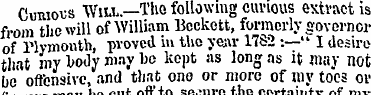
Curnous Witt . —Tho following curious extract is from the will of William Beckett , formerly governor of Plymouth , proved in the year 1782 : — " I desire that my body may be kept as long as it may not be offensive , and that one or more of my toes or fin" -ei' 8 may bo cut off to secure tho certainty of my bem" dead . I also make the further request , to mv dcavwifo , that as she has been troubled with one old fc olj she w "> n ^ think of marrying another ,
Iftrfrtitt.
Iftrfrtitt .
Jkhskcb Ot A Uovkrnment's Secnimr.—The S...
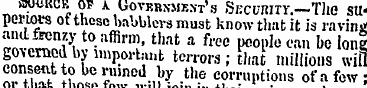
jkhskcb ot a Uovkrnment ' s SEcnimr . —The superiors ot these babblers must know that it is raving and frenzy to affirm , that a free people can be long K ^ - ^ f tcn'ors ' ' $ M millions will T ? Z « tV ? -ft . ' •*• corruptions of a few ; ?> ., n « J V J 0 m '" theu' ™« ••* " > ' longer than the corruption lasts ; they must know tSat every day new nml greater demands will rise upon the corruptors j that no revenue ( how great soever ) will feed the voraciousness of the corrupted , and that every disappointment will make tllClll turn upon the oppressors of their coimtrv , and fall into its true interest and their own ? they must know that there is no way in nature to prevent a
revolution in government , but by making the people easv under it , by showing them their interest in it ; that corruption , briber }' , and terrors , will make no lasting friends but infinite and implacable enemies , and that the best security of a prince among a free people , is their affections , which he can " always ga i n , by making their interest his own , by showing that all his views tend to their good . Then , as they love themselves , will they love him , and defend him who defends them . Upon this faithful basis his safety will bo better established than upon the an ** bitious and variable leaders of n few legions who may bo corrupted , disobliged , or surprised , and often have been so ; and hence have great revolutions been brought about , and g reat nations undone , only by the revolts of single regiments . —Thomas Gordon , —A Discourse on Standing Armies , 1722 .
Natoleox ' s Baiiuer . —A stranger having entered the apartment where the Emperor Xnpolcon was shaving himself , when in a little town in Italv , ho said , " I want to see your great emperor—what are you to him ? " Tho emperor replied , " I shave him . " Mr BnuiE op a Husband . — " My love " said a very affectionate wife , as she pointed to a wreath of artificial flo wers , on hor head , " don ' t vou think these will » row to-night ? " " There ' s sap enough under ' em ! " said the mi-gallant gentleman . —Ned Jlunt ~ line ' s Own .
The Uowxess of oi 7 B Foreruxxkus . —Cicero relates that the ugliest and most stupid slaves in Rome camo from England ! Moreover , ho urges his friend Atticus " not to buy slaves from Britain , on account of their stupidity and their inaptitude to learn music and other accomplishments . " Ciesar , also , describes the Britons generally as a nation of very barbarous manners . " " Most " of the p e op le of the interior , " hesavs , " never sue corn , but live upon milk and flesh , and arc clothed with skins . " In another place he remarks : — " In their domestic and social habits , the liritons are regarded as the most savage of nations . They are clothed with skins ; wear the hair of their heads unshaved and long ; but shave the rest of their bodies , except their upper lip : and stnin themselves a blue colour with woad , which gives them a horrible aspect in battle . " Don't , Jonathan , the negro slave despise , Just so your sires appeared in Ciesar ' s eyes .
The OiiiGi > - or UuitAx EREEoosf . —Life aud liberty are derived from tiie same Almighty source . They are tho Creator ' s gift , which ought never to be disjointed , and never can , when not forfeited bv crimes , without offering Him tho grossest insult . ' To suppose God had g iven life to some , without liberty to enjoy it , would be to charge Him with giving a real curse , under the fair disguise of a blessing . Where slavery is sanctioned and practised , as if the arbitrary laws of men could render it lawful , the gracious giver of life is accused of injustice . Mankind everywhere are clothed by him with the same inherent privileges , which cannot be invaded without making war upon Heaven . Ice . —Three thousand tons of ice have been cut in Massachusetts in tho present rear , for homo consumption and exportation . —New York Tribune . Why are pewter pots like bail legislation '—Because they are half-and-half mecuvrei .
Bellks and Dahlias . —A modern writer , who hns evidently deeply studied tho most charming productions of nature , says that ' dahlias are like the most beautiful women without intellectuality ; they strike you with astonishment by their exterior splendour , but are miserably destitute of those properties which distinguish and render asjrecabl \ less imposing flowers . Had nature given the fragrance of the rose or stock to tho dahlia , it would have been the most magnificent gem of the gardenbut , wanting seenrf it is like a fine woman without mind . "
Canadian Indians . —Every m . ' . n , like Gulliver in Lilliput , is fastened to some spot of earth by the thousand small threads whicli habit and association are continually stealing over him . Of these , perhaps , one of the strongest is here alluded to . Wiicn the Canadian Indians were once solicited to emig rate , " What ! " they replied , " .-sl ,. i ] l we say to the bones of ourfntliers , ' Arise , and go with us into a foreign laud ? ' " What the Steam Engine Does . —It propels , it rows , it sculls , it screws , it warps , it tows , it elevates , it lowers , it lifts , it pumps , it drains , it irrigates , it draws , it pulls , it drives , it pushes it
carries , it brings , it scatters , it splits , it collects , it condenses , it extracts , it breaks , it confines , it o ]> ciis , i t s h uts , it digs , it shovels , it excavates , it plows , it threshes , it separates it winnows , it washes , io grinds , it crushes , it sifts , it bolts , it mixes , it kneads , it mould s , it stamps , it punches , it beats , it presses , it picks , it hews , it cut * , it . slits , it shaves , it saws , it planes , it turns , it bores , it mortices , it drills , it heads , it blows , it forges , it rolls , it hummers , it rasps , it files , it polishesTit rivets , it sweeps , it brushes , i t scutc h es , it cards , it spins , it winds , it twists , it throws , it weaves , it shears , it coins , it prints .
rosTies Pilate's Successor . —A barrister being concerned in a cause which he wanted to postpone for a few days , asked Lord Mansfield when he would bring it on \ " On Friday next , " said his lordship , " Will yr > U please to consider , my lord , next Friday is Good Friday ? " "I don't care for that—the better day the better deed . " "Well , my lord , you will of course do as you please ; but if you do sit on that day , I believe you will be th e firs t judge who did business on a Good Friday since Pontius Pilate ' s time . "
Glamis Casti . e . —This ancient scat of Macbeth has lately given rise to curious conjectures in this nei ghbourhood . It appears that ' while wor k men were engaged in repairing some of the ruins in the castle , they discovered a staircase which iiad not been before known . They attempted to explore it , but from its construction and the foulness of the ' Mr , the men were obliged to give up prosecuting their arduous task . It is the belief of many -that it leads into a secret room which is supposed to be in the castle ; and it is not very improbable that something strange may turn out in connexion therewith . The Dog in Dancer . —A candidate for a scat in parliament , entering the house of a washerwoman m Yorkshire , 5 hoolv " hnnds with all the inmates , not excepting a little Cinderella on the health , and nauseated Dame Suds with his fulsome courtesies . Kicking the dog which lay snoozing by tho firo , " Get away wi' th e e , " she cried : " he'll be shaking hands wi' thee next !"
Bather Indigestible . —The Cornovian has the following joke on a farmer , who was accustomed to come home late at night in a " barleycorn" state , taking a cold bito , which was usually set for him bv his kind and forgiving wife . One night , beside the usual dish of cabbnao and pork , she left a washbowl filled with caps and starch . The lamp had Ions been extinguished when the staggering sot ' returned home , and by mistake , when proceedimr to satisfy his hunger , ho stuck his fork into the " wrong dish . He worked away at his mouthful of caps for some time , but being unable to masticate them , he snug out to his wife— " I say , old woman , where did you get tho cabbages , tliuy are so strum I can't chew 'em ? " " Gracious me !" replied the ' good lady , " if the stupid fellow isn't eating my cap , strings and ail ' . " Never ( man-el at meal time—you might just as well feed on a cushion stuffed with pins .
Important from the Gold Kecioxs . —Sackrymento Biggins , October 20 th , l-Si ? . —To Tim Flaherty : —AYrah thin , Tim , as soon as y ou re a d th is bit of a note come out at wonst . Rite t ' orenenst me whore I sit composing over this letther there ' s a fortune to be got for the mere sitthing . The sands is nil goohl powther . Och ' . if you eould only see how beautiful it shines in the sun . An' thin the depth of it . It coes claim down to the centre ov the world . The mountains , Tim , has rains , and ivvery vain is full of the cireulatm' majium . Wouldn't you like to bleed them vains , ould boy i Wu ' vo no horses here , ' cepting mules , and as soon as one ov the boys sets a load he puts it on the back
ov the donkey and carries it to the «¦? . ? wjcr *; The ass sayers , ye see , is the jintlemen as ' informs ye whether the goold ' s the rale stuff , or only iron pitaties . Yon see tlwo ' s ;\ desavhv * kind o' goohl they call pitaties . It ' s an invenshun ov the ould sarpent , and iv yez put it in the fire it vanishes in a thick smoke wid an cnfarncl smell ov sultir . Ilevcn be about us ! It ' s a fine healthy reiiu is the Saekvymento . There ' s no disease ' cept the shaking ager ; and tho fits come on first rate whin there ' s any sifthinff to be done . As soon as one o' the boys gets tho shake on him he just puts the sifther in his fists , and he'll make a small fortin a-ere the trimblc ' s off ov him . We ' re all rale demmicrats out here , Tim , While I'm writ-ins ov this letther on the side ov mv
hat—bad luek io the crown theiv 3 to it—I can see one of tho captins ov the >" ow York melisha washing the goold in the Ssackrymento with hardly a rag on him , savin' your presence . Ilemember me to Biddy , tho davlin ' , an ' toll k-i' if she'll put on the jacket and throuscrs she can make hapes of money here , for she knows how to use a spade , an' it ' . * ehsier diggin' the goold than cutting turf in Kilkenny , lint she'd letter not ho aft her natural duds , for the site ov a } H > breed a ' ruction in ttw-sittlwncnt . ^ dress vou asin shortly en the state affiilw in this country . 1 remain , VOl cozzem—Tsbence Maikwt ,
Lie R Commontt. Vcottjga<N: " St ^Mr^ Of...
lie r commontt . vcOTtJga < N : " ^ Mr ^ oftfffi « S »»^ ' s &^^ J ^ < £ ^ £ , ? . Vp < P-f Y >; iicr comiiTjR . r . " ^ ,, ^ ttveoat ^ nW ^^ A j £ of Ifirh ^^ rA , ;** W / 3 « PS ^^ -ig ll ^ ff *! SpltA '
-
-
Citation
-
Northern Star (1837-1852), April 14, 1849, page 3, in the Nineteenth-Century Serials Edition (2008; 2018) ncse.ac.uk/periodicals/ns/issues/ns2_14041849/page/3/
-