On this page
-
Departments (5)
-
Text (7)
-
fra«e to the "working classes. He wanted...
-

&sj-iti£ InUlMmtz
-

ACCIDENTS IN MINES
-

THE WEAVING TRADE.—IMPROVEMENT OF IRELAND.
-

THE FRANCHISE
-

mw&m, &c
-
Printed by WILLIAM RIDER, of No. 5, Macc...
Note: This text has been automatically extracted via Optical Character Recognition (OCR) software. The text has not been manually corrected and should not be relied on to be an accurate representation of the item.
-
-
Transcript
-
Note: This text has been automatically extracted via Optical Character Recognition (OCR) software. The text has not been manually corrected and should not be relied on to be an accurate representation of the item.
Additionally, when viewing full transcripts, extracted text may not be in the same order as the original document.
Fra«E To The "Working Classes. He Wanted...
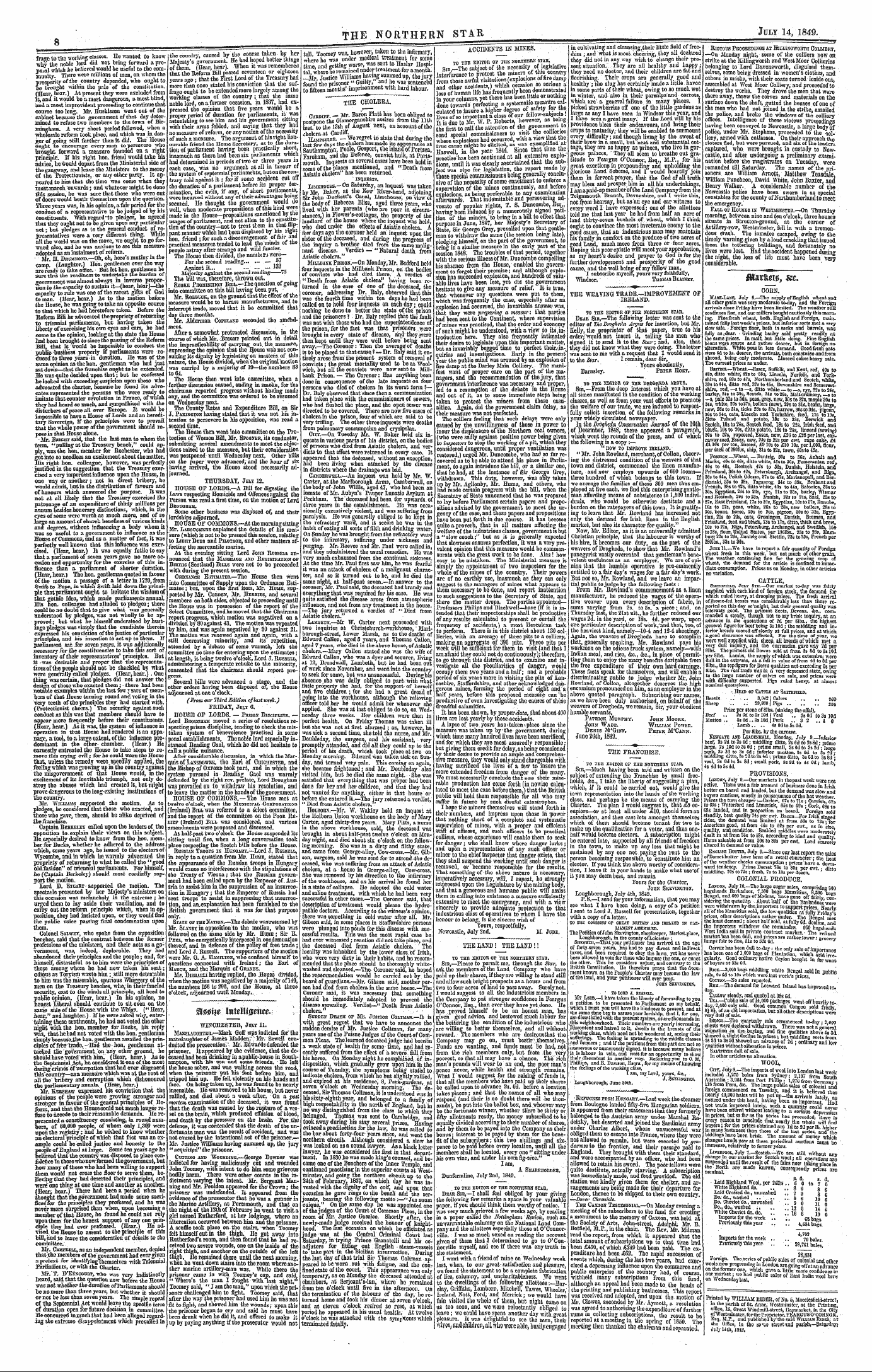
fra « e to the "working classes . He wanted to know ¦ wirv the noble lord did not bring forward a propo-il which he believed would be useful to the conimunltv . There were millions of men , on whom the prosperity of the country depended , who ought to be brought writhia the pr . le of the constitution . ( Hear , hear . ) At present they were excluded from It , and it would be a most dangerous , a most blind , and a most improvident proceeding to continue that course too long . Mr . fluskisson went out of the cabinet because the government of that day determined to refuse two members to the town of Birmingham . A very short period followed , when a ¦ wholesale reform took place , and which was in danger of going still further than it did . The House ought to encourage every man to persevere -who brought forward a . measure founded on a right
princ i p le . If his right lion , friend would take his advice , he wou ld dep a rt from t h e Mini s ter ia l si d e o f thecangwav , and leave the Ministers to the mercy of the Protectionists , or any other party . It appeared to him that the time nvas come when they niustmarch onwards ; and whatever might be done this session , he was sure that those who were out of doors "would bestir themselves upon the question . Three years was , in his opinion , a fair period for the conduct , of a representative to be judged of by his constituents . "With regard-to pledges , he agreed that they ought not to be given upon any particular act ; but pledges as to the general conduct of representatives were a very different thing . "While all the world was on the move , w e oug ht to go for--n-ard also , and he was anxious to see this measure adopted as an instalment of reform . __
" Mr . II . Dkcmmosd . —Oh , oh , here ' s mutiny in the camp . ( Laughter . ) Hon . gentlemen over the way are ready to take otfice . - But let hon . geritlemen be sure tint the readiness txt undertake the burden of "overnment was almost always in inverse proportion to the capacity to sustain it —( hear , heal- )—the capacity to rule was one ofthe rarest g ifts of God to man . ( Hear , hear . ) As to the motion before the House , he was going to take an opposite course to that -which he had heretofore taken . Before the Reform Bill he advocated the propriety of returning to triennial parliaments , but having taken the liberty of exercising his own eyes and ears , he had come to tbe opinion , looking at the state the House lad been brought to since the passing of the Reform Bill , that it " would be impossible to conduct the
p ublic-busihess p ro p erly if parliaments were reduced to three years in duration . He was ofthe same opinion as * tbe hon . gentleman -who bad just sat down—that the franchise ought to be extended . He-was quite decided npon that ; but he confessed he looked with exceeding suspicion upon those who advocated the charter , because he found its advocates represented the persons who were ready to imitate that counter revolution in France , of which they had heard so much , and sympathised with the disturbers of peace all over Europe . It would be Impossible to have a House of Lords and an hereditary Sovereign , If the principles were to prevail that the whole power ofthe government should repose in that House alone . Mr . Height said , t ha t the la st man to w hom the
term , " pulling at the Treasury bench , could apply , was the hon . member for Rochester , who had got into so needless an excitement about the matter . His rLjbt hon . colleague , however , was perfectly justified in the suggestion that the Treasury exercised a very important influence npon the House , in one way or another ; not in direct bribery , he would admit , but In the distribution of favours and of honours which answered the purpose . It was nob at aU likely that the Treasury exercised the patronage of an expenditure of thirty millions per annum besides honorary distinctions , which , in the eyes of some were worth as much more , and of so large an amount of church benefices of various kinds ana degrees , without influencing a body whom it was so useful to a government to influence as the
House of Commons , and as a matter of fact , it was perfectly well known that this influence was exercised . ( Hear , hear . ) It was equally futile to say that a parliament of seven years gave no more occasion and opportunity for the exercise of this influence than a parliament of shorter duration . ( Hear , hear . ) The hon . gentleman quoted in favour ofthe motion a passage of a letter in 1720 , from Swift io Pope , in -which Swift laid down the principle that parliament ought to imitate the wisdom of that gotuic idea , which made parliaments annual . His hon . colleague had alluded to pledges ; there could Le no doubt that to give what was generally understood by pledges , was not wholly to be approved ; but what he himself understood by hustings pledges was simply that the candidate therein
expressed his conviction ofthe justice of particular princip les , and his intention to act up to them . If parliament sat for seven years , it was additionally necessary for the constituencies to take this sort of inventory of their representatives' principles . But it -was desirable and proper thai the representatives of the people should not he shackled by what were generally called pledges . ( Hear , hear . ) . One tiring was certain , that pledges did not answer the design of those who exacted them ; there had been notable examples within the last few jsars of membsrs of that House turning round and voting in the "very teeth ofthe principles they had started with . ( Protectionist cheers . ) The security against such
conduct as this was that members should have to appear more frequently before their constituents . ( Hear , hear . ) As it was , the system of influence in operation in that House had rendered it an appanage , a tool , to a large extent , ofthe influence predominant in the other chamber . ( Hear . ) He earnestly entreated the House to take steps to remove this crying evil ; for he could warn the House that , unless the remedy were speedily applied , the feeling which was growing up in the country against the misgovernment of that House would , in the excitement of its inevitable triumph , not only destroy the abuses which had created it , but might prove dangerous to the long-existing institutions of the country .
Mr . "WiixiAMS supported the motion . As to pledges , he considered that those who exacted , and those who gave , them , should be alike depr ived of ihe-franchise . Captain Berkeley called npon the leaders of the opposition to-explain their- views on this subject . He . especLilly desired to know from the hon . member for Bucks , whether he adhered to the address which , some years ago , he issued to the electors of "Wycombe , and in which he warmly advocated the propriety of returning to what he called tho " good ohl . fashion" of triennial parliaments . For himself , he ( Captain Berkeley ) should most cordially support the motion . Lord D . Sxcart supported the motion . The s p ectac l e present ed b y h er M a jesty ' s ministers on this occasion was melancholy in the extreme ; he
urged them to lay aside their vacillation , and to carry out the reform principle which , when in opposition , they had insisted upon , or they would find the . public , voice passing final condemnation upon them . Colonel Sal-wet , w h o spo k e f rom th e opposition benches , said that the contrast between the former professions of the ministers , an d t h e i r acts as a go : Ternment , was , indeed , deplorable . They had abandoned their principles aud the people ; aud , for Mmself , distasteful as to bun were the principles of those among whom he had now taken his seat ; odious as Toryism wasto him ; still more detestable to him was the miserable , spurious "Whiggery of the men on the Treasury benches , who , in then'fancied security , cast to the winds all principle , all heed to
public opinion . ( Hear , hear . ) In his opinion , no b onest l i b eral shoul d cont i nue to s i t even on t h e same shJe of the House , with the Whigs . ( " Hear , bear , " and laughter . ) If he were asked why , entertaining these sentiments , he had not voted the ot h er nig ht with the hon . member for Bucks , his reply was , that be had not voted with the hon . gentleman simply because . the hon . gentleman assailed the principles of free'trade .-Had the-hon . gentleman attacked the " gov e rn m ent , on any other ground , he shouldhave voted ' with him . ( Hear , hear . ) As to tbe Septennial Act , he considered it one of the most d .-irrhgci-hnes of usurpation that had ever disgraced thk ~ couritry—as a measure which was at the root of all the bribery and corruption which dishonoured the parliamentary annals . ( Hear , hear . )
Mr . Kershaw expressed his conviction that the opinions of the people were growing stronger and stronger in favour of the general principles of Reform ° and that the Housecould not much longer refuse to accede to their reasonable demands . He represented a constituency consisting , in round numbers , of 60 , 000 people , of whom only 1 , 30 /) were npon the registry ; " and he wished to know whether an electoral principle of which that fact was an example could be called justice and honesty to the people of England at large . Some ten years ago he believed that the country was disposed to place confidence in those whonowformed thegovernnient , but
bow many of those who had been willing to support th e m wou l d not c ro ss th e fl oo r to serv e th e m , believing that they had deserted their principles , and -were one thing at one time and another at another . { Hear , hear . ) There had been a period when he thought that the government had made some sacrifices' / or the principles they professed , and he was never mere surprised than when , npon becoming a member eft hat House , he found he could not rely uponthem for the honest support of any one principle they had ever professed . ( Hear . ) He advised the ' House to assent to the princip le of this bill , and to leave the consideration of details to the committee .
Mr . Camfbell , as an independent member , denied that the members of the government had ever given a pretext for ideufifyiq g themselves with Triennial Parliariients , or with the Charter . Mr . T . D'Etscodut , who was very indistinctly heard , said that the question now before tbe House was not whether the duration of Parliaments should be no more than three years , but whether it should or not be less than seven years . The simple repeal of tlie Septennial Act would leave the specific term of duration open for future decision in committee . He concurred in much that had been alleged regarding she extreme dissppemiment Tdiieh prevailed in
Fra«E To The "Working Classes. He Wanted...
the country , caused by the course taken by her Maicsty ' s government . He bad hoped better things of them . ( Hear , hear ) . When it was remembered that the Reform Bill passed seventeen or eighteen years a" 0 ; that the First Lord of the Treasury had more tluin once stated his conviction that tbe suffrage ou < dit to be extended more largely among tho working classes of the country ; that the same noble lord , on a former occasion , in 1837 , had expressed the opinion that five years would be a proper period of duration for parliaments , it was astonishing to see him and his government sitting with their arms folded , arid saying that they had no measure of reform , or any notion ofthe necessity of such a measure . The argument of his right honourable friend the Home Secretary , as to the duration of parliament having been practically short , inasmuch as there had been six parliaments which had determined in periods of two or three years in
each case , was no argument at all in favour of the systern ' of septennial parliaments , butonthecontrary told against it ; for if some accident cut oft the duration of a parliament before its proper termination , the evils , if any , of short parliaments , were incurred without any of their advantages being secured . He thought the government would do well , when moderate propositions of this kind were made in the House—propositions sanctioned by the usages of parliament , and not alien to the constitution of the country—not to treat tt em m that flippant manner which had been displaced by his right hon . friend ; for such a discouragement of fair ami practical measures tended to lead the minds of tne people astrav after strange and wild fancies . The House then divided , the numbtPJ were—For the second reading . — 57 Against it ... . ' " - ' ,. _ St-ijoiity against the second reading to The bill was . therefore , thrown out .
Smoke Pkouibiiion Bill , —The question of going into committee on this bill having been put , Mr . Roebuck , on the ground that the effect of the measure would be to harass manufacturers , and to interrupt trade , moved that it be committed that day three months . Mr . Alderman Copelaxd seconded the amend
ment . After a somewhat protracted discussion , in the course of which Mr . iBrigut pointed out in detail the impracticability of carrying out ; the measure , expressing the opinion that the House was not consulting its dignity by legislating on matters of this nature , the House divided , when the original " motion was carried by a majority of 19—the numbers 83 to 61 . ' The House then went into committee , when a further discussion ensued , ending in smoke , for th e chairman reported progress without having made any , and the committee was ordered to be resumed on Wednesday next . Th e County Rates and Expenditure Bill , on Sir J . Pakisgion having stated that it was not his intention to persevere in his opposition , was read a second time .
The House then went into committee on the Protection of "Women Bill , Mr . Spoojjer , its conductor , submitting several amendments to meet the objections raised to the measure , but their consideration was postponed until Wednesday next , Other bills on the paper were advanced , and the horn-of six having arrived , the House stood necessarily adjourned .
T HURSDAY , Jolt 12 . HOUSE OF LORDS . —A Bill for digesting the Laws respecting Homicide and Offences against the Person was read a first time , on the motion of Lord Brougham . ¦ " , Some other business was disposed of , and their lordships adjourned . HOUSE OF COMMONS . —At the morning sitting Sir . Labouchere explained the details of his measure ( which is not to be pressed this session , relating to Light Dues and Pilotage , and other matters affecting the mercantile marine . At the evening sitting Lord Jons Russell announced that the Marriage and Registration of Births ( Scotland ) Bills were not to be proceeded with during the present session . Orbxaxce Estimates . —The House then went into Committee of Supply upon the Ordnance
Estimates ; hut , upon the first item , Mr . Hume , supported by Mr . Cobdeji , Mr . Hermes , and several members on both sides , objected to proceeding until the House was in possession of the report of the Select Committee , and he moved that the Chairman report progress , which motion was negatived on a division by SO against 43 . The motion was repeated by him , and was again negatived by 90 against 21 . The motion was renewed again and again , with a still decreasing minority , an d i ts repet i t i on attended by a debate of some warmth , left the committee no time for entering upon the estimates ; at length , it being twelve o'clock , Lord J . Russell , administering a temperate rebuke to the minority , consented that the chairman should report progress . Several hills were advanced a stage , an d the other orders haying been disposed of , the House adjourned at one o ' clock .
( From our Third Edition of last iveek . ) FRIDAY , Jult 0 . ' HOUSE OF LORDS . — Prison Discipline . — Lord Brougham moved a series of resolutions respecting prison discipline , tending to check the mistaken system of benevolence practised in some penal establishments , The noble lord especially instanced Reading Gaol , which he did not hesitate to call a public nuisance . After considerable discussion , in which the MarquisofliAXsnowsE , the Earl of Chichester , and
the Bishop of Oxford took part , and in which the system , pursued in Reading Gaol was warmly defended by the right rev . prelate , Lord Brougham was prevailed on to withdraw his resolution , and to leave the matter in the hands of the government . HOUSE OF COMMONS . —The House met at twelve o clock , when the Municipal Corporations ( Ireland ) Bill was referred to a select committee , and the report of the committee on the Poor Relief ( Ireland ) Bill was considered , and various amendments were proposed and discussed .
At half-past two o ' clock the House suspended its sitting nntil five , when a long conversation took place respecting the Scotch bills before the House . Russian Troops in Hungary . —Lord J . Russell , in reply to a question from Mr . Hu m e , stated that the appearance of the Russian troops in Hungary would cause no interference with the stipulations of the Treaty of Vienna ; that the Russian government had been called upon by the Emperor of . Austria to assist him in the suppression of an insurrection in Hungary ; th a t the Em p eror of Russi a h a d sent troops to assist in suppressing that insurrection , and a nex planation had been furnished to the British government that it was for that purpose only .
State of the Xation . —The debate was resumed by Mr . Slaxet in opposition to the motion , who was followed on the same side by Mr . Hume ; Sir R . Peel , who energetically interposed in condemnation thereof , and in defence of the policy of free trade ; and Lord J . Russell . The supporters ofthe motion were Mr . G . A . Hamilton , who confined himself to questions connected with Ireland ; the Earl of March , and the Marquis of Granby , Mr . Disraeli having replied , the House divided , when the motion was negatived by a majority of 140 , the numbers 156 to 296 , a nd th e Hous e , at three o ' clock , adjourned until Monday .., . - -
&Sj-Iti£ Inulmmtz
& sj-iti £ InUlMmtz
WINCHESTER , Jolt 11 . Manslaughter . —Mark Goff was indicted for" the manslaughter of James Madden : ' . Mr . Sewell conducted the prosecution . ' . Mr . Edwards defended the prisoner . It appeared by the evidence , that the deceased had been drinking in apublic-house ih Southampton , with hia aon and some friends . Ho left the house sober , and was walking across the road , when the prisoner put his 'foot before him , and tripped him up . He fell violently on his hands and face . On being taken up , he was found to be nearly
insensible . He was removed to his house , hut never rallied , and died about a week after . On a post mortem examination ofthe deceased , it was found that the death was caused by the rupture of a vesse l on the b rain , which produced effusion of blood , and death by the pressure on the brain . For . the defence , it was contended that the death ofthe unfortunate man was the result of accident , and was not caused by the intentional act ofthe prisoner . — Mr . Justice Williams having summed up , the jury " acquitted" the prisoner .
Cutting and Wounding . —George Downer was indicted for having maliciously cut and wounded John Toomey , with intent to do him some grievous bodily barm . There were other counts in the ind ictment vary ing the intent . Mr . Sergeant Manning and Mr . Poulden appeared for the" Crown ; the prisoner was undefended . It appeared from the evidence of the prosecutor that he was a gunner in the Marine Artillery , a t P ortsmouth , and that on the night of the 12 th of February he went to visit a girl named Rutherford , at her lod gings , where a n altercation occurred between him and the prisoner . A scuffle took place on the stairs , " when Toomey felt himself cut in the thigh . He got away into Rutherford ' s room , and then found that he had
received two severe wounds , one on the inside of the ri ght thigh , and another on the outside of the left thigh . He remained there until the next morning , when he went down stairs into the room where another marine artillery-man was . While there the prisoner came in with Toomey ' s cap , and said , " Where ' s tbe man I fought with ' last night . " Toomey said , " I am the man , " upon which the prisoner challenged him to fight . Toomey said , that after the way the prisoner had used him he was not fit to fight , and showed him the wounds ; upon this the prisoner began to cry and said he must have been drunk when he did it , and offered to make it up by paying anything if the prosecutor would not
&Sj-Iti£ Inulmmtz
t e ll Toome was , however , taken to tlie infirmary , where he was under medical treatment for some time and getting worse , was sent to Haslar Hospital where he remained under treatment for a month . -Imt . Justice Williams having summed up , tho jury found the prisoner « ' Guilty , and he was sentenced to fifteen months ' imprisonment with hard labour .
THE CHOLERA . Cardiff — Mr . Baron Piatt has been obliged to postpone the Glamorganshire assizes from the 11 th inst . to the 13 th of August next , on account of the cholera at Cardiff . Hampshire . — We regret to state that during tho last few days the cholera has made its appearance at Southampton , Poole , Gosport , the island of Portsea , Fareham , and the Defence , convict hulk , at Ports , mouth . Inquests on several cases have been held in some of tho pla ces mentione d , and "Death from Asiatic c holera" has been returned .
inquests . Limehousb . —On Saturday , an inquest was taken by Mr . Baker , at the New River-head , adjoining Sir John Duckett ' s Canal , Limohouse , on view of the body of Rebecca Bliss , aged three years , who lived with her parents ( who are poor iri circumstances , ) in Flower ' s-cottagcs , the property of the landlord of the house where the inquest was held , who died under the effects of Asiatic cholera . A few days ago the coroner held an inquest upon the s i ster of th e deceased , and during the progress of tbe inquiry a brother died from the same malignant disease . Verdict — " Natural death from Asiatic cholera . "
Mill-bask Prison . —On Monday , Mr . Bedford held four inquests in the Millbank Prison , on the bodies of convicts who had died there . A verdict of "Death from Asiatic cholera" haying been returned in the case of one of the deceased , the coroner , a ddres s ing Dr . Baly , observed that this was the fourth time % vithin ten days he had been called on to hold four inquests on each day ; could nothing be done to better the state ofthe prison and the prisoners ? : Dr . Baly replied that the fault was not with those who had the superintendence of the prison , for the fact was _ that prisoners were brought in every state of disease , and they were t h en k e p t until t h ey were w e ll b efore b ein g sent away . —The Coroner : Then the average of deaths
is to be placed to that cause ? — Dr . Baly said it entirel y arose from the present system of removal of convicts ; the great mortality used to be at Woolwich , but all the convicts were now sent to Millbank Prison . — The Coroner : Has anything been done in consequence ofthe late inquests on four persons who died of cholera in its worst form ?—Dr . Baly observed that since then a communication had taken place with the commissioners of sewers , who had flushed the place , a n d t h e open s ewer was directed to be covered . There are now five cases of cholera in the prison , four of which are said to be very trifling . The other three inquests were deaths from pulmonary consumption and erysipelas , City . —On Tuesday Mr . W . Baker held six
inquests in various parts of his district , on the bodies of persons who died from Asiatic cholera , and verdicts to that effect were returned in every case . It appeared that the dedeased , without an exception , had been living when attacked by the disease in districts where the drainage was bad . Camberwell . —An inquest was held by Mr . W . C a rter , at t h e Marl b oroug h Arms , Camberwell , on the body of John Willis , aged 47 , who had been an inmate of Mr . Aubyn's Pauper Lunatic Asylum at Peckham . Tfaedcceased had been for upwards , of three years in the establishment . He was occasionally excessively violent , and was suffering from paralysis . He was generally obli ged to be kept in the refractory ward , and it seems he was in the habit of eating all sorts of filth and drinking water .
On Sunday he was brought from the refractory ward to the infirmary , suffering under sickness and purging . Mr , Reeves and Mr . Paul were called in , and they administered the usual remedies . He was very much exhausted from the continual sickness . At the time Mr . Paul first saw him , he was fearful it was an attack of cholera of a malignant character , a n d so it turned out to be , and he died tlie same ni g ht , at half-past seven . —In answer to the coroner , Mr . Paul said , the deceased had brandy and everything that was required for his case . He was quite satisfied the disease arose from atmospheric influence , and not from any treatment in the house . —The jury returned a verdict of " Died from Asiatic cholera . " Lambeth . —Mr W . Carter next proceeded with
two inquiries at Chnstchurch-workhouse , " Marlborough-street , Lower Marsh , as to the deaths of Edward Gallon , aged 3 years , and Thomas Gallon , a ^ ed 7 y ears , who died in the above house , of Asiatic cholera . —Mary Gallon stated she was the wife of Edward Gallon , who was a dyer and scourer , living at 12 , Broadwall , Lambeth , but he had been out of work since Novem b er , and went into the country to seek for some , but was unsuccessful . During his absence . she was daily obliged to part with what little property she had , for the support of herself and five children ; for she had a great dread of going into the workhouse , although the relieving officer told hei * he would admit her whenever she applied . She was at last obli ged to do so , on Wednesday three weeks children then in
. Her were perfect health . On Friday Thomas was taken ill but she was not at first alarmed ; as , however , he was sick a second time , she told the nurse , and Mr . Doubleday , the surgeon , and his assistant , very prom p tl y attended , and did all they could up to the period of his death , whicli took place at two on Monday morning . Edward was taken sick on Sunday , and turned very pale . This coming on again , she be c ame frig htened ; and Mr . Doubleday also vi s ited him , but he died the same night . She was satisfied that everything that was proper had been done for her and her children , and that they had not w a nted for a n y thi ng , either in that house or before she entered it . —The jury returned a verdict , " Died from Asiatic cholera .
Holborx . —Mr . W . Wakley held an inquest at t h e Holborn Un i on workhouse on th e bod y o f M a r y Carter , aged thirty-five years . Mary Pitts , a nurse in the above workhouse , said , the d e c eased was brought in about half-past twelve o ' clock on Monday night , and died about six o ' clock on the following morning . She was in a dirty and filthy state , and came from George-alley , Cow-cross . —Mr . Gibson , surgeon , said he was sent for to attend the deceased , who was suffering from an attack of Asiatic cholera , at a house in George-alley , Cow-cross . She was removed by his direction to the infirmary of the workhouse , and on his arrival he found her in a state of collapse . Ho adopted the cold water and saline treatment , with winch he had been very successful in other cases . —The Coroner said , that description of treatment would please the
hydropathic doctors . According to the witness ' s opinion , there was something in cold water after all . Mr . Gibson said , in some places in Staffordshire persons were plunged into ponds for this disease with successful results . This was the most rapid case he had ever witnessed ; reaction did not take place , and the deceased died from Asiatic cholera . The locality was inhabited by the lower class of Irish , who were very dirty in their habits , and he recommended that the place should be thoroughly whitewashed and cleansed . —The Coroner said , he hoped the recommendation would be carried out by the board of guardians . —Mr . Gibson said , another person had died from cholera in the same house . —The Coroner said , it was necessary that something should b e i mmedi a t e l y adopted to prevent the disease spreading . Verdict— " Death from Asiatic cholera . "
Sudden Death of Mr . Justice Coltman . —It is with great regret that we have to announce the sudden demise of Mr . Justice Coltman , for many years one of the Puisne Jud ges ofthe Court of Common Pleas . The learned deceased judge had beetfin a weak state of health for some time , and had recent ly suffered from the effect of a severe fall from his horse . On Monday ni g ht he complained of indisposition , whicli gradually grow upon him in the course of Tuesday , the symptoms being stated to indicate cholera , from which"he but slightiy . rallied , and expired at his residence , 8 , Park-gardens , at seven o ' clock on Wednesday morning . The decease d , Sir Thomas Coltman , it is understood was in his sixty-eighth year , and belonged to a family of
high respectability in the north of England , but in no way distinguished from the class to which they belonged . Thomas was sent to Cambridge and took away during his stay several prizes . Having evincedapredilectionforthe law , he was called to the bar about forty-four years since , and went the northern circuit . Although considered a slow he was looked on as a sound lawyer . As a black letter lawyer , he was considered tho first in that departrnent . In 1830 he was made king ' s counsel , and became one ofthe Benchers ofthe Inner Temple , and continued practising in the superior courts at Westminster , and going the northern circuit up to the 24 th of February , 1837 , on which day he was invested with the dignity of the coif , a n d upon that occasion he gave rings to the bench arid the Serjeants , bearing the following motto : — "Jussuum cui que . " On the same day he was appointed one of the judges of the Court oi Common Pleas , in the room of Mr . Justice Gaselee . Shortly after , the
newly-made judge received the honour' of knighthood . The last occasion on which he officiated as judge was at tho Central Criminal Court last Saturday , in try ing ; Prince Granatelli and his coadjutors for fitting out English steam-vessels to take part in the Sicilian insurrection . During the last day of that trial Sir Thomas Coltman appeared to be worn . out with fatigue , and the confined state ofthe court . This appearance was only temporary , as on Monday the deceased attended at chambers , at Serjeant ' s-inn , where ho remained from ten o ' clock until five in the afternoon . On the termination of the labours of the day , lie returned home arid took his dinner at seven o ' clock , and at eleven o ' clock retired to rest , at which p e r i o d he appeare d in h is usu a l health ' . At twelve o ' clock he was attacked with the svmp Xoms wh i c h terminated fatally .
Accidents In Mines
ACCIDENTS IN MINES
TO THE EDITOR OF THE NORTHERN STAR . Sir —The subject of the necessity ^ of legislative interference to protect tho miners . of this country from those awful visitations ( explosions of fire damp andI otter accidents , ) which occasion so serious a loss of human life has frequently b e en demonstr a t e d Hour columns , yet there has been little or nothing doneTow ards pc & cting a systematic measuvc eaU culated to insure a higher degree of safe J ™ the lives of so important a class of our fcllow-suDjects It fs due to Mr . W . P . Roberts however , as being the first to call the attention of the govcrnmen to send special commissioners to visit the collieries where explosions had occurred , with a view that the li-uc cause mig ht be elicited a . was exemp ted at Haswellin the 1844 . Since that time the
, year practice'has been continued at all extensive explosions , until it was clearly ascertained that the subject was ripe for legislation , the report made by those special commissioners being generally conclusive of tho necessity of some enactment to enforce a supervision of the mines continuously , an d be f ore explosions , as being preferable to any examination afterwards . That indomitable and persevering advocate of popular rights , T . S . Duncombe , Esq ., h a v i ng b een i nduce d b y a numerousl y signed petition of the miners , ' to bring in a bill to effect that purpo s e i n Ju n e , 1847 , her Majesty ' s Secretary of State , Sir George Grey , prevailed upon that gentleman to withdraw tho same ( the session being late ) , nledffinff himself , on tho part ofthe government , to
bring in a similar measure in the earl y part ef the session 1848 . The troubles of that period , together with the serious illness of Mr . Duncombe compelling his absence from the House , enabled the government to forget their promise ; and although explosion has succeeded explosion , and hundreds of valuable lives have been lost , yet did the government hesitate to give any measure of relief . It is true , that whenever a ny quest i ons were put to them , which was frequently the case , especially after an exp losion had occurred , the invariable answer was , that they were preparing a measur : that parties had been sent to the Continent , where supervision of mines was practised , that the order and economy of such might bo understood , with a view to its Jn ?
troduction here . They also frequently intimated ^ their desire to legislate upon this important matter , but as invariably begged time to perfect their .-jnquirics and investigations . Early in the present year the public mind was aroused by an explosion of fire damp at the Darley Main Colliery . The manifest want of proper care on the part of the managers , and the recommendation of the jury , that government interference was necessary and proper , l ed to a resumption of tho deba te i n t h e Hous e and out of it , as to some immediate steps being taken to protect the miners from these casualties . Again , did the government claim delay , as their measure was not perfected . The colliers feeling that such delays were only
caused by the unwillingness of those in power to incur the displeasure ofthe Northern coal owners , ( who were sadly against positive power being given to inspectors to stop the working of a pit , which they considered dangerous , until proper ventilation was restored , ) urged Mr . Duncombe , who had so far recovered as to be able to attend his place in Parliament , to ag ain intro d uce the b ill , or a sim i lar one that he had , at the instance of Sir George Grey , withdrawn . This duty , however , was ably taken up by Mr . Aglionby , Mr . Hume , and others , who had made certain progress with tho bill , when the S e c r e tary o f St a t e announce d that he was prepare d to lay before Parliament certain papers and propositions advised by the government to meet the
urgency ofthe case , and those papers and propositions ha v e b een p ut f orth in due c ourse . It h a s b e c om e quite a proverb , that in all matters affecting the wel fa r e ofth e i ndustrious c l a s se s , government is but a " slow coach ; " but as it is generally expected that slowness ensures p erfection , it was a very prevalent opinion that this measure would be commensurate with the great work to be done . Alas ' . how easy to be mistaken . The Ministerial measure is simply the appointment of two inspectors for the whole ofthe mines of the country . Tlieir powers are of no earthly use , inasmuch as they can only suggest to the managers of mines what appears to them necessary to be done , and report inattention to suc h s ugge s t i ons to the Secretary of State , and there the matter drops . The parties appointed—Professors Philips and Blackwell—have ( it it is intended that their inspectorships shall be productive
of any results calculated to prevent or curtail the frequency of accidents , ) a most Herculean task to perform . There is in this district about 130 collieries , with an average of three pits to a colliery , making an aggregate of 390 pits . Three pits per week will be sufficient for them to visit ( and that I am afraid they could not do continuously ); therefore , to go through this district , and to examine and investigate all the peculiarities of danger , would occupy them two years and a half ; and a probable period of six years more in visiting the pits of Lancashire , Staffordshire , and other acknowledged dar iferous mines , forming tho period of eight and a alf years , before this proposed measure can be productive of even investigating the causes of these dreadful calamities . It has been shown , by propeivd'afo , that about iOO lives are lost yearl y by those accidents .
A l ap s e of two . years has'taken-place since the measure was taken up by the government , during which time many hundred lives nave boon sacrificed , and for which they are most assuredly responsible ; but giving them credit for delay , as being occasioned by their desire to provide an ample and comprehensive measure , they would only stand chargeable with having sacrificed tho lives bf a few to insure the more extended freedom from danger of the many . We must necessarily conclude that now their miserable production lias come forth ( in nowise calculated to meet the case before them , ) that the British public will hold them responsible for all who may suffer in future by such direful catastrophes . I hope the miners themselves will stand forth in their num be rs , and impress upon those in . power that nothing short of a complete and systematic su p erv i s i on o f mines , w i th a p ro p er an d efficient
sta ff of officers , and such officers to be practical c olliers , whose experience will enable them to seek for danger ; who shall know where danger lurks ; and upon a representation of any such officer or miner to the chief inspector that danger exists , that they shall suspend the working until such danger is remove d , or become responsible for the results . That something of the above nature is necessary , imperatively necessary , will , I re p eat , be strongly impressed upon the Legislature by the mining body , and that a generous and humane public will assist them in calling into existence a measure sufficiently extensive to meet the emergency , and with a view s i ncere ly to provide adequate protection to tliat industrious class of operatives to whom I have the honour to belong , is the sincere wish of Yours , respectfull y , Newcastle , Jul y 2 nd . M . Jude .
THE LAND ! THE LAND !! TO THE EDITOR OF THE NORTHERS STAR . . Sir , —Please to permit me , through the Star , to ask the members of the Land Company who have paid up their shares , If they are willing to stand still and allow such bright prospects as a house and from two to four acres of land to pass away . Surely not . I would suggest to all the industrious members in the Company to put stronger confidence in Feargus O'Connor , Esq ., than ever they have yet . done . He has proved himself to be an honest man , has given good advice , and bestowed much labour for the bettering the condition of the industrious who
are willing to better themselves , and all without reward .. The members who are desirmisthat the Company may go on , must bestir . ' . themselves . Funds are wanting , and funds must be had , not from the rich members only , but from the very poorest , so that all may have a chance . The rich man ' s pounds will wear to an end , the poor man ' s pence never , while health and strength remains . What I would suggest for the raising of funds is , that all the members who have paid up their shares be called upon to advance 2 s . 6 d . before a location takes places ; and that the names of all who may
respond ( and their is no doubt there will be thousands ) , be put into the ballot box , and whoever may be the fortunate winner , whether there be thirty or fifty allotments ready , the money subscribed to be equally divided according to their number of shares , and by them to be payed into the Company as their bonus ; interest to be payed by them for the benefit of the subscribers ; this two shillings and sixpence to be paid before every location , until all the mem be rs sh a ll b e locate d , every one s itting un d er his own vine ; and under his own fig-tree . " lam , A Shareholder , Dunfermline , July 2 nd , 1849 .
TO THE EDITOR OF THE NORTHERN STAR , Dear Sir , —I shall feel obli ge d by your g iving the following few remarks a space in your valuable paper , if you should think them worthy of notice . I was very much grieved a few weeks ago , by reading in a paper called the Nottingham Review , such an unwarrantable calumny on the National Land Company and the allottees especially those at O'Connorville . I was so much vexed on reading- the account given of them that I determined to go to O' Connor ville myself , and see if ther e was any truth in the statement .
I wont with a friend of mine on Wednesday week last , when , to our great-satisfaction and ple asure we found tho statement so be a complete fabrication of lies , calumny , and uncharitableness . We went to the dwellings of tho following allottees : —Barcla y , Griffiths , L a mborn , Mitchel l , T a wes , Wheeler , Ireland , Kbit , Ford , and Merrick ; w e would have fain visited the whole of them , but night came on us too soon , and we were reluctantly obliged to leave ; we could have spent another day with great pleasure . It was delightful to see the men , their wires , and children , all who were able , bualvengnsod
Accidents In Mines
in cultivating and cleansing , their little field of freedom ; and what is most cheering , they all declared they did not in any way wish to change their present situation . They are all healthy and happy ; they need no doctor , and their children are fat and flourishing . Their crops are generally good and healthy ; the slug has certainl y m a de a little havoc in some parts of their wheat , owing to so much wet in winter , and also in their parsnips and carrots , which are' a geivcval failure m many places . I picked strawberries off one of the little gardens as large as any I have seea in Windsor this year , and I have seen a great many ; If the Lord will by his providence bless their endeavours , and bring their crops to maturity ,- they will be enabled to surmount every difficulty ; and though living by tho sweat of their brow in a small , but neat and substantial cottage , they are as happy as princes , who live in gorgeous palaces . They all seem to breathe out
gratitude to Feargus O'Connor , Esq ., M . P ., for h i s great exertions in propounding and upholding the glorious Land Scheme , and I would heartily join them in fervent prayer , that the God of all truth may bless and prosper him in all his undertakings . I am apaid-up member of the Land Company from tlie Teignmouth Branch , Devonshire and I -write this , not from hearsay , but as an eye and ear witness to e very wor d I h a v e e xpr e ssed ; one of th e a ll o ttee s told me that last year he had from half an acre of land thirty-seven bushels of wheat , which I think ought to convince tho most inveterate enemy to the good cause , that an industrious man may maintain his family in comfort on the produce of two acres of good Land , much more from three or four acres . Hopi ng th i s poor ep istle will meet your approbation , as my heart ' s desire and pr a yer to Go d i s for th e further developement and prosper i ty of the good cause , and the well being of my fellow man ,
I subscribe myself , yours very faithfully , Windsor . TnoMAS Blainey
The Weaving Trade.—Improvement Of Ireland.
THE WEAVING TRADE . —IMPROVEMENT OF IRELAND .
TO THE EDITOR OF THE NORTHERN STAR . Dear Sir , —The following letter was sent to the editor of The Drogheda Argus for insertion , but Mr . Kelly , tho proprietor of that paper , true to his ordeiy would not insert it , telling the men whosigned it to send it to the Star ; and , also , that they did not know what they were doing . The letter was sent to me with a request that I would send it to th o Star . I remain , dear Sir , Yours obediently , Barnsley . ' Peter Hoey . io the editor of the TjROGH ' EdA arqus . Sir , — From t h e d eep interest which you have at all times manifested in the condition ofthe working classes , as well as from your vast efforts to promote the welf a re of our trade , we are induced to respectfully solicit insertion of the following remarks in your widely circulated newspaper .
In the Drogheda Conservative Journal of the 16 th of December , 1848 , there appeared a paragraph , which went the rounds of the press , and of which the following is a copy : — " HOW TO IMPROVE IRELAND . " Mr . John Rowland , merc h ant , of Collon , observing the distressed condition of the weavers of that town an d d istrict , commenced the linen manufacture , and now employs upwards of 600 loomsthree hundred of which belongs to this town . If we average the families of these 300 men thus employed at five each , we find this enterprising gentleman affording moans of subsistence to 1 , 500 individuals , who would be otherwise destitute and a burden on the ratepayers of this town . It is
gratifying to learn that Mr . Rowland has increased not only the demand for Irish linen in the English market , but also its character for quality . " Now , Mr . Editor , as it is an universally admitted Christian principle , that the labourer is worthy of his hire , it becomes our dut y , on the part of the w e aver s of Dro gheda , to show that Mr . Rowland's panegyrist vastly overr a ted th a t gentleman 's benevolent usefulness as an employer . We are of opinion that the humble operative is pre-eminently entitled to a fair day ' s wages for a fair day ' s work . But not so , Mr . Rowland , and we leave an impartial public to judge by the following facts : From Mr . Rowland ' s commencement as a linen
m a nu fa cturer , he reduced the wages of tho operative weaver upon every description of fabric , in sums varying from 2 s . to 5 s . a piece ; and , on Thursday last , the 21 st ult ., he further reduced our wages 2 d . in the yard , or 18 s . 4 d . per warp , upon one particular description of work , ' and that , too , of the heaviest kind , namely—10-4 and 12-4 sheetings . Again , the weavers of Drogheda have to complain that , generally speaking , Mr . . Rowland pays his workmen on the odious truck system , namely—with
In d ian meal , and rice , < fcc ., & c ., in place of permitting them to enjoy the many benefits derivable from the free expenditure of their own hard earnings . These facts speak for themselves , and will enable a discriminating public to judge whether Mr . John Rowland , of Collon , altogether deserves the high encomium pronounced on him , as an employer in the above quoted . paragraph . Subscribing our names , as wc have been duly authorised , on behalf of the weavers of Drogheda , we remain , Sir , your obedient humble servants .
Patrick Murphy . John Moore . John Wade . William Power Denis M'Ginn . Peter M'Cann , June 20 th , 1849 . .
The Franchise
THE FRANCHISE
to the editor of the northern star . Sir , —Much having been said and written on the subject of extending the Franchise by small freeholds , « Sic , I take the liberty of suggesting a plan , which , if it could be carried out , would give tlie town representation into the ' hands of the working class , and perhaps be the means of carrying the Charter . The plan I would suggest is , that £ 5 occup iers—or at least all under £ 10 , should form an association , and then cast lots amongst themselves
which of them should become tenant for two to make up the qualification for a voter , and thus onehalf would become electors . A subscription might b e entered into , supported by all friends of freedom in the town , to make up any loss that might bo sustained b y any one not paying the vent to the person becoming responsible , to constitute him an elector . If you think the above worthy of consideration , I leave it in your hands to make what use'of it you may deem best , an d r e main Yours for the C ' mrter , John Skevington ,
Loughborough , July 4 tb , 1819 . P . S . —I send for your information , t ha t you may see what I have been doing , a copy of a petition I sent to Lord J . Russell for presentation , together with a copy of a letter . TO THE COMMONS OF CHEAT BRITAIN AND IRELAND IN
PARLIAMENT ASSEM 11 LED . The Petition of John Skevington , shopkeeper , Market-place , Lou g hboro ug h , in the county of Leicester : Siiewetu , —That your petitioner has arrived at the age of forty-seven years , has had to pay direct and indirect taxes , and been required to obey the laws , yet has never been allowed to vote for those who impose the one , or enact the other . This lie considers unjust , and contrary to the British Constitution , lie therefore pravs that the document known as the People ' s Charter may become tho law ofthe land , and youv petitioner will ever pvay . John Skevi . ngton . to lord j . kussell ,
MY Loiro , —1 have taken the liberty of forwarding to you a' petition to be presented to Parliament on my behalf , which I trust you will have tlie kindness to present , and at the same time beg to assure your lordship , that I , for one , am dissatisfied with tlie present system , as are thousands in this neighbourhood . Their numbers are yearly increasing , Discontent and hatred to it , dwells in the breasts of the working class , whicli need not be wondered at , seeing their sufferings . The feeling is spreading to the middle classes andfarmcrs ; and if the petitions from this part are not so numerous or numerously signed , it is because many behave it is labour in vain , and wait for an opportunity to show tlieir discontent in another way . Keterring you to C . M , Phillips , and E . Dawson , Esqrs ., for my means of knowing the feelings of the working class , I am , my Lord , yours , & c , : , J . Skevinoton , - Loughborough , June 30 th .
Refugees from Hungary . —Last week the steamer from Boulogne landed fifty-five Hungarian soldiers . It appeared from their statement that they formerl y belonged to the Austrian army under Marshal Radetzk y , but deserted and joined the Sardinian" army under Charles Albert , whose unsuccessful war obliged them to escape into France , where they were not allowed to remain , but were escorted by gendarmes to tho frontier , and tlieir passage paid to England . They brought with them their standard , and were accompanied by an officer , who had been allowed to retain his sword . Tho poor lellows were quite destitute , actuall y starving . A subscri ption was immediately made , and food provided . The old station was kinal y g iven them for shelter , and arrangements are being made for their departure for Lon d on , t h ence to be shi pped to their own country . —Dover Chronicle .
The Caxton Testimonial . —On Monday evening a meeting of the subscribers to the fund for erecting a monument to the memory of Caxton , was hel d at tho Society of Arts , John-street , Adelphi , Mr . B . Botfield , M . P ., in the chair . The Rev . Mr . Milman read the report , from which it appeared that the tot a l a mount of subscri ptions up to that time had been £ 450 , of which £ 240 had been paid . The expenditure had been £ 62 . The rapid succession of events which , during the last two years , had exercised a depressing influence upon the commerce and public enterprise of the country had , of course withheld many subscriptions from this fund ' although an appeal had been made to the heads of the printing and publishing businesses . This report was received and adopted , and upon the motion of Mr . Clowes , seconde d b y Mr . Aymott , a resolution was agreed to authorising the expenditure of further sums m collecting subscriptions , the result to be r e p o rt ed a t a meeting in the spr i ng of 1850 The meeting then thanked the chairman and separated ,
The Franchise
Riotous Proceedings at HiLiiiNowoRTii Colliery , —On Monday ni fi ht , some of the colliers now oil strike at the Killingworth and West Moor Collieries be l onging to Lor d R a v e ns w orth , disguised themselves , some being dressed in women ' s clothes , and others in masks , with their coats turned inside out , assembled at West Moor Colliery , and proceeded to destroy the works . The y drove t he men t ha t w e re there away , threw the corves and materials on the surface down the shaft , gutted the bouses of one of the men who h ad no t j oine d in the st r ike , assailed the police , and broke the windows of the colliery offices . Intelligence of these riotous proceedings having been conveyed to Newcastle , a large bady of police , under Mr . Stephens , proceeded to the colliery , armed with cutlasses . On their approach the rioters fled , but were p u rsued , and six ot tho leaders captured , who wero brought in custody to
Newcast l e , and alter undergoing a preliminary examination before the magistrates on Tuesday , were remanded till Saturday . The names of the prisoners are William Arnott , Matthew Tcaadale » William Puncheon , David White , John Baxter , and Henry Walker . A considerable number of the Newcastle police have been sworn in as special constables forthe county of Northumberland to meet the emergency . Fall of Houses in Westminster . — On T hurs d ay morning , between nine a nd ten o'clock , three houses situate in Strutton-ground , at the corner of Artillery-row , Westminster , fell in with a tremendous crash . The inmates escaped , owing to the timely warning . given b y a loud crackling that issued from the tottering buildings , and fortunately no lives were lost . Had the accident happened during the ni ght , the loss of life must have been very considerable .
Mw&M, &C
mw & m , & c
CORN . Mark-Lane , July 9 . —The supply of English -wheat and all other jprain was very moderate to-day , and the Foreign arrivals since Friday have been limited . The weather still continues fine , and our millers bought cautiously this morning . Finefresh " wheat , hoth . English and Foreign , maint ained f u U y last w eek ' s prices , but inferior sorts met a very slow sale .. Foreign flour , both in sacks and barrels , was full y as > dear . -.- Grinding barley sold pretty readily at the same prices . In malt , but little doing . Fine English beans were scarce and rather dearer , but in foreign noalteration .. White peas ih less demand . Good fresh oats were 6 d to Is . dearer , the arrivals , both coastwise and from abroad , being only moderate . Linseed cakes heavy sale . The current prices as under .
Bbitish . —Wheat . —Essex , Suffolk , and Kent , red , 40 s to 48 s , ditto white , ' 42 s to 55 s , Lincoln , Norfolk , and Yorkshire , red , 39 s to 47 s , Northumberland and Scotch , white 89 s to 44 s , ditto red , 37 s to 45 s , Devonshire and Somersetshire , red , —s to —s , ditto white — to —s , rye , 22 s to 24 s , barley , 24 s to 30 s , Scotch , 24 s to 28 s , Maltordinary , —s to —s , pale 52 s to 56 s , peas , grey , new , 30 s to 32 s , maple' 30 s to 34 s , white , 25 s to 27 s , boilers ( new ) , 23 s to 31 s , beans , large , new , 28 s to 31 s ,, ticks 28 s to 32 s , harrow , 30 s to 34 s , pigeon , 30 s to 34 s , oats , Lincoln and Yorkshire , feed , 17 s to 19 s , ditto Poland and potato , 18 s to 28 s , Berwick and Scotch , 18 s to 24 s , Scotch feed , 18 s to 2-2 s , Irish feed , aad black , 16 s to 20 s , ditto potato , 18 s to 24 s , linseed ( sowing 50 s to 52 s , rapeseed , Essex , new , £ 20 to JE 28 per last , carraway seed , Essex , new , 25 s to 29 s per cwt , rape cake , £ 4 £ 410 s per ton , linseed , £ 0 10 s to £ 10 10 s . per 1 , 000 , flour , per sack of 2801 bs , ship , 31 s to 32 s , town , 40 s to 42 s .
Foreign . —Wheat , — Dantzig , 50 s to 56 s , Anhalt and Marks , 40 s to 46 s , ditto white , 45 s to 50 s , Pomeranian red , 40 s to 46 s , Rostock 42 s to 50 s , Danish , Holstein , and Friesland , 36 s to 42 s , Petersburgli , Archangel , and Riga , 36 s to 44 s , Polish Odessa , 37 s to 42 s , Marianopoli , and Berdianski , 35 s to 38 s , Taganrog , 3 4 s to 38 s , Brabant and French , 38 s to 42 s , dit t o whi t e , 40 s to 44 s , Salonica , 33 s to 36 s , Egyptian , 24 s to 2 6 s , rye , 21 s to 23 s , barley , Wismar and Rostock , 29 s to 23 s , Danish , 22 s to 2 ls , Saal , 22 s ta 27 s , East Friesland , 17 s to 19 s , E g y ptian , ICs to 17 s , Danube , 16 s to 17 s , peas , white , 26 s to 28 s , ne w boilers , 28 s to 30 s , beans , ho r se , 25 s to 2 o " s , pigeon , 30 s to 32 s , Egyptian , 21 s to 23 s , oats , Groningen , Danish , Bremen , and Friesland , feed and black , 13 s to ITs , ditto , thick and toew , 16 s to 2 Is , Kiga , Petersburg , Archangel , and Swedish , 15 sto 18 s , flour , United States , per lU 61 bs ., 23 s to 25 s , Hamburs 22 s to 24 s , Dantzig and Stettin , 23 s to 25 s , French per 2801 bs ., 33 s to 36 s .
June 11 . —We have to report a fair quantity of Foreign wheat fresh in this week , but not much of other grain . The weather continuing fine for the growing crop of wheat , the demand for the article is confined to immediate consumption , Prices as on Monday , in other articles no variation .
CATTLE . SMiranELD , Jcrr Stu . —Our market to-day was fairly supplied with each kind of foreign stock , tbe demand for ? which ruled heavy , at drooping prices . The fresh arrival off . home-fed beasts was considerably less than those rep orted on this da y se ' nni ght , but their general quality was tolerably good . The primest Scots , De v ons , & c , commanded a steady , though not to say brisk inquiry , at an . advance in the quotations of 2 d per 81 bs ., the highest g eneral fi g ure for beef being 3 s lOd ; the middling and inferior breeds moved off slowly at fuU pr ices , and at which a good clearance was effected , For the time of year , we were well supplied with sheep , all breeds of whicli mot a very dull inciuiry ,. and tho currencies gave way 2 d per 81 bs . The primest old Downs sold at from 3 s 8 d to 3 s lOd per 81 bs . Lambs , the supply of which was extensive , were duU in the extreme , at a fall in value of from 4 d to 8 d per 81 bs ,, the top figure for . Down qualities not exceeding 5 s por Slbs . The veal trade was in a very depressed state , owing to the large number of calves on sale , and prices were with difficulty supported . Pigs ruled heavy , at almost nominal quotations .
• i Head op Cattie at Smithfield . Beasts .. ' ¦ .. 3 , 042 ( Calves .. . S 60 Sheep . .. .. 29 , 860 j Pigs 25 * Price per stone of Slbs . ( sinking tlie offal ) . Beef .. 2 s Sd to 3 s IOd [ Veal ., 3 s Od to 3 s 10 d Mutton .. 3 s 0 d .., 3 sl 0 d . | Pork .. 3 2 ,. 4 0 Iamb .. .. 4 s Od to 5 s Od . Per Slbs . by the carcase . NEWGATE AND Leadenuail , Monday , July 9 . —Inferior beef , 2 s 2 d to 2 s 4 d ; middling ditto , 2 s Cd to 2 s 8 d ; prime larg e , 2 s IOd to 3 s Od ; prime small , 3 s Od to 3 s 2 d ; large pork , 3 s 2 d to 3 s 6 d ; inferior mutton , 3 s Od to 3 s " 3 - middling ditto , Ss 2 d to 3 s 4 d ; prime ditto , 3 s Cd to 3 s 8 d ; veal , 3 s Od to Ss 8 d ; small pork , 3 s 8 d to 4 s Od : lamb ! 4 s 4 d to os 4 d . '
PROVISIONS . Lojjdon , July 9 . —Our markets in thepast week More not active . There was a fair amount of business done in h-i « h butter on board and landed , but tlie demand was slow and buyers cautious , mostly in consequence ofthe hot weather . Prices tho turn cheaper : —Carlow , G 7 s to 71 s ; Carrick 67 s to C 9 s ; Waterford and Limerick , 65 s to 69 s ; Cork , C 8 s to 69 s landed , and in proportion on board . Forei gn sold steadily , best quality 74 s per cwt . Bacon—For Irish singed sides , the demand was limited at from 56 s to 73 s for American good , at from 44 s to 52 s per cwt ., as in si z e quality , and condition . Scalded middles * vere moderately dealt in at from 34 s to 48 s , according to kind and quality Hams saleable at from 50 s to 80 s per cwt . Lard scarcelv altered in demand or value . English Butter , Jul y 9 .-Since our last report the sales of Dorset butter have been of a retail character ; tlie heat ofthe weather checks consumption ; prices have a down ward tendency . Prime Dorset 70 s to 80 s per cwt . ditto middling , 70 s to 72 s ; fresh , 7 s to 10 s per dozen . '
COLONIAL PR O DUCE Losdox . . July 10 —The largo sugar sales , comprisine 300 hogsheads Barbadoes , 7 , 500 bags Mauritius , 8 , 5 00 baes Bengal , and GOO bags of Madras , have gone off fairly coil sideving the quantity . . About half of the Barbadoes were were withdrawn by thejmportcrs to support prices . Nearlv all ofthe Mauritius sold , the low qualities at fully Fridav ' s prices , other descriptions rather under . The Bengal met th e l eas t demand ; about half sold , at fully Cd . decline and the importers withdrew the remainder . 950 ho ^ lieads West India sold in private contract market .- The refined market has been dull , and prices are rather lower : m-ocerv lumps fair t o fine , 31 s to 52 s 6 d . b' ^^ y Coffee has heen dull to-day : the onl y sale of importance has been one of 1 , 000 bags of Plantation , whicli sold irre gulariy . Good ordinary native Ceylon bought in for want " of buyers at 35 s Cd . RICE .--3000 bags middling white Bengal sold iu public sale , 9 s fid to 10 s which were Inst neck ' s prices . Corro . v . —No sales reported . Itusi . —The demand for Leeward Island has improved today .
Taixow steady , and quoted at 38 s Cd . TEA—Public sale of 14 , 000 packages wept off heavily today , 2 , 000 only sold . Good common" Congou sold freelv 8 J 8 J , of an old importation , but all other descriptions were very duU of sale . Indigo . —The quarterly sale commenced to-day 2 ooo chests were declared withdrawn . There was not a general animation . iU the ; . buying , and line qualities above 4 s 3 d Showed a .. slight decline in prices ; but middling sorts from 3 s 3 d to 3 s 9 dslwwed an advance of 2 d : ordinary and low qualities withoutalteration in prices . Saltpbthe dull 6 f sale . In other articles no alteration . wool into
WOOL , ^ "I'M ^ rV ^ "" Port ot London last week included 1 , 2 ( 9 bales from Sydney ; 2 , 197 from South Australia : 3 , 934 from Port PhUip ; 1 , 270 from German ! m from Peru , & c The large public sales cTS & Sd foreign commenced on Tuesday , and it is believed that nearly 40 , 000 bales will be put up-the arrivals ktl as noticed under this head , having been so important Had not trade improved lately , such a quantity could never have been offered without leading to a serious dem-ession in prices , but so far as the series has proceeded , there is every reason to conclude that nearly the whole will find buyers ; for the prices obtained are Id to 2 d per lb . hkher in many instances than those of tlie last series , and the biddings have been brisk . The amount of money which changes bauds now at these , periodical auctions must bo immense , relatively to former years .
Liverpool , July 7 . —Scotch . —We are still without anv change in our market for Scotch wool ; all operations aiv » suspended until theresult of the fairs now taWplace Lt the North are made known , consequently prices are Laid Highland Wool , per 24 ffis .. c 6 to 7 n TVhite Highland do 8 0 g G Laid Crossed do ., unwashed .. 79 8 C Do . d o . , washed 8 6 in fi Do . Cheviot do ,, unwashed .. 9 o 11 ' X Do ., do ., washed .. ,. .. 12 o u t-White Cheviot do . do . .. .. 16 6 19 n Imports for the week ., ., 68 DagS Previously tins year .. ..- ' 4 , 631 bags . 4 702 Imports for the week ., .. ' vobale-Pmiously this year .. .. 28 . 7 C 1 bales
28 831 Foreign . The scries of public aales of colonial and other wools now progressing m London are going ollat an advance on the former one , which gave * little more confide ™ our market ; we had public sales of East India wool here on Wednesday last ,
Printed By William Rider, Of No. 5, Macc...
Printed by WILLIAM RIDER , of No . 5 , Maccleafickkitrect , mthe parish of St . Anne , Westminster , at the Printing , oflice , 16 , Great Windmill-street , Hayma r ke t , in the Ci t y of Westminster , forthe Proprietor , FEARGUS O'CONNOR , Esq . M . P ., and pubUshed by'the said William Rideb , at the Office , in tlie Si ) ^ e street snd . parish , —Saturday ! July lith . IW ,
-
-
Citation
-
Northern Star (1837-1852), July 14, 1849, page 8, in the Nineteenth-Century Serials Edition (2008; 2018) ncse.ac.uk/periodicals/ns/issues/ns2_14071849/page/8/
-