On this page
-
Departments (1)
-
Text (11)
-

" / THE SJIVAK 0*' FREEDOM. <¦ 7 , AI\y ...
-

lesion of the Suffrage, Vote by Ballot. ...
-

THE GENERAL ELECTION. AKD THIS DKJIUUKAU...
-

MR. HOLYOAKE'S LECTURES AT BRADFORD. Mr....
-

MR. HOLYOAKE AT COVENTRY. A lecture in c...
-

MINES AND THE MISERS. IO THE SUITOR OF T...
-

BIRTHS AND DEATHS-HEALTH OF THE METROPOL...
-

"RESPECTABLE" ROBBERY. False Weights axd...
-

Fatal Revjbxge.—The conductor of the dil...
-

Empwai $<witanmrt
-

MONDAY, May 10. HOUSE OF LORDS.—Masters ...
Note: This text has been automatically extracted via Optical Character Recognition (OCR) software. The text has not been manually corrected and should not be relied on to be an accurate representation of the item.
-
-
Transcript
-
Note: This text has been automatically extracted via Optical Character Recognition (OCR) software. The text has not been manually corrected and should not be relied on to be an accurate representation of the item.
Additionally, when viewing full transcripts, extracted text may not be in the same order as the original document.
Exiraonditfart Fatality.—The Clipper Sh'...
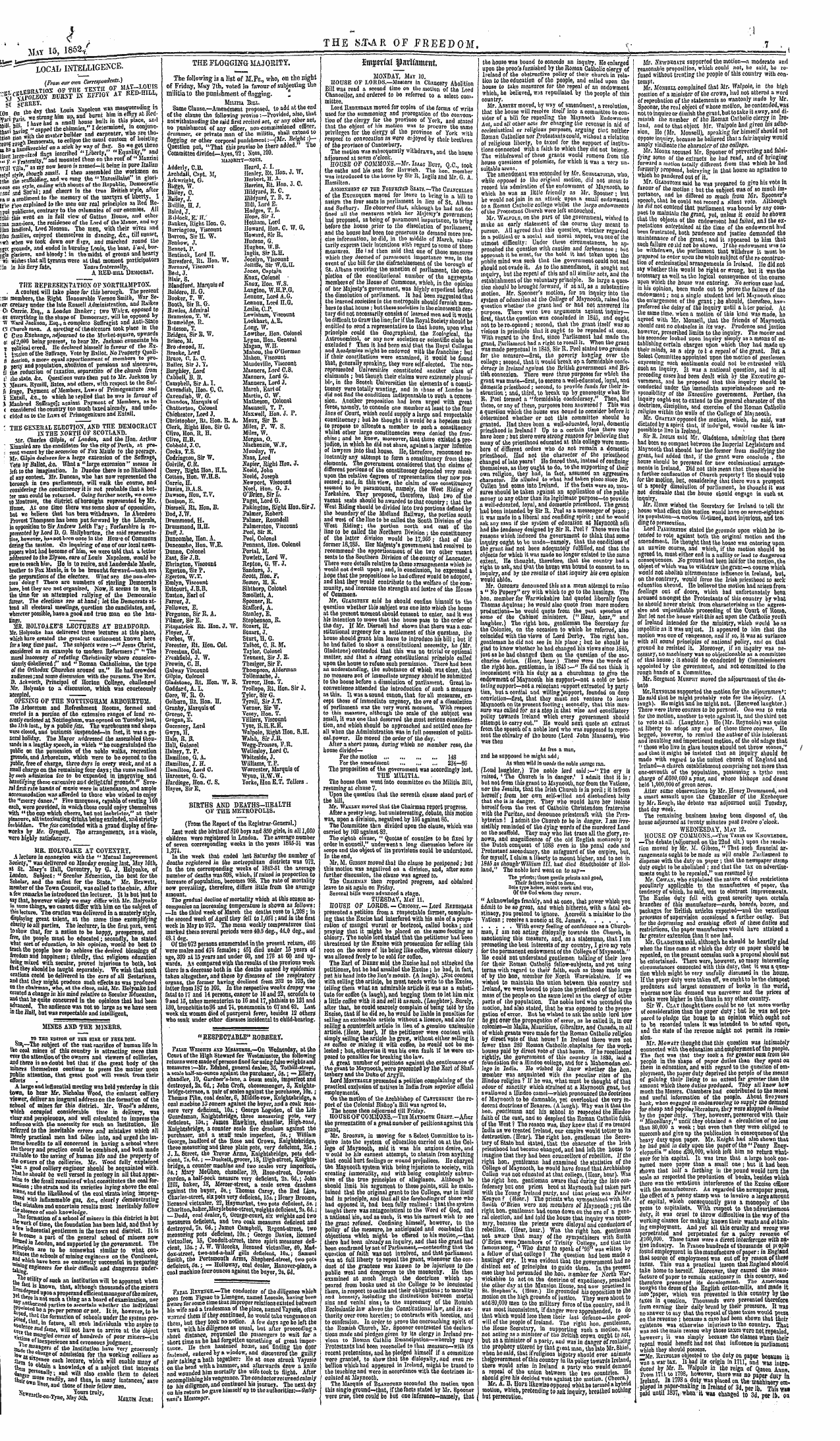
: LOCAL INTELLIGENCE . ( From our own Correspondents . ) " rt lEBlUTIOS OF TDE TEST" OF / A ^ OUS I ^ AF OLEOX BURST LY EFFIGY AT RED L 1 LL , srRRET . ,. . nl tho dav that Louis Napoleon was masquerading ia S J westrun-him up . and burnt him m effigy at Rcd-V u ' lha ? S a small honse built in this place , and £ ; J " ' capped the chimnics , " I determined , in conjuncl ^ n with the rmster builder and carpenter , who are tho-Si Democrats , to eclipse the usual custom of hoisting Sdkerciief on a stick by way of flag . So we got three t £ K dags inscribed ' " Liberty '' "Equality" and « i Fr 3 » ernitv , " and mounted them on the roof of" Mazzini T'lla" as new house is named—it being in pure Italian
. my Zt-le thon"h small I then assembled the workmen on a . iaffoldW . and we sang the " Marseillaise" in glorious style , endimr with shouts of the Republic , Democratic sua Socal ; and cheers in the true British s ' . yle , after s sentiment to the memory of the martyrs of liberty . I then explained to the men onr real principles as Red Republicans , contrary to the calumnies of our enemies . All ihjs went on in full view of Gatton House , and other znan-ions , the residence of the Lord of the Manor , and my landlord , Lord Monson . Tbe men , with their wives and families , enjoyed themselves in dancing , < £ c „ till sunset , when we took down our fl » g ? , and marched round tbe grounds , and ended in burning Louis , the base , Vase , burg larious , and bloody I in the midst of groans and hearty wishes that all tyrants were at tbat moment participators ; n his fiery fate . Tours fraternally , A RED-mix Democrat .
" / The Sjivak 0*' Freedom. <¦ 7 , Ai\Y ...
" / THE SJIVAK 0 * ' FREEDOM . <¦ 7 , AI \ y lo , 18 oV ___________*_—— y — - —~ —¦
Lesion Of The Suffrage, Vote By Ballot. ...
lesion of the Suffrage , Vote by Ballot . No Property Qoali-Jcstioo , amor * equal apportionment of members to property and population , abolition of pensions and sinecures , the reduction of taxation , separation of the church from ihe state . & e . Questions were then put to Mr . Jackson by Messrs . Rymill , Bates , and others , with respect to the Suffrage , Payment of Members , Laws of Primogeniture and Entail , & c ., to which he leplied tbat he was in favour of Manhood Suffrage- ; asainst Payment of Members , as he considered the country too much taxed already , and untieoTHn ^ ni tn fhn T . nws of Primogeniture and Entail .
THE REPRESENTATION OP XORTHAMPTOX . A contest will take place for this borough . The present members , the Right Honourable Veroon Smith , War Secretary under the late Russell Administration , and Raikes Carrie . Esq ,, a London Banker ; two Whirs , opposed to everything in the shape of Democracr , -will be opposed by "Ward Jackson , Esq ., a complete Suffragist and Anti-Stato Churchman . A meeting of the electors took p lace in the Cirn Exchange , adjourned to tbe Market-square , upwards of 2 , 000 being present , to bear Mr . Jackson enunciate his ¦ political creed . He declared himself in favour of the Ex-
The General Election. Akd This Dkjiuukau...
THE GENERAL ELECTION . AKD THIS DKJIUUKAUI IN THE NORTH OF SCOTLAND . Mr . Charles Gilpin , of London , and the Hon . Arthur Siimaird are the candidates for the city of Perth , at present vscant by tbe accession of Fos Maule to the peerage . Mr . Gilp in declares for a large extension of the Suffrage , Vote by Ballot , & c . What a " large extension " means is left to tbe imagination . In Dundee there is no likelihood of any contest . Mr . Duncan , who has now represented the ooroueh in two parliaments , will walk tbe course , and considering the constituency it is not probable that a better man could be returned . Going further north , we come to Hontrose , the district of boroughs represented by Mr . Hnme . At one time there was some show of opposition , but we believe tbat has been withdrawn . In Aberdeen Provost Thompson has been put forward by the Liberals ,
in opposition to Sir Andrew Leith Pay ; Forfarshire is represented by Lord D . G . HaHybarton , the said representative , however , has not been once in the Hou e of Commons during tbe session . On inquiring of one of onr local newspapers what bad become of him , we were told that a letter addressed to the Elysee , care of Louis Napoleon , would be sure to reach him . He is to retire , aud Lauderdale Maule , brother to Fox Maule , is to be brousht forward—such axe the preparations of the electora . What are the non-electors doing ? There are numbers of sterling Democrats here , but they are not organised . NOW , it seems to me , is ihe time for an attempted rallying of tbe Democratic force ? . The elections are at hand ; let the Democrats attend all electoral meetings , question the candidates , and , wherever possible , have a good and true man on the hustings . _ _
Mr. Holyoake's Lectures At Bradford. Mr....
MR . HOLYOAKE'S LECTURES AT BRADFORD . Mr . Holyoake has delivered three lectures at this place , which have created the greatest exciteaient known here for a long time past . The subjects were : — " Jesus Christ , considered as an example to modern Reformers ; " *« The moral innoeency of refuting Christianity where conscientiously disbelieved ; " and "Roman Catholicism , the type of the Orthodox Churches around us . " He had crowded audiences ; and some discussion with the parsons . Tbe Rev . B . Aekworth , Principal of Horton College , challeneed 3 Ir . Holyoake to a discussion , which was courteously accepted
. OPENING OP THE NOTTINGHAM ARBORETUM . The Arboretnm and Refreshment Rooms , formed aud erected in a portion of the extensive ranges of land recently enclosed at Nottingham , was opened on Tuesday last , the lith inst . , by a public fete . The warehouses and shops were closed , and business ' suspended—in fact , it was a general holiday . The Mayor addressed the assembled thousands in a lengthy speech , in which "he congratulated the public on the possession of the noble walks , recreation grounds , and Arboretum , which were to be opened to the pablic , free of charge , three days in every week , and at a
small charge on the remaining four days ; the sums realised by snch admission fee to he expended iu improving and beautifying these extensive and delightful grounds . " Several first rate bands of music were in attendance , and ample accommodation was afforded to those who wished to enjoy the " merry dance . " Five marquees , capable of seating 1 C 0 each , were provided , in wnich those could enjoy themselves with " the cup which cheers , but not inebriate ? , " at their pleasure , all intoxicating drinks being excluded , and strictly forbidden . The / ae concluded with a grand display of fireworks by Mr . Gyngell . The arrangements , as a whole , were highly satisfactory .
Mr. Holyoake At Coventry. A Lecture In C...
MR . HOLYOAKE AT COVENTRY . A lecture in connexion with the " Mutual Improvement Society , " was delivered on Monday evening last . May 10 th , at St . Mary ' s Hall , Coventry , by G . J . Holyoake , of London . Subject : " Secular Education , the best for the Scholar , and the safest for the State . " Mr . Brawett , member of the Town Council , was called to the chair . After a few remarks he introduced tbe lecturer . It is but just to say that , however widely we may differ with Mr . Holyoake in some things , we cannot differ with him on the subject of this lecture . The oration was delivered in a masterly style , displaying great talent , at the same time exemplifying charity to all parties . The lecturer , in the first Dart , went
to show that , for a nation to be happy , prosperous , and free , the people must be educated ; secondly , he stated what sort of education , in his opinion , woold he best to teach tbe people how to achieve the desired blessings of freedom and happiness ; thirdly , tbat religious education bang mixed with secular , proved injurious to both , but tan tbey should ba taught separately . We wish that such orations could be delivered in tbe ears of all Sectarians , and that they might produce such effects as was produced on the chairman , who , at the close , said , Mr . Holyoake had created a change in his mind relative to Secular Education , and that he quite concurred in the opinions that bad been advanced . The audience was not so large as we have seen 2 B the Hall , but was respectable and intelligent .
Mines And The Misers. Io The Suitor Of T...
MINES AND THE MISERS . IO THE SUITOR OF THB STAR OF FREEHCM . , SuV-The subject of the vast sacrifice of human life in tbe coal mines of this country is attracting more than ever the attention of the owners and viewers of collieries , and there is no doubt but that if the great body of the miners themselves continue to press the matter upon public attention , that great good will result from their efforts A large and influential meeting was held yesterday in this town , to hear Mr . Nicholas "Wood , the eminent colliery viewer , deliver an inagural address on the formation of tbe Ecbool of mines for this district . Mr . Wood ' s address , which occupied considerable time in delivery , was clear and perspicuous , and well calculated to impress the audience with the necessity for such an Institution , He referred to tha inevitable errors and mistakes wLieh all
merely practical men bad fallen into , and urged the immense benefits to all concerned ia having a school where the theory and practice could be combined , and both made available to the saving of human life and the property of the owners of the collieries . Mr- Wood fully explained ' bat a good colliery engineer should be acquainted with , rhat he should be well versed in geology in all that apper-• as to tbe fossil remains of what constitutes the coal ferrous ; the strata and its varieties laying above tbe coal r * ? . and the likelihood of tbe coal strata being iropregjpfl with inflammable gas , & c , clearly demonstrating ? mistakes and uncertain results mast inevitably follow ^ Th ncs of snc " knowledge . ? h ^ rn a tion of a school of miners in this district is but a fc - * of time «* foundation has been laid , and that by e * influential gentlemen in the town and district . It is to h - " " -uMgraiuHucu iu w io » ii nun uuiiisi . i »"
j- ° ° e a part of the general school of miners now nrhi * i ^ Nto " . and supported by the government . The Mitnt are to ^ soniewbat similar to what conjj . j ™ the schools of mining enginceis on ihe Continent , abi h ^ been s 0 emuient ly successful in preparing j Uig engineers for their difficult and dangerous underihe f !^ t u y ° fsuch an institution will be apparent when bre-rf ls , ^ nown . that , although thousands of the miners JettiT - n onaproperandefScientmanager of the mines , an- mf not such a thing as a board of examination , nor a . l"Or , sed parties to ascertain -whether the individual m ! T £ ! pn'P P erson or not - Ifc is > however , to be posed iu - foraation of £ ° bools under the system prove n ™ 'j ! . future « a 11 sncU individuals who aspire to ° tttha e * i 7 ' Unot hava ta artive at the object vi ctims f- " , e < l cor ~ es of bnndreds of poor miners—the Tbe m ^^ P " 61508 and erroneous judgment . We th = ° f the Institution have * Very generouslv to * ° f char S of admission for thB workiii ]? colliers as tfi € m & eaca lectnre i wh 5 ch * eoahle many of « ,. _ . lU Obtain a 1-HAwIpH . o « f n onl . ; nPr ?! . * ;«» .-- „»_ i uiicrcsi 3
, * = ni net-cn .. ii . ° " J "" ™» . 4 a nser mn J ; and wlU ^^ ennUe them to detect thenr osn n readU y , and thus , in many instances , ' save n » ves and those of their fellow men . Seweaotio * . Tours truly , ^ Oe-oo-Tyne afeyStfi , MiMlS IviM :
Mines And The Misers. Io The Suitor Of T...
THE FLOGGING MAJORITY . The following is a list of M . Ps ., who , on the night of Friday , May ftb , voted in favour of subjecting the militia to the punishment of flogging . "
Militia Bill . Same Clause . —Amendment proposed , to add at the end of the clause tho following proviso : —Provided , also , that notwithstanding tbe said first recited act , or any other act , no punishment of any officer , non-commissioned officer , drummer , or private man of the militia , shall extend to flogging or other corporal punishment : —( Mr . Bright : ) --Question put , "That this proviso be there added . Ihe Committee divided—Ayes , 92 - , Noes , 199 . MAJORITY—SOES . Adderly . C . B . Heard , J . I . Archdall , Capt . 51 , Henley , Rt . Hon . J . W . Arkwrhrbt , G . Herbert , H . A . Bagge , W Hernes , Rt . Hon . J . C . Bailey 0 . Hildyard , R . 0 .
, Bailey , J . Hildyard , T . B . T . B dllie , H . J . Hill , Lord E . Baird , J . Hodges , T . h . B . Mock , E ; H . Hope , Sir T . Bankes , Right . Hon . G . Hotham , Lord Barrington , Viscount Howard , Hon . C . W . G Barron , Sir H . \ V . Howard , Sir R . Benbow , J . Hudson , G Bennet , P . ? ? . he - A ; Bentinck , Lord H . iiglu , Sir R . H . Beresford , Rt . Hon . W . Jocelyn , Viscount Bernard , Viscount Jolliffe , Sir W . G . H . Best J Jones , Captain Blair , S . . Knox , Colonel Blandford Marquis of ? nox , Hon . W . S .
. Boldero , H . G . Langton , T , V . H . P . G . Booker , T . W . Lennox , Lord A . G . Booth , Sir R , G . Lennox , Lord H . G . Bowles , Admiral Leslie , 0 . P . . Bramston , T . W . Lewisham , Viscount Bremridge . R . Lockhart , A . E , Btteson , T . Long , W . Bridges , Sir B . W . Lowther , Hon . Colonel Brisco , M . Lygon , Hon . General Broidwood , H . Magan , W . H . Brooke , Lord Mahon , the 0 ' Gorman Bruce , O . L . C . Mahon , Viscount Duller , Sir i . 1 . Mandeville , Viscount
Burgh / ey , Lord Manners , Lord C . S . CabbelJ , B . B . Manners , Lord G . Campbell , Sir A . I . Manners , Lord J . Cavendish , Hon . C . C . March , Earl of Cavendish , W . G . ' Martin , 0 . W . Chaudos , Marquis of Matbeson , Colonel Chatterton , Colonel Maunsell , T . P . Chichester , Lord J . Maxwell , Hon . J . P Christopher , Rt . Hon . R . A . Meux , Sir B . Clerk , Right Hon . Sir G . Miles , P . W . S . Clive , Hon . R . H . Miles , W . Clive , H . B . Morgan 0 . Cobbold . j . c . Mackenzie . " vO .
Cocks , T . S . Monday , TY . Codrington , Sir W . Naas , Lord Colvile , C . R . A apier , Right Hon . J . Corry , Right Hon . H . L . Neeld , John Cotton , Hon . "W . H . S . Keeld , Joseph Currie , H . Newport , Viscount Davies , H . A . S . Noel , Hon . G . 3-Dawson Hon . T . V . O'Brien , Sir L . Denison E . Paget , Lord G . Disraeli , Rt . Hon . B . Pakington , Right Hon . Sir J Dod , J . W . Palmer , Robert Drummond , H . Palmer , Roundell Drummond , H . H . Palmerston , Viscount Daff , J . Peel , Sir R . Buncombe , Hon . A . Peel , Colonel
Buncombe , Hon . W . E . Pennant , Hon . Colonel Dunne , Colonel Portal , M . East , Sir J . B . Powlett , Lord W . Ebrington , Viscount Repton , G . W . J . Egerton , Sir P . Sandars , 3 . Egerton , W . T . ScOtt , Hon . F , Emlyn , Viscount Semer , H . K . Estcourt , J . B . B . Sibthorp , Colonel Euston , Earl of Smollett , A . Parrer , J . Spooner , R . Fellowes , E . Stafford , A . Ferguson , Sir R . A . Stanley , E . Filmer , Sir E . Stephenson , R . Fitzpatrick Rt . Hon . J . W . Stuart , H . Floyer , J . Stuart , J .
Forbes , W . Sturt , H . G . Forester , Rt . Hon . Col . Talbot , C . R . M . Freestun , Col . Taylor , Colonel Freshfield , J . W . Tennent , Sir J . E . Frewin , C . H . Thesiger , Sir F . Galway Viscount Thompson , Alderman Gilpin , Colonel Tollemache , J . Gladstone , Rt . Hon . "Vy " . E . Trevor , Hon . T . Goddard , A . L . Trollope , Rt . Hon . Sir J Gore , W . R . 0 . Tyler , Sir G . Golbura , Ht . Hon . H . Tyrell , Sir J . T . Granby , Matquis of Verner , Sir "W .
Greene , T . Vesey , Hon . T . Grogan , E . Villiers , Viscount Guernsey , I ord Vyse , R . H . R . H . Gwyn , H . Walpole , Right Hon . S . H Hale , R . 3 . Walsh , Sir J . B . Hall , Colonel Wegg-Prosses , F . R . Halsey , T . P . Wellesley , Lord C . Hamilton , G . A . "Whiteside , J . Hamilton , J . H . Williams , T . P . Hamilton , Lord C . Worcester , Marquis Of Harcoutt , G . G . "Wynn , H . W . W . Hardinge , Hon . C . S . Yorke , Hon E . T . Tellers Hayes , SirE .
Births And Deaths-Health Of The Metropol...
BIRTHS AND DEATHS-HEALTH OF THE METROPOLIS . ( From the Report of the Registrar-General . ) Last week tbe births of 810 boys and 850 girls , in all 1 , 660 children were registered in London . The average number of seven corresponding weeks in tho years 1845-51 was 1 . 37 L „ , „ In the week that ended last Saturday the number of deaths registered in the metropolitan districts was 972 , In the ten corresponding weeks of 1842-51 the average number of deaths was 898 , which , if raised in proportion to increase of population , becomes 988 . The rate of mortality now prevailing , therefore , differs little from the average amoaat . ....
The gradual decline of mortality which at this season accompanies an increasing temperature is shown as follows : —In the third week of March the deaths rose to 1 , 208 ; in the second week of April they fell to 1 , 051 ; and in the first week in May to 972 . The mean weekly temperatures that marked these several periods were 40 . 5 deg ., 44 . 0 deg ., and 48 . 1 deg . Of the 972 persons enumerated in tbe present return , 498 were males and 474 females ; 451 died under 15 years of age , 339 at 15 years and under 60 , and 176 at 60 and upwards . As compared with the results of the previous week there is a decrease both in the deaths caused by epidemics taken altogether , and those by diseases of tbe respiratory organs , the former having declined from 232 to 193 , the latter from 187 to 166 . In the respective weeks dropsy was fatal to 17 and 14 persons , cancer to lfi and 22 , scrofula to 9 and 15 , tabes mesenteric * to 16 and 17 , phthisis to 131 and 130 , bronchitis to 86 and 74 , pneumonia to 67 and 62 . Last week six women died of puerperal fever , besides 12 others who sunk under other diseases incidental to child-bearing .
"Respectable" Robbery. False Weights Axd...
"RESPECTABLE" ROBBERY . False Weights axd Measubes . —On Wednesday , at tbe Court of the High Steward for Westminster , the following returns were made of persons fined for using false weights and measures : —Mr . Edshed , general dealer , 35 , Tothill-strept , a scale haW-an-ounce against the purchaser , 03 . ; — Ellery , chandler , ID , Gardner ' s-lane , a beam scale , imperfect and destroyed , 2 s . 6 d . ; John Croft , cheesemonger , 3 , Knightsbridge-terrace , a pair of scales against the purchaser , 10 s . ; Thomas Pike , coal dealer , 8 , Middle-row , Knightabridge , % coal machine 13 ounces against the buyer , and a coak measure very deficient , 10 s . ; George Logsden , of the Life Guardsman , Knightsbridge , three measuring pots , very deficient , 15 s . ; James Hawkins , chandler , High-road , Knightsbridge , a counter scale five drachms against the purchaser , and a scuff scale imperfect , 5 s . ; William George , landlord of the Rose aud Crown , Knightsbridge , three measuring and three plain pots , very deficient , 25 s . ; J . L . Street , the Trevor Arms , Knightsbridge , pots
deficient , 7 s . Gd . ; —Duckett , grocer , 18 , Hi gh-street , Knightsbridge , a counter machine and two scales very imperfect , -5 s . ; Mary McGhee , chandler , 19 , Rose-street , Coventgarden , a half-peck measure very deficient , 2 s . Gd . ; John Hill , baker , 13 , Mercer-street , a scale seven drachms against the buyer , os . ; Thomas Carey , the Red Lion , Charles-street , six pots very deficient , 15 s . ; Henry Broome , licensed victualer . 22 , Haymarket , two pots deficient , Ss . ; Charlton , baker , Marylebone-street , weights deficient , 2 s . Cd . ; —Dodd , coal dealer , 6 , George-court , six weights and two measures deficient , and two coak measures deficient and destroyed , 7 s . 6 d . ; James Campbell , Regent-street , two measuring pots deficient , 10 s . ; George Davies , licensed victualler , 15 , Conduit-street , three spirit measures deficient , 15 s . ; J . W . Wilcocks , licensed victualler , 40 , Maddox-street , two-and-a-half gills deficient , 10 s . ; Samuel Smith , tho Portsmouth Arms , Shepherd-street , two pots deficient , os . ; — Holloway , coal dealer , Hanover-place , a coal machine four ounces agaiast the buver , 2 s . 6 d .
Fatal Revjbxge.—The Conductor Of The Dil...
Fatal Revjbxge . —The conductor of the diligence which coes from Figeac to Limogne , named Lescale , having been aware for some time that improper relations existed between his wife and a tradesman of the place , named Vayssie , often warned them if they continued , he would take vengeance on them , but they took no notice . A few days ago he left the town with his diligence as usual , but after proceeding a short distance , requested the passengers to wait for a short time as he had forgotten something of great importance . He then hastened hoaie , and finding the door fastened , entered by a window , and discovered the guilty pair faking a bath together : He at once struck Vayssie on the head with a hammer , and afterwards drew a knife and wounded him mortally the wife took to flight . After accom plishing bis vengeance . Tbe conductor returned calmly to his diligence , and continued his journey . The next day on his return he gave himself up to the authorities : — Galignani ' s llessenger .
Empwai $≪Witanmrt
Empwai $ < witanmrt
Monday, May 10. House Of Lords.—Masters ...
MONDAY , May 10 . HOUSE OF LORDS . —Masters in Chancery Abolition Bill was read a second time on the motion of the Lord Chancellor , and ordered to be referred to a select committee . Lord Rbdesdalb moved for copies of tho forms of writs used for tho summoning and prorogation of tho convocation of tbe clergy for the province of York , and stated that the object of his motion was to procure the same privileges for tho clergy of the province of York with respect to convocation as were ci . joyed b y their brethren of the province of Canterbury . The motion was subsequently withdrawn , and tbe house adjourned at seven o ' clock . HOUSE OF COMMOXS .-Mr . Isaac Butt , Q . C ., took the oaths and his seat for Harwich . The hon . member was introduced to the house by Sir R , Inglia and Mr . G . A . Hamilton .
ASSIOXMEST OP THE FORFEITED SEATS . —The ClTANCKLLOn of the Exchequer moved for leave to bring in a bill to assign the four seats in parliament in lieu of St . Albans and Sudbury . He observed that ; , although ho had not defined all tbe measures which her Majesty ' s government had proposed , as being of paramount importance , to bring before the house prior to tho dissolution of parliament , and the house had been too generous to demand more precise information , he did , in the middle of March , voluntarily express their intentions with regard to ' some of those measures . He I ad then said that one of those measures which they deemed of paramount importance was , in tho event of the bill for the disfrachisement of the borough of St . Albans receiving the sanction of parliament , the completion of the constitutional number of the agnregato
memoers oi tne uouse oi uommons , which , in the opinion of her Majesty ' s government , was highly expedient before the dissolution of parliament . It had been suggested that the learned societies in the metropolis should furnish members to that house ; but these societies in tho nineteenth century did not necessarily consist of learned men and it would bo difficult to draw the line ; for if the Royal Society should be entitled to send a representative to that house , upon what principle could the Geographical , the Zoological , the Astronomical , or any new societies or scientific clubs be excluded ? Then it had been said that the Royal Colleges and Academies mi ght be endowed with the franchise ; but if their constitutions were examined , it would be found that , generally speaking , they were self , elected . The nonrepresented Uni versifies constituted another class of
claimants ; out though their claims were extremely plausible , in the Scotch Universities the elements of a constituency were totally wanting , and in those of London ho did not find the conditions indispensable to Bach a concession . Another proposition had been urged with great force , namely , to concede one member at least to the four Inns of Court , whioh could supply a large and respectable constituency ; but he thought it would be a hopeless task to propose to allocate a member to such a constituency whilst other large constituencies were denied the franchise ; and he knew , moreover , that there existed a prejudice , in which he did not share , against a larger infusion of lawyers into that house . He , therefore , renounced reluctantly any attempt to form a constituency from those elements . The government considered tbat the claims of different portions of the constituency depended very much upon the relative degrees of representation they now possessed ; and , in this view , the claim of one constituency
seemed to be paramount , namely , the West Riding of Yorkshire . They proposed , therefore , tbat two of the vacant seats should bo awarded to that country ; that the West Riding should be divided into two portions defined by the boundary of tbe Midland Railway , the portion south and west of the line to be called the South Division of the West Riding ; the portion north and east of tho line to be called the Northern Division ; tbe constituency of the latter division would be 17 , 965 ; that of tho former 18 , 785 . Her Majesty ' s government had resolved to recommend- tho apportionment of the two other vacant seats to tbe Southern Division of tbe county of Lancaster . There were details relative to these arrangements which he would not dwell upon ; and , in conclusion , he expressed a hope that the propositions he had offered would bo adopted , and tbat they would contribute to the welfare of tbe community , and increase the strength and lustre of the House of Commons .
Mr . Gladstone said he should confine himself to the question whether this subject was one into which the house at the present moment should consent to enter , and it was his intention to move that the house pass to the order of the day . If Mr . Disraeli had shown that there was a constitutional urgency for a settlement of tbis question , the houso should grant him leave to introduce his bill ; but if he had failed to show a constitutional necessity , ho ( Mr . Gladstone ) contended that this was no trivial or optional matter , and tbat a strong constitutional principle called upon the house to refuse such permission . There had been
an understanding , the substance of which was clear , that no measure not of immediate urgency should be submitted to the house before a dissolution of parliament . Great inconvenience attended the introduction of such a measure as this . It was a sound canon , tbat for all measures , except those of immediate urgency , tho eve of a dissolution of parliament was the very worst moment . With respect to this measure , although the scale of the subject was small , it was one that deserved the most serious consideration , and which should be approached and settled once for all whea tbe Administration was in full possession of political . power . He moved tbe order of the day .
After a short pause , during which no member rose , the house
divided—For the motion 148 For the amendment ... 234—86 The proposition of the government was accordingly lost . THE MILITIA . The house then went into committee ou the Militia Bill , resuming at clause 7 . Upon the question that the seventh clause stand part of the bill , Mr . wakley moved that the Chairman report progress . After a pretty long , but uninteresting , debate , this motion was , upon a division , negatived by 156 against 85 . The Committee then divided upon tho clause , which was carried by 169 against 82 . The eighth clause , " Quotas of counties to be fixed by order in council , " underwent a long discussion before its scope and the object of its provisions could be understood . In the end .
Mr . M . Gibsojj moved tbat the clause bo postponed ; but tbis motion was negatived on a division , and , after some further discussion , the clause was agreed to . The Chairman then reported progress , and obtained leave to sit again on Friday . Several bills were advanced a stage . TUESDAY , Mat 11 . HOUSE OF LORDS . — Chicory . — Lord Rkdesdale presented a petition from a respectable farmer , complaining tbat the Excise had interfered with bis sale of a preparation of mangel wurzel or beetroot , called booka ; and praying that it might be placed on the same footing as chicory . The noble lord stated that the petitioner had been threatened by tbe Excise with prosecution for selling this root on tbe score of its being like coffee , whereas chicory was allowed freely to be sold for coffee .
The Earl of Derby said the Excise had not attacked the petitioner , but he bad assailed the Excise ; he had , in fact , put his bead into tbe lion ' s moutb . ( A laugh ) . [ Not content with selling the article , he must needs write to the Excise , telling them what an admirable article it was as a substitute for coffee ( a laugh ) , and begging tbem to let him mix a little coffee with it and sell it as such . ( Laughter ) . Surely , after that , he could scarcely complain of being told by the Excise , tbat if he did so , he would be liable io penalties for selling an exeiseable article without a licence , and also for selling a counterfeit article in lieu of a genuine exeiseable article . ( Hear , hear ) . If the petitioner were content with simply selling the article he grew , without either selling it as coffee or mixing it with coffee , he would not be molested ; but , otherwise it was his own fault if he were exposed to penalties for breaking the law .
A great number of petitions against the continuance of the grant to Maynootb , were presented by the Earl of Shaftesbury and the Duke of Argyll . Lord Montbaglb presented a petition complaining of the practical exclusion of natives in India from superior official employments . On the motion of the Archbishop of Carterbury the report of the Colonial Bishop ' s Bill was agreed to . The house then adjourned till Friday . HOUSE OF COMMONS . —Teb Maymooth GnANT .-Afcer the presentation of a great number of petitions against this grant , Mr . Spooner , ia moving for a Select Committee to inquire into the system of education carried on at the College of Maynootb , said it was his anxious desire , and
w ould be his earnest attempt , to abstain from anything that could hurt feelings or wound prejudices . He charged the Maynootb system with being injurious to society , with creating immorality , and with being completely subversive of the true principles of allegiance . Although he should limit bis argument to these points , still he maintained tbat the original grant to the College , was ia itself bad in principle , and tbat all the forebodings of those who had opposed it , had been fully realised : that tbe system taught there was antagonistical to the Word of God , and a national sin , and as such , it was his earnest wish to see the grant refused . Confining himself , however , to the policy of the measure , he anticipated and combated the objections which might be offered to his motion , —tbat there had been already an inquiry , and that tho grant had been confirmed by act of Parliament , —contending that the question of faith was not involved , and that parliament was at full liberty to repeal the grant , whenever the
conduct of the grantees was known to be injurious to the public weal and dangerous to the monarchy . He then examined at much length the doctrines which appeared from books used at the College to be inculcated there , in respect to oaths and their obligations ; to morality and honesty , including the distinctions between mortal sins and venial sins ; to tho supremacy of the Romish Ecclesiastic law abovu tho Constitutional law , and its authority over even heretics ; to contracts with heretics , and to confession . In order to prove the encroaching spirit of tho Romish Church , Mr . Spooner contrasted the declarations made and pledges given by its clergy in Ireland previous to Roman Cathlic Emancipation—whereby many Protestants had been reconciled to that measure—with its recent pretensions , and he pledged himself if a committee were granted , to show that the disloyalty , and even rebellion which had appeared in Ireland , might be traced to the teaching and were in accordance with the doctrines inculated at Maynootb .
The Marquis of Blandjobd seconded the motion upon this single ground—that , if the facts stated by Mr . Spooner were true , thee could be but one inference—namely , that
Monday, May 10. House Of Lords.—Masters ...
the house was bound to concede an inquiry . He enlarged upon tbe proofs furnished by the Roman Catholic clergy of Ireland of the obstructive policy of their church in relation to tho education of the people , and called upon the house to tako measures for the repeal of an endowment which , he believed , was repudiated by tbe people of this country . Mr . Anstey moved , by way of amendment , a resolution , that the house will resolve itself into a committee to consider of a bill for repealing tbe Maynooth Endowment Act , and all other acts for charging tho revenue in aid of ecclesiastical or relig ious purposes , arguing that neither Roman Catholics nor Protestants could , without a violation of religious liberty , bo taxed for the support of institutions connected with a faith to which they did not belong . The withdrawal of these grants would remove from tho house questions of polemics , for which it was a very unsuitable arena .
. . Tbe amendment was seconded by Mr . Scuouhelo , who , while opposed to the original motion , did not moan to record his admiration of tbe endowment of Maynooth , to which ho was as little friendly as Mr . Spooner ; but he would not join in an attack upon a small endowment to a Roman Catholic college whilst the hrge endowments of the Protestant Church were left untouched . Mr . Walfole , on the part of the government , wished to mike an early statement of the course they meant to pursue . All agreed that this question , whether regarded in a political or a social and moral aspect , was one of tbe utmost difficulty : Under these circumstances , he uppreached the question with caution and forbearance ; but approach it he must , for tho hold it had taken upon the nublic mind was such that the government could not and
should not evade it . As to tho amendment , it sought not inquiry , but the repeal of this and all similar acts , and the establishment of tho voluntary principle . So largo a question should be brought forward , if at all , as a substantive motion . Mr . Spooner ' s motion , for an inquiry into the system of education at the College of Maynooth , raised tho question whether the grant had or had not answered its purpose . There were two arguments against inquiryfirst , that the question was concluded in 1845 , and ought nottobero-opened ; second , that tho grant itself was so vicious in principle that it ought to bo repealed at once . With regard to the first , since Parliament had mado the grant , Parliament had a rigbt to recall it . When tbe grant was made perpetual in 1845 , Sir R . Peel stated two grounds for the measure—first , the poverty hanging over tho
college ; second , that it would break up a formidable confederacy in Ireland against tho British government nnd Brifish connexion . There were three purposes for which tho grant was made—first , to secure a well-educated , loyal , and domestic priesthood ; second , to provide funds for their instruction ; afid , third , to break up by generosity what Sir R , Peol termed a "formidable confederacy . " Then , had these , or any of these , purposes been answered ? This was a question which the house was bound to consider before it determined whether or not this committee should bo granted . Had there been a well-educated , loyal , domestic priesthood in Ireland ? Up to a certain time there may hare been ; but there wero strong reasons for believing that many of the priesthood educated at this college were members of different orders who do not remain a domestic
priesthood . Had not the character of tho priesthood changed of late years ? He feared that , instead of confining themselves , as they ought to do , to the supporting of their own religion , tbey had , in fact , assumed an aggressive character . He alluded to what had taken place since Dr , CuUen had come into Ireland . If the facts wero so , measures should bo taken against an application of the public money to any other than its legitimate purpose—to provide a well-educated , loyal , and domestic priesthood . The grant had been intended by Sir R . Peel as a messenger of peace ; it was made in a liberal and confiding spirit ; and he would ask any man if the system of education at Maynooth adh had tbe tendency designed by Sir R . Peel ? These were tbe reasons which induced the government to think tbat some inquiry ought to be made—namely , that the conditions of
the grant had not been adequately fulfilled , and tbat the objects for which it was made no longer existed to the same extent . He thoueht , therefore , that the country had a right to ask , and that the house was bound to consent to an inquiry , and by the results of that inquiry his oirn opinion would abide . Mr . Osborne denounced this as a mean attempt to raise a " Kb Popery" cry with which to go to the hustings . Tho hon . member for Warwickshire had quoted liberally from Thomas Aquinas ; he would also quote from more modern productions—he would quote from , tbe past speeches of some of the Cabinet ministers . ( "Hear , hear , " and laughter , ) The right hon . gentleman the Secretary for the Colonies , on the occasion to which he referred , also coincided with the views of Lord Derby . Tho right hon . gentleman be did not see in his place ; but he should be
glad to know whether he had changed his views since 1845 , just as he had changed them on the question of the saccharine duties . ( Hear , hear . ) These were the words of the rigbt hon . gentleman , in 1845 : — " He did not think it inconsistent with his duty as a churchman to give the endowment of Maynooth hia support—not a cold or hesitatingsupport-not a reluctant support extracted by party ties , but a cordial and willing Jsupport , founded on deep conviction—first , that they must not venture to leave Maynooth on its present footing ; secondly , that this measure was called for as a step in that wise and conciliatory policy towards Ireland which every government should attempt to carry out . " He would next quote an extract from the speech of a noble lord who was supposed to represent tbe chivalry of tho house ( Lord John Manners ) , who was then
As free a man , and he supposed he might add ;
As when wild in woods the noble savage ran . ( Loud laughter . ) Tho noble lord said : — "The cry is raised , ' The Church is in danger . ' I admit that it is ; but not from this grant to Maynooth , nor from the Vatican , nor the Jesuits , that the Irish Church is in peril ; it is from herself ; from her own self-willed and disobedient laity that she is is danger . They who would have her isolate herself from the rest of Catholic Christendom fraternise with the Puritan , and denounce priestcraft with the Presbyterian ! I admit tbe Cbnrcb to be in danger . I am irresistibly reminded of the dying words of the murdered Laud on the scaffold . They may who list trace all the glory , renown , and magnificence of the old English monarchy to the Dutch conquest of 1688 even in the penal code and Protestant ' ascendancy , the safeguard of the empire , but , for myself , I claim a liberty to mount higher , and to act in 1845 as though'Will / am III . had died Stadtholder of Holland . " The noble lord went on to
say—The priests ; those gentle priests and good , Their fathers loved to hear , Sole type below , midst work and woe , Of the God whom they revere , " Acknowledge frankly , and at once , tbat power whioh you admit to be so great , and which hitherto , with a fatal obstinacy , you pretend to ignore . Accredit a minister to the Vatican ; receive a nuncio at St . James ' s With every feeling of confidence as a Churchman , I am not acting disloyally , towards the Church , in sanctioning this measure , and , as a statesman , that I am promoting tbe best interests of my country , I give my vote for the permanent endowment of the College of Maynooth . " He could not understand gentlemen talking of their love for their Roman Catholic fellow-subjects , and yet using
terms with regard to their faith , such as those made use of by tho hon , member for North Warwickshire . If we wished to maintain the union between tbis country and Ireland , we were bound to place tbe priesthood of the large mass of the people on the same level as tho clergy of other parts of the population , The noble lord who seconded the motion , had also stated , that be was opposed to tho propagation of error . But he wished to ask the noble lord how fie got over the propagation of error , as he called it , in our colonies—in Malta , Mauritius , Gibraltar , and Canada , in all of which grants were made for the Roman Catholic religion by direct vote of that house ? In Ireland there were not fewer than 280 Roman Catholic , chaplains for the workbouses paid by direct vote of that house . If he recollected rightly , the government of this country in 1 S 33 , laid a
foundation for a Hindoo college , and for a Mabomedan colleg © in India . He wished to know whether the hon . member was acquainted with the peculiar rites of the Hindoo religion ? If he was , what must be thought of that odour of sanctity which strained at a Maynooth gnat , but swallowed a Hindoo camel—whioh pronounced the doctrines of Maynooth to be damnable , yet overlooked the very indecent doctrines of Benares . ( A laugh ) . Why was it that the hon . gentleman and hia school so respected the Hindoo faith of the east , and so despised the Roman Catholic faith of the West ? The reason was , they knew that if we treated India as we treated Ireland , our empire would totter to its destruction . ( Hear ) . The right hon . gentleman tbe Secretary of State bad stated , that the character of the Irish priesthood had become changed , and bad left tbe houso to imagine that they had been counsellors of rebellion . If the
right hon . gentleman had examined the statistics of the College of Maynooth , he would have found that Archbishop Cullen was not educated at that college . ( Hear , hear ) . Was the right hon . gentleman aware that during the late confederacy but one priest bred at Maynootb bad taken part with the Young Ireland party , and that priest was Father Kenyon ? ( Hear . ) The priests who sympathised -with Mr . Smith O'Brien wero not members oi' Maynooth ; yet the right hon , gentleman had come down on the eve of a general election , and had told the house that inquiry was necessary , because the priests wero disloyal and conductors of rebellion . ( Hear , hear . ) Was the right hon . gentleman not aware that many of the sympathisers with Smith O'Brien were ^ memb ers of Trinity College , and that the famous song , "Who dares to speak of ' 93 " was witten by a fellow of that college ? The question had been made a hustings cry . It was evident tbat the government had no distinct set of princi ples to guide them . In the present case they bad persuaded tbe hon . member for North
Warwickshire to act on the doctrine of expediency , preached the other day at the Mansion House , and now practised in St . Stephen ' s . ( Hear . ) lie grounded his opposition to the motion on the high grounds of justice , They were about to add 80 , 000 men to tho military force of the countrv , and it was most inconsistent , if danger were apprehended " , to do tbat which would lose them their last defence—the goodwill of the people oflreland . The right hon . gentleman , the Home Secretary , in supporting such a motion , was not acting as a minister of tho British crown OUght to act , but as a minister of a party , and was ' in danger of realising the prophecy uttered by that gieat man , tho late Mr . Sbiel , when he said , that if religious bigotry should ever animate thelgovernment ofthis country in its policy towards Ireland , there would arise in Ireland a party who would desiand a repeal of the union between the two countries . He should give his decided vote against the motion . ( Cheers . ) Mr . A . B . Hope likewise opposed what he termed a hybrid motion , which , pretending to ask inquiry , breathed nothing but persecution .
Monday, May 10. House Of Lords.—Masters ...
Mr . Sewdeoate supported the motion—a moderate and reasonable proposition , which could not , he said , be refused without treating the people of this country with con-Mr . Mossell complained that Mr . Walpole , in tho high position of a minister of the crown , had not uttered a word of reprobation of the statements so wantonly made by Mr . Spoonor , the real object of whose motion , he contended . was not to inquire or dimish the grant , but to take it away , andI diminish the number of the Roman Catholic clergy in Ireland , and to that object Mr . Walpole had given his adhesion . He ( Mr . Monsell ) , speaking for himself should not oppose inquiry , because he believed that a fair inquiry would amply vindicate the character of the college . Mr . Moore accused Mr . Snooner of perverting and
falsifying somo of the extracts he had read , and of bringing forward a motion totally different from that wbich he had formerly proposed , betraying in that house an agitation to which ho pandered out of it . " Mr . Gladstone said ho was prepared to give his vote in favour of tho motion : but the subject was of so much importance , and he differed so much from Mr . Spooner ' s speech , that he could not record a silent vote . Although he did not contend that parliament was bound by any compact to maintam the grant , yet , unless it could be shown that tho ob jects of the endowment bad failed , and the expectations entertained at tho time of the endowment had been frustrated , both prudence and justice demanded tho maintenance of the grant - , and it appeared to him that such failure coild not be shown . If the endowment wis to be withdrawn , tho parliament tbat Withdrew it must be
prepared to enter upon the whole subject of the reconstruction of ecclesiastical arrangements in Ireland . He did not say whether this would be right or wrong , but it was the necessary as well as the logical consequence of tbe course upon which the house was entering . M serious case bad , in his opinion , been made out to prove the failure of the endowment ; not a single student had left Maynooth since the enlargement of the grant , ; he should , therefore , hav * preferred the delay of the inquiry until a liter period . At the same time , when a motion of this kind was made , he a « reed with Mr . Monsell , that the friends of Maynootb should cast no obstacles in its way . Prudence and justice however , prescribed limits to the ' inquiry . The mover and
his seconder looked upon inquiry simply as a means of establishing certain charges upon which they had made up their minds , as a step to b o repeal of the grant . Bdt a Select Committee appointed upon tbe motion of gentlemen expressing such sentiments could not be entrusted with such an inquiry . It was a national question , and in all preceding cases had been dealt with by the Executive government , and he proposed that this inquiry should be conducted under tho immediate superintendence and responsibility of the Executive government . Further , the inquiry ought not to extend to the general character of the doctrines , discipline , and exercise of the Roman Catholic religion within the walls of the College of Mavnootb .
j- 11 ° , "AN opposed the motion , which , he said , was dictated by a spirit that , if indu ' ged , would render it impossible to live in Ireland . ' Sir R , Isauz said Mv . Gladstone , admitting that there had been no compact between the Imperial Legislature and Maynootb tbat should bar tho former from modifying tbe grant , had added that , if the grant were conclude , tha house should be prepared for new ecclesiastical arrangements in Ireland . Did not tbis mean that there should be a further confiscation of Church property ? He should vote for the motion , but , considering that there was a prospect of a speedy dissolution of parliament , he thought it was not desirable that the house should engage in such a * inquiry . Mr . Home wished the Secretary for Ireland to tell thf house what effect this motion would have on sovon-eightsol
its population—amotion ill-timed , most injurious , and ton . ding to persecution . Lord Palmerston stated the grounds upoa which he inv tended to vote against both the original motion and the amendment . He thought that the house was entering upon an unwise course , and which , if tho motion should be ngreed to , must either end in a nullity or lead to dangerous consequences . So ground had been laid for tho motion , the object of which was to withdraw the grant—a course which would not abolish ultramontane influence in Ireland , but , on the contrary , would force the Irish priesthood to seek education abroad . He believed the motion had arisen from feelings out of doors , which had unfortunatelv been
aroused amongst the Protestants of this country by what he should never shrink from characterisinc as the aggressive and unjustifiable proceeding of the Court of Roma , But let not the house visit this act upon the Catholic youth of Ireland intended for the ministry , which would be as impolitic as it was unjust . It appeared to him that the motion was one of vengeance , and if so , it was at variance with all sound principles of national policy , and on that ground he resisted it , Moreover , if an inquiry was necessary , no machinery was so objectionable as a committee of that house ; it should be conducted by Commissioners appointed by the government , and not committed to the rough hands of a Committee ,
Mr . Sergeant Murphy moved the adjournment of the debate Mv . Reysolds supported the motion for the adjournment He said tbat he might probably vote for the inquiry . ( A laugh ) . He might and he might not . ( Renewed laughter . ) There were three courses to bo pursued . Ono was to vote for the motion , another to vote against it , and the third not tovotoatall . ( Laughter . ) Ho ( Mr . Reynolds ) was quite at liberty to adopt any one of those three courses . He begged , however , to remind tho author of this intolerant and insulting and impertinent motion , of the old adage that
" those who live in glass houses should not throw stones , " and tbat it might be insisted that an inquiry should DO mado with regard to the united church of England and Ireland—a church establishment comprising not more than one-seventh of the population , possessing a tytlm rent charge of £ 000 , 000 a year , and whose bishops and deans held 1 , 000 , 000 of green acres . Alter sumo observations by Mr . Henry Drummond , and a smart assault upon the Chancellor of the Exchequer by Mr . Keogh , the debate was adjourned until Tuesday , that day week .
Tbe remaining . business having been disposed of , the house adjourned at twenty minutes past twelve o ' clock . WEDNESDAY . May 12 . HOUSE OF COMMONS . —The Taxes on Knowledge , —The debate ( adjourned on the 22 nd ult . ) upon the resolution moved by Mr . M . Gibson , " That such financial arrangements ought to be made as will enable Parliament to dispense with the duty on paper ; that the newspaper stamp duty ought to be abolished ; and that the tax on advertisements ought to be repealed , " was resumed by Mr . Cowan , who explained the nature of the restrictions peculiarly applicable to the manufacture of paper , the tendency of which , he said , was to obstruct improvements . The Excise duty fell with great severity upon certain branches of this manufacture—cards , boards , boxes , and package ? for British articles exported—and the vexatious processes of supervision occasioned a further outlay . But for tbe depressing and crushing effect of these duties and restrictions , the paper manufacture would have attained a far greater extension than it now had .
Mr . Gladstone said , although he should be heartily glad when the time came at which the duty on paper should ba repealed , on the present occasion such a proposal should not be entertained . There were , however , so many interesting circumstances connected with this duty , that it was a question which might be very usefully discussed in tbe bouse . If the paper duty were taken oft ' , we ought to be tbe cheapest producers and largest consumers of boohs in the world , whereas now the demand was narrower and the prices of hooks were higher in this than in any other country . SirW . Clay thought there could be no tax mora worthy of consideration than the paper duty ; but he was not prepared to pledge the house to an opinion which ought not to be recorded unless it was intended to be acted upon , and the state of the revenue might not permit its
remis-350 n ' . ,. . , Mr . Mowatt thought that this question was intimately connected with tbe education and employment of the people . The fact was tbat they took a far greater sum from the people in the shape of paper duties than they ; spent on them in education , and with regard to the question of employment , the paper duty deprived the people of the means of gaining their living to an extent far greater than the amount which those duties produced . Thby all Knew how much the Messrs . Chambers had contributed to the moral and useful information of the people . About five years back , vhen engaged in endeavouring to supply the demand for cheap and popularHteraiure , they were stojiped in limine by the paper duty , they , however , persevered with their " Miscellany , " until they obtained a circulation of no loss
than 80 , 000 a week ; but even then they were obliged to succomb and give up the publication in consequence of the heavy duty upon paper . Mr . Knight had also shown that he had paid in duty upon the paper of the " Penny Encyclopedia " alone £ 30 , 000 , which left him no return whatever for his capital . It was true tbat a largo book consumed more paper than a small one ; but it had been shown that half a farthing in the pound would turn the scale as respected the production of books , besides which there was tbe vexatious interference of the Excise officer with the manufacturer . As regarded the newspaper press , the effect of a penny stamp was to involve a large amount of capital , which consequently gave a monopoly of the press to capitalists . With respect to the advertisement duty , it was cruel to throw difficulties in the way of tha
working classes tor making known their wants and ottlining employment . And yet all this cruelty and wrong was perpetrated and perpetuated for a paltry revenue of £ 160 , 000 . These taxes were a direct interference with native industry . In Prance hundreds of thousands ot people found employment in the manufacture of paper : in England that source of employment was cut off by reason of theW taxes . This was a practical lesson that England should take home to herself . Moreover , they caused the manufacture of paper to remain stationary in this country , and therefore prevented its development . The Americana bought tho dross of the English cotton-mills , and made it into Jpaper , which was prevented in this country by the
taxes in question . Thousands were prevented therefore from earning their daily bread by their pressure . It was no answer to say that the repeal of these taxes would press on the revenue ; because a caso had been shown that their existence was otherwise injurious to the country . That was not the main reason why those taxes wero not repealed , however ; it was ainrply because the classes whom their repeal would benefit had not that influence in parliament wbich they should possess , - "Mr . Reynolds objected to the duty on paper because ifc was a war tax . It had its origia in 1711 , and was introduced by Mr . R . Walpolo in the reign of Queen Anne . From 1711 to 179 S , however , there was no paper dut y in Ireland . In 1798 a duty was placed en the-maohinerVem ployed inpaper-making in Ireland of 3 d . per lb . This wa « paid until 1837 , whenit was changed to 3 d , per lb . oa
-
-
Citation
-
Northern Star (1837-1852), May 15, 1852, page 7, in the Nineteenth-Century Serials Edition (2008; 2018) ncse.ac.uk/periodicals/ns/issues/ns2_15051852/page/7/
-